Bootstrap
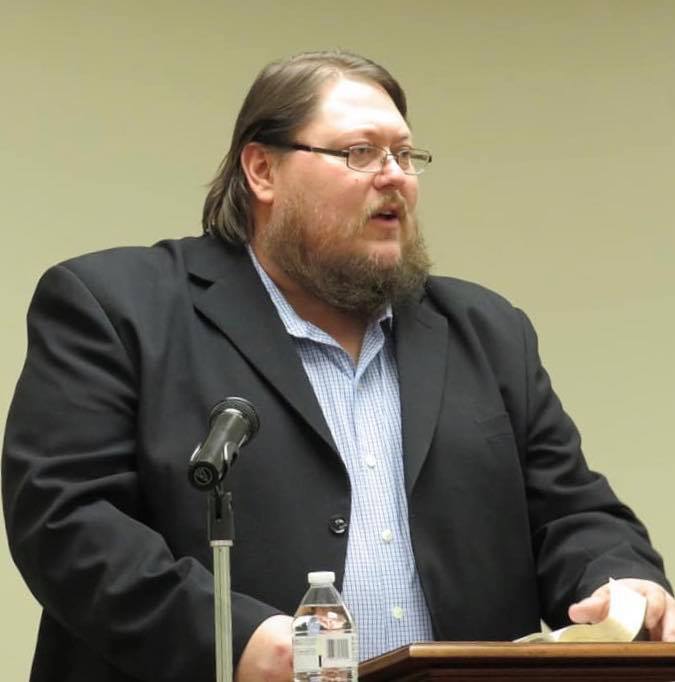
Mikal Smith

Made the Footstool

Hebrews 10:13
Mikal Smith May, 21 2023 Video & Audio
0 Comments
When the God said He shall make Christ enemies his footstool, who was he talking about and when shall this happen?

Sermon Transcript

Auto-generated transcript • May contain errors

100%
Turn with me if you would this
morning over to the book of Hebrews. The book of Hebrews. I've been looking yesterday at
a couple of verses here in Hebrews I was reading some passages yesterday
and my aim and thought this morning was to basically dwell on verse
10 of Hebrews, 10, by the which will. That's kind of what my
thoughts were yesterday at least and got up this morning and started
reading through these passages again this morning and speaking
the Lord everything and all of a sudden I got caught as I was
reading down through this passage I got caught on another phrase
down here and it's a phrase that I intended quite a while back
to preach upon. It's a subject that the Lord
kind of changed my mind about a few years back. I heard a preacher
that was in a conference bible conference with me one time preaching
on this subject and uh spirit of god just attested to my spirit
that what he was saying was true and uh as i began to look into
it i believe that he was true that was the spirit of god that
was attested to my spirit that it was such so uh Anyway, I was
reading down through that this morning and I thought, man, that
right there just really is sticking in my mind. So I thought we might
look at this this morning. I mentioned on Facebook and our
church page and everything that the subject of this is being
made the footstool of God. And that's the phrase that really
kind of jumped at me this morning is till his enemies be made his
footstool. But let's start reading in Hebrews
chapter 10. And I'm going to start reading
in verse seven. It says, then said I, speaking
of Christ, then said I, lo, I come in the volume of the book it
is written of me to do thy will, O God. Above, whenever he said,
sacrifice an offering and burn offerings, and offering for sin,
thou wouldst not, neither hath pleasure therein, which are offered
by the law. Then said I, lo, I come to do
thy will, O God. He taketh away the first that
he might establish the second. By the witch will, we are sanctified
through the offering of the body of Jesus Christ once for all.
Now that originally was what I wanted to talk about this morning,
by the witch will, God's will, speaking of God's will. Jesus
came in the volume of the book, everything is written of him
and everything in the book is written about Christ coming to
do the will of God and to accomplish the will of God. But what was
the will of God? By the which will we are sanctified. We are made holy. We are made
perfect. We are made complete in Christ Jesus through
the offering of the body of Jesus. And so because of all that what
Jesus has done, all of what Jesus does for us as our substitute,
then we come and we worship. That's why we're here today.
We're here to worship. Christ Jesus for what he has
done on our behalf. We're here to declare the gospel
of the good news that Jesus has accomplished all the will of
God on behalf of his people. And so that basically was what
I was kind of the gist of what I was wanting to maybe speak
about today if the Lord was willing and obviously the Lord wanted
me to go a different direction. But I want you to remember that,
that the Lord's will was that Christ make an offering to perfect
his people, and that they would be holy and blameless before
him in love, and that they would be considered spotless, without
blemish, that as the Bible says, that there would be no sin imputed
to them, that he has not beheld iniquity in Jacob, nor hath he
seen perverseness in Israel. Why? Because they have, before
the foundation of the world, always been seen in Christ. They were united to Christ before
the foundation of the world. They have always been in Christ
Jesus. Christ came as their substitute
on their behalf because they were his people before. God had
given him a people and he came for that people. And here we
see that he came to do God's will. It says in verse 11, and every
priest stand up daily, ministering and offering oftentimes the same
sacrifice, which can never take away sins. But this man, after
he had offered one sacrifice for sins forever, sit down on
the right hand of God. Now, here we see Christ after
he had made his sacrifice. The Bible says that he made that
sacrifice once for all. It's not like the Old Testament
priesthood where they had to stand day after day, year after
year, making sacrifices for the sins of the people. It couldn't
take away the sins of the people. Those atonement sacrifices never
could do anything. All that was was just a covering.
However, Jesus came to make complete and total propitiation for his
people. He came and he made a a sacrifice that was accepted
by God once for all time. There was no need. There's no
need for Christ to ever be slain again. There's no other sacrifices
that's needed. Everything that Jesus Christ
did satisfied God fully in all of his justice that for the people
that he gave to Christ and all the sins that they would ever
commit throughout their lifetime and every generation, that those
people would be a people who was holy unto God without spot
or blemish. And that came by the witch will. That was God's will. God's will
was that these people would fall in Adam and in that fall that
God would save them and redeem them out of that fall through
the blood of Jesus Christ as a demonstration not only of God's
justice but also of the demonstration of God's love and his mercy and
his grace. The Bible says that God has the
sovereign right to give mercy on whom he will have mercy and
he would give grace to whoever he would want to give grace to.
and that that was his sovereign right. And if he wanted to, if
he wanted to punish somebody, if he wanted to create a vessel
under dishonor and fit that vessel for destruction, that's his sovereign
right too. But praise the Lord that he,
before the foundation of the world, chose a people in Christ
to send Christ to be that one offering forever that would perfect
them, that would give them the status of justified before God. that God would not hold their
sins against him. And it says here, but this man,
after he had offered one sacrifice for sins, forever sat down on
the right hand of God from henceforth expecting till his enemies be
made his footstool. For by one offering he had perfected
forever them that are sanctified. Whereof, the Holy Ghost also
is a witness to us. For after that he had said before,
this is the covenant that I will make with them after those days,
saith the Lord. I will put my laws into their
hearts and in their minds will I write them, and their sins
and iniquities will I remember no more. Now, I'm gonna stop
right there. Looking at this subject back,
if you would, back to verse 13. Jesus, after he had made the
sacrifice, sat down at the right hand of God, expecting to his
enemies be made his footstool. And that's what I'd like to speak
about, being made the footstool. For most of my life, and I would
say up until about, you know, a few years ago, I always thought,
and let me just say this before we get too far into this and
everything. This phrase, being made the footstool
of Christ, or until his enemies be made his footstool, this is
actually found six times throughout Scripture. There's one time in
the Old Testament that it's found, we're gonna go there in just
a few minutes. But then there's five times that that verse The
first time is found in Psalms, and we're gonna go there in a
minute. But there are five times that that verse in Psalms is
quoted in the New Testament. So a total of six times that
this is found in the Bible, that thy enemies be made thy footstool.
And as I said, my whole life until just a few years ago, I
always thought this passage or this phrase is talking about
until the very end, whenever Christ takes and all those who
are the wicked, he judges them and throws them in the lake of
fire. Okay, that he stomps on them, that he, you know, what's
a footstool is something that we put our feet up on, right?
And rest our feet on. Something that we put our dirty shoes on,
it's under us. You know, it's just a, it's just
a piece of furniture that's, you know, there to, you know,
put our feet on. So you would think of a footstool
as something that's lowly, that's not worth anything, that's just,
you know, trash, basically, as far as the furniture world is
concerned. But my thought was this is the enemies
of God are all those who are not the elect of God, it's everybody
else. And so Christ is sitting at the
right hand of God waiting until his enemies are made his footstool. But as I mentioned, the Lord
showed me a different way of looking at this as I listened
to a brother a few years ago preach on this passage. And it
got me to thinking about that. And I think that this is not
talking about that. Now, I will say this, that the
Bible does clearly say one of these days that every knee shall
bow and every tongue shall confess that Jesus Christ is Lord, and
that includes the non-elect along with the elect. The good thing
is the Lord has given us grace to acknowledge that and to know
that and by revelation understand those things now. But the non-elect, they'll never
know that in this lifetime. But they will before they are
cast in the lake of fire. They will be bowing before Christ
Jesus who is King of kings and Lord of lords. and they will
acknowledge His kingship. They will acknowledge Him as
God. And so I do believe that's true. However, I don't think
that these verses, and we're going to briefly look at the
five places that it's found, or the six places that it's found. I don't believe that this is
speaking about the non-elect. I believe this is speaking about
us as the elect of God. If we are His children, We are
the enemies that are made his footstool. The Bible says that
we by nature were enemies of God, that we were enmity with
him, that we were enemies against God. The Bible says that while
we were enmity with God and while we were wrathful against him
by nature, children of wrath, God has reconciled us to him
and made peace. through the blood of Jesus Christ
that now, and even now in these verses that we looked about,
the Bible says that the law, whenever the law was intact,
the law was there, but it never gave peace to the conscience
of those who were making those sacrifices because every year
they had to keep making these sacrifices. Every time they sinned,
they had to make sacrifices. And so that sin may have been
covered, but it wasn't taken away. Their conscience wasn't
clear because they knew They're going to have to come back here
again with another sheep, another bird, another something to make
atonement as the priest would kill them and make atonement
for that. It could never bring the conscience to rest in that
atonement, rest in that activity that they were involved in, in
the priesthood. But as I said, when Christ came, he offered
for sins once and then sat down. And the reason he sat down is
because everything he did was enough to satisfy the justice
of God. So there was no more need for
that work in the priesthood. Christ did it all in one shot. He did it all for all of his
people once and for all. Therefore, there is no need to
worry about having to go back and go back and go back and go
back and go back. The Bible also says that whenever
the gospel is revealed unto the children of God, that it brings
peace. There is peace that it brings to us. And so whenever
we learn of what Christ has done on our behalf, and God teaches
that by the Holy Spirit to us and causes us to have a hope
in Him, then we are now, or conscious now, is no more worried about
that, it is now set upon Christ Jesus and our conscience now
is cleared that all of our sin has been paid for. All of our
sin that we have ever done and ever will do has all been paid
and there is not going to be anything remembered whenever
we come before God. As I said a while ago, we've
been justified. That means our account has been cleared that
we're justified. Justified, never sinned. It's
why we always talk about that. And so I believe that these enemies
that it's talking about here is not the non-elect, but it
is the people of God. It is the elect of God who were
by nature enemies of God, who were by nature hateful towards
God, wrathful towards God. Yet they have been made his footstool. But what is it about this footstool?
What does it mean to be made the footstool of God? The footstool
of God, as we look in the scripture, is the place where God is worshipped. It's the place where God is worshipped.
It's the house of God. We just sang two or three songs
here talking about the church being the house of God, being
Zion, the place where God makes his abode with us. Where two
or three are gathered in his name, there I am in their midst.
God said that I will be their God and I will dwell with him.
I will be there with them. And so we see that there is a
people of God and these people who once were enemies are now
changed. To now come before the throne
of God and to be his footstool to be at his feet now. Look with me if you would to
Psalms chapter 110. I want to, hopefully, God will
enable me, establish this through the Scriptures. Psalms 110. This is the first place that
this phrase is found in God's Word. Psalms 110. I'm going to start reading at
verse 1. It says, and this is where it's
found, The Lord said unto my Lord, sit thou at my right hand
until I make thine enemies thy footstool. Now that's God speaking
of Jesus. The Lord said unto my Lord, God
said unto the servant, his servant, sit here at my right hand until
I make thy enemies thy footstool. But look at verse two, it says,
the Lord shall send the rod of thy strength. The rod of thy
strength is the Lord Jesus Christ. The rod of thy strength is the Lord Jesus Christ. It
says, the Lord shall send the rod of thy strength out of Zion. And he says, rule thou in the
midst of thy enemies. Now, we've talked about this
before. A kingdom has a king, right? And what does the king
do in a kingdom? He rules. The king rules the
kingdom. He is the center point of the
kingdom. He is the focal point of the
kingdom. Everything coming and going,
everything that is happening, everything that's done, it all
is under the kingship that that king rules with. He rules his
kingdom. And here we see that the rod
of the strength of God is going to come out of Zion and rule
in the midst of his enemies. He is ruling his kingdom in the
midst of his enemies, brethren. So we see found in Scripture
here a precedence that the Lord has
set. Number one, he has set Christ at his right hand, meaning the
power, the authority, we've mentioned that before. Whenever the Bible
talks about sitting at the right hand or at the right hand of
God, it speaks of his power, it speaks of his authority, it
speaks of his sovereignty. What does a king have? A king
is a sovereign. One of the other terms for a
king is a sovereign. He is the sovereign. That means
He has all control, all rule. He rules over everything. Nothing
is higher than Him. Nothing controls Him. He controls
everything else. Well, that's what it means to
be God. God controls everything else. And He has set Christ in
the middle of the kingdom to rule, because He's given Him
His right hand, He is the right arm of God, to rule over his
enemies. It says in verse three, it says,
thy people shall be willing in the day of thy power and the
beauty of holiness from the womb of the morning thou has to do
it by you. So here we see that in this kingdom, the rod and
the strength of God that is sent out of Zion to rule in the, in
the midst of the enemies, those enemies, in verse three are called
his people, thy people, shall be willing in the day of thy
power. Willing to do what? Willing to be ruled over. Willing to submit. Willing to
worship at the feet of their king. That's what they're willing
to do. Thy people shall be willing in
the day of thy power. We talk about this all the time.
Man doesn't have free will. God has not given men free will.
The only person who has free will is God. That's the only
one who has free will. Every one of us, our will is
constrained. As I've mentioned before, everyone
says, well, it's constrained by your free, you have free will
according to your nature. That ain't true either. In my
natural nature, the Adamic nature, the fleshly nature, that nature
is ruled by God. I can't do no more in that nature
than God will God has purposed all things,
my endemic nature and my spiritual person. I am natural and everything
that I do in the flesh is natural and that is governed by God.
And everything that spirit that comes from above that comes in
and dwells in this flesh, that too is governed by God. God governs it all. So he is
the king, but it says here, we are the ones that will be made
willing. Thy people shall be willing in
the day of thy power. Why? Because there has been a
rod of strength set to rule over us. He is in the midst of his
enemies and he is ruling over them and he makes them willing. They shall be made willing in
the day of thy power. Whenever God exerts his power
over his subjects, they will be willing. Why? Because they
recognize that he is the sovereign. They recognize that he is the
king. They recognize that he is God. Now we see this phrase in several
other places in the scripture. That's the first place we find
it. But we also find it in the book of Matthew. Turn with me
if you would to Matthew. Now I've kind of established
a little bit of that, but I think we want to look a little bit
further at some other verses once we find all the places that this
is found in the scripture. And I hope to show that the scriptures
do clearly teach that we are the enemy's made footstools.
Turn with me, if you would, to Matthew chapter 22. Matthew 22. Let's look at verse 36. It says,
Master, which is the greatest commandment of the law? Jesus
said unto him, Thou shalt love the Lord thy God with all thy
heart, with all thy soul, with all thy mind. This is the first
and great commandment. And the second is likened to
it. Thou shalt love thy neighbor as thyself. All these two commandments
hang all the law and the prophets. While the Pharisees were gathered
together, Jesus asked them, saying, What think ye of Christ? Whose
son is he? They said unto him, The son of
David. He said unto them, How then doth
David in spirit call him Lord? saying, the Lord said unto my
Lord, sit thou on my right hand till I make thine enemies thy
footstool. If David then called him Lord,
how is he his son? And no man was able to answer
him a word, neither durst any man from that day forth ask him
any more questions." Jesus was establishing the fact that David
had considered the Lord his Lord. And he says, well, whose son
is he? If David then called him Lord, how is he his son? Jesus was establishing his authority
as the Messiah. Jesus was trying to get them
to understand. I'm trying to get them to understand.
Jesus was expounding to them what the scriptures actually
was teaching is that the Messiah and him being the Messiah, is
the Lord at God's right hand. And they themselves are rejecting
Him. They are not coming under His rule. They are not coming
to His feet and bowing in submission. Why? Because they are not His
people. They are not His footstool. Look, if you would, at Mark,
basically the same passages that we see here in Mark chapter 12. This is Mark's account of the
same thing that we've just seen. Verse 28. One of the
scribes came and having heard them reasoning together, perceived
that he had answered him well, asked him, which is the first
commandment of all? Jesus answered him, the first
of all the commandments is, hear, O Israel, the Lord our God is
one Lord, and thou shalt love the Lord thy God with all thy
heart, with all thy soul, with all thy mind, with all thy strength.
This is the first commandment. And the second is like namely
this, thou shalt love thy neighbor as thyself. There is none other
commandment greater than these. And the scribe said unto him,
well, master, thou hast said the truth. There is one God and
there is none other but he. And to love him with all the
heart and with all the understanding and with all the soul and with
all the strength and to love his neighbor as himself is more
than all whole burnt offerings and sacrifices. When Jesus saw
that he answered discreetly, he said unto him, thou art not
far from the kingdom of God. And no man, after that, durst
ask him any question. Jesus answered and said, while
he taught in the temple, how say the scribes that Christ is
the son of David? For David himself said, by the
Holy Ghost, the Lord said to my Lord, thou sit thou on my
right hand, till I make thine enemies thy footstool. David
therefore himself calleth him Lord. And whence is he then his
son? And the common people heard him
gladly. And he said unto them, his doctrine,
beware of the scribes, which love to go in long clothing and
love salutations in the marketplaces, the chief seats in the synagogues
and the uppermost rooms at feasts, which devour widows' houses and
for pretence make long prayers. These shall receive greater damnation. So we see here Jesus again, a
little more clear depiction of him speaking of him being over
all and that how these men, they make it a thing to be, they want
to be worshiped. They want to be thought about.
But yet Christ has established that he is the Lord and the King
over all. Look at Luke's account, if you
would, Luke chapter 20. Brethren, obviously this is an
important passage as many times as we keep seeing it come up
in the scriptures. Luke chapter 20, and the passage
begins in verse 39. Then certain scribes answered
and said, Master, thou hast said well, and after that they durst
not ask him any questions at all. And he said unto them, how say
they that Christ is David's son? David himself saith in the book
of Psalms, the Lord said unto my Lord, sit thou on my right
hand, till I make thine enemies thy footstool. David therefore
calling him Lord, how is he then his enemy? Then in the audience
of all the people, he said unto his disciples, the wearer of
the scribes, which desire to walk in long robes and love greetings
in the markets and the highest seats in the synagogues and the
chief rooms and feasts, which devour widows' houses, and for
a show make long prayers, the same shall receive greater condemnation."
So we see that there, we see it also in Acts chapter 2. I want to start reading verse
29. This is in the middle of Peter's sermon on the day of
Pentecost. It says, men and brethren, let me freely speak unto you
of the patriarch David, that he is both dead and buried, and
his sepulcher is with us unto this day. Now, if you remember
the Jews, they held in high esteem their patriarchs, okay? They
held in high esteem Moses, Abraham, Moses, they held Joshua, They
held in high esteem David, King David. These were men that they
held in real high esteem and basically kind of worshipped. He would raise up Christ to sit
on his throne, Messiah. Sit on his throne. He's seen
this before, spake of the resurrection of Christ, that his soul was
not left in hell, neither his flesh did seek corruption. So
here we see that Christ ascending the throne was speaking of the
resurrection. It's not talking about some millennial
reign down the road and a thousand year reign. Christ ascending
the throne of David was Christ's resurrection. That's whenever
he ascended the throne of David. He's seen this before, spake
of the resurrection of Christ, that his soul was not left in
hell, neither his flesh did see corruption. This Jesus hath God
raised up, whereof we are all witnesses. Therefore, being by
the right hand of God exalted, and having received of the Father
the promise of the Holy Ghost, he has shed forth this which
ye now see and hear. For David is not ascended into
the heavens, but he saith himself, the Lord said unto my Lord, sit
thou at my right hand until I make thy foes thy footstool. Therefore let all the house of
Israel know assuredly that God had made this same Jesus whom
ye have crucified, both Lord, the one sitting in his right
hand, and Christ, the Messiah that came to you and you crucified. Now, when they heard this, they
were pricked in their heart and said unto Peter and to the rest
of the apostles, men and brethren, what shall we do? Peter said
unto them, repent, be baptized every one of you in the name
of Jesus Christ for the remission of sins, and he shall receive
the gift of the Holy Ghost for the promises unto you and to
your children and to all that are far off, even as many as
the Lord our God shall call. In many other words, he did testify
and exhort, saying, save yourselves from this untoward generation.
They that gladly received his word were baptized, and the same
day they were added unto them, the church, about 3,000 souls. They continued steadfastly in
the possible doctrine of fellowship, and breaking of bread and prayers. So here we see that Peter, whenever
he began to press upon them the kingship
of Christ, he appealed back to the 110th Psalm, where David,
who wrote that 110th Psalm by the inspiration of the Holy Spirit,
wrote, my Lord said unto me, My Lord said, the Lord said unto
my Lord, David's Lord, David's master. God said to my master,
sit at my right hand. David's master was Christ Jesus.
He recognized that. David is not the master. David
is not the one at God's right hand. That's what Peter's argument
was. David hasn't ascended up into heaven. You guys are putting
all this emphasis on these men, and especially David. You guys
are raising him up, but Jesus is the one who is sitting at
the right hand of God, not David. David's still dead and buried
in the tomb. His bones are still there. Well, they probably was
disintegrated by then, but David was in the tomb, dead. But yet Christ was alive and sitting
at the right hand of God. So those are all the places that
that's found in Scripture. So you'd think six places in
Scripture where the Bible says that the enemies of God will
be made his footstool. But that would be a pretty important
phrase, and as I've already kind of alluded to, I believe this
talks about the people of God. I think that means the elect
of God. As they are converted by the Holy Spirit, as they are
granted repentance, as they are revealed to Scripture in the
Gospel, that they who once were enemies are brought nigh unto
God. That they are brought nigh unto
God and they come and they kneel at His feet. That is one of the
ways in old days that you used to worship. In fact, we were
watching a movie just last night, I believe it was, and one of
the signs of someone being submitted to another person is that they
come and they kiss their feet. And the king would be there and
they would come and they would bow down and they would kiss
their feet. If you remember the Samaritan woman, or not the Samaritan
woman, Mary, whenever she came to Jesus and washed his feet,
you know, she came and she bowed at his feet. She anointed his
feet It was all about coming to his feet. Whenever Jesus washed
the disciples' feet, he bowed and he came and washed his feet. It's an act of coming and being
submissive to somebody, coming to the lowliest part of that
person, but giving reverence to that lowliest part of that
person. And so whenever we come to the king, we come to the lowest
part of the king, which is his feet. The dirtiest part of his
body, probably, is his feet. But we come to that uncommonly
part and we come and we sit and we worship at the feet of Jesus. We worship at his feet. We don't
worship him at his face because we're not equals with him. Right? We don't worship looking down
on him. We don't worship looking straight at him because he's
far greater than we are. But we come and we bow at his
feet. We come in submission. Why? Because we realize his kingship. Everything that He has done for
us, everything that He has accomplished for us, we come in submission
and give homage to Him. We give worship to Him because
He has done this for us. And I believe the Bible speaks
that we would be this people. Look with me if you would back
in the Old Testament to Isaiah and turn to chapter 66, Isaiah
66. Isaiah 66, look with me at verse one. Thus
saith the Lord, the heaven is my throne and the earth is my
footstool. Now look at the question here
that comes right after that. Where is the house that ye build
unto me and where is the place of my rest? Notice in conjunction with the
footstool is where is the house that ye build unto me. The Bible
speaks that we are a house that is framed up by God, that we
are lively stones and that He has built us into the house of
God. We are the house of God. We are His building. The Bible
says that Whenever Jesus came and spoke to that woman of Samaria,
she said, you know, we worship over here and you guys worship
over there. And Jesus said, listen, there's going to be a time come
when the worshipers of God are not going to worship over here
and over there. They're not going to come to
a specific place. But the Bible says that his worshipers
are going to worship him in spirit and in truth. that he will cause
them to worship him in spirit and in truth. It's not going
to be in a physical building. That's not the church. We all
know that. You've heard me preach that and hold to that all these
years, that the church is not a physical building. Whenever
we lost that meeting house that we used to stay in, we didn't
lose the church. The church didn't go away. The
church was meeting inside of that building. The church is
the baptized believers that were meeting together in that building. That is who the church is. The
church is assembled, gathered, baptized believers. That is who
the church is. And whenever that church comes
together and forms, it forms the house of God. That is the
place in which God comes and dwells. In the Old Testament,
he used to come down into the tabernacle of meeting, and he
would come and his glory would come and rest over The Ark of
the Covenant. Now, the Bible says that he's
not going to be in temples made with hands. Jesus said, I'm going
to tear down this tabernacle in three days. I'm going to raise
it up again. But he wasn't speaking about that building necessarily,
although that building was torn down. He was talking about his
body. He said, I'm going to tear this
tabernacle down. I'm going to raise it back up. And in raising it back up, he
has established a spiritual kingdom, not a physical kingdom. Everybody's
looking for a physical kingdom. It's a spiritual kingdom. Jesus
said, my kingdom is not of this world. He's the king of that
kingdom. And all the subjects of that
kingdom is a spiritual subjects. It's not physical. The Bible
says that the flesh and blood cannot inherit the kingdom of
God. That those who are in the flesh
cannot enter into the kingdom of God. With fleshly eyes, with
fleshly understanding, with fleshly abilities, we can't do the will
of God, we can't do spiritual things, we cannot see spiritual
things, we can't understand spiritual things, we will never be accepted
of God based upon the things in this physical kingdom. But
brethren, in the spiritual kingdom, we are different people than
who we are in the natural kingdom. In the spiritual kingdom, we
are perfect and righteous and holy. We do submit to God. We do love God with all of our
heart. We do love our neighbor as ourselves,
our fellow brothers in Christ, fellow brothers and sisters in
Christ. In the spirit, we can do that. In the flesh, we can't
ever do that. It's imperfect. Never will be
perfect. And God isn't accepting the partial
try that you do to be that. No, He only accepts what Christ
did on your behalf that is credited to you and as that spiritual
life that is in you is perfect, that is what God looks at. This
flesh is just a temporary suit that I'm wearing until the perfect
suit is given to us when Christ comes again. Until now, until
then, this kingdom is a spiritual kingdom. It will be a spiritual
kingdom. And then whenever we get those
spiritual bodies, it will still be a spiritual kingdom, although
it will be in a physical thing. We will be physically there.
We will be physically with Christ. We will be physically worshiping
Christ at His feet. But it will be with the spiritual
body, brethren. It ain't ever gonna be about this natural life,
this natural self. This time, this period that we
are in in this body means nothing. It's all about what's in the
spirit. And he said, the Lord, the heaven
is my throne and the earth is my footstool. Where is the house
that you build unto me? What did Jesus say? He said,
I will build my church. What's the physical house? A
footstool. People of God. Whenever they
gather together, they become the church. That's where he meets. The Bible says, in what's called
the Great Commission, he says, and lo, I am with you. And who
was he saying whenever he said you, ye, I will be with ye always,
even until the end of the age. He was speaking to the church
that gathered us in, that was there. He had the apostles there,
he had the disciples there, the women were there, all those that
were a part of the church that Jesus began. And Jesus before
that even said, I will build my church, and the gates of hell
will not prevail against it. He's the one that is building
the house. The Lord saith, the heaven is my throne, and the
earth is my footstool. Where is the house that ye build
unto me? And where is the place of my
rest? Look with me, if you would, in
1 Chronicles. chapter 28. And David assembled, starting
in verse 1. And David assembled all the princes
of Israel, the princes of the tribes and the captains of the
companies that ministered to the king by course, and the captains
over the thousands and the captains over the hundreds, and the stewards
over all the substance and possession of the king and of his sons with
the officers and with the mighty men and with all the valiant
men unto Jerusalem. Then David the king stood up
upon his feet and said, hear me, my brethren and my people.
As for me, I had in my heart to build a house of rest for
the ark of the covenant of the Lord, and for the footstool of
our God, and had made ready for the building. But God said unto
me, Thou shalt not build a house for my name, because thou hast
been a man of war, and hast shed blood. Howbeit the Lord God of
Israel chose me before all the house of my Father, to be king
over Israel forever for he had chosen Judah to be the ruler
of the house of Judah and the house of my father and among
the sons of my father he liked me to make me king over all Israel. We'll stop right there, but he
says here, as for me, I have in my heart to build a house
of rest for the ark of the covenant of the Lord, which the ark of
the covenant, if you remember we talked about this a while
back, The Ark of the Covenant is a type and a picture of Christ
Jesus. You had the Ark and it was overlaid
with gold, and you had the gold bar, the mercy seat that would
sit on it, and that's where the glory of God came and rested
upon that. That's where the offering and
the blood was spilled, was right there, and the blood covered
that, and God accepted that sacrifice whenever it was made there. Inside
the Ark of the Covenant, the Ten Commandments, and we had
Aaron's rod that budded, and we had the bowl of showbread
in there, and all those are pictures of Christ Jesus. And it says
right here, it says, I have in my heart to build a house of
rest for Christ and for the footstool of our
God. It's for Christ and for the footstool of our God. I think that has spiritual meaning
for us. That God here is showing the
connection between Christ as King and His people who are made
the house and rest of God. That's where He dwells. That's
where He lives among His people. We are the footstool of God. We are the building of God. That is His footstool. Look at Psalms 99. See man, I think that's kind
of a stretch preacher. I think you're kind of stretching
things. I might be, I don't know. I'll
take any correction if any brothers are out there that's watching
or listening. This is by God's word. Psalm
99, look with me if you would. At verse five it says, exalt ye
the Lord our God And where does the worship take place at? His
footstool. Exalt ye the Lord our God and
worship at his footstool for he is holy. So the worship of
God is at the footstool. That was what the footstool was
for. It was for the worship of God. Now let's go back and think
about a couple of things we've already seen. The Bible says
that God made the world and the whole world was his footstool,
right? Does not the Bible say that all of His creation is in
nature, that everything that God has made bears witness that
He is God, shows forth His handiwork, that everything shows forth the
worship of God as God, as nature does? That everything at the
end of time, every knee shall bow and every tongue shall confess
that Jesus Christ is Lord. All the earth and everything
therein is His. The Bible said it was made by
Him and it was made for Him, for of Him and to Him and through
Him be all things be glory forever. Everything brings glory to God. Everything. God has purposed
all things for His glory. good and bad, His purpose, all
things for His glory. So the world and all that is
in it will bring forth praise unto God. But we, as the footstools,
have been made willing to come. Made willing to come and worship
Him as holy, as our substitute. Why do I think that's talking
about us? Why is the footstool? Us won't look because it's just
a few verses down. Verse 9. Exalt the Lord our God
and worship at His holy hill, for the Lord our God is holy. Worship at His holy hill. The holy hill was the house of
God. The holy hill was Zion. It's not that place that everyone's
trying to get to in the Matrix. Zion is the holy hill of God. Jerusalem, the city of God. That is where we are to worship. And the Bible
equates the children of God as the city of God. Or you get that. Turn with me
if you would. Back to Revelation. Revelation 21, chapter 21. John wrote this, and I saw a
new heaven and a new earth. For the first heaven and first
earth were passed away, and there was no more sea. And I, John,
saw the holy city, new Jerusalem, coming down from God out of heaven,
prepared as a bride adorned for her husband. And I heard a great
voice out of heaven saying, behold, the tabernacle of God is with
men and he will dwell with them and they shall be his people
and God himself shall be with them and be their God. And God
shall wipe away all tears from their eyes and there shall be
no more death, neither sorrow nor crying, neither shall there
be any more pain for the former things are passed away. And he
that sat upon the throne said, behold, I make all things new. And he said unto me, write, for
these words are true and faithful. And he said, I am the Alpha and
the Omega, the beginning and the end. I will give unto him
that that is a thirst of the fountain of the water of life
freely. He that overcometh shall inherit all things and I will
be his God and he shall be my son. But the fearful and unbelieving
and the abominable and murderers and whoremongers and sorcerers,
idolaters and all liars shall have their part in the lake which
burneth with fire and brimstone which is the second dead. Verse 9, look at it with me.
And there came unto me one of the seven angels, which had the
seven vows, full of the seven last plagues, and talked with
me, saying, Come hither, I will show thee the bride, the Lamb's
wife. Now we know, brethren, the Bible
teaches that we, as the people of God, are the bride of Jesus
Christ. We are His bride. We are the Lamb's bride. But look at verse 10. He said, Come, I will show thee
the bride, the Lamb's wife, and he carried me away in the Spirit
to a great high mountain and showed me that great city, holy
Jerusalem, descending out of heaven from God." Brethren, the
bride is the city. The city is the bride. And both
of those speak of the people of God who are built unto God
a holy dwelling. He dwells with us. He is in us. Jesus said, I will send you a
companion. He will be with you and he will be in you. He is
with us corporately while we are here in our midst. He said
he would be with us when two or three are gathered. He would
be there in our midst. The kingdom of God is here. We
are together in the midst. And the Bible says, what about
the Lord? He said, I will put you in their
midst, in the midst of my enemies. I will put you in the midst of
my enemies. So here we see, brethren, that
we are the holy heel. We are the footstool. One last
verse and we'll close this up. Look at Psalm 132. Psalm 132. Starting in verse one, it says,
Lord, remember David and all his afflictions, how we swear
unto the Lord and vow to the mighty God of Jacob. Surely I
will not come into the tabernacle of my house nor go up into my
bed. I will not give sleep to my eyes
or slumber to my eyelids until I find out a place for the Lord,
a habitation for the mighty God of Jacob. Lo, we heard of it
at Ephratah. Sorry, I may have mispronounced
that. We found it in the fields of
the wood. Verse seven, we will go into
his tabernacles, we will worship at his footstools. Arise, O Lord,
into thy rest, thou and the ark of thy stream. Let thy priests
be clothed with righteousness, and let thy saints shout for
joy. For thy servant David's sake,
turn not away the face of thine anointed. Who is the anointed?
of God, it is Christ. For the sake of Christ, the Lord
has sworn in truth unto David, he will not turn from it, of
the fruit of thy body will I set upon thy throne. And he says
here, let thy priests be clothed with righteousness. The Bible
says that we are made priests unto God. That's the people of
God. We are made priests unto God. The Bible says that we have
been clothed with his righteousness. Let the priest be clothed with
righteousness and let the saint shout for joy. Where are they
doing this at? They are doing this at the footstool. The church is the place of God's
dwelling. The church is the place of God's
worship. The church is the place where
the people of God come together and form that holy hill, that
beautiful city, the place of God, the place of His rest, where
He has rested in us. And we worship Him. We are made
willing in the day of His power. We who were enemies and were
far off and who were enmity who were haters of God have been
brought nigh unto God by the blood of Christ Jesus. And brethren,
that is what originally I was hoping to say in the passage
in Hebrews chapter 10. Get back to it so I don't misquote
it. Then he said, Lo, I come to do
thy will, O God. He comes and he says he taketh
away the first. He taketh away the shadow. He
taketh away the first covenant that could not bring consciousness
of sin away. The law, the sacrifices, he takes
that away so that he might establish the second. The old tabernacle
and the priesthood of the old system could never do anything. But he came as the king of the
kingdom and was placed in the midst of his enemies, and he
has made all of his enemies his worshipers. See, we couldn't
worship God in the old. We had no way of being able,
under the old covenant, We could not do anything to worship God
because we fail at every turn. We break the law of God. There
is no ability to worship in the law, through the law, by the
law. But by the Spirit of God, we
have been made the worshipers of God, given a contrite heart. The Bible says a contrite spirit
is what he loves. that bulls and goats and all
the sacrifices of blood, he don't care for but a broken and contrite
heart. A broken and contrite heart is someone who has been
made willing, been made submissive, that has been brought low to
their feet where they come and worship at the feet. That's what
a contrite heart is. That's what he loves. And we
have been made his footstool. He says, by the witch will, we
are sanctified, are set apart. We are set apart. That's what
that word sanctified means. It means to be set apart for
holiness, for holy use. God has set us apart to be his
worshipers, to be his footstool, the place to where we come to
bow before him and to give honor and glory to him. He said, from henceforth expecting
till all his enemies be made his footstool, I think it was
2 Peter 3 now where it talks about Christ. He isn't coming
back. What is he doing? He's waiting,
expecting, because he wills that none perish but that all come
to repentance. The reason he hasn't come back
for that last day is because there is still more of his people
that are to be brought to repentance. As soon as all are brought to
repentance, then that's the end. When all of his enemies are made
his footstool, his worshipers are granted repentance and they
come to Christ worshiping him, that will be the end. So brethren,
I'm thankful that the Lord, if we be his, has made us his footstool. Does anybody have any questions
or any comments? Any corrections? Well, man, if you're interested,
if anybody's watching or listening, if I misspoke in anything on
this, I pray that the Lord will correct me on that. You guys
are welcome to make comments about that. As long as it's about
the scriptures, I'll take correction. All right, anybody got anything?
All right. Lord, we thank you this morning
for all that you are and all that you've done for us through
the Lord Jesus Christ. We thank you for the mercy and
grace that's given us through him. Thank you for the blood
that has cleansed us from all of our sin. Thank you for the
Holy Spirit of God that has come and revealed the gospel truth
to us after he has quickened us. Lord, we thank you that you've
given us the word of God that has revealed who you are, who
we are. Thank you, Lord, that you've
given us this time together to come as the footstool of God
to worship you. where we are appreciative of
everything that you have done for us on our behalf as our substitute. We know that there are no gods
like you. All other gods that are out there, which truly are
no gods at all, but all perceived gods that are out there are all
requiring obedience from their subjects, perfect obedience,
lest they be punished. But here we see through the eyes
of love of our God, That all the perfection that was required
was given to us through the Lord Jesus Christ. And that all the
punishment that was due because of our sinfulness, our Lord Jesus
also took on as a substitute in our place. And that your full
and complete wrath was poured out upon him. It should have
been us, but yet in love, you sent your son to die for us.
And Lord, we are so grateful for that. There is nothing we
can ever do to repay you, but Father, we just pray that you
would give us a heart to come boldly before your throne. Whatever times of supplication
must be made, but Lord, that we might come humbled in our
heart as we come rejoicing in what Christ has done for us on
our behalf. Lord, we are grateful again for
this church, for everywhere that your churches are found, Lord,
we pray. that you might bless them, that
you might keep them, that you might encourage them, even today,
Father, wherever all those that's in your name are gathered. We
pray, Lord, that you would edify them by your word. Be with those
who are preaching the word, Lord, that you might speak and minister
Christ through them. And again, we just ask, Lord,
that you would help us now as we leave this place. Keep us
and that you might bless us, Lord, this week. And we pray
for all your sheep that are out there, Lord, as you gather them
together, we pray, Lord, that you would take them to places,
help them, Lord. We pray for all of our brothers
and sisters that are out there where there is no sound churches
close. We pray, Lord, that you might
raise up a church amongst them. And as you promised that you
will build your church. And so we trust in you. It is
your church. And so, Lord, we just look forward
to the day that we see you face to face, and we put off this
flesh, and we put on that body that you have prepared for us.
We again are thankful today for salvation in Christ Jesus, and
we ask this all because of Christ, in his name, amen.

Comments

0 / 2000 characters
Comments are moderated before appearing.

Be the first to comment!

Joshua

Joshua

Shall we play a game? Ask me about articles, sermons, or theology from our library. I can also help you navigate the site.