Bootstrap
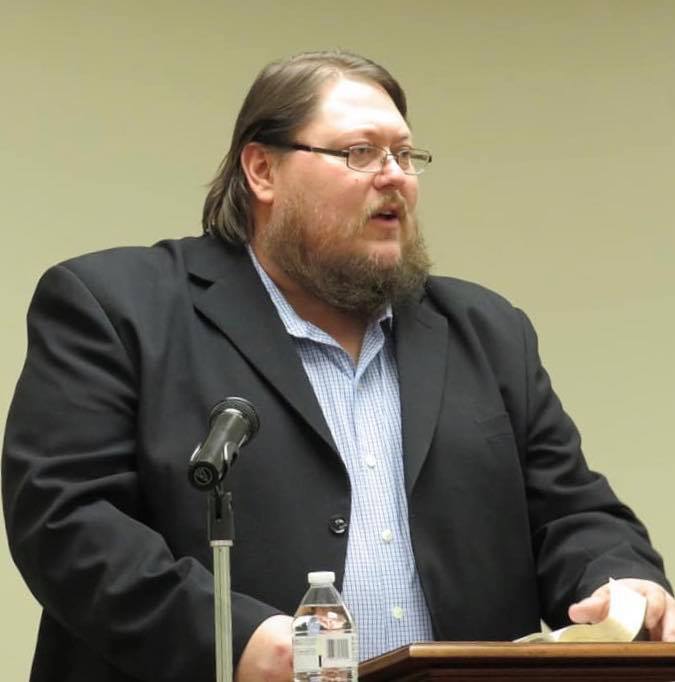
Mikal Smith

Christ's Heavenly Manhood Pt1

1 Timothy 2:5
Mikal Smith October, 23 2022 Audio
0 Comments
Study on Christ's manhood

Sermon Transcript

Auto-generated transcript • May contain errors

100%
I'm going to start reading at
verse... I'm going to be looking at verse 5. I'm going to be looking
at several verses actually today. But I want to read verse 5. It's kind of the foundational
backdrop of what we're going to be talking about this morning.
1 Timothy chapter 2 verse 5 says,
For there is one God and one mediator between God and men,
the man, Christ Jesus. Lord, we just ask you now to
be with us as we open your word and as we present your truth
here this morning, Lord. We know that everything that's
found within these pages is truth. And we pray, Lord, that you would
form our understanding by your truth. that we not lean on our
own understanding. May we not look towards theologians
and commentaries and the teachings and traditions of men to form
the basis of what we believe. But Father, may we find truth
in your word alone and that our doctrines and that our teachings
may be grounded, rooted, found from the pages of your scriptures.
Lord, I pray that you'd help me today to preach truth and
that the things that I preach be error. Lord, I pray that you
would bring to mind to all your brethren that are listening the
truth and that you might bring me into correction, that you
might give me the understanding of what these things mean, that
I might rightly be able to provide it, to be able to share it. But
Father, Lord, we just pray that your Spirit will be among us
to help us The only way that we can accomplish these things,
speaking the truth, hearing and understanding, knowing and discerning
the things that are truth and the things that are not, is by
your Spirit. And so we pray, Christ, that
You would send Your Spirit to teach us today. Lord, we thank
You for these brethren that are here in this day that You've
given for us together, and we ask that You might bless them.
In Jesus' name we pray. Amen. There is only one God and one
mediator between God and men. And that is the man, Christ Jesus. Now I've mentioned to you guys
on many occasions that the Bible, the scriptures say that all scripture
is given by inspiration of God. That means these are God's words.
And God doesn't just throw a bunch of filler in here just to fill
up space. He doesn't make mistakes. He
doesn't put things in here that shouldn't have been here. And
it just happened to get put down on paper. Now it's been printed
for years and years and years and years. This is God's Word,
His preserved Word. We believe that thoroughly. And
I know there's a lot of discussion and debate out there whether
or not we have the preserved Word of God and whether this
is perfectly inerrant. And some people say that only
the autographers were perfect. We don't have a Bible since then
that's been without its issues and stuff. I believe that God's
preserved his word. I believe that we have a Bible
that is inerrant, that we believe that every word of this is inspired
of God, and that he has, as he promised, would keep his word.
The Bible says that his word would continue, that it wouldn't
fail, that it wouldn't go away, that it would always stand, Heaven
and earth will pass away, but my words will always be here.
That's another reason why we don't believe that with the culture
and with the traditions of men and the way that society goes
and the changes that happen within those societies, that God's Word
has to be, well, that don't have any bearing for us today because
that was back for an older time. Now, God's Word stands in every
generation. Remember, I preached just not
too long ago that God's purpose and God's will stands to all
generations, not just the generation that it was written to, not to
just everybody that was at that time period or in that situation. It's to all generations. And
so God's Word doesn't change. God doesn't change, therefore
His Word doesn't change. And it's the only truth that
we have. And because of that, a lot of times whenever we preach
and we teach and we hold to things that we find in Scripture that
are truthful, A lot of people, they don't like that. They won't
agree with that. Their minds either have not been
converted by the Lord if they are the elect of God. Their minds
have not yet been taught of God to understand that rightly. And
until God reveals that and gives them light upon that, they don't
understand that. Or they're a reprobate and they
cannot because they don't have spiritual life. They cannot understand
the things of God. They cannot receive the spiritual
teachings. of what the Word of God says.
They don't understand or nor do they believe God for what
He says and honor God for who He is and for what He has said.
And so we see that a lot of times that the teachings of Scripture
can get you in trouble with a lot of people. It can cause division. Jesus said, you know, that whenever
He came and whenever the people of God believe upon Him, that
there would be division, even among mother and daughter and
father and son, that it would cause division among households,
it would cause division even within the churches. The Bible
says that heresies must come that it might prove those who
are Christ. And so we see that sometimes
whenever you teach and preach the Word of God, those who hold
to something other than the truth, there will be issues. But even
among the people of God, sometimes there are those who do not have
the same understanding of Scripture. And again, I say the reason for
that is because the Lord has not yet shed light upon that
to some or others, one way or the other, okay? It's something
that I preach, that I feel strongly about, that I'm convicted about,
that I feel is what the Scriptures is clearly saying, and I have
thorough Bible to back those things up, If I have that interpretation
wrong, then the Word of God would be able to correct me. And somebody
else may see that error and know that, and they may come and talk
to me and say, hey, you know, I think you're wrong about this,
and here's the reason why. And the Lord does not reveal
that to me. I just don't know. I can't understand.
I can't see that. I don't understand. I don't see
where you're coming from, why that's true, that you're saying
this seems to be the truth about what this is. And so there is
this dependence upon God to reveal these things. That's why we as
the people of God, especially if we have brothers and sisters
in Christ who believe the gospel and on some of these other issues
that we talk about and everything, whenever we disagree with those
or we don't see eye to eye on that, we should be loving and
long suffering towards them. We need to pray that God would
reveal truth, whether it's to them or to us. and that we would
pray that God would grant repentance to the acknowledging of the truth.
So I say all that because what I want to talk about this morning
has a lot of controversy that surrounds it. Matter of fact,
there have been preachers that I know that have ceased to fellowship
with people like me and other preachers that hold to this position
about Jesus. I think that they've done so too quickly because they've not
listened to what we have to say thoroughly. They're jumping to
conclusions, maybe. They're not realizing the implications
of what we're talking about, what the Bible says, the clear
stuff. And that's why I say every word
counts. When we go to the Bible, every word counts. Here in 1
Timothy chapter 2 and verse 5, we see that there is only one
God and one mediator between God and man, and that's the man,
Christ Jesus. And my thoughts immediately on
this go to the fact that the Holy Spirit, whenever He gives
Paul, whenever He's writing to Timothy, to write this down,
He made clear to say the man, Christ Jesus. The mediator between
God and man is the man, Christ Jesus. He didn't say the Word. He didn't say the Spirit. He
didn't say the Father. He said the only mediator between
God and man is the man Christ Jesus. And we've talked about
this before. We know that Jesus Christ, as
the God-man, He is both fully God, fully man. That's how He becomes that intercessor.
He becomes the intercessor by taking on not only his, or having
his divine nature, which he has always had, but taking on upon
himself the nature of man. So therefore, he is fully God,
fully man. Whenever he became man, he did
not put away, as I mentioned last week or a couple weeks ago,
He did not put away His deity. He did not lay aside His divine
attributes. He did not cease being God. He
merely submitted Himself in that form as man to all of the purpose
of God. He submitted Himself to God to
follow out the plan of redemption, the purpose of God according
to election. And so Christ, He never did lay
aside deity. Whenever He is God, He never
does say, well, I'm not fully man. I'm just pretending to be
man. He was fully man. Okay. There are some that teach
that Jesus really wasn't man. Whenever he died upon the cross,
he was just a spirit. It really wasn't flesh. He wasn't
man. Whenever he rose from the dead,
he wasn't a real man. He was just a spirit. He even
did rise from the dead. So there's a lot of controversy
around this, and I understand why some men can become very
concerned whenever they're hearing something different than what
all the theologians of the past have continually regurgitated
over and over and over and over again, and what systematic theology
books have over and over and over again put down, and what
commentaries have over and over again said. Whenever they hear
something a little bit different than what they're used to hearing,
they become a little a little cautious, full of trepidation
before they want to, you know, listen to it or even especially
accept it, you know, as truth. And so we understand that there
is this and we want to be sensitive to that and I in no way want
to belittle anybody or to ever say, you know, because all this
is learned by God. But as I said, this, the Holy
Spirit put this down that there is only one mediator between
God and man, the man Jesus Christ. He put in the word man, Jesus
Christ. Meaning that the mediatorial
work of Jesus Christ as man and God combined into that one flesh, that mediatorial work consisted
of God being in flesh, being man. The whole reason for God
taking on the form of man is to fulfill the offices, the roles,
the character of Redeemer. And within the characteristics
or the role of Redeemer, that's where we see the words the Son.
He is God's Son. How is He God's Son? He's not
God's Son by divinity. He's God's Son by begottenness. God has prepared and begotten
Him. He's prepared a body for Him
and has begotten Him as the firstborn Son. If He's begotten, He cannot be begotten
as God because then He would be a begotten deity. And we know
that the Bible says that He has been forever, that He is eternal.
God never had a beginning. God never had a starting point.
God never had a time in the divine Godhead that God ever began to
exist. He has always been. He is eternal. And He's always been the same
yesterday, today, and forever. Now, this is talking about Jesus.
Yesterday, today, and forever. And somehow, I don't know how
to explain this, and I don't have a full grasp on even all
of what I'm going to talk about today. But I just know one thing
is that Christ assumed this manhood as our mediator before the foundation
of the world. He didn't start this manhood
at Bethlehem. He was born of a virgin, and
I should probably say at the outset of this, I truly believe
that Jesus is fully God, that He is divine, and that He is
fully man. I also believe that Jesus was
born of a virgin, and that by the Holy Spirit, that the Holy
Spirit overshadowed Mary. We're going to talk about that
and everything, and that Jesus was made in the fashion of a
man. I believe that Jesus was born
of a virgin. that Mary had not had any relations
with the man. Therefore, Jesus was not born
of Adam. But I also believe that Jesus
didn't have anything from Mary. Mary didn't have anything in
Jesus. Otherwise, he would have been
on the earth earthy. So we're going to talk about that here
in just a few minutes. So I believe in all those cardinal doctrines
that Jesus Christ is not just a spirit. that Jesus Christ was
not just pretend man, he was truly man. And I don't believe
that he put away his deity, I believe that he continued in his full
deity, and that he suffered as a man, that he was tempted as
a man, and that he felt everything that man feels so that he might
be are mediated, that He might be our God who sympathizes with
how we have been and what we are going through and what we
know. I believe that Jesus is that,
but I believe that Jesus Christ assumed this manhood before the
foundation of the world because there, again, If Christ stood
as the land slain before the foundation of the world, that's
in a mediatorial office. If Christ stood as the mediator
between God and man in the everlasting covenant, he stood as the God-man
because there's only one mediator. The Word, that person of the
Godhead, and I say person, I believe that the Godhead, that God is
one, and that the Godhead is shown forth in the characters
of the father and the word and the holy ghost and these three
are the record bearers that are in heaven that bear record of
who christ jesus is and who god is and these three record bearers
are found in their fullness in christ jesus that he is the embodiment
of that godhead i don't understand the godhead i'll be honest i
don't understand the godhead i just know what the scriptures
say that there is only one god and that that God is shown himself
as Father, as Word, and as Holy Spirit. And that God is invisible
and it cannot be seen. But yet that God inhabited a
body and all the fullness of that Godhead was found in the
man Christ Jesus. And we see that within that man,
Christ Jesus, all the fullness of the Godhead dwelt bodily,
but He also submitted Himself as a servant like us, becoming
a man, and that in that He dwelt as the God-man. And the Bible
says that as that man, Christ Jesus has been the mediator from
all time. So we don't find any references
in the Scriptures anywhere where the Word has been our surety,
where the Father has been our surety, or where the Holy Ghost
has been our surety. The only thing that we have ever
heard of the references of the surety, of the mediator, as the
redeemer, as the king, as the prophet, as the priest, as the
sacrifice, as the lamb, as our propitiation, and all the terms
as son, All the terms that have to do with Christ in His role,
even the word Christ, Messiah, all these refer to God as man,
in His role in man. So all the what we would call
pre-incarnate references to God speak of Him as the three-one
God, Father, Word, and Holy Spirit, in Christ Jesus, or all the pre-incarnate
speaks of that 3-1 God. But whenever it speaks of Christ,
it's that 3-1 God manifested in the flesh. And I don't believe
that the Scriptures get confused. I don't believe the Holy Spirit
is confused when it gave the writers to write about Christ
in His offices, Christ in His roles, Christ in His duties within
the redemption, whether it's God as He ordains all things
and God as He elected us and then gave us to Christ, the Holy
Spirit who gives us understanding and quickens us and teaches us
and seals us and keeps us and makes Christ known to us. All
those things, I believe, are all found in Christ Jesus. All
the works of God are found in Christ Jesus. And I believe the Bible bears
this out. Whenever it speaks of the works
of Christ, it speaks of the works of Christ as the God-man. A body was prepared. The Son was brought forth or
begotten of God. And we never hear these terms
used as Word, Father, and Spirit. as it pertains to the redemption
of God's elect. It's only the man, Jesus Christ. And the reason for that is because
there is only one Mediator. The Word is not the Mediator.
The Spirit is not the Mediator. The Father is not the Mediator.
God, that Godhead that is made up of Father, Word, and Spirit,
has become Mediator through the man, Jesus Christ. So turn with
me, if you would, to Isaiah chapter 9 and verse 6. Isaiah chapter 9 and verse 6. It says, For unto us a child is
born. Now here we're talking about
two. We're talking about Jesus. We're
talking about Him being born Unto us a child is born. So when
was Jesus born as a child? Well, that was in Bethlehem,
right? So now we're speaking of Christ's humanity or Christ's
manhood as it pertains to being born of Mary. It says, for unto
us a child is born. But if you'll notice, the child
that's being born is a son that's being given. See, Christ was
born of Mary and therefore was basically Mary's child, legally
was Mary's child. But the Bible here says that
for unto us a child is born, unto us a son is given. God's son, Christ The man, God-man, is given as
that child. So in my mind, in my understanding,
that the child that was born was the son already to God, therefore
he already had manhood. Yet he was given to us as a child. And then as a child he grew in
stature. And he grew in grace with the
Lord. It says, For unto us a child
is born, and unto us a son is given, and the government shall
be upon his shoulder, and his name shall be called out. Here's
the other names of Christ, the Son, the God-man. The God-man. Now remember, who are we talking
about? We're talking about Jesus. For
unto us a child is born, unto us a son is given. So we're talking
about God already manifested in the flesh. Who is this? And here are some of the names
given to the God-man. The one manifested in the flesh.
Wonderful. That's why we sing the song.
His name is wonderful. His name is wonderful. His name
shall be called Wonderful. But the Bible also says that
His name shall be called Counselor. Didn't Jesus say that if I go
away, the God-man goes away, I will send unto you another
counselor? And then later in John chapter
14, the Bible says that I will send myself to you. He said,
I will come to you. Well, wait a minute, I thought
the Holy Spirit was coming. That's another person that's coming. Now, Jesus said that I will send
another counselor. I'm here in the flesh as God-man,
but I, Jesus, will come to you as my spirit. I will come to
you, but I will come to you as spirit. I will come to you in
the spirit. And so he did come. And he, what
is the counselor? He is wonderful. He is the Counselor. Look at here, the Mighty God. We know that Jehovah revealed
Himself to Abraham as the Mighty God, the Almighty God. And the
definite article, the, is there. The Mighty God. So Jesus, the God in flesh, is
the mighty God. He is the mighty God. If you
speak of the mighty God, you're speaking of Jesus. If you speak
of Jehovah, you're speaking of Jesus. Jesus is the mighty God. He is Jehovah. He is Yahweh.
He is the triune Godhead in flesh. He is the God-man. And He shall be called Wonderful
Counselor, the Mighty God, looky here, the Everlasting Father. Now that's odd because a lot
of people want to distinguish the Father, the Son, the Holy
Ghost. But the Bible says that the Triunity
of God is the Father, Word, and Holy Spirit, and these three
are one, and that one God is revealed or manifested or shown
or imaged in the man Jesus Christ. You can't see the invisible God.
Father, Word, Spirit, that Godhead, that one God that is Spirit,
you can't see Him. No man has seen God at any time.
The only person that has ever been seen that can be said to
be God is Jesus Christ. And it says here that He is the
everlasting Father. Jesus said, if you have seen
Me, seeing the Father. I and the Father are one. And here we see that the Child
that is born, the Son that is given, is not only the wonderful
Counselor, but He is the mighty God, the everlasting Father. And here it is, the Prince of
Peace that speaks of the role of Jesus as our Redeemer. He's
the one who brings peace between God and man. He's the one who
brought peace between us and the Father. We were at enmity
towards God. Jesus Christ is the one who brought
peace to our heart so that we would no longer be at enmity
with God. He also brought peace in the
fact that God who is holy and we who are sinful can be brought
to be with God because He has removed the enmity between us
He has removed the sin that was the barrier between us and God
that keeps us from coming to God. He has removed that. Therefore,
God can justify us and have fellowship with us because Christ has removed
that barrier of sin, that barrier of death. There is no sin. There is no death that can keep
us. He is the Prince of Peace. This speaks of Jesus the man.
So it is the man Christ Jesus who is the mediator of that covenant
and stands as such as long as that covenant has been. So however
long that everlasting covenant has been brought forth within
the Godhead, Jesus Christ has assumed that
manhood, that role as God-man, because there is only one mediator.
A testament is not mediated upon one. It's a mediation between two.
And we see here it's a mediation between God and man through the
God-man. God didn't covenant with us individuals. He covenanted with us through our head, through our
surety, Jesus Christ. Jesus stood on our behalf in
that covenant. The covenant was, here's my law,
it must be kept fully. Here is perfection. Righteousness
must be established. If there is no righteousness,
all those who are unrighteous will die. All those who sin,
they shall surely die. and all have sinned and fallen
short of the glory of God. But yet Christ stood on our behalf
as our surety, as our mediator, as the God-man. He stood in our
place as our righteousness, as our perfection, our law-keeper. He stood as that. Our righteousness
comes from Him. Therefore, as long as that covenant
with God has existed, Jesus has been standing in that role as
the God-man. If the man Christ Jesus has stood
before the foundation of the world as mediator, not to mention
the lamb slain from the foundation of the world, then it seems to
me that the man Christ Jesus was begotten, brought forth,
and a body prepared before the foundation of the world. Now,
all this got me thinking whenever I was actually preaching several
years ago through the book of John. And in John chapter 1,
if you'll turn with me, John chapter 1 and verse 1, you see something about the Word
of God here. John 1, verse 1, it says, "...in
the beginning was the Word, and the Word was with God, and the
Word was God. The same was in the beginning
with God. All things were made by Him,
and without Him was not anything made that was made." Now, who
made all things? The One who was God and the One
who was with God. The Word in flesh. That's Jesus
Christ. Jesus Christ made all things. We know that the Scripture is
very clear on this. That Christ made all things.
Jesus. Now again, brethren, Jesus, the
Word made flesh, the Word incarnate, Emmanuel, God with us, the God-man refers to Jesus in
His manhood. And it says here that Jesus in
His manhood was the one who created all things. So therefore, if
Jesus created all things, then that means that Jesus, the God-man, existed before the foundation
of the world, because all things were created by Him and for Him. So notice, though, if you would,
it says that the Word was with God and was God. Now, the Word
was God. I take that to mean that He self-existed
as God. The Word was God. He was already God. He has always
been God. The Word is God. So He self-existed as God. As being part of that Godhead,
He self-existed. And we clearly know that the
Word was God. It says right here, for the Word was God. Now, we know the Word. We know
that the Holy Spirit, we know that the Father, the Bible says
that these three are one. So, how can somebody be God,
but be with God? He was God, but how was he with
God? Well, I think that's what the
second part was. was God, and He was with God. The Bible says that there are
three that bear record in heaven, the Father, the Word, and the
Holy Ghost, and these three are one. So I find that to mean, in John
1, that this self-existed God, who is Spirit, who is invisible,
who cannot be seen, found a spatial presence with
God, a physical presence with God, through becoming man. And through that body, through
that manhood, Christ created all things. He, in the beginning,
was the Word, and the Word was with God, so the Word existed
before all things. The Word was God, but the Word
was also with God. How was the Word with God? I
believe He was with God in a spatial existence, in His manhood. If we look at Colossians chapter
1 verse 6, we'll see that they kind of corroborate some of this. Turn with me to Colossians chapter
1. Look with me if you would, verse
16. Now, we know that this first chapter
here is speaking of Christ Jesus. It says, for by Him, and again,
the context here is speaking of Jesus Christ and His preeminence. for by Him, Christ Jesus, Jesus
Christ." Now, if you don't see that, if you don't believe me
on that, go back and read the first 15 verses because we start
here. Verse 12, giving thanks unto
the Father, which hath made us meet to be partakers of the inheritance
of Satan's light, who hath delivered us from the power of darkness,
and hath translated us into the kingdom of his dear Son, speaking
of the God-man, in whom we have redemption through his blood,
even the forgiveness of sins, that's speaking of the Redeemer's
deaths, okay, so we're again talking about the God-man, who
is the image of the invisible God. We know that the Bible clearly
teaches that Jesus is the image of the invisible God. The firstborn
of every creature, keep that in your mind, the firstborn of
every creature, for by Him were all things created that are in
heaven and that are in earth, visible and invisible. whether
they be thrones or dominions or principalities or powers,
all things were created by Him and for Him. And He is before
all things and by Him all things consist." So Paul identifies
the Creator of all things as Jesus Christ. Now we know back
in John chapter 1 that speaks of the Word made flesh. The Word
who was with God is the one who created all things. So who was
the one who was with God? Jesus Christ. The God-man in
flesh. The God-man already assumed manhood
and was with God, as God, but with God in that form, in that
body. Why? Because He's the one that
created all things, visible and invisible. Why? Because He is the firstborn of
all the creation. He is the firstborn
of every creature, and He is before all things. Jesus Christ
was before all created things, but yet He is also the firstborn
of every creature. Now, that's not me speaking.
Now, I know a lot of people are going to say, Heretic, Heretic,
Heretic, and they're going to use these names Way back when,
and when all the councils of the Catholics got together to
try to put forth all these different doctrines that, for some reason,
non-Catholic people like to hold to. This clearly says that Jesus,
who is the image of the invisible God, is the firstborn of every
creature. It didn't say the firstborn after he was born from Mary. It didn't say that he was the
firstborn of just people. It says he is the firstborn of
every creature. Some people are going to say, I say, yes. The man, Jesus, was
surely created. The Bible even says, a body hast
thou prepared for me. Made. He was made in the image. That means that there was no
body. Now there is a body. Where did
that body come from? God is the Spirit. How did God
manifest Himself in the body unless God the Spirit prepared
the body, made the body, fashioned the body, created the body. That's where people are going
to start partying and saying, I don't think this is right.
This is some sort of heresy. But look, the Bible clearly said
this, that who was the one who was before all things? Christ. Well, Christ is only known as
the God-man. Who is the One who was before
all things and created all things? Jesus. The One who was God but
is also with God. I'm not saying that Jesus was
not God. That's not what I'm saying. Jesus
was God. But He was also with God. How was He with God? In the very fact that He was
God manifested in the flesh. Now, some people are going to
say, well, I think you're taking that a little further. I think
that it means that he was the firstborn and being raised from
the dead. Well, look with me in Revelation
chapter 3. In Revelation chapter 3. Look at verse 14. The Holy Spirit
who came and had John write these things, and this is a letter
that he wrote to the Laodicean church. It says, And unto the
angel of the church of the Laodiceans write, These things saith the
Amen. Who's that talking about? Does
anybody know? Who's the Amen? Church? Nope. Who was the one
who came to tell John to write these things? It was Christ. These things were given from
Christ. So Christ is the Amen. The one
who is telling John to write these things are the things that
come from Christ. Christ is the one who is dictating
these words. That's why He's called the Word.
All the things that are written in the Scripture that are inspired
by the Spirit are the words of Christ, God's words. And if they're
God's words, they're Christ's words, because Christ is God.
It says, these things say at the Amen, the faithful and true
witness. Ah, so here we see the faithful
and true witness. We know that the Bible talks
about Jesus being the faithful and true witness. Well, we won't follow that rabbit
trail. But we know this is speaking
of Jesus, but look what it says here. These things say at the
Amen, the faithful and true witness, the beginning of the creation
of God. So Jesus is identified here as
the beginning of the creation of God. When God began to create
things outside of Himself, outside of the Spirit, which was God,
when He began to create, the first thing that He created was
the man that He would inhabit, Jesus Christ. And then by that man, all things
were created after Him. He is the first creation of God,
Is that not what was said in verse 15 of Colossians 1? That He is the firstborn of all creatures? Jesus is noted as the beginning
of the creation of God, but it's not the first time this has been
recorded as we've seen in verse 15. So, this is kind of what
helps me understand John 1. The Word was made flesh and dwelt
among us. Now, go ahead and go back to
John 1. I know this is probably confusing
and probably erratic. I apologize. I'm just not a smart person.
Nor very organized one. in John chapter 1. Go back to
chapter 1. And we see here in verse 14,
it says, And the Word was made flesh and dwelt among us, and
we beheld His glory, the glory as the only begotten of the Father,
full of grace and truth. I, John, bear witness of Him,
and cried, saying, This was He of whom I spake. He that cometh
after me is preferred before me. For He was before me." Okay? So now let's look at this. It's
a little more into what we're talking about here. Note this. The phrase, the Word
was made flesh and dwelt among us. We mostly connect that verse
with Jesus being born in Bethlehem. But nowhere does it talk about
that. Nowhere does it even hint that this is talking about when
Jesus came in Bethlehem. Matter of fact, again, as we
look at this passage at the very beginning, We see the Word was
with God. The same was in the beginning
with God. All things were made by Him. This is talking about
before the foundation of the world. So we don't have anything here
that tells us that this being made flesh only took place at
the place of Jesus' birth in Bethlehem. When was he made flesh? Well,
does the Bible talk about that? Well, we just read two verses
that said he was the beginning of the creation of God. That
he was before all things. So that manhood, that body, that
flesh that he took upon, whatever kind it was, which I would say
it was a spiritual body, whatever that body was, it was surely
It was surely before the foundation of the world. But that body did
come. He did come as man and dwell
among us. And he did that before Bethlehem. You say, well, wait a minute. You mean Jesus was here before
he was born in Bethlehem? Well, absolutely he was. There's
a ton of verses in the Old Testament that tells us these things that
we'll get to later. It says, "...and the Word was made flesh
and dwelt among us." Now, it does not say that He assumed
this at Mary, at the birth with Mary. We've seen that Jesus is
the firstborn of all creation. If He would have been born of
Mary brethren, He would have been of the earth earthing. There's
no timeline revealed whenever He was made flesh and when He
dwelt among us. It merely states the fact that
the Word became flesh and that God in flesh dwelt among us. God dwelt among His people in
the Old Testament. But notice, secondly, that John
said, and we beheld His glory. Whose glory? Now, open your Bibles and follow
along with me, because if you just kind of tune out, you're
not going to hear what I'm saying, and that's where a lot of people
get a misunderstanding of what we believe about these things,
and they begin to think that we preach heresy, or just automatically
tune us out and say, well, that's wrong, I ain't listening to that
guy, whatever the case might be. But look at what it says
here, and let's look at the context, and let's have some exegesis
and not eisegesis. Let's exegete the Word. And the
Word was made flesh and dwelt among us, and we beheld His glory. Whose glory? The Word made flesh. Who's the subject here? The Word
made flesh. Who is the Word made flesh? Jesus. Now does that hold up to scrutiny?
Absolutely it does. And we beheld his glory. And
it says in verse 15, John bear witness of him. And Christ saying,
this was he of whom I spake. So John bore witness of this
person. So we know it's speaking of Jesus
Christ because John was the one who came bearing witness of Christ
before. He was the forerunner of Jesus
Christ. That was his purpose. He purposed that for the foundation
of the world, prophesied about it in the Old Testament, and
brought it to be at the exact time it needed to happen. Therefore,
John was born six months before Jesus was. John actually existed
in here, so to speak, before Jesus was. But notice what he
said here. John bear witness of Him and
cried saying, This was He of whom I spake. He that cometh
after me, I'm preparing His way and the one that I'm telling
you about that's coming after me is preferred before me or
has prevalence or has superiority over me. Why? For He was before
me. How is Jesus before John? If we're talking about being
born in the womb, how is Jesus before John? Because John was
born before Jesus. John was born six months before
Jesus. John's mother conceived and had
John in her belly ready to be born in nine months before Jesus
was conceived in the womb of Mary. So how is Jesus, the Word made
flesh, the only begotten of the Father, full of grace and truth,
the one who is preferred before John, The One who was before
John. How was He before John? Because
He was God. Manifested in the flesh before
John. He was manifested in the flesh
in His heavenly manhood. Look there at verse 14. And dwelt
among us and we beheld His glory. Now what glory? What glory is
it that they beheld? Because if you remember, whenever
Jesus came, Jesus came lowly, a man of sorrows, no comeliness. We talked about that last week.
Right? Jesus came and nobody would even
think about Him, to worship Him or anything. But yet it says
here, we beheld His glory. It tells us. the glory as of
the only begotten of the Father." What glory was it that they beheld? The glory of God manifested in
the flesh. They beheld the glory of God
in flesh, which Paul said is a mystery. That God was manifested
in the flesh. How is God who is eternal, how
is God who the Bible says that the heavens of heavens cannot
contain He manifested in the flesh. I don't know. But He was. And they beheld the
glory of God being manifested in the flesh of the man Jesus
Christ. And it was this man that the
Bible says was before John. It was this man who the Word
was made. And it was this man who was with
God. Because He was God. So He existed before as man. So I'm convinced that Jesus is
the image of the invisible God, that His flesh was prepared,
was given, and was manifested before His birth in Bethlehem.
Now, what happened in Bethlehem was a glorious thing, brethren.
It was a glorious thing. But while we're talking about
what was going on in the beginning. Him being with the Father, creating
all things. Let's go back to Genesis chapter
1. Can we find this found in the
Scriptures in other places? In the mouth of two or three
witnesses, a thing established. We've already seen it in two
places, three places. Let's see if it's found anywhere
else. In Genesis chapter 1, and look with me if you would at
verse 26. It says, "...And God said, Let
Us make man in Our image, after Our likeness, and let them have
dominion over the fish of the sea, and over the fowl of the
air, over the cattle, and over all the earth, and over every
creeping thing that creepeth upon the earth." So God created
man in His own image. In the image of God, created
He Him, male and female, created He them. God said, let us make man in
our own image after our own likeness. So God created man in His own
image. I'm fully aware that many take this to mean that He created
them as a moral, rational, thinking people. That's what I've heard
most of my life, that He's made them with body, soul, and spirit. I do not deny that the Scriptures
say that we are made of body, soul, and spirit. But brethren,
Whenever God says let us make man in our image, does that mean
body, soul, and spirit? Does the Bible say that there?
Let's make man in our own image? See, it's presupposition that
leads us to think those things. Now, I would have no problem
with the fact that God has made us to be moral, rational, and
thinking people. Mind, emotion, will. Again, the
will that we have is according to the nature that we have. Our
will is a will that's bent towards self-righteousness. We want to do whatever makes
us look good. Pleases us. Satisfies us. But, brethren, the word image
does not refer to things like mind, emotion, and will. Them
are not images. An image is something that is
a form, that is a likeness, that is something that is... If I told you to make an image
of this cup, would you just describe the cup? No, what would you do? You probably
would either take a pencil out and you would draw an image. Or you would take some clay and
you would form it into a cup. Or you would take some paper
mache and Make a cup. Something. But you would make
a form or a fashion, you would make something in the image of
this cup. An image is an image. It's something
that's to be seen. It's something to behold. We
beheld His glory. We saw. We looked upon. We felt. We handled. He had reality. He wasn't a spirit that was here
that looked like a man. He was man. And so an image is
something that is not body, soul, or not soul, spirit, not mind,
emotion, and will. That's not an image. The word
image means an image or a likeness. Likeness means a resemblance.
Now if somebody says that we were made with body, soul, and
spirit, I say, okay, well, I can go with that. Jesus had a body,
he had a soul, and he had spirit. But everybody wants to say we
were made body, soul, and spirit. Mind, emotion, will. We were
made moral creatures. But where's the body part? If
we were made body, soul, and spirit, what about the body part?
That is what image means, though, by the way. But it seems many
dropped the body part. They say it cannot mean that
since no body was given to Him until Bethlehem. See, they immediately
try to equate that. Oh, well, it can't be meaning
His body because that didn't happen until Bethlehem. Well,
we've just seen that Jesus had manhood before He was born of
a virgin. Jesus had manhood before that. That He assumed the body likened
to His servants. He assumed a body that was prepared
for Him that would look the same as the body that His servants
would have. But He was made first, and we
were made after Him in His image. God said, let us make man in
our image after our likeness. But if we search the Scriptures
also, brethren, we'll find that every place that the Bible speaks
of the image of God, it always speaks of Jesus Christ. The image
of God is found in Jesus Christ. He is the image of the invisible
God. Now, there's a lot more that
we can explore about that, about Him standing as the Lamb slain
before the foundation of the world. Only as the Son of Man,
as Jesus, as the Christ, the Messiah is He to sacrifice, the
surety, the mediator, the substitute. All those names refer to God
in the flesh. So as long as He has been our
surety, our mediator, our Lamb slain, He has had manhood. And therefore, there is only
one God and one mediator between God and man, and that is the
Man, Christ Jesus. That was just the introduction.
Next week, we'll take up with the rest of this. I just wanted
to begin that today. It took an hour to get there.
But there are several verses that we have throughout Scripture
that teach us this very thing. And I hope, by God's grace, to
be able to do that next week. So if this has piqued any interest
in anybody, that you may not have heard this or read this,
come back for next week. finish for what we believe, why
we believe these things. And this isn't nothing new. I
mean, I'm not preaching something that's new. I mean, there's been
brethren that has preached this down through time that we can
find record of that has preached this. I know lots of brethren
that are here today that believe these things. Are they on TV
and radio? No. They're not. But most of
the guys on TV and radio don't believe the gospel either. So
anyway, we'll pick up. Does anybody have any questions
or anything? I know that was kind of a little bit convoluted,
trying to go back and forth, but I apologize for my weakness. It's not the weakness of the
scriptures, but it's my weakness. Anybody got any questions? Comments? Anybody watching, if you have
any questions or comments that you would like, I would be glad to take those
comments if you want to message me or leave in the comments there. I don't particularly desire to
have an open debate on our Facebook page there, but we can have a
discussion in private if you want to have that and everything.
I'm always open for correction. Anyway. Nobody? All right. Father, we thank you again for
this day and we thank you for Christ Jesus. We thank you for the work
that he has done on our behalf. We thank you for all that he
is in us and for us. The world that we're created
by him and for him. We give him praise. By Christ Jesus, the man, every
knee shall bow and every tongue shall confess that Jesus Christ
is Lord. that He is Jehovah, that He is Yahweh, that He is
the Everlasting Father, that He is the Prince of Peace, that
He is the Mighty God, that He is the Wonderful Counselor. Every time we'll confess that
Christ Jesus is Lord. And Father Lord, we just pray
that all men will see Your beauty and Your glory in the work that
You have done as the Son as the God-man, you manifested
in the flesh on our behalf, assuming the role of a servant and finding
equality as God, not robbery, because you are eternally God. And so, Father, we just ask that
you just might speak to our hearts, teach us, give us understanding. of this
mystery which is God manifested in the flesh. Give us understanding
as best as we can in this feeble mind and feeble body, Lord, what
it is for God to take on flesh and to dwell among us. You are
Emmanuel. You are God with us. You have
promised that you would make your place, your presence in
your tabernacle, which is your people. We are the lively stones that
You have built for Yourself, not made with hands of man, but
made by You. You have built us up and You
have dwelt among us as long as we have been Your people. And
so, Father, we thank You for that. We thank You for our union
with Christ Jesus and the salvation that comes by Him. And it's in
His name that we pray.

Comments

0 / 2000 characters
Comments are moderated before appearing.

Be the first to comment!

Joshua

Joshua

Shall we play a game? Ask me about articles, sermons, or theology from our library. I can also help you navigate the site.