Bootstrap
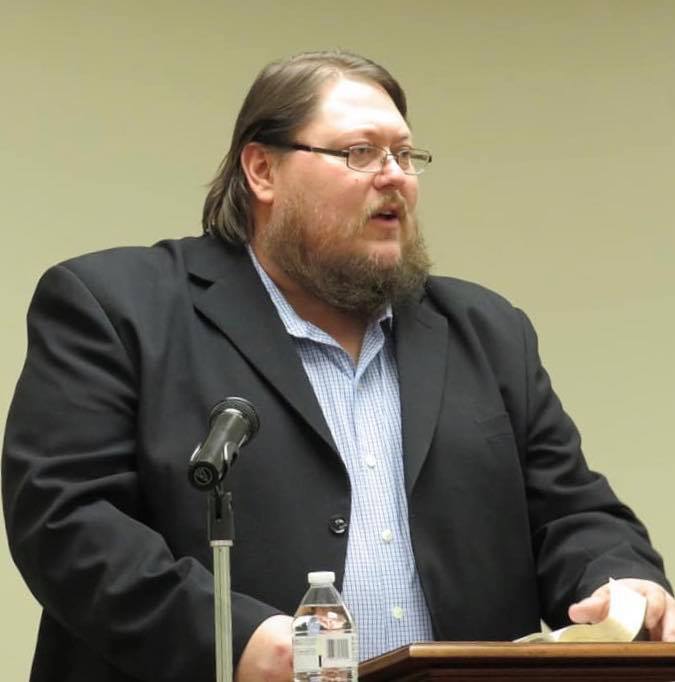
Mikal Smith

The Purpose of God is Eternal

Psalm 33:11
Mikal Smith October, 6 2022 Audio
0 Comments
Preached at Bethel Baptist Church in Choctaw, OK.

Sermon Transcript

Auto-generated transcript • May contain errors

100%
We've been here, I think, a couple
years. It's good to be with y'all again. Thank you ladies for the
food that we had tonight. It was wonderful. Everyone else
that was involved in it, I always say the ladies, I don't know,
men might be involved in it as well, so we always thank you
for that. The hospitality, the hotel rooms,
man, it's wonderful to have a hotel just right down the street and
not have to Fight through all the traffic in Oklahoma City
to get here. It's a blessing. Thank you so
much again Turn with me if you would this evening over to Psalm
33 Psalm 33 Whenever I sent my messages to
Brother Royce, I sent this message along with another one that was
actually going to be one sermon that I was going to preach at
my church, and yet it seemed it was going to be too long,
so we split it into two parts. And so I thought, well, I'll
just give him both of those, and I'll make a two-part sermon
there, and maybe he'll pick that one. The Lord led him to it,
so I'm glad he did. But a wonderful study that the
Lord brought me through, and a comforting one. When we speak
of the sovereignty of God, when we speak of the efficacious nature
of Christ's death, when we speak of the victorious work that Christ
has accomplished, finished, On behalf of His people, it's comforting
to those who have ears to hear. There was a time in my life that
it was a troubling message to me, a message I didn't like to
hear, that I didn't care for at all. You can ask Tom. We had
a few conversations back and forth. I didn't like the message
at all. But I thank the Lord that He gave me a heart and a
mind to understand these things and to love them, and I do love
these things. You know, Brother Tom, I don't
know whether to call you Brother Tom or Uncle Tom. You'll answer to any of them,
right? I've often been called a mystic
as well. And most of the time, the guys that call me a mystic
call me a mystic because I believe that the Holy Spirit can teach
somebody without the aid of a man. And that the Holy Spirit can
quicken and convert and grant repentance and faith without
the work of any man. And people say, well, you're
just a mystic. How in the world can that happen without somebody
being there to do the job? Well, praise the Lord that he
does it in spite of men. Brother, I'm glad to be called
a mystic if that's what one is called. But brethren, as Brother
Tom said, all we have is the Word of God. That's where truth
is found. Truth isn't found in your pastor
or me or any other pastor. Truth isn't found in a confession
or a creed or a commentary or a cemetery. Truth is only found
in God alone and He has given us His word. He is revealed.
Is this all the truth that there is? I don't know, He's only given
us this. But everything that He has given
us is truth. And the only truth. And if it
doesn't coincide and go along with what this truth is, it's
not truth. No matter how many books are
written about it, no matter how many theologians says it is,
This is God's Word, it's the final authority. And so we want
to look to God's Word tonight to see what it has to say about
our God. If we wanna know anything about
God, we gotta go to where it's told to us, right? We gotta go
to His Word. He has revealed Himself to us.
Now the Bible says that can a man find out God by searching? And
that's a rhetorical no. No, we can't find out God by
searching. We're never gonna find the end
of it, and we're gonna never exhaust it. We can't do it. But
praise the Lord, He has revealed Himself to some degree in His
Word, and what we believe about God must come from here. Not about what comes from in
here. The heart is deceitfully wicked above all things, and
who can know it? Our heart wants to tell us about
a God that is kind of conformed to us, right? What we like. But yet, whenever we come to
find out anything about the Lord, we've got to come to find out
what He has revealed about Himself. And whenever we find in Scripture
that God has revealed something about Himself, if God so give
us an enabling to do so, we submit to that. And we say, well, whatever
I thought, or whatever I learned, or whatever grandma told me,
or whatever, you know, aunt or uncle so-and-so said, or whatever
anybody said, that's different, I'm going to have to just turn
away from that, that's not truth. And so tonight we want to look
and see what does the Bible say about God and His purpose? What
does God say about Himself and about everything that He does?
So turn with me to Psalms 35 or 33 and I'm going to start
reading actually in verse 8, but we're going to mainly be
looking at verse 11. This is going to be the background
to lots of verses that we're going to look at tonight, but
I want you to turn fast with me because I want to move fast
through these verses to show some of these things. Psalm 33
and verse 8, it says, Let all the earth fear the Lord, let
all the inhabitants of the world stand in awe of Him. One of these
days that is going to happen, brethren. It's not happening
now, but one of these days that's going to happen. For he spake
and it was done. He commanded and it stood fast. Can't say that about anybody
else. The Lord bringeth the counsel of the heathen to naught. He
maketh the devices of the people of none effect." You think the
world's going out of control? You think what's going on in
our country right now with what the leaders that we've got is
crazy and that they're just going to run it all into the dirt?
Listen, they're not doing anything that the Lord has not purposed
for them to do. Everything is by His purpose.
And he is the one who has set them up. He's the one who will
take them down. And so they can't do anything. He bringeth the counsel of the
heathen to naught. He maketh the devices of the
people of none effect. They think they're going to throw
him out. They think they're going to You know, get everybody to
move away from God and all these types of things. Let's quit having
prayer. Let's quit using God's name.
Let's get Him off our money. Let's do all this stuff. Listen,
they can do all those things, but one of these days He's going
to bring the heathen and their counsel and their devices to
nought. And here we go, verse 11, the counsel of the Lord,
it standeth forever. The thoughts of His heart to
all generations. Now tonight, we're gonna use
this backdrop in my next sermon that we're gonna use as well,
but I mainly wanna focus here in verse 11 on the portion that
says, the counsel of the Lord standeth forever, the thoughts
of his hearts to all generations. If you noticed in your bulletin,
tonight is the purpose of God is eternal, and my next message
is the purpose of God is immutable, and I think we find both of those
in this passage. We can see that in both these
passages. But first I want to talk about the eternality of
God's purpose. Now, whenever we look in scripture,
the words thought, the words counsel, the words purpose, God's
will, God's pleasure, all those things, a lot of times we can
kind of get murky with those and we seem to always use those
interchangeable. Matter of fact, the Bible does
use those interchangeable in some areas. Matter of fact, if
you look at the Greek and Hebrew behind some of these words, you'll
find that those other words are used in the translation of the
scriptures. You'll see they're translated
those words in other places. But I'm compelled to say that
even though those words are interchangeable in God's Word, and even though
those have very close similarities in their definitions and how
they're used in Scripture, I'm compelled to think that there
is a little bit of difference, there's some nuances between
them things, and I believe that they, if you allow me this, because
it's hard to speak of this when you're speaking of eternality,
but I believe that there is a progression in how they work. know the Bible
says in Proverbs that the, that the, that the counsel is, or
the purpose is, is, well it just went out of my mind. The purpose
is governed by the counsel of God. That the purpose is governed
by the counsel. So if the purpose is affected
by the counsel, then that means there's something different between
those two things. And here we see the thoughts
of God's heart is to all generations. The counsel of the Lord stands
forever. The thoughts of His heart to all generations. Is
there a difference between them? And I think there is enough there.
And I may be wrong about this, and I'm always open for correction
whenever I might misspeak of these things. And I pray that
God Gives me to speak truth. But as I've been given to understand,
the thoughts of God seem to speak of the ideas of God. The inmost
motive and desire of God. Now whenever I say desire, I
don't mean desire as though something is missing or deficient in God. But desire as in a directed,
deliberate, and self-sufficient motive to act. Whenever the Bible
uses thought, and I believe that kind of coincides with His will,
that it speaks of the inner motive of God, His deliberate, self-sufficient
desire to act, okay? At some point, God desired, or
determined, or said, I'm going to create. And He did. And he said, I'm gonna create
this, and I'm gonna create it just like this, and that's gonna
happen this way, and this is how it's gonna end, which we'll
get to in a minute. But God had a thought, a desire
to act, but it was a self-sufficient desire. It wasn't something that
was coming from the outside, coercing him. We know that God
is self-existent. He is the I am, that nothing
affects him, nothing makes him do what he does. He does what
he does because it's his own will. It's his own pleasure.
I see the counsel of God speaking of the determining within that
Godhead an orderly way to carry out the thoughts and motives
of God. The Godhead counsels within itself. It doesn't take
counsel outside of itself. The Bible says that who can be
God's counselor? Nobody can. God doesn't take
counsel from anybody. We like to try to give God counsel,
but God doesn't take counsel from anybody. The only counsel
that God has is within Himself. And so therefore, the thoughts,
the desires, that self-motivated will of God or desire of God
to act is then determined and is carried out, and His motives
then become action. And then we see the purpose of
God, and I believe that that speaks of that determined plan
that comes out of the counsel of God, and then that decree
to accomplish the thoughts of God's heart. His purpose is what
God has counseled to do that has come from the desire of His
heart. And so His purpose, the Bible
says here, The counsel of the Lord standeth forever the thoughts
of His heart to all generations." So the desire of what God has
determined to do within the counsel of Himself has become now a purpose
and God has set that into action. And God moved upon the face of
the waters. And He said, let there be light.
And from there on, and here we are today, and it's going to
reach on in until he comes back again. God is doing whatever
he's doing, and it all comes back to the thoughts of his heart. But it says here that the thoughts
of his heart is to all generations. Now, at first glance, we might
pass by this, but brethren, if you think about it, the only
way that God's thoughts can be to all generation is for those
thoughts to have taken place before generations began. So
when generation one started, God's thoughts were already made,
counseled, and a purpose in place for that generation to know,
and to experience, and to see, and if by His grace, praise and
worship. Luke, if you would with me to
Isaiah chapter 46. Isaiah 46, starting in verse
9, the Bible says, Remember the former things of old, for I am
God and there is none else. I am God and there is none like
me. Now that ends all debate about other gods. Right? That ends all debates. He says,
I am God and there is none like me. Declaring the end from the
beginning, And from ancient times the things that are not yet done
saying, my counsel shall stand and I will do all my pleasure. Now, if you'll look there at
verse 10, he says, declaring the end from the beginning. So
God in his thoughts, in his counsel, in his purpose has declared all
things the end from the beginning. Now, if you look closely in Scripture,
whenever the Scripture uses the word, from the beginning, that
generally means from the foundation of the world, before things began. It is at the point of the beginning. So we would call that an eternity. Before time was eternity. How it all works, I don't know.
Ask Brother Royce, he might know. I don't. All I know is it was
eternal. There was no time before he created
time. Does things happen in eternity? Yes, it does. We know that Christ
took on his role as the mediator before the foundation of the
world, but he has not always been that. The Bible says that
Christ was possessed of God before the mountains were created, before
all things was created. The first creation of God, Christ
was that man that God made to be the mediator between God and
man. And it was before the foundation of the world. So we know things
happened before creation that happened in sequence of things
as far as we can understand, as far as God has revealed them
to us. This says here, declaring the end from the beginning. So
God has declared everything and how it is going to end. And He's
done that from the very beginning. So some people say, well, God's
predestination, Tom alluded to absolute predestination, I too
believe in absolute predestination. I believe everything is predestinated
by God. Every grass that moves when the
wind blows, I believe everything is predestinated of God, everything. Not one thing is not predestinated,
everything's predestinated. Now this right here says that
He has declared all things, the end from the beginning, But it
says, and from ancient times, the things that are not yet done.
So what does that mean? Well, if he's declared the end
from the beginning and all things that are not yet done, that means
everything from the beginning that are yet to take place until
it gets to the end, that would move me to believe that everything
is everything. He has declared everything from
that point of the beginning to the point of the end, everything
in between is that thing. The things of ancient times that
have not yet been done means everything from the beginning
point to the ending point. And no, God doesn't react to
things in time. Oh, here's the ending purpose
that I have. Oh, this guy's getting out of
the way, and that's going to mess up my purpose, so I better change
some stuff to get him in. No, listen, the reason he went out
of the way, or as some would say, out of God's will, was because
God desired him to go out of God's will. The reason that anything happens
and everything that happens is not a chaotic mess, it is a divinely
ordered, I mean down to the very minutest thing, purpose of God. To get to that end. If you think
about people having free will to just make choices and their
free choices can decide this or that and all this stuff. And
there's an ending thing that God has determined from the beginning
and all the things that are not yet been done, if He's determined
all those things, how in the world can there be a free will
to choose or to choose otherwise? Because if you choose to choose
otherwise, then somebody might choose something that might not
get to the end. But brethren, if God has determined
all things, the end from the beginning, than even those otherwise
choosings were part of God's purpose as well. The wrath of man shall praise
him, the remainder of wrath he will restrain. He has created
all things for himself, even the wicked for the day of destruction. And I would even say the wicked
and what their wicked hands do, as we will soon see. He says, declaring the end from
the beginning from ancient times, the things that are not yet done,
saying, my counsel shall stand and I will do all my pleasure.
God's purpose is from eternity, it is eternal. He thought, He
counseled, He purposed, and He declared and is bringing about
all things by His providence to its ultimate end. Turn with me to Acts chapter
15 and verse 18. Acts 15 and verse 18. Scripture
says, known unto God are all his works from the beginning
of the world. Now what does that mean, preacher? Well, I would say declaring the
end from the beginning and all things that are not yet done,
everything in between is his works. Here it says, known unto
God are all his works from the beginning of the world. So God
knows from all eternity everything that is going to happen from
the beginning clear to the end. Romans chapter 9 and verse 11. You say, that's kind of a weird
jump. Well, here's the thing. The purpose of God that is eternal
that is mostly spoken of throughout scripture. In fact, the majority
of scripture, if not almost all the scripture, speaks of is the
purpose of God according to election. See, we can talk about all the
grandeur of God, which is great, and we should do that and worship
and praise Him for who He is, but brethren, when that gets
down to it, How does the eternality of God's purpose, as Tom said,
meet my experience? How does it meet my experience?
How does the gospel fit in with the eternal purpose of God? If
God's purpose is eternal, then that means the gospel is eternal. If God's purpose is eternal and
everything from the beginning clear to the end was purposed
by God, then that means your salvation is eternal. Your salvation didn't begin at
the moment that you believe. Brethren, your salvation was
something that God had purposed before the foundation of the
world. And you say, well, you know, these are just kind of
nitpicky things that y'all like to get into arguments about in
theological groups. Brethren, it is of utmost importance
to the gospel that we understand these things because whenever
people start talking about our salvation is hinged upon something
that we do, whether it's our faith, whether it's our works,
whether it's being baptized, joining a church, doing whatever,
if somebody places salvation, and the hinge point being something
that we must accomplish, then it's not the gospel. It's a false
gospel. And the people that preach those
things in the book of Galatians says they are not a servant of
Christ. A servant of Christ is going to preach to you the gospel
of the finished, accomplished work of Jesus Christ and what
He has done and the salvation is in Him alone. And so what
does that have to do with God's eternality and His purpose? Well,
because if salvation is eternal and it began in eternity before
time ever began, then it means that you had nothing to do with
it, you can't get your hands on it, you can't mess it up,
and you can't hinder it. Salvation is a perfect work from
a perfect God, perfectly orchestrated, perfectly finished, perfectly
being carried out, and will perfectly be consummated at the end. And God knows all His works,
and nobody's going to change his mind about it. It says, for
the children being not yet born, neither having done anything
good or evil, that the purpose of God according to election
might stand, not of works, but him that calleth. God's purpose
includes, and I would say primarily is, according to election. We
see this often in the scriptures, that God's purpose having to
do with God's choosing. God's redemptive plan of a people
that He has given to Christ, and that Christ has died for,
and that Christ has done everything as a substitute on their behalf.
His obedience, our obedience. His death, our death. His resurrection,
our resurrection. His glorification, our glorification. And so whenever we see that God's
purpose is according to election, is God's purpose to glorify Himself?
Absolutely it is. But brethren, we can't add anything
to God's glory. God is glorious in who He is.
We can't make God more glorious than He is. He isn't waiting
for us to glorify Him in the aspect of adding glory to Him. We glorify Him by praising Him. We are speaking forth His glory,
but we don't make Him glory. But yet in the midst of all of
His purpose in glorifying Himself, the way that God in the thoughts
of His heart has decided to glorify Himself is in the redemption
of a people. Through the work of His Son that
just so happened to be a death on the cross. God's purpose that is eternal
is strongly and deeply connected to His purpose of election. In Jeremiah 31 in verse 3, the
Bible says, "...the Lord hath appeared of old unto me, saying,
Yea, I have loved thee with an everlasting love, therefore with
loving kindness have I drawn thee." You see here that God's
love for His people is an everlasting, that's part of His purpose. His
election is an election based upon His love. God foreloved
us and gave us to Christ. We belong to the Father. He gave
us to the Son. Christ prayed, Thine they were.
Thine are mine and mine are thine. We belong to God. We are His
workmanship. We are His. And He loves us. And the Bible tells us that He
has loved us with an everlasting love. So that is why He elected
us. The Bible says that before the
foundation of the world, there were names written down in a
book. And He also says there were names not written down in
a book. God knows the names of all His
creation and He chose to write some names down and chose not
to write other names down. In choosing some to write their
names down, giving them to Christ, He loved us. Choosing not, what does the Bible say? Jacob
I loved, Esau I hated. That's a strong pill for us to
swallow, isn't it? That God does hate. But the Bible
reveals that about our God. In Matthew 25 verse 34, the Bible
says, Then shall the king say unto them on his right hand,
Come ye blessed of my father, inherit the kingdom prepared
for you from the foundation of the world. The Lord prepared
a kingdom from the foundation of the world for a specific group
of people. Those who were called according to His purpose. Those
who were elected according to the purpose of God in election. The eternal purpose of God included
everything for those who would be redeemed. 2 Thessalonians 2.13 says, But
we are bound to give thanks always to God for you, brethren, beloved
of the Lord, because God hath from the beginning chosen you
to salvation. He didn't choose you because
you first chose Him. He chose you to salvation. He chose you to be saved in Christ
Jesus. And he says that was from the
beginning, before anything. How could it be your choice if
God did it from the beginning? How can it be in your hands?
How can it be your destiny for you to choose? I've often heard
it said growing up, well, God's a gentleman. He would never push
himself on anybody. Praise God He did. He said, because God hath from
the beginning chosen you to salvation through sanctification of the
Spirit and belief of the truth. In 1 Peter chapter 1 and verse
20, the Bible says, who verily, speaking of Christ, who verily
was foreordained before the foundation of the world, but was manifested
in these last times for you. Christ was foreordained before
the foundation of the world. That's kind of what I was talking
about a while ago. When we speak of Christ, we speak
of Christ in the role of Messiah, of mediator, the role of intercessor,
the role of prophet, priest, king. All those roles is when
Christ assumed that. says he was foreordained as that
before the foundation of the world. The Bible tells us very
plainly that he stood as a lamb slain before the foundation of
the world. That speaks of the work of Christ on our behalf
as our mediator, as our substitute before the foundation of the
world. Now in time did he actually come and manifest himself? Yeah,
that's what the Bible just told us but in these last times it's
manifest for us. But brethren he stood on our behalf as that
before the foundation of the world. We were in Him before
the foundation of the world. We often hear in sovereign grace
and reformed circles that we are put into Christ at the moment
that we believe. That's not what the Bible teaches.
The Bible teaches that our union with Christ begins before the
foundation of the world. That's when we were united with
Him. Brethren, if we were not united with Him, Ephesians would
need to be torn out of the book. Ephesians 1, because it says,
we were blessed with all spiritual blessings in heavenly places
in Christ Jesus before the foundation of the world. God's purpose and specifically
God's purpose in election, redemption, salvation is eternal. We find probably the greatest
passage that tells this in 2 Timothy chapter 1 and verse 9 and I'll
conclude with that. The Bible says, speaking of Christ
again, who has saved us? Past tense, right? Are people
getting saved? We hear that a lot in modern
Christendom. quote-unquote Christendom. We're out there getting people
saved who have saved us past tense and called us past tense.
Now again, I'm open for correction on this, but as I understand,
this calling isn't the same as our calling whenever God grants
us repentance and faith. To me, this calling is where
God called us out from all that He would create whenever He sanctified
us in Christ Jesus before the foundation of the world. who has saved us, and here's
the reason why. He saved us and called us with
a holy calling, not according to our works, but according to
His own purpose and grace which was given us in Christ Jesus
before the world began." If you'll notice there, in between the
commas, grammatically I don't know what this is called, But
he starts a thought, who has saved us and called us with a
holy calling. And then he interjects there,
just to let you know, not according to our works, but according to
his own purpose and grace. But then he moves on with the
thought. So if we lift that part out and go with the full thought,
who has saved us and called us with a holy calling, which was
given us in Christ Jesus before the world began. So there was
a salvation and a calling before the world began that had to do
with us. Is there something that happens
in time? Absolutely there is. Our experience of that. The manifesting
of that. It says, "...which was given
to us in Christ Jesus before the world began." But what does
it say after that? "...but is now made manifest
by the appearing of our Lord and Savior Jesus Christ." Who
has done what? Who has abolished sin. Who has
brought what? Life and immortality to light
through the gospel. See, the gospel didn't bring
life to us. It told us of the life that we
already had in Christ. The life that was hid with Christ
in God. That's the life that is being
told to us in the gospel. You've been given eternal life.
Well, who is eternal life? You say, well, that's the wrong
question. What is eternal life? Well, you could say, what is
eternal life? But if you look at the Bible closely, you can
ask, who is eternal life? Because the Bible says He is
life. In Him is life. Our life is His life. And we were united to that. The
Bible says that we were in Him. In Genesis we see the Bible teaches
that there are A seed that is His. A generation, the Bible
speaks of, that is His. A progeny. We are His children. That means that His life is our
life. The Bible set down a principle.
It said that everything that God made, He said that they reproduced
after their own kind. Right? That's a principle that
God laid down for every kind God has made that they reproduce
after their own kind because their seed is in them. And we read in 1 Corinthians
that we, yes from Adam, have a fleshly seed that is corrupt
and cannot please God and it doesn't get any better. But we're
also of a heavenly seed. a life that began in eternity,
but yet now, as Tom said, we are experiencing now. See, we
have life because the first life had all the other lives in Him. When God made the first apple
tree, All other apples that ever come came because of the seed
of the one apple tree because it contained all the life of
the rest of its kind. And we are a spiritual seed. And our life comes from the spiritual
root, the spiritual beginning that came from eternity. before
the world began. So God's purpose in glorifying
Himself was through the redemption found in Jesus Christ to a people
who in Adam has no life, but yet in Christ has been given
life. And the Gospel manifests that.
It shows it forth. It declares it. It tells us the
finished work of Jesus Christ on our behalf and our involvement
in the inheritance because of what Christ has done. Why is it important for us to
see that salvation and God's purpose is from eternity? Because,
brethren, it can't be lost. Yes. It can't be earned. That's
right. It can't be messed up for a little
while and then gained back again. It can't be changed. And we'll see that here tomorrow
night. But praise God that the Lord chose us It should
humble us, brethren, to know. See, whenever we think it's about
our choice, that puffs us up with pride. I thank you, Lord, that you have
not made me like this sinner. Well, brethren, sovereign gracers
can say, Lord, I thank you that you've chosen me and not made
me a reprobate. It's easy to say that. Brethren,
we should be humbled to see that before anything was ever thought
of, before anything was ever created, God thought of us. And He counseled amongst Himself
to have a people to redeem through His Son. And He purposed to do
so. And by His grace, all that is
being manifested now. Amen? Thank you so much for reminding
me. Good teaching.

Comments

0 / 2000 characters
Comments are moderated before appearing.

Be the first to comment!

Joshua

Joshua

Shall we play a game? Ask me about articles, sermons, or theology from our library. I can also help you navigate the site.