Bootstrap
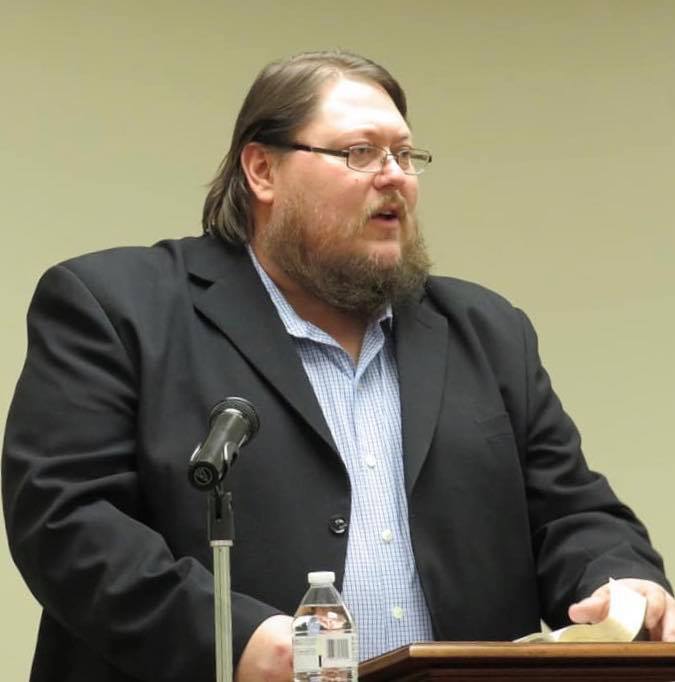
Mikal Smith

The Lord Our Banner

Exodus 17:15
Mikal Smith November, 1 2020 Video & Audio
0 Comments

Sermon Transcript

Auto-generated transcript • May contain errors

100%
Exodus chapter 17. Exodus chapter
17. Reading through some passages
this week in Exodus and come across this verse In verse 15,
where we'll go down to, we'll read from 8 to 15, I believe
that's as far as I wanna go. 16, we'll read through 16. I've
got it down here, it's 15, but I'll go through 16. But it's
in verse 15 that we're gonna find our topic of our text. But was reading through this
this week and just something really struck me. I've got this perpetual study
going on that's been going on now for several years of seeing
Christ everywhere in the scriptures. And specifically, whenever we
look at God You know, the Bible tells us that there's only one
God, and there's none beside him, that there's only one true
God. And the Bible is replete, especially
in the Old Testament, the hero of Israel, the Lord our God,
the Lord is one. The Bible says that there are
three that bear record in heaven, the Father, the Word, and the
Holy Spirit, and these three are one. The Bible tells us that
we have a God that is one. And looking at the Trinity, looking
at the triuneness of the Godhead, there is a lot of mystery there.
We don't really know fully. The Bible even tells us that
who can know God by searching. We can't know God fully by searching
because he is beyond knowing. He's infinite, beyond knowing. And so when we look at God and
we look at who God is, the only thing that we can really know
is what the Bible has revealed to us. We can have all these
theories, and theologians definitely have put out their theories about
the Trinity, about God, and about things like that. And sometimes
as I've come from their understanding in the past to where I am now,
I have found that a lot of times we press upon the scriptures
more than it's really there. And sometimes whenever we stop
and take a look and just let the scriptures say what they
say, a lot of times we come back with something different than
what man's traditions are putting forward. And we often need to
do that. Always examine what we believe. Examine your doctrines according
to God's word and let Let that be the determining factor. And
let's not say more than what the scriptures say, but we surely
don't want to say anything less than what the scripture says.
And so in this ongoing study, I've been looking and seeing
where everywhere that we find in the scripture where God is
talked about in that triune witness, whether it be as Father, as the
Word, as the Holy Ghost, we find that all of that finds its culmination
in the man, Jesus Christ. whether it's in the Old Testament
or the New Testament. And you guys have heard me preach
here many times before about the pre-existence of the Lord
Jesus and His manhood we find in the Old Testament. We see
that He is all over the Old Testament. When we look at the Bible and
it says that Jesus is the image of the invisible God, That means
that he is God manifested in the flesh. So everything that
God is, the Father, the Word, the Holy Spirit, is all in the
man, Jesus Christ. And he is what makes God known. That's why Jesus said, if you've
seen me, you've seen the Father. They wanted to know, hey, show
us the Father. He said, have I been so long with you that
you not know? You've seen me, you've seen the
Father. If you wanna know anything about the Holy Spirit, you know
it about Jesus Christ because the Holy Spirit is the Spirit
of Christ. And if we wanna know anything
about the Word, well, we look to Jesus Christ because He is
the Word manifested in the flesh. He is the Word of God. He is the voice piece of God.
He is the mouth of God. When God went to create in the
beginning, in the beginning was the Word, And the word was with
God and the word was God. All things were made by him and
was made for him. He is the one that spoke out,
let there be. Jesus is God manifested in the
flesh. So anything that we know about
God, we find revealed in the face of Jesus Christ. He is the
image and the face of the Godhead. Now I don't know how all that
Godhead works. There are some that say they're distinct individual
persons. I don't see the Bible saying
that. I know that it says there are three that bear record, the
Father, Word, and Holy Spirit, but it says these three are one.
And so I'll just say what the Bible says. There are three record
bearers. Those three record bearers are those, the Father, Word,
and Holy Spirit, and they are bearing record of the Son. And I would also go so far to
say that they're bearing record in the Son. through the Son,
because He is the fullness of the Godhead bodily, Colossians
says. And so that's what my, this perpetual
study is, is I'm seeing almost on every page, everywhere that
God is talked about, whether it's talked about as the Father,
whether it's talked about as the Word, as it's talked about
the Holy Spirit, whether it's talked about in all of His names,
Jehovah, Adonai, Messiah, all these terms, all, come back to
Jesus Christ. I mean, we could take, we could
write all these names it's finding in scripture and every one of
them are going to point directly to the Lord Jesus Christ, the
man, the God man, Jesus Christ. So anyway, I was reading through
Exodus this week and I came across this passage and it's another
name of God. Now I preached a couple of weeks
ago down at Choctaw on God's name, I am that I am, and that
God's sovereignty is his glory. And in Exodus, God revealed himself
to Moses as I am that I am, the self-existent God. Okay, I will
be who I will be, and I've preached that here before to you guys
as well. But in that, he revealed his name as Jehovah, and that
word Jehovah means the one who exists. the God that exists,
but in that, the meaning that comes through in that is the
God who will be who he will be. No one can make him to be anything
else than what he is, and he does what he does, and it speaks
of God's sovereignty. God is sovereign, and if you
remember in that passage, he told Moses, he said, this is
my name forever and my memorial to all generations. So what God
was telling Moses is, and basically kind of the question that I posed
at the beginning of my message down in Choctaw, is there are
a lot of people that often ask us, why do you preach sovereign
sovereignty so much? Why do you talk about sovereignty
so much? Why is your church called sovereign grace? Why is that
question? The breadth of my sermon was
to answer that question, is because God has revealed himself as Jehovah,
which is sovereign, the only God, the one and only God. And that through that sovereignty,
he wants to be known. He is sovereign over all things.
And of course, I read many, many verses that had to do with that. God said, this is my memorial
to every generation. I want every generation to know
my name, that I am who I am, I will be who I will be, I will
do what I will do, and none can stay my hand, none can turn me,
I'm one mind, no one can turn me. I am God, and so God wants
to be known as Jehovah the Sovereign, and that's why we preach him,
that's why we teach him, that's why we spend so much time talking
about God's sovereignty, because God has, purpose and declared
all things that will ever be. And he's bringing that about
by his sovereign command over all things. I mentioned to them
down there, there's a difference. God revealed himself as God,
the almighty to Isaac, to Abraham, Isaac, and Jacob. He said, I'm
God almighty. or the Almighty. That's how he
revealed him. But whenever he told Moses, he said, you know,
I revealed myself as the Almighty to the forefather, but to you,
I want to reveal myself as Jehovah. I am that I am. There's a difference
between God being sovereign and God being the Almighty. They
almost sound alike, right? Being sovereign and being Almighty
almost sounds the same. But there is a difference in
that. Being Almighty means to have all power. That's what it
means to be Almighty. You have all might, you have
all power. but to be sovereign means that
you have all right to exercise all power in the way that you
want to do. That's the difference between
sovereignty and being almighty. God being the sovereign and God
being almighty are two different things, and that's why it transitioned
there. See, back to those forefathers, God showed himself as God the
almighty. Why? Because he was calling those
people out of a nation that wasn't nothing. Abraham came from he
the nation, He was a heathen and God called him out and was
bringing them through and was going to make them into a nation.
And by his mighty power, he did all those things. Matter of fact,
he delivered them out of Egypt with a mighty hand, he said.
And he did that so that he might show his power and might to Pharaoh
and to all of Egypt. And so God showed himself as
almighty. But then as they leave Egypt
and then they go into Canaan and start to take over Canaan,
they start killing and running all these people out of the country
or out of the land to take over this land that wasn't even theirs.
But God had already promised them victory. I'm gonna give
you all this land. But you gotta come in, you gotta
tear it all down. You gotta kill everything and
not leave anything. And so as they were on the precipice
of doing that, God the Almighty now had to reveal himself because
there was probably a lot of people saying, well, that's not our
land. Those people, that's their place. Well, how can you go in
and just do that? What about Egypt? How can you
just destroy people like that? I mean, there may have been some
of this thought going on. What about, I thought we had
this thing about God is God's love, but what about all of this? So God revealed himself as sovereign. I can do what I will do. I will
have mercy on him. I will have mercy. I will have
compassion upon him. I will have compassion. And so
God was now revealing himself, showing, not only do I have all
might to do all these mighty things that you've seen and will
continue to see, but I am sovereign. I have the right to do that.
I have the right. Now, we don't have right as that
to do that. I can't go across to my neighbor's
yard and off with all of them and just take over his house
and say, this is mine, okay? But God has the right to do that. Now, I know that there is some,
if not all, because this goes against the very nature of Adam
to think this way and to have a God this way. But that's the
God revealed in Scripture. And so if we see the God revealed
in Scripture is that way, then we submit to that. And we put
away the idol of God that we've had in our mind that isn't that
way. And we don't try to bury those verses because it makes
us uncomfortable. And we don't try to mark them
out, saying they obviously don't think that, or try to reason
away and twist scripture in other places to make that verse not
seem what it seems to be saying. We take the scriptures as they
come. And we take the whole of Scripture. Is that what all of
Scripture is teaching? Absolutely, it teaches that through
all of Scripture. And so God now is declaring His
name once again to Moses, and He's saying, I am not only almighty,
but I am sovereign. I have the right to do what I
want to do. And then we come to the edge
where we're going into Canaan. It's time to go in. Moses is
about to fade away. Joshua has now become the strong
man of Israel. And we kind of pick up here as
they're going in and they're going to be fighting with the
Amalekites. So that's where we're gonna pick
up in our reading here and read chapter 17, starting in verse
eight. It says, then came Amalek and
fought with Israel in Rephidim. And Moses said unto Joshua, Choose
us out, men, and go out, fight with Amalek. Tomorrow I will
stand on top of the hill with the rod of God in my hand. So
Joshua did as Moses had said to him and fought with Amalek. And Moses, Aaron, and Hur went
up to the top of the hill. And it came to pass when Moses
held up his hand that Israel prevailed. And when he let down
his hand, Amalek prevailed." Now keep that in mind. But Moses' hands were heavy and
they took a stone and put it under him and he sat there on. And Aaron and Hur, stayed up
his hands, the one on one side and the other on the other side. And his hands were steady until
the going down of the sun. And Joshua discomfited Amalek
and his people with the edge of the sword. And the Lord said
unto Moses, write this for a memorial in a book and rehearse it in
the ears of Joshua. For I will utterly put out of
remembrance of Amalek from under the heaven. And Moses built an
altar and called the name of it Jehovah Nisi. For he said,
because the Lord has sworn that the Lord will have war with Amalek
from generation to generation. Now, what we find here, brethren,
is a symbolism Now this really did happen, okay, this really
actually happened now. There are some that believe that
these stories in the Old Testament were just stories. This actually
happened, and this was real life business here. There really was
a Moses, there really was a Joshua, there really was Amalekites,
and they did go out and war, and this really did happen. However,
the Bible tells us that all these things in the Old Testament,
speaking of the Old Testament writings, the New Testament writers
told us, he said, all these things were written for our understanding,
for our knowing. And it's all written about Christ. All of the Old Testament is about
Christ. It's to point us to Christ. It's
not just a bunch of stories just to make us feel good. I mean,
they are good reading. I mean, I've always said, you
know, if you take the Bible, you get every kind of genre of
book you ever want to read. I mean, you get history, you
get romance, you get science fiction, you get action, you
get drama. I mean, you get it all in the
Bible. And so whenever we take God's
word, especially the Old Testament, a lot of people say, well, we
don't need the Old Testament. We've got the New Testament. And I'll
be honest, I probably spend most of my study time in the New Testament
because it's kind of easier to, you know, to get along with because
I like to study doctrine really well, and doctrine comes out
more fully seen in the New Testament. But there is a lot to be seen
in these types and foreshadows in the Old Testament. And everything
that happened, God used for our understanding to point us to
Christ. You remember, after Jesus was
resurrected, and he was walking on the road to Emmaus, and those
two men that were there, and they began to talk, and he said
that he took them, and from the first to the last, the beginning
to the end, he went and showed them everywhere that it was all
pertaining of him. That all of it was about him. And there were
many times that Christ was preached out of the Old Testament. As
a matter of fact, that's all the only Bible that they had in Jesus'
time is the Old Testament. And those apostles, whenever
they established those churches, they were preaching from the
Old Testament. And they were preaching Christ
whenever Philip was carried away in the spirit and went down where
the Ethiopian eunuch was reading in Isaiah. And he would come
up to the side and ask me, what are you reading? I don't know,
how can I know unless somebody tells me what? And so he took and from
that same place where he was reading in Isaiah, began to preach
unto him Christ. And so we find Christ everywhere
in the Old Testament. But we have to study and look
and we have to meditate upon it. We have to think about it.
And if we always make the Old Testament to point to other things,
we're always going to miss out on what the passage is about.
Everything in here is pointing to the Lord Jesus Christ. He is the center point of all
things. Like I said, not only in the Godhead, is He the center
of all things, but in life, in redemption, in everything, Jesus
is the center point. He is, as we just read here,
He is our Jehovah Nisi. He is our sovereign banner. That's what the word Nisi means.
It means a banner. The Jehovah Nissi means the Lord,
our banner. That's what that means. And so
we see a lot of symbolism here. We see a lot of things taught
for our instruction in this picture, in this real life war. We see
that they're coming against the Amalekites. Amalek was a descendant
of Eliphaz. He was the son of Eliphaz from
his concubine, Timnah. He was the grandson of Esau.
Now, we all know who Esau is, right? The two brothers, Jacob
and Esau. And God used Jacob and Esau,
even though they were real life twins, real life boys, God used
them as a picture of God's sovereign election. Those who God would
choose and those that God would not choose. Those who God had
elected and those who God reprobated. And it says that Esau have I,
or Jacob have I loved, Esau have I hated. And so Esau and his
line all the way through the Old Testament, we see as a picture
of the reprobate, as the picture of those that were forsaken of
God, who was not elected of God. And that his whole lineage, his
whole line was, was forsaken of God. And here we see that
Amalek was no different. He was out of that lineage of
Esau and therefore was rejected of God. And the word Amalek means
dweller in the valley. He was a valley dweller, for
sure. Not that kind of valley dweller. I regress. He was a dweller in
the valley. Now we've seen this, we've sung
the old songs, we've had the stories, we say this to each
other once in a while, you know, man, I love it whenever we're
up on the mountain, but most of the time I see myself down
in the valley. We talk about the 23rd song,
yea though I walk through the valley, the shadow of death,
I will fear no evil. We talk about the valley. The
valleys are the low points in our life. The valley is the place
where our faith begins to wane. The valley is the place where
we seem to be under oppression, under affliction. And those times in the valley
become a tempting place for us to look away from Christ. And
so Amalek here, he represents those times where our eyes come
off of Christ. And we are looking to our circumstances. We're looking to ourselves. Listen,
brethren, with all this that's going on in our country right
now, I mean, they're running scared with COVID and with the
election and all the stuff that's going on. People are running
in fear. When the Bible tells us that
we should not have fear, that He's not giving us a spirit of
fear. Whenever in Psalm 91, He tells us that those of us who
dwell in the shadow of the Almighty, that we don't have anything to
fear, that the pestilence isn't gonna come to us. And it's not
gonna take us. We have a sure word in the Scripture
that tells us that God is in control of all governments, and
He sets up leaders as He sees fit. And so He's in control of
all this. It's not running amok out here.
But yet a lot of times our eyes look at that, and we take our
eyes off of Christ, and we look at our circumstances, and oh
man, what's going to happen? We're going to start getting
unsettled. But here we see God went out
to war against Amalek, the dweller in the valley. And what did he
do for them? He set Moses up on a hill. He
was at Mount Horeb, which is at Mount Sinai. And he set Moses
up there and he told Moses to take your rod with you and go
up on there and hold your arms up with that rod. And as long
as you hold that rod up, the Israelites will prevail. But
if you let that rod down, then the dweller of the valley will
prevail. Can I see where I'm going here? So he went up and he said to
take Aaron and to take her. Now who do these two represent
for us in the Old Testament? Well, Aaron represents the priesthood,
right? Aaron was the first high priest.
Whenever God set up the whole priest system and the law system,
He set up Aaron as the priest. And then from there, He sanctified
all of the tribe of Levi, or the descendants of Aaron, all
of that tribe, and they were set apart to be the priest unto
God. And Aaron was that first high
priest. So Aaron represents Christ as the high priest. But what
about this man Hur? We don't know a lot about Hur.
We know that there were two or three Hurs throughout the Bible.
One probably the most famous that you guys know has been Hur,
and he came later. But this Hur, the word Hur here
means freedom or liberty. it speaks of the Holy Spirit.
It represents the Holy Spirit. So you have Aaron on one side,
who is representing Christ as high priest, and you have her
on the other side, who represents the Holy Spirit, who brings freedom. And then you have Moses holding
up the rod of God, which that rod of God represents his strength
and victory. You remember through all those
times in God's dealing with Pharaoh, God often had Moses use that
staff to show His power. And every time Moses used that
staff, victory came. And so once again, God was using
that staff to show victory and power. And so as long as Moses
held that up, and the Israelites could see that, then they prevailed
over the Amalekites. But whenever that was lowered
where he couldn't see it, then the Amalekites overcame Israel. Now, what does that have to do
with us and what does that have to do with what we're talking
about here today? Well, Jehovah Nisi means the Lord our banner.
We know what a banner is, right? All of us knows what a banner
is. A banner is like a flag. Another
word that the Bible uses is an ensign, an ensign, E-N-S-I-G-N,
an ensign. And it could be a signal, it
could be a pole, it could be a sail, like sails on a ship. Anyway, a banner is something
that, and we all know, in our country at least, we look at
our flag, and what were banners used for? One of the things that
banners were used for, and there are several different things
that banners are used for, a banner is usually lifted up to display
the point of union. Whenever we were fighting in
the Civil War, or excuse me, when we were fighting in the
Colonial Wars and the war against Britain and everything, we had
a rallying flag. Our flag, that's why we have
the Star-Spangled Banner song, you know, that though the rocket's
wrecked there, the bones bursting in air, gave proof through the
night that the flag was still there. The flag was still held
up. showing that we're still fighting,
we're still progressing, we're still moving on. And the flag
was always a point of union. It rallied people together. Now,
talk about today times. You know, we had eight years
of Obama who did nothing but tear this country down and speak
bad about this country. And everything that this country
was set up about and set up under by our founding fathers, Obama
and the people like Obama just want to totally turn that away
from there. If you remember, I mentioned to you a few weeks
ago, the three institutions that God has established in the world
here, in the earth, is marriage, the church, and government. And all three of those institutions,
these leftist extremists, want to overturn. They want to upturn
it and turn it against what God has set it up to be. God, in
his sovereignty and providence, brought about the founding of
this country the way that it happened. Now, can it change?
Yeah, God's sovereign to do that. Can he destroy nations? Absolutely
he can. Can he judge nations? I think
that he is judging our nation because of the wickedness that
we've been allowing for the last 40 years. I think that he is
judging that nation. Now, he's the one who predestined
for that to take place there, to bring to pass what is today.
So it's not like, you know, God's just sitting there waiting to
see what we're gonna do. God has purposed these things. And
so there's the rise and falls of nations. Rome rose and fell. The Turkish governments rose
and fell. I mean, all these things have
taken place through history by God's command. But if you notice
in our country, we went through eight years, and actually, there
was a little bit of rallying during George Bush's tenure and
everything, but even he, as a globalist, was doing things against what
our common core values in America was about. And of course, when
Obama came in, You know, he just totally wanted to do away, and
as he himself said, he wanted to fundamentally change the Constitution. Okay? Now, our hope isn't in
those things, and I hope anybody watching, listening on Sermon
Audio, watching on Facebook, or anything, or anybody here,
doesn't think that our hope is, you know, I'm hoping in the government
and all this kind of stuff, and thinking politics is the be-all,
end-all. That's not what I'm saying. My
point is this, that the people and their values were being trampled
on. And the thing that Trump came
back in is he grabbed the flag and he brought it back up. He
raised the American flag back up and says, hey, it's time to
look out for America. And so that was a rallying cry, and
you can obviously see by the thousands of people now that
are coming around that they're saying, yes, finally our voice
is being heard. We don't want socialism. We don't
want communism. We don't want leftist extremism
here. We don't want all these things.
This is our values. This is who we are. And whenever
that flag is raised again, that's what Trump, he's a nationalist.
He's pushing national things. We are a nation and this is who
we were and this is what we should be again. And so that's the whole
issue of make America great again. That was his whole thing. That's
what a flag does. A flag causes common union between
people. They rally around what's behind
the flag. What's behind the flag for America?
Freedom. Freedom's behind that flag. religious
freedom, freedom of speech, freedom to bear arms, all these freedoms
that we have, that God allowed for us to have set up in this
government, we've been given through that Constitution by
God. But through the Constitution,
he allowed that to be the government of our people. He set that government
up for us. And so that rallying cry behind
those principles caused us to unite together, people that was
kind of, ah, just out there everywhere, all of a sudden now has banded
together. Well, that's one thing that a flag does. Another thing
that a flag does, they hold up a flag to show might
against the enemy, to recognize the difference between them and
us. And so we have a flag, and it bears and shows that we are
united in this group of people. We have a flag that goes up that
gives us hope that everything's still going on. Soldiers, whenever
they're fighting and everything, and they think, man, am I the
only one out here? But they yet see the flag is
still flying. They know, hey, our guys that
are in control are still in control and still saying, keep pressing,
keep pressing. Okay, so the flag does that as
well. So we have that kind of a union
and that kind of an allegiance because of that flag. But that
flag also reminds us what that flag stands for. And as I mentioned
a minute ago, like our American flag, it stands for freedom,
it stands for all these things. And so whenever we look at this
under the guise of Christ being the Lord, our banner, everything
that is stood for in Christ. And I will say, you know, this,
this word, Jehovah Nisi, a lot of people, and I've even said
this myself, that's speaking of the God of the Old Testament,
that Godhead, that invisible God. It speaks of, it speaks
of the true God, but it isn't speaking of Jesus. It's speaking
of that invisible God that we would call the Father or something.
But Jehovah-Nissi, I am, speaks of Jesus. Jehovah-Nissi, the
Lord, our banner. It speaks of his deity, it speaks
of his, this banner speaks of not only Christ being the God-man,
okay, but it also speaks of his atonement. His banner speaks
of his atonement. I'm going to point that out here
in just a minute. It speaks of his imputed righteousness. Whenever
we look to the banner of Christ, we see imputed righteousness,
not righteousness that we have to try to earn on our own. Brethren,
if you're like me, you'll surely come under the weight of your
inability whenever you try to be good enough for God. And so,
whenever we get to those places where we think, hey man, I'm
striding along here doing great with all the good works that
I can do. Then all of a sudden you find
yourself, man, I just can't do anything right. The refreshing
that comes whenever we look to that banner and see it's imputed
righteousness. That's what it's based on. Your
salvation is based on imputed righteousness, not your self-righteousness. So, child of grace, when you
fail, Don't be disheartened. Don't go down into the valley.
Don't let the valley dwellers overcome you, okay? Don't become
a valley dweller. Look at the banner. Christ is
God. Christ brought you to God by
his effectual atonement. The Bible says that he reconciled
us to God by his death. And so you've been reconciled
by God. So that banner speaks of His deity. It speaks of His
atonement that Christ has died for you. If you're under His
flag, you're under His headship. You're under Him. He's your King.
That means He is responsible for you. And so we look at that
banner and we see His deity, we see His atonement, we see
His righteousness. We also see that in that banner
we have free grace that is given to us without us having to earn
it. when we were yet in sin, Christ died for us. And that
death secured everything that we ever needed. And then that
death, after it was secured, after in the covenant of God,
God said, this is my people. And Christ is saying, I will
go and I will bring them back. And if I don't bring them back,
then you can lay that at my feet, lay it at my hands for them not
coming back. And so Christ goes, and as the
Bible says, that He has power over all flesh to give eternal
life to as many as God has given Him. And He gives that eternal
life to each one of those children of grace in the time that He
bestows it upon them. And He does it without them asking.
He does it without them working. He does it without them being
good enough, rich enough, a certain color, a certain tribe. He does
it without any distinctions. He does it freely. And so that
banner tells us that grace is free. But it definitely reminds
us that he has the sovereign rule over all things. He has
the sovereign rule over all things. But some may say, you know, Preacher,
I don't know about Jesus being Jehovah Nissi. I still kind of
have always been told that, you know, Jesus didn't come on the
scene until Bethlehem. That that can't be talking about
Jesus is talking about He's talking about God the Father. Well, brethren,
the word banner here, Jehovah Nisi, the Lord our banner. Now, I could go to a lot more
places than what I'm gonna read right here now, but for the sake
of time, I'm only gonna read a few verses. Turn with me, if
you would, to Psalm 60. Psalm 60. Look with me if you would down
to verse 4. It says, Thou hast given a banner
to them that fear Thee, that it may be displayed because of
the truth. So remember, if God, if Christ
is Or let's back up, for those who
may not think this is talking about Jesus. Jehovah Nisi, the
Lord, our banner. So God has given us a banner
to all of us that fear Him. And that that banner may be displayed
because of the truth. Now let me ask you, why do we
have a banner? And why is it displayed? Well, we have a banner and it's
displayed individually because of the truth. Number
one, because of the word of truth that came to our ears when God
called us out of unbelief and into belief. Whenever God called
us out of unbelief, He called us out of unbelief by the truth.
The truth is what brought us from wrong thinking about our
self-righteousness being what saves us, to looking at Christ
alone to save us. We also have this because He
is the way, the truth, and the life, and no man comes to the
Father but by Him, the truth. So Jesus as the truth is our
banner. And we bear that banner because
of Him. We also know that it's because
the Word of God tells us that He is our truth. You think, you know, you mean
you have to tell people that they're the children of God? We need to remind ourselves,
brethren, put people into remembrance. Remember, the apostle used to
say that. He said, I'm here to put you
into remembrance of these things. That's why the gospel is preached.
I mean, most people think that, well, the gospel is preached
to get people saved. And then once people are saved,
well, they don't need to hear the gospel anymore and preach other things
to them. Well, no, that's not true. The gospel is the food
that we eat. That's our bread. That's our
wine. The gospel is what we feed upon. Now, the gospel being Christ,
right? He is our food. He is our food. He said, I am
the bread of life. He that eateth meat shall never hunger. He said
that he was the water. He's the drink of the beast that
never thirsts. He is the wine. I mean, he is
the one that we feast upon, and when we feast upon him, then
we have spiritual nourishment, right? And this is where the
Presbyterians and Catholics, they go awry whenever they think
in the Lord's Supper that the bread and wine actually become
physical things. Whether it's the Protestants,
they believe that it doesn't become actual flesh and blood
in their mouth, but it actually gives them spiritual, through
the means of grace, gives them spiritual nourishment in a physical
way. The Catholics, they believe that
whenever you put that wafer in your mouth, that it actually
turns into Christ's flesh, true flesh. and that that blood becomes
actual, or that wine becomes actual blood. And so they do
that to crucify the Lord again, and again, and again, and again.
But the Lord give us the Lord's Supper as a memorial, as a reminder
for us. So we are reminded, we're put
to remembrance of what? Of what Christ has done. That's
what the banner is there for. The banner is raised to not only
unite us together, not only to show our presence is still here,
our King is still there, but it's to show everything that
He did to get us there. Everything that He did for us
is inside that banner. His love, His salvation, His
deliverance, His victory, all of that is in that banner. And
when we look to the banner, we see Christ, right? Now there
was another time that this happened in the Old Testament, similar
to this. Do you remember? It also happened
with the children of Israel and happened with Moses. Do you remember
what happened? All these snakes started biting
people. And what did God tell Moses to do? He said, make a
golden staff or make a staff and put something on there. What
did he tell him to put on the top of it? Y'all remember? Snake. He said, put a snake up on top
of that thing and hold that up and instruct everybody who's
been bit by that snake, if you'll look at that snake, you'll live. But if you don't, you're going
to die. That kind of seems weird, right? And you would think that
everyone would say, well, that's easy enough. I'll just look up
at the snake. I mean, even if they really didn't believe it,
right? You would think, I don't know about that, but what's it
gonna hurt? You know, look up. But there
were those who didn't look up and they died. Him raising that
up, that's an ensign. That's like a banner. But what
did it represent whenever he held that up? It represented
Christ, right? You say, Christ was represented
by a serpent? He who became sin for us. who
took on our sin for us, he became sin and died on the cross. Matter of fact, when Jesus was
talking to Nicodemus in John three, he even brought those
two together. Whenever he said, for God so
loved the world that he gave his only begotten son, and whosoever
believeth in him should not perish, but have everlasting life. And
he talked to, and he coordinated that along with Moses raising,
just as Moses lifted up the rod in the wilderness. So shall the
Son of Man be lifted up. See, it was an end sign. All those who looked lived. All
those who didn't die. And we're not talking about that
in eternal salvation because that's secured for us. But what
are we talking about? We're talking about the Amlekites.
We're talking about the child of grace who goes from being
on the mountain where their faith is rich and full, and they're
looking to Christ and enjoying the things of Christ. the times
that we backslide and we go in and our faith begins to waver
and we start looking to ourselves and we become overtaken by the
cares of this world and we begin to be beat down and when our
eyes come off of Christ and then all of a sudden now we're living
in the valley, we're valley dwellers, like the Amlekites. But the inside
is there. As long as you look at the end
sign and you can see the end sign, then what happens? We prevail
over the Amalekites. But as long as we can't see the
banner, then we are overtaken by the Amalekites. And so what
did God do? God put a stone underneath, had
him put a stone underneath Moses. Why? Well, he was getting weary. He's about to sit down. And if
he goes down, even though he might be holding that staff,
they might not be able to see it. So he put something underneath
Moses to make sure that that was able to be seen, and he put
two things on the side of Moses to make sure that those arms
didn't fall down. And what did he do? He put a stone underneath
Moses. Isn't Jesus Christ called the
cornerstone? The chief stone? Isn't he the
one who was hewn out of the rock? the stone of offense, the stone
of stumbling. Isn't Jesus the chief cornerstone
of the building of God? He is our stone. And then we
have the high priest. We have Christ and all of his
priestly duties that he did in his death. And we have his spirit
who comes and breathes life and revival into our hearts and speaks
freedom to us, reminding us Whenever sin overtakes us, whenever the
cares of the world overtakes us, He reminds us of our freedom.
God's already given us the victory. Remember, God gave them the victory
over everyone in that land. And the Holy Spirit is there.
The Spirit of Christ coming and telling us, remember the victory. Faith is the victory. Glory is victory. He comes and
reminds us that the victory has already been won. Just look to
the banner. Remember what the banner symbolizes.
And so as long as that banner was up, brethren, as long as
we keep looking to the banner, we will not become like the Amlekites
and be dwellers in the valley. And so we pray that Christ would
give us faith. So that's what that is. The banner
to them that fear Thee It may be displayed because of the truth.
Look with me real quick, a couple more verses before we finish
up here. Isaiah chapter 11. Isaiah chapter 11. And someone said, well, I don't see
how you can't play that stretch preacher saying that that might
be Jesus in that verse. Look with me here at Isaiah chapter
11. I'm gonna start reading in verse 10. It says, and in that
day, there shall be a root of Jesse. Anybody know who that is? A root
of Jesse. Which shall stand for an ensign
or a banner of the people. To it shall the Gentiles seek
and his rest shall be glorious. Wasn't Jesus the one who was
called the root of Jesse? Jesus was called the root of
Jesse. Now David was actually the root of Jesse, King David,
but yet this is going back and saying that Christ is gonna come
from the root of Jesse. There's gonna be a root of Jesse.
Speaks of Jesus Christ, look at verse 11. And it shall come
to pass in that day that the Lord shall set his hand Again,
the second time, to recover the remnant of his people, which
shall be left from Assyria and from Egypt and from Pathros and
from Cush and from Elam and from Shinar and from Hamath and from
the islands of the sea. And he, here it is, and he shall
set up an ensign or a banner for the nations. So here again,
it's not just for the Israelites, but it's for all nations. See,
the Gentile salvation was talked about in the Old Testament a
ton of times. It wasn't a new thing, and people
didn't realize it and weren't looking at it, but Christ preached
it in the Old Testament. And he shall set up an ensign,
a banner for the nations, and shall assemble the outcast of
Israel. See, those people, those Gentile
nations, are actually considered to be part of Israel, the ones
that are or the outcast at least, the ones who are scattered abroad,
those who are being assembled out of those other nations. See,
they are part of the true Israel, the spiritual Israel of God.
It says, and gather together the dispersed of Judah from the
four corners of the earth. The envy also of Ephraim shall
depart and the adversaries of Judah shall be cut off, Ephraim
shall not envy Judah, and Judah shall not vex Ephraim." So we
see here again that this ensign, this banner, is set before them,
and this ensign is the root of Jesse. The root of Jesse, which
shall stand for an ensign. See, we're to look to him. Probably a verse you're very
familiar with is in the Song of Solomon, if you want to turn
there. The Song of Solomon. I would probably be safe to say
that the Song of Solomon is probably one of the least studied books
of the Bible. But again, it's about Christ. Look at Song of Solomon, chapter
two. Let's go back to verse one, because
that kind of gives us a little more context to who we're talking
about. It says, I am the rose of Sharon. You know who that's talking about,
right? It's talking about Jesus, who's the rose of Sharon. I am
the lily of the valley. Well, don't we sing about that? He's the lily of the valley. We sing that, right? Let's talk
about Jesus. As the lily among thorns, so is my love among the
daughters. As the apple tree among the trees
of the wood, so is my beloved among the sons. I sat down under
his shadow with great delight, and his fruit was sweet to my
taste. And here it is, verse four. He
brought me to the banqueting house, and his banner over me was love. His banner over me was love. Now, brother, we have Christ as our head, and he came, the Bible says that
he drew us with cords of love. He continues to constrain us
by love, right? We are constrained by the love
of Christ. The love of Christ constrains us, constrains us,
keeps us. Okay, so we see that his banner
over me was love. Not only the love that he gave
to me, but the love that he put in me. And
that love is reciprocal. Does the Bible say that we love
him because he first loved us? That his love is shed abroad
in our heart? And what is it whenever we have
those times, whenever we're down and we're feeling, we go back
and we think of the love of Jesus. You know, there's that song,
you know, if nobody loves me, but you, you know. If anybody
in this world never loved me ever again or showed their love
for me ever again, I can always rely on the fact that Jesus loves
me. This I know for the Bible tells
me so. See, we are under his love. His love has been shed on us
and through us. His banner over us is love. It speaks of his love. I've quoted
John 3, 16, for God so loved the world that he raised up as
an ensign his son, that whosoever believeth shall not perish, but
have everlasting life. Jesus died for those who would
be the believing ones, all those who God would bring to believe.
He is the love of God shown. You remember, it's been a long
time now since I preached on this, But you remember I preached
on love and I said, biblical love isn't about just emotions. Matter of fact, emotion is very
far down on what love actually is. When we look at the word
love in a biblical sense, in the way that the Bible defines
love, love is something that is an action that we do. or a
commitment that we keep. I don't love my wife because
I have emotional feelings for my wife. Those emotional feelings
come and go. As with anybody that's ever been
married, you know there are times when, I'm going fishing. Emotional ties can come and go. But whenever I married my wife,
told her that I love her, and I vows before God said that I
would promise to love and to cherish and keep her, that love
is a commitment to her. Whether or not the feelings are
there, I have promised a commitment to her. That love is a commitment. Whenever God said that he loved
us, it wasn't because he had this, oh, man, they're so cute.
or this ooey-gooey feeling for these people. No, he set a commitment
out on a people and said, I am going to love these people. And the way that he showed his
love is by sending his son. Action, love is action. If you
love me, you will keep my commandments, right? It's action. Now, thank thank the Lord that
those commandments are summed up in loving God and loving our
brothers. Faith in Christ Jesus and looking
to him. But even that we can't we can't
keep that either without his help and without his grace. And
so God's banner over us is love. And Jesus is the one who is said
to be that banner. The banner of Christ or the banner
of love, the banner Jehovah Nisi, is the rallying point for all
true Christians. That's where we meet. The rallying
point is the person and the work of Jesus Christ. His name is
Jehovah Nisi, the Lord, our banner. Whenever we are warring with
the flesh, you know, Paul in the seventh chapter of Romans,
I talked about that spiritual warfare that we all have. If
you're a child of grace, the Bible says that the flesh wars
against the spirit and the spirit against the flesh. The things
that I want to do, I don't do, and the things that I don't want
to do, I do. That's the struggle, having the spirit of God in you
and you being a vessel of clay or flesh. That flesh continues
to do fleshly things. It can't do anything better.
and the spirit of God that's in you is perfect and righteous
and can't do anything wrong. And so you've got something that
is perfect and holy and righteous inside of you, but you yourself
are flesh and can't do anything right or pleasing to God, that's
always going to clash. And Paul said, who shall deliver
me from this body of death? This body of death is what's
causing the issue here. It's warring against the Spirit
of God in me that wants to, in my mind, I want to do the things
of God, and I strive to do the things of God, but more than
often I find that it's filled with flesh and it's not a perfect
work. It's filthy rags. Who shall deliver
me from this? And he said, praise be, Jesus
is gonna deliver me from this. How's he gonna deliver me from
this? Well, number one, he's already delivered us from the
guilt of sin, from the penalty of sin, The penalty of sin has
already been dealt with. Christ died for us, and the penalty
or the wage of sin, which was death, was taken by Jesus Christ,
and you don't have to pay that penalty anymore. The penalty
for sin has been removed. So however you sin from now until
the day that you die or Christ comes again, the penalty has
been paid for that. Now that's not telling you to
go out and live it up, right? I'm not saying that. But I'm
just saying as a reassurance to your heart, that sin has been
taken care of. But we find that there is, in
that flesh-spirit controversy there, in my mind, I want to
do the things, but in my flesh, I don't do those things. And
Paul said, I just, matter of fact, if you look at exactly
what he said, he said, basically, I've resided in my own mind. He says, verse 21, I find then
a law that, Romans 7, verse 21, I find then a law that when I
would do good, evil is present with me, for I delight in the
law of God after the inward man. See, that's what I'm talking
about, that's perfect. But I see another law in my members, warring
against the law of my mind and bringing me into captivity to
the law. And listen, brother, that's all the flesh can do.
It can't do any better. And he said, Oh, wretched man
that I am, who shall deliver me from the body of this death?
I thank God through Jesus Christ our Lord. So Jesus Christ has
delivered us from this body of death by taking away the penalty
of sin. He's taken away the guilt of sin because if we keep our
eyes looking to the inside, what Jesus has done for us, then we're
reminded that we're no longer guilty of that sin. He's removed
the guilt. We're not guilty. That's what
justification means. Just as if I've never sinned.
God looks at us in Christ's righteousness. And so whenever we feel the guilt
of sin, what does He tell us to do? He said, confess it and
look to Him, right? Confess your sins to God. We confess, Lord, I can't do
it. I didn't do it. Messed it up
again. But He's faithful and just and
will forgive us. Why? Because He paid the price
for it already. the penalty of sin, and he removed
the guilt of sin. Don't feel guilty over that. Now, surely we sorrow in our
heart because we don't want to sin against our God. We don't want
to sin against the Lord. That should grieve us in our
heart, and we should be burdened that we do that. But brethren,
it's going to be there, and that's God's lot for us until we die,
is for this battle to take place. And as I mentioned to the brothers
a few weeks ago, the reason that God has given us that is to keep
us humbled before him. so that we will look to the inside,
so that we will look to the banner. Why did God always have the Israelites
fighting? Why did he always have them getting
taken into captivity and released from captivity, taken into captivity
and released from captivity? Why did he always do that? Because
it would always bring his people back to him. Why do we continue
to struggle with the flesh? Because it keeps bringing us
back to him, because we've been given a mind of Christ, a mind
that is spiritual to know our sinfulness, and so that mind
that has that knowledge of sin and our inability before God
continues to remind us that we can't do it, but the gospel tells
us it's been done for us, and it keeps leading us back to Christ.
And so God has given us that inward man to remind us as an
ensign. See, that inward man is Christ
in us, the hope of glory, We have the hope of glory. Why?
Because we keep keeping it? Because we keep keeping ourselves
righteous? No, we keep failing. But he keeps saying, look at
the banner. What does the banner say? And he says, I thank God through
Jesus Christ my Lord. So then, in light of all that,
this is what I've come to conclude. With the mind I myself serve
the law of God. But with the flesh, I serve the
law of sin. There is therefore now, though,
no condemnation to them which are in Christ Jesus. Whenever
I feel the flesh come and the law of sin in my members, I look
to the inside. There is there now for no condemnation
to those who are in Christ Jesus. Remember what Christ has done.
Those who walk not after the flesh, but after the Spirit,
what does walking in the spirit mean? Keeping good dibs on God? No, walking in the spirit, biblically,
whenever you look at this in Galatians, it teaches walking
in the spirit is whenever we walk in faith, looking to Christ
alone. That's what walking in the spirit means. It doesn't
mean walking perfectly before God. None of us can walk perfectly
before God. Walking in the Spirit biblically
means walking with the view of looking to Christ alone, trusting
Christ alone, trusting His works alone, knowing that it was His
works that keep us, that it was His obedience that God is looking
at and not our obedience for salvation or keeping. And so
that is what walking in the Spirit is. And so he says, for those
who are walking in the Spirit, those of us who are in Christ
Jesus, there's no condemnation. Why? Because we walk in the Spirit.
We walk looking to Christ. We walk looking to Him and trusting
in Him alone. And so even though the flesh
may do all of its work against us, the victory has already been
set. God is not disappointed with
you. God is not mad at you. God is
not gonna judge you and cast you off. That you are loved by
him. His banner over us is love. His
banner over us is Christ Jesus. And that banner, Jehovah, the
Lord, our banner, Jehovah Nissi, the Lord, our banner, is the
banner, I pray, that you guys keep looking at. Does anybody
have any questions or any comments? Let's bow and have a word of
prayer. Our gracious heavenly Father,
we come once again this morning, Father, just so grateful and
thankful to be in the house of God. We thank you for the brethren
that are gathered here today. We thank you, Father, that you
have promised to be here with us by your spirit, We pray and
we hope that he has been here. I pray, Father, that the things
that have been said has been in accordance with truth. I pray
that you've encouraged and ministered to the brethren here today. Father
Lord, I pray that you might continue to grow us and to encourage us
by the gospel, that you might cause us to grow in the grace
and knowledge of the Lord Jesus Christ, but looking to Christ
as our only hope. that all things within this word
is about him and that we might praise him and honor him and
that everything we do might be about him. Father, I don't know
anything else better to preach about than about our Lord and
Savior. And so we ask now, Lord, that
you might take these things and that you might work them in our
heart and in our mind to your will and to the way that you
have decided that all things might be known and understood.
And Lord, I pray that You be with each one of these brothers
and sisters and all the rest of the people that are here,
Father, that you might minister to them through this word. We
ask you to be with us now as we go this week, that you might
be with us, enable us, be our mouthpiece, Father, whenever
we talk to people of the gospel, that we might be encouraged throughout
this week, especially this week, Lord, as we see all this turmoil
that's going on in our country and government and people and
Lord, with this coming election. Father, we pray that you would
give us a good leader. We pray, we thank you that in these past
four years, Lord, that you've given us a leader that has at
least come and done, brought us back to the principles that
this country was founded upon and has at least looked and acknowledged
God in our country and has given back freedom to those who want
to worship Christ. And we know that this man isn't
perfect. No man is. And we know that not everything
he does is right. But Father, we know that he is
good and that he, at least from the outset, looks like he desires
good for this country. And so we pray for him. We pray
for all of our leaders. We ask, Lord, that you might
lift them up. And whatever leader you choose
for us come Tuesday, Lord, we pray that we might be given grace
to be content in what you have done. and that you might increase
our faith and that you might work in us to pray and to support
for whoever you give us. And Father Lord, I pray that
you might be with this country. We already have hints of people
that are going to be rioting and raising upheaval if they
don't get their way. Father, Lord, we know that you
can squelch all of that. You are the Prince of Peace.
And so we know that you can bring that. So Father, we just pray
for our country now. We ask that you might bless the
food that we're about to eat, the time of fellowship around
the table. And it's all in Christ's name that we pray. Amen.

Comments

0 / 2000 characters
Comments are moderated before appearing.

Be the first to comment!

Joshua

Joshua

Shall we play a game? Ask me about articles, sermons, or theology from our library. I can also help you navigate the site.