Another insightful and practical gem from Horatius Bonar.
Sermon Transcript
Auto-generated transcript • May contain errors
100%
religious delirium, spiritual
chloroform, religious inebriation by Horatius Bonar from Human
Remedies. And whenever the tormenting spirit
from God troubled Saul, David would play the harp. Then Saul
would feel better, and the tormenting spirit would go away. 1 Samuel
16, 23. Here is music, religious music,
the music of the harp, the harp of David. This is soothing, but
it does not reach the seat of the disease. It is something
human, something external, something materialistic, something earthly,
something that man can originate and apply. It is effectual to
a certain extent. It drives away the tormenting
spirit and restores temporary tranquillity, thus possibly deceiving
its victim. In like manner we find the human
spirit afflicted in every age, sometimes more and sometimes
less, and in all such cases man steps in with his human and external
contrivances. I do not refer to the grosser
forms of dispelling gloom, drunkenness and profligacy, in which men
seek to drown their sense of need and make up for the absence
of God. I refer to the refined remedies,
those of art, science, music, gaiety, by which men try to minister
to a diseased mind. What is Romanism and ritualism
but a repetition of soul's minstrelsy? The soul needs soothing. It is
vexed and fretted with the world. Its conscience is not at ease.
It is troubled and weary. It takes itself to religious
forms. something for the eye and ear,
to chants and vestments and postures and performances, sweet sounds
and fair sights, sentimental and pictorial religion, all of
which is but a refined form of worldliness. By these the natural
man is soothed, and the spirit is tranquilized. The man is brought
to believe that a cure has been wrought, because his gloom has
been alleviated by these religious spectacles, these exhibitions
which suit the unregenerate soul so well. They but drug the soul,
filling it with a sort of religious delirium. They are human sedatives,
not divine medicines. They result in a partial and
temporary cure. It is said that the evil spirit
departed, but not that the Holy Spirit returned. Saul's trouble
was alleviated, but not removed. The disease was still there. The results of David's harp were
only superficial. So it is with the sinner still. There are many external remedies
which act like spiritual chloroform upon the soul. They soothe and
calm and please, but that is all. They do not reach below
the surface, nor touch the deep-seated malady within. Men try rites,
sacraments, pictures, music, dresses, and the varied attractions
of ecclesiastical ornament. But these leave the spirit unfulfilled,
and its wounds unhealed. They cannot regenerate, or quicken,
or heal, or fill with the Holy Spirit. They may keep up the
self-satisfaction and self-delusion of the soul, but that is all. They do not fill, they merely
hide our emptiness. Our age is full of such contrivances,
literary and religious, all got up for the purpose of soothing
the troubled spirits of man. Excitement, gaiety, balls, theatres,
operas, concerts, ecclesiastical music, dresses, performances—what
are all these but man's remedies for casting out the evil spirit
and healing the soul's hurt, without having recourse to God's
one remedy? These pleasant sights and sounds
may soothe the imprisoned soul. But what of that? They do not
bring it nearer to God. They do not work repentance or
produce faith or fix the eye on the true cross. They leave
the soul still without God and without salvation. The religion
thus produced is hollow, fitful, superficial, sentimental. It will neither save nor sanctify. It may produce a sort of religious
inebriation, but not that which God calls godliness, not that
which the apostles pointed out as a holy life, a walk with God. And whenever the tormenting spirit
from God troubled Saul, David would play the harp, Then Saul
would feel better and the tormenting spirit would go away. 1 Samuel
16.23
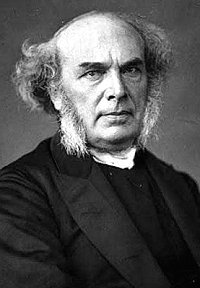
About Horatius Bonar
Horatius Bonar (19 December 1808 — 31 July 1889), was a Scottish churchman and poet. He is principally remembered as a prodigious hymnodist. Friends knew him as Horace Bonar.
Comments
Your comment has been submitted and is awaiting moderation. Once approved, it will appear on this page.
Be the first to comment!