Bootstrap
J.C. Ryle

John 13:1–5

John 13:1-5
J.C. Ryle November, 20 2022 Audio
0 Comments
You will find it helpful to READ the texts--as you LISTEN to the audios!
The TEXTS for the entire commentary can be bound here:
https://www.gracegems.org/Ryle/John.htm

Sermon Transcript

Auto-generated transcript • May contain errors

100%
Section 1 of Expository Thoughts on the Gospel of St. John, Volume 3, by J. C. Ryle. CHAPTER XIII. Now before the feast of the Passover, when Jesus knew that his hour was come, that he should depart out of this world unto the Father, having loved his own which were in the world, he loved them unto the end. And supper being ended, the devil having now put into the heart of Judas Iscariot, Simon's son, to betray him, Jesus, knowing that the Father had given all things into his hands, and that he was come from God, and went to God. He riseth from supper, and laid aside his garments, and took a towel, and girded himself. After that he poureth water into a basin, and began to wash the disciples' feet, and to wipe them with the towel wherewith he was girded.

The passage we have now read begins one of the most interesting portions of St. John's Gospel. For five consecutive chapters, we find the evangelist recording matters which are not mentioned by Matthew, Mark, and Luke. We can never be thankful enough that the Holy Ghost has caused them to be written for our learning. In every age, the contents of these chapters have been justly regarded as one of the most precious parts of the Bible. They have been the meat and drink, the strength and comfort of all true-hearted Christians. Let us ever approach them with peculiar reverence. The place whereon we stand is holy ground.

We learn, for one thing, from these verses, what patient and continuing love there is in Christ's heart toward His people. It is written that, having loved his own which were in the world, he loved them unto the end. Knowing perfectly well that they were about to forsake him shamefully in a very few hours, in full view of their approaching display of weakness and infirmity, our blessed Master did not cease to have loving thoughts of his disciples. He was not weary of them. He loved them to the last.

The love of Christ to sinners is the very essence and marrow of the Gospel. that He should love us at all and care for our souls, that He should love us before we love Him or even know anything about Him, that He should love us so much as to come into the world to save us, to take our nature on Him, bear our sins, and die for us on the cross. All this is wonderful indeed. It is a kind of love to which there is nothing like among men. The narrow selfishness of human nature cannot fully comprehend it. It is one of those things which even the angels of God desire to look into. It is a truth which Christian preachers and teachers should proclaim incessantly and never be weary of proclaiming.

But the love of Christ to saints is no less wonderful, in its way, than his love to sinners, though far less considered. that he should bear with all their countless infirmities, from grace to glory, that he should never be tired of their endless inconsistencies and petty provocations, that he should go on forgiving and forgetting incessantly, and never be provoked to cast them off and give them up. Oh, this is marvellous indeed! No mother watching over the waywardness of her feeble babe in the days of its infancy has her patience so thoroughly tried as the patience of Christ is tried by Christians. Yet his longsuffering is infinite. His compassions are a well that is never exhausted. His love is a love that passeth knowledge.

Let no man be afraid of beginning with Christ if he desires to be saved. The chief of sinners may come to him with boldness and trust him for pardon with confidence. This loving Savior is one who delights to receive sinners. Luke chapter 15 verse 2. Let no man be afraid of going on with Christ after he has once come to him and believed. Let him not fancy that Christ will cast him off because of failures and dismiss him into his former hopelessness on account of infirmities. Such thoughts are entirely unwarranted by anything in the Scriptures.

Jesus will never reject any servant because of feeble service and weak performance. Those whom he receives, he always keeps. Those whom he loves at first, he loves at last. His promise shall never be broken, and it is for saints as well as sinners.

We learn, for another thing, from these verses what deep corruption may sometimes be found in the heart of a great professor of religion. It is written that the devil put into the heart of Judas Iscariot, Simon's son, to betray Christ. This Judas, we must always remember, was one of the twelve apostles. He had been chosen by Christ himself, at the same time with Peter, James, John, and their companions. For three years he had walked in Christ's society, had seen his miracles, had heard his preaching, had experienced many proofs of his loving-kindness, He had even preached himself and wrought miracles in Christ's name.

And when our Lord sent out his disciples two and two, Judas Iscariot no doubt must have been one of some couple that was sent. Yet here we see this very man possessed by the devil and rushing headlong to destruction. On all the coasts of England there is not such a bacon to warn sailors of danger as Judas Iscariot is to warn Christians. He shows us what length a man may go in religious profession and yet turn out a rotten hypocrite at last and prove never to have been converted. He shows us the uselessness of the highest privileges unless we have a heart to value them and turn them to good account. Privileges alone without grace save nobody and will only make hell deeper.

He shows us the uselessness of mere head knowledge. To know things with our brains, and to be able to talk and preach and speak to others, is no proof that our own feet are in the way of peace. These are terrible lessons, but they are true. Let us never be surprised if we see hypocrisy and false profession among Christians in modern days. There's nothing new in it, nothing peculiar, nothing that did not happen even among Christ's own immediate followers, and under Christ's own eyes.

Bad money is a strong proof that there is good coin somewhere. Hypocrisy is a strong indirect evidence that there is such a thing as true religion. Above all, let us pray daily that our own Christianity may at any rate be genuine, sincere, real and true. Our faith may be feeble, our hope dim, our knowledge small, our failures frequent, our faults many. But at all events let us be real and true. Let us be able to say with poor, weak, erring Peter, Thou, Lord, who knowest all things, knowest that I love Thee. John chapter 21 verse 17.

Notes, John chapter 13 verses 1 to 5. There are peculiarities in St. John's narrative at the end of our Lord's life on earth, which seem to require a few introductory remarks before entering into the substance of the 13th chapter. A careful reader of the four Gospels can hardly fail to remark that in St. John's account of the last six days of our Lord's ministry, many things mentioned by Matthew, Mark, and Luke are entirely omitted.

The parables of the two sons, the householder who let out a vineyard, of the wedding garment, of the ten virgins, of the talents, of the sheep and goats, are left out. The second cleansing of the table, the cursing of the barren fig tree, the public discussion with the chief priests and elders about John's baptism, the silencing of the Pharisees, the Sadducees and the lawyers, the public denunciation to the multitude of the scribes and Pharisees. All these interesting matters are found in the first three Gospels, but passed over in silence in the fourth. We cannot doubt that there were wise reasons. But the most striking thing in St. John's narrative at this point is the entire absence of our Lord's famous prophecy upon the Mount of Olives and of the institution of the Lord's Supper. Both these deeply interesting portions of our Lord's last doings before His crucifixion, which are most fully given in the three Gospels, are completely omitted in the fourth. The reason of these two remarkable omissions we are left to conjecture. God giveth no account of His matters. If we once admit that all Scripture is given by inspiration of God, we need not doubt that the Gospel writers were equally guided and directed by the Holy Ghost, both in the things they omitted and the things they recorded. Nevertheless, a few remarks on the subject may be interesting to some readers.

A. Concerning the omission of the prophecy on the Mount of Olives, I venture the following conjecture. I think it is partly accounted for by the time when St. John's Gospel was given to the Church. That must have been very near the taking of Jerusalem, the destruction of the Temple, and the complete overthrow of the Jewish ceremonial. Now, if St. John had just at this crisis inserted anew this prophecy in his Gospel, it would have confirmed the erroneous notion, which many have always held, that it refers only to the destruction of Jerusalem and does not extend to the second advent of Christ and the end of the world. His marked silence about it would be a testimony against the misapplication of the prophecy. The second reason of the omission, I think, is the striking fact that the writer of the fourth gospel was inspired to write the book of Revelation. No wonder, therefore, that he was directed to pass over our Lord's prophecy when he was about to write, at a later date, the most striking prophetical book in the Bible.

b. Concerning the omission of the Lord's Supper, I venture the following conjecture. I think it was specially intended to be a witness forever against the growing tendency of Christians to make an idol of the sacraments. Even from the beginning, there seems to have been a disposition in the Church to make Christianity a religion of forms and ceremonies, rather than of heart, and to exalt outward ordinances to a place which God never meant them to fill. Against this teaching, St. John was raised up to testify. The mere fact that in his gospel he leaves out the Lord's Supper altogether, and does not even name it, is strong proof that the Lord's Supper cannot be, as many tell us, the first, foremost, chief, and principal thing in Christianity. Its perfect silence about it can never be reconciled with this favorite theory. It is a most conspicuous silence, which the modern advocates of the so-called sacramental system can never get over or explain away. If the sacrament of the Lord's Supper really is the first and chief thing in Christianity, why does St. John tell us nothing about it? To that question I can only see one answer. It is because it is not a primary, but a secondary thing in Christ's religion. The reason assigned for the omission by many commentators, viz., that St. John thought it needless to repeat the account of the institution after it had been recorded by three evangelists and St. Paul, appears to me entirely insufficient.

Verse one. Now before Passover, We should observe that the Feast of the Passover is always carefully mentioned by each Gospel writer as the precise time of the year when Jesus was crucified. It was ordered of God that it should be at this particular time for two good reasons. For one thing, the Passover lamb was the most striking and remarkable type in the whole Jewish ceremonial of Christ himself and the history of the Passover of Christ's work of redemption. For another thing, it secured the greatest assembly of Israelites to be eyewitnesses of our Lord's crucifixion. At no time of the Jewish year were so many Jews gathered at Jerusalem. Anything that happened at the Passover would be reported by Jewish worshipers I'm returning home, all over the civilized world. For these two reasons, the Lamb of God was slain at this feast, in spite of the priest who said, not on the feast day. Let us remember that one of the few dates we know for certainty of the events in our Lord's life is the time of His crucifixion. Of the time of His birth and baptism, we know nothing. But that He died at Easter, we may be quite sure.

When Jesus Knew Our Come Let us note that our Lord knew perfectly beforehand when and how He should suffer. This, whatever we may think, is a great addition to suffering. Our ignorance of things before us is a great blessing. Our Lord saw the cross clearly before Him and walked straight up to it. His death was not a surprise to Him, but a voluntary, foreknown thing.

That Depart World Father Let us observe how death is spoken of here. It is taking a journey, a going from one place to another. In the case of our Lord, it was a return to his Father's house and a going home after finishing the work he came to do. So a believer's death, in a lower sense, is going home. Calvin observes, this definition of death belongs to the whole body of the Church. It is to the saints a passage to the Father, an inlet to eternal life.

Having loved his own, world, loved, end. The meaning of this seems to be, having always loved his own disciples, and having given many proofs of his singular affection, he now, before leaving them alone like orphans in the world, gave one more striking proof of his love by washing their feet, and thus, on the last evening before his death, showed that he loved them to the very end of his ministry, and was not weary of them. He knew perfectly that they were going to forsake him and act like cowards, but that did not prevent him loving them with all their weakness to the very end. He knew perfectly that he was about to suffer within 24 hours, but the knowledge and foresight of it did not absorb his thoughts so as to make him forget his little flock of followers. Saints, when they are dying, often ask to be left alone and let alone. Christ, on the trial of his crucifixion, thought of others and loved his disciples to the end.

The love of Christ to Christians who really believe on him is a great depth. It passeth knowledge. It is something that our poor, corrupt nature cannot fully comprehend or measure. The expression, his own, applied to believers, is very noteworthy. They are Christ's peculiar property, given to him by the Father and his own special care as members of his body. Titchman's idea that his own means all mankind is preposterous and weak. and ignores the privileges of believers.

The expression, which we're in the world, is another great depth. Believers are not in heaven yet and find it out to their cost. They are in a cold, unkind, persecuting world. Let them take comfort in the thought that Jesus knows and remembers it. I know thy works and where thou dwellest. Revelation chapter three, verse 13.

Theophilact thinks that our Lord purposefully deferred this act of washing the disciples' feet to the last evening of His ministry in order to leave in their minds a pleasant impression of His love and condescension. Melachthon shows that the three greatest marks of pity and compassion are

1. to tolerate the wicked for a season
2. to abstain from exposing their sins as long as possible
3. to warn them plainly and gently before leaving them forever

All this appears in our Lord's dealing with Judas in this chapter.

Verse 2. And supper being ended. These words would have been more literally rendered, while supper was going on, or supper being in progress. That this is the true meaning seems clear from the 26th verse. If supper had really been ended, we should not have heard of a sop being given out of the dish, etc. It is only fair to say that Scaliger and other learned men insist that the Jews had more than one supper at the Passover, one a legal one, strictly according to ritual, the other a social one. They think these two suppers are both in this chapter. Gerhard gives this opinion at length. Whitby seems to lean to this view and maintains that Our Lord twice pointed out Judas as the traitor, once privately and once publicly.

Let it be noted that Our Lord's ministry ended with a supper. that the last ordinance he appointed was a supper, that one promise he has left to a believer is, I will come and sup with him. Revelation chapter 3 verse 20. That one promise he has left to a believer is, I will come and sup with him. Revelations chapter 3 verse 20. And that the first thing that will take place at his second advent will be the marriage supper of the lamb. All point to the same great truth, the close union, familiarity, and comfortable intimacy between Christ and His people. It is a thing far too little known.

What supper this was we are not told, and are left to conjecture. It is a point on which opinions widely differ. Some, as Lightfoot, think that the supper was the same that took place at Bethany in the house of Simon the leper two days before the Passover. Rollick also thinks it was not the Passover. Others think it was the ordinary Passover supper, which our Lord was eating with his disciples the night before his crucifixion. This certainly, in my judgment, seems the more probable view. One thing, at any rate, is pretty clear. It was not the institution of the Lord's Supper. It seems highly improbable that the washing of the disciples' feet would take place after the Lord's Supper. That blessed ordinance appears to come in after the twentieth verse. Brentius stands alone in maintaining that it was the Lord's Supper.

The devil put heart. This does not mean that Judas now for the first time left the faith and became an apostate. Our Lord long before had spoken of him as one that was a devil. John chapter 6 verse 70. But it means that now at length the devil suggested to the heart of this unhappy man the atrocious idea of betraying his master. It was the last and final heading up of his apostasy. The personality of Satan, and his old character as the father of all wickedness, are forcibly brought out here.

The word rendered put is literally cast. This graphically describes the way in which Satan works. He casts into the heart of those he tempts the seeds of evil. The heart is the seed plot which he sows. Suggestion is one of his chief weapons. The sin of man consists in opening his heart to the suggestion, giving it a place and letting it sink down. This is obvious in the first temptation of Eve in the Garden of Eden. Tichman's idea that the expression is only a popular form of speaking is utterly untenable and cannot be reconciled with the general teaching of the Bible about the devil.

Judas Iscariot, Simon's son. Here, as in three other places, the false apostle is called emphatically Simon's son. Doubtless this was to mark him out as not the Judas who was brother of James and son of Alpheus. Who this Simon was, we do not know. See note on John chapter 6 verse 71.

To betray him. There seems no need for regarding Judas's betrayal of his master as anything but the wicked act of a wicked man who loved money more than his soul. The theory that he was a high-minded, impatient disciple who wished his master no harm but desired to hasten his kingdom and expected him to work a miracle and save himself at the last is ingenious but lacks foundation. Our Lord's word applied to him, a devil, and the word of St. John, a thief, appears to me to overturn the theory altogether. Judas betrayed Jesus because he loved money better than his master. He probably did not realize the full consequence of his act, but this is often the case with wicked men.

Verse 3. Jesus, knowing that the Father, etc. The reason why this verse comes in here is not very plain. Why are we told that Jesus washed his disciples' feet, knowing all these wonderful things? What is the special point and object of the sentence? Some think that the words mean that our Lord knew the end of His ministry was at hand, that all His work was accomplished, and that the Father had now committed to Him all power in heaven and earth, and that having come from God, He was about to return to God very shortly. Knowing this, he seized the last opportunity that remained to give his disciples a practical example of love and humility. He knew that his time was short and that he must give the lesson this night if it was to be given at all.

Others, as Chrysostom, Augustine, and Zwingle, think that the object of the words is to show the extent and depth of our Lord's infinite condescension and love to his disciples. with a full knowledge that the Father had committed all power unto his hands, that he had been from eternity with God, and was going back to God, knowing all the dignity and majesty of his person and office, he yet condescended to perform the most menial office, and to minister like a servant to his disciples. Either view is good sense, and good divinity, and admissible as a fair interpretation of the words. For myself I prefer the latter view.

Theophilact points out that to argue our Lord's inferiority to the Father from the expression, delivered all things into his hand, is unfair. He justly remarks that you might as well infer the Father's inferiority to the Son from the expression in Corinthians, when he shall have delivered up the kingdom to the Father. Bernard remarks that Jesus came from God, not leaving him, and went to God, not leaving us.

Verse 4. He riseth from supper, etc. The minuteness with which every action of our Lord is related here is very striking. No less than seven distinct things are named. Rising, laying aside garments, taking a towel, girding himself, pouring water into a basin, washing, and wiping. This very particularity stamps the whole transaction with reality, and is the natural language of an astonished and admiring eyewitness.

The laying aside garments, of course, only means the laying aside of the long, loose outer garment which people in the East always wear, and which must be laid aside if any bodily exertion is used. The girding himself refers to the well-known practice of tying tightly round the person any loose garment before taking any action requiring bodily exertion. A good servant is said to have his loins girded and his lamp burning, ready for any errand or duty. The likeness between our Lord's action here and the words in Luke chapter 12 verse 37 are very striking. He shall gird himself, serve them, etc.

Jensenius remarks that the rising here mentioned seems like a clear proof that this supper could not be the Paschal supper. That was to be eaten standing. The use of the present tone all through this description is noteworthy. It brings the whole transaction before us like a picture. Hengstenberg says here, Jesus had seated himself at the table, and Peter probably enjoyed the honor of washing his feet. After this he, with the other disciples, sat down also at table, expecting that the younger would spontaneously assume the function of foot-washer for all the rest. But pride evoked pride. The younger apostles, following a quick impulse, seated themselves also at table. Thus a situation of deep embarrassment resulted in murmuring and contest. Who would be the first to rise up again? Jesus put an end to the embarrassment by rising from supper and washing the feet of his disciples. This is possible, but it is only conjecture.

Verse 5. After that he poureth water, etc., etc. Wonderful as all this transaction seems, and no doubt is, when we remember who our Lord was, one thing must never be forgotten. The actions here described would not seem nearly so strange to the disciples as they do to us. They were simply the courteous actions of a host who desired to show the utmost degree of hospitable attention to his guest. Thus Abraham washed the feet of the three angelic messengers. Genesis chapter 18 verse 4. See also 1st Samuel chapter 25 verse 41.

In a hot country like Palestine where people wore no stockings and the heat was very scorching to the skin, frequent washing of the feet was an absolute necessity and to wash the feet of guests was a common piece of hospitality. It is one mark of a deserving widow that she has washed the saints feet. 1st Timothy chapter 5 verse 10. The real wonder was that such a master, on such a solemn occasion, should do such a condescending act to such weak disciples. It was not so much the action as the doer of it that was remarkable.

After all, there was a touching fitness in our Lord's choice of an instructive action on this solemn occasion. He knew that He was leaving His disciples, like poor feeble travelers, in a weary, wicked world. He would therefore wash their feet before parting, and strengthen and refresh them for the journey. It will be observed that the work was not left unfinished and half done. Like a perfect servant, our Lord wiped the feet as well as washed them.

End of section 1.
J.C. Ryle
About J.C. Ryle
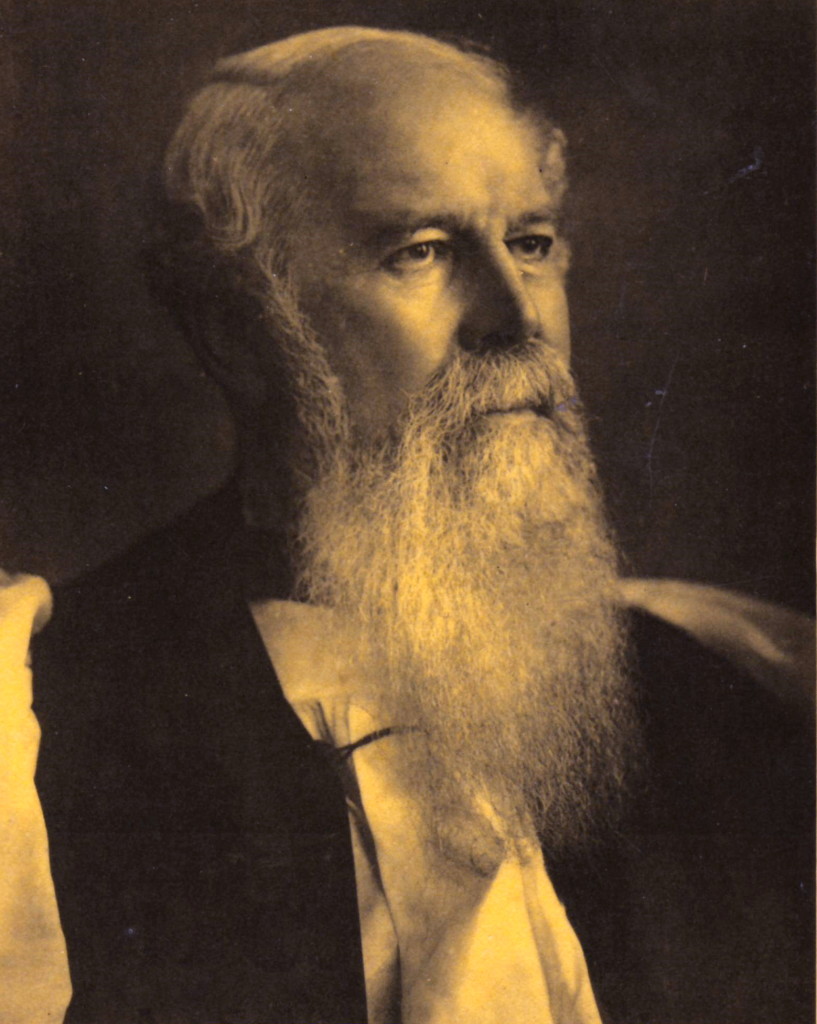
John Charles Ryle (10 May 1816 — 10 June 1900) was an English evangelical Anglican bishop. He was the first Anglican bishop of Liverpool.
Broadcaster:

Comments

0 / 2000 characters
Comments are moderated before appearing.

Be the first to comment!

Joshua

Joshua

Shall we play a game? Ask me about articles, sermons, or theology from our library. I can also help you navigate the site.