Bootstrap
J.C. Ryle

John 13:21-30

John 13:21-30
J.C. Ryle November, 20 2022 Audio
0 Comments
You will find it helpful to READ the texts--as you LISTEN to the audios!
The TEXTS for the entire commentary can be bound here:
https://www.gracegems.org/Ryle/John.htm

Sermon Transcript

Auto-generated transcript • May contain errors

100%
CHAPTER XIII. When Jesus had thus said, he was troubled in spirit, and testified, and said, Verily, verily, I say unto you, that one of you shall betray me. Then the disciples looked one on another, doubting of whom he spake. Now there was leaning on Jesus' bosom one of his disciples, whom Jesus loved. Simon Peter therefore beckoned to him that he should ask who it should be of whom he spake. He then lying on Jesus' breast, said unto him, Lord, who is it? Jesus answered, He it is, to whom I shall give a sop, when I have dipped it. And when he had dipped the sop, he gave it to Judas Iscariot, the son of Simon. After the sop Satan entered into him. Then said Jesus unto him, That thou doest, do quickly. No man at the table knew for what intent he spake this unto him. For some of them thought, because Judas had the bag, that Jesus had said unto him, Buy those things which we have need of against the feast, or that he should give something to the poor. He then having received the sop, went immediately out, and it was night.

The subject of the verses before us is a very painful one. They describe the last scene between our Lord Jesus Christ and the false apostle Judas Iscariot. They contain the last words which passed between them before they parted forever in this world. They never seem to have met again on earth excepting in the garden when our Lord was taken prisoner. Within a short time both the Holy Master and the treacherous servant were dead. They will never meet again in the body till the trumpet sounds and the dead are raised, and the judgment is set, and the books are opened. What an awful meeting that will be!

Let us mark, firstly in this passage, what trouble our Lord Jesus went through for the sake of our souls. We are told that shortly after washing the disciples' feet, he was troubled in spirit and said, One of you shall betray me. The whole length and breadth and depth of our Master's troubles during his earthly ministry are far beyond the conception of most people. His death and suffering on the cross were only the heading up and completion of his sorrow. But all throughout his life, partly from the general unbelief of the Jews, partly from the special hatred of the Pharisees and Sadducees, partly from the weakness and infirmity of his few followers, he must have been in a peculiar degree a man of sorrows and acquainted with grief. Isaiah 53.

But the trouble before us was a singular and exceptional one. It was the bitter sorrow of seeing a chosen apostle deliberately becoming an apostate, a backslider, and an ungrateful traitor. That it was a foreseen sorrow from the beginning we need not doubt. But sorrow is not less acute because long foreseen. That it was a peculiarly cutting sorrow is very evident. Nothing is found so hard for flesh and blood to bear as ingratitude. Even a poet of our own has said that it is sharper than a serpent's tooth to have a thankless child. Absalom's rebellion seems to have been David's heaviest trouble, and Judas Iscariot's treachery seems to have been one of the heaviest trials of the son of David. When he saw it drawing near, he was troubled in spirit.

Passages like these should make us see the amazing love of Christ to sinners. How many cups of sorrow He drained to the dregs in working out our salvation, beside the mighty cup of bearing our sins! They show us how little reason we have for complaining when friends fail us and men disappoint us. If we share our Master's lot we have no cause to be surprised. Above all, they show us the perfect suitableness of Christ to be our Savior. He can sympathize with us. He has suffered Himself and can feel for those who are ill-used and forsaken.

Let us mark, secondly, in these verses, the power and malignity of our great enemy the devil. We are told in the beginning of the chapter that he put it into the heart of Judas to betray our Lord. We are told here that he entered into him. First he suggests, then he commands. First he knocks at the door and asks permission to come in, then, once admitted, he takes complete possession and rules the whole inward man like a tyrant.

Let us take heed that we are not ignorant of Satan's devices. He is still going to and fro in the earth, seeking whom he may devour. He is about our path and about our bed, and spies out all our ways. Our only safety lies in resisting him at the first, and not listening to his first advances. For this we are all responsible. Strong as he is, he has no power to do us harm, if we cry to the stronger one in heaven, and use the means which he has appointed. It is a standing principle of Christianity and will ever be found true. Resist the devil and he will flee from you. James chapter 4 verse 7.

Once let a man begin tampering with the devil and he never knows how far he may fall. Trifling with the first thoughts of sin, making light of evil ideas when first offered to our hearts, allowing Satan to talk to us and flatter us and put bad notions into our hearts, all this may seem a small matter to many. It is precisely at this point that the road to ruin often begins. He that allows Satan to sow wicked thoughts will soon find within his heart a crop of wicked habits. Happy is he who really believes that there is a devil, and believing, watches and prays daily that he may be kept from his temptations.

Let us mark, lastly in these verses, the extreme hardness which comes over the heart of a backsliding professor of religion. This is a thing which is most painfully brought out in the case of Judas Iscariot. One might have thought that the sight of our Lord's trouble, and the solemn warning, one of you shall betray me, would have stirred the conscience of this unhappy man, but it did not seem so. One might have thought that the solemn words, that thou doest, do quickly, would have arrested him, and made him ashamed of his intended sin, but nothing seems to have moved him. Like one whose conscience was dead, buried, and gone, he rises and goes out to do his wicked work, and parts with his Lord for ever.

The extent to which we may harden ourselves by resisting light and knowledge is one of the most fearful facts in our nature. We may become past feeling, like those whose limbs are mortified before they die. We may lose entirely all sense of fear, or shame, or remorse, and have a heart as hard as the nether millstone, blind to every warning, and deaf to every appeal. It is a sore disease, but one which unhappily is not uncommon among professing Christians. None seem so liable to it as those who, having great light and privilege, deliberately turn their backs on Christ and return to the world. Nothing seems likely to touch such people but the voice of the archangel and the trump of God.

Let us watch jealously over our hearts and beware of giving way to the beginnings of sin. Happy is he who feareth always, and walks humbly with his God. The strongest Christian is the one who feels his wickedness most, and cries most frequently, Hold thou me up, and I shall be safe. Psalm 119, verse 117. Proverbs 28, verse 14.

Notes, John chapter 13, verses 21 to 30.

Verse 21. when Jesus had thus said, this would be more literally rendered, had said these things, referring to all he had just been saying. There seems to be a kind of break or pause in the narrative here. This is the point in St. John's narrative where the institution of the Lord's Supper seems to come in. At any rate, there seems no point comparing his account of this evening with that of Matthew, Mark, and Luke, where it can be so well fitted in. This is the view of Jansenius, Lamp, and Bergon.

was troubled in spirit. This expression applied to our Lord is peculiar to St. John. We find it only in his gospel here and at chapter 11 verse 33 and chapter 12 verse 27. Here it seems to mean principally the pain and sorrow which our Lord experienced on seeing one of his own chosen apostles about to betray him. In addition to this, it probably includes that peculiar agony and distress of soul which our Lord was subject to under the presence of a world's sin laid upon him and which we see intensified in the Garden of Gethsemane.

Let it be noted that of all the Gospel writers John is the one who dwells most fully on the divine nature of our Lord and also is the one who describes most fully the reality of his human affections. Observe that to be troubled and disturbed in mind is not itself sinful. Brentius remarks, after Gustine, how foolish were the Stoic philosophers who taught that a wise man is never disturbed in mind. Muschulis thinks that our Lord's distress and sorrow at the sight of the wickedness of Judas had much to do with this trouble of spirit. Nothing so sad as the sight of a hardened, incorrigible backslider.

And testified, and said. The frequency with which John used the word testified is very remarkable. It occurs thirty-three times in his Gospel, and only three times in all the other three Gospels. Why our Lord is said to testify in this place is hard to see. We must suppose that it means He made an open, solemn declaration in a very impressive manner, like a witness bearing testimony to some great and unexpected fact.

Verily, I say, one of you betray me. The solemn Amen! Amen! here, as elsewhere, was calculated to arrest the attention of the disciples to the declaration our Lord was going to make. One out of you, i.e. out of your number, shall betray me. My last and crowning trial draws near. I am about to bear a world's sins in my own body on the tree, and painful as it is to say, the first step in the history of my passion shall be my betrayal by one of yourselves. Let us note our Lord's thorough foreknowledge of all the details of his sufferings, as well as of the great fact that he was about to be killed.

Then the disciples looked, another. The first effect of our Lord's declaration seems to have been silence. Like men stunned and amazed, the disciples looked at one another in astonishment. The thing announced was the last thing they expected to hear.

Doubting of whom he spoke. The word doubting hardly conveys the full force of the Greek here. It is rather, as in 2 Corinthians 4, verse 8, perplexed, puzzled. Let us note that neither here nor afterwards does any suspicion appear to have fallen on Judas. For anything we can see, he looked as good as Peter, James, and John, and as unlikely to betray his master. The length to which hypocrisy can go is very awful.

Now, leading Jesus' bosom. To understand this we must remember the customs of the East, in the time of our Lord, about the position and attitude of the guests at a meal. They did not sit, but reclined. The famous picture of the Last Supper by Leonardo da Vinci gives a totally inaccurate idea of the scene.

1. Disciples. Jesus loved. There can be no doubt this was John, the writer of this gospel. It is the first time he speaks of himself in this way, and the expression occurs afterwards four times. Chapter 19, verse 26. Chapter 20, verse 7. Chapter 20, verse 20. The Greek word rendered loved deserves notice. It signifies the higher, nobler, and more refined kind of love. There are two words in the Greek language translated love in the New Testament. Let it be noted that the general special love with which our Lord loved all his disciples did not prevent his having a particular love for one individual. Why he specially loved John we are not told. Gifts certainly do not appear so much in John as grace, but it is worth noting that love seems more the characteristic of John than of any disciple, and that in this he showed more of the mind of Christ. It is quite clear that special friendship for one individual is quite consistent with love for all. It is noteworthy that of all the writers of the New Testament, none go so deep and reveal so much of the hidden things of God as he who lay in the bosom of Christ.

Simon Peter therefore beckoned, etc. The characteristic forwardness and zeal of Peter come out strikingly in this verse. None seem so excited by our Lord's announcement as he is. None is so anxious to know of whom the Lord can be speaking. He cannot wait silently like the others. He makes a sign to John to ask privately who it can be. A fisherman by early training, like John, he was probably intimate with him and could make himself understood by signs. Let us note that the whole transaction seems to show that Peter did not sit next to our Lord in the post of honor and favor. That place was given to John.

Rollick here observes that so far from Peter having any primacy among the apostles, here he uses the intercession of John. Verse 25. He then lying on Jesus' breast, etc. The Greek words here would be more literally rendered, he having fallen upon. It is so translated in 11 of 12 other places where it occurs in the New Testament. The idea is evidently of one moving and leaning towards another so as to get closer to him and whisper a question so as not to be heard or observed. That this is what John did is evident. It is plain that he did not say out loud, Lord, who is it?

Verse 26, Jesus answered, he, Sop, dipped it. The action by which our Lord told John he would indicate the traitor to him was probably so common at an Eastern banquet that no one at the table would remark anything about it. That it was a common way of eating is shown by Ruth 2.14, dip thy morsel in the vinegar. The word sop, the marginal reading tells us, might be translated morsel. To give a morsel, as our Lord did, was probably a mark of favor or compliment. That our Lord's answer was whispered is evident. No one seems to have noticed it except John. Hengstenberg observes that by this act of kindness and attention Jesus would touch the heart of Judas once more if happily he might be susceptible of better emotions. And when dipped gave Judas Simon. The word gave is literally gives in the present tense showing the immediate action which followed our Lord's reply to John's question. Here, as elsewhere, it is noteworthy that John specially calls Judas the son of Simon in order to make it quite clear what Judas it was who did this foul deed.

Van Gogh remarks, how very near to Jesus was Judas on this occasion, but in a short time after, by what a wide gulf did glory separate Jesus from Judas and destruction separate Judas from Jesus.

Verse 27. And after the sup, Satan entered him. Of course, this does not mean that now for the first time Satan entered, but that from this moment Satan got full and entire possession of the heart of Judas. Up to this time he was in it, but now he possessed it. The word then is emphatically given in the Greek, but omitted by our translators. It should be, after the supper, then Satan entered into him.

Let us note the reality, personality, and awful power of our great spiritual enemy, the devil. There are degrees in his power and dominion over us. If his first temptations are not resisted, he may, in the end, gain full and entire possession of every part of our soul and lead us captive to be his slaves. This seems the history of Judas.

Muskullus observes that even at the first communion, Satan was present and busy in a heart. Then said Jesus, That doest do quickly. The full meaning and purport of this solemn saying, it is not easy to define positively. It is evidently a very elliptical saying, and we can only conjecture about it. Of course we cannot suppose that our Lord desired to hasten on an act of wickedness, nor yet can we suppose for a moment that there was any impatience in our Lord, or unwillingness to await the hour of His sufferings.

but we must remember that the Lord foreknew perfectly all that was before Him in the next twenty-four hours. Does He not then speak to Judas as one of the instruments in the great work which was about to be accomplished? Does He not seem to say, If thou must indeed do this wicked act, and I know now that the Prince of this world has got full possession of thy heart, go on and do it, there need be no delay? I am ready to suffer and to die. Do thy part, and I will do mine. The sacrifice is ready to be slain. Do thy part in the transaction, and let there be no unnecessary waste of time.

Chrysostom says, This is not the expression of one commanding, nor advising, but of one reproaching, and showing him that he desired to correct him, but that since he was incorrigible, he let him go. Augustine says, This was a word rather of glad readiness than of anger. Calvin says, Hitherto Jesus tried by various methods to bring Judas back, but to no purpose. Now he addresses him as a desperate man. Go to destruction, since you have resolved to go to destruction. In doing so, he performs the office of a judge who condemns to death not those whom he drives of his own accord to ruin, but those who have already ruined themselves by their own fault.

Cyril starts the odd idea that our Lord addresses these words to Satan rather than Judas, and, as it were, challenges him to do his worst. Gerhard sees a likeness in the expression to God's words to Balaam when he says, They did not signify approbation, but only permission. Yet God's anger was kindled when Balaam went with Balak's ambassadors. Mascalus observes the use of the present tense here. It is not, what thou art going to do, but, what thou art doing now. Even at the Lord's table wickedness was going on in Judas's heart. Lightfoot says, I take the expression for a tacit, severe threat, pronounced not without scorn and indignation. I know well what thou art contriving against me. What thou doest, do quickly, else thy own death may prevent thee, for thou hast but a very short time to live. Thine own end draws on apace. Whitby compares it to Ezekiel chapter 20 verse 39, Go ye, serve everyone his idols. Some, as Hengstenberg, would render the Greek word for quickly, more quickly, as if our Lord wished him to hasten his work, but there seems no necessity for this.

After all, it is noteworthy that the disciples did not know what the saying meant, and even John, though writing forty or fifty years afterwards, by inspiration of God, was not directed to explain it, though he does explain our Lord's sayings in other places. We may therefore safely leave the meaning somewhat uncertain. That our Lord spoke these mysterious words aloud and openly, so that all the company heard, is quite evident from the context. John's question was a whisper, his reply was another whisper, and neither was remarked or heard by others, but the address to Judas was heard by all.

Verse 28. Now no man at the table, etc. This verse would be more literally rendered, Now this thing no one knew, of them that were sitting at the table, for what purpose he said it to him. The sentence confirms the statement above made, that both John's question and our Lord's answer were spoken in a whisper or undertone and not noticed by anyone. This sudden address of our Lord to Judas would therefore take the disciples by surprise.

Verse 29. For some of them thought, etc. This whole verse is interesting and throws light on some curious points. The statement that Judas had the bag shows the position he occupied among the apostles. He was so far from being suspected that he had the charge of a common store of money. Bollinger even thinks that he must have been a man remarkable for wisdom, prudence, economy, and faithfulness. The supposition of some, that Jesus told Judas to buy the things needed against the feast, shows clearly that our Lord did not work miracles in order to procure the necessaries required by himself and his disciples.

Christians must buy and sell like other people, and must manage their money affairs with prudence and economy. It shows how little the disciples realized that their master's death was close at hand. The supposition of others that Jesus told Judas to give something to the poor shows plainly what was our Lord's custom in the matter of almsgiving. He sanctified and adorned the practice of caring for the poor by his own example. This passage and Galatians chapter 2 verse 10 deserve careful consideration. It may be doubted whether the English poor law has not tended to shut up English almsgiving far more than is right before God.

Let us mark the snares which attend the possession, fingering, and handling of money. The man who has care of the money in our Lord's little company of followers is the very man who makes shipwreck of his soul forever through the love of money. Give me neither poverty nor riches should be a Christian's frequent prayer. Psalm 30 verse 8. Bollinger points out that the possession of money is evidently not, in itself, sinful and wicked, and argues from the verse, that the Romish mendicant friars, and others who made it a merit of self-imposed poverty, are under complete delusion. It is not the having, but the misusing of money which is sinful. He then received Sop immediately out. The hasty departure of Judas, as soon as our Lord had given him the morsel, and spoken the remarkable words already commented on may easily be explained, he saw at once that our Lord knew all his plot and dreaded exposure. His conscience condemned him, and he dared no longer sit in our Lord's company. He at any rate understood what our Lord meant, if nobody else did. He felt himself detected and discovered, and for very shame got up and went away.

It is curious and noteworthy that John, at all events, must have known Judas to be the traitor, and yet he seems to have said nothing. It seems very difficult to me to explain this part of the history of this memorable evening unless we admit that Judas Iscariot received the Lord's Supper with the other apostles. From this point to the seizure of our Lord in the garden, the narrative flows on without break or interruption, and I cannot see any place at which the Lord's Supper can come in. I therefore hold strongly that Judas was actually a communicant. The subject is very fully discussed by Gerhardt, who takes this view. and confirms it by quotations from Cyprian, Jerome, Augustine, Chrysostom, Cyril of Jerusalem, Theodoret, Euthymius, Aquinas, Ferus, Toletus, Bellarmine, Jensenius, Baronius, Maldonatus, Calvin, Biza, Martyr, Bucer, and Whittaker.

After all, the expression of Luke chapter 22 verse 21 appears to me unanswerable. it was night. This emphatic little sentence, of course, is not inserted without a meaning, but why we are left to conjecture. Perhaps it was meant to show us that Judas purposely waited till darkness to accomplish his deed of darkness. This is your hour and the power of darkness. Luke chapter 22 verse 53. Perhaps it was meant to show that Judas slunk off at a time when nobody could see where he went, follow him, or observe his movements. Perhaps it was meant to show that the time was hastening on and that our Lord had reason to say, that thou doest do quickly. Perhaps it was only meant to mark the precise time when our Lord delivered the exquisite address of the next three chapters. St. John loves to mark time and places in his narrative. One thing, at any rate, is very clear. The expression shows that the First Lord's Supper was not celebrated by day, but by night. The objections to an evening sacrament commonly made by certain persons are really so untenable in the face of this passage that one marvels how men of common sense can make them.
J.C. Ryle
About J.C. Ryle
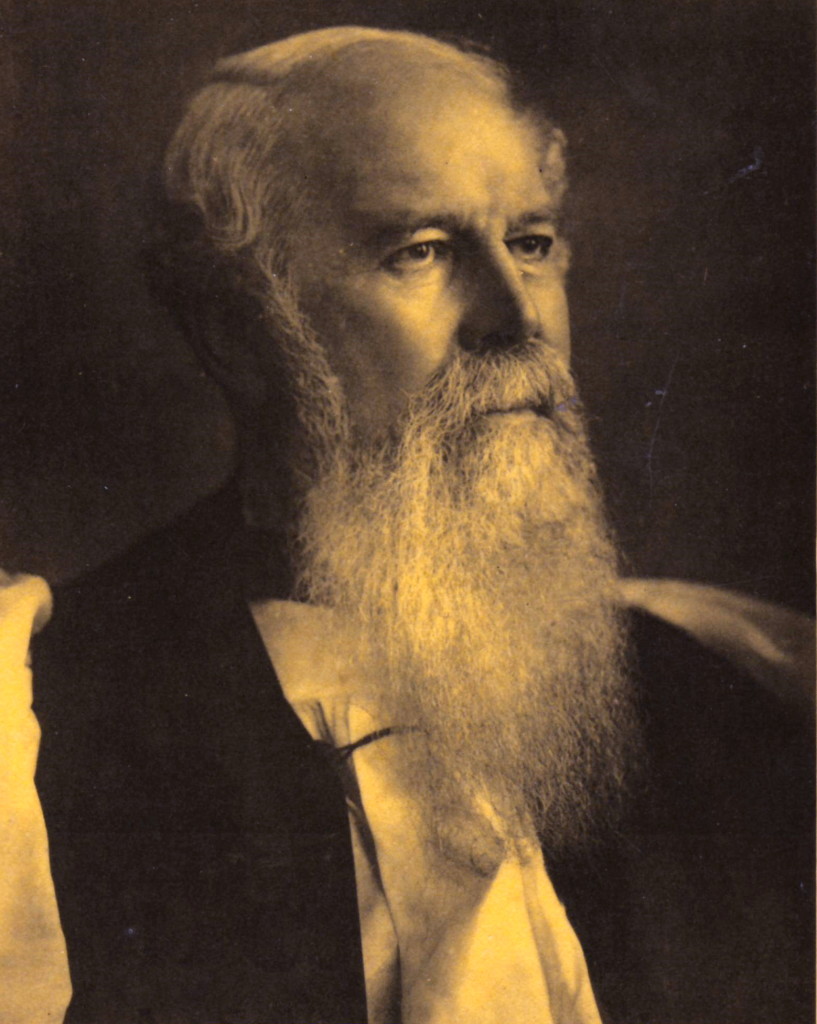
John Charles Ryle (10 May 1816 — 10 June 1900) was an English evangelical Anglican bishop. He was the first Anglican bishop of Liverpool.
Broadcaster:

Comments

0 / 2000 characters
Comments are moderated before appearing.

Be the first to comment!

Joshua

Joshua

Shall we play a game? Ask me about articles, sermons, or theology from our library. I can also help you navigate the site.