Bootstrap
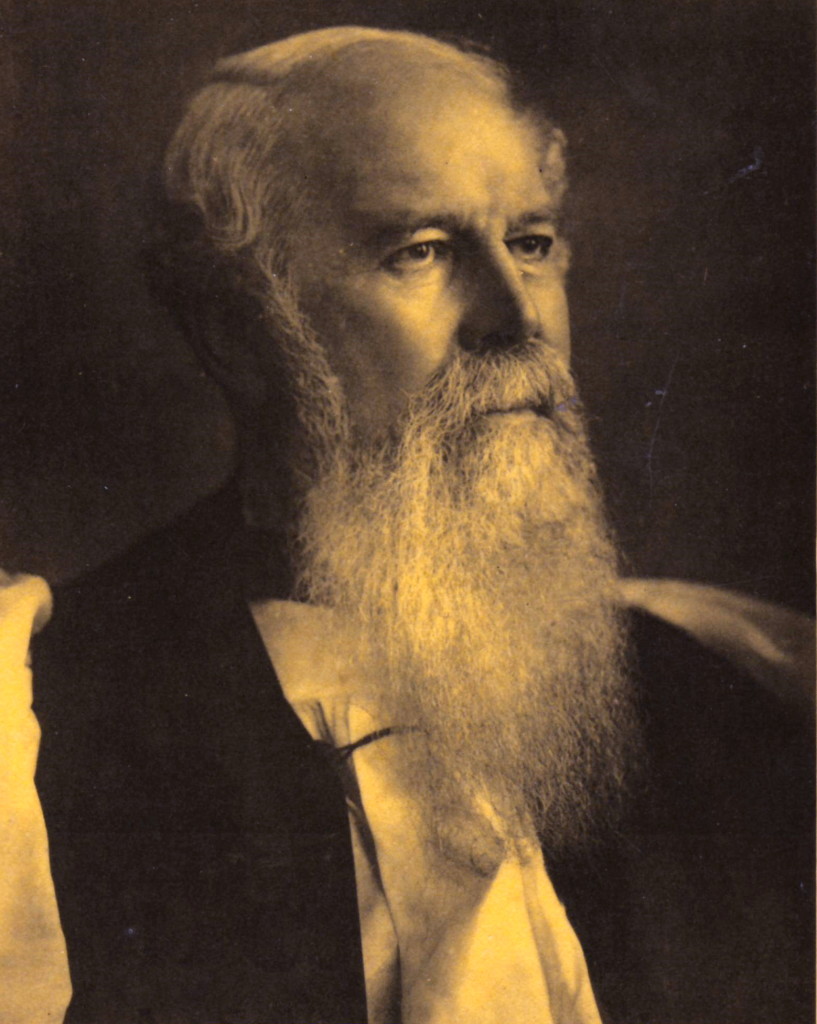
J.C. Ryle

John 14:12-17

John 14:12-17
J.C. Ryle November, 20 2022 Audio
0 Comments
You will find it helpful to READ the texts--as you LISTEN to the audios!
The TEXTS for the entire commentary can be bound here:
https://www.gracegems.org/Ryle/John.htm

Sermon Transcript

Auto-generated transcript • May contain errors

100%
Section 8 of Expository Thoughts on the Gospel of St. John Volume 3 by J. C. Ryle. CHAPTER XIV. Verily, verily, I say unto you, He that believeth on me the works that I do, shall he do also, and greater works than these shall he do, because I go unto my Father. And whatsoever ye shall ask in my name, that I will do, that the Father may be glorified in the Son. If ye shall ask anything in my name, I will do it. If ye love me, keep my commandments. And I will pray the Father, and he shall give you another Comforter, that he may abide with you for ever. Even the Spirit of Truth, whom the world cannot receive, because it seeth him not, neither knoweth him. But ye know him, for he dwelleth with you, and shall be in you."

These verses are an example of our Lord's tender consideration for the weakness of His disciples. saw them troubled and faint-hearted at the prospect of being left alone in the world. He cheers them by three promises, peculiarly suited to their circumstances. A word spoken in season, how good it is!

We have, first in this passage, a striking promise about the works that Christians may do. Our Lord says, He that believeth on me, the works that I do he shall do also, and greater works than these shall he do, because I go unto my Father.

The full meaning of this promise is not to be sought in the miracles which the Apostles wrought after Christ left the world. Such a notion seems hardly borne out by facts. We read of no Apostle walking on the water or raising a person four days dead like Lazarus.

What our Lord has in view seems to be the far greater number of conversions, the far wider spread of the Gospel, which would take place under the ministry of the Apostles than under His own teaching. This was the case, we know from the Acts of the Apostles. We read of no sermon preached by Christ, under which three thousand were converted in one day, as they were on the day of Pentecost.

In short, greater works means more conversions. There is no greater work possible than the conversion of a soul. Let us admire the condensation of our Master in allowing to the ministry of His weak servants more success than to His own.

Let us learn that His visible presence is not absolutely necessary to the progress of His Kingdom. He can help forward His cause on earth quite as much by sitting at the right hand of the Father and sending forth the Holy Ghost as by walking to and fro in the world.

Let us believe that there is nothing too hard or too great for believers to do so long as their Lord intercedes for them in heaven. Let us work on in faith and expect great things, though we feel weak and lonely like the disciples. Our Lord is working with us and for us, though we cannot see Him.

It was not so much the sword of Joshua that defeated Amalek as the intercession of Moses on the hill.

We have, secondly in this passage, a striking promise about the things that Christians may get by prayer. Our Lord says, Whatsoever ye shall ask in my name, that will I do. If ye shall ask anything in my name, I will do it. These words are a direct encouragement to the simple, yet great duty of praying. Everyone who kneels daily before God, and from his heart says his prayers, has a right to take comfort in these words. weak and imperfect as his supplications may be, so long as they are put in Christ's hands and offered in Christ's name, they shall not be in vain. We have a friend at court, an advocate with the Father, and if we honor him by sending all our petitions through him, he pledges his word that they shall succeed. Of course it is taken for granted that the things we ask are for our souls' good, and not mere temporal benefits. Anything, and whatsoever, do not include wealth and money and worldly prosperity. These things are not always good for us, and our Lord loves us too well to let us have them. But whatever is really good for our souls, we need not doubt we shall have it, if we ask in Christ's name.

How is it that many true Christians have so little? How is it that they go halting and mourning on the way to heaven and enjoy so little peace and show so little strength in Christian service? The answer is simple and plain. They have not because they ask not. They have little because they ask little. They are no better than they are because they do not ask their Lord to make them better. Our languid desires are the reason of our languid performances. We are not straightened in our Lord but in ourselves.

happy are they who never forget the words, Open thy mouth wide, and I will fill it. Psalm 81, verse 10. He that does much for Christ, and leaves his mark in the world, will always prove to be one who prays much.

We have, lastly, in this passage, a striking promise about the Holy Ghost. Our Lord says, I will pray the Father, and He shall give you another Comforter, even the Spirit of Truth. This is the first time that the Holy Ghost is mentioned as Christ's special gift to His people. Of course, we are not to suppose that He did not dwell in the hearts of all Old Testament saints, but He was given with peculiar influence and power to believers when the New Testament dispensation came in, and this is the special promise of the passage before us. We shall find it useful, therefore, to observe closely the things that are here said about Him.

The Holy Ghost is spoken of as a person. To apply the language before us to a mere influence or inward feeling is an unreasonable strain of words. The Holy Ghost is called the Spirit of Truth. It is His special office to apply truth to the hearts of Christians, to guide them into all truth and to sanctify them by the truth. The Holy Ghost is said to be one whom the world cannot receive and does not know. His operations are in the strongest sense foolishness to the natural man. The inward feelings of conviction, repentance, faith, hope, fear, and love, which he always produces, are precisely that part of religion which the world cannot understand.

The Holy Ghost is said to dwell in believers, and to be known to them. They know the feelings that he creates and the fruits that he produces, though they may not be able to explain them or see at first whence they come. but they all are what they are, new men, new creatures, light and salt in the earth, compared to the worldly, by the indwelling of the Holy Ghost.

The Holy Ghost is given to the church of the elect, to abide with them, until Christ comes the second time. He is meant to supply all the needs of believers, and to fill up all that is wanting while Christ's visible presence is removed. He is sent to abide with and help them until Christ returns. These are truths of vast importance. Let us take care that we grasp them firmly and never let them go. Next to the whole truth about Christ, it concerns our safety and peace to see the whole truth about the Holy Ghost. Any doctrine about the Church, the ministry, or the sacraments, which obscures the Spirit's inward work, or turns it into mere form, is to be avoided as deadly error. Let us never rest till we feel and know that He dwells in us. If any man have not the Spirit of Christ, he is none of his. Romans chapter 8 verse 9.

Notes John chapter 14 verses 12 to 17 verse 12. Verily works shall he do also. Here we have another comforting word addressed to the disciples. They must not suppose there would be an end of miraculous works when their master went away, and that they would be left weak and helpless, and unable to do anything to arrest the attention of an unbelieving world. On the contrary, our Lord assures them, with two emphatic verilies, that miracles would not cease with his departure. He would take care that believers should have power to do works like his own, and to confirm their word by signs following.

I cannot doubt that this promise refers to the miraculous gifts which the first generation of Christians had power to exercise, as we read elsewhere in the Acts of the Apostles, that the sick were healed, the dead raised, and devils cast out by disciples after the Lord ascended, is quite plain, and thus fulfilled the words now before us. I can see no reason to suppose that our Lord meant the promise to be fulfilled after the generation he left on earth was dead. If miracles were continually in the Church, they would cease to be miracles. We never see them in the Bible except at some great crisis in the Church's history. The Irvingite theory, that the Church would always have miraculous gifts if men had only faith, seems to me a violent straining of this text.

and greater works do. The meaning of these words must be sought in the moral and spiritual miracles which followed the preaching of the Apostles after the day of Pentecost. It could not be truly said that the physical miracles worked by the Apostles in the Acts were greater than those worked by Christ, but it is equally certain that after the day of Pentecost they did far more wonderful works in converting souls than our Lord did. On no occasion did Jesus convert three thousand at one time and a great company of priests.

Because I go to the Father." These words point to the great outpouring of the Holy Ghost which took place after our Lord's ascension into heaven, whereby the miracles of conversion were wrought. There was an immediate and mysterious connection, we must remember, between our Lord ascending up on high and receiving gifts for men. If He had not gone to the Father the Spirit would not have been sent forth. Ephesians chapter 4 verse 8

Melachthon thinks the promise of this text is clearly bound up with the following verse, He shall do greater works because I go to the Father, and because then whatsoever ye shall ask I will do. Verse 13. And whatsoever ask will I do. Here comes another great piece of comfort for the troubled disciples, viz., a promise that Christ will do everything for them which they pray for in His name and for His sake. whatever help or strength or support or guiding they need, if they ask God for it in Christ's name, Christ will give it. This is one of those texts which authorizes all prayers being made through Christ's mediation, as in prayer book collects. The whatsoever must of course be taken with the qualifying condition, whatsoever really good thing ye ask.

connection with the end of the preceding verse should not be overlooked. When I go to the Father I will do whatever ye ask. That Father glorified Son. This is a difficult sentence. The meaning probably is, I will do whatever ye ask that my Father may be glorified by my mediation by sending into the world a Son through whom sinners can obtain such blessings. Christ's power to do anything that He is asked brings glory to Him who sent Him.

14. IF, ASK ANYTHING, WE'LL DO IT. This verse is a repetition of the preceding to give emphasis and assurance to the promise. It is as if our Lord saw how slow the disciples would be to believe the efficacy of prayer in His name. Once more I tell you most emphatically that if you ask anything in My name I will do it. We should notice, both in this verse and the preceding one, that it is not said, If ye ask in my name, the Father will do it, but I will do it.

Verse 15. If ye love, keep commandments. Here we have a direct, practical exhortation. If ye really love me, prove your love by not weeping and lamenting at my departure, but by striving to do my will when I am gone. doing and not crying is the best proof of love. The commandments here mentioned must include all the Lord's moral teachings while on earth, and specially such rules and laws as He laid down in the Sermon on the Mount. I cannot but think that in this verse our Lord had in view the disposition of His disciples to give way to grief and distress at His leaving them. and to forget that the true test of love was not useless and barrenness lamentation, but practical obedience to their master's commands. Let us notice how our Lord speaks of My commandments. We never read of Moses or any other servant of God using such an expression. It is the language of one who was one with God the Father and had power to lay down laws and make statutes for his church.

Verse 16 and I, pray the Father, etc. This verse holds up to the Eleven another grand consolation, viz., the gift of another abiding comforter in place of Christ, even the Holy Ghost. When I go to Heaven I will ask the Father to give you another friend and helper, to be with you and support you in my stead, and never leave you as I do. In this remarkable verse several points demand special notice. One principal point is the mention of all three persons in the Blessed Trinity, the Son praying, the Father giving, the Spirit comforting. When our Lord says, I will pray the Father and He shall give, we must need suppose that He accommodates language to our minds. The gift of the Holy Ghost was appointed in the eternal councils of the Trinity, and we cannot literally say that the gift depended on Christ asking. Moreover, in another place our Lord says, I will send Him. Burkitt remarks that the future tense here points to Christ's continual intercession. As long as Christ is in heaven, Christians shall not want a supply of comfort.

When we read of the Holy Ghost being given, we must not think that He was in no sense in the church before the day of Pentecost. He was ever in the hearts of Old Testament believers. No one ever served God acceptably from Abel downwards without the grace of the Holy Ghost. John the Baptist was filled with Him. can only mean that He shall come with more fullness, influence, grace, and manifestation than He did before. When we read of the Spirit abiding forever with disciples, it means that He will not, like Christ after His resurrection, return to the Father, but will always be with God's people until Christ comes again. The word comforter is the same that is translated advocate and applied to Christ Himself in 1 John chapter 2 verse 2. This has caused much difference of opinion. The word is only used five times in the New Testament, and is four times applied to the Holy Spirit. Some, as Lightfoot, Bishop Hall, and Doddridge, maintain that our translation here is right, and that it is the office of the Spirit to comfort and strengthen God's people. others as Beza, Lamp, Dedeus, Gomarus, Pool, Pierce, Steer, and Alford, maintain that the word here should have been rendered advocate, as in John's epistle, and that this word aptly expresses the office of the Spirit as pleading our cause and making intercession for the saints, and helping them in prayer and preaching. See Romans chapter 8 verse 26, Matthew chapter 10 verses 19 and 20.

I decidedly prefer this latter view. Those who wish to see an able argument in its favor should study Canon Lightfoot's volume on New Testament revision, page 55. Lamp sensibly remarks that the word another points to the phrase meaning advocate rather than comforter. That Jesus is our advocate, I'll allow. Well, our Lord seems to say, you shall have another advocate beside myself. Why use the word another at all if comforter is the meaning? It is only fair to say that the consolation of Israel was a Jewish name of Messiah, Luke chapter 2 verse 25, and that some think that Christ was one comforter and the Holy Ghost another, but I do not see much in this.

Even the spirit of truth. The Holy Ghost is most probably so called because he brings truth especially home to men's hearts. because truth is his great instrument in all operations, and because he bears witness to Christ the truth. Elsewhere we read, It is the Spirit that beareth witness, because the Spirit is truth. 1 John 5.6.

Whom world cannot receive, knoweth him. Here our Lord teaches that it is one great mark of the unbelieving and worldly that they neither receive nor know nor see anything of the Holy Ghost. This is strikingly true. Many false professors and unconverted people receive Christ's name and talk of Him, while they know nothing, experimentally, of the operations of the Holy Spirit. It is written, The natural man receiveth not the things of the Spirit of God, for they are foolishness to him, neither can he know them.

But ye know, dwelleth, shall be in you. Our Lord's meaning here must be that the Eleven knew something, experimentally, of the Spirit's work. They might not be fully acquainted with Him, but He was actually in them, making them what they were, and He would remain in them and carry on the work He had begun to a glorious end. Whether you know it thoroughly and rightly or not, He is actually in you now, and shall always be in you and never leave you.

Let us mark in this and in the preceding verse how our Lord speaks of the Holy Spirit as a person. We should never speak of Him as a mere influence or dishonor Him by calling Him it. Let us never forget that having the Spirit or not having the Spirit makes the great distinction between the children of God and the children of the world. Believers have Him, worldly and wicked people have Him not.
J.C. Ryle
About J.C. Ryle
John Charles Ryle (10 May 1816 — 10 June 1900) was an English evangelical Anglican bishop. He was the first Anglican bishop of Liverpool.
Broadcaster:

Comments

0 / 2000 characters
Comments are moderated before appearing.

Be the first to comment!

Joshua

Joshua

Shall we play a game? Ask me about articles, sermons, or theology from our library. I can also help you navigate the site.