Bootstrap
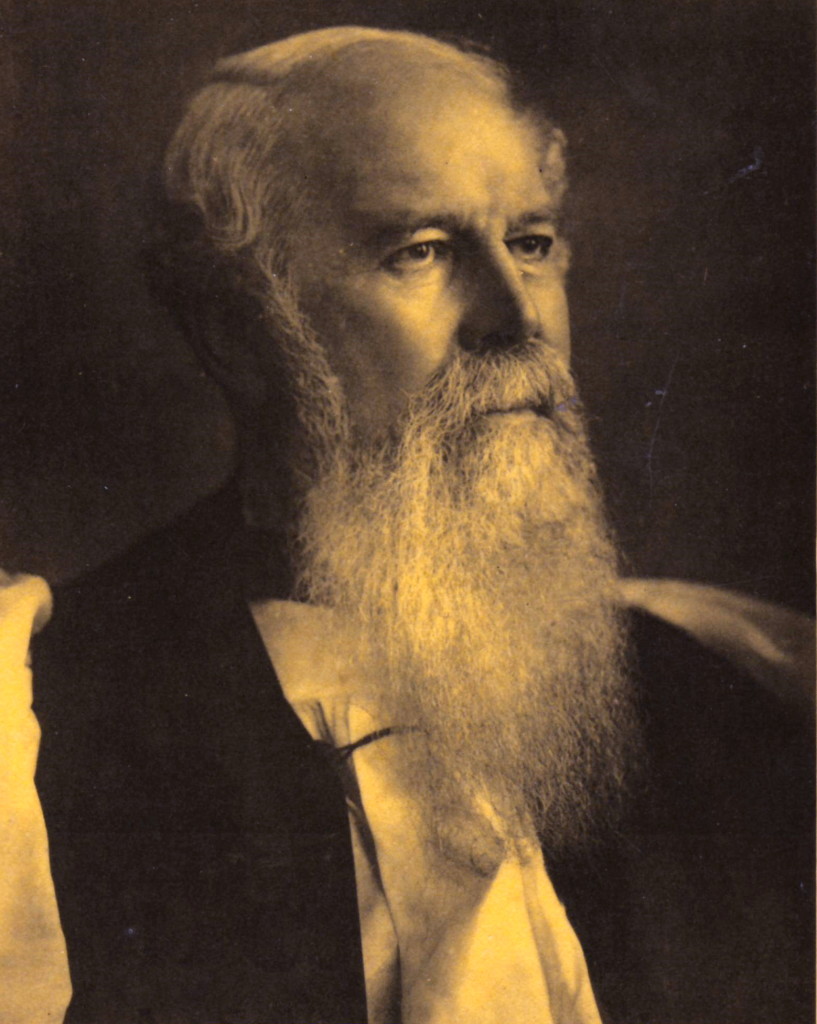
J.C. Ryle

John 14:21-26

John 14:21-26
J.C. Ryle November, 20 2022 Audio
0 Comments
You will find it helpful to READ the texts--as you LISTEN to the audios!
The TEXTS for the entire commentary can be bound here:
https://www.gracegems.org/Ryle/John.htm

Sermon Transcript

Auto-generated transcript • May contain errors

100%
X. EXPOSITORY THOUGHTS ON THE GOSPEL OF SAINT JOHN. CHAPTER XIV.

He that hath my commandments, and keepeth them, he it is that loveth me. And he that loveth me shall be loved of my Father, and I will love him, and will manifest myself to him.

Judas saith unto him, not Iscariot, Lord, how is it that thou wilt manifest thyself unto us, and not unto the world?

Jesus answered and said unto him, If a man loves me, he will keep my words, and my Father will love him, and we will come unto him, and make our abode with him.

He that loveth me not keepeth not my sayings, and the word which ye hear is not mine, but the Father's which sent me.

These things have I spoken unto you, being yet present with you. But the Comforter, which is the Holy Ghost, whom the Father will send in my name, he will teach you all things, and bring all things to your remembrance whatsoever I have said unto you.

" We learn from these verses that keeping Christ's commandments is the best test of love to Christ. This is a lesson of vast importance, and one that needs continually pressing on the attention of Christians. It is not talking about religion, and talking fluently and well, too, but steadily doing Christ's will, and walking in Christ's ways, that is the proof of our being true believers.

Good feelings and desires are useless if they are not accompanied by action. They may even become mischievous to the soul, induce hardness of conscience, and do positive harm. Passive impressions which do not lead to action gradually deaden and paralyze the heart. Living and doing are the only real evidence of grace. Where the Holy Spirit is, there will always be a holy life, a jealous watchfulness over tempers, words, and deeds, a constant endeavor to live by the rule of the Sermon on the Mount.

This is the best proof that we love Christ. Of course, such maxims as these must not be rested and misunderstood. We are not to suppose for a moment that keeping Christ's commandments can save us. Our best works are full of imperfection. When we have done all we can, we are feeble and unprofitable servants. By grace are ye saved, through faith, not of works. Ephesians chapter 2 verse 8.

But while we hold one class of truths, we must not forget another. Faith in the blood of Christ must always be attended by loving obedience to the will of Christ. What the Master has joined together, the disciple must not put asunder. Do we profess to love Christ? Then let us show it by our lives. The apostle who said, Thou knowest that I love thee, received the charge, Feed my lambs. That meant, Do something, be useful, follow my example. John chapter 21 verse 17.

We learn secondly from these verses that there are special comforts laid out for those who love Christ and prove it by keeping his words. This, at any rate, seems the general sense of our Lord's language. My Father will love Him and we will come unto Him and make our abode with Him.

The full meaning of this promise, no doubt, is a deep thing. We have no line to fathom it. It is a thing which no man can understand except he that receives and experiences it. But we need not shrink from believing that eminent holiness brings eminent comfort with it, and that no man has such sensible enjoyment of his religion as the man who, like Enoch and Abraham, walks closely with God.

There is more of heaven on earth to be obtained than most Christians are aware of. The secret of the Lord is with them that fear him, and he will show them his covenant. If any man hear my voice, and open the door, I will come to him, and sup with him, and he with me. Psalm 25 verse 14, Revelation chapter 3 verse 20.

Promises like these, we may be sure, mean something, and were not written in vain. How is it, people often ask, that so many professing believers have so little happiness in their religion? How is it that so many know little of joy and peace in believing, and go mourning and heavy-hearted towards heaven?

The answer to these questions is a sorrowful one, but it must be given. Few believers attend as strictly as they should to Christ's practical sayings and words. There is far too much loose and careless obedience to Christ's commandments. there is far too much forgetfulness, that while good works cannot justify us, they are not to be despised.

Let these things sink down into our hearts. If we want to be eminently happy, we must strive to be eminently holy.

We learn, lastly, from these verses, that one part of the Holy Ghost's work is to teach and to bring things to remembrance. It is written, The Comforter shall teach you all things, and bring all things to your remembrance.

To confine this promise to the eleven apostles, as some do, seems a narrow and unsatisfactory mode of interpreting Scripture. It appears to reach far beyond the Day of Pentecost, and the gift of writing inspired books of God's Holy Word. It is safer, wiser, and more consistent with the whole tone of Our Lord's Last Discourse to regard the promise as the common property of all believers in every age of the world.

Our Lord knows the ignorance and forgetfulness of our nature in spiritual things. He graciously declares that when He leaves the world, His people shall have a teacher and a remembrancer.

Are we sensible of spiritual ignorance? Do we feel that at best we know in part and see in part? Do we desire to understand more clearly the doctrines of the gospel? Let us pray daily for the help of the Teaching Spirit. It is His office to illuminate the soul, to open the eyes of the understanding, and to guide us into all truth. He can make dark places light and rough places smooth.

Do we find our memory of spiritual things defective? Do we complain that though we read and hear, we seem to lose as fast as we gain? Let us pray daily for the help of the Holy Ghost. He can bring things to our remembrance. He can make us remember old things and new. He can keep in our minds the whole system of truth and duty and make us ready for every good word and work.

Notes.

John chapter 14 verses 21 to 26.

Verse 21. He that hath commandments loveth me. Our Lord seems to return to the lesson of the 15th verse and to repeat it because of its importance. There, however, he spoke specially to his disciples. Here he lays it down as a general principle applicable to all Christians in all time. He that not only possesses and knows my commandments, but also does and practices them, he is the man that really loves me.

Obedience is the true test of real love to Christ and not knowledge and talk only. Many have, but do not keep Christ's will. Vergoan observes, this amounts to a declaration that the sad hearts and weeping eyes of the apostles would not be accepted by their Lord as proof of their love. Obedience was the test he chose.

He loveth me, loved father. Here follows an encouragement to practical obedience. He that really loves me and proves his love by his life shall be specially loved by my father. My father loves those who love me. Let us carefully note that there is a special love of God the father, which is peculiarly set on believers over and above the general love of pity and compassion with which he regards all mankind. In the highest sense, God is a father to none but those who love Christ. The modern doctrine of a fatherhood of God, which is soul-saving to those who neglect Christ, is a mere delusion of man.

And I love manifest him. Here follows another encouragement to the man who strives to keep Christ's commandments. Christ will specially love that man and will give him special manifestations of his grace and favor, invisibly and spiritually. He shall feel and know in his own heart comforts and joys that wicked men and inconsistent professors know nothing of.

That the manifesting of himself here spoken of is a purely unseen and spiritual thing is self-evident. It is one of those things which can only be known by experience, and is only known by holy and consistent Christians. We should carefully observe here that Christ does more for the comfort of some of His people than He does for others. Those who follow Christ most closely and obediently will always follow Him most comfortably and feel most of His inward presence. It is one thing, as St. John says, to know Christ, another to know that we know Him.

1 John chapter 2 verse 3. Jude, the writer of the Epistle and brother of James, was the apostle who speaks here. He is called elsewhere Labaius and Thaddeus. Remembering that James is called in Galatians the Lord's brother, there must have been some relationship between him and our Lord. Probably he was a cousin. Whether a recollection of this may have been in his mind when asking the question at midst of conjecture, this is the only word recorded to have been spoken by Jude in the Gospels.

We should mark the careful manner in which St. John reminds us that it was not the false apostle who asked. Let us note that out of each saying of the three apostles who spoke to our Lord, interrupting him in his last discourse, a great truth was elicited for the benefit of the Church. Thomas, Philip, and Jude, ignorant and slow as they were, drew out of our Lord's mouth rich and precious sayings.

How is it manifest us not world? This question is the simple inquiry of one guessing after the truth, and not able to see clearly what our Lord's words meant, whether a visible or an invisible manifestation of Himself. What is the precise distinction of privilege between ourselves and the world to which you The Greek for, how is it, would be literally, what has happened? The Greek for, thou wilt, is literally, thou art about. Whitby thinks that Jude, like most Jews of his time, expected Messiah's kingdom to be a visible temporal kingdom over all the earth. He could not therefore understand a manifestation of Christ confined to the disciples.

Verse 23. Jesus answered, We'll love him. This sentence is simply a repetition of the truth contained in the 15th and 21st verses. I tell you again emphatically that the man who really loves me will keep my words and obey my commandments, and I repeat that such a man will be specially loved and cared for by my Heavenly Father. Let us note that in this verse our Lord does not say, keep my commandments, but my word generally, in the singular number, including all his whole teaching.

And we will come, abide with him. These words can only admit of one's sense, a spiritual and invisible coming and abiding. The Father and the Son will come spiritually into the heart and soul of a true saint, and will make their continual dwelling with him. This, again, is a purely experimental truth, and one that none can know but he that has felt it. Let us note the condensation of the Father and the Son, and the high privileges of a believer.

No matter how poor and lowly a man may be, if he has faith and grace, he has the best of company and friends. Christ and the Father dwell in his heart, and he is never alone and cannot be poor. He is the temple of the Father, Son, and Holy Ghost.

The use of the plural number, we, is very noteworthy in this place.

Verse 24. He loveth me not my sayings. Once more the same great principle already taught is laid down again from the negative side. Where there is no obedience to Christ, there is no love. Nothing can be more plain than our Lord's repeated warnings that practical obedience, keeping His commandments and sayings, doing His will, is the only sure test of love to Him. Without this obedience, profession, talk, knowledge, churchmanship, yea, even feeling, conviction, and weeping and crying, are all worthless things.

And word, not mine, Father, sent me. The purpose of this sentence is to remind the disciples of the authority and dignity of our Lord's sayings and commandments. They are not His words only, but His Father's. He that despises them despises the Father, and he that honors them, by obedience, honors the Father.

Verse 25. These things, spoken, present with you. Our Lord seems here to begin to wind up the first part of His discourse to a conclusion. Whether these things mean only the things He spoke this evening, or all the things He had taught them during His ministry at midst of doubt, I rather incline to the view that the expression must be taken in the widest sense. These and many other things I have spoken to you, while abiding and dwelling among you. Your hearts are troubled, perhaps, by the thought that you cannot remember them, and do not understand them. Here there are some grounds of comfort.

But Comforter, Holy Ghost, my name. Here comes one more grand consolation. When I am gone the Holy Ghost, the promised Advocate, whom the Father will send on my account, through my intercession and to glorify me, shall supply all your need and provide for all your wants. Let us note how distinctly the Holy Spirit is spoken of here as a person and not as an influence. Let us note how the Father sends the Spirit but also sends Him in Christ's name and with a special reference to Christ's work.

He shall teach you all things. The first word here rendered, He, is unmistakably applicative to none but a person, being a masculine pronoun. The teaching here promised must mean, firstly, that fuller and more complete instruction which the Holy Ghost gave to believers after our Lord's ascension. No one can read the Acts without seeing that the eleven were different men after the day of Pentecost, and saw and knew and understood things of which they were very ignorant before.

But, secondly, the teaching most probably includes all that teaching and enlightening which the Spirit imparts to all true believers in every age. Light is the first thing we need, and He gives it. It is His special office to open the eyes of our understandings. The expression, all things, must plainly be limited to all things needful to be known by the soul, and does not include all knowledge of every kind. And bring all things, remembrance, told you. This is a special consolation for the weak memories of the troubled disciples. Our Lord promises that the Spirit would bring back to their memories the many lessons, both doctrinal and practical, which they had heard from Him but forgotten.

This was a very needful promise. How often we find it recorded that the disciples did not understand our Lord's sayings and doings at the time they heard and saw them, it is almost needless to point out.

John 2.22.12.16 Some apply these words especially to the gift of inspiration by which the New Testament Scriptures were written. I cannot see this. The promise was to the whole eleven, of whom only five were allowed to write. This is strongly dwelt on by Alfred.

Some apply these words exclusively to the eleven. I cannot see this either. To my eyes they seem a general promise, primarily, no doubt, applying specially to the eleven, but after them belonging to all believers in every age.

As a matter of experience, I believe that the awakening of the memories of true Christians is one of the peculiar works of the Holy Ghost on their souls. Once converted, they understand things and remember things in a way they did not before.

Does anyone complain of his own ignorance and bad memory? Let him not forget that there is one whose office it is to teach and to bring to remembrance. Let him pray for the Holy Spirit's help.

End of section 10
J.C. Ryle
About J.C. Ryle
John Charles Ryle (10 May 1816 — 10 June 1900) was an English evangelical Anglican bishop. He was the first Anglican bishop of Liverpool.
Broadcaster:

Comments

0 / 2000 characters
Comments are moderated before appearing.

Be the first to comment!

Joshua

Joshua

Shall we play a game? Ask me about articles, sermons, or theology from our library. I can also help you navigate the site.