Bootstrap
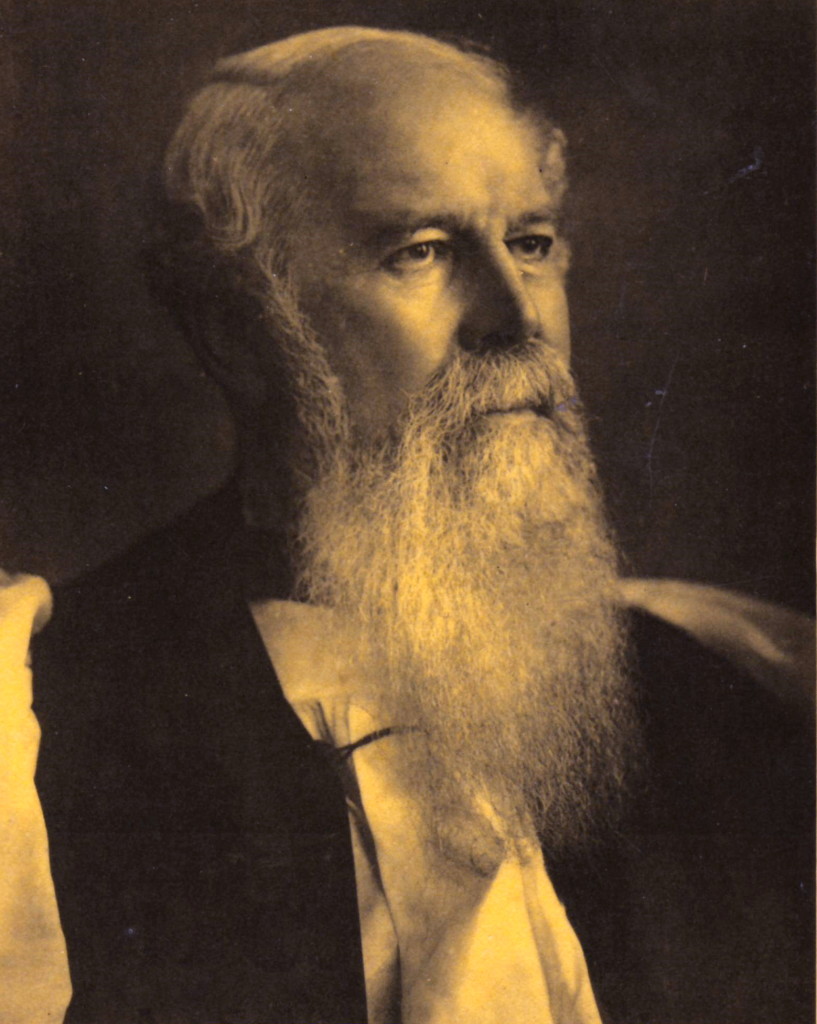
J.C. Ryle

John 18:12-27

John 18:12-27
J.C. Ryle November, 20 2022 Audio
0 Comments
You will find it helpful to READ the texts--as you LISTEN to the audios!
The TEXTS for the entire commentary can be bound here:
https://www.gracegems.org/Ryle/John.htm

Sermon Transcript

Auto-generated transcript • May contain errors

100%
XVIII. XII-XXVII. Then the band and the captain and officers of the Jews took Jesus and bound him, and led him away to Annas first, for he was the father-in-law to Caiaphas, which was the high priest that same year. Now Caiaphas was he which gave counsel to the Jews that it was expedient that one man should die for the people.

And Simon Peter followed Jesus, and so did another disciple. That disciple was known unto the high priest, and went in with Jesus into the palace of the high priest. But Peter stood at the door without. Then went out that other disciple, which was known unto the high priest, and spake unto her that kept the door, and brought in Peter.

Then saith the damsel that kept the door unto Peter, Art not thou also one of this man's disciples? He saith, I am not. And the servants and officers stood there, who had made a fire of coals, for it was very cold, and they warmed themselves, and Peter stood with them and warmed himself.

The high priest then asked Jesus of his disciples and his doctrine. Jesus answered him, I speak openly to the world, I ever taught in the synagogue and in the temple, whither the Jews always resort, and in secret I have said nothing. Why askest thou me, as them which heard me what I have said unto them? Behold, they know what I said.

And when he had thus spoken, one of the officers which stood by struck Jesus with the palm of his hand, saying, Answerst thou the high priest so? Jesus answered him, If I have spoken evil, bear witness of the evil, but if well, why smitest thou me?

Now Annas had sent him bound unto Caiaphas the high priest, and Simon Peter stood and warmed himself. They said therefore unto him, Art thou not also one of his disciples? he denied it and said, I am not. One of the servants of the high priest, being his kinsman, whose ear Peter cut off, saith, Did I not see thee in the garden with him? Peter then denied again, and immediately the cock crew.

In this part of St. John's history of Christ's sufferings, three wonderful things stand out upon the surface of the narrative. To these three, let us confine our attention.

We should mark, for one thing, the amazing hardness of unconverted men. We see this in the conduct of the men by whom our Lord was taken prisoner. Some of them most probably were Roman soldiers, and some of them were Jewish servants of the priests and Pharisees. But in one respect they were all alike. Both parties saw our Lord's divine power exhibited when they went backward and fell to the ground. Both saw a miracle, according to St. Luke's Gospel, when Jesus touched the ear of Malchus and healed him. yet both remained unmoved, cold, indifferent and insensible, as if they had seen nothing out of the common way.

They went on coolly with their odious business. They took Jesus, bound him, and led him away. The degree of hardness and insensibility of conscience to which men may attain when they live twenty or thirty years without the slightest contact with religion is something awful and appalling. God and the things of God seem to sink out of sight and disappear from the mind's eye. The world and the things of the world seem to absorb the whole attention. In such cases we may well believe miracles would produce little or no effect, as in the case before us.

The eye would gaze on them, like the eye of a beast, looking at a romantic landscape without any impression being made on the heart. He who thinks that seeing a miracle would convert him into a thorough Christian has got much to learn. Let us not wonder if we see cases of hardness and unbelief in our own day and generation. Such cases will continually be found among those classes of mankind who from their profession or position are completely cut off from the means of grace. Twenty or thirty years of total irreligion, without the influence of Sunday, Bible, or Christian teaching, will make a man's heart hard as the nether millstone. His conscience at last will seem dead, buried, and gone. he will appear past feeling.

Painful as these cases are, we must not think them peculiar to our own times. They existed under Christ's own eyes, and they will exist until Christ returns. The Church which allows any portion of a population to grow up in practical heathenism must never be surprised to see a rank crop of practical infidelity.

We should mark, for another thing, the amazing condescension of our Lord Jesus Christ. We see the Son of God taken prisoner and led away bound like a malefactor, arraigned before wicked and unjust judges, insulted and treated with contempt. And yet this unresisting prisoner had only to will his deliverance, and he would at once have been free. He had only to command the confusion of his enemies, and they would at once have been confounded. Above all, he was one who knew full well that Annas and Caiaphas and all their companions would one day stand before his judgment seat and receive an eternal sentence. He knew all these things, and yet condescended to be treated as malfactor without resisting.

One thing, at any rate, is very clear. The love of Christ to sinners is a love that passeth knowledge. To suffer for those whom we love, and who are in some sense worthy of our affections, is suffering that we can understand. To submit to ill-treatment quietly, when we have no power to resist, is submission that is both graceful and wise. But to suffer voluntarily, when we have the power to prevent it, and to suffer for a world of unbelieving and ungodly sinners, unasked and unthanked, this is a line of conduct which passes man's understanding.

Never let us forget that this is the peculiar beauty of Christ's sufferings, when we read the wondrous story of His cross and passion. He was led away captive and dragged before the high priest's bar, not because he could not help himself, but because he had set his whole heart on saving sinners, by bearing their sins, and by being treated as a sinner, and by being punished in their stead. He was a willing prisoner that we might be set free. He was willingly arraigned and condemned that we might be absolved and declared innocent. He suffered for sins, the just for the unjust, that he might bring us unto God. Though he was rich, yet for our sakes he became poor, that we through his poverty might be rich. He was made sin for us who knew no sin, that we might be made the righteousness of God in him.

1 Peter 3.18, 2 Corinthians 8.9, 5.21.

Surely, if there is any doctrine of the Gospel which needs to be clearly known, it is the doctrine of Christ's voluntary substitution. He suffered and died willingly and unresistingly, because He knew that He had come to be our substitute, and by substitution to purchase our salvation.

We should mark, lastly, the amazing degree of weakness that may be found in a real Christian. We see this exemplified in a most striking manner in the conduct of the Apostle Peter We see that famous disciple forsaking his master and acting like a coward, running away when he ought to have stood by his side, ashamed to own him when he ought to have confessed him, and finally denying three times that he knew him. And this takes place immediately after receiving the Lord's Supper, after hearing the most touching address and prayer that mortal ear ever heard, after the plainest possible warnings, under the pressure of no very serious temptation.

Lord, we may well say, what is man that thou art mindful of him? Let him that thinketh he standeth take heed lest he fall. 1 Corinthians 10.

This fall of Peter is doubtless intended to be a lesson to the whole Church of Christ. It is recorded for our learning that we be kept from like sorrowful overthrow. It is a beacon mercifully set up in Scripture to prevent others making shipwreck. It shows us the danger of pride and self-confidence. If Peter had not been so sure that although all denied Christ, he never would, he would probably never have fallen. It shows us the danger of laziness. If Peter had watched and prayed when our Lord advised him to do so, he would have found grace to help him in the time of need. It shows, as not least, the painful influence of the fear of man. Few are aware, perhaps, how much more they fear the face of man whom they can see than the eye of God whom they cannot see.

These things are written for our admonition. Let us remember Peter and be wise.

And after all, let us leave the passage with the comfortable reflection that we have a merciful and pitiful High Priest, who can be touched with the feeling of our infirmities and will not break the bruised reed. Peter no doubt fell shamefully, and only rose again after heartfelt repentance and bitter tears. But he did rise again. He was not left to reap the consequence of his sin, and cast off for evermore. The same pitiful hand that saved him from drowning, when his faith failed him on the waters, was once more stretched out to raise him when he fell in the high priest's hall. Can we doubt that he rose a wiser and better man? If Peter's fall has made Christians see more clearly their own great weakness and Christ's great compassion, then Peter's fall has not been recorded in vain.

Notes.

John chapter 18 verses 12 to 27.

Verse 12. Then the band and the captain, etc. These verses begin the story of our Lord when he was actually in the hands of his deadly enemies. For the first time in his earthly ministry we see him not a free agent, but submitting to be a passive sufferer, and allowing his foes to work their will. The last miracle had been wrought in vain. Like a malefactor he is seized and put in chains. The captain must mean the Roman officer who commanded the band, cohort or detachment, which was sent to apprehend our Lord. The officers must mean the civil servants of the priests who accompanied them. The binding must mean the putting of chains or handcuffs on our Lord's arms and wrists.

Verse 13, And led him away to Annas, etc. This is a fact which is mentioned by no Gospel writer except John. The explanation of it is probably something of this kind. In the time when our Lord Jesus was on earth, the office of the High Priest among the Jews was filled up with the utmost disorder and irregularity. Instead of the High Priest being High Priest for life, he was often elected for a year or two, and then deposed and his office given to another. They were often living at one time several priests who had served the office of High Priest, and then ceased to hold it, like sheriffs or mayors among ourselves. In the case before us, Annas appears, after ceasing to be high priest himself, to have lived in the same palace with his son-in-law, Caiaphas, and to have assisted him as an assessor and advisor in the discharge of his duties, which, from his age and official experience, he would be well qualified to do.

Remembering this, we may understand our Lord being led away to Annas first, and then passed on by him to Caiaphas. So intimate were the relations between the two that in Luke chapter 3 verse 2 we are told that Annas and Caiaphas were high priests. In Acts chapter 4 verse 6, Annas is called the high priest. Yet it is very certain that Caiaphas was the acting high priest the year that our Lord was crucified. John distinctly asserts it.

The gross inconsistency of the Jews in making such a dew about the Law of Moses, while they permitted and tolerated such entire departures from its regulations about the High Priest's office, is a curious example of what blindness unconverted men may exhibit. As to there being two High Priests at the same time, we must in fairness remember that even in Holy David's time, Zadok and Apathar were the priests. 2 Samuel chapter 20 verse 25. The gross irregularity in our Lord's time consisted in making the high priest's office an annual one.

The object of the Jews in bringing our Lord before the high priest, and in the Sanhedrin first, is very plain. They wished to convict him of heresy and blasphemy, and then after that to denounce him to the Romans. Augustine thinks that Caiaphas arranged that our Lord should be taken to Annas first, because he was his father-in-law. He also thinks that these two held the office of high priest, each in his turn, year by year. Calvin thinks that our Lord was only taken to Annas first, because his house happened to be convenient, till the high priest and council assembled. Cyril and Meschalus think that Annas was the contriver and designer of all done against Christ.

Serahir interposes the verse, which in most Bibles comes as the 24th, and is at once sent him bound to Caiaphas the high priest. Luther, Flacius, and Beza incline to approve this, but it is fair to say that there is a great lack of authority for this change. Many commentators think that Jesus was taken to Annas first by way of exhibiting to the old enemy of all righteousness the triumphant success of the attempt to capture the prisoner whom this anhedron had agreed to slay. They think that he was just shown to Annas and then passed on to Caiaphas.

But I cannot think this probable. I hold with Alford and Ellicott that our Lord was examined by Annas. Cornelius Allopade suggests that Annas was very likely the person with whom Judas bargained to betray our Lord for money, and that when the capture was effected, Judas brought the prisoner to the house of Annas and remained there to claim his price, after Annas had seen him. He observes with some acuteness that Judas does not appear after this in the history of the examination of our Lord.

Lightfoot quotes a Jewish writer who says that, in the second temple, which only stood 420 years, there were in that time more than 300 high priests. Henry remarks, It was the ruin of Caiaphas that he was high priest that year, and so became a ringleader in putting Christ to death. Many a man's advancement has lost him his reputation, and he would not have been dishonored if he had not been preferred and promoted.

Now Caiaphas was he, etc. This verse contains one of John's peculiar explanatory comments, and as such comes in parenthetically. It is as though he said, Let us not forget that this is the very Caiaphas who after the raising of Lazarus had said publicly that it was expedient that one man should die for the people. Behold how he is made the unconscious instrument of bringing that saying to pass, though in a widely different sense, from that which he intended. Calvin compares him to Balaam. Let us note how the great wicked men of this world, the Sennacheribs and Neroes and bloody Marys and Napoleons, are used by God as his saws and axes and hammers to do his work and carry out the building of his church, though they are not themselves in the least aware of it. Indeed Caiaphas helps forward the one great sacrifice for the sins of the world. Verse 15. And Simon Peter followed Jesus. The first flight and running away of the disciples is passed over entirely by John. He simply mentions that Peter followed his master, though at a distance, lovingly anxious to see what was done to him, yet not bold enough to keep near him like a disciple. Anyone can see that the unhappy disciple was under the influence of very mixed feelings. Love made him ashamed to run away and hide himself. Cowardice made him afraid to show his colors and stick by his Lord's side. Hence he chose a middle course, the worst, as it happened, that he could have followed. After being self-confident when he should have been humble, and sleeping when he ought to have been praying, he could not have done a more foolish thing than to flutter round the fire and place himself within reach of temptation. It teaches the foolishness of man when his grace is weak. No prayer is more useful than the familiar one, lead us not into temptation. Peter forgot it here. And so did another disciple. This would be more literally rendered, the other disciple. The opinion of many commentators is that this disciple was John. Precisely the same expression is used in four successive verses. John 20, verses 2, 3, 4, and 8, where John is clearly referred to. This is the view of Chrysostom, Cyril, Alfred, Wordsworth, and Burgon. Chrysostom and Cyril observe that it was John's humility that made him conceal his name both here and elsewhere. Here he would not proclaim that he stood while Peter fell. Ferris suggests that the presence of a disciple is mentioned in order to show that John saw with his own eyes all that went on at our Lord's examination. that disciple, known priest. How and in what manner this acquaintance originated we are not told, nor is there any clue to a knowledge of it. On the face of things it certainly seems strange that a humble Galilean fisherman, like John, should be personally known to Caiaphas. On the other hand we must not forget that every devout Jew went up to Jerusalem at the three great feasts, and on these occasions might easily have become acquainted with the high priest, and the more likely to get acquainted, if a conscientious and godly man. Moreover, we must remember that John was once a disciple of John the Baptist, and that there was a time when Jerusalem and all Judea attended on John's ministry. Acquaintance might have been formed then. Some have thought that John's calling as a fisherman might easily bring him into communication with the family of Caiaphas when he visited Jerusalem on business. All these, it must be confessed, are only conjectures, and it is perhaps the safest to admit our ignorance. Enough for us to read that the High Priest knew John, but why and how we cannot tell. Hengstenberg suggests an explanation which is so singular that I think it best to give it in his own words. The character of John leads to the obvious supposition that his acquaintance with the High Priest rested on religious grounds. Searching for godly pearls, John had earlier sought from the high priest what, after the intervening ministry of the Baptist, he found in Christ. With what eyes he had formerly regarded the position of high priest is shown by the fact that, though a disciple of Christ, he nevertheless assigned to the word of the high priest a prophetic significance. John 11, verse 51. John, by his internally devout nature, had so attracted the good will of the High Priest, that he did not wholly cast him off even after he had gone over to the true High Priest. Nor had John entirely abandoned Caiaphas. Real love cannot be so easily rooted from the heart, and it is characteristic of John to retain a pious regard to earlier relations. In the love which hopeth all things, he might hope yet to win the High Priest to Christ. I make no comment on this extraordinary suggestion. I cannot see the slightest warrant for it, but others, perhaps, who, like the Athenians, love new things, may see more in it than I can. After all, it is only fair to remember that Augustine, Gerhard, Colovius, Lightfoot, Lamp, and many others think it quite uncertain who this disciple, known to the high priest, was. Grotius and Poole think it might have been the master of the house where Jesus had the Lord's supper. Tolitus thinks it was one of those to whom the garden belonged. Bengal thinks it was Nicodemus. One German commentator suggests that it was Judas Iscariot. Calvin thinks it most improbable that a proud high priest would have known so mean a person as a fisherman. Yet, singularly enough, Galter and others lean strongly to the theory that John's business as a fisherman may have made him acquainted with a high priest. It certainly is rather remarkable that when John was brought before Annas and Caiaphas shortly after, they do not appear to have known much of him except that he was unlearned and ignorant and had been with Jesus. Acts chapter 3 verse 13. The question, who it was, is one which will probably never be settled. And went in with Jesus, palace priest. This sentence would seem to indicate that John went together with our Lord either by his side or in the crowd around him, from the garden where he was taken to the house of Annas and Caiaphas. We can hardly doubt that at first he fled, when we read, All forsook him and fled. But we must suppose that he soon turned back, and mixed with the multitude escorting our Lord, which he might easily do by night, amidst the confusion of the whole event. It is noteworthy that some think the houses of Caiaphas and Annas were adjacent, and that the hall was common to both of them. I am strongly disposed to think that this is a correct view, and a remembrance of it might help us over several difficulties in the narrative of the four evangelists when compared. But Peter stood, door without. This seems to indicate that at first Peter stood outside the door of the palace, not daring to go in. It is a little detail to the story of his fall which the other three Gospel writers omit to mention. Again we see in him the mixture of good and bad feelings, cowardice and love contending for mastery. Happy would have been for him if he had stayed outside the door. Rollock remarks that when Peter found the door shut, he ought not to have stood there but gone away. It was by God's providence the door was shut. He got a warning then to leave off, but would not. These impediments cast in our way, when we purpose to do a thing, should not be idly looked at, but should make us carefully try the deed, whether it be lawful. Then went out that other, brought in Peter. Here we see how Peter got inside the palace. It was through the mistaken, though well-meant kindness of John. He must have seen through the door, when it occasionally opened, the well-known figure of his brother disciple, and with the best intentions got him admission. It is plain that John must have been well known to the household of the high priest, or else we should not be told that he had only to speak to the doorkeeper to get admission for Peter. Let us mark what mistakes even the best believers make in dealing with their brethren. John thought it would be a kind and useful thing to bring Peter into the high priest's house. He was perfectly mistaken, and it was unintentionally one link in the chain of causes which led to his fall. People may harm each other with the best intentions. Quisnel remarks, Men sometimes imagine they do a considerable piece of service to their friends who are clergymen by introducing them to the great, and therefore they undesignedly expose them to sin and eternal damnation. V. 17. Then saith, Damsel, door, Peter. Those who are best acquainted with Jewish customs say it was a common practice to employ women as doorkeepers. Thus a damsel named Rhoda went to the gate when Peter knocked at the door of Mary's house in Jerusalem, after his miraculous escape from prison. It is the same in large houses in Paris to this very day. This was the first trial of Peter's faith and courage. A woman asks him a simple question. There's nothing to show that she does it in a threatening manner, as if she desires to harm him. But at once the apostle's courage breaks down. He answers with a direct lie, I am not. How little we know of our own hearts. Twelve hours before, Peter would have told us this lie was impossible. Is thy servant a dog that he should do this thing? Why this doorkeeper should have asked the question we know not. Perhaps Peter's dress and appearance, like a Galilean fisherman of the very same stamp and style as John, made her guess that, like John, he was a disciple. Perhaps Peter's manner and demeanor made her guess it. There may have been agitation, anxiety, fear in the apostle's countenance. Perhaps the woman may have seen him in Jerusalem in company with Jesus. Perhaps the mere fact that John knew him, and asked her to admit him, made her assume that he was a friend of John, and, like John, a disciple of Christ. Perhaps the Galileans were marked men, not often seen in high priest's houses, and known to be specially favorable to the cause of Jesus of Nazareth. Any one of the solutions, or all, may be correct. In any case, the woman only asked a simple question, and perhaps from no other motive than curiosity, and at once the great apostle falls into sin. how weak we are when left to reap the consequences of self-confidence and laziness and neglect of prayer. Even an apostle, we see, could tell a cowardly lie. Chrysostom observes, What sayest thou, Peter? Didst not thou declare but now, I will lay down my life for thee? What hath happened, then, that thou canst not endure the question of a doorkeeper? Is it a soldier who questions thee? Is it one of those who seized him? No, it is a mean and abject door-keeper. Nor is the questioning of a rough kind. She saith not, Art thou a disciple of that cheat and corruptor, but of that man? which was the expression rather pitying and relenting. But Peter could not bear any of these words. The expression, Art thou not also? is used because John was already within. Augustine remarks, Behold that most firm pillar of the church, touched, but by one breath of danger, trembles all over. Where is now that boldness of promising, that confident vaunting of himself? Bronteus remarks how the impulsive, unstable character of the Apostle Peter comes out here. One hour he draws his sword against a whole multitude of armed men, another hour he is frightened out of his Christian profession and driven into lying by one woman.

Verse 18, And servants officers stood there. This seems to indicate that when Peter entered the hall he found the common servants and the higher attendants of the high priest standing round a fire. It is the pluperfect tense, they had stood, or had been standing there some little time. Who had made fire coals cold themselves? It is remarked by all travelers in Palestine that the nights in that country about Easter time are often so extremely cold that a fire is very acceptable. The servants and officers were in the act of warming themselves when Peter entered. It is worth notice that the Greek word rendered, a fire of coals, is only used here and at John chapter 21 verse 9, in the marvelous account of Jesus appearing to the disciples at the Sea of Galilee. Some have thought that the fire of coals on the latter occasion was purposely intended by our Lord to remind Peter of his fall.

And Peter stood with them, himself. The Greek words here would be more literally rendered, and there was among them Peter standing and warming himself. The tense is imperfect and conveys the idea of continuous action for a little time. The apostle stood among the crowd of his master's enemies and warmed himself like one of them, as if he had nothing to think of but his bodily comfort, while his beloved master stood in a distant part of the hall, cold and a prisoner. Who can doubt that Peter, in his miserable cowardice, wished to appear one of the party who hated his master, and thought to conceal his real character by doing as they did? And who can doubt that whilst he warmed his hands he felt cold, wretched, and comfortless in his own soul? The back-slider in heart is filled with his own ways. How many do as others do, and go with the crowd, while they know inwardly they are wrong? Cyril suggests that Peter wished to conceal his discipleship by warming himself and trying to look comfortable among the high priest's servants.

V. 19. THE HIGH PRIEST ASKED DISCIPLES' DOCTRINE. This verse describes the first judicial examination that our Lord underwent. Here He was questioned concerning His disciples, that is, who they were, how many, what position they occupied, and what were their names, and concerning His doctrine, that is, what were the principal points or truths of His creed, what were the peculiar things He called on men to believe. The object of this preliminary inquiry seems manifest. It was meant to elicit some admission from our Lord's mouth on which some formal charge of heresy and blasphemy before the Sanhedrin might be found.

There are two grave difficulties growing out of this verse, both of which require consideration.

a. Who was the High Priest in this verse? Most commentators think it was Caiaphas. He alone is called by John the High Priest, the same year in which Jesus was crucified. Some few think it was Annas, because John says Jesus was brought to him. Verse 13. This at first sight seems the plain meaning of the narrative and is confirmed by verse 24. Yet this theory is open to the serious objection that it makes John call Annas the high priest and that it makes John omit altogether our Lord's examination before Caiaphas and the Sanhedrin. Yet notwithstanding all these difficulties, I own the opinion that this is the true view of the history. Augustine, Chrysostom, Cosibon, Ferus, Bessar, Styr, Alfred, and Ellicott maintain this view, but most of the commentators do not. We must remember that Annas is distinctly called the High Priest in Acts chapter 4 verse 6, and this probably before the year of the crucifixion had completely run out. Even in David's time, Zadok and Ahimelech were called the priests, 2 Samuel chapter 8 verse 17, as if both were high priests.

b. What was the examination recorded in this verse? It seems to be one entirely passed over by Matthew, Mark, and Luke. They only record what took place before Caiaphas, which, on the other hand, is a part of the history passed over by John. It appears a kind of preliminary inquiry, intended to prepare the case for the Zedhedrim. In spite, therefore, of the common opinion, I decidedly hold the theory that the examination here related is only described by John. It seems, moreover, to have been an examination conducted by Annas only, and quite of a separate character from that which took place at daybreak before the Sanhedrim. This, at any rate, seems to my mind by far the most reasonable account of the passage, and the difficulties in the way of any other interpretation appear to me insuperable.

Ellicott remarks, It only requires the simple and reasonable supposition that Annas and Caiaphas occupied one common official residence, to unite their testimony, and to remove many of the difficulties with which this portion of the sacred narrative is specially marked.

Be this as it may, we can scarcely doubt, from the clear statement in St. John's Gospel, that a preliminary examination of an inquisitorial nature, in which our Lord was questioned, perhaps conversationally, about His followers and His teaching, and which the brutal conduct of one attendant present seems to show was private and informal, took place in the palace of Annas. There, too, it would seem, we must place the three denials of St. Peter.

Jesus answered him, etc. This verse contains a calm, dignified statement from our Lord of the general course of His ministry. He had done nothing in a clandestine or underhanded way. He had always spoken openly to the world and not confined His teaching to any one class. He had always taught publicly in synagogues and in the temple where the Jews resorted. He had said nothing privately and secretly, as if He had any cause to be ashamed of it.

The verse is mainly remarkable for the strong light it shows on our Lord's habit of teaching throughout the three years of His ministry. It shows that He was eminently a public teacher, kept back no part of His message from any class of the population, and proclaimed it with equal boldness in every place. There was nothing whatever of reserve about His gospel. This is His own account, and we therefore know that it is correct.

I have spoken in the most public manner, and taught in the most public places, and done nothing in a corner. Calvin remarks, When Jesus says that he spoke nothing in secret, this refers to the substance of his doctrine, which was always the same, though the form of teaching it was various.

We should observe that our Lord did not refuse to use the synagogue and the temple on account of the corruption of the Jewish Church. Four times we read in St. John of our Lord being at Jerusalem at the feasts, John 2, 13, 5, 1, 7, 14, 10, 22, and each time speaking in the temple.

V. 21. Why askest thou me? etc. This verse is a remonstrance against the gross injustice of Annasa's line of examination. Our Lord appeals to him whether it is reasonable and just and fair to call upon a prisoner to criminate himself, and to supply evidence which may be used against himself. Why dost thou, the judge, ask information of me, the prisoner, about my disciples and my doctrine? Ask rather of those who have heard me teach and preach, what I have said to them. These know well, and can tell you what things I have said.

Cyril thinks there may be a reference here to those servants of the priest, who were sent on a former occasion to take Jesus, and returned, saying, Never man spake like this man. The boldness and dignity of our Lord's reply to Annas in this verse are very noteworthy. They are an example to all Christians of the courageous and unflinching tone which an innocent defendant may justly adopt before the bar of an unrighteous judge. The righteous is bold as a lion.

The wide difference between the language of our Lord here and that which He uses before Caiaphas and the Sanhedrim, as recorded in Matthew, Mark and Luke, is very remarkable. It affords strong additional evidence that we are reading an account of an examination of a more private kind before Annas, quite distinct from that which took place before Caiaphas. The careful reader of the other three Gospels cannot fail to observe that not a word of all this has been recorded in them. Bengel and Stier think that the expression, These, points to the people there in the court, hearing and standing by.

22. And when he had thus spoken, etc. This verse mentions an event which John alone has recorded. One of the attendants standing by rudely interrupts our Lord by striking him, and coarsely taxing him, with impertinence and disrespect and so speaking, as he had spoken to the high priest. The reek words literally rendered mean, give a blow on the face, but whether with the palm of the hand or with a stick it cannot be determined. The marginal reading renders it quite uncertain.

Some see in the action a fulfillment of the prophecy, they shall smite the judge of Israel with a rod upon the cheek. Micah chapter 5 verse 1. Steer remarks that this was the first blow which the holy body of Jesus received from the hands of sinners. We may learn from this circumstance what a low, degraded, and disorderly condition the Jewish courts of ecclesiastical law must have been in at this period, when such a thing as publicly striking a prisoner could take place, and when violence could be shown to a prisoner in a full court of justice for answering boldly for himself.

It supplies strong evidence of the miserably fallen state of the whole Jewish nation, when such an act could be done under the very eyes of a judge. Nothing is a surer index of the real condition of a nation than the conduct of its courts of justice, and its just or unjust treatment of prisoners. The scepter had clearly fallen from Judah, and rottenness was at the core of the nation, when the thing mentioned in this verse could happen.

Our Lord's assailant evidently held that a prisoner must never reply to his judge, however unjust or corrupt the judge might be. Theophilic suggests that the man who struck our Lord was the one who had heard our Lord preach and was now anxious to free himself from the suspicion of being one of his friends. There is a striking resemblance between the treatment our Lord received here and the treatment which Latimer, Ridley, Rogers, and other English martyrs received at their examination before the Popish bishops.

Hutchison remarks, corrupt masters are generally corrupt servants.

Verse 23, Jesus answered him, etc. Our Lord's reply to him who smote is a calm and dignified reproof. If I have spoken wickedly, bear witness, in a just and orderly way, becoming a court of law, but do not strike me. If on the contrary I have spoken well, what reasonable cause canst thou allege for striking me either here or out of court?

Let us note that our Lord's conduct at this point teaches that His maxim, if anyone smite thee on the right cheek, turn to him the other also. Matthew 5, verse 39, is a maxim which must be taken with reserve, and is not of unlimited application. There may be times when, in defense of truth and for the honor of justice, a Christian must firmly protest against violence, and publicly refuse to countenance it by tame submission.

Augustine observes, Our Lord here showed that his great precepts of patience are to be put in practice, not by outward show of the body, but by preparedness of heart. Visibly to present the other cheek is no more than an angry man can do. How much better than that with mild answer he can speak the truth, and with tranquil mind endure worse outrages.

Verse 24. Now Annas had sent him, Caiaphas, priest. This verse undoubtedly contains a difficulty. Most commentators seem to think that it states a fact which ought to come in after the thirteenth verse, and that the questioning and smiting of the last four verses took place before Caiaphas and the Sanhedrin, not before Annas. Some think that up to this point John only describes what took place before Annas, and that he entirely passes over what took place before Caiaphas as being well known to his readers.

The question is undoubtedly rather a puzzling one, and there is much to be said on both sides. On the one hand, it seems curious that the examination of our Lord before Caiaphas and the Sanhedrin should be so completely omitted by John in his Gospel, as it must be, if we take the high priest of the nineteenth verse to be Annas. On the other hand, we cannot see why John should so carefully mention our Lord being led to Annas first, if after all Annas did not examine him at all, and send him at once to Caiaphas.

If I must give an opinion, I must say that I agree with Stier, Ellicott, and Alford, and consider that the 24th verse describes Our Lord's first appearance before Caiaphas, and that for some wise reason John entirely omits, and silently passes over, Our Lord's examination before the Sanhedrin, and that the examination of the 19th and four following verses was a kind of private preliminary examination before Annas, which Matthew, Mark, and Luke entirely omit.

My grounds for this conclusion are as follows.

A. The whole tone of John's narrative would make any ordinary reader suppose that Annas, and not Caiaphas, was the examiner and high priest in the 19th verse. The story reads straight on, upon this theory, while upon the other it is most awkward and seemingly contradictory. And the 24th verse seems to come in at the wrong place.

B. The tone of the high priest's examination in John is entirely different from that of the other three Gospels, and so also are our Lord's answers.

C. There is nothing uncommon in John omitting something which is fully recorded in the other three Gospels. The institution of the Lord's Supper is an example. His Gospel was eminently supplementary. Written later than the others, he was specifically inspired to dwell at great length on the examination of Jesus before Pilate, the Gentile ruler, and to say comparatively little about the proceedings in the Jewish courts.

Last but not least, the Greek of the 24th verse cannot fairly and honestly bear the same sense which our translators have put upon it. They have really strained the words to make the sense square with their evident interpretation. The word sent is not a plurperfect at all in the Greek. The verse literally translated is, Annas sent him bound to Caiaphas the high priest. It is rather, did then send him, than now had sent him. The natural sense that any ordinary reader would put on it is that Annas, having asked our Lord about his disciples and his doctrine, and having found by his reply that he could make nothing of him, did then send him bound to Caiaphas.

As to what then took place before Caiaphas and the Sanhedrim, John tells us nothing, and leaves us to learn it from Matthew, Mark, and Luke. Such are my reasons for the view which I adopt.

If the reader does not think them valid, he must regard the twenty-fourth verse as one of John's parenthetical explanations or comments, and carry the true place of the fact mentioned backwards to verse thirteenth, and must suppose that the examination of our Lord in the nineteenth and four following verses is the examination before Caiaphas and the Sanhedrim, and only another part of what Matthew, Mark, and Luke describe. Not least, he must suppose that did send in the twenty-fourth verse means had sent sometime before.

Chrysostom says, Annas questioned Jesus about his doctrine, and having heard him, sent him to Caiaphas, and he having in turn questioned him, and discovered nothing, sent him to Pilate.

Verse 25. And Simon Peter warmed himself. This would be more literally rendered, withstanding and warming himself. The expression seems to indicate that all the time during which Annas was questioning and examining our Lord, Peter was standing by the fire in another part of the hall, and warming himself comfortably among the enemies of our Lord, like one of them. May not the light of the fire, as it burned up, have made Peter's face and appearance more easily recognizable?

They said, Art not thou, disciple? Here comes Peter's second trial. After a time, when the fire had burned up, and men could see better and felt more warmth, they looked at Peter standing among them, and recognizing either by his dress and talk that he was a Galilean, or suspecting by his anxious manner that he was a friend of our Lord, they asked him plainly, Art thou not one of this prisoner's disciples?

We see what trials people bring on themselves by going where they ought not. He denied it, I am not. A second time we find the unhappy apostle telling a lie, and this time it is added emphatically, he denied it. The further a backslider goes, the worse he becomes. The first time he seems to have said quietly, I am not. The second time he flatly denies. Even an apostle can fall into being a liar.

Bloomfield suggests that Peter heard our Lord's examination and was terrified at hearing the inquiry made about his disciples. This, he supposes, hastened his fall.

Verse 26. One of the servants, etc., etc. Here comes Peter's last trial. Attention seems to have been roused by his strong denial, and eyes were fixed on him. And the one who had seen him in the garden, and marked him as a forward man among the disciples by his using the sword, presses home the painful question, Did I not see thee?

Verse 27. Peter then denied again. This denial we know from the other Gospels was more loud and emphatic than any, and was made with cursing and swearing. The further a man falls, the heavier his fall.

Calvin remarks on the course of a backslider. At first the fault will not be very great, next it becomes habitual, and at last, after the conscience has been laid asleep, he who has accustomed himself to despise God will think nothing unlawful, but will dare to commit the greatest wickedness.

Henry remarks, the sin of lying is a fruitful sin, and therefore exceedingly sinful. One sin needs another to support it, and that needs another.

And immediately the cock crew. There was nothing uncommon in this, of course. Everyone knows that cock's crow at night. But the bird's familiar crow no doubt sounded in Peter's ear like a clap of thunder, because it awoke him to a sense of his sin and his fall.

It will be noted that for wise reasons John says nothing about Peter's weeping, or about our Lord turning and looking at him, or about Peter going out. He seems to have left the hall when the cock crew, without any attempt being made to detain him. This, too, may have been the overruling work of his gracious master.

As long as the world stands, Peter's fall will be an instructive example of what even a great saint may come to if he neglects to work and pray, of the mercy of Christ in restoring such a backslider, and of the honesty of the Gospel writers in recording such a history. Let it never be forgotten that Peter's fall is one of those few facts which all four Gospel writers carefully record for our learning.
J.C. Ryle
About J.C. Ryle
John Charles Ryle (10 May 1816 — 10 June 1900) was an English evangelical Anglican bishop. He was the first Anglican bishop of Liverpool.
Broadcaster:

Comments

0 / 2000 characters
Comments are moderated before appearing.

Be the first to comment!

Joshua

Joshua

Shall we play a game? Ask me about articles, sermons, or theology from our library. I can also help you navigate the site.