Bootstrap
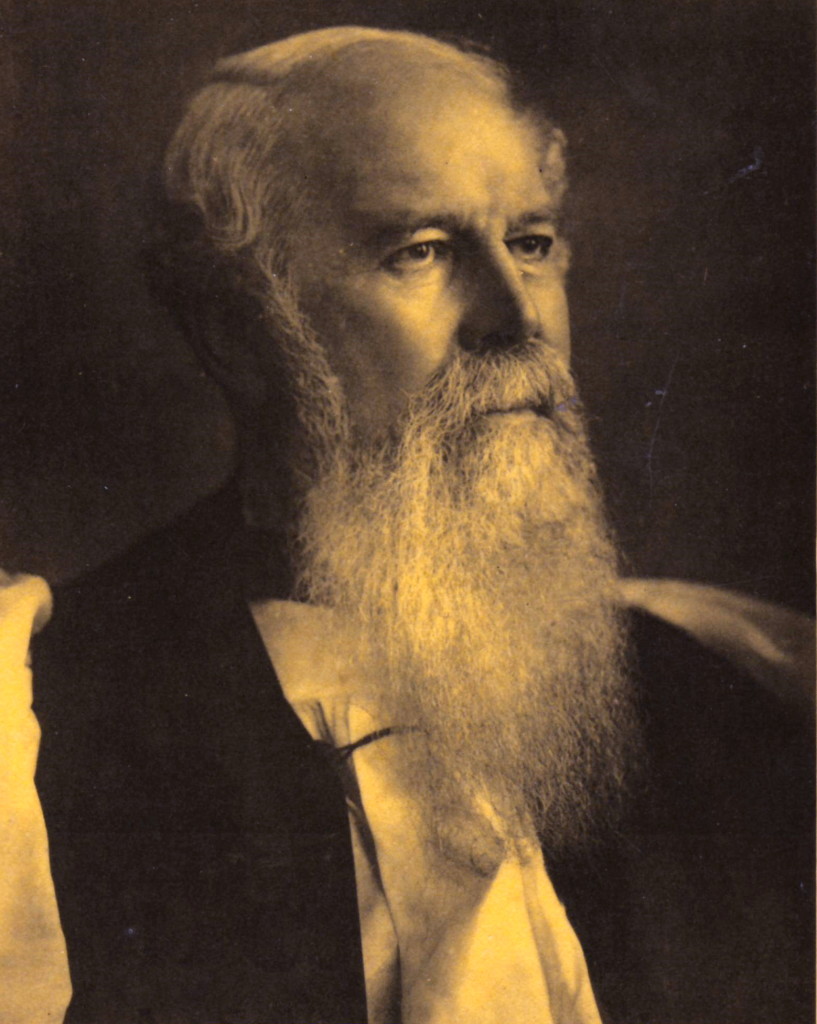
J.C. Ryle

John 19:1-16

John 19:1-16
J.C. Ryle November, 20 2022 Audio
0 Comments
You will find it helpful to READ the texts--as you LISTEN to the audios!
The TEXTS for the entire commentary can be bound here:
https://www.gracegems.org/Ryle/John.htm

Sermon Transcript

Auto-generated transcript • May contain errors

100%
Section 27 of Expository Thoughts on the Gospel of St. John, Volume 3 by J. C. Ryle. Chapter 19, Verses 1 to 16. Portrait of Christ, Portrait of the Jews, Portrait of Pilate. This LibriVox recording is in the public domain. Read by Marianne.

John, Chapter 19, Verses 1 to 16. Then Pilate therefore took Jesus, and scourged him. And the soldiers plaited a crown of thorns, and put it on his head, and they put on him a purple robe, and said, Hail, King of the Jews! and they smote him with their hands.

Pilate therefore went forth again, and saith unto them, Behold, I bring him forth to you, that ye may know that I find no fault in him. Then came Jesus forth, wearing the crown of thorns, and the purple robe, and Pilate saith unto them, Behold the man!

When the chief priest, therefore, and officer saw him, they cried out, saying, Crucify him, crucify him. Pilate saith unto them, Take ye him, and crucify him, for I find no fault in him. The Jews answered him, We have a law, and by our law he ought to die, because he made himself the Son of God.

When Pilate, therefore, heard that saying, he was the more afraid, and went again into the judgment hall, and saith unto Jesus, Whence art thou? But Jesus gave him no answer. Then saith Pilate unto him, Speakest thou not unto me? knowest thou not, that I have power to crucify thee, and have power to release thee?

Jesus answered, Thou couldst have no power at all against me, except it were given thee from above. Therefore he that delivered me unto thee hath the greater sin. And from thenceforth Pilate sought to release him, but the Jews cried out, saying, If thou let this man go, thou art not Caesar's friend. Whosoever maketh himself a king speaketh against Caesar.

When Pilate therefore heard that saying, he brought Jesus forth, and sat down in the judgment seat, in a place that is called the Pavement, but in Hebrew, Gabatha. and it was the preparation of Passover, and about the sixth hour. And he saith unto the Jews, Behold your king!

But they cried out, Away with him, away with him, crucify him. Pilate saith unto them, Shall I crucify your king? The chief priests answered, We have no king but Caesar. Then delivered he him therefore unto them to be crucified, and they took Jesus, and led him away.

These verses exhibit to our eyes a wonderful picture, a picture which ought to be deeply interesting to all who profess and call themselves Christians. Like every great historical picture, it contains special points on which we should fix our special attention. Above all, it contains three lifelike portraits, which we shall find it useful to examine in order.

The first portrait in the picture is that of our Lord Jesus Christ Himself. We see the savior of mankind scourged, crowned with thorns, mocked, smitten, rejected by his own people. unjustly condemned by a judge who saw no fault in him, and finally delivered up, to a most painful death.

Yet this was he who was the eternal Son of God, whom the Father's countless angels delighted to honor. This was he who came into the world to save sinners, and after living a blameless life for thirty years, spent the last three years of his time on earth in going about doing good and preaching the gospel.

Surely the sun never shone on a more wondrous sight since the day of its creation. Let us admire that love of Christ which St. Paul declares, passeth knowledge, and let us see an endless depth of meaning in the expression. There is no earthly love with which it can be compared, and no standard by which to measure it. It is a love that stands alone.

Never let us forget when we ponder this tale of suffering that Jesus suffered for our sins, the just for the unjust. that he was wounded for our transgressions, and bruised for our iniquities, and that with his stripes we are healed. Let us diligently follow the example of his patience in all the trials and afflictions of life, especially in those which may be brought upon us by religion. When he was reviled, he reviled not again. When he suffered, he threatened not, but committed himself to him that judges righteously. Let us arm ourselves with the same mind. Let us consider him who endured such contradiction of sinners without a murmur, and strove to glorify him by suffering well, no less than by doing well.

The second portrait in the picture before us is that of the unbelieving Jews who favored our Lord's death. We see them for three or four long hours obstinately rejecting Pilate's offer to release our lord, fiercely demanding his crucifixion, savagely claiming his condemnation to death as a rite, persistently refusing to acknowledge him as their king, declaring that they had no king but Caesar, and, finally, accumulating on their own heads the greater part of the guilt of his murder.

Yet these were the children of Israel, and the seed of Abraham, to whom pertained the promises and the Mosaic ceremonial, the temple sacrifices and the temple priesthood. These were men who professed to look for a prophet like unto Moses, and a son of David, who was to set up a kingdom as Messiah. Never, surely, was there such an exhibition of the depth of human wickedness since the day when Adam fell. Let us mark with fear and trembling the enormous danger of long-continued rejection of light and knowledge. There is such a thing as judicial blindness, and it is the last and sorest judgment which God can send upon men. He who, like Pharaoh and Ahab, is often reproved but refuses to receive reproof, will finally have a heart harder than the nether millstone, and a conscience past feeling, and seared as with a hot iron.

This was the state of the Jewish nation during the time of our Lord's ministry, and the heading up of their sins was their deliberate rejection of Him when Pilate desired to let Him go. From such judicial blindness may we all pray to be delivered. There is no worse judgment from God than to be left to ourselves and given over to our own wicked hearts and the devil. There is no surer way to bring that judgment upon us than to persist in refusing warnings and sinning against light.

These words of Solomon are very awful. Because I have called, and ye refused, I have stretched out my hand, and no man regarded. But ye have said it not all my counsel, and would not of my reproof. I also will laugh at your calamity. I will mock when your fear cometh." Proverbs chapter 1 verses 24 to 26.

Never let it be forgotten that, like the Jews, we may at length be given up to a strong delusion so that we believe lies and think that we are doing God's service when we are committing sin. 2 Thessalonians chapter 2 verse 11.

The third and last portrait in the picture before us is that of Pontius Pilate. We see a Roman governor, a man of rank and high position, an imperial representative of the most powerful nation on earth, a man who ought to have been the fountain of justice and equity, halting between two opinions in a case as clear as the sun at noonday.

We see him knowing what is right, and yet afraid to act up to his knowledge. convinced in his own conscience that he ought to acquit the prisoner before him, and yet afraid to do it lest he should displease his accusers, sacrificing the claims of justice to the base fear of man, sanctioning from sheer cowardice an enormous crime, and finally countenancing, from love of man's good opinion, the murder of an innocent person. Never, perhaps, did human nature make such a contemptible exhibition. Never was there a name so justly handed down to a world's scorn as the name which is embalmed in all our creeds, the name of Pontius Pilate.

Let us learn what miserable creatures great men are, when they have no high principles within them, and no faith in the reality of a God above them. The meanest laborer who has grace and fears God, is a nobler being in the eyes of his Creator than the king, ruler, or statesman, whose first aim it is to please the people.

To have one conscience in private and another in public, one rule of duty for our own souls and another for our public actions. To see clearly what is right before God, and yet for the sake of popularity to do wrong, this may seem to some both right and politic, and statesman-like, and wise, but it is a character which no Christian man can ever regard with respect.

Let us pray that our own country may never be without men in high places who have grace to think right and courage to act up to their knowledge. without truckling to the opinion of men. Those who fear God more than man, and care for pleasing God more than man, are the best rulers of a nation, and in the long run of years are always most respected.

Men like Pontius Pilate, who are always trimming and compromising, led by popular opinion instead of leading popular opinion, afraid of doing right if it gives offense, ready to do wrong if it makes them personally popular, such men are the worst governors that a country can have. They are often God's heavy judgment on a nation because of a nation's sins.

Notes. John chapter 19 verses 1 to 16.

Verse 1. Then Pilate took Jesus, scourged him. The cruel injury inflicted on our Lord's body in this verse was probably far more severe than an English reader might suppose. It was a punishment which among the Romans generally preceded crucifixion and was sometimes so painful and violent that the sufferer died under it. It was often a scourging with rods, and not always with cords, as painters and sculptors represent. Josephus, the Jewish historian, in his Antiquities, particularly mentions that malefactors were scourged and tormented in every way before they were put to death. Smith's Dictionary of the Bible says that under the Roman mode of scourging, the culprit was stripped, stretched with cords or thongs on a frame, and beaten with rods.

As to Pilate's reason for inflicting this punishment on our Lord, there seems little doubt. He secretly hoped that this tremendous scourging, in the Roman fashion, would satisfy the Jews, and that after seeing Jesus beaten, bleeding, and torn with rods, they would be content to let Him go free. As usual, he was double-minded, cruel, and deceitful. He tried to please the Jews by ill-treating our Lord as much as possible, and at the same time he hoped to please his own conscience a little by not putting Him to death. He told the Jews, indeed, according to Luke's account, what he wanted. I will chastise him and release him. Luke 23, verse 16. How entirely this weak design failed we shall see by and by.

Chrysostom says, Pilate scourged Jesus, desiring to exhaust and soothe the fury of the Jews. Being anxious to stay the evil at this point, he scourged him, and permitted to be done what was done, and the robe and the crown to be put on him in order to relax their anger. Augustine and Cyril say much the same thing.

The importance of this particular portion of our Lord's sufferings is strongly shown by the fact that Isaiah specifically says, by his stripes we are healed. and that St. Peter especially quotes that text in his first epistle. Isaiah 53, 5. 1 Peter 2, 24.

Our Lord himself particularly foretold that he would be scourged. Luke 18, 33.

It may seem needless to say that Pilate did not scourge Jesus with his own hands. Any plain reader will at once conclude that the scourging was inflicted by his soldiers or attendants. Yet the venerable Bede thinks that Pilate himself scourged Jesus. And it is worth remembering that a modern skeptical writer has actually argued that the book of Leviticus must be uninspired, because in that book the priest is committed to lift and move and offer up the bodies of slain sacrifices, which alone he could not do. Surely he might have recollected that a man is said to do things when he does them by the hands of servants and attendants. It was thus, no doubt, that Pilate scourged Jesus.

The word took probably means commanded him to be seized. Hengsteberg thinks that the remarkable incident of Pilate's washing his hands, Matthew chapter 27 verse 24, and declaring his innocence of Christ's blood, comes in between this verse and the preceding chapter. I would rather place it after the fifteenth verse of the nineteenth chapter.

The place where this horrible indignity was inflicted on our Lord's holy person, according to St. Matthew, chapter 27, verse 27, was the praetorium, or common hall, which was probably a kind of guard-room, where the Roman soldiers used to spend their time and keep themselves in readiness to do anything the governor wished. What kind of place the guardroom of a body of rough Roman soldiers can have been we can hardly conceive, even if we visit the worst regimental guardrooms of modern days.

Some think that our Lord was scourged twice, once at the beginning of Pilate's examination and once after his final condemnation. This, however, seems to me very doubtful. The idea probably arises from not carefully observing that the proceedings before Pilate, after the scourging recorded here, are peculiar to St. John's Gospel and omitted by Matthew, Mark, and Luke.

Bessa remarks, Before the message, Christ our Righteousness, was revived, and the Lutheran Christ for us was again the refreshment of weary souls, men could not draw much refreshment from Christ's scourging. Before the Reformation whole hosts of self-bewailing penitents came forth from Italy and spread over Germany. They were called Flagellants, and naked to the waist they roamed through the towns and villages singing penitential hymns like Dies Irae, and flogging one another.

Verse 2. AND SOLDIERS CROWN THORN'S HEAD. About the object of the soldiers in this act there can be no doubt. It was done in mockery and ridicule of our blessed Lord, and to pour contempt on the idea of his being a king. These rude men would show how they defied such a king. We can well believe that rough, heathen soldiers like Roman legionnaires were expert and trained by practice in the best way of torturing a prisoner. Thorns, according to Tristam, are so common in Palestine that the soldiers would have no difficulty in finding materials for weaving this crown. Hasselquist, quoted in Smith's Dictionary, says, The plant, called nepk ziziphus spina christi, was very suitable for the purpose, as it has many sharp thorns, and its flexible, pliant, and round branches might easily be plaited in the form of a crown, And what, in my opinion, seems the greatest proof is, that the leaves most resemble those of ivy, as they are of a very deep green.

Perhaps the enemies of Christ would choose a plant like that with which emperors and generals used to be crowned, and there might be calumny even in the punishment. How painful and irritating such a crown of thorns would be, sticking into the forehead or head of one whose hands were bound, we can easily imagine.

Here, as in every step of Christ's Passion, we see His complete and perfect substitution for sinners. He, the innocent sin-bearer, wore the crown of thorns that we, the guilty, might wear a crown of glory. Vast is the contrast which there will be between the crown of glory that Christ will wear at His second advent and the crown of thorns which He wore at His first coming.

Lightfoot remarks that it was a most unquestionable token that Christ's kingdom was not of this world when he was crowned only with thorns and briars which are the curse of the earth. It was, moreover, a striking symbol of the consequences of the fall being laid on the head of our divine substitute. In Leviticus it is written that Aaron shall lay his hands upon the head of the live goat, and confess over him all the iniquities of the children of Israel, and all their transgressions, and all their sins, putting them upon the head of the goat. Leviticus chapter 16 verse 21.

History says that in the crusades, when Godfrey of Boulogne, the Christian general, was made king of Jerusalem, he refused to be crowned with a golden crown, saying that It did not become him to wear a crown of gold in a city where his savior had worn a crown of thorns.

Rollock observes, Ye shall find these soldiers even worse inclined than Pilate was. This falls out, if the master commanded them to do one evil deed, often the servants will do two. When John Hus, the martyr, was brought forth to be burned, they put a paper over his head, on which were pictured three devils, and the title, Herciarch. When he saw it, he said, My Lord Jesus Christ, for my sake, did wear a crown of thorns. Why should not I, therefore, for his sake, wear this ignominious crown?

And they put purple robe. This again was done as a mark of contempt and derision. A mock royal robe was thrown over our lord's shoulders in order to show how ridiculous and contemptible was the idea of his kingdom. The color purple was doubtless meant to be a derisive imitation of the well-known imperial purple, the color worn by emperors and kings.

Some have thought that this robe was only an old soldier's cape, such as a guard-house would easily furnish. Some, with more show of probability, have thought that this robe must be the gorgeous robe which Herod put on our Lord, mentioned by St. Luke, when he sent him back to Pilate. Luke, chapter 13, verse 11. A circumstance which John has not recorded. In any case, we need not doubt that the robe was some shabby, cast-off garment It is worth remembering that this brilliant color, scarlet or purple, would make our blessed Lord a most conspicuous object to every eye, when He was led through the streets from Herod, or brought forth from Pilate's house to go to the assembled multitude of the Jews.

Once more we should call to mind the symbolical nature of this transaction also. Our Lord was clothed with a robe of shame and contempt, that we might be clothed with a spotless garment of righteousness, and stand in white robes before the throne of God.

verse 3, and said, Hail, King of the Jews. This again was evidently done to pour contempt upon our Lord. The words of the soldiers were spoken in contemptuous imitation of the words addressed to a Roman Emperor on his assuming imperial power. Hail, Emperor! Ave, Imperator! It was as much as saying, Thou a King indeed! Thou and thy kingdom are alike base and contemptible.

Hengstenburg observes, It was the kingdom of the Jews itself that the soldiers laughed at. They regarded Jesus as the representative of the messianic hope of the Jews. They would turn to ridicule these royal hopes, which were known far in the heathen world, more especially as they aspired to the dominion of the whole earth.

Let us not fail to remark at this point that ridicule, scorn, and contempt were one prominent portion of our Blessed Master's sufferings. Anyone who knows human nature must know that few things are more difficult to bear than ridicule, especially when we know that it is undeserved, and when it is for religion's sake. Those who have to endure such ridicule may take comfort in the thought that Christ can sympathize with them, for it is a cup which He Himself drank to the very dregs.

Here again He was our substitute. He bore contempt that we might receive praise and glory at the last day. Henry remarks, If at any time we were ridiculed for well-doing, let us not be ashamed, but glorify God, for thus we are partakers of Christ's sufferings.

and they smote hands. The word so rendered would be equally well translated, they gave him blows with a rod or stick. The same Greek word in the singular is so translated in the marginal reading of John chapter 18 verse 22. When we compare Matthew chapter 27 verses 27 and 30, where it says that the soldiers took a reed and smote him with it on the head, it seems highly probable that this was the action he recorded.

According to Matthew, the soldiers put the reed in our Lord's hand as a mock scepter, and when, as Lamp observes, he refused to retain it in his right hand, because he came to suffer indignities but not to perform them, they snatched it out of his hand and brutally struck him with it on the head. This appears to me a reasonable and satisfactory supposition, and makes it most likely that the blow here was not with the hand.

If the blows were inflicted on the head, whether with hand or reed, we can readily conceive what acute bodily pain they might occasion to a head covered with thorns. The thorns would be driven into the skin till the blood ran down the face and forehead and neck of our Lord. Truly He was bruised for our iniquities. Isaiah 53 v. 5.

4. Pilate therefore went forth, etc. This verse opens a new scene of the painful story of the Passion. The scourging being over, and the mockery of the soldiers having gone on as long as Pilate thought it worth while, the Roman governor went forth outside the palace where he lived, to the Jews, who were waiting to hear the result of his private interview with our Lord. We must remember that, under the influence of hypocritical scrupulosity, they would not go inside the Gentile governor's house, lest, forsooth, they should be defiled, and were therefore waiting in the court outside.

Now Pilate comes out of his palace and speaks to them. The words of this verse seem to show that Pilate came out first, and that our Lord was let out behind him. Behold, I am bringing him outside again, that you may know that I can find no fault or cause of condemnation in him, and no ground for you to charge that he is a stirrer up of sedition and a rebel king. He is only a weak, harmless fanatic, who lays claim to no kingdom of this world, and I bring him forth to you as a poor, contemptible person worthy of scorn, but not one that I can pronounce worthy of death. I have examined him myself, and I inform you that I can see no harm in him.

" It seems to me quite plain that Pilate's private interview with our Lord has completely satisfied the Governor that he was a harmless, innocent person, and made him feel a stronger desire to dismiss him unhurt, and he secretly hoped that the Jews would be satisfied when they saw the prisoner whom they had accused brought out beaten and bruised, and treated with scorn and contempt, and that they would not press the charge any further. How thoroughly this cowardly double-dealing man was disappointed, and what violence he had to do to his own conscience, we shall soon see.

It is very noteworthy that the expression, I find no fault in him, is used three times by Pilate in the same Greek words in St. John's account of passion. John 28, 38, 29, 4-6. It was meet and right that he who had the chief hand in slaying the Lamb of God, the sacrifice for our sins, should three times publicly declare that he found no spot or blemish in him. He was proclaimed a lamb without spot or fault after a searching examination by him that slew him.

The language of this sentence appears to me to show that Pilate went outside the palace first and announced that he was going to bring out the prisoner and that then our Lord followed him. The word forth, both in this and the preceding verse, means literally outside or without. It is the same that is used in the text. His brethren stood without Matthew chapter 12 verse 46 and without our dogs Revelation chapter 22 verse 15

That our blessed Lord, the Eternal Word, should have meekly submitted to be led out after this fashion, as a gazing stock and an object of scorn, with an old purple robe on his shoulders and a crown of thorns on his head, his back bleeding from scourging and his head from the thorns, to feast the eyes of a taunting, howling, bloodthirsty crowd, is indeed a wondrous thought. Truly, though he was rich, yet for our sakes he became poor. 2 Corinthians chapter 8 verse 9.

Since the world began, the sun never shone on a more surprising spectacle both for angels and men.

And Pilate, behold the man. This famous sentence, so well known as echo homo in Latin, admits of two views being taken of it. Pilate may have spoken it in contempt. Behold the man you accuse of setting himself up as a king! See what a weak, helpless, contemptible creature he is! Or else Pilate may have spoken it in pity. Behold the poor, feeble man whom you want me to sentence to death! Surely your demands may be satisfied by what I have done to him. Is he not punished enough?

" Perhaps both views are correct. In any case, there can be little doubt that the latent feeling of Pilate was the hope that the Jews, on seeing our Lord's miserable condition, would be content and would allow him to be let go. In this hope again we shall find he was completely deceived.

Pilate probably threw a strong emphasis on the expression, Man, indicative of contempt. This may have led to the Jews saying so strongly, in the seventh verse, that the prisoner made himself the son of God, and claimed to be divine, and not a mere man, as Pilate had said. He probably also meant the Jews to mark that he said, Behold the man, not your king, but a mere common man.

VI. WHEN THE CHIEF PRIESTS CRUCIFY HIM.

We see in this verse the complete failure of Pilate's secret scheme for avoiding the condemnation of our Lord. The pitiful sight of the bleeding and despised prisoner had not the effect of softening down the feelings of his cruel enemies. They would not be content with anything but his death, and the moment he appeared they raised the fierce cry, Crucify him, crucify him.

Let it be noted that the chief priests were the foremost in raising the cry for crucifixion. It is a painful fact that in every age none have been such hard, cruel, unfeeling, and bloody-minded persecutors of God's saints as the ministers of religion. The conduct of Bishop Bonner, in the reign of Bloody Mary, toward some of our martyred Reformers is a melancholy proof of this.

The officers here mentioned were the attendants and servants and immediate followers of the priests, who would naturally take up any cry raised by their masters. The word rendered cried out means a loud shout or clamorous cry, and is peculiar to john's account of this part of the passion. It is the same word that is used of our Lord at the grave of Lazarus. He cried Lazarus come forth. john chapter 11 verse 43. It is the same that is used of the multitude at Jerusalem when they would no longer listen to Paul speaking to them on the stairs. They cried out and cast off their clothes and threw dust in the air. Acts chapter 22 verse 23.

The cry crucify was equivalent to a demand that our Lord might be put to death after the Roman manor. Cyr remarks, when the multitude would perhaps have blushed with shame at the sight of what had been done, remembering Christ's miracles, the priests are the first to cry out, and so inflame and stir up the mob. He who would know to what an extraordinary degree of bloodthirstiness a mob may be stirred up when once excited, should study the history of the reign of terror at Paris, during the first French Revolution.

Pilate saith, Take ye in him. This, as Cyril justly argues, is the language of one vexed and irritated, and made impatient by the pertinacity with which the priest stuck to their point. Do your bloody work yourself, if you must needs have it done. Take your prisoner away, and do not trouble me with the case. I find no fault in him, and I dislike being made your tool in this matter.

" It seems impossible to put any other construction on Pilate's words. He could not have meant, gravely and seriously, that he would allow the Jews to put the prisoner to death, and thus admit the precedent of letting them inflict capital punishment. Temper, vexation, and irony seemed to lie at the bottom of his words, and the chief priests seemed to have taken his words in this sense. We cannot doubt that they would gladly have taken away our Lord and crucified Him at once, if they had thought Pilate really meant that they should do so.

For the third time we should notice Pilate's emphatic declaration, I find no fault in him. Three times he vainly tried to evade condemning our Lord in order to make the Jews desist from their bloody design. Once by asking the Jews to choose between Christ and Barabbas, once by sending Him to Herod, once by scourging Him and exhibiting Him in a contemptible light before the people. Three times he failed utterly.

For Kitt remarks, hypocrites within the pale of the visible church may be guilty of such monstrous acts of wickedness as even the consciences of heathens without the church may boggle at and protest against.

Verse 7. The Jews answered him, etc. In this verse we find the priests taking up a new ground of accusation against our Lord. They saw that their political accusation had failed. Pilate would not condemn him as a king and refused to see any fault in him on that score. They, therefore, charge our Lord with blasphemy and committing an offense against their law.

as to Pilate's ironical words, Take ye him and crucify him, they made no remark on them, as though they knew they were not meant to be taken seriously. The whole sense must be filled up, in some such way as this. It is no use telling us to crucify this prisoner ourselves, because you well know that it is not lawful for us to put any man to death. But seeing that you will not condemn him as a political offender, we now charge him with an offense against our religion, which, as our governor, you are bound to defend and We call upon you to condemn him to death for claiming to be the Son of God, which, according to our law, is blasphemy and a capital crime.

This is a lengthy paraphrase, undoubtedly, but one which is necessary if we would fill in the sense of the verse and understand what the Jews meant. The law referred to by the Jews is probably Leviticus chapter 29 verse 16. But it is curious that stoning is the punishment there mentioned, and not a word is said of crucifixion. This they do not tell Pilate.

There is, perhaps, more fullness in the expression, a law, that appears at first. It may mean, we Jews have a law given us by man from God, which is our rule of faith and religion. It is a law, we know, not binding on Gentiles, but it is a law which we feel bound to obey. One of the articles of that law is that, he that blasphemeth the name of the Lord shall be stoned. We ask that this article may be enforced in the case of this man. He has blasphemed by calling himself the Son of God, and he ought to be put to death. We, therefore, demand his life.

There certainly seems an emphasis in the Greek on the word, we, as if it meant, we Jews, in contradistinction to Gentiles. The expression, he ought, is literally, he owes it. He is a debtor. He is under an obligation or penalty of death, according to the terms of our code of law. The expression made himself must mean appointed, constituted, or declared himself the Son of God. Compare Mark 3.14, John 6.15, 8.53, Acts 3.36, Hebrews 3.2, Revelation 1.6.

The expression, Son of God, meant far more to a Jewish mind than it does to us. We see in John 5, verse 18, that the Jews considered that when our Lord said that God was his Father, he made himself equal with God. See also John 10, verse 33. One thing, at any rate, is very clear. Whatever Sassanians may say, our Lord distinctly lay claim to divinity, and the Jews distinctly understood Him to mean that He was God as well as man.

Cyril Well remarks that if the Jews had dealt justly, they would have told the Gentile ruler that the person before Him had not only claimed to be the Son of God, but had also done many miracles in proof of His divinity. Rolick observes, Look what blinds them. The Word of God that should make them see blinds them so that they use it to their own ruin. The best things in the world, yea, the Word of God itself, serve to wicked men for nothing else but their induration. The more they read, the blinder they are. And why? Because they abuse the Word and make it not a guide to direct their affections and their actions.

Verse eight. when Pilate, heard, was afraid. In this verse we see Pilate in a different frame of mind. This new charge of blasphemy against our Lord threw a new light over his feelings. He began to be really frightened and uncomfortable. The thought that the meek and gentle prisoner before him might after all be some superior being, and not a mere common man, filled his weak and ignorant conscience with alarm. What if he had before him some God in human form? What if it should turn out that he was actually inflicting bodily injuries on one of the gods? As a Roman, he had doubtless heard and read many stories, drawn from the heathen mythology of Greece and Rome, about gods coming down to earth and appearing in human form. Perhaps the prisoner before him was one. The idea raised new fears in his mind.

Already he had been made very uncomfortable about him. Our Lord's calm, dignified, and majestic demeanor had doubtless made an impression. His evident innocence of all guilt, and the extraordinary malice of his enemies, whose character Pilate most likely knew well, had produced an effect. His own wife's dream had its influence. Even before the last charge of the Jews, the Roman judge had been awestruck, and secretly convinced of our Lord's innocence, and anxious to have him set free, and actually afraid of his prisoner. But when he heard of his being the Son of God, he was made more afraid.

Forgon remarks, like Gamaliel in the Acts, Pilate was seized with a salutary apprehension lest happily he be found even to fight against God. The saying referred to must mean the expression, Son of God. The word more deserves attention. It shows clearly that from the first Pilate had been afraid and uneasy in conscience. He had never liked the case being brought before him at all. To have such an extraordinary preacher, and a worker of such miracles as our Lord, brought to his bar, frightened him. but now when he heard that he laid claim to divinity he was more afraid.

We must never forget the pilot, as Roman governor of Judea, charged with the management of a most turbulent and troublesome province, was doubtless informed by spies, as well as by the officers of his army, of everything that went on in Judea. Can we doubt for a moment that he must have heard many accounts of our Lord's ministry, and especially of His miracles and astonishing power over the sick and the dead? Can we doubt that he heard of the raising of Lazarus at Bethany, within a walk of Jerusalem? Remembering all this, we may well suppose that he regarded the whole case brought before him by the Jews with much anxiety from the very first, and we can well understand that when he heard that Jesus was the Son of God, he was more than ever alarmed. Unprincipled rulers have an uneasy position.

Bishop Hall thinks that the cause for Pilate's fear was only the increased rage and excitement of the people. He was afraid of a riot and tumult.

V. 9. And went again judgment hall. This means that, on hearing this fresh charge of blasphemy, Pilate retired again from the outside of the palace into the inner part, where he had before conversed with our Lord, once more leaving the Jews outside. This new charge was so serious that he did not care to enter into it publicly, and preferred examining our Lord about it privately.

And saith, Whence art thou? This question, I think, can admit of only one meaning. It meant, Who art thou? What art thou? Art thou from heaven? Art thou one of the gods come down to earth, of whom I have heard the priests talk? What is thy real nature in history? If thou art some superior being, more than a common man, tell me plainly, that I may know how to deal with thy case. Tell me privately, while these Jews are not present, that I may know what line to take up with thine enemies.

We may well believe that Pilate caught at the secret hope that Jesus might tell him something about himself, which would enable him to make a firm stand and deliver him from the Jews. In this hope, again, the Roman governor was destined to be disappointed.

but Jesus gave him no answer. Our Lord's silence, when this appeal was made to him by Pilate, is very striking. Hitherto he had spoken freely and replied to questions. Now he refused to speak any more.

The reason of our Lord's silence must be sought in the state of Pilate's soul. He deserved no answer, and therefore got none. He had forfeited his title to any further revelation about his prisoner. He had been told plainly the nature of our Lord's kingdom, and the purpose of our Lord's coming into the world, and had been obliged to confess publicly his innocence. And yet, with all this light and knowledge, he had treated our Lord with flagrant injustice, scourged him, allowed him to be treated with the vilest indignities by his soldiers, and held him up to scorn, knowing in his own mind all the time that he was a guiltless person.

he had, in short, sinned, away his opportunities, forsaken his own mercies, and turned a deaf ear to the cries of his own conscience. Hence our Lord would have nothing more to do with him, and would tell him nothing more. He gave no answer.

Here, as in many other cases, we learn that God will not force conviction on men, and will not compel obstinate unbelievers to believe, and will not always strive with men's consciences. Most men, like Pilate, have a day of grace and an open door put before them. If they refuse to enter in and choose their own sinful way, the door is often shut and never opened again.

There is such a thing as a day of visitation, when Christ speaks to men. If they will not hear His voice, and open the door of their hearts, they are often let alone, given over to a reprobate mind, and left to reap the fruit of their own sins. It was so with Pharaoh, and Saul, and Ahab, and Pilate's case was like theirs.

He had his opportunity and did not choose to use it but preferred to please the Jews at the expense of his conscience and to do what he knew was wrong. We see the consequence. Our Lord will tell him nothing more.

In saying all this, I think we must not forget that Pilate's wicked refusal to listen to his own conscience, and our Lord's consequent refusal to speak to him any more, were all overruled by the eternal counsels of God to the carrying out of His purpose and redemption. In handling such a portrait we must speak with reverence. but it is plain that if our Lord had revealed to Pilate who He was, and forced Pilate to see it, the crucifixion might perhaps never have taken place, and the great sacrifice for a world's sin might never have been offered up on the cross.

Our Lord's silence was just and well merited, but it was also part of God's counsels about man's salvation. Let us note that there is a time to be silent as well as a time to speak. This is a matter in the social intercourse of daily life about which we all need to pray for wisdom. To be always saying to everybody everything we know is not the line of a wise follower of Christ.

Let us note that if we do not make good use of light and opportunities, and if we resist Christ speaking to our conscience, a time may come when, like Pilate, we may speak to Christ, and ask things of Him, and He may give us no answer. It is written in a certain place, They would not of my counsel, they despised all my reproof, therefore shall they eat of the fruit of their own way. Then they shall call upon me, but I will not answer. Proverbs chapter 1 verses 24 to 32.

Chrysostom observes, Christ answered nothing, because he knew that Pilate asked all the questions idly. Bessa remarks, A petition to Christ for enlightenment, even when offered up in a man's last moments from a death-bed, never fails being answered, if offered in sincerity and from the heart, and obtains for the supplicant as much grace as is needful for salvation. But to a Pilate Jesus is silent.

In this verse we see the imperious, fierce, haughty, arrogant temper of the Roman governor breaking out. Accustomed to see prisoners cringing before him and willing to do anything to obtain his favor, he could not understand our Lord's silence. He addresses him in a tone of anger and surprise combined. Why dost thou not answer my question? Dost thou know what thou art doing in offending me? Dost thou know that thou art at my mercy, and that I have the power to crucify thee or release thee according as I think right?"

I can see no other reasonable construction that can be put on Pilate's words. The idea that he was only persuading our Lord, and gently reminding Him of His own power, seems utterly unreasonable and inconsistent with the following verse. This high-minded claim to absolute power is one which ungodly great men are fond of making. It is written of Nebuchadnezzar, Whom he would he slew, and whom he would he kept alive, and whom he would he set up, and whom he would he put down.

Yet even when such men boast of power, they are often, like Pilate, mere slaves, and afraid of resisting popular opinion. Pilate talked of power to release, but he knew in his own mind that he was afraid, and so was unable to exercise it. It is only fair to remember that the Greek word rendered power might be rendered authority or commission, and in this sense pilot might only mean, I have commission from the Roman government to sentence prisoners to death or let them go free. Would it not be for thine interest to speak to me? Verse 11, Jesus answered, etc.

Our Lord's reply to Pilate in this verse is remarkably calm and dignified, though not without some difficulties because of its elliptical construction. It may be paraphrased thus. Thou speakest of power. Thou dost not know that both thou and the Jews are only tools in the hands of a higher being, and that thou couldst have no power whatever against me if it were not given thee by God. This, however, thou dost not understand, and art therefore less guilty than the Jews. The Jews who deliver me unto thine hand do know that all power is from God. Thus their knowledge makes them more guilty than thou. Both thou and they are committing a great sin, but their sin is a sin against knowledge, and thine is comparatively a sin of ignorance. You are both unconsciously mere instruments in the hand of God, and you could do nothing against me if God did not permit and overrule it.

The logical connection of the former and latter parts of the verse is by no means clear. The precise object of therefore, and the reason why God's overruling providence made the Jews more guilty than the Gentiles, are things which it is not easy to explain. But I must think that the latent idea of our Lord was to remind Pilate how ignorantly he was acting, and how little he knew what he was about compared to the Jews.

That the possession of superior knowledge increases the sinfulness of a sinner's sin seems taught by implication in this verse. It was more sinful in the Jews, with all their knowledge of the law and the prophets, to deliver up Christ to be crucified, than it was in Pilate, an ignorant heathen, to condemn him and put him to death.

The word he is differently interpreted. Some think that it must refer to Caiaphas as the high priest and chief actor in the whole affair of our Lord's murder. Some even think it refers to Judas Iscariot. The more probable idea is that it refers to the whole Jewish people, personified by he and represented by their high priest. One thing at any rate is very certain. This was the last word that Jesus spoke during his trial. Henceforth he was, like a lamb before his shearers, dumb.

Hengstenburg remarks, that in apportioning the comparative guilt of Pilate and of the Jews our Lord chose Himself even at this crisis the true Judge of mankind. Lamp remarks, the sin of the Jews was heavier than that of Pilate. Pilate was a Gentile, ignorant alike of the Messiah and of His distinguishing marks. The Jews had read the prophecies about Him. Pilate could only have heard something about our Lord's great miracles by rumor and report They were all done under the very eyes of the Jews. Pilate injured Jesus unwillingly and from cowardice, they injured him from hatred and envy. Finally, Pilate was only the instrument, the Jews were the impelling cause. Thus our Lord pronounces His opinion concerning His judges, an opinion according to which He will one day judge them.

The expression, therefore, or literally, on account of this, is rather a difficult one. Marklyn says it means, Because he has not power from above, which thou hast, the Jew has the greater sin. Pierce takes the same view. Rollick observes, speaking of the Inquisition in Spain, the Papists, when they have caught a Christian who confesseth Jesus Christ, after trying him, put him in the hands of the Emperor or King of Spain. Then they wash their hands as clean of his blood. And who took his life but the King of Spain? But the wrath of God persecutes them, and the blood of the innocent lies on them, because they delivered them into their hands to be tormented. Hutcheson observes that, the greatest height of impiety is found within the visible church, where there is most knowledge. When all has been said we must admit that there is probably something in the verse more deep than we have aligned to fathom. The two propositions of the verse are both quite intelligible. But the connecting link, therefore, is a hard knot, which has not yet been fairly untied. Augustine paraphrases this sentence thus. He sins worse who, of ill-will, delivers up the innocent to the power to be put to death, than doth the power itself, if, for the fear of another greater power, it puts to death the innocent. The Jews deliver me into the power as having ill will against me, but thou art about to exercise thy power against me as being afraid for thyself. Not that a man has a right to put to death an innocent person from fear, but to put to death out of hatred is much more evil than to put to death out of fear." Cyril says much the same. One thing, at any rate, is very clear. There are degrees in sin. all are not equally sinful. The servant who knew his master's will, and did it not, was more guilty than he who knew it not." Verse 12. And from thenceforth Pilate sought to release him. This is a remarkable sentence. It evidently means that from this point of the case Pilate sought more diligently than ever to have our Lord acquitted and set free. Before he wished it, now he really took pains to effect it. Whether this was occasioned by our Lord's manner and demeanor in speaking the words of the preceding verse, or by some meaning which He attached to the words we cannot tell, but it was so. How and in what manner Pilate sought to release Jesus we are not told by John, but it is evident that he left our Lord in the hall where He had been asking Him, Whence art Thou? and went out alone to the Jews, to tell them He could make nothing of their charge of blasphemy and wish to let the prisoner go. This must have taken place outside the doors, because the Jews scrupulously refused to go inside. Moreover, the Jews could not have known of this fresh desire to release Jesus if Pilate had not come forth and communicated it to them. In this verse, therefore, be it remembered, we have Pilate and the Jews alone outside the palace, and our Lord left inside. Pilate proposes to release Him, and the Jews protest against it. Then we shall find Pilate goes in again and brings Jesus out for the last time. But the Jews cried out, Caesar! In these words we see the Jews stopping Pilate short, in his weak efforts to get our Lord released, by an argument which they knew well would weigh heavily on a Roman mind. They tell him plainly, that they will accuse him to Caesar, the Roman Emperor, as a governor unfriendly to the imperial interests. You are no friend of Caesar if you let off this prisoner. Every one who sets himself up as a king, be his kingdom what it may, is usurping part of Caesar's authority and is a rebel. If you pass over this man's claim to be a king and set him at liberty we shall complain of you to Caesar. This was a settling and clinching argument. Pilate knew well that his own government of Judea would not bear any investigation. He also knew well the cold, suspicious, cruel character of Tiberius Caesar, the Emperor of Rome, which is specially mentioned by Tacitus and Suetonius, the Roman historians, and he might well dread the result of any appeal to him from the Jews. From this moment all his hopes of getting rid of this anxious case and letting our Lord go away unharmed were dashed to the ground.

He would rather connive at a murder to please the Jews than allow himself to be charged with neglect of imperial interests and unfriendliness to Caesar. It is hard to say which was the more wretched and contemptible sight at this point of the history. Pilate trampling on his own conscience to avoid the possible displeasure of an earthly monarch, or the Jews pretending to care for Caesar's interests and warning Pilate not to do anything unfriendly to him. It was a melancholy exhibition of cowardice on the one side and duplicity on the other, and the whole result was a foul murder.

Verse 13. When Pilate heard that saying, etc., The saying here refers to the Jews saying about Caesar in the preceding verse. When Pilate heard the dreaded name of Caesar brought up, and found himself threatened with a possible complaint to Rome as a neglecter of imperial interests, he saw plainly that nothing more could be done, and that he must give way to the demands of the Jews and sacrifice an innocent prisoner.

He therefore returned to the palace, brought forth Jesus again, and for the first time took his seat on the throne of judgment outside the palace, in the courtyard or paved area adjacent to it. The case was now over. Pilate's weak efforts to deliver an innocent prisoner from unjust accusation were useless. He dared no longer oppose the bloody demands of the Jews. There remained nothing to be done but to take his seat publicly on the throne of judgment and pronounce the sentence.

The word, fourth, here, as in the fourth and fifth verses, merely means, outside. Pierce remarks that, this is the fifth time that Pilate came forth and tried to prevail with the Jews that Jesus might not be crucified. On the judgment seat, Parkhurst remarks, in the Roman provinces justice was administered in the open air, the presiding judge sitting on a tribunal, on a raised ground covered with marble. The pavement means the marble, or mosaic-leveled space, on which the judge's chair was placed. Parkhurst says that Roman governors used sometimes to carry with them the materials to form such a pavement.

The word Gabatha, according to Hammond, is more Syriac than Hebrew. According to the custom of the New Testament, which calls Syriac, at that time, the vulgar language of the Jews, Hebrew. Parker says that the word means literally a raised place, and remarks that John does not mean in this verse that Gabatha means pavement, but that the same place, which in Greek was called pavement, was called in Hebrew the raised place.

and it was preparation of the Passover. This remarkable expression cannot mean that this was the hour for preparing the Passover meal, for it was not. It means, this was the day before the general Sabbath of the Passover week, a day well known among Jews as the preparation or day of preparing for the Passover Sabbath, which was peculiarly a high day. St. Mark expressly says this in his account of the Passion, Mark chapter 15 verse 42. that all the Jewish feasts had their eves or preparation days is quite clear for rabbinical writers. We should observe how accurately and precisely John marks the day of the crucifixion. And about the sixth hour. This expression raises a grave difficulty and one which in every age has perplexed the minds of Bible readers. The difficulty lies in the fact that Mark in his gospel expressly says, it was the third hour and they crucified him, Mark chapter 15 verse 25. while John in this place says our Lord was only condemned at the sixth hour. Yet both evangelists wrote by inspiration and both were incapable of making a mistake. How then are we to reconcile and harmonize these two conflicting statements?

The solutions of the difficulties suggested are many and various.

A. Some say, as the rationalistic writers, that one of the two evangelists made a blunder, and that one of the accounts therefore is false. This is a solution which will satisfy no reverent-minded Christian. If Bible writers could make blunders like this, there is no such thing as inspiration, and there is an end of all confidence in Scripture as an infallible guide.

B. Some say, as Theophylact, Biza, Nonus, in his poetical paraphrase, Titman, Lay, Usher, Vol. 7, p. 176, Cornell, Bengal, Pierce, Alfred, Scott, and Bloomfield, that the discrepancy has probably been caused by an error of the manuscript writers and that the true reading in St. John should be third and not sixth hour. This, however, is a very short-cut road out of the difficulty, and the immense proportion of old manuscripts are flatly against it.

See, some say, as Augustine does in one place, and Bollinger, that at the third hour the Lord was crucified by the tongues of the Jews, and at the sixth by the hands of the soldiers. This, however, to say the least, is a weak and childish explanation. Moreover, it is open to the grave objection that it would make out our Lord to have been only three hours on the cross, and all that time in the dark, and not seen consequently by any one. At this rate the inscription over his head on the cross would certainly not have been read by many. There was darkness over all the land from the sixth to the ninth hour.

Some say that Mark reckoned time on the Jewish plan, which means the hours began to count from the morning, and their 7 o'clock answered to hour 1, while John reckoned time on our English plan, which is the same as the Roman one, and John's 6th hour meant literally about 6 in the morning. According to this theory, Jesus was condemned in John's account of the Passion at 6 o'clock in the morning and crucified in Mark's account at 9 o'clock. This explanation is very commonly adopted, and is supported by Wordsworth, Lee, and Bragon, but it is open to very serious objections. I see no proof whatever that John reckons time on the Roman and English plan, and not on the Jewish plan.

The passage in the story of the Samaritan woman, which is commonly quoted as a proof, is no proof at all, and our reflection will cut directly the other way. If the sixth hour, when Jesus sat at the well, C. John, chapter 4, verse 6, meant really our English six o'clock in the evening, it makes it impossible to understand how the conversation with the woman, her return to her native village, the telling of the men to come and see Jesus, the coming of the men, the return of the disciples with meat, could all be brought into the short space of one evening. The thing would have been impossible. Moreover, it is an additional objection that if Jesus was condemned at six o'clock in the morning, there are left three long hours between the condemnation and the crucifixion unaccounted for and unexplained. I am obliged to say that in my judgment this way of explaining the difficulty completely fails.

Some think, as Calvin, Busser, Galter, Brentius, Mascullus, Gerhard, Lamp, Hammond, Poole, Jensenius, Burkett, Hengstenberg, and Ellicott, that John's sixth hour means any time after hour nine o'clock in the morning, any time in fact within the space begun by the Jewish third hour. They say that the Jews divided the twelve hours of their day into four great portions, from six to nine, from nine to twelve, from twelve to three, and from three to six. They also say that any part of the time after hour six in the morning would be called the third hour, and any time after hour nine in the morning would be called the sixth hour. And they conclude that both the condemnation and the crucifixion took place soon after nine o'clock. Mark calling at the third hour, because it was near our nine o'clock, John calling at the sixth hour, because it was sometime between our nine and twelve.

Grotius says, in Parkhurst, that the third, sixth, and ninth hours, which were most esteemed for prayer and other services, were marked by the sounding of a trumpet, and that after the trumpet's sounding at the third hour, the sixth hour was considered to be at hand. Glass and lamp support this opinion, and Lampe shows from Maimonides, a famous Jewish writer, that the Jews really divided the day into four quarters. Hengstenberg also remarks that the fourth and fifth hours are never mentioned in the New Testament. This theory undoubtedly brings the two evangelists near to one another if it does not quite reconcile them.

F. Some think, as Augustine, in the second place, suggests, and Harmer, quoted in Parkhurst, following him, that the sixth hour here does not refer to the time of day, but to the preparation of the Passover. and from that the meaning is, it was the preparation of the Passover and about the sixth hour after that preparation began. But as that preparation often began very early indeed in the morning, or about our three o'clock, six hours counted from that time would bring us down to Mark's third hour, or our nine o'clock. Lightfoot supports this view, which is certainly very ingenious, and would clear away all difficulty. But it may fairly be objected that plain readers would hardly attach such a meaning, as Harmer suggested, to the sixth hour.

The difficulty is one of those which will probably never be solved. God has been pleased to leave it in the scriptures for the trial of our faith and patience, and we must wait for a solution. Questions of time and date like this are often the most puzzling, from our inability to place ourselves in the position of the writer, and from the widely different manner in which measures and points of time are expressed in the language of different nations and at different ages. This very difficulty before us, perhaps, presented no difficulty whatever to the Apostolic Fathers such as Polycarp and Clement. Perhaps they possessed some simple clue to its solution of which we know nothing. It is our wisdom to be patient, and to believe that it admits of explanation though we have not eyes to see it.

If I must venture an opinion, I think that there is more to be said for the fifth of the six solutions I have given than for any other, but I allow that it is incomplete. In any case, we must in fairness remember that St. John does not say, distinctly and expressly, it was the sixth hour, but about the sixth hour. This shows some latitude may be allowed in interpretation, and that the acknowledged discrepancy between John and Mark must not be too far pressed, or made of too much importance. One thing, at all events, appears to me quite inadmissible. We cannot allow ourselves to suppose that Jesus was not crucified till twelve o'clock in the day, when the miraculous darkness began, and that he only hung on the cross three hours.

And he saith, Behold your King. These words must have been spoken in bitter irony, anger, and contempt. Behold the man whom you accuse of setting himself up as a king and being an enemy to Caesar. Behold this bleeding, weak, humble, meek, helpless prisoner. This wretched, harmless person you pretend to be afraid of and want me to crucify. You wish your own king to be put to death? This, I am to understand, is what you desire. Look at him and say.

" Verse 15, But they cried, Away, crucify him. as on former occasions Pilate's public appeal had not the slightest effect on the Jews. Once more they raised their fierce, relentless, obstinate cry and demanded the prisoner's death by crucifixion. Nothing but his blood would satisfy them. The horrible excesses of the Parisian mob during the infamous reign of terror in the First French Revolution give us some faint idea of the savage spirit which can run through a crowd by a kind of infection when their hatred is stirred up against an individual. The Greek word rendered away with him is literally take him away and often means take him away to execution or destruction. Henry remarks that this public rejection of Christ fulfilled two prophecies of Isaiah. Him whom the nations abhoreth, Isaiah chapter 47 verse 7, and we hid as it were our faces from him, Isaiah chapter 53 verse 2.

Pilate saith, Crucify your king! For the last time Pilate puts the question to the Jews, and gave them a last chance of relenting. In bitter irony he asks, Shall I then really crucify your own king? Shall I, a Roman, order a king of the Jews to be put to an ignomious death? Is this your wish and desire? The chief priests, no king but Caesar. These memorable words inflicted indelible disgrace on the leaders of the Jews and stamped the Jews forever as a fallen, blinded, God-forsaking, God-forsaken, and apostate nation. They who at one time used to say, the Lord God is our King, renounced the faith of their forefathers and publicly declared that Caesar was their King and not God. They stultified themselves and gave the lie to their own boasted declaration of independence of foreign powers. Had they not said themselves, We be Abraham's seed and were never in bondage to any man? John 8.33. Had they not tried to entrap our Lord into saying something in favor of Caesar that they might damage his reputation? Is it lawful to give tribute to Caesar? Matthew 20.17.

And now, forsooth, they shout out, We have no king but Caesar. Above all, they madly proclaimed to the world, though they knew it not, that the scepter had departed from Judah, and that Messiah must have come. Genesis, chapter 49, verse 10. Truly the scepter had departed, when chief priests could say, We have no king but Caesar. Seale remarks that while other nations all over the world cling tenaciously to their own religion and honor those whom they call gods and will not forsake them, Israel revolted from God, cast off his authority, and claimed Caesar as their king. Justly, therefore, they were delivered over into Caesar's hands, and endured the heaviest calamities.

Henry remarks, They would have no king but Caesar, and never have they had any other to this day, but have been many days without a king and without a prince, that is, without any of their own, and the kings of the nations have ruled over them. Since they will have no king but Caesar, so shall their doom be, themselves have decided it.

Lamp compares the conduct of the priests in this place to that of the trees in Jotham's parable, who said to the bramble, Come and reign over us. Judges 9.14. The very men who ought to have taught the people to hope for the Messiah here publicly renounce the Messiah's kingdom and declare themselves contented with Caesar.

I cannot but think that Pilate's public washing of his hands before the people and saying, I am innocent of the blood of this just person, Matthew 27.24, must come in at this part of St. John's narrative.

16. Then delivered, etc. This verse describes the conclusion of the most unjust trial of our blessed Lord when, in His humiliation, His judgment was taken away. Acts 8.33. All was now over. The last appeal had been made to the Jews, and for the last time they had rejected it. What happened is described by Luke, but passed over by John.

Pilate gave sentence that it should be as they required. Luke chapter 23 verse 24. He then formally delivered over our Lord into the hands of the chief priests, and formally gave them permission to put Him to death by crucifixion. These hardened and wicked men at once took Jesus and led Him away.

Of course, we must not suppose that the chief priests themselves laid hands on our Lord, and with their own hands led Him away. No doubt the Roman soldiers of Pilate were the executioners, and a centurion had charge of all the bloody transaction of the execution. But inasmuch as the soldiers only carried out the wishes of the priests, the priests were the responsible persons and prime agents in this judicial murder.

Luke says, he delivered Jesus to their will. Luke chapter 23 verse 25. Let us remember, when we read the word delivered, that it was expressly written He was delivered for our offenses, and that God spared not His own Son but delivered Him up for us all. Romans 4.25.8.30 Christ was delivered to death that we might be delivered from death and set free. Here is substitution.

Let us remember, as we read the word led, that Isaiah expressly foretold that Messiah should be brought, or led, as a lamb to the slaughter. Isaiah 53, verse 7, Acts 8, verse 32.

Alfred thinks it possible that at this point the scourging of our Lord was repeated, but I see no satisfactory proof of this. Considering what a Roman scourging was, it is not probable that anybody could have endured it twice in one day.

Let us note that, according to the narrative of John, there seems no delay between the condemnation of our Lord and His crucifixion. He went at once from Gabatha to Golgotha, and from the judgment to the execution. At this rate the theory, supported by Burgon and others, that there was a delay of three hours between six o'clock and nine, after condemnation, is completely overthrown.

If we looked at Matthew and Mark alone, we might fancy that Pilate saw nothing more of our Lord after he had been scourged and mocked by the soldiers. But it appears plain to me, if we carefully compare John's account with that of Matthew and Mark, that they have not recorded our Lord's last appearance before Pilate, which John relates. Nor can I feel surprised at this, when I remember that throughout John's gospel he supplies what the other evangelists have omitted.

In particular, he supplies our Lord's examination before Annas, and his private conversation with Pilate, when the Jews would not enter Pilate's palace, and entirely omits the examination before Caiaphas. So, likewise, I think he supplies the last scene in our Lord's trial, which Matthew and Mark entirely omit, for some wise reason. Holding this theory, which to me seems the most natural account of the order of things, I cannot see any room for an interval of time between the final condemnation and the crucifixion.

Henry remarks with much shrewdness, judgment was no sooner pronounced, than with all possible expedition, the prosecutors, having gained their point, resolved to lose no time, lest Pilate should change his mind and order a reprieve, and also lest there should be an uproar among the people.

How St. John became acquainted with all the details of our Lord's trial, and the private conversations between him and Pilate, is a question which none can answer satisfactorily, who do not hold the doctrine of plenary inspiration. that John was in and about the palace of the high priest, and not far from our Lord all the time, from the seizure at Gethsemane up to his death, we may well believe, but that he could have overheard the private conversations between Jesus and Pilate seemed simply impossible. How, then, could he know anything about them and write them down? There is but one answer. He wrote them by inspiration of the Holy Ghost.

Why the common people, who always heard Jesus gladly, permitted our Lord's crucifixion so easily, and made no resistance, is at first sight rather hard to understand. The Galileans, who would have made Jesus king at one time, were of course at Jerusalem in great numbers on account of the Passover feast. The triumphal entry into Jerusalem, when an immense multitude cried, Hosanna to the Son of David, blessed is the King that cometh, had happened only a few days before. The priests themselves were afraid of an uproar among the people. Yet there was not a symptom of any opposition to the judicial murder which was arranged and carried into execution. How was this?

In reply we must probably take into account the following considerations.

1. There was a superstitious reverence for the priests among all Jews. The mere fact that the high priests accused Jesus would have immense weight.
2. The fear of the Roman garrison kept the people back.
3. The followers and friends of Jesus were almost entirely the poor and lower orders.
4. All multitudes are fickle and capricious.
J.C. Ryle
About J.C. Ryle
John Charles Ryle (10 May 1816 — 10 June 1900) was an English evangelical Anglican bishop. He was the first Anglican bishop of Liverpool.
Broadcaster:

Comments

0 / 2000 characters
Comments are moderated before appearing.

Be the first to comment!

Joshua

Joshua

Shall we play a game? Ask me about articles, sermons, or theology from our library. I can also help you navigate the site.