Bootstrap
J.C. Ryle

John 20:1-10

John 20:1-10
J.C. Ryle November, 20 2022 Audio
0 Comments
You will find it helpful to READ the texts--as you LISTEN to the audios!
The TEXTS for the entire commentary can be bound here:
https://www.gracegems.org/Ryle/John.htm

Sermon Transcript

Auto-generated transcript • May contain errors

100%
CHAPTER XX. The first day of the week cometh Mary Magdalene early, when it was yet dark, unto the sepulchre, and seeth the stone taken away from the sepulchre. Then she runneth, and cometh to Simon Peter, and the other disciple, whom Jesus loved, and saith unto them, They have taken away the Lord out of the sepulchre, and we know not where they have laid him.

Peter therefore went forth, and that other disciple, and came to the sepulchre. So they ran both together, and the other disciple did outrun Peter and came first to the sepulchre. And he, stooping down and looking in, saw the linen claws lying. Yet went he not in. Then came Simon Peter following him, and went into the sepulchre, and seeth the linen claws lie. And the napkin that was about his head, not lying with the linen claws, but wrapped together in a place by itself.

Then went in also that other disciple which came first to the sepulchre, and he saw and believed. For as yet they knew not the scripture that he must rise again from the dead. Then the disciples went away again unto their own home.

The chapter we have now begun takes us from Christ's death to Christ's resurrection. Like Matthew, Mark, and Luke, John dwells on these two great events with peculiar fullness and particularity. And we need not wonder. The whole saving Christianity hinges on the two facts that Christ died for our sins and rose again for our justification.

The chapter before our eyes deserves special attention. Of all the four evangelists, none supplies such deeply interesting evidence of the resurrection as the disciple whom Jesus loved. We are taught in the passage before us that those who love Christ most are those who have received most benefit from Him.

The first whom St. John names among those who came to Christ's sepulchre is Mary Magdalene. The history of this faithful woman, no doubt, is hidden in much obscurity. A vast amount of needless obloquy has been heaped upon her memory, as if she was once a habitual sinner against the seventh commandment. Yet there is literally no evidence whatever that she was anything of the kind.

But we are distinctly told that she was one out of whom the Lord had cast seven devils. Mark chapter 6 verse 9, Luke chapter 8 verse 2. One who had been subjected in a peculiar way to Satan's possession, and one whose gratitude to our Lord for deliverance was a gratitude that knew no bounds.

In short, of all of our Lord's followers on earth, none seem to have loved Him as much as Mary Magdalene. None felt that they owed so much to Christ. None felt so strongly that there was nothing too great to do for Christ. Hence, as Bishop Andrews beautifully puts it, She was last at his cross, and first at his grave. She stayed longest there, and was soonest here. She could not rest till she was up to seek him. She sought him while it was yet dark, even before she had light to seek him by.

In a word, having received much, she loved much, and loving much, she did much, in order to prove the reality of her love. The case before us throws broad and clear light on a question which ought to be deeply interesting to every true-hearted servant of Christ. How is it that many who profess and call themselves Christians do so little for the Savior whose name they bear? How is it that many, whose faith and grace it would be uncharitable to deny, work so little, give so little, say so little, take so little pains to promote Christ's cause and bring glory to Christ in the world? These questions admit of only one answer. It is a low sense of debt and obligation to Christ, which is the account of the whole matter. Where sin is not felt at all, nothing is done, and where sin is little felt, little is done. The man who is deeply conscious of his own guilt and corruption, and deeply convinced that without the blood and intercession of Christ, he would sink deservedly into the lowest hell, this is the man who will spend and be spent for Jesus, and think that he can never do enough to show forth his praise.

Let us daily pray that we may see the sinfulness of sin and the amazing grace of Christ more clearly and distinctly. Then and only then shall we cease to be cool and lukewarm and slovenly in our work for Jesus. Then and then only shall we understand such burning zeal as that of Mary, and comprehend what Paul meant when he said, The love of Christ constraineth us, because we thus judge, that if one died for all, then we're all dead, and that he died for all, and that they which live should not henceforth live unto themselves, but unto him which died for them and rose again. 2 Corinthians chapter 5 verses 14 and 15.

We are taught, secondly in these verses, that there are widely different temperaments in different believers. This is a point which is curiously brought out in the conduct of Peter and John when Mary Magdalene told them that the Lord's body was gone. We are told that they both ran to the sepulcher, but John, the disciple whom Jesus loved, outran Peter and reached the empty grave first. Then comes out the difference between the two men. John, Of the two, more gentle, quiet, tender, reserved, retiring, deep feeling, stooped down and looked in, but went no further. Peter, more hot and zealous and impulsive, and fervent and forward, cannot be content without going down into the sepulcher and actually seeing with his own eyes.

Both, we may be sure, were deeply attached to our Lord. The hearts of both, at this critical juncture, were full of hopes and fears and anxieties and expectations all tangled together. Yet each believes in his own characteristic fashion. We need not doubt that these things were intentionally written for our learning. Let us learn from the case before us to make allowances for wide varieties in the inward character of believers. To do so will save us much trouble in the journey of life and prevent many an uncharitable thought. Let us not judge brethren harshly, and set them down in a low place, because they do not see or feel things exactly as we see and feel, and because things do not affect or strike them just as they affect and strike us.

The flowers in the Lord's garden are not all of one color and one scent, though they are all planted by one Spirit. The subjects of His kingdom are not all exactly of one tone and temperament though they all love the same Savior and are written in the same Book of Life. The Church of Christ has some in its ranks who are like Peter and some who are like John, and a place for all and a work for all to do. Let us love all who love Christ in sincerity and thank God that they love Him at all. The great thing is to love Jesus.

We are taught, finally, in these verses, that there may be much ignorance even in true believers. This is a point which is brought out here with singular force and distinctness. John himself, the writer of this gospel, records of himself and his companion Peter, and yet they knew not the scripture that he must rise again from the dead. How truly wonderful this seems! For three long years these two leading apostles had heard our Lord speak of His own resurrection as a fact, and yet they had not understood Him. Again and again He had staked the truth of His Messiahship on His rising from the dead, and yet they had never taken in His meaning.

We little realize the power over the mind which is exercised by wrong teaching in childhood and by early prejudices imbibed in our youth. Surely the Christian minister has little right to complain of ignorance among his hearers when he marks the ignorance of Peter and John unto the teaching of Christ himself. After all, we must remember that true grace, and not head-knowledge, is the one thing needful. We are in the hands of a merciful and compassionate Saviour, who passes by and pardons much ignorance when he sees a heart right in the sight of God.

Some things, indeed, we must know, and without knowing them we cannot be saved. Our own sinfulness and guilt, the office of Christ as a Saviour, the necessity of repentance and faith, such things as these are essential to salvation. But he that knows these things may, in other respects, be a very ignorant man. In fact, the extent to which one man may have grace together with much ignorance, and another may have much knowledge and yet no grace, is one of the greatest mysteries in religion, and one which the last day alone will unfold.

Let us then seek knowledge, and be ashamed of ignorance. But above all, let us make sure that, like Peter and John, we have grace and right hearts.

The last two chapters of St. John's Gospel are taken up with accounts of our Lord's appearances after His Resurrection. Like Matthew, Mark and Luke, St. John dwells very fully on the history of the Crucifixion and Resurrection, but, as in other parts of his Gospel, so here also, he supplies many deeply interesting details which the other evangelists, for some wise reason, have not recorded. A few preliminary remarks on the whole subject will not perhaps be found uninteresting. The matter is one about which every Christian ought to have very clear and correct views.

a. Concerning the importance of Jesus Christ's resurrection from the dead, it would be hard to speak too strongly. It is a cardinal article of the Christian faith, second to none in value. It is the grand proof that He was the promised Messiah whom the prophets had foretold. It is the one great sign which He named to the Jews when asked to give convincing evidence of His divine mission, the sign of the prophet Jonah, the rebuilding of the temple after destruction. Matthew 12, verse 39, John 2, verses 19 to 21. If He did not rise again after three days, they were not to believe Him. It is the completion of the work of redemption which He came into the world to accomplish. It proved that the ransom was accepted and the victory over sin and death obtained. Christ was delivered for our offenses and raised again for our justification. We are begotten again unto a lively hope by the resurrection of Jesus Christ from the dead. Romans chapter 4 verse 25, Peter chapter 1 verse 3. If he had not risen again, our hope would have been a huge uncertainty. It is a fact which has the closest connection with the spiritual life and position before God of all believers. They are counted by God as risen with Christ, and they should regard themselves as partakers of Christ's resurrection life and sitting in heavenly places. Not least, It is the pledge and assurance of our own resurrection at the last day. We need not fear death and look at the grave with despair, when we remember that Jesus Christ rose again in the body. As surely as the head rose, so shall the members be raised. Let these points never be forgotten. When we think of them, we may understand why the apostles, in their preaching and epistles, dwell so much on the resurrection. Well would it be if modern Christians thought more about it. Myriads seem unable to look at anything in the Gospel except the sacrifice and death of Christ, and altogether pass over His resurrection.

b. Concerning the evidences of Christ's resurrection, the proofs that He actually did rise again from the grave with His body, it is most remarkable to observe how full and various they are. He was seen at least eleven times after He rose again, at different times of day, in different ways, and by different witnesses. was seen first by one woman alone, then by several women together, then by one man, then by two men, and each time in the open air. Then he was seen by ten disciples in the evening in a room, then by eleven disciples again in a room, and afterwards on five different occasions, at one of which no less than five hundred people were present. Those to whom he appeared touched him, talked with him, and saw him eat and drink. Matthew 28.9, John 20.27, Luke 24.42. Nor must it be forgotten that all who saw him were most unwilling at first to believe, and most slow to credit the report of his resurrection. Yet they were all finally convinced. If there is any fact in Christianity that is well supported by evidence, it is the fact of Christ rising again from the dead. It is the one fact that no infidel has ever fairly grappled with. One thing at any rate is most undeniably certain, and no infidel can escape it. The apostles a few weeks after our Lord's crucifixion were utterly and entirely different men in every way from what they were before the crucifixion. Bolder, more decided, more unhesitating, followers of Jesus of Nazareth than they used to be, to a most enormous extent. Even such men as the German rationalists, Paulus and Strauss, according to Thulek, are obliged to make the curious admission, something extraordinary must have occurred.

C. Concerning the best mode of harmonizing the accounts which the four evangelists give of our Lord's appearances after He rose again from the dead, there is undeniably some difficulty. But it is probably far more apparent than real. Matthew, Mark, Luke, and John each tell their own story. There is a most decided absence of any appearance of concert or collusion about them. how to reconcile the seeming discrepancies in their narratives has exercised the skill of commentators in every age. Dean Alford says flatly that he attempts no harmony of the accounts and that he believes all such attempts to be fruitless. I do not agree with him at all, and I think the statement to be unworthy of the able writer who makes it. I think the accounts can be harmonized and reconciled, and that too without any unfair violence to the narratives of the four Gospels.

The order of Christ's eleven appearances between his resurrection and ascension I believe to be as follows.

1. To Mary Magdalene alone. Mark 16, verse 9. John 20, verse 14.
2. To certain women returning from the sepulchre, Matthew 28, 9-10.
3. To Simon Peter alone, Luke 14, 34.
4. To two apostles going to Emmaus, Luke 24, 13.
5. To ten apostles at Jerusalem and some other disciples, Thomas being absent, John 20, 19.
6. To eleven apostles at Jerusalem, Thomas being present, John 20, 26-29.
7. To seven disciples fishing at the Sea of Tiberias, John 21, verse 1.
8. To eleven apostles on the mountain in Galilee, and perhaps some others with them, Matthew 28, verse 16.
9. To above five hundred brethren at once, 1 Corinthians 15, verse 7.
10. To James only, 1 Corinthians 15, verse 7.
11. To all the apostles, and probably some others, on Mount Olivet at his Ascension.

Most of these eleven appearances require little or no explanation. The ninth and tenth in the list are recorded only by St. Paul, and some think that the appearance to 500 at once is the same as that to the eleventh in Galilee, though I doubt it. The appearance to Peter is one of which we know nothing except the fact. And, in my judgment, it certainly is not the same as the appearance to the two who are walking to Emmaus.

The only appearances, after all, about which there is any difficulty are the two first in the list, and to my own mind the difficulty is by no means insuperable. The knot to be untied is this. St. Mark expressly says that our Lord appeared first to Mary Magdalene. Mark 16.9. St. John also describes this appearance, and it is quite plain from his account that Mary Magdalene was alone. John chapter 20 verse 11 to 13. Yet St. Matthew says that Mary Magdalene and the other Mary came to the sepulcher together, saw an angel, and heard that our Lord had risen, ran to bring the tidings to the disciples, and were met on the way by Jesus, and both saw him at the same time.

Now, how is this to be explained? How can the account of these three witnesses be made to harmonize and agree? I will try to show.

1. I believe that Mary Magdalene and the other Mary did not go alone to the sepulcher on the morning of the resurrection. By comparing Mark 16 1 and Luke 23 55 and 24 1 with Matthew 28 1, it is quite evident that several other women accompanied them.
2. I believe that, on drawing nigh the sepulchre, the company of women saw the stone rolled away from its mouth. At once, on seeing this, it flashed on the mind of Mary Magdalene that the body of Jesus had been removed from the tomb, and without waiting a moment she ran off to Peter and John and told them, as recorded in John 20, verses 1 and 2. This is the view of Chrysostom and Cyril.
3. I believe that, while Mary Magdalene ran off to tell Peter and John, the other women went up to the sepulcher, found the body gone, saw a vision of angels, were told that Jesus had risen, and were commanded to go and tell the disciples. They departed to tell the news. Some went in one direction and some in anotherâ€"Mary and Salome with one party, Joanna with another.
4. I believe that while this was going on, Mary Magdalene, who had run off alone to tell Peter and John, had found them, and that they all three came to the sepulchre shortly after the other women went away. Whether Mary got there so soon as Peter and John, perhaps admits of doubt.
5. I believe that Peter and John saw the empty sepulchre and went away, leaving Mary Magdalene weeping there.
6. I believe that, as soon as Peter and John went away, Mary Magdalene saw the two angels and immediately after saw our Lord Himself and was told to carry a message to His brethren. John 20.17
7. I believe that in the meantime the other women had gone in two or three directions to tell the other disciples who lived in a different part of Jerusalem from that where Peter and John lived. Mary the wife of Cleophas and Salome were yet on their way when Jesus met them shortly after he had appeared to Mary Magdalene.
8. I believe that one party of the women, with Joanna at their head, saw nothing of our Lord, but went to the disciples and told them the message of the angels.
9. I believe that, shortly after this, our Lord appeared to Simon Peter, who very likely had gone again to the grave on hearing Mary Magdalene's report.
10. I believe that in the course of the same day our Lord appeared to the two disciples on the way to Emmaus, who had left Jerusalem after Joanna and the two women reported the vision of angels, but before our Lord had appeared to Peter.
11. Finally, I believe that in the evening of the same day our Lord appeared to the apostles and others with them, Thomas being absent. Luke says, the eleven apostles were gathered together, but he evidently means the apostles generally as a body, See my note on Luke chapter 14 verse 34. This was our Lord's fifth appearance on the day that he arose.

I know not whether this scheme of reconciliation will satisfy all my readers. On a point so much controverted, it becomes a commentator to speak humbly and diffidently. I content myself with saying that I see far fewer difficulties in it than in any other scheme that I have met with. I see, moreover, nothing unfair or unreasonable about it, and nothing which is not consistent with the variety that may justly be expected from the testimony of four independent witnesses. To those who wish to study the subject more fully, I strongly recommend a careful study of West on the Resurrection and Burke's Horae Evangelicae.

This, I need hardly say, means our Sunday, the Lord's Day, the first day following the Jewish Sabbath. Between the end of the nineteenth chapter and these words we must suppose an interval of thirty-six hours to have passed away. During these hours our blessed Lord's body lay still in the tomb and His soul was in Paradise while the disciples were quiet in their respective abodes and honored the fourth commandment. The chief and principal breakers of this Sabbath were the priests and Pharisees, who came to Pilate and obtained leave to set a watch around the tomb, and to put a seal on the stone which laid its mouth. The very men who made a boast of the law, through breaking of the law dishonored God, and disgraced themselves. The very followers of him whom they had slain kept the law more strictly than they did.

cometh Mary Magdalene, early, dark, sepulcher. St. John names none but Mary, yet it is clear, by examining the account of the other three Gospel writers, that she did not come alone. She was one among several women from Galilee, including Mary, the wife of Cleophas, or Alpheus, Salome, the mother of John and James, and Joanna, the wife of Cusa, Herod's steward. These all appear to have been near our Lord when He was crucified, and to have looked on if they did not actively help when He was buried. They then probably agreed to come to the tomb early on the morning after the Sabbath in order to do more for our Lord's body than there was time to do on Friday afternoon. On the Sabbath they rested according to the commandment. They now came as early as they could, even before the sun was up, in order to begin their pious work as soon as they had light to do it.

Foremost among the whole party was Mary Magdalene. Rupertus and Ferus maintain that Mary Magdalene lived at Bethany, and therefore came alone to the sepulchre from a different road to that by which the other women came. But this seems pure conjecture, and probably arises from confounding Mary Magdalene with Mary the sister of Lazarus.

And seeth stone sepulchre. It seems to me, from these words, that Mary Magdalene was the first who detected in the dim twilight that the stone was rolled away from the mouth of the tomb. It may be that she was in advance of the other women, and thus saw it first. It may be that strong feeling and anxiety made her more quick-sighted and keen of observation than her companions. Indeed, we do not know for a certainty that all the women came together in a body. For anything, I can see, they may have come separately, or by twos and threes, and Mary may have been the first of the party. It is quite consistent with her character to suppose this.

In any case, her conduct this memorable morning was so remarkable and prominent that St. John speaks of her alone. All the women showed faith and courage and love, he seems to intimate. but none so pre-eminently as Mary Magdalene. She was first to come near the tomb, first to discover that the stone was rolled away, first to conjecture that something remarkable had happened, and first to act at once on what she saw.

Let us note Mary's courage and zeal to honor her buried Lord. Not every woman would have dared to go outside the city while it was yet dark, to a grave, and especially during the Passover feast, when thousands of strangers were probably sleeping under any slight shelter near the walls of Jerusalem.

Let us note how St. John takes it for granted that his readers were acquainted with the other three Gospels and knew that a stone had been rolled to the door of the sepulchre. He here speaks of the stone, yet he has said nothing about it before.

There seems strong internal evidence that Mary and the other women who agreed to come with her to the sepulchre could not have known of the Roman guard having been placed around it. It seems at all events highly improbable that they would have gone there before the sun was up if they had expected to find Roman soldiers at the place.

Andrews observes that four special favors were granted to Mary in one day. One, to see the angels. Two, to see Christ at all. Three, to see him first of all. Four, to be employed by Christ to carry a heavenly errand. And why? Because she loved much. He adds, we cannot say that she believed much. By her thrice repeated saying her Lord was taken away, verses two, 13, and 15, it seems she believed no more than the high priest would have had the world believe that he was taken away by night.

Verse two, then she runneth. I believe this expression means that Mary Magdalene, the moment she saw the stone rolled away from its place, ran off alone to tell the news to Peter and John. She did not go a step nearer the tomb, but left the other women to go up to the grave and look in, and thus miss seeing the angel whom they saw. She waited for nothing. The stone was moved. The body, she at once concluded, had been taken away. She turned on her heel at once and ran off to tell the two chief apostles. The rest of the party probably drew near the grave slowly and hesitatingly, not knowing what to think or expect, and Mary was probably a long way on the road to the dwelling of Peter and John before they finally turned away from the tomb.

This should be carefully noticed, if we would reconcile the narratives of Matthew and John. It is clear to my own mind that there was something peculiar and striking in the conduct of Mary Magdalene this wonderful morning, and St. John desires on that account to direct our special attention to it. Mary, he seems to say, was the first to come to the tomb, the first to see that the stone was removed, and the one that ran off alone to tell me and Peter. Many of the Galilean women showed faith and love and zeal that morning, but none more than Mary.

And Cometh Peter, other disciple, loved. The other disciple here mentioned was unquestionably John. Mary's reasons for running to tell these two first were probably these.

a. They were chief men among the apostles.
b. They had been the two who had stuck most closely to Jesus up to the last, and shown most faith and love, and were naturally most anxious to know about his body.

See, wherever John was, Mary the mother of our Lord was. Can we doubt that Mary Magdalene would think of her as one among the first to be told about the stone being rolled away? It is moreover highly probable, though a matter of conjecture only, that Peter and John were staying at the same house very near the sepulcher. It is most likely that the other apostles were scattered, according to our Lord's prophecy, in different parts of Jerusalem, and none were so near the tomb as Peter and John.

It is interesting to notice how, all through the Gospels and Acts, Peter and John seem to have been peculiarly drawn together and to have been close friends and companions. As fishermen we are told that James and John were partners with Simon. Luke chapter 5 verse 10. Three times the names of James is joined with theirs. on the Mount of Transfiguration, at the house of Jarius, and in the Garden of Gethsemane.

But the special intimacy between Peter and John comes out at the Last Supper, in the High Priest's house, on the occasion now before us, at the Sea of Tiberias, at the end of this Gospel, and in the third of Acts, where the lame man was healed. All point to that mysterious drawing together between two men of widely different temperaments, which every observing eye must occasionally see in the world.

John alone, of all the apostles, had witnessed Peter's sad fall in the high priest's house and observed his bitter weeping afterwards. Can we not understand that from Friday night to Sunday morning John would be lovingly employed in binding up the broken heart of his brother and telling him of our Lord's last words? Can we doubt that they were absorbed and occupied in converse about their Master on this very morning when Mary Magdalene suddenly ran in with the wonderful news?

The love and tender charity of John's character came out beautifully in his affection for Peter, even after his denial of Christ. How many modern churches would have excommunicated Peter and put him in a low place for months! John clings to him, and has him under his own roof, wherever that was. When Judas fell, he had no friend to raise and cheer him. When Peter fell, there was a brother born for adversity, who did not despise him. Bengal thinks, from the repetition of the preposition to in the Greek, to Peter, to John, that the disciples were not together, but I cannot think this is at all likely.

And saith, taken away, no not, laid him. Mary's announcement was a very short one. Whether she had actually looked inside the tomb and seen that it was empty seems more than doubtful. It would rather appear, by comparison of the four Gospels, that she had only seen the stone rolled away from the door, but that was enough for her. She had at once jumped to the conclusion that the body of the Lord was taken away, and so she announces it. And, after all, she had reason on her side. Who would have taken the trouble of rolling away the stone but one who wanted to take away the body? If the stone was rolled away, she justly concluded the body was gone.

One thing, at any rate, will be observed by every one who carefully compares St. John's narrative with that of the other three evangelists. Mary Magdalene had evidently not seen the vision of angels which the other women saw, or else she would certainly have mentioned it to Peter and John. She does not say a word about it. She has not heard the comfortable tidings that the Lord has risen or else she would surely have told it. She clearly knew nothing of all this, and the conclusion is plain in my mind that she ran off as soon as she saw the stone rolled away and waited for no companion.

Another thing should be observed. St. John's narrative here lets out the fact that Mary Magdalene did not go to the sepulcher alone. For what does she say? She speaks in the plural number. We know not where they have laid him. That we can only apply to herself and the other women who had gone with her to the grave. We should notice that Mary's mournful announcement is almost the same that she made to the angels when they asked her why she wept. Verse 13. Her repeated dwelling on the body being gone and her wanting to know where it was laid should be noticed.

May we not suspect that this holy woman, with all her faith and love, has not yet realized the great truth that Jesus was to rise again? She talks of his body, and longs to know where it is laid, and seems to think it must be a cold dead corpse still, and wishes to do it more honor. But she has forgotten altogether his repeated prediction that he would rise again. Alas, how little of Christ's teaching the best of us take in, how much we let fall!

By the word they we must suppose Mary meant our Lord's enemies, the chief priests or the Roman soldiers. Perhaps we should not press the word too closely. It may be that the good woman, in her excitement and trouble, hardly knew whom she meant, and spoke indefinitely. Somebody has taken away. She can hardly have meant that the chief priest had taken away the body in order to exhibit it as the dead corpse of a conquered and wicked imposter. It is fair to say that Ecclempadius actually thinks that Mary saw the angels, talked with them, and received the message for the disciples that Christ had risen, but quite forgot it. This, however, seems to me an extremely improbable view.

Verse 3. Peter therefore went forth, and that other disciple, etc. The announcement of Mary Magdalene was so startling that the two disciples arose at once and went to the sepulchre in order to find out what this rolling away of the stone meant, and to make sure that the Lord's body was gone. We need not doubt that they would at once ask Mary, How do you know the body is gone? and would receive the answer, Because the stone is rolled away. But finding then that Mary had not actually been inside the sepulchre and seen it empty, they judged it best to go and see for themselves.

When we remember that Mary, the mother of our Lord, was, in all human probability, in the house where Peter and John were, we may well imagine that she would be deeply anxious to have the whole matter cleared up at once. St. Luke, we may recollect, only mentions Peter going to the sepulcher. This verse before us fills up the narrative and tells us that John went with him. Two witnesses would be better than one. The simple fact here mentioned shows the anxiety and excitement of the two loving apostles.

We can well suppose that Mary Magdalene's sudden announcement completely overwhelmed them so that they knew not what to think. who can tell that thoughts did not come to their mind as they ran about our Lord's oft-repeated prediction of His resurrection. Could it really be true? Could it possibly prove that all their deep sorrow was going to turn to joy? These are all conjectures, no doubt. Yet a vast quantity of thoughts may run through a mind, at a great crisis, in a very few minutes. Those who have had a narrow escape from drowning know that very well.

Why John outran Peter we know not. The common opinion is that John was the younger man of the two, and so he has been always represented by painters in every age of the Church. The only evidence, however, we have of this difference of age is the fact that John's father is mentioned as being alive, following his calling as a fisherman with his sons, while Peter's father, Jonas, is not mentioned in the same way. Moreover, John outlived all the rest of the Apostles by many years, so he may well have been a comparatively young man when our Lord called him to be an Apostle.

After all, the matter is of little importance. Bodily strength and agility are no evidence that a man possesses superior grace. The holiest saints have often had very weak and infirm bodies. Holy and zealous as John was, we have no right to contend that he felt more zeal than penitent, broken-hearted Peter when he outran him on this eventful morning. Lamb thinks it just possible that Peter was troubled in conscience by reason of his recent and therefore went to this grave with a slower, hesitating step. But I doubt this.

" Verse 5, And he stooping down, etc. The opinion of well-informed persons who have seen the tombs near Jerusalem is that our Lord Sepulchre was a kind of cave hewn out of the side of a rocky hill, and that there was either a hollow place hewn out at a little distance within the entrance of the cave, to receive the body, or that the grave sloped gradually backwards, and the body was laid at the back part of the cave. In either case, we may understand that a person coming to the door of the cave, which must have been small, if a single stone could close it, could only see what was inside by it stooping down, as we are here told John did. When John looked in, he saw nothing whatever but the empty grave and the linen cloths in which our Lord's body had been wrapped lying together. Not going in, it is evident that he could not see very clearly the precise state of a dark cave with only one small entrance. He only saw enough to satisfy him at a glance that the body of Christ was not there and that the linen cloths were there. Why the beloved apostle went not in we do not know and are left to conjecture. It may be that he was at once satisfied that the body of his master was gone and that was all he cared to know. It may be that he felt a holy reverence for the place where our Lord had been laid and shrunk from going in. It may possibly be that he felt some fear and hardly knew what to expect next, remembering the earthquake and the rending of graves on the previous Friday. It may be that, being the younger man of the two, he waited for his elder brother to take the lead, and would touch nothing, do nothing, and take no step, without another witness besides himself. We cannot tell.

The incident is precisely one of those little circumstantial details which bring out men's natural temperament. It is noteworthy that John himself is the writer who records that he went not in. Be the motive what it may, he generously gives his brother Peter the whole honor and credit for being the first of the two to go inside the grave and thoroughly investigate the condition of it in every particular.

We should not forget that the simple fact of the linen claws lying was enough to satisfy any thinking mind that something extraordinary must have occurred. No enemy or thief, in removing our Lord's body, would have taken the trouble to remove the linen claws in which he was wrapped. Reason points out that it would save time and trouble to take the body as it was, with the linen wrapped around it. Lamb thinks it possible that John did not go in for fear of being made unclean by a dead body, but I can hardly think this.

In this verse we see how differently different men act under the same circumstances. Grace does not alter natural temperaments when it changes hearts. What John for some reason would not do, Peter did. On arriving he went down at once through the mouth of the cave into the inside of the sepulcher. Then he saw, as John had seen, that the body of our Lord was not there, and that the linen claws, in which the body had been wrapped, were lying there, and had been removed in some way from the body.

How much linen was used by Joseph and Nicodemus we cannot tell. But when we consider that one hundred pounds of aromatic powder had been used in wrapping up the body, it is not unreasonable to suppose that many yards of linen had been employed. The quantity of linen wrapped around the corpse of an Egyptian, we know from the mummies, was prodigious. It is probable that the linen wrapped around our Lord's body, which Peter saw lying, was no small heap.

It is noteworthy that two different Greek words are used in this and in the preceding verse to express seeing. St. John saw at a glance. St. Peter saw as a spectator looking round and examining. The Greek word rendered lying in one verse and lie in the other is precisely the same and without reason our translation varies. In both it should be lying.

Verse 7 And the napkin, etc., etc. The object of this verse seems to be to show that Peter found in the empty tomb the clearest evidence of a deliberate, orderly, and calmly done transaction. The linen cloths in which our Lord's body had been wrapped were lying by themselves. The napkin which had been tied round his head was rolled up by itself in another place, separate from the linen claws. There were no symptoms of hurry, haste, or fear. All had been done decently and in order. Everything that Peter saw contradicted the idea that the body had been stolen. No thief would have taken so much trouble about the claws and napkin. In fact, the person who had removed the body, whoever it was, must have entailed on himself needless labor if he removed it as a dead corpse by unwrapping the linen claws in which the corpse was buried. The easiest plan would have been to carry away the body just as he found it, wrapped up in linen. Why were the linen claws taken off and left behind? Why were the removers of the body so careful to take away nothing but the body? Questions like these must have sorely perplexed Peter's mind.

The body he saw plainly was gone, but there was something in the whole appearance of things which he could not understand. Chrysostom observes, the linen cloth lying was a sign of the resurrection. For neither, if any person had removed the body, would they, before doing so, have stripped it. Nor, if any had stolen it, would they have taken the trouble to remove the napkin and roll it up and lay it in a place by itself. They would have taken the body as it was. On this account John tells us, by anticipation, that it was buried with much myrrh which glues linen to the body not less firmly than lead, in order that when thou hearest that the napkin lay apart thou mayest not endure those who say he was stolen. A thief would not have been so foolish as to spend so much time on a superfluous matter. Why should he undo the cloths? How could he have escaped detection if he had done so? He would probably have spent much time in doing it, and been found out by delaying. But why did the cloths lie apart while the napkin was wrapped together by itself? that thou mayest learn that it was not the action of men in confusion or haste, the placing some in one place and some in another, and the wrapping them together. Theophilict, as usual, follows Chrysostom, and adds that linen cloths wrapped around the body with myrrh would stick to it like pitch.

The word translated napkin is only used four times in the New Testament, on one occasion, and when only it is rendered handkerchief. We are here told how John at last followed Peter and went inside the tomb. He does not seem to have gone in at first with Peter, but to have waited without while his brother apostle investigated and examined everything. Then, on hearing his report, he resolved to go inside himself and see with his own eyes. Why he hesitated at first, we are left to conjecture. Perhaps, like Mary Magdalene, he was so absorbed and overwhelmed by the fact that his master's body was gone that he could pay no attention to the minor details of the transaction. But when he did go inside the tomb, and saw with his own eyes the clear evidence of a deliberate, orderly removal of the body only, and the claws left behind, it seems to have flashed across his mind that the Lord must have risen, for we are told that he believed.

Concerning the true meaning of this word believed, in this place, there has been some dispute, but without good cause. It cannot, of course, mean that John became a true believer, now for the first time. Such an idea is absurd. Nor can it only mean, I think, that John at last believed that the body of our Lord was not there. Such an interpretation seems to me cold, tame, and shallow. I hold that it can only bear one meaning, and that is, that John, when he saw the state of the tomb, believed that Christ had really risen from the dead. In short, he was the first of all of our Lord's followers that believed his resurrection.

9. For as yet they knew not, etc. This parenthetical comment of the evangelist is hardly rendered with accuracy in our English version. It would be more literally translated, as yet they had not known, in the plurperfect sense. The meaning, obviously, is, up to this time these two disciples, like all the rest of our Lord's followers, had not fully understood the meaning of the Scriptures which taught that Christ must rise again from the dead after dying for our sins. Augustine suggests that one reason why the disciples did not understand our Lord's prediction of His own resurrection was His custom of using parables in His teaching. Being accustomed to being spoken to in parables by Him, they supposed Him to signify some other thing. But the worthy father rather seems to forget that although our Lord spoke in parables to the multitude, when He was alone He expounded all things to His disciples. Yet the suggestion is worth remembering. Dwellers in the cold, prosaic North can have little idea of the enormous quantity of figurative and flowery language used in Oriental countries. An Englishman going for the first time among Orientals finds it hard to know whether those around him are using flowery expressions which mean nothing or speak of facts.

Whether St. John referred to any particular text in using this expression about Scripture is a matter of doubt. To me, it is far more likely that he had in view the general teaching of the whole Old Testament, both in types and typical events, as well as in direct texts. I suspect that he refers to such things as the receiving back of Isaac by Abraham on Moriah after he had offered him, the whale casting up Jonah on the dry land, the living bird being let go free and cleansing the leper, the scapegoat being let go alive on the Day of Atonement, and other like things written for our learning. The subject, I must honestly say, is a very deep one. It is vain to deny that the manner in which texts are quoted from the Old Testament and the New Testament is sometimes very puzzling. The safest and most reverent line of thought is to believe that there is a fullness in Scripture which many of us have never realized, and that scores of texts refer to Christ's life, death, and resurrection, though we know it not. When it says here, he must rise again, the meaning is literally, it is necessary, or it is becoming that he should rise. It was necessary for the accomplishment of man's redemption and for the completion of the work which Jesus came to do as our substitute and representative. The second Adam must die and rise again in order to win back what the first Adam lost.

The case of the apostles is a striking example of the extent of spiritual ignorance there may be in a man while his heart is right with God. Who would think of denying that Peter and John were true believers and loved Christ and were on the way to heaven? Yet here we are plainly told that up to this time they had not understood that Jesus must rise again on the third day. after dying for our sins on the cross. Surely we must take care that we do not hastily condemn men as heretics and set them down as graceless and godless, because they are deficient in head-knowledge. After all, how many Christians there are in the present day, who talk about Christ's blood and Christ's death, but seem to know nothing of Christ's resurrection, and hardly give it a place in their religion except as a fact. It is very noteworthy that while Peter and John and their companions seemed to have overlooked and forgotten our Lord's predictions that He would rise again the third day, there were certain Jews who did not forget them at all. And who were they? The very last men that we might have expected, the chief priests and Pharisees. It is written in Matthew, chapter 27, verses 62 to 64, that they went to Pilate and said, We remember that deceiver said, while he was yet alive, After three days I will rise again. What a curious fact is that! Peter and John forgot their Lord's predictions, while Caiaphas and his wicked companions remembered them. Burgon quotes from Ainsworth, a saying of a Jew, commenting on Genesis 22.4. There are many a three things in the Holy Scripture of which one is the resurrection of the Messiah. I add to this that anyone who examines Ainsworth's commentary on this verse will find that he gathers together as many as fifteen places in the Old Testament where three is spoken of as a mystical number.

Verse 10. Then the disciples went, their own house. This verse describes the end of the visit which Peter and John made to the grave. They had seen with their own eyes proofs positive that Mary Magdalene's report was true. The grave was empty, and their master's body was gone. They both felt that there was no need for tarrying at an empty sepulchre, and resolved to return to their lodging. They could do no good by staying longer. They might do good by going away. They therefore went home. Peter, confounded and perplexed, and unable to account for what he had seen, John convinced and persuaded by what he had seen that his master had risen from the dead. Doubtless he could not prove it yet, had not seen him alive, and could not convince Peter of it, but for all that he believed it. The Greek words which we render, to their own home, mean literally, to themselves. It can only signify, in my judgment, the lodging which they occupied in Jerusalem. Though John was acquainted with the high priest, and may have occasionally visited Jerusalem, on the business of his fisherman's calling, there is not the least likelihood that he had a house there. Wherever John was in Jerusalem, it is interesting to remember, in looking at the events of this wonderful morning, that Mary, the mother of our Lord, was probably under his roof, in accordance with our Lord's last command. May we not fairly suppose that one reason why the disciples did not linger at the tomb, like Mary Magdalene, was their earnest desire to return home and tell the Mother of our Lord what they had seen? I see nothing fanciful or unreasonable in this thought. Cyril suggests, with some probability, that one reason why Peter and John went away from the tomb so soon was fear of the Jews. They might well expect that the anger of Caiaphas and his companions on finding the sepulchre was empty and the body of Jesus gone would be very great, and they would naturally turn their wrath on the helpless disciples. The day was breaking, and the sooner they got home the better. Mary Magdalene might stay near the tomb with more safety. Bisa thinks that this verse leaves John, Peter, and Mary in three different states of mind. John was convinced, and believed that Jesus was risen from the dead. Peter was uncertain, wondering, and amazed. Mary could not yet believe it at all.
J.C. Ryle
About J.C. Ryle
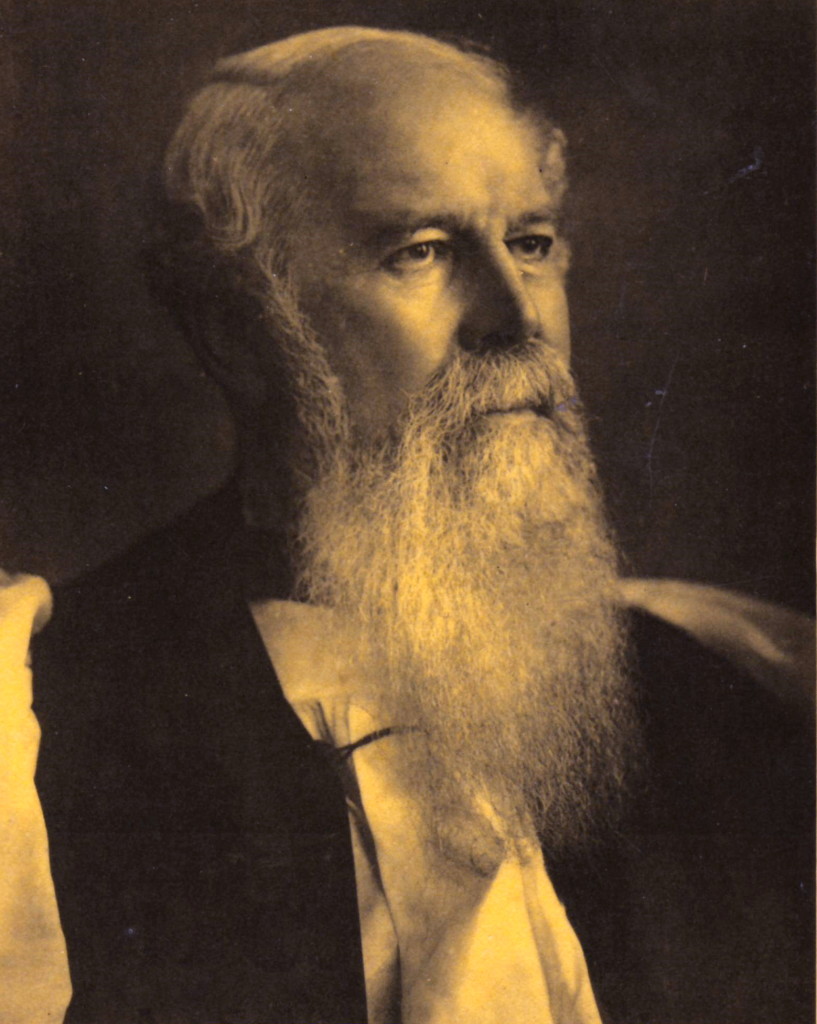
John Charles Ryle (10 May 1816 — 10 June 1900) was an English evangelical Anglican bishop. He was the first Anglican bishop of Liverpool.
Broadcaster:

Comments

0 / 2000 characters
Comments are moderated before appearing.

Be the first to comment!

Joshua

Joshua

Shall we play a game? Ask me about articles, sermons, or theology from our library. I can also help you navigate the site.