You will find it helpful to READ the texts--as you LISTEN to the audios!
The TEXTS for the entire commentary can be bound here: https://www.gracegems.org/Ryle/John.htm
Sermon Transcript
Auto-generated transcript • May contain errors
100%
Section 15 of Expository Thoughts on the Gospel of St. John, Volume 3, by J. C. Ryle. Chapter 15, Verses 17 to 21. WHAT CHRISTIANS MUST EXPECT FROM THE WORLD. Reasons for Patience. This LibriVox recording is in the public domain. Read by Marianne.
John, Chapter 15, Verses 17 to 21. These things I command you, that ye love one another. If the world hate you, ye know that it hated me before it hated you. If ye were of the world, the world would love his own. But because ye are not of the world, but I have chosen you out of the world, therefore the world hateth you. Remember the word that I said unto you, The servant is not greater than his lord. If they have persecuted me, they will also persecute you. If they have kept my sayings, they will keep yours also. But all these things will they do unto you for my name's sake, because they know not him that sent me.
The passage before us opens with a renewed exhortation to brotherly love. For the third time in this discourse, our Lord thinks it needful to press this precious grace on the attention of His disciples. Rare, indeed, must genuine charity be when such repeated mention of it is made. In the present instance, the connection in which it stands should be carefully observed. Christian love is placed in contrast to hatred of the world.
We are shown first, in this passage, what true Christians must expect to meet in this worldâ€"hatred and persecution. If the disciples looked for kindness and gratitude from man, they would be painfully disappointed. They must lay their account to be ill-treated like their master. The world hateth you. Be not moved nor surprised. If they have persecuted me, they will also persecute you. If they have kept my saying, they will keep yours also.
Facts, painful facts, in every age, supply abundant proof that our Lord's warning was not without cause. Persecution was the lot of the apostles and their companions wherever they went. Not more than one or two of them died quietly in his bed. Persecution has been the lot of true believers throughout the 18 Christian centuries of history. The doings of Roman emperors and Roman popes, the Spanish Inquisition, the martyrdoms of Queen Mary's reign all tell the same story. Persecution is the lot of all really godly people at this very day. Ridicule, mockery, slander, misrepresentation still show the feeling of unconverted people against the true Christian. As it was in St. Paul's day, so it is now, in public and in private, at school and at college, at home and abroad, all that will live godly in Christ Jesus shall suffer persecution.
" 2 Timothy 3, verse 12. Mere churchmanship and outward profession are cheap religion, of course, and cost a man nothing. But real, vital Christianity will always bring with it a cross. To know and understand these things is of the utmost importance to our comfort. Nothing is so mischievous as the habit of indulging false expectations. Let us realize that human nature never changes, that the carnal mind is enmity against God and against God's image in His people. Let us settle it in our minds that no holiness of life or consistency of conduct will ever prevent wicked people hating the servants of Christ, just as they hated their blameless Master. Let us remember these things, and then we shall not be disappointed.
We are shown, secondly in this passage, two reasons for patience under the persecution of this world. Each is weighty and supplies matter for much thought. For one thing, persecution is the cup of which Christ himself drank. Faultless as he was in everything, in temper, word, and deed, unwearied as he was in works of kindness, always going about doing good, never was anyone so hated as Jesus was to the last day of his earthly ministry. Scribes and high priests, Pharisees and Sadducees, Jews and Gentiles, united in pouring contempt on him, and opposing him, and never rested till he was put to death.
Surely this simple fact alone should sustain our spirits and prevent our being cast down by the hatred of man. Let us consider that we are only walking in our Master's footsteps and sharing our Master's portion. Do we deserve to be better treated? Are we better than he? Let us fight against these murmuring thoughts. Let us drink quietly the cup which our Father gives us. Above all, let us often call to mind the saying, Remember the word that I spake unto you, The servant is not greater than his master.
For another thing, persecution helps to prove that we are children of God and have treasure in heaven. It supplies evidence that we are really born again, that we have grace in our hearts and are heirs of glory. If you were of the world, the world would love his own. But because you are not of the world, but I have chosen you out of the world, therefore the world hated you. Persecution, in short, is like the goldsmith's hallmark in real silver and gold. It is one of the marks of a converted man.
Let us nerve our minds with this cheering thought. When we feel ready to faint and give way under the world's hatred, No doubt it is hard to bear, and the more hard when our conscience tells us we are innocent. But after all, let us never forget that it is a token for good. It is a symptom of a work begun within us by the Holy Ghost, which can never be overthrown. We may fall back on that wonderful promise, Blessed are ye when men shall revile you and persecute you, and shall say all manner of evil against you falsely for my sake. Rejoice and be exceeding glad, for great is your reward in heaven." Matthew 5, verses 11 and 12.
When the world has said and done its worst, it cannot rob believers of that promise. Let us leave the whole subject with a feeling of deep pity for those who persecute others on account of their religion. Often, very often, as our Lord says, they do it because they know no better. They know not Him that sent me. Like our Divine Master and His servant Stephen, let us pray for those who despitefully use us and persecute us. Their persecution rarely does us harm, and often drives us nearer to Christ, the Bible, and the throne of grace. Our intercession, if heard on high, may bring down blessings on their souls.
Notes, John chapter 15 verses 17 to 21.
Verse 17. These things I command, love one another. The expression these things must either refer backwards to what has just been said or forwards to what is going to be said. I prefer the latter view. I press on you these repeated charges to love one another because you must expect the hatred of the world. The more the world hates you, the more you ought to love one another and stick together.
Verse 18. If world hate hated me, you. The object of this verse is to encourage and comfort the disciples under the hatred and enmity of the unbelieving Jews. Do not be surprised and discouraged if you find yourself hated and persecuted by an unbelieving world. Do not think the fault is yours. You know and have seen and must remember that this same world has always hated and persecuted me before you, although it could lay no fault to my charge. The principle of the verse will be found true in every age. It is not the weaknesses and inconsistencies of Christians that the world hates, but their grace. Christians should carefully remember that their spotless and blameless master was bitterly hated by the world when he was on earth, and they must count it no strange thing if they are treated in the same way.
Hengstenberg thinks that the words, ye know, should be taken as an imperative and not an indicative, like remember in verse 20. I doubt this, but the construction of the Greek language makes it an open question. The Greek word rendered before is literally first. It is the same that is translated before in John 1, verses 15 and 30.
Verse 19. If ye are of the world, etc. In this verse, our Lord shows the disciples that the hatred of the world, however painful to bear, is a satisfactory evidence of their state before God. It is like, Blessed are ye when men shall revile you and persecute you, and, Woe unto you when all men shall speak well of you. This comes out more clearly if we invert the order of the verse. The world hates you because you are not like itself, but have a different faith and a different life, and because I have drawn you out of it to be My disciples and apostles. The world also loves what is like itself, and would love you if your standard of faith and life was like its own. The very hatred of the world, therefore, is a satisfactory evidence that you are My disciples.
Luther remarks, towards each other, apart from Christ, the men of the world are as little friends as dogs and cats. In all that concerns Christ, they are unanimous in hatred. The expression, his own, means literally, its own thing, its own spirit, tone, character, faith, and life. The whole verse contains rich experimental comfort for true Christians.
There are few things that we are so slow to realize as the enmity of natural man against God, and all that have anything of God's image. And forgetfulness of it often brings believers into much trouble and perplexity of mind. They do not expect the world's hatred, and are surprised when they meet with it. This verse teaches plainly that they ought not to be surprised. Burgon quotes a saying of Bishop Sanderson. The godly are in the world as strangers and in a foreign, yea, in an enemy's country, and they look upon the world and are looked upon it as strangers, and are used by it accordingly.
Verse 20. Remember the word, etc. Our Lord continues in this verse the same subject, viz., what the disciples must expect from the world. He reminds the eleven of the things He had said before when He first sent them out to preach, Matthew 10, Luke 6, 40. He had always told them that they must not expect to be better treated than He had been Himself. He quotes the proverbial saying that a servant must not expect to fare better than his master. Did they persecute me? Then they will persecute you. Did they keep, mind, and attend to my teaching? As a rule, the greater part did not, and you must expect the same. We ought to observe carefully how strongly this lesson about the world is laid down by our Lord. It was doubtless spoken for all time, and with a special reference to believers' slowness to realize it. If there is anything that true Christians seem incessantly forgetting, and seem to need incessantly reminding of, it is the real feeling of unconverted people towards them, and the treatment they must expect to meet with. Wrong expectations are one great cause of Christians feeling troubled and perplexed.
That word remember, do you remember, has a mine of meaning in it. Gadiker, Bengal, and some others think that the Greek word rendered keep here means to observe with a malicious intention, to carp at it. But this seems improbable. Whether, however, there is not a latent irony in the sentence is doubtful.
Verse 21, But all these things names sake. Our Lord here tells his disciples that he himself was the cause of all the enmity and hatred they would meet with. They would be hated on account of their master more than on account of themselves. These things must refer apparently to the expression, hate, persecute, and keep your saying. It may be some comfort to a persecuted Christian to think that it is for his master's sake that he is ill-used. He is filling up that which is behind the afflictions of Christ. Colossians 1, verse 24. He is bearing the reproach of Christ. Hebrews 11, verse 26.
Because they know not, sent me. This sentence is elliptical. It means that dark ignorance was the great cause of the conduct of the unbelieving Jews. They did not rightly know God the Father who had sent Christ into the world. They did not know that Christ was the Messiah whom the Father had promised to send. In this state of ignorance they blindly persecuted Christ and his disciples.
This judicial blindness and hardness of the Jewish nation in the time of our Lord and His Apostles is a thing that ought to be carefully observed by all Bible readers. See Acts 3.17, 13.27, 28.25-27, 1 Corinthians 2.8, 2 Corinthians 3.14. It was a peculiar judicial blindness, we must remember, to which the whole nation was given over, like Pharaoh, as a final punishment for many centuries of idolatry, wickedness, and unbelief. Nothing but this seems thoroughly to account for the extraordinary unbelief of many of our Lord's hearers.
In leaving this passage, we should not fail to notice the singular frequency with which our Lord speaks of the world. Six times He mentions it. We should also notice the singular resemblance between the line of argument adopted in the passage and the line of St. John in the third chapter of his first epistle. The apostle writes his epistle in that part as if he had this chapter before him. End of section 15
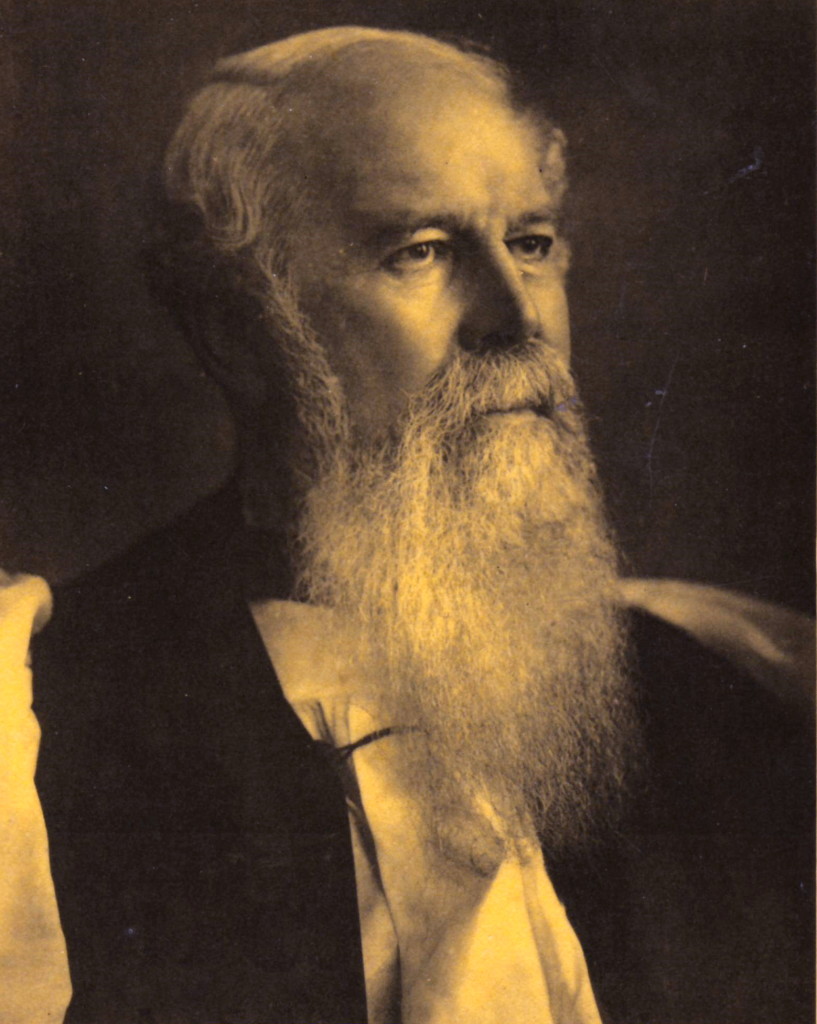
About J.C. Ryle
John Charles Ryle (10 May 1816 — 10 June 1900) was an English evangelical Anglican bishop. He was the first Anglican bishop of Liverpool.
Comments
Your comment has been submitted and is awaiting moderation. Once approved, it will appear on this page.
Be the first to comment!