Bootstrap
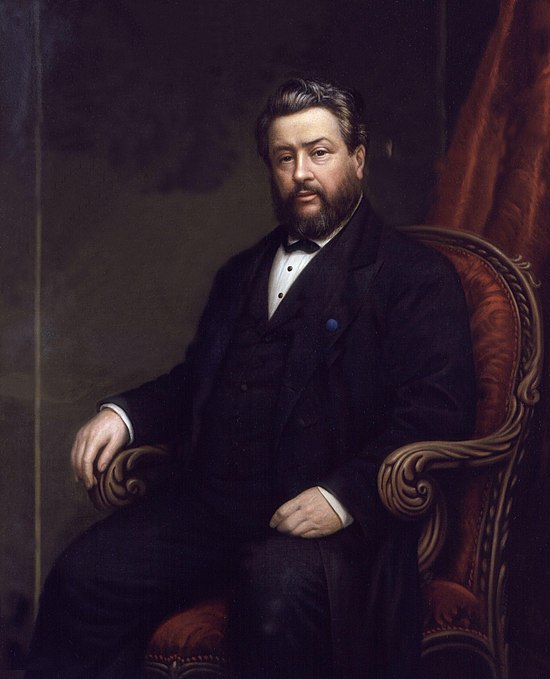
Charles Spurgeon

Comfort for the Fearful!

Matthew 18:26; Romans 8
Charles Spurgeon June, 18 2022 Audio
0 Comments
Another superb video by the Prince of Preachers!

Sermon Transcript

Auto-generated transcript • May contain errors

100%
He saith unto them, Why are ye fearful, O ye of little faith? Matthew chapter 8, verse 26. Comfort for the fearful. A sermon delivered by C. H. Spurgeon on Thursday evening, October 18, 1877 at the Metropolitan Tabernacle.

The winds were howling, the waters were roaring, and the disciples thought that the little ship must surely be engulfed in the raging sea. So they aroused their master from his sorely needed sleep and cried to him, Lord, save us, we perish!

Note well the first words that he speaks to his frightened followers. Generally, when a man is in trouble, it is best first to help him out of it if we can, and then to give him any rebuke that he may deserve. Yet we may be quite sure that our Lord Jesus Christ followed the wisest order in every case. Being aroused because there was danger, he dealt first with the chief cause of danger. What was that? Not the winds or the waves, but the disciples' unbelief.

There is always more peril to a Christian in his own unbelief than in the most adverse circumstances by which he may be surrounded. Our Lord did not first rebuke the winds and waves and then speak to the disciples, but he dealt with the chief peril first, by rebuking their unbelief. I think I may venture to say, though to omnipotence all things are possible, that it was an easier task for Christ to calm the winds and the waves than to still the tumult raised by doubt in his disciples' minds. He could more swiftly cause a calm to fall upon the stormy surface of the Galilean lake than upon the perturbed spirits of his terrified apostles. The mental always excels the physical. The ruling of hearts is a greater thing than the governing of winds and waves.

So, beloved, when we have to battle with trouble, let us always begin with ourselves, our own fears, mistrusts, suspicions, selfishness and self-will. For the chief danger lies there. All the trouble in the world cannot harm you so much as half a grain of unbelief. Poverty cannot make you so poor as mistrust can, and sickness cannot make you so sick as unbelief can. The greatest evil to be dreaded is that of doubting your Lord. May God grant you grace to take this estimate of unbelief, and because Christ first rebuked that, and then the winds and the waves, so do you first seek to have yourself under proper control, so that afterwards you may be able to overcome your difficulties, whatever they may be. He who is, by the grace of God, enabled to master his own soul, need not doubt that he shall also be master of everything that opposes him.

I am going to try, as the Spirit of God shall help me, to minister consolation to any that are suffering through fear. And I shall speak first to those who are Christ's disciples, and who know that they are His, and then secondly I shall speak to those who would not like to say that they are not His disciples, but who yet dare not say that they are. the many who feign would be His, but who hardly dare to hope that He is willing to have them as His disciples.

To them I shall say as Christ said to His apostles, Why are ye fearful, O ye of little faith?

So first I shall apply the question in my text to those who really are the Lord's people, those who are in the boat with Christ, His disciples who follow Him and keep near to Him. Why are ye fearful, O ye of little faith? First, why is it that you doubt his love? He brought you on to this stormy sea, he bade you take the ship, and he knew all about this storm coming on. Do you think because of your present experience that he does not love you? You dare not utter such a calumny. Look back at your past life and see how patiently he is borne with you. Your slowness in learning has not made your Divine Teacher angry, but He has still gone on teaching you. Do you remember when He first called you by His grace and what you were when He called you? Do you recollect what you have been since He called you? Yet He has still continued to love you and has not cast you away.

Look back, I pray you, upon the many times in which He has appeared for you, bringing you through very severe trials and sustaining you under very heavy burdens. After all this, do you mistrust Him? Can you do so? Will you imitate the language of the unbelieving Israelites and say, Is it because there were no graves on shore that the Lord has brought us out upon this stormy sea? Do you suspect that he has brought you thus far, encouraging you with many hopes, allaying your fears and supplying your necessities, on purpose that he might overwhelm you with disappointment? Has he been trifling with you in all this, exciting desires and expectations in you, which, after all, are not to be fulfilled, but you are to be left to perish?

Oh no! Each believer can confidently sing, Can he have taught me to trust in his name, And thus far have brought me, to put me to shame. It is impossible that he can have done this. It is altogether unlike him, and inconsistent with all his past treatment of us, and with his well-known character. Come, child of God, you know that he loves you after all. The proofs and pledges of that love rise up before your memory, so you cannot think that He will suffer you to be cast away. Will He allow your present troubles to destroy you, when so many others have not been able even to hurt a hair of your head? Trust in His love and dismiss your fears.

Let me turn to another side of this truth. Do you doubt your Lord's power? These disciples ought not to have done so. for they had lately been eyewitnesses of so many remarkable displays of his power. Had they not seen him cast out devils? Had they not been with him when a touch of his had healed the leper, when another time the laying of his hand upon the fevered brow had raised the sick one from her bed? Had they not come fresh from a mass of miracles where, in the crowded street, he had dealt out healing to all manner of sufferers? How could they doubt his power when before their own eyes they had seen it so wonderfully displayed? Is he master of devils and not of winds? Can he cast out diseases and not lull to sleep the roaring billows? It was both absurd and wicked for them to think of setting a limit to his unbounded power.

And now you, dear child of God, after the experience you have had of His goodness, and after what you know the Lord did for you by His redeeming love in ages past, dare you say that He has not power to deliver you now? Is anything too hard for the Lord? You say that you are poor, but can He not supply your need? Are not the cattle upon a thousand hills His own? Does He not claim the silver and gold as His treasure? He can feed the universe. He has done it these many centuries, and he is still doing it. The commissariat of the whole universe has depended upon his perpetual benevolence and care, and yet from day to day the hosts of birds and beasts and fishes and insects still are fed. And will not he who supplies the wants of all living creatures by simply opening his hand, find food enough for his own child? Will you doubt his power? Is your case a very peculiar and difficult one? Do you draw a line and say, this God can do, but that he cannot do? Is that right? Is it reasonable? Granted that he is omnipotent, and he is omnipotent whether you admit it or not, and you have done away with difficulties.

O thou with little faith in God's power, wherefore dost thou doubt? He can, he will help thee, if thou wilt but trust him to do so.

Peradventure, however, your doubt may touch another point. Have you any suspicion of God's wisdom? Possibly these disciples might have thought, it was very unwise of our master, just at eventide, to bid us cross this lake, which, lying low in a hollow surrounded by hills, is subject to very sudden and fierce gusts of wind, that catch a ship and twist around, so that no steersman can tell how to cope with the various currents and winds which are so extraordinary in their course. It was unwise of him to bring us here.

Yet if they did talk like that, they ought to have known better. For they had sat at his feet and listened to the wondrous wisdom which poured from his lips. They knew that he was supremely wise. How then could they doubt? And dost thou, O child of God, think that the Lord is dealing unwisely with thee? Darest thou charge the all-wise Jehovah with folly? Whatever infinite wisdom does must be right. Thou errest continually. What art thou but a mass of mistakes? What is thy life but a constant repetition of floundering and blundering? But he who is shown his marvellous skill in creation, and his wondrous wisdom in redemption, and also in providence, dost thou think that he miscalculates, or misses the mark he aims at, or that he can in any way err? O cast away this dishonouring reflection upon the Lord, as thou hearest him say to thee, Why art thou fearful, O thou of little faith?

There are some other things which might very well have smitten the consciences of these fearful followers of Christ, and among them were these considerations which I suggest to you as worthy themes for your meditation. It is true that it was a terrible storm. But then they were in the same boat with their lord. Whenever a foaming billow smote the ship and agitated the breasts of the disciples, it moved their master also. He had to bear all the tossing of the waves, the wild leaping of the vessel from the billow's base to the billow's crown. He must have felt it just as much as they did. If the little vessel went down with them, it must go down with him also, for they were in the same boat. How this thought ought to have lulled their fears to rest!

And, beloved Christian, dost thou not know that he that believes in Jesus is sailing in the same ship with him? Remember how Paul writes, For ye are dead, and your life is hid with Christ in God. Because I live, said Jesus himself to his disciples, ye shall live also.

It was a bold saying of one that he had trusted Christ to save him so he knew that he could not be lost. But, asked someone, suppose after all that you are lost. Well then, he replied, Christ would lose more than I should, for while I should lose my soul, he would lose his honour. If he did not save one who trusted him, he would lose his character as saviour. He would lose the most precious jewel in his crown. So that can never be.

No, he that believes in him shall never be ashamed nor confounded, world without end. He can never be either unable to save or unfaithful to his promise to save all who trust him. Well does Dr. Watts write, his honour is engaged to save the meanest of his sheep. All that his Heavenly Father gave, his hands securely keep.

Another reflection is that although they were in a great storm, the power that made the storm was the very power to which they had to trust. There was not a single blast of the tempest, but Jehovah's might had sent it. nor did a single wave leap up in apparent wrath, but with God's permission, or at His command. It was His power, outside the vessel, that was putting them into peril, and they ought to have known that the same power would be exerted to deliver them.

It is the same in your case. You are in great trouble, but does trouble spring out of the ground? Does it come by chance? Nay, God's hand is in it all. I know men talk of the laws of nature, but the laws of nature have no force in themselves. The whole force that carries out a law of nature is a divine force. So your difficulties are of God's sending, trials of God's making, and they are all still in the hand of the all-powerful One to restrain, or mitigate, or increase, or direct according to His own will.

You have often heard, I dare say, that pretty little story—which I cannot help telling again, because it drops in so appropriately here—of the woman on board ship who was much disturbed in a storm, while her husband, the captain, was calm and restful. She asked him why he was so placid when she was so distressed. He did not answer in words, but he took down his sword and held it to her breast. She smiled. He said, why are you not afraid? This is a sharp sword with which I could slay you in a minute. Ah, she replied, but I am not afraid of a sword when it is my husband who wields it. So, said he, neither am I afraid of a storm when it is my father who sends it and who manages it.

Now since all the trials and troubles of this mortal life are as much in the hand of the great God as that sword was in the hand of the good woman's husband, we need not be afraid of them, for they are all in his power. When he rides aloft in his chariot and the skies tremble at the sound thereof, why should you tremble, even ye timid ones? The God that rules on high and thunders when he please, that rides upon the stormy sky and manages the seas, This awful God is ours, our Father and our Love. It is only the flash of His spear when you see the vivid lightning, and only the roll of His majestic voice when you hear the thunders peal. Therefore why are ye fearful, O ye of little faith?

There was another thing that ought to have kept those disciples from being afraid, and it was this. Suppose they had sunk. Still, having put to sea at his command and with him on board, all would have been well with them.

I have heard of a sailor who was very calm in a storm, and someone asked him,—'Why are you not afraid? Can you swim?' '—'No,' he said,—'I cannot swim. But if I were to sink to the bottom of the sea, I should only sink into my heavenly father's hand, for he holds the waters in the hollow of his hand.' That is a sweet thought. And if the worst comes to the worst with you, my brother, if what we call the worst should come to you, my sister, well, you would only die. You would go as low as the grave, but blessed be God, you would never go any lower. And in due time, even your body will come up again from that grave, and reunited with your soul, be forever with the Lord. Wherefore, comfort one another with these words.

But suppose you should die, your soul will then leap away from death into eternal life in a moment. Death would end all your troubles, rid you forever of all your burdens, and you would be at home, to go no more out forever. So you may well say with good old John Ryland, come welcome death, I'll gladly go with thee.

There was one other reason why these disciples ought not to have been at all alarmed, and that was because their master was asleep. Oh, say you, I do not see what comfort that was to them. Well, let me tell you what happened to me one night when I was on board ship. In my sleep I started because I thought I heard something slip. Something had slipped. It was the anchor that had been cast overboard. I called out to the one who slept near me. What is the matter? He said, there is something the matter, I feel sure. Why, I asked, and he replied, because the captain is up. It was in the middle of the night, but the captain was up. So I was also up very soon, and saw that the captain was up, and that the sailors were quietly getting out of a boat. If my friend had told me that the captain was asleep, I might have slept on. For I should have said, it is all right if he is asleep. I need not trouble myself to know what is the matter. But when I heard that he was up, I thought it was time for me to be up too.

If you were on board ship and saw the captain busy, heaving the lead and doing it himself very deliberately and quietly, you would say to yourself, I do not know what is wrong, but I feel sure there is something the matter. The captain seems so anxious. But if at any time you were at sea and you said to another passenger, where is the captain? And the reply was, oh, he is in his berth, sound asleep. You would say, oh, then, it is all right.

Why did the Lord Jesus Christ go to sleep in a storm? Why, just because He knew that all was right. Why should He not go to sleep? The great loving heart of Christ would not have rested if His children had been in any danger. It was because there was no danger, either to Him or to them, that He went to sleep.

Perhaps you are saying to yourself, I have not had any wonderful deliverances from this trouble. I have had in times gone by, but now the Lord does not seem to work any great marvel for me. No, because there is not any need for it. An old version of the 18th Psalm says,

On cherub and on cherubim,
Full royally he rode,
And on the wings of mighty winds
Came flying all abroad.
And so delivered he my soul,
Who is a rock, but he,
He liveth, blessed be my rock,
My God, exalted be.

When the Lord thus descended from above, you may depend that there was some great danger threatening one of his children. Otherwise he would not have come at such speed as that, and you may rest assured that if he does not come thus to help you, it is because there really is not any urgent need for his interposition, as you are not in any great danger. Possibly the Lord sees it will be best for you to bear your troubles a little longer, for you are getting good out of them. He means to leave you in the furnace for a little while, because he can see that your dross is being taken away. But if the good metal in you were being injured in the slightest degree, he would lift you out of the furnace directly. There is no serious harm happening to you, and therefore the Lord does not intervene. I hope that you can see now that the sleep of Jesus ought to have given rest to the minds of his disciples, but it did not, and he had to say to them, Why are ye fearful, O ye of little faith? Thus have I spoken to the Lord's own people. May the Holy Spirit graciously bless the word to them.

Now I want your attention for a short time while I speak to those who cannot say that they are Christ's disciples. There is a story told of Dr John Owen, who was then Mr John Owen, that he had been for two or three years in great distress of mind. He went to London, hoping to hear a very famous divine, but on arriving at the meeting-house he found that the doctor was not preaching. A man, whose name Mr Owen never knew, preached from the text from which I am now preaching. Why are ye fearful, O ye of little faith? He was a man of no great ability. But it pleased God that night to break John Owen's fetters by means of the remarks that were made by the stranger preacher, which were exactly suited to the condition of John Owen's mind at that time. And so that mighty master of theology, perhaps the grandest of all English divines with whom God has ever favoured us, was brought into light and liberty through the instrumentality of that stranger preacher.

I wish that the few minutes I can now spend in addressing you could be as fruitful as his message was on that occasion. If only one of you is brought into the light, I will bless the name of the Lord. but I long for very many to be thus blessed.

You are seeking Christ, dear friend, and longing to be saved, but for want of faith you are still in trouble of soul. What is your real condition? Perhaps you say, I labour under a deep sense of sin, I have been exceedingly guilty. Possibly some one sin specially troubles you, or more probably a number. It may be that you know that you have sinned against light and knowledge, and you are aware of the peculiar provocation of having sinned as you have done after enjoying Christian teaching from your youth up. You feel that there is some special aggravation about your transgression, and you say to yourself, I can scarcely believe that there is pardon for me.

My dear friend, I put it to you, why art thou fearful, O thou of little faith? Did not Jesus Christ come into the world to save sinners? Is there any sin which he is not able to forgive? It is true that there is a sin which is unto death, but you have not committed that sin or else you would be in a state of death and would have no desire to be saved. But if you have any spiritual life so that you long to be saved, You have not committed that unpardonable sin, and all other sin and blasphemy can be forgiven unto men if they repent of it and trust the Lord Jesus Christ.

I am afraid that you do not think enough of the greatness of the Saviour, that He is God as well as man. Consider the dignity of His person as God over all, blessed forever, yet nevertheless stooping to bear human sin. Think of your sin as much as you will, but do also think much more of the sin-bearer and his vicarious sufferings. Weep at the remembrance of your guilt, but weep on Calvary. Weep with the wounds of Christ before you. But, O I pray you, do not do my Lord the great dishonour to say that he cannot forgive you. It is you who will not believe in Him. It is certainly not with Him that the difficulty lies. He is able to save them to the uttermost that come unto God by Him, seeing He ever liveth to make intercession for them. It is not possible that you are beyond His ability to save. There have been other persons saved, and many of them, who have sinned just as much as you have done. And even if there had not been any such, yet recollect that if you are a sinner beyond all others, your case presents an opportunity for Christ to exceed everything that He has ever done, and He would delight in that. He delighteth in mercy. So if you are really what you suppose yourself to be, namely something altogether extraordinary in the way of guilt, then there remains room for Christ to show in you the extraordinary power of His grace. I pray you to believe that He can do this. Trust Him to do it, and you shall find that He both can and will.

Possibly, someone says, my difficulty is not so much concerning the power of God to pardon as concerning the strong propensities to sin which I find dwelling in me. How can they be conquered? I have resolved a great many times to overcome them, but I find my sin to be like Samson. It is not to be bound with new cords and green wits, for it breaks loose from all its bonds. I cannot think that I can be saved with such an impetuous temper, or such a proud spirit, or whatever form your sin happens to take.

Now, beloved friend, it is well that you should see this difficulty. But is not He who is mighty to save quite able to grapple with it? Have you forgotten that text, Behold, I make all things new? Do you not know that the Spirit of God has been given, that He may take away the heart of stone out of your flesh, and give you a heart of flesh? Have you never read the covenant of grace, which says, Then will I sprinkle clean water upon you, and ye shall be clean from all your filthiness, and from all your idols will I cleanse you. A new heart also will I give you, and a new spirit will I put within you. Is anything too hard for the Lord in this matter? I tell thee, if thou art near akin to a devil, he can make thee into something more than an angel. And if thy lusts and corruptions seem to have a strength that seems to thee to be well nigh omnipotent, yet is the power of the Holy Spirit able to cast out all this evil and to overcome the devil within thee. A strong man armed may keep the house, but when a stronger than he shall come, then shall he be driven forth and made to know who is his master. Believe thou that Christ is stronger than thy sin, and come and trust thyself to him, O thou of little faith.

But, says another, my trouble is that I cannot find anything in me that Christ can work upon, I perceive in my sister who is saved some traits of character that I think admirable. I perceive some redeeming feature in all converted people, but I do not perceive anything of the kind in myself. I seem to be weak where I ought to be strong, and strong where I ought to be weak. I am all that I ought not to be, and nothing that I should be.

Ah, my friend, I want you to believe, to do my Lord Jesus the honour to believe, what he has a right to claim from you, namely that he can deal readily enough with your case, for yours is just the typical case that he came to save. You remember God's ancient law concerning the leper who was to show himself to the priest. It was the priest's duty to examine him from head to foot with careful eye. While he was surveying him, he came upon a place, perhaps the size of the palm of his hand, where the flesh was perfectly healthy. There was no sign of leprosy in it, whatever, and the priest said, this is a fatal spot, you are unclean, you must be put away outside the camp. Then he examined another leper, and looking him all over, though he seemed covered with scales of leprosy, Yet the priest found that he had a little place, perhaps the size of the top of his finger, which was quite clear of the disease. The man said, I have always thought there was hope for me, for you see that little spot, there is no leprosy there. But the priest sorrowfully shook his head and said, you are unclean, you must be put outside the camp. There came another leper, who said to the priest, it is scarcely necessary for you to examine me. For from the crown of my head to the sole of my foot, I am covered with this loathsome disease. There is not a speck or spot in me that has not the disease everywhere. So the priest looked, but he could not see one healthy place, and therefore he said, You are clean. You may go wherever you like. I suppose it showed that the man's constitution had been strong enough to throw the disease out. I infer that was the rationale of it, physically. But anyhow, according to the law of the leper, the man was clean. And, my friend, if on looking yourself all over you can perceive no good whatever, or anything like good, And if the great high priest, even the Lord Jesus Christ, can see no good in you, he will pronounce you clean the moment you come unto him and trust in him. This may seem strange to you, but it is the very essence of the gospel, even as Joseph Hart sings. Tis perfect poverty alone that sets the soul at large. While we can call one might our own, we have no full discharge. But let our debts be what they may, however great or small. As soon as we have naught to pay, our Lord forgives us all. Well, now you who thus condemn yourself should see that your very condemnation of yourself gives you hope of salvation. Why, the devil himself, I should think, would hardly dispute with some of you the fact that you are sinners. On the contrary, he has often been to you and said, see what a great sinner you are. For once he spoke the truth, though he did even that with an evil intention. If he says that to you, say to him, Yes, Satan, you have proved that I am a sinner. But that is my hope of salvation, for it is a faithful saying and worthy of all acceptation that Christ Jesus came into the world to save sinners. He who condemns himself, God absolves. He who is shut up in the prison of the law so that he cannot escape. He who writes his own death warrant and signs it and feels that he deserves to die. He is the man for whom the Lord Jesus Christ sets open the door of mercy and says, come unto me, for I have absolved thee. Thou art a free man. Be of good comfort. I died to redeem just such souls as thou art. So again I say, O thou of little faith, wherefore dost thou doubt? Another case I would like to meet is that of one who says, Oh, but I have such a lack of sensibility. I am afraid I do not feel humble enough. Some sinners weep, but I cannot. Some have upon them an awful horror of great darkness, but I have not. I wish I had. Dear friend, dost thou think that would help Christ to save thee? O, then thou dost malign my Lord, who wants no help from thee. He can save thee, stony-hearted as thou art. If there be no sensibility, or anything else that is good about thee, he can give thee all this, or save thee just as thou art. Do not think that he needs thine assistance. What canst thou do, poor fool? I cannot help calling thee fool, if thou dost think that thou canst do anything to help him to save thee.

A righteousness like his, wouldst thou patch thy rags upon it? blood like his, wouldst thou bring some bottles full of thy tears to add to the merit of his great sacrifice? I tell thee that the purest tear thou hast ever shed would stain his precious blood. Thou wilt need forgiveness for that tear, if thou dreamest that there can be any merit in it to add to the merit of his blood.

Ah, says another, but I have to mourn my feebleness in prayer. I know some who have found Christ because they seemed to lay hold of Him at the mercy seat, but I cannot, I can hardly touch the hem of His garment. Well then, do that, and if thou dost, thou shalt be healed. A little genuine faith ensures the death of all thy sin. Dost thou think that Christ asks great things of thee? Listen man, though Christ bids thee look unto him and live, it is he that first gives life to that eye of thine, or else it never could have looked unto him.

There is nothing good in thee, it is all in Christ, from first to last it is grace, grace, grace. And grace, you know, takes no payments, for it would mar its glory and its freeness if it took from thee anything, from a thread to a shoelatchet. Be thou only emptiness, and Christ will be thy fullness. But I do not feel, thou sayest. Well then, be so empty that thou art even empty of feeling. Thy feelings cannot save thee, but Christ will give thee all the feeling that thou needest. Come unto him just as thou art, and trust him for everything.

You are like a child who has done something very wrong. And his father says, my child, I will freely forgive you. The child says, I cannot believe it. I've been so wicked. I want to do something. The father says, my dear child, I love you so that I have freely forgiven you. I can forgive all. I can forget all. And I've done so. The child says, but I know if anyone had offended against me as I have done against you, I could not forgive and forget. No, the father says, but my child, my ways are not thy ways, nor my thoughts thy thoughts.

The child still cannot believe that his father loves him so as to be ready to forgive him. But if he would believe that, and just throw himself on his father's bosom with the cry, Father, I have sinned! Oh, what ease of mind he would at once feel! out with thy confession. Let not sin be smouldering in thy bosom any longer. Tell the Lord how guilty thou art. Tell him that thou deservest his utmost wrath. Tell him that thou couldst not complain, even if he should destroy thee. But tell him that thou dost cling to Christ, and to the promise of pardon made in his word.

Say to him, Thou hast promised to forgive all who in thy Son believe, Lord, I know thou canst not lie. Give me Christ, or else I die. That is the thing to do. God help you to do it. Believe over the head of your sins. Believe over the head of your sensibility. And I charge you, do not look at anything but Christ. When thou lookest on thy sins, instead of looking at Christ, thou makest an antichrist of thy sins. And when thou dost look on thy faith, and say, I cannot think that my faith is enough, if thou lookest at thy faith instead of looking to Christ, I say, away with thy faith, away with everything but what Christ has done and what Christ is.

And the boundless love of the great forgiving God whose bowels yearn over thee, and who cries, How shall I give thee up, Ephraim? How shall I deliver thee, Israel? How shall I make thee as Admar? How shall I set thee as Zeboim? Mine heart is turned within me, my repentings are kindled together, for I am God and not man. O thou of little faith, why art thou so fearful? Trust thy God and live.

But lastly, I hear someone else say, my trouble is concerning the difficulties of a Christian life. How can I, if I begin to be a Christian, hold on to the end? Dear friend, I will not deny that there are difficulties and that they are very great, much greater than you imagine.

But your holding on is not the great matter. It is Christ who will hold you on. Your perseverance in grace is no more to be your own act apart from Christ than is your first hope in Him. You are to look to Christ to be the Omega as well as to be the Alpha, to be the Z as well as to be the A of the Christian alphabet.

And if you come and cast yourself upon Him, it is not His custom to cast away any that come to Him, neither at first nor yet afterwards. Having loved his own which were in the world, he loved them unto the end. And he will do the same with you. He will subdue your corruptions, drive out your iniquities, and present you at the last faultless before his Father's throne.

Oh, I can talk about this, but after all it is only the Lord and Giver of grace who can drive away your unbelief. May he do so now, and to his dear name shall be the praise for ever and ever. Amen.
Charles Spurgeon
About Charles Spurgeon
Charles Haddon Spurgeon (19 June 1834 — 31 January 1892) was an English Particular Baptist preacher. His nickname is the "Prince of Preachers."
Broadcaster:

Comments

0 / 2000 characters
Comments are moderated before appearing.

Be the first to comment!

Joshua

Joshua

Shall we play a game? Ask me about articles, sermons, or theology from our library. I can also help you navigate the site.