Bootstrap
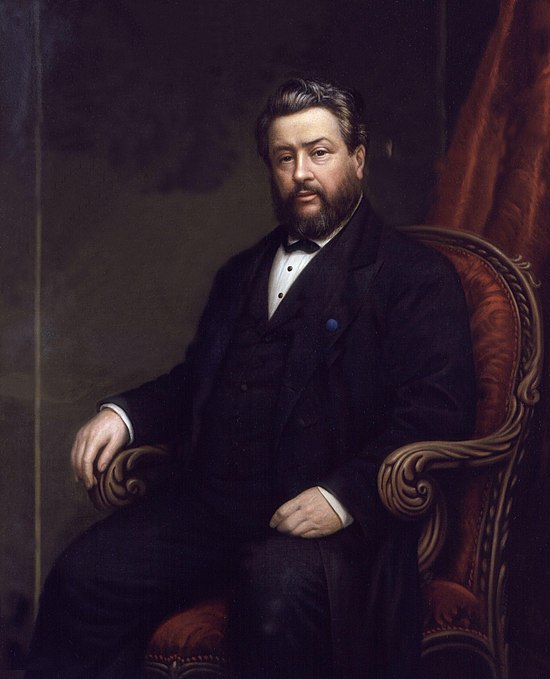
Charles Spurgeon

Prayer Perfumed with Praise

Philippians 4:6-7; Romans 8
Charles Spurgeon June, 17 2022 Audio
0 Comments
Another superb video by the Prince of Preachers!

Sermon Transcript

Auto-generated transcript • May contain errors

100%
In everything by prayer and supplication with thanksgiving, let your requests be made known unto God. Philippians chapter 4, verse 6. Prayer perfumed with praise. A sermon delivered on Lord's Day morning, April 20th, 1879, by C. H. Spurgeon. In everything by prayer and supplication, with thanksgiving, let your requests be made known unto God. According to the text, we are both by prayer and supplication to make known our requests unto God. If any distinction be intended here, I suppose that by prayer is meant the general act of devotion and the mention of our usual needs, and by supplication I think would be intended our distinct entreaties and special petitions. We are to offer the general prayer common to all the saints, and we are to add thereto the special and definite petitions, which are peculiar to ourselves. We are to worship in prayer, for God is to be adored by all his saints. And then we are to beseech his favours for ourselves, according to the words of the text, letting our requests be made known unto God. Do not forget this second form of worship. There is a good deal of generalising in prayer, and God forbid that we should say a word against it, so far as it is sincere worship, but we want to have more of specific, definite pleading with God, asking Him for such and such things, with a clear knowledge of what we ask. you will hear prayers at prayer meetings in which everything is asked in general but nothing in particular and yet the reality and heartiness of prayer will often be best manifest by putting up of requests for distinct blessings See how Abraham, when he went to worship the Lord, did not merely adore him and in general pray for his glory, but on a special occasion he pleaded concerning the promised heir. At another time he cried, O that Ishmael might live before thee. And on one special occasion he interceded for Sodom. Elijah, when on the top of Carmel, did not pray for all the blessings of providence in general, but for rain, and for rain there and then. he knew that he was what he was driving at kept to his point and prevailed so my beloved friends we have many wants which is so pressing as to be very distinct and definite and we ought to have just so many clearly defined petitions which we offer unto God by way of supplication and for the divine answers to these we are bound to watch with eager expectancy so that when we receive them we may magnify the Lord The point to which I would draw your attention is this, that whether it be the general prayer or the specific supplication, we are to offer either or both with thanksgiving. We are to pray about everything, and with every prayer we must blend our thanksgiving. Hence it follows that we ought always to be in a thankful condition of heart. Since we are to pray without ceasing, and are not to pray without thanksgiving, it is clear that we ought to always be ready to give thanks unto the Lord. We must say with the psalmist, thus will I bless thee while I live. I will lift up my hands in thy name. The constant tenor and spirit of our lives should be adoring gratitude, love, reverence and thanksgiving to the Most High. This blending of thanks with devotion is always to be maintained. Always must we offer prayer and supplication with thanksgiving. No matter though the prayer should struggle upward out of the depths, yet must its wings be silvered o'er with thanksgiving. Though the prayer were offered upon the verge of death, yet in the last few words which the trembling lips can utter, there should be notes of gratitude as well as words of petition. The law saith with all thy sacrifices thou shalt offer salt, and the gospel says with all thy prayers thou shalt offer praise. one thing at a time is said to be a wise proverb, but for once I must venture to contradict it and say that two things at a time are better when the two are prayer and thanksgiving. These two holy streams flow from one common source, the spirit of life which dwells within us. And they are utterances of the same holy fellowship with God. And therefore it is right that they should mingle as they flow and find expression in the same holy exercise. Supplication and thanksgiving so naturally run into each other that it would be difficult to keep them separate. Like kindred colors, they shade off into one another. Our very language seems to indicate this, for there is small difference between the words to pray and to praise. A psalm may be either prayer or praise or both. And there is yet another form of utterance which is certainly prayer, but is used as praise and is really both. I refer to that joyous Hebrew word which has been imported into all Christian languages, hosanna. Is it a prayer? Yes! Save Lord! Is it not praise? Yes! For it is tantamount to God save the King and it is used to extol the Son of David. While we are here on earth we should never attempt to make such a distinction between prayer and praise that we should either praise without prayer or pray without praise. But with every prayer and supplication we should mingle thanksgiving, and thus make known our requests unto God. This co-mingling of precious things is admirable. It reminds me of that verse in the Canticles where the king is described as coming up from the wilderness in his chariot like pillars of smoke perfumed with myrrh and frankincense with all powders of the merchant. There is the myrrh of prayer and the frankincense of praise. So too the holy incense of the sanctuary yielded the smoke of prayer which filled the holy place. But with it there was the sweet perfume of choice spices, which may be compared to praise. Prayer and praise are like the two cherubim on the ark. They must never be separated. In the model of prayer which our Savior has given us, saying, after this manna pray ye, the opening part is rather praise than prayer. Our Father which art in heaven, hallowed be thy name. And the closing part of it is praise, wherein we say for thine is the kingdom, the power and the glory forever and ever. Amen. David, who is the great tutor and exemplar of the church as to her worship, being at once her poet and her preacher, takes care in almost every psalm, though the petition may be agonizing, to mingle exquisite praise. Take, for instance, that psalm of his after his great sin with Bathsheba. There one would think, with signs and groans and tears so multiplied, he might have almost forgotten or have feared to offer thanksgiving while he was trembling under a sense of wrath. And yet, ere the psalm that begins, Have mercy upon me, O God, can come to a conclusion, the psalmist has said, O Lord, open thou my lips, and my mouth shall show forth thy praise. And he cannot pen the last word without beseeching the Lord to build the walls of Jerusalem, adding the promise, Then shall thou be pleased with the sacrifices of righteousness, with burnt offering and whole burnt offering, then shall they offer bullocks upon thine altar. I need not stop to quote other instances, but it is almost always the case that David, by the fire of prayer, warms himself into praise. He begins low, with many a broken note of complaining, but he mounts and glows, and like the lark, sings as he ascends. When at first his harp is muffled, he warbles a few mournful notes and becomes excited, till he cannot restrain his hand from that well-known and accustomed string which he had reserved for the music of praise alone. There is a passage in the 18th Psalm in the third verse in which indeed he seems to have caught the very idea I want to fix your minds upon this morning. I will call upon the Lord who is worthy to be praised so shall I be saved from mine enemies. He was in such a condition that he says the sorrows of death compassed me and the floods of ungodly men made me afraid. The sorrows of hell compassed me about, the snares of death prevented me. Driven by distress, he declares that he will call upon the Lord, that is, with utterances of prayer. But he does not alone regard his God as the object of prayer, but as one who is to be praised. I will call upon the Lord, who is worthy to be praised. and then as if inspired to inform us of the fact that the blending of thanksgiving with prayer renders it infallibly effectual, as I shall have to show you it does, he adds, so shall I be saved from my enemies. Now if this habit of combining thanksgiving with prayer is found in the Old Testament saints, we have a right to expect it yet more in New Testament believers, who in clearer light perceive fresh reasons for thanksgiving. But I shall give you no instance except that of the writer of my text. Does he not tell us in the present chapter that those things which we have seen in him we are to do? For his life was agreeable with his teaching. Now observe how frequently he commences his epistles with a blending of supplication and thanksgiving. Turn to the Romans and note to the first chapter of the eighth and ninth verses this fusion of the precious metals. First, I thank my God through Jesus Christ for you all, that your faith is spoken of throughout the whole world. For God is my witness, whom I serve with my spirit in the gospel of his son, that without ceasing I make mention of you always in my prayers. There is, I thank my God, and I make mention of you in my prayers. This was not written with a special eye to the precept. of our text. It was natural to Paul so to thank God when he prayed. Look at the epistle to the Colossians in the first chapter at the third verse. We give thanks to God and the Father of our Lord Jesus Christ, praying always for you. To the same effect we read in the first epistle to the Thessalonians in chapter 1 and verse 2. We give thanks to God always for you all, making mention of you in our prayers. Look also at the 2nd of Timothy chapter 1, I thank God whom I serve from my forefathers with a pure conscience that without ceasing I have remembrance of thee in my prayers night and day and if it be so in other epistles we are not at all surprised to find it so in the Philippian epistle itself for so we read when we turn to its first chapter at the third and fourth verses I thank my God upon every remembrance of you always in every prayer of mine for you all making request with joy nor indeed Need I confine you to the language of Paul's epistle? Since it is most noteworthy that in Philippi itself, and those to whom he wrote must have remembered the incident, Paul and Silas prayed and sang praises to God at midnight, so that the prisoners heard them. It is clear that Paul habitually practiced what he here enjoins. His own prayers had not been offered without thanksgiving. What God hath joined together, he had never put asunder. With this as a preface, I invite you to consider carefully and prayerfully, first, the grounds of thanksgiving in prayer, and secondly, the evil of its absence, and thirdly, the result of its presence. First then, there are reasons for mingling thanksgiving with prayer. In the nature of things, it ought to be so. We have abundant cause, my brethren, for thanksgiving at all times. We do not come to God in prayer as if He had left us absolutely penniless, and we cry to Him like starving prisoners begging through prison bars. We do not ask as if we had never received a single farthing from God before and hardly thought we should obtain anything now, but on the contrary, having been already with the recipients of immense favors, we come to a God who abounds in loving kindness, who is willing to bestow good gifts upon us and waits to be gracious to us. We do not come to the Lord as slaves to an unfeeling tyrant, craving for a boon, but as children who draw nigh to a loving father, expecting to receive abundantly from his liberal hands. Thanksgiving is the right spirit in which to come before God, who daily loadeth us with benefits. Bethink you for a while what cause you have for thanksgiving in prayer. And first you have this, that such a thing as prayer is possible, that a finite creature can speak with the infinite Creator, that a sinful being can have audience with the thrice holy Jehovah. It is worthy of thanksgiving that God should have commanded prayer and encouraged us to draw near to Him, and that moreover He should have supplied all things necessary to the sacred exercise. He has set up a mercy seat, blood besprinkled, and he has prepared a high priest ever living to make intercession. And to these he has added the Holy Ghost to help our infirmities and to teach us what we should pray for as we ought. Everything is ready and God waits for us to inquire at his hands. He is not only set before us an open door and invited us to enter, but he has given us the right spirit with which to approach. The grace of supplication is poured out upon us and wrought in us by the Holy Ghost. What a blessing it is that we do not attempt prayer with a peradventure, as if we were making a double experiment. Nor do we come before God as a forlorn hope, desperately afraid that he will not listen to our cry. But he has ordained prayer to be the ordinary commerce of heaven and earth, and sanctioned it in the most solemn manner. Prayer may climb to heaven, for God has himself prepared the ladder and set it down just by the head of his lonely Jacob. so that though that head be pillowed on a stone, it may rest in peace. Low at the top of that ladder is the Lord himself in his covenant capacity, receiving our petitions and sending his attendant angels with answers to our requests. Shall we not bless God for this? Let us praise his name, dear friends, also especially that you and I are still spared to pray and permitted to pray. What if we are greatly afflicted, yet it is of the Lord's mercy that we are not consumed? If we had received our desserts, we should not now have been on praying ground and pleading terms with him. But let it be for our comfort and to God's praise that still we may stand with bowed head and cry each one, God be merciful to me, a sinner. Still may we cry like sinking Peter, Lord save for I perish. Like David we may be unable to go up to the temple, but we can still go to our God in prayer. The prodigal has lost his substance, but he has not lost his power to supplicate. He has been feeding swine, but as yet he is still a man and has not lost the faculty of desire and entreaty. He may have forgotten his father, but his father has not forgotten him. He may arise and he may go to him, and he may pour out his soul in his father's bosom. Therefore let us give thanks unto God, that he has nowhere said unto us, Seek ye my face in vain. If we find a desire to pray trembling within our soul, and if Though almost extinct, we feel some hope in the promise of our gracious God, if our heart still groans after holiness and after God. Though she hath lost her power to pray with joyful confidence, as once she did, yet let us be thankful that we can pray, even if it be but a little. In the will and power to pray there lies the capacity for infinite blessedness. He who hath the key of prayer can open heaven. Yea, he hath access to the heart of God. Therefore, bless God for prayer. And then, beloved, beyond the fact of prayer and our power to exercise it, there is a further ground of thanksgiving that we have already received great mercy at God's hands. We are not coming to God to ask favors and receive them for the first time in our lives. Why, blessed be His name, if He never granted me another favor, I have enough for which to thank Him as long as I have any being. This, moreover, is to be recollected, that whatever great things we are about to ask, we cannot possibly be seeking for blessings one half so great as those which we have already received, if we are indeed his children. If thou art a Christian, thou hast life in Christ. Art thou about to ask for meat and raiment? The life is more than these. Thou hast already obtained Christ Jesus to be thine, and he that spared him not will deny thee nothing. Is there, I was about to say, anything to compare with the infinite riches which are already ours in Christ Jesus? Let us perpetually thank our benefactor for what we have. while we make a request for something more. Should it not be so, shall not the abundant utterances of the memory of His great goodness run over into our requests, till our petitions are baptized in gratitude? While we come before God in one aspect, empty-handed to receive of His goodness, on the other hand we should never appear before Him empty, but come with the fat of our sacrifices, offering praise and glorifying God. Furthermore, there is this to be remembered. that when we come before God in the hour of trouble, remembering his great goodness to us in the past and therefore thanking him, we ought to have faith enough to believe that the present trouble about which we are praying is sent in love. You will win with God in prayer if you can look at your trials in this light. Lord, I have this thorn in the flesh. I beseech thee, do deliver me from it. But meanwhile, I bless thee for it. For though I do not understand the why or the wherefore of it, I am persuaded there is love within it. Therefore, while I seek thee to remove it, so far as it seemeth evil to me, yet wherein it may, to thy better knowledge, work for my good, I bless thee for it, and am content to endure it, so long as thou seest fit. It's not that a sweet way of praying. Lord, I am in want, be pleased to supply me. But meanwhile, if thou do not, I believe it is better for me to be in need, and so I praise thee for my necessity while I ask thee to supply it. I glory in my infirmity, even while I ask thee to overcome it. I triumph before thee in my affliction and bless thee for it, ever while I ask thee to help me in it and to rescue me out of it. This is a royal way of praying. Such an amalgam of prayer and thanksgiving is more precious than the gold of Ophir. Furthermore, beloved, whenever we are on our knees in prayer, it becomes us to bless God that prayer has been answered so many times before. Here thy poor petitioner bends before thee to ask again, but ere he asks, he thanks thee for having heard him so many times before. I know that thou hearest me always, therefore do I continue still to cry to thee. My thanksgivings urge me to make fresh petitions, encouraging me in the full confidence that thou wilt not send me away empty. Why many of the mercies which you possess today and rejoice in are answers to prayer. They are dear to you because like Samuel, whom his mother so named because he was asked of God, they come to you as answers to your supplications. When mercies come in answer to prayer, they have a double delight about them, not only because they are good in themselves, but because they are certificates of our favor with the Lord. Well then, as God has heard us so often, and we have the proofs of his hearing, should we ever pray with murmurings and complainings? Should we not rather feel an intense delight when we approach the throne of grace, a rapture awakened by sunny memories of the past? Again we ought to pray with thanksgiving in the highest of all senses by thanking God that we have the mercy which we seek. I wish we could learn this high virtue of faith When I was conversing lately with our dear friend George Muller, he frequently astonished me with the way in which he mentioned that he had, for so many months and years, asked for such and such a mercy and praised the Lord for it. He praised the Lord for it as though he had actually obtained it. Even in praying for the conversion of a person, As soon as he had begun to intercede, he began also to praise God for the conversion of that person. Though I think he told us he had in one instance already prayed for 30 years and the work was not yet done, yet all the while he had gone on thanking God because he knew the prayer would be answered. He believed that he had his petition. and commenced to magnify the giver of it. Is this unreasonable? How often do we antedate our gratitude among the sons of men? If you were to promise some poor person that you would pay his rent when it came due, he would thank you directly, though not a farthing had left your pocket. We have enough faith in our fellow men to thank them beforehand, and surely we may do the same with our Lord. Shall we not be willing to trust God for a few months ahead, aye, for years beforehand, if His wisdom bids us wait? This is the way to win with Him. When you pray, believe that you receive the boons ye ask, and ye shall have them. Believe that ye have it, says the Scripture, and ye shall have it. As a man's note of hand stands for the money, so let God's promise be accounted as the performance. Shall not heaven's banknotes pass as cash? Yea, verily, they shall have unquestioned currency among believers. We will bless the Lord for giving us what we have sought, since our having it is a matter of absolute certainty. we shall never thank God by faith and then find that we were befooled he has said all things whatsoever whatsoever ye shall ask in prayer believing ye shall receive and therefore we may rest assured that the thanksgiving of faith shall never bring shame into the face of the man who offers it Once again, then I will say no more upon these grounds of thanksgiving. Surely brethren, if the Lord do not answer the prayers which we are offering, yet still he is so good, so supremely good, that we will bless him whether or no. We ought even to praise him when he does not answer us, and bless him for refusing our desires. how devoutly might some of us thank him that he did not answer our prayers when we sought for evil things in the ignorance of our childish minds we asked for flesh and he might have sent us quails in his anger and while the flesh was yet in our mouths his wrath might have come upon us but in love he would not hear us blessed be his name for not closing his ear in pity Let us adore him when he keeps us waiting at his doors. Thank him for his rebuffs and bless him for refusals, believing always that Ralph Erskine spoke the truth when he said, I'm heard when answered soon or late. Yea, heard when I no answer get. Yea, kindly answered when refused and treated well when harshly used. Faith glorifies the love of God, for she knows that the Lord's roughest usage is only love in disguise. We are not so sordid as to make our songs depend upon the weather, or on the fullness of the olive press and the wine fat. Blessed be His name, He must be right even when He seems at cross-purposes with His people. We are not going to quarrel with him, like silly babes with their nurses, because he does not happen to grant us every desire of our foolish hearts. Though he slay us, yet we will trust in him, much more if he decline our requests. we shall ask him for our daily bread, and if he withhold it, we will praise him. Our praises are not suspended upon his answers to our prayers. If the labor of the olive should fail, and the field should yield no fruit, if the flock shall be cut off from the fold, and the herd from the stall, yet still would we rejoice in the Lord, and joy in the God of our salvation. Blessed Spirit, raise us to this state of grace, and keep us there, Of that which we have spoken, this is the sum. Under every condition and in every necessity, draw nigh to God in prayer, but always bring thanksgiving with you. As Joseph said to his brethren, you shall not see my face unless your younger brother be with you. So may the Lord say to you, you shall not receive my smile unless you bring thankfulness with you. Let your prayers be like those ancient missiles which one sometimes sees, in which the initial letters of the prayers are gilded and adorned with the profusion of colours, the work of cunning writers. Let even the general confession of sin and the litany of mournful petitions have at least one illuminated letter. Illuminate your prayers. Light them up with the rays of thanksgiving all the way through. And when you come together to pray, forget not to make melody unto the Lord with psalms and hymns and spiritual songs. Secondly, I shall drive at the same point while I try to show the evil of the absence of thanksgiving in our prayers. First and foremost, we should be chargeable with ingratitude. Are we to be always receiving and never to return thanks? Aristotle rightly observes a return is required to preserve friendship between two persons and as we have nothing else to give to God except gratitude let us abound therein if we have no fruit of the field let us at least render to him the fruit of our lips have you no thanks to bring? How then can you expect further favours? Does not liberality itself close its hand when ingratitude stands in the way? What, never a word of gratitude to him from whom all blessings flow? Then may even the ungodly despise you. Next it would argue great selfishness if we did not combine praise with prayer. Can it be right to think only of yourselves, to pray for benefits and never honor our benefactor? Are we going to impart the detestable vice of avarice into spiritual things and only care for your own soul's good? What, no thought for God's glory? No idea of magnifying His great and blessed name? God forbid that we should fall into a spirit so mean and narrow. Healthy praise and thanksgiving must be cultivated because they prevent prayer from becoming overgrown with the mildew of selfishness. Thanksgiving also prevents prayer from becoming an exhibition of the want of faith, for indeed some prayer is rather a manifestation of the absence of faith than the exercise of confidence in God. If, when I am in trouble, I still bless the Lord for all I suffer, therein my faith is seen. If, before I obtain the mercy, I thank God for the grace which I have not yet tasted, therein my faith is manifest. What, is our faith such that it only sings in the sunshine? Have we no nightingale music for our God? Is our trust like the swallow which must leave us in winter? Is our faith a flower which needs the conservatory to keep it alive? Can it not blossom like the gentian at the foot of the frozen glacier, where the damp and chill of adversity surround it? I trust it can. It ought to do so, and we ought to feel that we can praise and bless God when outward circumstances appear rather to demand sighs than songs. Not to thank God in our prayers would argue willfulness and want of submission to his will. Must everything be ordered according to our mind? To refuse to praise unless we have our own way is great presumption and shows that like a naughty child we will sulk if we cannot be master. I might illustrate the wilfulness of many a supplication by that of a little boy who was very diligent in saying his prayers, but was at the same time disobedient, ill-tempered, and the pest of his house. His mother told him that she thought it were mere hypocrisy for him to pretend to pray. He replied, no mother, indeed it is not, for I pray God to lead you and father to like my ways better than you do. Numbers of people want the Lord to like their ways better, but they do not intend to follow the ways of the Lord. Their minds are contrary to God and will not submit to His will, and therefore there is no thanksgiving in them. Praise and prayer is indicative of a humble, submissive, obedient spirit. And when it is absent, we may suspect willfulness and self-seeking. very much of the prayer of rebellious hearts is the mere growling of an angry obstinacy the whine of an ungratified self-conceit God must do this and he must do that or else we will not love him what baby talk what spoiled children such are a little whipping will do them good I never believed in the goodness of God said one ever since he took my dear mother away I knew a good man whose child was on the verge of the grave. When I went to see her, he charged me not to mention death to her, for he said, I do not believe God would do such an unkind action as to take my only child away. When I assured him that she would surely die within a few days, and that he must not quarrel with the will of the Lord, he stood firm in his rebellion. He prayed, but he could not bless God, and it was no marvel that his heart sank within him. And he refused to be comforted when at last his child died, as we felt sure she would. He became afterwards resigned, but his want of acquiescence cost him many a smart. This will not do. This quarrelling with God is poor work. resignation comes to the heart like an angel unawares and when we entertain it our soul is comforted we may ask for the child's life but we must also thank the lord that the dear life has been prolonged so long as it has been and we must put the child and everything else into our father's hands and say if thou shouldest take all away Yet still will I bless thy name, O thou Most High. This is acceptable prayer, because it is not soured by the leaven of self-will, but salted with thankfulness. We must mingle our thanksgivings with our prayers, or else we may fear that our mind is not in harmony with the divine will. Recollect, dear friends, that prayer does not alter the mind of God. It never was the intent of prayer that it should attempt anything of the kind. Prayer is the shadow of the decrees of the Eternal. God has willed such a thing, and He makes His saints to will it, and express their will in prayer. Prayer is the rustling of the wings of the angels who are bringing the blessing to us. It is written, delight thyself in the Lord and he will give thee the desires of thine heart. It is not said that he will give the desire of his heart to every Jack and Tom. but you must first delight in the Lord and when your mind finds all her joy in God then it is clear that God and you so far as it can be are standing on the same place and moving in the same direction and now you shall have the desire of your heart because the desire of your heart is the desire of God's heart Character, as much as faith, lies at the basis of prevalence in prayer. I do not mean in the case of the prayer of the sinner when he is seeking mercy, but I mean in the habitual prayers of the godly. There are some men who cannot pray so as to prevail, for sin has made them weak, and God walks contrary to them because they walk contrary to him. He who has lost the light of God's countenance has also lost much of the prevalence of his prayers. You are not to suppose that every Israelite could have gone to the top of Carmel and opened the windows of heaven as Elijah did. No, he must first be Elijah, for it is the effectual fervent prayer not of every man, but of a righteous man that availeth much. And when the Lord has put your heart and my heart into agreement with him, then we shall pray and prevail. What did our Lord say? If ye abide in me and my words abide in you, then ye shall ask what ye will, and it shall be done unto you. Doubtless many lose power in prayer because their lives are grievous in the sight of the Lord, and he cannot smile upon them. Will any father listen to the request of a child who has set himself up in opposition to parental authority? The obedient, tender, loving child, who would not wish for anything which you did not think right to give, is he whose requests you are pleased to consider and fulfill? Yea, more, you even anticipate the wishes of such a child, and before he calls you answer him. May we be such children of the great God? And now in the third place, let us consider the result of the presence of this thanksgiving in connection with prayer. According to the context, the presence of thanksgiving in the heart, together with prayer, is productive of peace. In everything by prayer and supplication with thanksgiving, let your requests be made known unto God, and the peace of God, which passeth all understanding, shall keep your hearts and minds through Christ Jesus. Now that peace, that conscious calm, that divine serenity which is described as the peace of God is not produced by prayer alone but by prayer with thanksgiving. Some men pray and therein they do well but for lack of mixing thanksgiving with their prayer they are agitated, and they come away from the closet even more anxious than when they entered it. If they mingled in their petition that sweet powder of the merchants which is called praise, and mixed it after the art of the apothecary, in due proportions the blessing of God would come with it, causing repose of heart. If we bless our gracious Lord for the very trouble we pray against, if we bless Him for the very mercy which we need, as though it had already come, if we resolve to praise Him whether we receive the boon or not, learning in whatever state we are in, therewith to be content, then the peace of God which passeth understanding will keep our hearts and minds by Christ Jesus. Brethren, as you value this divine rest of spirit, as you prize constant serenity of soul, I beseech you mingle praises with your prayers. The next effect of it will be this. The thanksgiving will often warm the soul and enable it to pray. I believe it is the experience of many who love secret devotion that at times they cannot pray for their heart seems hard, cold, dumb and almost dead. Do not pump up unwilling and formal prayer, my brethren, but take down the hymn book and sing. While you praise the Lord for what you have, you will find your rocky heart begin to dissolve and flow in rivers. You will be encouraged to plead with the Lord because you will remember what you have aforetime received at his hand. If you had an empty wagon to raise to the mouth of a coal pit, it might be a very difficult task for you, but the work is managed easily by the common sense of the miners. They make the full wagons as they run down, pull the empty wagons up the incline. Now when your heart is loaded with praise for mercy received, let it run down the incline and draw up the empty wagon of your desires. and you will thus find it easy to pray. Cold and chill prayers are always to be deplored, and if by so simple a method as in treating the Lord to accept our thanksgiving, our hearts can be warmed and renewed, let us by all means take care to use it. Lastly, I believe that when a man begins to pray with thanksgiving, he is upon the eve of receiving the blessing. God's time to bless you has come when you begin to praise him as well as pray to him. God has his set time to favor us and he will not grant us our desire until the due season has arrived. But the time has come when you begin to bless the Lord. Now take an instance of this in the second book of Chronicles, 20th chapter and 20th verse. Jehoshaphat went out to fight with an exceeding great army, and mark how he achieved the victory. They rose early in the morning and went forth into the wilderness of Tekoa. And as they went forth, Jehoshaphat stood and said, Hear me, O Judah, and ye inhabitants of Jerusalem. Believe in the Lord your God. socially be established, believe his prophets socially prosper. And when he had consulted with the people, he appointed what? Warriors? Captains? that was all done but he appointed singers unto the Lord and that should praise the beauty of holiness as they went out before the army and to say praise the Lord for his mercy endureth forever and when they began to sing and to praise the Lord set ambushments against the children of Ammon Moab and Mount Seir which would come against Judah and they were smitten Victory came when they began to sing and to praise. You shall get your answers to prayer when you multiply your thanksgivings in your prayers and supplications. Rest you sure of that. Our thanksgiving will show that the reason of our waiting is now exhausted. that the waiting has answered its purpose and may now come to a joyful end. Sometimes we are not in a fit state to receive a blessing, but when we reach the condition of thankfulness, then is the time when it is safe for God to indulge us. A professing Christian came to his minister once and said, Sir, you say we should always pray. Yes, my friend, undoubtedly. But then, sir, I have been praying for twelve months that I might enjoy the comforts of religion, and I am no happier than before. I have made that my one perpetual prayer, that I might enjoy the comforts of religion, and I do not feel joy or even peace of mind. In fact, I have more doubts and fears than ever I had. Yes, said his minister, and that is the natural result of such a selfish prayer. Why, dear friend, he said, come and kneel down with me, and let us pray in another manner. Father, glorify thy name, thy kingdom come. Now, said he, go and offer those petitions and get to work to try to make it true, and see if you do not soon enjoy the comforts of religion. There is a great deal in that fact. If you will but desire God to be glorified and aim at glorifying Him yourself, then shall the joys of true godliness come to you in answer to prayer. The time for the blessing is when you begin to praise God for it. For brethren, you may be sure that when you put up a thanksgiving on the ground that God has answered your prayer, you really have prevailed with God. suppose you had promised to some poor woman that you would give her a meal tomorrow you might forget it you know but suppose when the morning came she sent her little girl with a basket for it she would be likely to get it I think but suppose that when that she sent in addition a little note in which the poor soul thanked you for your great kindness could you have the heart to say my dear girl I cannot attend to you today come another time Oh dear, no. If the cupboard was bare, you would send out to get something because the good soul so believed in you that she had sent you thanks for it before she received your gift. Well, Now trust in the Lord in the same manner. He cannot run back from his word, my brethren. Believing prayer holds him, but believing thanksgiving binds him. If it is not in your own heart, though you be evil, to refuse to give what you have promised when that promise is so believed that the person rejoices as though he had it, then depend upon it the good Lord will not find it in his heart to refuse. The time for reception is fully come because thanksgiving for that reception fills your heart. I leave the matter with you. If you are unable to pray in that fashion, great good will come to yourselves and to the Church of God and to the world at large by such prayers. Now I think I hear in this audience somebody saying, but I cannot pray so, I do not know how to pray. Oh, that I knew how to pray. I am a poor guilty sinner. I cannot mix any thanksgiving with my supplications. Ah, my dear soul, do not think about that just now. I am not so much preaching to you as I am preaching to the people of God. for you it is quite enough to say God be merciful to me a sinner and yet I will venture to say that there is praise in such a petition you are implicitly praising the justice of God and appraising his mercy by appealing to him when the prodigal returned and he began his prayer by saying I'm not worthy to be called thy son there was in that confession a real praise of the Father's goodness of which he was unworthy to partake But you need not think about this matter at present. For just you have to find Jesus and eternal life in Him. Go and plead the merit of Jesus and cast yourself upon the love and mercy of God in Him and He will not cast you away. And then another day when you have thus found and known him, take care that the thanksgiving for your salvation never ceases. Even when you are most hungry and poor and needy in the future, continue to bless your saving Lord and say, this poor man cried and the Lord heard him. And because the Lord inclined his ear unto me, I will praise his name as long as I live. God bless you for Jesus' sake. Amen.
Charles Spurgeon
About Charles Spurgeon
Charles Haddon Spurgeon (19 June 1834 — 31 January 1892) was an English Particular Baptist preacher. His nickname is the "Prince of Preachers."
Broadcaster:

Comments

0 / 2000 characters
Comments are moderated before appearing.

Be the first to comment!

Joshua

Joshua

Shall we play a game? Ask me about articles, sermons, or theology from our library. I can also help you navigate the site.