they limited the Holy One of Israel. Man is always altering what God has ordained. Although God's order is ever the best, yet man will never agree therewith. When God gave forth the law, it was engraved upon two stones. The first table contained the commandments concerning man and God. The second dealt with man and man. Sins against God are sins against the first table. Sins against man are offences against the second table.
Man, to prove constantly his perversity, will put the second table before the first, nay upon the first, so as to cover and conceal it. There are few men who will not allow the enormity of adultery. Few are still who will dispute the wickedness of murder. Men are willing enough to acknowledge that there is sin in an offence against man, that which endangers the human commonwealth, that which would disturb the order of earthly governments. All this is wrong enough, even in man's esteem, but when you come to deal with the first table, it is hard indeed to extort a confession from mankind. They will scarce acknowledge that there is any such thing as an offence against God, or if they do acknowledge it, yet they think it but a light matter.
What man is there among you that hath not in his heart often lamented sins against man rather than sins against God? And which of you hath not felt a greater compunction for sins against your neighbour or against the nation than for sins committed against God and done in his sight? I say that such is the perversity of man that he will think more of the less than of the greater. An offence against the majesty of heaven is thought to be far more venial than an offence against his fellow-creature.
There are many transgressions of the first table, of which we think so little that perhaps we scarcely ever confess them at all, or if we acknowledge them it is only because the grace of God has taught us to estimate them aright. One offence against the First Table which seldom agitates the mind of an unconvicted sinner is that of unbelief, and with it I may put the want of love to God. The sinner does not believe in God, does not trust in Him, does not love Him. He gives his heart to the things of earth and denies it to his Creator. Of this high treason and rebellion he thinks nothing. If you could take him in the act of theft, a blush would mantle his cheek. But you detect him in the daily omission of love to God and faith in his Son, Jesus Christ, and you cannot make him feel that he is guilty of any evil in this. O strange contortion of human judgment! O blindness of mortal conscience! That this greatest of iniquities, a want of love to the All-Lovely, and a want of faith in Him who is deserving of the highest trust, should be thought to be as nothing, and reckoned among the things that need not to be repented of.
Among such sins of the first table is that described in our text. It is consequently one of the masterpieces of iniquity, and we shall do well to purge ourselves of it. It is full of evil to ourselves, and is calculated to dishonour both God and man. Therefore let us be in earnest to cut it up both root and branch. I think we have all been guilty of this in our measure, and we are not free from it even to this day. Whether we be saints or sinners, we may stand here and make our humble confession that we have all tempted the Lord our God and have limited the Holy One of Israel.
What then is meant by limiting the Holy One of Israel? Three words will set forth the meaning. We limit the Holy One of Israel, sometimes by dictation to Him, at other times by distrust of Him, and some push this sin to its farthest extreme by an utter and entire despair of His goodness and mercy. These three classes, in all their degree, limit the Holy One of Israel.
In the first place, I say we limit the Holy One of Israel by dictating to Him. Shall mortal dare to dictate to his Creator? Shall it be possible that man shall lay down his commands and expect the King of Heaven to pay homage to his arrogance? Will a mortal impiously say, Not thy will, but mine be done? Is it conceivable that a handful of dust, a creature of a day that knoweth nothing, should set its judgment in comparison with the wisdom of the only wise? Can it be possible that we should have the impertinence to map out the path of boundless wisdom, or should decree the footsteps which infinite grace should take, and dictate the designs which omnipotence shall attempt?
Startle, startle at your own sin. Let each of us be amazed at our own iniquity. We have had the impudence to do this in our thoughts. We have climbed to the throne of the highest. We have sought to take him from his throne, that we might sit there. We have grasped his scepter and his rod. We have weighed his judgments in the balances and tried his ways in the scales. We have been impious enough to exalt ourselves above all that is called God.
I will first address myself to the saint and with the candle of the Lord attempt to show to Israel her secret iniquity and to Jerusalem her grievous sin. O Heir of Heaven, be ashamed and be confounded while I remind thee that thou hast dared to dictate to God. How often have we in our prayers not simply wrestled with God for a blessing, for that was allowable, but we have imperiously demanded it. We have not said, Deny this to me, O my God, if so thou pleasest. We have not been ready to say, as the Redeemer did, nevertheless not as I will, but as thou wilt. But we have asked and would take no denial, not with all humble deference to our Lord's superior wisdom and grace, but we have asked and declared that we would not be content unless we had that particular blessing upon which we had set our hearts.
Now whenever we come to God and ask for anything which we consider to be a real good, we have a right to plead earnestly. But we err when we go beyond the bounds of earnestness and come to impudent demand. It is ours to ask for a blessing, but not to define what that blessing shall be. It is ours to place our head beneath the mighty hands of divine benediction. But it is not ours to uplift the hands, as Joseph did those of Jacob, and say, not so, my father. We must be content if he gives the blessing cross-handed, quite as content that he should put his left hand on our head as the right. We must not intrude into God's almonery. Let him do as seemeth him good. Prayer was never meant to be a fetter upon the sovereignty of God, much less a licensed channel for blasphemy. We must always subjoin at the bottom of the prayer this heavenly postscript. Father, deny this, if it be most for thy glory. Christ will have nothing to do with dictatorial prayers. He will not be a partaker with us in the sin of limiting the Holy One of Israel.
Oftentimes, too, I think we dictate to God with regard to the measure of our blessings. We ask the Lord that we might grow in the enjoyment of his presence. Instead of that, he gives us to see the hidden depravity of our heart. The blessing comes to us, but it is in another shape from what we expected. We go again to our knees and we complain of God, that he has not answered us, whereas the fact has been that he has answered the spirit of our prayer, but not the letter of it. He has given us the blessing itself, but not in the shape we asked for it. We prayed him to give us silver, he has given us gold. But we are blind creatures and cannot understand the value of this new shaped blessing, and therefore we go grumbling to him as if he had never heard us at all. If you ask, especially for temporal mercies, always take care to leave the degree of those mercies with God. You may say, Lord, give me food convenient for me. But it is not yours to stipulate how many shillings you shall have per week or how many pounds in the year. You may ask that your bread may be given you and that your water may be sure. but it is not yours to lay down to God out of what kind of vessels you shall drink or on what kind of table your bread shall be served up to you you must leave the measuring of your mercies with Him who measures the rain and weighs the clouds of heaven beggars must not be choosers and especially they may not be choosers when they have to deal with infinite wisdom and sovereignty and yet further I fear that we have often dictated to God with regard to the time. As a church we meet together and we pray God to send us a blessing. We expect to have it next week. It does not come. We wonder that the ministry is not blessed on the very next Sabbath day so that hundreds are pricked in the heart. We pray again and again and again, and at last we begin to faint. And why is this? Simply because that in our hearts we have been setting a date and a time to God. We have made up our minds that the blessing must come within a certain period. And as it does not come, we do as it were spite our God by declaring we will stop no longer, that we have waited time enough, we will have no more patience, we will be gone. It is clear the blessing will not come. We waste our words, we imagine, by seeking it. Oh, how wrong is this! What, is God to be tied to hours or months or years? Do his promises bear dates? Has he not himself said, though the vision tarry, wait for it, it shall come, it shall not tarry. And yet we cannot wait God's time, but we must have our time. Let us always remember it is God's part to limit a certain day to Israel saying today if you will hear my voice. But it is not our part to say to God today if you will hear my voice. No, let us leave time to him, resting assured that when the ship of our prayers are long at sea, they bear home all the richer cargo, and if the seeds of supplication are long buried, they shall produce the richer harvest. For God, honouring our faith, which he has exercised by waiting, shall multiply his favours and enlarge his bounty. Your prayers are out of interest, at a great percentage. Let them alone, they shall come back, not only the capital, but with compound interest, if you will but wait till the time runs out and God's promise becomes due. Brethren, in these matters we cannot acquit ourselves, and I fear that much more than this will be necessary before our sin is fully unveiled. We have limited the Holy One in other ways and I may remark that we have done this with regard to our prayers and efforts for others. A mother has been anxious for her children's conversion. Her eldest son has been the object of her fervent prayer. Never a morning has passed without earnest cries to God for his salvation. She has spoken to him with all a mother's eloquence. She has prayed in private with him. She has used every means which love could suggest to make him think of a better world. All her efforts at present seem to be wasted. She appears to be ploughing upon a rock and casting her bread upon the waters. Year after year has rolled on. Her son has left her house. He has commenced business for himself. He begins now to betray worldliness. He forsakes the house of prayer which his mother frequents. She looks round every Sabbath morning but John is not there. The tear is in her eye. Every allusion in the minister's sermon to God's answering prayer makes her heart beat again. At last she says, Lo, these many years I have sought God for this one blessing, I will seek no longer. I will, however, pray another month, and then, if he hear me not, I think I can never pray again. Mother, retract the words. Blot out such a thought from thy soul, for in this thou art limiting the Holy One of Israel. He is trying thy faith. Persevere, persevere. while life lasts, and if thy prayers be not answered in thy lifetime, may hap from the windows of heaven thou shall look down and see the blessing of thy prayers descend on the head of thy child. This has been the case too when we have sought to do good to our fellow men. You know a certain man in whose welfare you take an extraordinary interest. You have availed yourself occasionally of an opportunity of addressing Him. You have pressed Him to attend the house of God. You have mentioned Him in your private devotions and often at your family altar. You have spoken to others that they might pray with you. For you believe the promise, if two of you shall agree on earth as touching anything that they shall ask, it shall be done for them of my Father which is in heaven. But now months have rolled on, and your friend seems to be in a more hopeless condition than ever. Now he will not go to the house of God at all. Perhaps some ungodly acquaintance has such a power over him that your efforts are counteracted by his evil influence. All the good you can do is soon undone. And you are ready to say, I will never use another effort. I will turn my attention to someone else. In this man's case, at least, my prayers will never be heard. I will withdraw my hand. I will not use unprofitable labor. And what is this but limiting the Holy One of Israel? What is this but saying to God, because thou hast not heard me when I wish to be heard, because thou hast not exactly blessed my efforts as I would have them blessed, therefore I will try this no more. Oh impudence! Oh impudence to the Majesty of Heaven! Christian cast out this demon and say, get behind me Satan, for thou savourest not the things that be of God. Once again attempt, and not once, but though a thousand times thou failest, try again. For God is not unfaithful to forget your work of faith and your labour of love. Only continue to exercise your patience and your diligence. In the morning sow your seed, and in the evening withhold not your hand, for either this or that shall surely prosper in its appointed season. While thus charging the people of God with sin, I have been solemnly condemning myself, and if a light conviction shall abide upon all my believing hearers, my errand is accomplished.
I will address myself now to those who cannot call themselves the children of God, but who have lately been stirred up to seek salvation. There are many of you who are not hardened and careless now. There was a time when you were callous and indifferent, but it is not so with you at the present moment. You are anxiously saying, what must I do to be saved, and have been perhaps very earnestly in prayer during the last two or three months.
every Sunday morning service sends you home to your knees and you cannot refrain from sighs and tears even in your daily business for you cry as one that cannot be silenced Lord save or I perish
mayhaps Satan has been putting it in your heart that since your prayers have not been heard it is now of no avail oh saith the evil one these many months has thou prayed to God to put away thy sin and he has not heard thee, give it up, never bend thy knees again, heaven is not for thee, therefore make the best of this world, go and drink of its pleasures, suck in its joys, lose not the happiness of both worlds, make thyself gay here, for God will never bless thee and save thee hereafter,
And is this what he has said? Oh, listen not to him. He designs thy destruction. Hearken not to his voice. There is nothing he desires so much as that thou shouldst be his prey. Therefore be thou on thy watchtower against him, and listen not to his cajoling.
Hearken to me for a season, and God bless thee in the hearing, that thou mayest no longer limit the Holy One of Israel. Sinner, what hast thou been doing while thou hast said, I will restrain prayer because God has not yet answered me? I say, what hast thou been doing? Hast thou not been stipulating with God as to the day when He shall save thee?
Suppose it is written in the book of God's decree, I will save that man and give him peace after he has prayed seven years. Would that be hard upon thee? Is not the blessing of divine mercy worth waiting for? If he kept thee tarrying at his gate day after day, though thou shouldst wait fifty years, if that gate opens at the last, will it not well repay thy waiting? Knock, man, knock again, and go not away. Who art thou that thou shouldst say to God, I will have peace on such a day, or else I will cease to supplicate?
This is a common offence with all poor, trembling, seeking souls. Confess it now and say to God, Lord, I leave the time with thee, but I will not cease to supplicate, for if I perish, I will pray, and perish only there.
And do you not think again? that perhaps the cause of your present distress is that you have been dictating to God as to the way in which he shall save you. You have a pious acquaintance who was converted in a very remarkable manner. He was suddenly convicted and as suddenly justified in the sight of God. He knows the very day and hour in which he obtained mercy. And you have foolishly made up your mind that you will never lay hold upon Christ unless you feel the same. You have laid it down as in a decree that God is to save you, as it were, by an electric shock, that you must be consciously smitten and vividly illumined or else you will never lay hold on Christ. You want a vision. You dictate to God that he must send one of his angels down to tell you he has forgiven you. Now rest assured God will have nothing to do with your dictation. With your desire to be saved he will have to do, but with your planning as to how he should save you he will have nought to do. O be content to get salvation anyhow, if thou dost but get it. If thou canst not have it, like the prodigal son who felt his father's arms about him, and knew his father's kiss, and had music and dancing in the moment that he was restored, if thou canst not come in by the front door, be content to enter at the back. If mercy comes on foot, do not despise her, for she is just as fair as when she rides in her chariot. Be content to go in sackcloth before God, and there to bemoan thy guilt, and to lay hold on Him who taketh away the sin of the world. Sinner, believe in Christ. That is God's command, and thy privilege. Cast thyself flat on His atonement. Trust thou in Him, and Him alone. And if God choose not to comfort thee in the way in which thou hast expected, yet be content to get the blessing anyhow, so long as thou receivest it at all. Limit not, I beseech thee, the Holy One of Israel. Upon this point of dictation I might tarry very long and give many instances. But I choose rather to close up this first head of my discourse by observing once again what a heinous offence, what an unreasonable iniquity it is for any of us to attempt to dictate to God. O man, know that he is sovereign, he everywhere hath sway, and all things serve his might. Wilt thou, a beggar, dictate to the King of Kings, the Lord of Lords, when the angels veil their faces before him, and scarcely dare to look upon his brightness? Wilt thou dare to lord it over him, and command thy Maker? Shall infinite wisdom stoop to obey thy folly? And shall divine goodness be cooped and caged, and imprisoned within the bars of thy frantic desires? What dost thou dare to mount the steps of his throne, and affront him with thy haughty speeches, when cherubim dare not look upon his brightness, when the pillars of heaven's starry roof tremble and start at his reproof? Wilt thou seek to be greater than he is? Shall mortal man be greater than his God? Shall he dictate to the everlasting, he who is born of a woman, and of few days, and full of folly? No, go thou to his throne, bow thyself reverently before him, give up thy will, let it be bound in golden fetters, a bond-slave to God. Cry thou this day, Lord, have mercy on me, a sinner, and let it not be as I will, but as thou wilt. Thus then I have discoursed on the first part of the subject. In the second place, we limit the Holy One of Israel by distrust. And here again, I will divide my congregation into the two grand classes of saints and sinners. Children of God, purchased by blood and regenerated by the Spirit, you are guilty here. For by your distrust and fear, you have often limited the Holy One of Israel and have said, in effect, that His ear is heavy and that it cannot hear. and that his arm is shortened, that it cannot save. In your trials you have done this. You have looked upon your troubles. You have seen them roll like mountain waves. You have hearkened to your fears, and they have howled in your ears like tempestuous winds. And you have said, my bark is but a feeble one, and it will soon be shipwrecked. It is true that God has said that through tempests and tossings He will bring me to my desired haven. But alas, such a state as this was never contemplated in His promise. I shall sink at last and never see His face with joy. What hast thou done, fearful one? O thou of little faith, dost thou know what sin thou hast committed? Thou hast judged the omnipotence of God to be finite. Thou hast said that thy troubles are greater than his power, that thy woes are more terrible than his might. I say, retract that thought, drown it, and thou shalt not be drowned thyself. Give it to the winds, and rest thou assured that out of all thy troubles he will surely bring thee, and in thy deepest distress he will not forsake thee.
But, says one, I did believe this once, and I had hoped for an escape from my present predicament, but that escape has failed me. I did think that some friend would have assisted me, and thus I imagined I should have come out of the furnace. Ah, and thou art distrusting God, because He does not choose to use the means which thou hast chosen, because His election and thy election are not the same, therefore thou doubtest Him. Why, man, he is not limited to means, to any means, much less to one of thy choosing. If he deliver thee not by calming the tempest, he hath a better way in store. He will send from above and deliver thee. He will snatch thee out of the deep waters, lest the floods overflow thee.
What might Shadrach, Meshach, and Abednego have said? Suppose they had got it into their heads that God would deliver them in some particular way. They did have some such idea, but they said as if to prove that they trusted not really to their thought about the deliverance. Nevertheless, be it known unto thee, O King, we will not worship thy gods, nor bow before the image which thou hast set up. They were prepared to let God have His will, even though He used no means of deliverance.
But suppose, I say, they had conferred with flesh and blood, and Shadrach had said, God will strike Nebuchadnezzar dead. Just at the moment when the men are about to put us into the furnace, the king will turn pale and die, and so we shall escape. Oh, my friends, they would have trembled indeed when they went into the furnace, if they had chosen their own means of deliverance and the king had remained alive. But instead of this, they gave themselves up to God, though he did not deliver them. And though he did not prevent their going into the furnace, yet he kept them alive in it, so that not so much as the smell of fire had passed upon them,
It shall be even so with you. Repose in God. When thou seest him not, believe him. When everything seems to contradict thy faith, still stagger not at the promise. If he hath said it, he can find ways and means to do it. Rest assured, sinner, he would come from his throne to do it himself, in person, rather than suffer his promises to be unfulfilled. The harps of heaven should sooner lament an absent God than thou shouldst have to mourn a broken promise. Trust in him, repose constantly on him, and limit not the Holy One of Israel.
Do you not think that the Church as a great body has done this? We do not, any of us, expect to hear that a nation is born in a day. If it should be said that in a certain chapel in London this morning some thousand souls had been converted under one sermon, we should shake our heads incredulously and say it cannot be. We have a notion that because we have only had drops of mercy of late we are never to have showers of it. Because mercy seems only to have come in little rills and trickling streamlets, we have conceived the idea that it never can roll its mighty floods like the huge rivers of the Western world. No, we have limited the Holy One of Israel, especially as preachers have we done it. We do not expect our ministry to be blessed, and therefore it is not blessed. If we had learned to expect great things, we should have them. If we had made up our minds to do this, that the promise was great, that the promisor was great, that his faithfulness was great, and that his power was great, and if with this for our strength we set to work expecting a great blessing, I trow we should not be disappointed.
But the universal Church of Christ hath limited the Holy One of Israel. Why, my friends, if God should will it, he need not ask where are to come the successors of such and such a man. He need not sit down and ask, when such and such a one is gone, where shall be another who shall preach the word with power. When God gives the word, great shall be the multitude of them that publish it. And when the multitude shall begin to publish, believe me, God can move thousands as easily as he can move tens. And where our baptismal pool hath been stirred by ones and twos, he can bid millions descend to be baptized into our holy faith.
Limit not, O limit not, thou Church of the Living God, limit not the Holy One of Israel.
And now I turn to the poor troubled heart, and although I accuse of sin, yet I doubt not the Spirit shall bear witness with the conscience, and leading to Christ, shall this morning deliver from its galling yoke. Poor troubled one, thou hast said in thine heart, my sins are too many to be forgiven. What hast thou done? Repent thee, and let the tear roll down thy cheek. Thou hast limited the Holy One of Israel. Thou hast put thy sins above His grace. Thou hast considered that thy guilt is more omnipotent than omnipotence itself. He is able to save to the uttermost them that come unto God by Christ. Thou canst not have exceeded the boundlessness of His grace. Be thy sins ever so many, the blood of Christ can put them all away. And if thou doubtest this, thou art limiting the Holy One of Israel.
Another says, I do not doubt His power to save, but what I doubt is His willingness. What hast thou done in this? Thou hast limited the love, the boundless love of the Holy One of Israel. What, dost thou stand on the shore of a love which ever must be shoreless? Was it deep enough and broad enough to cover the iniquities of Paul? And doth it stop just where thou art? Why, thou art the limit then. Thou standest as the limiting landmark of the grace of the Holy One of Israel. Out upon thy folly, get rid of this thy mistrust, He whose love has embraced the chief of sinners is willing to embrace thee. If now, hating thy sin and leaving thy iniquity, thou art ready to put thy trust in Jesus. I beseech thee, limit not the Holy One of Israel by thinking He is unwilling to forgive.
Are you really conscious of the sin you are committing when you think God unwilling to save? while you are accusing God of being a liar. Does not that alarm you? You have done worse than this. You have even accused him of being perjured. For you doubt his oath. As I live, saith the Lord, I have no pleasure in the death of him that dieth, but had rather that he should turn unto me and live. You do not believe that? Then you make God to be perjured. O, tremble at such guilt as this.
No, but you say, I would not accuse him, but he would be quite just if he were unwilling to save me. I am glad thou say'st that. Thou proves that thou dost not accuse his justice. But I still say thou art limiting his love. What doth he say himself? Hath he limited it? Hath he not himself said, Ho, every one that thirsteth, come ye to the waters. And he that hath no money, come ye, buy and eat. Yea, come, buy wine and milk without money and without price. And thou art thirsty, and yet thou thinkest that his love cannot reach to thee. Oh, while God assures thee that thou art welcome, be not wicked enough to throw the lie in the teeth of mercy. Limit not the Holy One of Israel.
But, sir, I am such an old sinner. Yes, but limit not God. But I am such a black sinner. Limit not the efficacy of the cleansing blood. But I have aggravated him so much. Limit not his infinite long-suffering. But my heart is so hard. Limit not the melting power of his grace. But I am so sinful. Limit not the potency of the atonement. But, sir, I am so hard-hearted, and I feel so little my need of Him. Limit not the influences of the Spirit by thy folly or thy stubbornness, but come as thou art, and put thy trust in Christ, and so honour God, and He will not dishonour thy faith.
If you will, but now, for half a moment, consider how faithful God hath been to his children and how true he has been to all his promises. I think that saint and sinner may stand together and make a common confession and utter a common prayer. Lord, we have been guilty of doubting thee. We pray that we may limit thee no longer. Oh, remember, remember more and more God's love and goodness to his ancient people. Remember how he delivered them many a time, how he brought them out of Egypt with a high hand and an outstretched arm. Think how he fed them in the wilderness, how he carried them all the days of old. Remember his faithfulness to his covenant and to his servant Abraham, and say, will He ever leave you? Will He forget His covenant seal with blood? Will He be unmindful of His promise? Will He be slow to answer or slack to deliver? Scout the thought, drive it far away, and now come and at the foot of the cross renew your faith. In the sight of the flowing wounds, renew your confidence and say, Jesus, we put our trust in Thee. Thy Father's grace can never fail. Thou hast loved us, and Thou wilt love us despite our sins. Thou wilt present us at last before Thy Father's face in glory everlasting.
And now to conclude, I want your solemn attention while I address myself to a very small number of persons here present, for whose sorrowful state I feel the greatest pity. It has been my mournful duty as pastor of so large a congregation to have to deal with desperate cases. Here and there are men and women who have come into a state which, without meaning to wound them, I am free to confess I think is sullen despair. They feel that they are guilty. They know that Christ is able to save. They also doctrinally understand the duty of faith and its power to bring peace. But they persevere in the declaration that there is no mercy for them. In vain you find out a parallel case. They soon discover some little discrepancy and so escape you. The most mighty promises lose all their force because they turn their edge by the declaration, that does not mean me. They read in the word of God that Jesus Christ came into the world to save sinners. They are sinners, but they cannot think he came to save them. They know right well He is able to save them to the uttermost. They would not say that they had gone beyond the uttermost, but still they think so. They cannot imagine that free grace and sovereign love can ever come to them. They have, it is true, their gleams of sunshine. Sometimes they believe, but when the comfortable presence of God is gone, they relapse into their old despair.
Let me speak very tenderly, and oh, that the Spirit of God would speak also. My dear brother and sister, what art thou doing? I ask thee, what art thou doing? If thou art not limiting the Holy One of Israel, wouldst thou dishonour God? No, sayest thou, I would not. But thou art doing it. Thou art saying that God cannot save thee, or, if not saying that, thou art implying that all the torture thou hast felt in thy conscience and all the anxiety thou hast in thine heart have never yet moved God to look on thee. Why, thou makest God to be the most hard-hearted of all beings. If thou shouldst hear another groan as thou art groaning, thou wouldst weep over him. But thou thinkest that God looks on thee with cold indifference, and will never hear thy prayer. This is not only limiting, it is slandering the Holy One of Israel.
O come forth, I beseech you, and dare to believe a good thing of thy God. Dare to believe this, that He is willing now to save thee, that now He will put away thy sins. But suppose, sir, I should believe something too good? Nay, that thou canst not do. Think of God as being the most loving, the most tender-hearted being that can be, and thou hast thought just rightly of him. Think of him as having a mother's heart that mourns over its sick babe. Think of him as having a father's heart, pitying his children. Think of him as having a husband's heart, loving his spouse and cherishing her, and thou hast just thought rightly of him. Think of him as being one who will not look on thy sins, but who casts them behind his back. Dare for once to give God a little honour. Come, put the crown on his head. Say, Lord, I'm the vilest rebel out of hell, the most hard-hearted, the most full of blasphemous thoughts. I'm the most wicked, the most abandoned. Lord, let me have the honor now of being able to say thou art able to save even me. And on thy boundless love, thy great, thine infinite grace do I rely.
One of Charles Wesley's hymns, which I forget just now, has in it an expression something like this.
Lord, if there be a sinner in the world more needy than I am, then refuse me. If there be one more undeserving than I am, then cast me away. If there be one that needs grace and mercy, pity and compassion more than I, then pass me by. But Lord, says he in his song, Thou knowest I, the chief of sinners am, the vilest of the vile, the most hardened, and the most senseless. Then, Lord, glorify thyself by showing to men, to angels and to devils, what thy right hand can do.
May the Holy Ghost enable thee now to come forth from the dungeon of despair and no longer limit the Holy One of Israel. I shall add no more. But leave the effect of this sermon with my God. May every one of us believe him better, and have greater thoughts of him, and never let us be guilty henceforth of confining, as it were, within iron bonds, the limitless One of Israel. Amen.
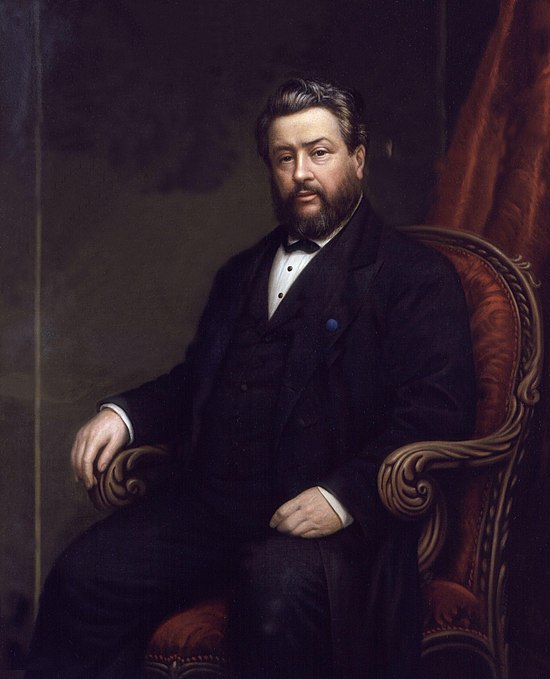
About Charles Spurgeon
Charles Haddon Spurgeon (19 June 1834 — 31 January 1892) was an English Particular Baptist preacher. His nickname is the "Prince of Preachers."
Comments
Your comment has been submitted and is awaiting moderation. Once approved, it will appear on this page.
Be the first to comment!