Good evening, I'm Nathan W. Bingham
and welcome to Ask Ligonier. It was almost two years ago that
we launched Ask Ligonier, our biblical and theological chat
service, a rather ambitious new outreach for Ligonier Ministries
as we positioned team members across multiple countries and
multiple time zones so that we could answer your Bible questions
24 hours a day, six days a week. And since that time thousands
and thousands of biblical questions have been answered coming in
either through social media, online chat or email. And occasionally we like to bring
a teacher, a guest teacher into the studio to be really a guest
member of the Ask Ligonier team to be able to answer your biblical
questions live and to do it on camera. And tonight is one of
those nights. And our special guest this evening
is someone who really doesn't need an introduction. He's a
popular author and Bible teacher. He served as the pastor teacher
at Grace Community Church for over 50 years. Our guest this
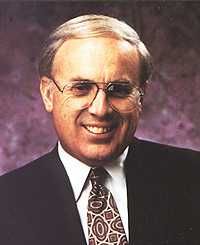
evening is Dr. John MacArthur. Dr. MacArthur,
thank you for being with us. It's my pleasure, Nathan. Thank
you for the invitation. Well, if you have a question
for Dr. MacArthur, be sure to use the Ask Ligonier hashtag
on Twitter. Find Ligonier's Facebook page and send us a message or
basically leave a comment wherever it is that you're watching the
live stream this evening. Now, Dr. MacArthur, you know
that Ligonier has been committed to providing trusted teaching
to students for approaching 50 years now. And so we launched
the Ask Ligonier chat service so folks on the Internet in countries
around the world could come and ask Bible questions whenever
they had them. And as I said at the beginning, we've got people
in the United States and Australia and other countries so that we
can answer those questions 24 hours a day, six days a week. And so tonight, there are thousands
of people watching from around the world, and they're flooding
Twitter and Facebook and YouTube and other places with questions
for you. And I know we've had this in the schedule for close
to six months. I've personally been looking
forward to it for a number of months. And so what I really
want to do at the beginning is to start with a lightning round
so that we can get to as many of these questions as possible.
Is this an Alzheimer's test? Possibly. We'll find out. I'll
let you know at the end if you pass. Okay. But here's the challenge. If it's a lightning round, your
answers need to be around 30 to 45 seconds each. And I can
promise you everyone online is going to be timing your answers.
So are you ready for the challenge? I'm ready. Okay. Hit me. All
right. So the first question comes from Jim. He's on Twitter.
And Jim wants to know, if I'm really saved, why do I still
have guilt from my past? Because you cannot rid yourself
of your memories. Regeneration renews the soul,
the inner man. You're a new creation in Christ.
But that new creation in Christ is incarcerated in flesh, and
that flesh is the composite of what it means to be a fallen
human being. So your memories are a part of that flesh, and
that's always going to be there. The good news is that as you
grow in grace and in the knowledge of Christ over time, those memories
will fade. But look, sinful experiences
perhaps you would say are as vivid as any experiences in life,
maybe more vivid than other experiences of life because of the heightened
emotions. So it's not likely that you're going to forget your
sin, but gradually it'll fade away as you are renewed in your
mind and in your Christ-likeness. That's a great length for an
answer, so I think you're going to do well for this lightning
round. All right, next question is from Facebook. Someone's asking,
is there a prayer that God cannot hear or answer? Well, yeah, there's
a prayer that God will not hear or answer, and that's a prayer
that's inconsistent with His will or His purpose or His plan.
The prayers that are going to be answered are the prayers that
are prayed consistent with the name of Christ. If you ask anything
in my name, the Father hears, and the Father responds, John
14 says. So, that's why we encourage everybody to pray according to
the will of God. You don't really want to pray against the will
of God. You want to find yourself lined up with the purposes of
God. So, God will not answer prayers inconsistent with His
will, because He's going to accomplish His purposes. Okay, next question
is from Tina. She's also asking from Facebook.
Her question is, discuss the meaning of, let he who is without
sin cast the first stone. What does that mean? It's just
a simple idea that says you're not the final judge of anybody.
You know, when our Lord says, judge not lest you be judged,
some people say, well, you're not supposed to judge me, you're
not supposed to judge me. That's not true, because we're
told in the Scripture to evaluate everything, to discern everything. But what it means, basically,
is you're not the final judge. You're not sitting in final judgment
on anybody's life, because Paul says to the Corinthians, even
when I know nothing against myself, herein am I not justified Only
God knows my motives and the inner thoughts. So, we can certainly
look at someone's life and make a determination, and we need
to do that. By their fruits, we will know them. So, we need to
make determinations about people's spiritual condition by what we
see and what we observe, but that is not the final judgment.
The final judgment rests with God. Someone using our online
chat service is asking, under what circumstances is it appropriate
to leave a church? Well, there would be a lot of
circumstances when it would be appropriate to leave a church,
when God is dishonored, when error is taught, when sin is
condoned. I think what the question implies
is somebody who's in a church that basically is preaching the
gospel, opening the Bible, but it's not everything it should
be. And my answer to that question, which I get an awful lot, is
put yourself in the best possible church available to you. Find
the place, because before the Lord you're responsible to grow
in grace and in the knowledge of Christ. You need to be in
a church that's going to help that the most. So don't languish
in an inadequate church when there's a better one nearby that's
more faithful. Another one from our online chat
service. This question is, why did Jesus weep at the death of
Lazarus in John 11? because he is moved with compassion. He is basically in all points
tempted like as we are. He feels what we feel. We have
not a high priest who cannot be touched with our infirmities.
He was weeping with those who weep. He wasn't weeping because
of the end of Lazarus, because the end of Lazarus was going
to be resurrection. He was weeping because of the
sorrow of Mary and Martha. And this is the empathy, this
is the sympathy, the tenderness, the kindness of Christ manifesting
itself in that setting. Question sent to us on Facebook,
which Bible commentaries do you recommend? Good ones. That's
a good lightning round answer. Yeah, well look, I mean, faithful
to the text. faithful to the text. And look,
any Bible commentary typically is going to have some theological
predisposition. Let's say some of them were Reformed,
some of them might be Arminian, some of them might be devotional,
some in the middle. Find one that is relentlessly faithful
to what the text teaches. And I don't mean by that some
technical commentary, but find one that grapples with the text
without a lot of presuppositions. Another question from Facebook,
how should we approach being in the world but not being of
the world? Well, we don't have to approach
it because it's where we are. I don't have to worry about how to do
that, I'm there. And the simple answer to that is to be of the
world, to be in the world rather than not of the world. And I
think Paul answers that question in a simple way in Colossians
3, set your affections on things above, not on things on the earth.
So what you have to do is focus on the fact that heaven is your
home, that's where your citizenship is, your Father is there, your
Savior is there, the redeemed and glorified saints are there,
the church triumphant is there, your inheritance is there, your
reward is there, a home being prepared for you is there. So
it's a matter of where your affections lie. And this is what our Lord
was saying also in the book of Matthew when He said, wherever
your heart is, that's where your money is going to go. So, if
your heart is in the world, that's where your money is going to
go. But your treasure is going to follow your heart. So, I just
think living a heavenly life is making sure that the priority
in your life is always that which is related to the eternal kingdom
of Christ. BINGHAM Michael, on Twitter, he's asking us, do you
use any Bible apps or audio Bibles? Yeah, I sometimes use basically
the MacArthur Study Bible app and it's got a, Grace to You
has an audio version of that so I can, while I'm driving,
I can turn on and listen to the Bible. I love to do that, I love
to listen to it. I don't use a lot of Bible apps
in my study because I'm basically hard to retrain and I've spent
my whole life surrounded by books. I'm not really adept at running
on the computer, so I'm still working through stacks of books.
That's my world. All right, next question. This
is a comment on YouTube. Liz wants to know, does God hear
the prayers of unbelievers? It depends on what they are.
God would hear the prayer of a penitent. Jesus said, him that
comes to me, I'll never turn away. If you call on the Lord
from a pure heart, from a sincere heart, He will hear that cry
and that prayer. The better way to understand
it is this. God is under no obligation to answer the prayer of an unbeliever.
He has no relationship. He is bound by nothing. They
have no claim on Him at all. Yet you hear people say, well,
I'm praying for you in a very vague kind of non-Christian way.
God is under no constraint, no obligation to answer the prayer
of anyone who's not His own children. One final question for this lightning
round, we're almost there. This is a message to us on Facebook,
and the question is, can you expound on what it means to fear
the Lord? Yeah, I think fear is just another
word for worship, adoration. It's hard to put that in a lightning
round, Nathan, because Fear of the Lord is the beginning of
wisdom. That's where everything starts, is having a reverence
of God. And as R.C. would say, the greatest
need of any human being, believer or unbeliever, is to know God.
And until you know the fullness of God, you don't know what it
means to fully fear God. The ability to fear God is directly
correlated to how much you know about Him. The more you have
imbibed the wisdom and revelation of God's character on the pages
of Holy Scripture, the more glorious He becomes to you, the more you
see His beauty, the more you will have awe and fear and worship
Him. where you survived the first
lightning round. So congratulations. But we're going to come back
closer to the end of the hour and we'll do that again. Keep sending your
questions in for Dr. John McArthur. Be sure to use
the hashtag AskLigonier on Twitter, send us a message on Facebook,
leave a comment on YouTube or wherever it is that you're watching
the live stream this evening. And remember, as I said, the
Ask Ligonier team answers Bible questions 24 hours a day, six
days a week. So if we run out of time this
evening to get to the questions you've submitted, They're going
to seek to get them answered for you in the coming days. But
whenever you have a Bible question, be sure to turn to Ask Ligonier.
You can find all the ways that you can take advantage of that
free service by visiting ask.ligonier.org. Or you can take your time with
your answers for these questions coming up now. This one's from
Brian. He writes to us on Facebook and
says, what does it mean to offer worship with reverence and awe?
Referencing Hebrews 12, 28 and 29. And again, it's following
up the last question in the lightning round. How can I connect this
in a simple way? The ability to rise high in worship
is directly correlated to your ability to go deep in understanding
the nature of God. So, a deep understanding of the
Word of God, a rich and thorough and deep understanding of sound
theology is directly the producer of elevated worship. If you have
a superficial understanding of God, you have superficial worship. Even if somebody's whipping you
up into a frenzy, and it's loud and noisy and the lights are
flashing and the noise is overpowering, that's not necessarily worship.
That's just noise. Worship is when the heart is
elevated to the heights of its love and adoration in the contemplation
of what is true about God. It is your theology that produces
your worship. What we have so often and what
we see so much in evangelicalism today is called worship, but
it's kind of an emotional frenzy whipped up by certain styles
of music among people who have very little thoughts about God
and are really riding an emotional roller coaster with the words
of Jesus or the names of Jesus in it. True worship is deep grasp
of the glories of God a contemplation of those glories, appreciation
for those glories, gratitude for those glories that results
in a heart that literally bursts with thanksgiving and praise.
That's the real thing. And the reason that if you come
to, for example, Grace or you go to St. Andrews, they're singing
hymns. Why are they singing hymns? Because
they don't need to be whipped into some emotional frenzy. put
in their hands an articulation of their doctrine and let them
sing from the soul the glories of those truths." We sing hymns
because we don't need the repetition. We don't need the emotional stimulation
externally. We want to sing hymns because
they're rich. They advance the truth from verse
to verse to verse, and then they celebrate that truth in the choruses.
So, when you think about, well, you know, hymns, that's old-fashioned.
No. The experience of someone singing
great hymns is the ability to borrow words to express what
you feel about the great realities of your theology. That's a very
different experience than some emotional experience with lights
and loud noise. That may not be worship at all. Alright, we've got another question
this time from Facebook. Is there any biblical support
for someone being, quote, demon-possessed in today's world? Well, sure.
It's only a question of degree. There are only two possibilities.
You're either in the family of God or the family of Satan. When
Jesus in John 8 said to the leaders of Israel, you're of your father
the devil. He was basically saying, if you're not a child of God,
you're a child of the devil. If God's not your father, Satan
is your father. So, the whole world lies in the lap of the
evil one, John says. So, it's only a question of degree
or manifestation. Every single unbelieving person
is under the control of Satan. Whether or not that person has
a demon inside him or her, or several demons inside him or
her, it's just a question of degree and manifestation. I think
demon possession is far more prevalent than we ever would
understand. We tend to see it in biblical
terms in a kind of a bizarre behavior. And that's what missionaries
tell us when they come back from the mission field and they see
demon-possessed people and they do the kind of things like people
did in the Bible, throw themselves into the fire and all of that.
But I think demons are a much more gray flannel suit in our
culture. I think they occupy souls and beings, but they behave
in a way that's consistent with the culture. I would believe
that many of the people who produce the filth and the trash in our
culture are demon-possessed people. that they're being driven by
satanic powers and they don't even know it. It doesn't manifest
itself in bizarre ways. They're not throwing themselves
into the fire. They're not out of control. The demons are sophisticated
enough to keep that contained to accomplish their purposes
in another way. But again, it doesn't matter in a sense whether
an unconverted person has demons in him, has one demon, or maybe
is free of demons, but under the control of Satan, the end
is the same. Let me just ask you a follow-up question to that,
because I know a lot of people often ask, what about Christians? Can
Christians be demon-possessed? No, of course not, because you're
the temple of the Spirit of God, which you have of God. You're
not your own. You're bought with a price. You've been purchased. You've
been redeemed. You have been transformed. You are the temple
of the Holy Spirit of God. greater is He that is in you
than He that is in the world. There's the distinction. He that
is in you is the Holy Spirit. He that is in the world is Satan.
No true believer can ever be possessed by a demon. There's
no reason to be chasing demons among Christian people. Does
that mean that demons don't you know, do things to distract us
or distort things in our world? Sure. I mean, they're loose in
the world, they're operating under Satan's purposes and plans,
and we do wrestle against, not flesh and blood, but principalities,
powers, and the rulers of the doctrines of this world, spiritual
wickedness, and the heavenlies, Ephesians tells us. So, yeah,
we're in a battle with demons, but the battle for a believer
is fighting the demons that have literally taken over the thoughts
of people in the world. And the passage to think about
is 2 Corinthians 10, the weapons of our warfare are not fleshly
We can't fight this spiritual warfare with fleshly weapons.
Pragmatism isn't going to work. The weapons of our warfare are
not fleshly. They have to be mighty to the
pulling down of strongholds. So, if we're going to get into
spiritual battle, we're going to have to realize that this
battle is about tearing down spiritual strongholds. And the
word there is the word for prison, castle, fortress, and tomb, massive
stone edification. So, here's what spiritual war
is. we're coming against these fortifications. Now, what are
they? The next verse says, even logismos, ideas, ideologies,
theories, philosophies, psychologies, religions. So, we're battling
against ideologies that have become people's fortresses and
will end up being their tombs. And the real spiritual war is
smashing down the fortresses that people are captive in and
then bringing every thought captive to Christ. That's spiritual war.
Chasing demons is pointless because you have no power over them.
You remember the sons of Sceva trying to chase demons away,
and the demons said to them, Jesus we know and Paul we know,
but who are you? You know, get out of our way. So we don't have
power over demons. That's not our domain, but we
are the instruments by which the Lord brings the truth. The only thing you can do to
destroy error and is to bring the truth. So let's just sum
that passage up, 2 Corinthians 10. We are fighting against these
massive fortifications, which are ideas raised up against the
knowledge of God. Okay, any ungodly idea is a fortress
that's going to become someone's tomb if they don't get out of
it. So we smash those ideological fortifications with the truth
of God's word, And we are the instruments the Lord uses to
do that. Obviously He does the work by His power and then lead
every thought captive to Christ. People shouldn't be chasing demons.
They ought to be taking the truth and bringing it to bear against
the lies that have held people prisoner and captive. We've got
a question now that is one that we hear frequently on Ask Ligonier. This is from a lady called Christy.
She wants to know, what happens to the souls of babies who die
by abortion? Well, I think the same thing
that happens to the soul of any baby that dies. It goes into
the presence of the Lord. Jesus said, you'll die in your
sins and where I go you'll never come because you believe not
on me, in John. So he said, the reason you'll
never come where I am is because you believe not on me. That is
impossible for a baby. And, you know, our Lord even
said that, "'Permit the little children to come unto Me, for
of such is the kingdom of God.'" What in the world was He saying
there? I wrote a book called Safe in the Arms of God, and
I would encourage anybody who's struggling with the question
of what happens to children that die, Safe in the Arms of God, I made. And, in fact, that book came
out of a Q&A at Ligonier. with a bunch of guys who seem
to have not landed somewhere, but if you're the pastor of a
large church and you have people that are losing their babies,
you need to come up with a biblical answer. So, I believe they are
a marvelous illustration of how God saves people apart from anything
they can do. Is that any more, is there any
better illustration of saving grace than when God rescues the
soul of a baby that dies and takes it to glory? I think the
case can be made repeatedly. I think particularly of David.
The contrast between David's son that died and he said, ''He
cannot come to me, but I shall go to him.'' He's not saying,
''I'm going to the funeral.'' He's saying, ''I'm going to go
where he is.'' The contrast was, he washed his face, he went out,
he cleaned up, and he entered into life. On the contrast to
that, you look at Absalom. Absalom died and David could
not be consoled because he knew Absalom was lost in hell forever. So, this is the upside of abortion. This doesn't make the crime right
any more than killing anybody would be made right. I mean,
you could say, well, if Christians are going to heaven, we could
kill Christians. If you're going to make that argument. So, God
overrules the slaughter of infants. God overrules high mortality
rates in some countries of the world and has through human history.
God overrules all that by gathering the little ones to Himself. This
question from Vicki on YouTube, she says, my teenager finds evolutionary
science convincing, but intelligent design models less so. How do
I help him navigate a respect for science while retaining respect
for Scripture? Yeah, well, let's just back off
the Scripture point for a moment. To start having a respect for
science, you would have to have a respect for reason. Reason. Reason would say this, this entire
universe does not exist because of a series of unrelated accidents. That's not reason, that's insanity.
That's when you put somebody in a padded cell. Because reason
basically operates on one basis, cause and effect. cause and effect. That's how reason operates. You
see a cause and an effect and a cause and effect, you track
that, that's what reason does. So to look at the massive universe,
macrocosm, look at the microcosm universe and conclude that nobody
times nothing equals everything is a form of insanity. Is there
anything more insane than that? That's like saying I'm a potato
chip. I mean, this is completely irrational. You cannot have personality,
intellect, emotion, complexity, massive displays of power coming
out of nothing. One of the interesting things
that I read some years ago was Von Neumann who was a German
scientist. had the idea of a perfect machine,
and so he designed this perfect machine by concept, and he said
a perfect machine would be self-propelling. In other words, it would have
within itself its own energy source. It would be self-repairing. It would have the ability to
repair itself at every point, and thirdly, it would be self-reproducing.
So this perfect machine that was self-propelling, self-repairing,
and self-reproducing he concluded, would be so infinitely complex
as to never be possible to build. And then he realized that that's
exactly what every single living cell in life is. It is a self-propelling,
self-repairing, self-reproducing complex machine that has within
it structure and DNA and information systems that cause it to do exactly
what it does. If you look at that, you have
to understand that this demonstrates a massive, massive complex mind. Now, one other thing to say about
it. Science doesn't have any business talking about creation.
All science can do is observe. Science can say, this happens,
this happens, this happens. There is no scientific explanation
for creation. any more than you could say there's
a scientific explanation for Jesus walking on water. What's
the scientific explanation for Jesus walking on water? There
is none. What's the scientific explanation for Jesus raising
dead people? There is none. What's the scientific
explanation for Jesus giving sight to blind people? There
is no scientific explanation. So if there's no scientific explanation
for miracles, which is essentially why they're miracles, then what
is the most monumental, massive, incomprehensible miracle of all
miracles? And that is that the entire universe
comes into existence in six days. There's no scientific explanation
for that. If you walk back into the creation account with science
as your tool, you're a fool. The only way you'll know creation
is to hear from the first eyewitness of creation, the Creator Himself,
and that's Genesis 1 and 2. So science has no business going
into places where they can't see a reproducible reality. Creation is the most massive
of all miracles. But again, if you're talking
to a teenager, what you want to say is, you know that every
effect has a cause. And the complexity of all the
massive effects in the universe cannot have no cause. How do
we know about creation? The only way we could possibly
know is if we have an eyewitness account from the Creator, and
that's what Scripture is. BINGHAM So the second part of
their question was about the reliability of Scripture or trusting
Scripture. I want to note that you've written
a number of books that Reformation Trust has published. One that
we released this year was titled Final Word. which is basically
on the authority of Scripture. So I'd love to let that person
that submitted that question know that as our way of saying
thanks for watching live, and this is true for everyone watching
live tonight, we would love to be able to give you a free copy
of Dr. MacArthur's book, Final Word. If you'd like to request the
e-book edition of that for free, simply visit ask.ligonier.org
slash offer. That's ask.ligonier.org slash
offer. And you'll be able to request
your free e-book copy of Dr. MacArthur's new book, Final Word,
as I said, all about the authority and reliability of Scripture.
All right, we're going to turn to another question, Dr. MacArthur.
This one's from John on Twitter. And John is asking, what is the
danger of taking a universalistic approach to Paul's words in 2
Corinthians 5, verses 14 to 15? Noting there, one has died for
all. Yeah, one has died for all is
simply saying one has died for all for whom he died. That is
a verse that is connected intrinsically to the idea of a specific atonement,
a limited atonement. And if you...if you parse the
verb...the verse, you're talking about 2 Corinthians 5. I don't
want to depend on my memory, so let me... Yeah, 2 Corinthians
5, 14 to 15. Yeah, I know that. The love of Christ controls us,
having concluded this, that one died for all, therefore all died. He died for all so that they
who live might no longer live for themselves but Him who died
and rose again on their behalf. All that is simply saying is...
that Christ died for all, therefore all for whom He died, died. It
doesn't define the all. We know the all is defined as
the elect. The all is defined as those who
have been chosen by God before the foundation of the world.
He died for all. So, the point that Paul is simply
making doesn't define the word all. We always have to define
that. I mean, all men perceived that John the Baptist was a prophet.
Well, does that mean everybody who ever lived in the history
of humanity perceived John the Baptist was a prophet? Of course
not. So, the all here simply is saying Christ died for all. What all? The all who died in
Christ. Backing off that verse itself
to the issue, the issue is this. Did Christ die for no one? Or
did He die for someone? If you say He died for everyone,
the whole world, if you take a universal approach to that,
then in reality He died for no one. Because all He did was provide
a potential sacrifice. And that potential sacrifice
would have to be validated or applied by some act on the part
of the sinner. not what you've got in the death
of Christ, is a potential offering, a potential sacrifice, so that
He died, but nobody really died in Him. There was just a potential
death in Him that later on people could reach out and sort of apply
to themselves. That is a very troubling reality because now
you have Christ, think of it this way, doing the same thing
on the cross for all the people in hell that he did for all the
people in heaven, which means he didn't do anything in particular
for them except create a potentiality that they could somehow activate
by their own faith. This is deeply disturbing when
you think of what the atonement is. What Paul is saying there
is, when He died, the all for whom He died died in Him, so
that He died for His own. They were in Him when He died.
We were in Him when He died. We were in Him when He rose."
This is a specific atonement. This is the particular redemption
that Christ wrought on the cross. And I think that's all that verse
is saying. The issue here is not whether we're going to deal
with the fairness of the death of Christ, but whether we're
going to deal with the nature of it. Did He die for nobody, just
potentially, or did He actually bear in His own body our sins
on the cross and win redemption for the elect? And that's what
the Bible teaches. This question from Wills on Facebook,
he's asking, regarding Philippians 2, 6-7, what does it mean that
Christ emptied Himself? That's a really important question.
First of all, it does not mean that He became anything less
than He was. It does not mean that He ceased to be God, because
then He would have ceased to be who He was. It does mean that
He basically submitted Himself to the power of the Holy Spirit
and the will of the Father. In fact, if you go through, particularly
in the Gospel of John, he says, I only do what the Father tells
me to do, I only do what the Father shows me to do, I only
do what the will of the Father, and then he also said that when
you deny the things that I have done and attribute them to Satan,
you have blasphemed the Holy Spirit in the Gospel of Matthew.
So the self-emptying is, in the simplest way to explain it, is
that Christ set aside His own life as an act of total obedience
to the will of the Father through the power of the Holy Spirit.
He didn't cease to be God in any sense, fully God or truly
God as R.C. used to like to say, truly God,
truly man, no diminishing of His glory as God, no diminishing
of His glory as man, but all the person of Christ completely
bound, as it says in Philippians 2, to lower himself to the point
of a slave, and that's the language that's so important. He became,
he defines the kenosis by using the word slave. All the way down,
one who was face-to-face with God, prostanteon in the gospel
of John, and he prayed in John 17 to be restored to that prostanteon,
face-to-face with God, because he had made a slave of himself,
voluntarily submitting to the will of the Father. and the power
of the Holy Spirit. Look, those are words that I
can say without fully comprehending that in a Trinitarian sense.
BINGHAM. Jen on Facebook has a question,
I think very appropriate today in today's church climate. Is
speaking in tongues still a biblical practice? No, it isn't. It was, for a period of time,
a signed gift in the New Testament. I've spoken a lot on that through
the years, written a lot on that. There's a lot of good material
on that. But there was a time, particularly when, according
to what Isaiah said and Paul repeats it in 1 Corinthians,
this was a sign to Israel that there was a time when God spoke
to them in a language they could understand And they would not
receive that, and obviously they killed the Messiah, and God was
going to speak in a language they couldn't understand. It
really was a judgment. So, it was part of the signed
gifts associated with the apostolic era that has since passed away.
Why do you think it is that this phenomenon is so present in the
church today? Well, it got a resurrection back
in the early 1900s in the Azusa Street meeting. It came out of
the early annals of Pentecostalism. But it's not isolated to forms
of Christianity. It appears in other religions. There are other non-Christian
religions that have this kind of sort of hyper-spiritual talk
and communication. I honestly believe that it's
part of a whole network of sought experiences from people who think
the Word of God is not enough. I don't think it's faith that
causes people to seek this. I think it's doubt looking for
proof. because they have basically been exposed to teaching that
says God wants to do more, the Lord wants to speak into your
life, like listening for the voice of God, there's more, you
need more of God, more of this, more of that. In those environments,
there's a generated dissatisfaction with what's available in the
Word of God. And so, this is not faith, this is doubt, this
is people who are disappointed because they're not knowledgeable
in the Word of God, looking for some higher experience. This is a kind of... Gnosticism
with Christian words attached to it. I mean, you hear this
from, for example, a typical contemporary charismatic preacher
would say, Jesus talks to me. Jesus told me to say this. In
fact, I heard women preachers say that, you know, I don't really
care what you think. Jesus tells me what to do. Well,
that's a pretty dominating idea. And if somebody believes that,
what are they going to do? They're going to back off and say, this person
is getting a special message from Jesus. So, I think it's
the chase for something esoteric that is a false spiritual experience
rather than the true spiritual experience that comes from interacting
with the Spirit of God on the pages of Holy Scripture. We have
Kerry on Facebook, and they're asking, why is understanding
the doctrine of penal substitution vitally important to the Christian
life? Well, because if you don't understand
the doctrine of penal substitution, you don't know why Christ died.
And you would assume that if you're a Christian, you would
want to know why Christ died. If you took one verse, 2 Corinthians
5, 21, Paul says you're ambassadors, right, in 18 to 21. So, you know,
we go into the world, we beg people to be reconciled to God.
He's given us the word of reconciliation, right? That's the message we
preach. You can be reconciled to God. We have the ministry
of reconciliation. We have the message of reconciliation.
But how is that possible? How is it possible for a sinner
to be reconciled to a holy God? That is the most legitimate question
that a sinner could ever ask. Okay, you're telling me God's
holy, that God is righteous, that God is perfect. How is it
possible for me to be reconciled to a holy God without Him not
tarnishing His holiness? Or to put it in the language
of Paul, how can God be just and the justifier of sinners?
That is the absolute apex question of all religion. The primary
question that religion attempts to answer is, how can I go from
being God's enemy to being His friend? How can I make peace
with God, whatever God that religion espouses? So all religion is
designed to somehow come to terms with the deity. In Christianity,
the question is built around holiness and justice and righteousness. So how can God forgive me and
still be holy? And the only thing that answers
that question is penal substitution. Because penal substitution says,
God is so holy, every sin will be punished. Every single sin
in the life of every Christian believer through all of human
history will be punished, was punished. All sin must be punished. Either the sinner will bear that
punishment eternally or Christ took that punishment on the cross.
But the only thing that protects the pure, righteous holiness
of God is that sin is punished. That's penal substitution. If
you remove that part of the cross, then how does God reconcile His
holiness with just wishing sin away without a punishment? There
has to be a punishment for God to maintain His justice. That
punishment falls on His Son. I can remember before I became
a Christian, but had heard the gospel a number of times, sitting
down with the woman that's actually now my wife and asking her, explain
to me, John 3, 16, why did God have to send His Son? Why did
Jesus have to die? Why didn't God bake brownies
to save the world? Like, what's this whole dying on the cross
thing? At the time, she couldn't answer the question, and it was
actually hard. We had to go into church and try and get information,
explain to me penal substitution, because all the gospel presentations
I had heard was missing that piece. But see, that is the question. That is not some kind of optional
issue. Penal substitution, you've got
a massive problem if God just says, hey, you're forgiven. Now
the character of God is called into question as to His integrity,
His holiness, His virtue, His righteousness, His perfection. And so God is so pure and holy
that He will punish every single sin ever committed by every person,
either in that person or in the substitute for that person. That
is the purest heart of Christianity and soteriology. We'll go to
one more question before we have another lightning round. So it's
just a little warning for you that we're going to come to a
lightning round. But Madeline on YouTube wants to know, is
limited atonement, lots of questions on the atonement tonight, is
limited atonement biblical and how would you explain that in
light of the verses that says that Christ died for the whole
world? Well, we know He's the Savior
of the world because there's only one Savior for the world.
The world has only one Savior. But we also know the atonement
is limited. We all know that, right? The atonement is limited
because people go to hell. Jesus said in the Sermon on the
Mount, many will say to Me, Lord, Lord, and I will say to them,
depart from Me, you workers of iniquity, I never knew you. Jesus
talked more about hell than He did about heaven. We know that
hell is a reality and we know people go there and perish forever.
So, we all believe in a limited atonement, right? Not everybody's
going to be saved. You either believe in a limited
atonement or you believe in a universal atonement. And if you believe
in a universal atonement, to be logically consistent, then
there's no hell and no one will be in hell. Everyone will be
in heaven. If you're going to affirm an unlimited atonement,
then you really are going to end up as a universalist because
if he actually died for the whole world, then the whole world is
saved. So we can't go there because
there is a hell and it's full of people, in fact, most people.
So the atonement is limited. Then the question is who limits
it? Do we limit it or does God limit it? And the answer to that
question biblically is crystal clear. God limited it. He limited
it to the elect. Either God determined whom He
would save and take to glory Or God just threw atonement out
there as some nebulous option and hoped some people would grab
hold of it and become a part of His redeeming purpose. The
Bible does not allow for that. So, you just need to remind yourself,
you believe in a limited atonement. Now, you ask the question, are
men sovereign or is God sovereign? If God's sovereign, then He limited
it. We're going to go to a lightning round now, which means that questions,
the answers, need to be 30 to 45 seconds. I can take as long
as I want asking the question, but the answers need to be 30
to 45 seconds in length. So the first question is, if
you could only preach through one book of the Bible for the
rest of your ministry, which book of the Bible would it be
and why? It would probably be the Gospel of John, because You
can't find a more glorious, compelling, overwhelming subject than Jesus
Christ. There's nothing comparable to
Him. And I've lived that in preaching through the gospel of John twice.
The most transforming thing that anybody will ever have is a vision
of Christ. Great answer, good lightning
round answer. Next one's Ryan on Facebook. He wants to know,
why do some believe that they can choose to be saved when it
is by God's choice that we are saved? Well, lots of people believe
the wrong things. I think people believe that because
they're ignorant, that they don't know. And so, you know, they
say, hey, we grew up in a democracy, you get to choose. You know,
we get to vote. Particularly in America, we've never lived
in a monarchy. We don't know what it is to have a sovereign
over us. So American politics can kind of get in the way of
our theology sometimes. But I think some people are just
ignorant. The other people think it's kind of unfair. But if you
study the Word of God faithfully, you know, I say this so often,
I'm telling you, Nathan, this comes up I bet every single week
of my life. Somebody fought against the understanding of divine sovereign
election. They fought against it, fought
against it, and then all of a sudden the light went on. and then they
see it on every page of the Bible. Every verse, every chapter, every
book, it's just jumping out all over the place. Once you see
that reality, Scripture comes alive in a way that is just incredible. So when the resistance is there,
you're fighting for your freedom. When you abandon that freedom
and you let the Word of God speak, you fall into this glorious exhilaration
of realizing you've just been chosen and it's everywhere in
the Scripture. A question coming in through our online chat. This
question is, does God give people free will? No, God doesn't give people free
will if you mean by that that they can choose anything they
want. I would define free will as this. Every human being has
the freedom to choose whatever sin he wants. There you go. That's free will. You can choose
whatever sin you want to choose. You just can't choose not to
sin. So yes, there's free will, but there's only free will within
the framework of depravity and corruption. The one thing you
can't choose is to get out of there. For that, you have to
cry for the mercy and grace of God to extract you by His own
sovereign love and power. So sinners think they have free
will, but the Bible defines the sinners as in bondage to sin. It is a bondage to sin that is
so profound that the only thing they can choose is which sin.
Britt on Twitter wants to know, how do you mortify sin? Well,
that simply means to kill sin. It's a simple way of saying,
don't let it raise its ugly head. You know, you want to basically
push. And I think David, look, thy
word have I hid in my heart that I might not sin against you.
It's all about your thoughts. As a man thinks in his heart,
so he is. So if I expose myself to sin and temptation and garbage
and the culture, I'm going to have a hard time suppressing
sin because I'm activating all the the beachheads of sin in
my human flesh. So, I have to control my mind.
I have to have my mind renewed continually in the Word of God
so that my mind is down the righteous path, not down the sinful path.
This isn't something that is some kind of esoteric experience.
This is daily exposure to the Word of God. This is having the
Word running around in your heart and soul and your mind all the
time. Another good reason to sing great hymns is those hymns
put theology in your heart in memorable ways. Very few minutes
in my day ever pass that I'm not singing a hymn in my head.
And that's a recitation of the things that I believe, and those
are righteous truths that insulate me from sin. So, killing sin
is not something that happens at one point in time. Paul says,
this is important, I die daily. So, you're killing it all the
time, but in the strength of the Spirit and through the truth
of the Scripture. Rene on Twitter, why can't we lose our salvation?
Because you didn't do anything to gain it. I'll reverse that
a little bit. If you could lose your salvation,
you would. If it depended on you at all, you would lose it.
If my salvation depended on me, I would lose it. I would lose
it. I don't have the power to hold
my salvation. I don't have the power to keep my salvation. Listen to the words of Hebrews,
that He ever lives to make intercession for us, for the purpose of bringing
us to glory. Right now, the reason that Christians
are going to get to heaven is not because they hold on, it's
because Christ holds on. He will bring many sons to glory. If Christ didn't hold on to me,
I would never get there. That is the incredible reality
of His high priestly work. I think we, you know, you hear
this, just comment on that a little bit quicker. People say, you
know, if you want to get in touch with the wonder of your salvation,
think about the cross, think about the cross, preach the gospel
to yourself. I say this, if you want to think about the wonder
of your salvation, think about this, Christ right now, this
split second, is holding onto you eternally in His everlasting
arms and will not let you go. That's the most glorious reality.
It isn't that you look back and look at what He did, you realize
what He is doing as He ever lives to make intercession for you,
to bring you to glory. Another question, Slava on Facebook,
they want to know, you have said that you have begun reading more
biographies. Can you name two that have impacted
you the most? I think probably the biography
that impacted me the most was the two volumes of Ian Murray
on Martyn Lloyd-Jones, because he gave a lifetime to the preaching
and teaching of the Word of God and sound doctrine, and he was
a bit of a maverick, and also he was a warrior, he was a fighter
for the truth, and that, you know, read many years ago, but
had a really a strong impact on my life, that particular biography. There are many others. William
Tyndale's biography by David Daniel, the Yale series. I read
it twice, and it's a cumbersome read, but You know, there's something
about these men that makes you feel small and inadequate and
insignificant. I think, for me, one of the most
humbling experiences that I ever have is to read these biographies
because I feel small and I say to myself, how did I ever get
to serve the Lord the way I'm serving the Lord when I can't
even touch the hem of these guys' garments. So, a biography of
William Carey by his nephew Pierce Carey and the ministry that he
went through in India translating the Bible and all of his work
burned up in a fire. I mean, those things are powerful. The story of John Payton, when
I was very young in high school, a missionary to the Hebrides
who basically his wife and he arrived there and his wife died. He slept on the grave to keep
the natives from digging her up and eating her body, and he
stayed there for years and planted churches. Yeah, I need all of
that I can get. I'm reading a new biography,
the pastor of Kilsich, a new Banner biography that is so heartwarming
of a guy who served in a country church for 70 years in obscurity,
but whose life is a treasure. We need those because there aren't
a lot of heroes in this culture that we can look up to. And sometimes
you have to look back to find those kinds of people. The last
question for the lightning round. Wade on Facebook is asking, what
are your thoughts on Christians telling unbelievers God loves
you or Jesus loves you? Well, it's true. God loves the
world, and I think we have that message. But I think that that's
not the whole message. I think if you say what the old
Campus Crusade, God loves you and has a wonderful plan for
your life, that's not accurate. There is currently a terrible
plan for your life and destiny. So, yes, I think we're to express
that. God so loved the world that He
gave His only begotten Son. God does love. He actually is
the Savior. Paul says He's the Savior of
all men, especially those who believe. There's a sense in which
He puts His saving grace on display in common grace. Sinners don't
die when they deserve to die. So the sin should die. We should
all have been dead before we ever came to the cross. So, we
see the love of God in the survival of sinners. People say, well,
look at the Old Testament and all those people that God killed.
That's not the issue. Look at the Old Testament and
look at all the people who lived when God is putting on the display
of His grace and mercy. Yes, we preach that, but the
other thing, it has to be preached, and it has to be preached equally,
is that sin will bring you to eternal damnation and eternal
destruction, and only the love of God can rescue you, and that's
only through Christ. We survived both lightning rounds tonight.
So big congratulations to that. I know we didn't make it easy
for you with some of those kind of more challenging questions,
but you did great. And I want to remind you watching
live to request your free copy of Dr. MacArthur's book, Final
Word. You can request the ebook edition of that for free by visiting
ask.ligonier.org slash offer. Well, you've served as pastor-teacher
at Grace Community Church for more than 50 years now. As you
think back to 50 years ago when you entered the pulpit, what
advice would you give now to that young John MacArthur? I
think what comes to mind when I'm asked that question is, be
patient. I was impatient to some degree.
I think that's part of being young and being an aggressive
personality. And I think it's worse in this
generation today when impatience is a dominant feature of life
in this world. I want it. I want it now. I've
got to have it now. Even success is expected by young people to
come instantaneously. And if it doesn't come fast enough,
they try to think up mechanisms to make things happen, even in
a ministry. I think that the message is be
patient. The Word will do its work if you're faithful. The
Spirit will do His work. Be patient. And 50 years later,
you may look back and say, I am not the explanation of this.
Patiently teaching the Word of God week after week after week,
day after day after day after day, whether it's in the church
or from house to house, patiently letting the Word of God do its
work with the same people over a long period of time, and the
rewards are beyond comprehension. So be patient and let the Word
do its work. It's a slow process. Sanctification
is a slow process, but if you're around long enough to see the
third and fourth generation, it's absolutely exhilarating.
For those who have never visited Grace Community Church, how would
you describe this community of people? I think probably the
most evident reality here is love. And I think that would
surprise people because they think, you know, if you're strong
in doctrine, you're going to get kind of hard-nosed people.
Strong doctrine makes soft people. Weak doctrine makes hard people.
The Word softens people's hearts. And people who come here, I hear
this all the time. We have all kinds of events and
conferences. People are amazed at the kindness,
the love, the compassion, the care, the service, the gentleness,
the humility of this congregation. I think that's That's what the
Word of God does produce. It produces a loving congregation,
and that's manifest. BINGHAM Well, turning back to
some of the questions that people are submitting live online this
evening, Damian on YouTube is asking, what advice would you
give someone who will be the successor to the senior pastor
role? I don't know if he's got his
eyes on Grace Community Church, but he wants... What would be your
advice to someone that's going to succeed another pastor? show
love and respect, and even though you may wanna do things differently, he owns the hearts of those people.
And if you don't show him honor, you're gonna lose the people
who love him. And those are the people you're gonna depend on
for the future of that church. So the more honor you show to
that man, the more love you show to that man, the more respect
you show to him, the more you will move those people from loving
him to loving you. question from Facebook. How do
you discern if someone is called to be a pastor? Well, first of
all, Paul says if a man desires that office, he desires a noble
work. But then you have to have the test. Is he qualified? 1 Timothy 3. And who lays those
qualifications down and affirms them? That would be the church.
And then the elders would lay hands on that individual. I think
it starts with a desire of the heart, if you desire that, if
that's what your heart desires. And it's confirmed by the leadership
of the church that you have the character qualifications and
the skill to teach, and that there's fruitfulness when you
do that. That, you know, that's the direction you go. But this
is an issue, and we don't have time to talk about the whole
issue, but all this entrepreneurial pastoral trend that's going on
now where a guy decides he wants to be a pastor, so he goes and
gets a storefront and turns it into a church and ordains himself
and pops up in the front and makes himself a pastor is alien
to anything scriptural. No man should engage in the ministry.
First of all, you better be careful because stop being so many teachers. James said theirs is a greater
condemnation. You don't want the condemnation that comes with
the failure So, you better be sure you have the gifts and the
purity of heart to get into this. But I think this freewheeling
approach where people basically are autocratic rather than the
product of careful, prayerful evaluation by mature, godly elders
placing them into ministry has created massive problems in the
church. If you think that's something you want to do, get in a church
where you can be mentored by the leadership and pastors of
that church, and as you grow and develop the skills and they
affirm those skills, then you'll know. And in the end of the day,
I would say this, if you can do something else, do it, because
if you can do something else, there'll be many days when you
wish you could. This is something for people who can't do anything
else. So compelling. Caroline on Twitter wants to
know, what do you think the church will look like in the next 10
to 20 years? That's so hard to predict because
trends used to come every 20 years, then every 10 years, then
every year, now every week. It's hard to keep up with the
trends. I mean, the faces of the churches are changing as
fast as the culture change, and that's frightening. That is frightening.
One of the things about Grace Church 50 years, if you were
here 40 years ago and you were here now, you would say this
is the same as it was. Because we know what the word
of God tells us to do, and we're just doing what we've always
done. We pay no attention to the culture, no attention to
the trends. We're not trying to find ways to make unbelievers
happy. But the church is in such a mad
rush to accommodate the culture that whatever the culture looks
like in 10 years, I'm afraid the church is gonna look a lot
like that too. Well, final question for you this evening, and it's
a question, again, we get asked a lot on Ask Ligonier. Susie
on Facebook is wondering, well, she says, I grew up in the church
and I've asked the Lord for salvation, but I still doubt my salvation.
How can I have assurance? There are a lot of people who
struggle with doubt. There are several reasons. One,
you don't know enough of the doctrine of salvation to understand
that it is built in security. So you need a more biblical understanding
of salvation. There are a lot of people who
minimize doctrine, but the very foundation of a believer's security
is a full understanding of the doctrine of salvation. You can
dismiss penal substitution, or you can believe it, and there
the foundation is laid for your understanding that your salvation
is eternal. Secondly, I think people doubt their salvation
because they are basically in a situation where doubt is cast
on salvation. You could possibly lose this.
The reverse of that is this. Don't go back to an event and
say, well, I know I'm a Christian because I prayed this prayer.
Ask simple questions like, what do you love? What do you have
strong affection for? If you've been transformed by
the power of the Spirit of God, if you're a new creation in Christ,
There are going to be some marks, and I'll just lay these out in
the simplest way I can. The first one is love. You will
love the Lord. There'll be strong impulses in
your heart toward Christ, toward the Lord. You will love the Scripture. That's not an unbeliever's affection.
You will love the church. You'll want to be there. You
will love God's people, and you will even love the lost. The
second thing is, if you're a true believer, You'll be marked by
humility. You won't be proud, boastful,
brash, self-exalting. There will be just a very sweet
kind of brokenness that's just part of you. Thirdly, you will
desire what is right. your heart will long for those
things. So I say this, it's not the perfection of your life that
demonstrates your salvation, it's the direction. And it's
in the direction of love and humility and righteousness. Well,
thank you so much for your time this evening, Dr. MacArthur.
My pleasure. Thank you. And don't forget, when you have
biblical or theological questions, you can ask them and get answers
24 hours a day, six days a week, free of charge, thanks to the
Ask Ligonier chat service. To learn more about Ask Ligonier,
simply visit ask.ligonier.org. Well, I'm Nathan W. Bingham,
and I look forward to seeing you next time.
Pristine Grace functions as a digital library of preaching and teaching from many different men and ministries. I maintain a broad collection for research, study, and listening, and the presence of any preacher or message here should not be taken as a blanket endorsement of every doctrinal position expressed.
I publish my own convictions openly and without hesitation throughout this site and in my own preaching and writing. This archive is not a denominational clearinghouse. My aim in maintaining it is to preserve historic and contemporary preaching, encourage careful study, and above all direct readers and listeners to the person and work of Christ.
Brandan Kraft
Bible Verse Lookup
Examples: Isaiah 53:10, Rom 8:28-30, Psalm 23, grace, love one another
0 results
Click a result to view with context
to
This chapter has verses 1---
Sign in to save your Bible lookup and search history.
Comments
Your comment has been submitted and is awaiting moderation. Once approved, it will appear on this page.
Be the first to comment!