Bootstrap
J.C. Ryle

The Real Presence

Exodus 33:15
J.C. Ryle October, 20 2019 Audio
0 Comments
Another great chapter from Ryle's book, "Knots Untied".

You will find it helpful to READ the text--as you LISTEN to the audios!
Here is the text for this audio:
https://www.gracegems.org/23/real_presence.htm

Sermon Transcript

Auto-generated transcript • May contain errors

100%
Chapter 9. The Real Presence. Part 1. If thy presence go not with me, carry us not up hence. Exodus chapter 33 verse 15. There is a word in that text that heads this page which demands the attention of all English Christians in this day. That word is presence. There is a religious subject bound up with that word on which it is most important to have clear, distinct, and scriptural views. That subject is the presence of God, and especially the presence of our Lord Jesus Christ with Christian people. What is that Presence? Where is that Presence? What is the nature of that Presence? To these questions I propose to supply answers. 1. I shall consider, first, the general doctrine of God's Presence in the world. 2. I shall consider, secondly, the special doctrine of Christ's real spiritual Presence. 3. I shall consider, thirdly, the special doctrine of Christ's real bodily Presence. The whole subject deserves serious thought. If we suppose that this is a mere question of controversy, which only concerns theological partisans, we have yet much to learn. It is a subject which lies at the very roots of saving religion. It is a subject which is inseparably tied up with one of the most precious articles of the Christian faith. It is a subject about which it is most dangerous to be wrong. An error here may first lead a man to the Church of Rome, and then land him finally in the gulf of infidelity. Surely it is worthwhile to examine carefully the doctrine of the presence of God and of His Christ. 1. The first subject we have to consider is the general doctrine of God's presence in the world. The teaching of the Bible on this point is clear, plain, and unmistakable. God is everywhere. There is no place in heaven or earth where He is not. There is no place in air or land or sea, no place above ground or underground, no place in town or country, no place in Europe, Asia, Africa or America where God is not always present. Enter into your closet and lock the door. God is there. Climb to the top of the highest mountain where not even an insect moves. God is there. sail to the most remote island of the Pacific Ocean, where the foot of man never trod, God is there. He is always near us, seeing, hearing, observing, knowing every action, and deed, and word, and whisper, and look, and thought, and motive, and secret, of every one of us, and everywhere. What saith the Scripture? It is written in Job, His eyes are upon the ways of man, and he seeth all his goings. There is no darkness, no shadow of death, where the workers of iniquity may hide themselves. Job chapter 34 verse 21. It is written in Proverbs, The eyes of the Lord are in every place, beholding the evil and the good. Proverbs chapter 15 verse 3. It is written in Jeremiah, It is written in the Psalms, Thou know'st my down-sitting and mine up-rising. Thou understand'st my thought afar off. Thou compass'd my past, am my lying down, and art acquainted with all my ways. For there is not a word on my tongue, but lo, O Lord, thou know'st it altogether. Whither shall I go from thy spirit? Whither shall I flee from thy presence? If I ascend up into heaven, thou art there. If I make my bed in hell, behold, thou art there. If I take the wings of the morning, and dwell in the uttermost parts of the sea, even there shall thy hand lead me, and thy right hand shall hold me. If I say, Surely the darkness shall cover me, even the night shall be light about me. Yea, the darkness hideth not from thee, but the night shineth as the day. The darkness and the light are both alike to thee. Psalm 139, verses 2 to 12. Such language as this confounds and overwhelms us. The doctrine before us is one which we cannot fully understand. Precisely so. David said the same thing about it almost 3,000 years ago. Such knowledge is too wonderful for me. It is high. I cannot attain unto it. Psalm 139 verse 6. But it does not follow that the doctrine is not true, because we cannot understand it. It is the weakness of our poor minds and intellects that we must blame, and not the doctrine. There are scores of things in the world around us which few can understand or explain, yet no sensible man refuses to believe. How this earth is ever rolling round the sun with enormous swiftness while we feel no motion. How the moon affects the tides and makes them rise and fall twice every 24 hours. How millions of perfectly organized living creatures exist in every pint of pond water which our naked eye cannot see. All these are things well known to men of science, while most of us could not explain them for our lives. And shall we, in the face of such facts, presume to doubt that God is everywhere present, for no better reason than this, that we cannot understand it? Let us never dare to say so again. How many things there are about God himself which we cannot possibly understand, and yet we must believe them, unless so senseless as to be atheists. Who can explain the eternity of God, the infinite power and wisdom of God, or the works of God in creation and providence? Who can comprehend a being who is a spirit, without body, parts, or passions? How can a material creature, who can only be in one place at one time, take in the idea of an immaterial being who existed before creation, who formed this world by His Word out of nothing, and who can be everywhere and see everything at one and the same time? Where, in a word, is there a single attribute of God that mortal men can thoroughly comprehend? Where, then, is the common sense or wisdom of refusing to believe the doctrine of God being present everywhere merely because our minds cannot take it in? Well says the Book of Job, Canst thou by searching find out God? Canst thou find out the Almighty unto perfection? It is high as heaven. What canst thou do? Deeper than hell. What canst thou know? Job chapter 11 verses 7 and 8. Let us have high and honorable thoughts of the God with whom we have to do while we live and before whose bar we must stand when we die. Let us seek to have just notions of his power, his wisdom, his eternity, his holiness, his perfect knowledge, his presence everywhere. One-half the sin committed by mankind arises from wrong views of their Maker and Judge. Men are reckless and wicked because they do not think that God sees them. They do things they would never do if they really believed they were under the eyes of the Almighty. It is written, Thou thoughtest that I was altogether such a one as thyself. Psalm 50 verse 21 It is written again, They say the Lord shall not see, neither shall the God of Jacob regard it. Understand, ye brutish among the people, and ye fools, when will ye be wise? He that planteth the ear shall he not hear? He that formed the eye shall he not see? Psalm 94 verses 7 to 9. No wonder that holy Job said in his best moments, when I consider it, I am afraid of him. Job chapter 23 verse 15. What is your God like, said a sneering infidel one day to a poor Christian? What is this God of yours like, this God about whom you make such a dew? Is he great or is he small? My God, was the wise reply, is a great and a small God at the same time, so great that the heaven of heavens cannot contain him, and yet so small that he can dwell in the heart of a poor sinner like me.

Where is your God, my boy? said another infidel to a child whom he saw coming out of a school where the Bible was taught. Where is your God about whom you have been reading? Show him to me, and I will give you an orange. Show me where he is not, was the answer, and I will give you, too. My God is everywhere."

Well, it is said, in a certain place, God hath chosen the weak things of the world to confound the things that are mighty. Out of the mouth of babes and sucklings thou hast perfected praise. 2 Corinthians 1.27, Matthew 21.16

However hard to understand this doctrine may be, it is one which is most useful and wholesome for our souls. To keep continually in mind that God is always present with us, to live always as in God's sight, to act and speak and think as under His eye, all this is eminently calculated to have a good effect upon our souls. Wide and deep and searching and piercing is the influence of that one thought, Thou God, seest me.

A. The thought of God's presence is a loud call to humility. How much that is evil and defective must the all-seeing eye see in every one of us! How small a part of our character is really known by man! Man looketh on the outward appearance, but the Lord looketh on the heart. 1 Samuel 16.7. Man does not always see us, but the Lord is always looking at us, morning, noon, and night. Who has not need to say, God be merciful to me, a sinner? be?

The thought of God's presence is a crushing proof of our need of Jesus Christ. What hope of salvation could we have if there was not a mediator between God and man? Before the eye of an ever-present God, our best righteousness is filthy rags, and our best doings are full of imperfection. Where should we be if there was not a fountain open for all sin, even the blood of Christ? Without Christ, the prospect of death, judgment, and eternity would drive us to despair.

The thought of God's presence teaches the folly of hypocrisy in religion. What can be more silly and childish than to wear a mere cloak of Christianity while we inwardly cleave to sin, when God is ever looking at us and sees us through and through? It is easy to deceive ministers and fellow Christians, because they often see us only upon Sundays. But God sees us morning, noon, and night, and cannot be deceived. Oh, whatever we are in religion, let us be real and true.

d. The thought of God's presence is a check and curb on the inclination to sin. The recollection that there is One always near us and observing us, who will one day have a reckoning with all mankind, may well keep us back from evil. Happy are those sons and daughters who, when they leave the family home and launch forth into the world, carry with them the abiding remembrance of God's eye. My father and mother do not see me, but God does. This was the feeling that preserved Joseph when tempted in a foreign land. How can I do this great wickedness and sin against God? Genesis chapter 39 verse 9.

e. The thought of God's presence is a spur to the pursuit of true holiness. The highest standard of sanctification is to walk with God, as Enoch did, and to walk before God, as Abraham did. Where is the man who would not strive to live so as to please God, if he realized that God was always standing at his right hand? To get away from God is the secret aim of the sinner. To get nearer to God is the longing desire of the saint. The real servants of the Lord are a people near unto him.

Psalm 148, verse 14. The thought of God's presence is a comfort in time of public trouble. When war and famine and pestilence break in upon a land, when the nations are rent and torn by inward divisions, and all order seems in peril, it is cheering to reflect that God sees and knows and is close at hand, that the King of kings is near and not asleep. He that saw the Spanish armada sail to invade England and scattered it with the breath of his mouth, he that looked on when the schemers of the gunpowder plot were planning the destruction of Parliament, this God is not changed.

G. The thought of God's presence is a strong consolation in private trial. We may be driven from home and native land, and placed at the other side of the world. We may be bereaved of wife and children and friends, and left alone in our family, like the last tree in a forest. But we can never go to any place where God is not, and under no circumstances can we be left entirely alone. Such thoughts as these are useful and profitable for us all. That man must be in a poor state of soul, who does not feel them to be so.

Let it be a settled principle in our religion never to forget that in every condition and place we are under the eye of God. It need not frighten us if we are true believers. The sins of all believers are cast behind God's back, and even the all-seeing God sees no spot in them. It ought to cheer us, if our Christianity is genuine and sincere. We can then appeal to God with confidence, like David, and say, Search me, O God, and know my heart. Try me and know my thoughts, and see if there be any wicked way in me, and lead me in the way everlasting.

Psalm 139, verses 23 and 24. Great is the mystery of God's presence everywhere, but the true man of God can look at it without fear.

2. The second thing which I propose to consider is the real spiritual presence of our Lord Jesus Christ. In considering this branch of our subject, we must carefully remember that we are speaking of one who is God and man in one person. We are speaking of one who in infinite love to our souls took man's nature and was born of the Virgin Mary, was crucified, dead, and buried, to be a sacrifice for our sins, and yet never ceased for a moment to be very God. The peculiar presence of this blessed person, our Lord Jesus Christ, with His Church, is the point which I want to unfold in this part of my paper. I want to show that he is really and truly present with his believing people, spiritually, or after the manner of a spirit, and that his presence is one of the grand privileges of a true Christian.

What, then, is the real spiritual presence of Christ, and wherein does it consist? Let us see.

a. There is a real spiritual presence of Christ with that church which is his mystical body, the blessed company of all faithful people. This is the meaning of that parting saying of our Lord to his apostles, I am with you all way, even unto the end of the world. Matthew chapter 28 verse 20. To the visible church of Christ, that saying did not strictly belong. Rent by divisions, defiled by heresies, disgraced by superstitions and corruptions, the visible church has often given mournful proof that Christ does not always dwell in it. Many of its branches, in the course of years, like the churches of Asia, have decayed and passed away.

It is the Holy Catholic Church, composed of God's elect, the Church of which every member is truly sanctified, the Church of believing and penitent men and women. This is the Church to which alone, strictly speaking, the promise belongs. This is the Church in which there is always a real spiritual presence of Christ.

There is not a visible church on earth, however ancient and well-ordered, which is secure against falling away. Scripture and history alike testify that, like the Jewish church, it may become corrupt and depart from the faith, and departing from the faith may die. And why is this? Simply because Christ has never promised to any visible church that he will be with it always, even unto the end of the world.

The word that he inspired St. Paul to write to the Roman Church is the same word that he sends to every visible church throughout the world, whether Episcopal, Presbyterian, or Congregational. Be not high-minded, but fear. Continue in God's goodness, otherwise thou also shalt be cut off. Romans chapter 11 verses 20 to 22.

Footnote. Whatsoever we read in scripture concerning the endless love and the saving mercy which God shows toward his church, the only subject thereof is this church, which is the mystical body of Christ. Concerning this flock, it is that our Lord and Savior hath promised, I give unto them eternal life, and they shall never perish, neither shall any pluck them out of my hand. Hooker, Ecclesiastical Polity, Book 3, Chapter 1, Page 2.

These are wise words, and words that all hawkers-professed admirers would do well to ponder and digest. Few things are so mischievous as the common habit of applying to such mixed and corrupt bodies as visible churches those blessed promises of perpetuity and preservation which belong to none but the company of true believers.

On the other hand, the perpetual presence of Christ with that holy Catholic Church, which is His body, is the great secret of its continuance and security. It lives on and cannot die, because Jesus Christ is in the midst of it. It is a ship tossed with storm and tempest, but it cannot sink because Christ is on board. Its members may be persecuted, oppressed, imprisoned, robbed, beaten, beheaded, or burned, but His true Church is never extinguished. It lives on through fire and water. When crushed in one land, it springs up in another. The Pharaohs, the Herods, the Neros, the Julians, the bloody Marys, the Charles, the Knights, have labored in vain to destroy this Church. They slay their thousands and then go to their own place. The true Church outlives them all. It is a bush that is often burning and yet is never consumed. And what is the reason of all this? It is the perpetual presence of Jesus Christ.

b. There is a real spiritual presence of Christ in the heart of every true believer. This is what St. Paul meant when he speaks of Christ dwelling in the heart by faith. Ephesians chapter 3 verse 17. This is what our Lord meant when he says of the man that loves him and keeps his word, we will come unto him and make our abode with him. John chapter 14 verse 23. In every believer, whether high or low, or rich or poor, or young or old, or feeble or strong, the Lord Jesus dwells and keeps up his work of grace by the power of the Holy Ghost. As he dwells in the whole church, which is his body, keeping, guarding, preserving and sanctifying it, so does he continually dwell in every member of that body, in the least as well as in the greatest.

This presence is the secret of all that peace and hope and joy and comfort which believers feel. All spring from their having a divine tenant within their hearts. This presence is the secret of their continuance in the faith and perseverance unto the end. In themselves they are weak and unstable as water, but they have within them one who is able to save to the uttermost and will not allow his work to be overthrown. Not one bone of Christ's mystical work shall ever be broken. Not one lamb of Christ's flock shall ever be plucked out of his hand. The house in which Christ is pleased to dwell, though it be but a cottage, is one which the devil shall never break into and make his own.

C. There is a real spiritual presence of Christ wherever his believing people meet together in his name. This is the plain meaning of that famous saying, wherever two or three are gathered together in my name, there am I in the midst of them. Matthew 18.20. The smallest gathering of true Christians for the purpose of prayer or praise or holy conference, or reading God's word, is sanctified by the best of company. The great, or rich, or noble may not be there, but the King of Kings himself is present, and angels look on with reverence.

The grandest buildings that men have reared for religious uses are often no better than white and sepulchers, destitute of any holy influence, because given up to superstitious ceremonies, and filled to no purpose with crowds of formal worshippers, who come unfeeling, and go unfeeling away. No worship is of any use to souls at which Christ is not present. Incense, banners, pictures, flowers, crucifixes, and long processions of richly dressed ecclesiastics are a poor substitute for the great high priest himself. The meanest room where a few penitent believers assemble in the name of Jesus is a consecrated and most holy place in the sight of God. They that worship God in spirit and truth never draw near him in vain. Often they go home from such meetings warmed cheered, stabilized, strengthened and comforted, and refreshed. And what is the secret of their feelings? They have had with them the great master of assemblies, even Christ himself.

d. There is a real spiritual presence of Christ with the hearts of all true-hearted communicants in the Lord's Supper, Rejecting, as I do, with all my heart, the baseless notion of any bodily presence of Christ on the Lord's table, I can never doubt that the great ordinance appointed by Christ has a special and peculiar blessing attached to it. That blessing, I believe, consists in a special and peculiar presence of Christ, vouchsafed to the heart of every believing communicant. That truth appears to me to lie under those wonderful words of institution, Take, eat, this is my body. Drink ye all of this, this is my blood." These words were never meant to teach that the bread in the Lord's Supper was literally Christ's body, or the wine literally Christ's blood. But our Lord did mean to teach that every right-hearted believer who ate that bread and drank that wine in remembrance of Christ would in so doing find a special presence of Christ in his heart, and a special revelation of Christ's sacrifice of his own body and blood to his soul. In a word, there is a spiritual presence of Christ in the Lord's Supper, which they only know who are faithful communicants, and which they who are not communicants miss altogether. After all, the experience of all the best servants of Christ is the best proof that there is a spiritual blessing attached to the Lord's Supper. You will rarely find a true believer who will not say that he reckons this ordinance one of his greatest helps and highest privileges. He will tell you that if he was deprived of it, he would find the loss of it a great drawback to his soul. He will tell you that in eating that bread and drinking that cup, he realizes something of Christ dwelling in him, and finds his repentance deepened, his faith increased, his knowledge enlarged, his graces strengthened. Eating the bread with faith, he feels closer communion with the body of Christ. Drinking the wine with faith, he feels closer communion with the blood of Christ. He sees more clearly what Christ is to him and what he is to Christ. He understands more thoroughly what it is to be one with Christ and Christ with him. He feels the roots of his spiritual life insensibly watered and the work of grace within him insensibly built up and carried forward. He cannot explain or define it. It is a matter of experience which no one knows but he who feels it. And the true explanation of the whole matter is this. There is a special and spiritual presence of Christ in the ordinance of Lord's Supper. Jesus meets with those who draw near to his table with a true heart in a special and peculiar way. E. Last but not least, there is a real spiritual presence of Christ vouchsafed to believers in special times of trouble and difficulty. This is the presence of which St. Paul received assurance on more than one occasion. At Corinth, for instance, it is written, Then spake the Lord to Paul in the night by a vision, Be not afraid, but speak, and hold not thy peace. For I am with thee, and no man shall set on thee to hurt thee. Acts chapter 18 verses 9 and 10. Jerusalem, again, when the apostle was in danger of his life, it is written, The night following the Lord stood by him, and said, Be of good cheer, Paul, for as thou hast testified of me in Jerusalem, so must thou bear witness also in Rome. Acts chapter 23 verse 11. Again, in the last epistle St. Paul wrote, we find him saying, At my first answer no man stood with me, but all men forsook me. I pray God that it may not be laid to their charge. Notwithstanding, the Lord stood with me and strengthened me. 2Timothy chapter 4 verses 16 and 17. This is the account of the singular and miraculous courage which many of God's children have occasionally shown under circumstances of unusual trial, in every age of the Church. When the three children were cast into the fiery furnace and preferred the risk of death to idolatry, we are told that Nebuchadnezzar exclaimed, Daniel chapter 3 verse 25. When Stephen was beset by bloody-minded enemies on the very point of stoning him, we read that he said, Behold, I see heaven opened, and the Son of Man standing on the right hand of God. Acts chapter 7, verse 56. Nor ought we to doubt that this special presence was the secret of the fearlessness with which many early Christian martyrs met their deaths, and of the marvellous courage which the Marian martyrs, such as Bradford, Latimer, and Rogers, displayed at the stake. A peculiar sense of Christ being with them is the right explanation of all these cases. These men died as they did because Christ was with them. Nor ought any believer to fear that the same helping presence will be with him whenever his own time of special need arrives. Many are overly careful about what they shall do in their last sickness and on the bed of death. Many disquiet themselves with anxious thoughts as to what they would do if husband or wife or if they were suddenly turned out of house and home. Let us believe that when the need comes, the help will come also. Let us not carry our crosses before they are laid upon us. He that said to Moses, certainly I will be with thee, will never fail any believer who cries to him. When the hour of special storm comes, the Lord who walks upon the waters will come and say, peace, be still. There are thousands of doubting saints continually crossing the river, who go down to the water in fear and trembling, and yet are able at the last to say with David, Though I walk through the valley of the shadow of death, I will fear no evil, for thou art with me. Psalm 23, verse 4. This branch of our subject deserves to be pondered well. This spiritual presence of Christ is a real and true thing, though a thing which the children of this world neither know nor understand. It is precisely one of these matters of which St. Paul writes, But for all that, I repeat emphatically, the spiritual presence of Christ, his presence after the manner of a spirit with the spirits of his own people, is a thing real and true. Let us not doubt it. Let us hold it fast. Let us seek to feel it more and more. The man who feels nothing whatever of it in his own heart's experience may depend upon it that he is not yet in a right state of soul. Chapter 9. The Real Presence. Part 2. 3. The last point which I propose to consider is the real bodily presence of our Lord Jesus Christ. Where is it? What ought we to think about it? What ought we to reject, and what ought we to hold fast? This is a branch of my subject on which it is most important to have clear and well-defined views. There are rocks around it on which many are making shipwreck. No doubt there are deep things and difficulties connected with it, but this must not prevent our examining it as far as possible by the light of Scripture. Whatever the Bible teaches plainly about Christ's bodily presence, it is our duty to hold and believe. To shrink from holding it because we cannot reconcile it with some human tradition, or some minister's teaching, or some early prejudice imbibed in youth, is presumption and not humility. To the law and to the testimony. What say the scripture about Christ's bodily presence? Let us examine the matter step by step. There was a bodily presence of our Lord Jesus Christ during the time that He was upon earth at His first advent. For thirty-three years, at least, between His birth and His ascension, He was present in a body in this world. In infinite mercy to our souls, the Eternal Son of God was pleased to take our nature on Him, and to be miraculously born of a woman, with a body just like our own. He was made like unto us in all things, sin only accepted. Like us he grew from infancy to boyhood, and from boyhood to youth, and from youth to manhood. Like us he ate, and drank, and slept, and hungered, and thirsted, and wept, and felt fatigue and pain. He had a body which was subject to all the conditions of a material body. While, as God, he was in heaven and earth at the same time, as man, his body was only in one place at one time. When he was in Galilee, he was not in Judea. And when he was in Capernaum, he was not in Jerusalem.

In a real, true human body he lived. In a real, true human body he kept the law and fulfilled all righteousness. And in a real, true human body he bore our sins on the cross and made sanctification for us by his atoning blood. He that died for us on Calvary was perfect man, while at the same time he was perfect God.

This was the first real bodily presence of Jesus Christ. The truth before us is full of unspeakable comfort to all who have an awakened conscience and know the value of their souls. It is a heart-cheering thought that the one mediator between God and man is the man Jesus Christ. Real man, and so able to be touched with the feeling of our infirmities. Almighty God, and so able to save to the uttermost all who come to the Father by Him.

The Savior in whom the laboring and heavy laden are invited to trust is one who had a real body when he was working out our redemption on earth. It was no angel, nor spirit, nor ghost, that stood in our place and became our substitute, that finished the work of redemption and did what Adam failed to do. No, it was one who was real man. By man came death, and by man came also the resurrection of the dead. 1 Corinthians 15, verse 21.

The battle was fought for us, and the victory was won by the eternal word made flesh, by the real bodily presence among us of Jesus Christ. Forever let us praise God that Christ did not remain in heaven, but came into the world and was made flesh to save sinners. that in the body He was born for us, lived for us, died for us, and rose again. Whether men know it or not, our whole hope of eternal life hinges on the simple fact that 1800 years ago there was a real bodily presence of the Son of God for us on the earth.

b. Let us now go a step further. There is a real bodily presence of Jesus Christ in heaven at the right hand of God. This is a deep and mysterious subject, beyond question. What God the Father is, and where He dwells, what the nature of His dwelling place, who is a spirit, these are high things which we have no minds to take in. But where the Bible speaks plainly, it is our duty and our wisdom to believe.

Luke chapter 24 verse 6 In that body, having finished his redeeming work on earth, he ascended visibly into heaven. He took his body with him and did not leave it behind, like Elijah's mantle. It was not laid in the grave at last, and did not become dust and ashes in some Syrian village like the bodies of saints and martyrs. the same body which walked in the streets of Capernaum, and sat in the house of Mary and Martha, and was crucified at Golgotha, and was laid in Joseph's tomb, that same body, after the resurrection glorified undoubtedly, but still real and material, was taken up into heaven, and is there at this very moment. To use the inspired words of the Acts, while they beheld, he was taken up, and a cloud received him out of their sight. Acts chapter 1 verse 11. to use the words of St. Luke's Gospel, while he blessed them he was parted from them and carried up into heaven. Luke 24, verse 51. To use the words of St. Mark, after the Lord had spoken to them he was received up into heaven and sat at the right hand of God. Mark 16, verse 19.

The fourth article of the Church of England states the whole matter fully and accurately. Christ did truly rise again from death, and took again his body, with flesh, bones, and all things appertaining to the perfection of man's nature, wherewith he ascended into heaven, and there sitteth, until he returned to judge all men at the last day.

And thus, to come round to the point with which we started, there is in heaven a real bodily presence of Jesus Christ. The doctrine before us is singularly rich in comfort and consolation to all true Christians. That divine Savior in heaven, on whom the gospel tells us to cast the burden of our sinful souls, is not a being who is spirit only, but a being who is man as well as God.

He is one who has taken up to heaven a body like our own, and in that body sits at the right hand of God to be our priest and our advocate, our representative and our friend. He can be touched with the feeling of our infirmities because he has suffered himself in the body being tempted. He knows by experience all that the body is liable to from pain and weariness and hunger and thirst and work, and has taken to heaven that very body which endured the contradiction of sinners and was nailed to the tree.

Who can doubt that that body in heaven is a continual plea for believers and renders them ever acceptable in the Father's sight? It is a perpetual remembrance of the perfect propitiation made for us upon the cross. God will not forget that our debts are paid for, so long as the body which paid for them with life-blood is in heaven before His eyes. Who can doubt that when we pour out our petitions and prayers before the throne of grace, we put them in the hand of one whose sympathy passes knowledge? No one can feel for poor believers wrestling here in the body, like Him who in the body sits pleading for them in heaven.

Forever let us bless God that there is a real bodily presence of Christ in heaven. Let us now go a step further. There is no real bodily presence of Christ in the sacrament of the Lord's Supper or in the consecrated elements of bread and wine. This is a point which it is peculiarly painful to discuss, because it has long divided Christians into two parties and defiled the very solemn subject with sharp controversy.

Nevertheless, it is one which cannot possibly be avoided in handling the question we are considering. Moreover, it is a point of vast importance, and demands very plain speaking. Those amiable and well-meaning persons who imagine that it signifies little what opinion people hold about Christ's presence in the Lord's Supper, that it is a matter of indifference, and that it all comes to the same thing at last, are totally and entirely mistaken. They have yet to learn that an unscriptural view of the subject may land them at length in a very dangerous heresy.

Let us search and see. My reason for saying that there is no bodily presence of Christ in the Lord's Supper, or in the consecrated bread and wine, is simply this. There is no such presence taught anywhere in Holy Scripture. It is a presence that can never be honestly and fairly got out of the Bible.

Let the three accounts of the institution of the Lord's Supper, in the Gospels of St. Matthew, St. Mark, and St. Luke, and the one given by St. Paul to the Corinthians, be weighed and examined impartially, and I have no doubt as to the result. They teach that the Lord Jesus, in the same night that he was betrayed, took bread and gave it to his disciples, saying, Take, eat, this is my body, and also took the cup of wine and gave it to them, saying, Drink ye all of this, this is my blood.

But there is nothing in the simple narrative, or in the verses which follow, which shows that the disciples thought their master's body and blood were really present in the bread and wine which they received. There is not a word in the epistles to show that after our Lord's ascension into heaven the Christians believed that His body and blood were present in an ordinance celebrated on earth, or that the bread in the Lord's Supper, after consecration, was not truly and literally bread, and the wine truly and literally wine.

Some persons, I am aware, suppose that texts such as This is My Body and This is My Blood are proofs that Christ's body and blood, in some mysterious manner, are locally present in the bread and wine at the Lord's Supper after their consecration. but a man must be easily satisfied if such texts content him. The quotation of a single isolated phrase is a mode of arguing which would establish Arianism or Sicinianism.

The context of these famous expressions shows clearly that those who heard the words used and were accustomed to our Lord's mode of speaking understood them to mean, this represents my body and this represents my blood. The comparison of other places proves that there is nothing unfair in this interpretation. It is certain that the words is and are frequently mean represent in scripture.

The disciples no doubt remembered their master saying such things as, the field is the world, the good seed are the children of the kingdom. Matthew chapter 13 verse 38. St. Paul, in writing on the sacrament, confirms this interpretation by expressly calling the consecrated bread, bread, and not the body of Christ, no less than three times. 1 Corinthians chapter 11 verses 26 to 28.

Some persons, again, regard the sixth chapter of St. John, where our Lord speaks of heating his flesh and drinking his blood, as proof that there is a literal bodily presence of Christ in the bread and wine at the Lord's Supper. But there is an utter absence of conclusive proof that this chapter refers to the Lord's Supper at all. The Lord's Supper had not been instituted, and did not exist, till at least a year after these words were spoken.

Enough to say that the great majority of Protestant commentators altogether deny that the chapter refers to the Lord's Supper, and that even some Romish commentators on this point agree with them. The eating and drinking here spoken of are eating and drinking of faith, and not a bodily action.

Some people fancy that St. Paul's words to the Corinthians, the bread that we eat, is it not the communion of the body of Christ, 1 Corinthians 10, verse 16, are enough to prove a bodily presence of Christ in the Lord's Supper. But unfortunately for their argument, St. Paul does not say, the bread is the body, but the communion of the body. And the obvious sense of the words is this, the bread that a worthy communicant eats in the Lord's Supper is a means whereby his soul holds communion with the body of Christ.

Nor do I believe that more than this can be got out of the words. Above all, there remains the unanswerable argument that if our Lord was actually holding his own body in his hands when he said of the bread, this is my body, his body must have been a different body to that of ordinary men. Of course, if his body was not a body like ours, his real and proper humanity is at an end.

At this rate, the blessed and comfortable doctrine of Christ's entire sympathy with his people, arising from the fact that he is really and truly man, would be completely overthrown and fall to the ground. Finally, if the body with which our blessed Lord ascended up into heaven can be in heaven and on earth, and on ten thousand communion tables at one and the same time, it cannot be a real human body at all.

Yet that he did ascend with a real human body, although a glorified body, is one of the prime articles of the Christian faith. And one that we ought never to let go. Ones admit that a body can be present in two places at once, and you cannot prove that it is a body at all. Ones admit that Christ's body can be present at God's right hand and on a communion table at the same moment, and it cannot be the body which was born of the Virgin Mary and crucified upon the cross.

From such a conclusion we may well draw back with horror and dismay. Well says the prayer book of the Church of England, the sacramental bread and wine remain still in their very natural substances, and therefore may not be adored, for that were idolatry, to be abhorred of all faithful Christians. And the natural body and blood of our Saviour Christ are in heaven, and not here, it being against the truth of Christ's natural body, to be at one time in more places than one.

This is sound speech that cannot be condemned. Well would it be for the Church of England if all churchmen would read, mark, learn, and inwardly digest what the prayer book teaches about Christ's presence in the Lord's Supper. If we love our souls and desire their prosperity, let us be very jealous over our doctrine about the Lord's Supper.

Let us stand fast on the simple teaching of Scripture, and let no one drive us from it under the pretense of increased reverence for the ordinance of Christ. Let us take heed, lest under confused and mystical notions of some inexplicable presence of Christ's body and blood under the form of bread and wine, we find ourselves unaware heretics about Christ's human nature.

Next to the doctrine that Christ is not God, but only man, there is nothing more dangerous than the doctrine that Christ is not man, but only God. If we would not fall into that pit, we must hold firmly that there can be no literal presence of Christ's body in the Lord's Supper, because His body is in heaven and not on earth, though as God He is everywhere.

Footnote. The following sentence from Hooker on the subject of Christ's body deserves special attention. It behooveth us to take great heed, lest, while we go about to maintain the glorious deity of him which is man, we leave him not the true bodily substance of a man. According to Augustine's opinion, that mystical body which we make to be everywhere present doth thereby cease to have the substance of a true body. Hooker, Ecclesiastical Polity, Book 5, Chapter 55. D.

Let us now go one step further and bring our whole subject to a conclusion. There will be a real bodily presence of Christ when He comes again, the second time, to judge the world. This is a point about which the Bible speaks so plainly that there is no room left for dispute or doubt.

When our Lord had ascended up before the eyes of His disciples, the angels said to them, This same Jesus, which has taken up from you into heaven, shall so come in like manner as you have seen Him go into heaven. There can be no mistake about the meaning of these words. Visible and bodily, our Lord left the world, and visibly and bodily, he will return in the day which is emphatically called the day of his appearing, 1 Peter 1, verse 7.

The world has not yet done with Christ. Myriads talk and think of him as one who did his work in the world and passed on to his own place, like some statesman or philosopher, leaving nothing but his memory behind him. The world will be fearfully undeceived one day. That same Jesus who came 18 centuries ago in loneliness and poverty to be despised and crucified shall come again one day in power and glory to raise the dead and change the living and to reward every man according to his works. The wicked shall see that Saviour whom they despised, but too late, and shall call on the rocks to fall on them and hide them from the face of the Lamb. Those solemn words which Jesus addressed to the high priest the night before his crucifixion shall at length be fulfilled. Ye shall see the Son of Man sitting on the right hand of power and coming in the clouds of heaven. Matthew 26.

The godly shall see the Saviour whom they have read of, heard of, and believed, and find, like the Queen of Sheba, that the half of His goodness had not been known. They shall find that sight is far better than faith, and that in Christ's actual presence is fullness of joy. This is the real bodily presence of Christ, for which every true-hearted Christian ought daily to long and pray. Happy are those who make it an article of their faith, and live in the constant expectation of the second personal advent of Christ.

Then, and then only, will the devil be bound, the curse be taken off the earth, the world be restored to its original purity, sickness and death be taken away, tears be wiped from all eyes, and the redemption of the saint, in body as well as soul, be completed. It doth not yet appear what we shall be. But we know that when he shall appear we shall be like him, for we shall see him as he is. 1 John chapter 3 verse 2.

The highest style of Christian is the man who desires the real presence of his Master, and loves His appearing. II Timothy chapter 4 verse 8 I have now unfolded, as far as I can in a short paper, the truth about the presence of God and His Christ. I have shown 1. The general doctrine of God's presence everywhere. 2. The scriptural doctrine of Christ's real spiritual presence. 3. The scriptural doctrine of Christ's real bodily presence. I now leave the whole subject with a parting word of application, and commend it to serious attention.

In an age of hurry and bustle about secular things, in an age of wretched strife and controversy about religion, I entreat men not to neglect the great truths which this paper contains. What do we know of Christ ourselves? We have heard of him thousands of times. We call ourselves Christians, but what do we know of Christ experimentally, as our own personal Savior, as our own priest, our own friend, the healer of our conscience, the comfort of our heart, the pardoner of our sins, the foundation of our hope, the confidence of our souls? How is it? 2. Let us not rest till we feel Christ present in our own hearts and to know what it is to be one with Christ and Christ with us. This is real religion. To live in the habit of looking backward to Christ on the cross, upward to Christ at God's right hand and forward to Christ coming again. This is the only Christianity which gives comfort in life and good hope in death. Let us remember this.

3. Let us beware of holding erroneous views about the Lord's Supper, and especially about the real nature of Christ's presence in it. Let us not so mistake that blessed ordinance, which was meant to be our soul's meat, as to turn it into our soul's poison. There is no sacrifice in the Lord's Supper, no sacrificing priest, no altar, no bodily presence of Christ in the bread and wine. These things are not in the Bible, and are dangerous inventions of man. leading on to superstition. Let us take care.

4. Let us keep continually before our minds the second advent of Christ, and that real Presence which is yet to come. Let our loins be girded, and our lamps burning, and ourselves like men daily waiting for their Master's return. Then, and then only, shall we have all the desires of our souls satisfied. Till then the less we expect from this world, the better. Let our daily cry be, Come, Lord Jesus."

End of chapter 9 part 2
J.C. Ryle
About J.C. Ryle
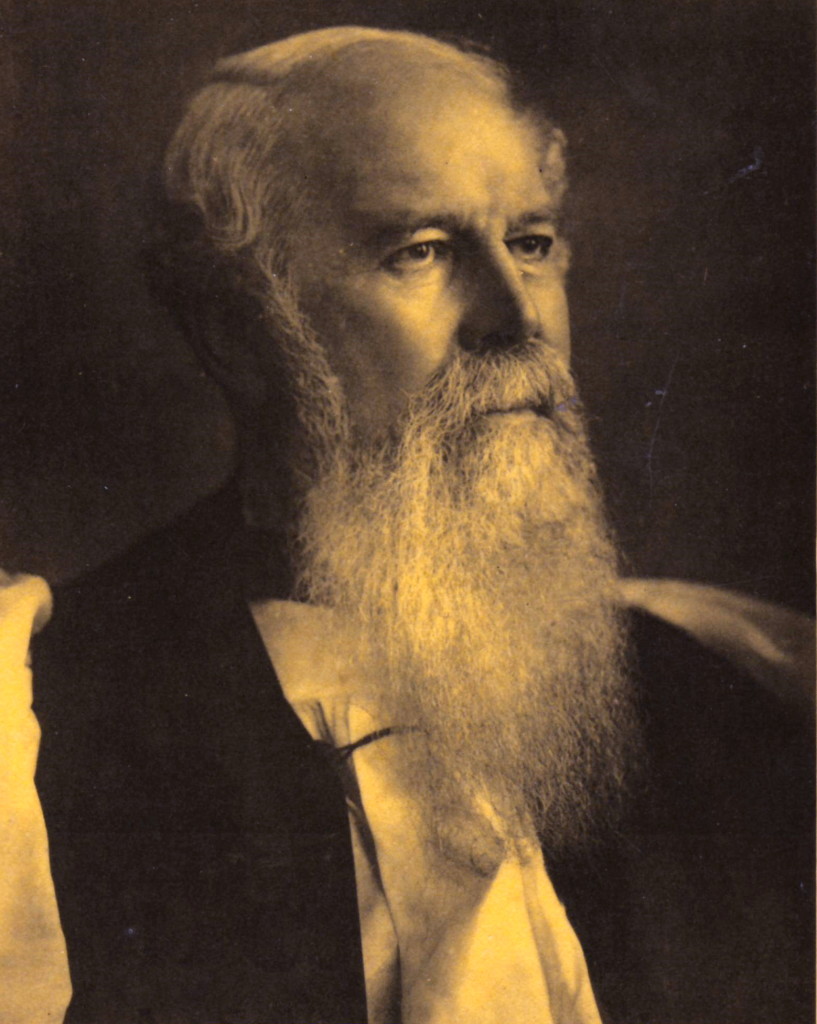
John Charles Ryle (10 May 1816 — 10 June 1900) was an English evangelical Anglican bishop. He was the first Anglican bishop of Liverpool.
Broadcaster:

Comments

0 / 2000 characters
Comments are moderated before appearing.

Be the first to comment!

Joshua

Joshua

Shall we play a game? Ask me about articles, sermons, or theology from our library. I can also help you navigate the site.