Bootstrap
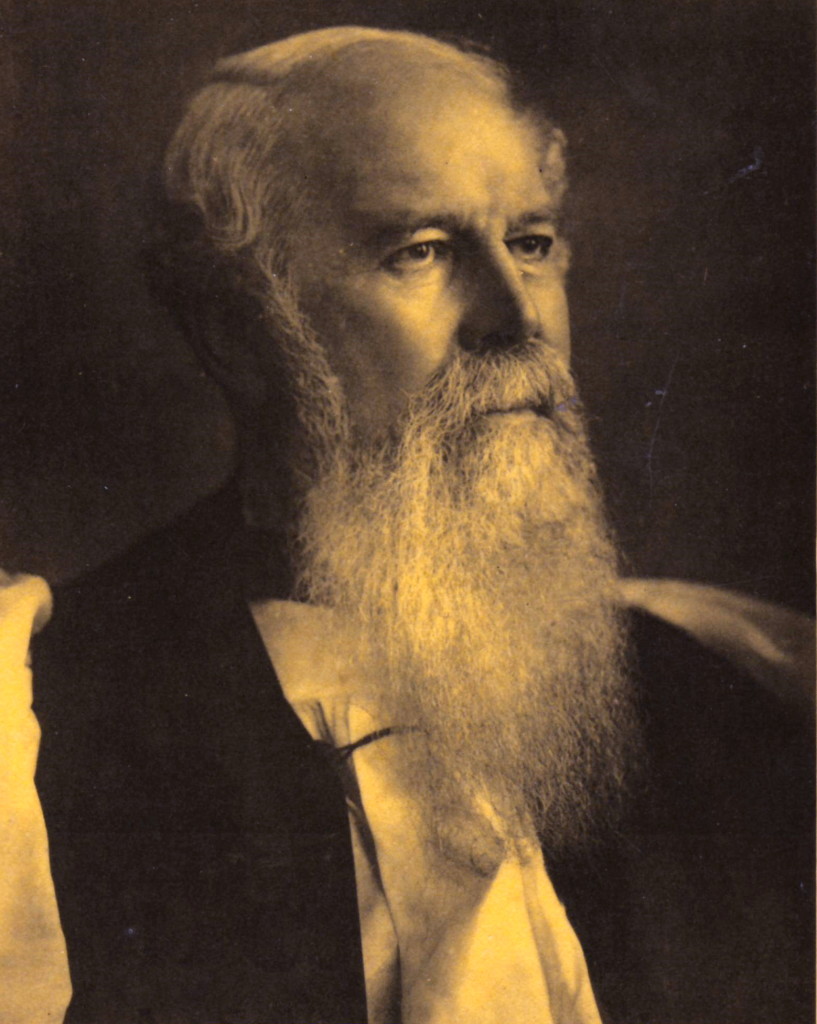
J.C. Ryle

Worship

John 4:24; Philippians 3:3
J.C. Ryle October, 20 2019 Audio
0 Comments
Another great chapter from Ryle's book, "Knots Untied".

You will find it helpful to READ the text--as you LISTEN to the audios!
Here is the text for this audio:
https://www.gracegems.org/23/worship.htm

Sermon Transcript

Auto-generated transcript • May contain errors

100%
CHAPTER XIII WORSHIP. PART I.

GOD IS A SPIRIT, AND THEY THAT WORSHIP HIM MUST WORSHIP HIM IN SPIRIT AND IN TRUTH. JOHN CHAPTER IV VERSE 24.

WE ARE THE CIRCUMCISION WHICH WORSHIP GOD IN THE SPIRIT. PHILIPPIANS CHAPTER III VERSE 3.

IN VAIN DO THEY WORSHIP ME. MATTHEW CHAPTER XV VERSE 9.

A SHOW OF WISDOM IN WILL WORSHIP. COLOSSIANS CHAPTER II VERSE 23.

We live in times when there is a vast quantity of public religious worship. Most English people who have any respect for appearances go to some church or chapel on Sundays. To attend no place of worship in this country, whatever may be the case abroad, is at present the exception and not the rule.

But we all know that the quantity is of little value without quality. It is not enough that we worship sometimes. There remains behind a mighty question to be answered. How do we worship? Not all religious worship is right in the sight of God. I think this is as clear as the sun at noonday to any honest reader of the Bible. The Bible speaks of worship which is in vain as well as worship which is true, and of will-worship as well as spiritual worship. To suppose, as some thoughtless persons do, that it signifies nothing where we go on Sundays, and matters nothing how the thing is done, provided it is done, is mere childish folly. Merchants and tradesmen do not carry on their businesses in this fashion. They look at the way their work is done and are not content with work done anyhow. Let us not be deceived. God is not mocked. The question, how do we worship, is a very serious one.

I propose to unfold the subject of worship, and to lay down some scriptural principles about it. In a day of profound ignorance, in some quarters, and of systematic false teaching in others, I hold it to be of primary importance to have clear ideas about all disputed points in religion. I fear that thousands of Englishmen and women can render no reason for their faith and practice. They do not know why they believe, or what they believe, or why they do what they do. Like children they are tossed to and fro by every wind of doctrine, and are liable to be led astray by the first clever heretic who meets them. In a day like this let us try to get hold of some distinct notions about Christian worship.

1. I will show the general importance of public worship.
2. I will show the leading principles of public worship.
3. I will show the essential parts of complete public worship.
4. I will show the things to be avoided in public worship.
5. I will show the tests by which our public worship should be tried.

I purposely confine my attention to public worship. I purposely pass over all private religious habits, such as praying, Bible reading, self-examination and meditation. No doubt they lie at the very root of personal Christianity, and without them all public religion is utterly in vain, but they are not the subject I want to handle today.

I have first to show the general importance of public worship. I trust I need not dwell long on this part of my subject. This paper is not likely to fall into the hands of any who do not at least call themselves Christians. There are few, except downright infidels, who will dare to say that we ought not to make some public profession of religion. Most people, whatever their own practice may be, will admit that we ought to meet other Christians at stated times and in stated places, and unitedly and together to worship God. Public worship, I am bold to say, has always been one mark of God's servants. Man, as a general rule, is a social being and does not like to live separate from his fellows. In every age God has made use of that mighty principle and has taught His people to worship Him publicly as well as privately, together as well as alone. I believe the last day will show that wherever God has had a people, He has always had a congregation. His servants, however few in number, have always assembled themselves together, and approached their Heavenly Father in company. They have been taught to do it for many wise reasons, partly to bear a public testimony to the world, partly to strengthen, cheer, help, encourage and comfort one another, and, above all, to train and prepare them for the general assembly in Heaven.

As iron sharpeneth iron, so doth the countenance of a man his friend. That man can know little of human nature who does not know that to see others doing and professing the same things that we do in religion is an immense help and an encouragement to our souls. From the beginning of the Bible down to the end, you may trace out a line of public worship in the history of all God's saints. You see it in the very first family that lived on earth. The familiar story of Cain and Abel hinges entirely on acts of public worship. You see it in the history of Noah. The very first thing recorded about Noah and his family, when they came forth from the ark, was a solemn act of public worship. You see it in the history of Abraham, Isaac, and Jacob. Wherever the patriarchs had a tent, they always had an altar. They not only prayed in private, but worshipped in public.

You see it throughout the whole Mosaic economy, from Sinai downward, till our Lord appeared. The Jew who was not a public worshipper at the tabernacle or the temple would have been cut off from the congregation of Israel. You see it throughout the whole New Testament. The Lord Jesus himself gives a special promise of his presence wherever two or three are assembled in his name. The apostles, in every church they founded, made the duty of assembling together a first principle in their list of duties. Their universal rule was, forsake not the assembling of yourselves together. These are ancient things, I know, but it is well to be reminded of them. Just as you may lay it down as a certainty that where there is no private prayer there is no grace in a man's heart, so you may lay it down as the highest probability that where there is no public worship there is no church of God and no profession of Christianity.

Footnote. The reader will of course understand that I fully admit the impossibility of public worship being kept up in times of persecution. When the Roman emperors persecuted the early church and all Christians were prescribed, there could of necessity have been no public worship. But these are evidently exceptional cases. End of footnote.

Turn now from the Word of God to the pages of church history and what will you find? You will find that from the days of the Apostles down to this hour, public worship has always been one of God's great instruments in doing good to souls. Where is it that sleeping souls are generally awakened, dark souls enlightened, dead souls quickened, doubting souls brought to decision, mourning souls cheered, heavy-laden souls relieved? Where, as a general rule, but in the public assembly of Christian worshipers, and during the preaching of God's Word? Take away public worship from a land. shut up the churches and chapels, forbid people to meet together for religious services, prohibit any kind of religion except that which is private. Do this, and see what the result would be. You would inflict the greatest spiritual injury on the country which was so treated. You could do nothing so likely to help the devil, and stop the progress of Christ's cause, except the taking away of the Bible.

Next to the word of God there is nothing which does so much good to mankind as public worship. Faith cometh by hearing. Romans chapter 10 verse 7. There is a special presence of Christ in religious assemblies.

I grant freely that public worship may become a mere act of formality. Thousands of so-called Christians, no doubt, are continually going to churches and chapels and getting no benefit from their attendance. Like Pharaoh's lean kind, they are nothing bettered, but rather worse, more impenitent, more hard-hearted. No wonder that the ignorant Sabbath-breaker defends himself by saying, For anything I can see, those who go nowhere on Sundays are just as good people as church-goers and chapel-goers.

But we must never forget that the misuse of a good thing is no argument against the use of it. Once begin to refuse everything that is misused in this sinful world, and there is hardly anything left for you that is good. Take a broader view of the question before you. Look at any district you like in England and divide people into two great parties, worshippers and non-worshippers. I will engage you will find that there is far more good among those that worship than among those that do not. It does make a difference, whatever men may say. It is not true that worshippers and non-worshippers are all alike.

We ought never to forget the solemn words of St. Paul, Forsake not the assembling of yourselves together, as the manner of some is, but exhort one another. Hebrews 10.25 Let us act upon that exhortation as long as we live, and through evil report and good report continue regular attendance at public worship. Let us not care for the bad example of many around us who rob God of His day, and never go up to His house from one end of the year to the other. Let us go on worshipping in spite of every discouragement, and let us not doubt that in the long run of life it does us good. Let us prove our own meatness for heaven by our feelings toward the earthly assemblies of God's people.

Happy is that man who can say with David, I was glad when they said unto me, Let us go into the house of the Lord. I had rather be a doorkeeper in the house of my God than to dwell in the tents of wickedness. Psalm 122, verse 1. Psalm 84, verse 10.

2. I proceed, in the second place, to show the leading principles of public worship. These leading principles are so plain and obvious to any thoughtful reader of the Bible that I need not dwell on them at any length. But for the sake of some who may not hitherto have given much attention to the subject, I feel it best to state them in order.

a. For one thing, true public worship must be directed to the right object. It is written plainly, both in the Old and New Testament, Thou shalt worship the Lord thy God, and Him only shalt thou serve. Deuteronomy chapter 6 verse 13, Matthew chapter 4 verse 10. All adoration and prayers addressed to the Virgin Mary, the saints and angels, is utterly useless and unwarranted by Scripture. It is worship that is mere waste of time. There is not the slightest proof that the departed saints or the angels can hear our worship, or that if they did hear it they could do anything for us. It is worship that is most offensive to God. He is a jealous God and has declared that He will not give His glory to another. Of all His ten commandments there is none more stringent and sweeping than the second. It forbids us not only to worship but even to bow down to anything beside God.

b. For another thing, true public worship must be directed to God through the mediation of Christ. It is written plainly, I am the way, the truth, and the life, no man cometh unto the Father but by me. It is written of Christians that they are a people who come unto God by Christ. Hebrews chapter 7 verse 25. The mighty Being with whom we have to do, without controversy, is a God of infinite love, kindness, mercy, and compassion. God is love. But it is no less true that He is a Being of infinite justice, purity, and holiness, and that He has an infinite hatred of sin and cannot bear that which is evil. He is the same God that cast down the angels from heaven, drowned the world with a flood, and burned up Sodom and Gomorrah. He who carelessly presumes to draw near to him without an atonement and a mediator, or by any other mediator than the one mediator whom he has appointed, will find that he worships in vain. Our God is a consuming fire. Hebrews chapter 12 verse 29.

C. For another thing, true public worship must be either directly scriptural, or deducible from scripture, or in harmony with scripture. It is written plainly concerning the Jews of our Lord's time, In vain do they worship me, teaching for doctrines the commandments of men. Matthew 15, verse 9.

No doubt there is a conspicuous absence of particular injunctions about New Testament worship. No doubt there is a reasonable liberty allowed to churches and congregations in their arrangements about worship. But still the rule must never be forgotten. Nothing must be required of men contrary to God's word.

Well says the twentieth article of the Church of England. The Church hath power to decree rites and ceremonies and authority in controversies of faith, and yet it is not lawful for the Church to ordain anything that is contrary to God's word written. Well says 34th article, ceremonies at all times have been diverse and may be changed according to the diversities of countries, times and men's manners so that nothing be ordained against God's word.

I say, therefore, that any man who tells us that there are seven sacraments when the Bible only mentions two, or that any man-made ordinance is as binding on our consciences and as needful to salvation as an ordinance appointed by Christ, is telling us what he has no right to tell. We must not listen to him. He is committing not only a mistake, but a sin.

St. Paul distinctly tells us that there is such a thing as will-worship, which has a show of wisdom, but is in reality useless, because it only satisfies the flesh. Colossians 2.23.

d. For another thing, true public worship must be an intelligent worship. I mean by that expression that worshipers must know what they are doing. It is written plainly, as a charge against the Samaritans, Ye worship, ye know not what. We know what we worship. John chapter 4 verse 22. It is written of the heathen Athenians that they ignorantly worshipped an unknown God. It is utterly false that ignorance is the mother of devotion. The poor Italian Papists, unable to read and not knowing a chapter in the Bible, may appear extremely devout and sincere, as they kneel in crowds before the image of the Virgin Mary, hear Latin prayers which they do not understand, but it is utterly preposterous to suppose that their worship is acceptable to God. He who made man at the beginning made him an intelligent being with mind as well as body. A worship in which the mind takes no part is useless and unprofitable. It might suit a beast as well as a man.

e. For another thing, true public worship must be the worship of the heart. I mean by this, that the affections must be employed as well as our intellect, and our inward man must serve God as well as our body. It is written plainly in the Old Testament, and the saying is quoted by Jesus Christ himself, This people draweth nigh unto me with their mouth, and honoureth me with their lips, but their heart is far from me. But in vain do they worship me. Isaiah chapter 29 verse 13, Matthew chapter 15 verse 8.

It is written of the Jews in Ezekiel's time, They come unto thee as the people cometh, and they sit before thee as my people, and they hear thy words, but they will not do them. For with their mouth they show much love, but their heart goeth after their covetousness. Ezekiel chapter 33 verse 31. The heart is the principal thing that God asks man to bring in all his approaches to him, whether public or private. A church may be full of worshippers who may give God an immense amount of bodily service. There may be abundance of gestures and postures, and turnings to the east, and bowings, and crossings and prostrations, and grave countenances, and upturned eyes, and yet the hearts of the worshippers may be at the end of the earth. One may be thinking only of coming or past pleasures, another of coming or past business, and another of coming or past sins. Such worship, we may be very sure, is utterly worthless in God's sight. It is even worse than worthless. It is abominable hypocrisy.

God is a spirit, and He cares nothing for man's bodily service without man's heart. Bodily service profiteth little. Man looketh on the outward appearance, but the Lord looketh on the heart. The broken and contrite heart is the true sacrifice, the sacrifice which God will not despise. 1 Samuel 16, 7. Psalm 51, 17.

F. In the last place, true public worship must be irreverent worship. It is written, Keep thy foot when thou goest to the house of God, and be more ready to hear than to give the sacrifice of fools, for they consider not that they do evil. Ecclesiastes 5, 1.

It is recorded that our Lord Jesus Christ began and ended His ministry with two practical protests against irreverent worship. On two distinct occasions He cast out of the temple the buyers and sellers who were profaning its courts by their traffic, and justified His act by the weighty words, It is written, My house shall be called the house of prayer, but ye have made it a den of thieves.

People who call themselves Christian, and go to churches and chapels to stare about, whisper, fidget, yawn, or sleep, but not to pray, or praise, or listen, are not a whit better than the wicked Jews. They do not consider that God detests profaneness and carelessness in His presence, and that to behave before God as they would not dare to behave before their sovereign at a levee or a drawing-room is a very grave offense indeed.

We must beware that we do not rush from one extreme to the other. It does not follow, because bodily service alone is useless, that it does not matter how we behave ourselves in the congregation. Surely even nature, reason, and common sense should teach us that there is a manner and demeanor suitable to mortal man, when he draws nigh to his Almighty Maker.

It is not for nothing that it is written, God is greatly to be feared in the assembly of the saints, and to be had in reverence of all them that are about him. Psalm 89, verse 7.

If it is worthwhile to attend public worship at all, it is worthwhile to do it carefully and well. God is in heaven and we are on earth. Let us not be rash and hasty. Let us mind what we are about. Let us have grace whereby we may serve God acceptably with reverence and godly fear. Hebrews 12, 28, 29.

I ask the reader's special attention to the five leading principles which I have just laid down. I fear they strike at the root of the worship of myriads in our own land, to say nothing of Papists, Mohammedans, and the heathens abroad. Thousands of English people, I fear, are regularly spending their Sundays in a worship which is utterly useless. It is a worship without Scripture, without Christ, without the Holy Spirit, without knowledge, without heart and without the slightest benefit to the worshipers. For any good they get from it, they might just as well be sitting at home and not worshiping at all.

Let us take heed that this is not our condition. Let us remember, as long as we live, that it is not the quantity of worship, but the quality that God regards. The inward and spiritual character of the congregation is of far more importance in His sight than the number of the worshippers, or the outward invisible signs of devotion which they exhibit. Children and fools, who admire poppies more than corn, may think all is right when there is a great external show of religion, but it is not so with God. He is all-seeing eyes look at the inner man.

III. I proceed, in the third place, to show the essential parts of Christian public worship. I will suppose the case of a man who has never given the subject of religion any sincere attention, and has never gone regularly to any place of worship at all. I will suppose such a man to be awakened to a sense of the value of his soul, and to be desirous of information about certain things in religion. He is puzzled by finding that all Christians do not worship God in the same way, and that one neighbor worships God in one fashion, and another in another. He hears one man saying that there is no road to heaven excepting through his church, and another replying that all will go to hell who do not join his chapel. Now what is he to think? Are there not certain things which are essential parts of Christian worship?

I answer without hesitation that there are. It shall be my next business to exhibit them in order. I freely grant that there is little said on the nature of public worship in the New Testament.

There is a wide difference in this respect between the law of Moses and the law of Christ. The Jews' religion was full of strict and minute directions about worship. The Christians' contains very few directions and those of the simplest and most general description. The Jews' religion was full of types, emblems, and figures. The Christians' only contains two, viz., baptism and the Lord's Supper. The Jews' religion approached the worshipper chiefly through the eye. The New Testament religion appeals directly to the heart and conscience. The Jews' religion was confined to one particular nation. The Christians' was meant for the whole world. The Jew could turn to the writings of Moses and see at a glance every item of his worship. The Christian can only point to a few isolated texts and passages. which are to be applied by every church according to circumstances. In a word, there is nothing answering to Exodus or Leviticus in the New Testament.

Yet a careful reader of the Christian scriptures can hardly fail to pick out of them the essential parts and principles of Christian worship. Where these essential parts are present, there is Christian worship. Where they are absent, the worship is, to say the least, defective, imperfect, and incomplete.

A. In complete public worship, the Sabbath should always be honored. That blessed day was appointed for this very purpose, among others, to give men an opportunity of meeting together in God's service. A Sabbath was given to man even in Paradise. The observance of a Sabbath was made part of the Ten Commandments. The worship of God on the Sabbath was observed by our Lord Jesus Christ Himself. To meet together, on one day of the week, at least, was a practice of the early Christians, though they met on the first day instead of the seventh. Acts 20.7, 1 Corinthians 16.2. To assemble in God's house on the Christian Sabbath has been the custom of all professing Christians for eighteen hundred years. The best and holiest of God's saints have always pressed on others, most strongly, the value of Sabbath worship, and bore witness to its usefulness.

It sounds very fine and spiritual, no doubt, to say that every day should be a Sabbath to a Christian, and that one day should not be kept more holy than another, but facts are stronger than theories. Experience proves that human nature requires such helps as fixed days and hours and seasons for carrying on spiritual business, and that public worship never prospers unless we observe God's order. The Sabbath was made for man, by him who made man at the beginning, and knew what flesh and blood is. As a general rule, it will always be found that where there is no Sabbath, there is no public worship.

b. In complete public worship there should be a ministry. I do not for a moment say that it is of absolute necessity that it must be an Episcopal ministry. I am not so narrow-minded and uncharitable as to deny the validity of Presbyterian or Congregational orders. I only maintain that it is the mind of God that ministers of some kind should conduct the worship of Christian congregations, and be responsible for its decent and orderly conduct in approaching God. I am at a loss to understand how anyone can read the Acts of the Apostles and the Epistles to the Corinthians, Ephesians, Timothy, and Titus, and deny that the ministry is an appointment of God. I say this with every feeling of respect for the Quakers and Plymouth Brethren, who have no ordained ministers. I simply say that I cannot understand their views on this subject. Reason itself appears to me to tell us that business, which is left to nobody in particular to attend to, is a business which is soon entirely neglected. Order is said to be heaven's first law. Once let a people begin with no Sabbath and no ministry, and it would never surprise me if they ended with no public worship, no religion and no God.

c. In complete public worship there should be the preaching of God's Word. I can find no record of church assemblies in the New Testament in which preaching and teaching orally does not occupy a most prominent position. It appears to me to be the chief instrument by which the Holy Ghost not only awakens sinners, but also leads on and establishes saints. I observed that in the very last words that St. Paul wrote to Timothy as a young minister, he especially enjoins him to preach the word. 2 Timothy 4. I cannot, therefore, believe that any system of worship in which the sermon is made little of, or thrust into a corner, can be a scriptural system, or one likely to have the blessing of God. I have no faith in the general utility of services composed entirely of prayer-reading, hymn-singing, sacrament-receiving, and walking in procession. I hold firmly with Bishop Latimer that it is one of Satan's great aims to exalt ceremonies and put down preaching. There is a deep meaning in the words, despise not prophesying, 1 Thessalonians chapter 5 verse 20. A contempt for sermons is a pretty sure mark of a decline in spiritual religion.

D. In complete public worship there should be united public prayer. I can find no account of religious assemblies in the New Testament in which prayer and supplication did not form a principal business. I find St. Paul telling Timothy, I exhort first of all, that supplications, prayers, intercessions, and giving of thanks be made for all men. 1Timothy 2.1. Such prayers should be plain and intelligible, that all the worshippers may know what is going on and be able to go along with him who prays. They should as far as possible be the joint act of all the assembly and not the act of one man's mind alone. A congregation of professing Christians which only meets to hear a grand sermon and takes no part or interest in the prayers seems to me to fall short of the standard of the New Testament. Public worship does not consist only of hearing.

e. In complete public worship there should be the public reading of the Holy Scriptures. This was evidently a part of the service of the Jewish synagogue, as we may learn from what happened at Nazareth and at Antioch in Pisidia. We cannot doubt that the Christian church was intended to honor the Bible as much as the Jewish. To my eyes St. Paul points to this when he says to Timothy, Till I come give attention to reading. I do not believe that reading in that text means private study. Reason and common sense alike teach the usefulness of the practice of publicly reading the Scriptures. A visible church will always contain many professing members who either cannot read, or have no will or time to read at home. What safer plan can be devised for the instruction of such people than the regular reading of God's Word? A congregation which hears but little of the Bible is always in danger of becoming entirely dependent on its minister. God should always speak in the assembly of His people, as well as man.

F. In complete public worship there should be united public praise. That this was the custom among the first Christians is evident from St. Paul's words to the Ephesians and Colossians, in which he commanded the use of psalms and hymns and spiritual songs. Ephesians 5.19, Colossians 3.16. That it was a custom so widely prevalent as to be a mark of the earliest Christians is simply a matter of history. Pliny records that when they met, they used to sing a hymn to the Christ as God.

No one indeed can read the Old Testament and not discover the extremely prominent place which praise occupied in the temple service. What man in his senses can doubt that the service of song was meant to be highly esteemed under the New Testament? Praise has been truly called the flower of all devotion. It is the only part of our worship which will never die. Preaching and praying and reading aloud one day will be no longer needed, but praise shall go on for ever. A congregation which takes no part in praise, or leaves it all to be done by a deputy through a choir, can be hardly thought in a satisfactory state.

Finally, in complete public worship there should be the regular use of the two sacraments which Christ appointed in His Church. By baptism new members should be continually added to the congregation and publicly enrolled in the list of professing Christians. By the Lord's Supper, believers should be continually offered an opportunity of confessing their Master and continually strengthened and refreshed and put in remembrance of His sacrifice on the cross. I believe, with every feeling of respect for Quakers and Plymouth Brethren, that no one who neglected these two sacraments would have been regarded as a Christian by St. Paul and St. Peter, St. James and St. John.

No doubt, like every other good thing, they may be painfully misused and profaned by some, and superstitiously idolized by others. But, after all, there is no getting over the fact that baptism and the Lord's Supper were ordained by Christ Himself as means of grace, and we cannot doubt He meant them to be reverently and duly used. A man who preferred to worship God for many years without ever receiving the sacrament of the Lord's Supper is a man, I am fully persuaded, that would not have been thought in a right state in the days of the Apostles.

I commend these seven points to the serious attention of my readers and invite them to consider them well. I can easily believe that I may have said things about them with which some Christians may not agree. I am not their judge. to their own master they must stand or fall. I can only tell my readers, as an honest man, what appears to me the teaching of Holy Scripture. I do not for a moment say that no man will be saved who does not see public worship precisely with my eyes. I say nothing of the kind. But I do say that any regular system of public worship, which does not give a place to the Sabbath, the ministry, preaching, prayers, Scripture reading, praise, and the two sacraments, appears to me deficient and incomplete.

If we attend a place of worship where any of these seven points is neglected, I think we suffer loss and damage. We may be doing well, but I think we might be doing better. To my mind, these seven parts of public worship appear to stand out plainly on the face of the New Testament, and I plainly say so.

4. I proceed, in the fourth place, to show some things which ought to be avoided in public worship. I am well aware that there is no perfection in this world. There is no visible church, I am sure, in whose public worship it would not be easy to show faults, defects and shortcomings. The best service in the best visible church on earth will always be infinitely below the standard of the glorified church in heaven. I admit with sorrow and humiliation that the faith and hope and life and worship of God's people are all alike full of imperfections.

To be continually separated and succeeding from churches because we detect blemishes in their administration is not the act of a wise man. It is to forget the parable of the wheat and tares. But I cannot forget, for all this, that we have fallen on dangerous times in the matter of worship. There are things going on in many English churches and chapels in the present day so highly objectionable that I feel it a plain duty to offer some cautions about them. Plain speaking about them is imperatively demanded at a minister's hands. If the watchmen hold their peace, how shall the city take alarm? If the trumpet give an uncertain sound, who shall prepare himself for the battle?

There are three great and growing evils in public worship which require special watching in the present day. I feel it a positive duty to direct attention to them. We have need to stand on our guard about these evils, and to take heed that they do not infect and damage our souls.

a. Let us beware for one thing of any worship in which a disproportionate honor is given to any one ordinance of Christ to the neglect of another. There are churches at this moment in which baptism and the Lord's Supper, like Aaron's rod, swallow up everything else in religion. Nothing beside receives much attention. The honor done to the font and the Lord's table meet you at every turn. All else, in comparison, is jostled out of its place, overshadowed, dwarfed, and driven into a corner. Worship of this sort, I hesitate not to say, is useless to man's soul. Once alter the proportions of a doctor's prescription, and you may turn his medicine into a poison. Once bury the whole of Christianity under baptism in the Lord's Supper, and the real idea of Christian worship is completely destroyed.

b. Let us beware, for another thing, of any worship in which an excessive quantity of decoration and ornament is used. There are many churches at this moment in which divine service is carried on with such an amount of gaudy dressing, candle lighting, and theatrical ceremonial that it defeats the very purpose of worship. Simplicity should be the grand characteristic of New Testament worship. Ornament at any time should be employed with a very sparing hand. Neither in the Gospels nor in the Epistles shall we find the slightest warrant for a gorgeous and decorated ceremonial, or for any symbols except water, bread, and wine. Above all, the inherent wickedness of human nature is such that our minds are only too ready to turn away from spiritual things to visible things. Whether men like it or not, what the heart of man needs teaching is the uselessness of outward ornaments without inward grace.

c. Let us beware, above all things, of any worship in which ministers wear the dress or act in the manner of sacrificing priests. There are hundreds of English churches at this moment in which the Lord's supper is administered as a sacrifice and not as a sacrament, and the clergy are practically acting as mediators between God and man. The real presence of our Lord's body and blood, under the form of bread and wine, is openly taught. The Lord's table is called an altar. The consecrated elements are treated with an idolatrous reverence, as if God himself was in them, under the form of bread and wine. The habit of private confession to clergy is encouraged and urged on the people. I find it impossible to believe that such worship as this can be anything but offensive to God. He is a jealous God and will not give His honor to another. The sacrifice of our Lord Jesus Christ on the cross, once offered, can in no sense or way ever be repeated. his mediatorial and priestly office he has never deputed to any man, nor any order of men. There is not a word in the Acts or Epistles to show that the Apostles ever pretended to be sacrificing priests, or to make any oblation in the Lord's Supper, or to hear private confessions, and confer judicial absolutions. Surely that simple fact ought to make men think. Let us beware of sacrificialism, the Mass, and the confessional.

Against the three evils of which I have just been speaking, I desire to lift up a warning voice. Such worship is not acceptable in God's sight. It may be pressed upon us most plausibly by clever men, it may be very attractive to the eye and ear and the sensual part of our nature, but it has one fatal defect about it. It cannot be defended and maintained by plain text of scripture. Sacramentalism, ceremonialism, sacrificialism, will never be found, in Bibles, fairly read and honestly interpreted.

We should search the pages of English history, if nothing else will open our eyes, and see what those pages tell us. Of worship in which the sacraments, ceremonials, sacerdotalism, and the Mass made up the principal part, of such worship England has surely had enough. Such worship was tried by the Church of Rome in the days of our forefathers, for centuries before the Protestant Reformation, and utterly failed. It filled the land with superstition, ignorance, formalism, and immorality. It comforted no one, sanctified no one, elevated no one, helped no one toward heaven. It made the priests overbearing tyrants, and the people cringing slaves. And shall we go back to it? God forbid! Shall we once more be content with services in which baptism, the Lord's Supper, the power of the priesthood, the real presence of Christ in the Eucharist, the necessity of symbolical decorations, the value of processions, banners, pictures, altar lights, are incessantly pressed on our minds? Once more I say, God forbid! Let every one that loves his own soul come out from such worship and be separate. Let him avoid it and turn away from it, as he would from poison.

V. I proceed in the last place to show some tests by which our public worship should be tried. This is a point of vast importance, and one which every professing Christian should look fairly in the face. Too many are apt to cut the knot of all difficulties about the subject before us by referring to their own feelings. They will tell us that they are not theologians, that they do not pretend to understand the difference between one school of divinity and another. But they do know that the worship in which they take part makes them feel so much better that they cannot doubt it is all right. I am not disposed to let such people turn away from the subject of this paper quite so easily. I cannot forget that religious feelings are very deceitful things. There is a sort of gentle animal excitement produced in some minds by hearing religious music and seeing religious spectacles, which is not true devotion at all. While it lasts, such excitement is very strong and very contagious, but it soon comes and soon goes, and leaves no permanent impression behind it. It is a mere sensuous animal influence, which even a Romanist may feel at seasons, and yet remain a Romanist, both in doctrine and practice.

A. True spiritual worship will affect a man's heart and conscience. It will make him feel more keenly the sinfulness of sin and his own particular personal corruption. It will deepen his humility. It will render him more jealously careful over his inward life. False public worship, like dram drinking and opium eating, will every year produce weaker impressions. True spiritual worship, like wholesome food, will strengthen him who uses it and make him grow inwardly every year.

b. True spiritual worship will draw a man into close communion with Jesus Christ Himself. It will lift him far above churches and ordinances and ministers. It will make him hunger and thirst after a sight of the King. The more he hears, and reads, and prays, and praises, the more he will feel that nothing but Christ Himself will feed the life of his soul, and that heart communion with Him is meat indeed, and drink indeed. The false worshipper, in the time of need, will turn to external helps, to ministers, ordinances, and sacraments. The true worshipper will turn instinctively to Christ, by simple faith, just as the compass needle turns to the pole.

c. True spiritual worship will continually extend a man's spiritual knowledge. It will annually give bone and sinew and muscle and firmness to his religion. A true worshipper will every year know more of self and God and heaven and duty and doctrine and practice and experience. His religion is a living thing and will grow. A false worshipper will never get beyond the old carnal principles and elements of his theology. He will annually go round and round like a horse in a mill, and though laboring much will never get forward. His religion is a dead thing and cannot increase and multiply.

D. True spiritual worship will continually increase the holiness of a man's life. It will make him every year more watchful over tongue and temper and time and behavior in every relation of life. The true worshipper's conscience becomes annually more tender, the false worshipper's becomes annually more seared and more hard. Give me the worship that will stand the test of our Lord's great principle. By their fruits ye shall know them. Give me the worship that sanctifies the life, that makes a man walk with God and delight in God's law, that lifts him above the fear of the world and the love of the world, that enables him to exhibit something of God's image and God's likeness before his fellow men, that makes him just, loving, pure, gentle, good-tempered, patient, humble, unselfish, temperate,

This is the worship that comes down from heaven and has the stamp and seal and subscription of God. Whatever men may please to say, the grand test of the value of any kind of worship is the effect it produces on the lives of the worshipers. A man may tell us that what is called ritualism nowadays is the best and most perfect mode of worshiping God. He may despise the simple and unadorned ceremonial of evangelical congregations. He may exalt to the skies the excellence of ornament, decoration, and pageantry in our service of God. But I take leave to tell him that Christian men will try his favorite system by its results. So long as ritualistic worshipers can turn from matins and early communions to races and operas, and can oscillate between the confessional and the ballroom, So long the advocates of virtualism must not be surprised if we think little of the value of virtualistic worship.

Let us hear the conclusion of the whole matter. The best public worship is that which produces the best private Christianity. The best church services for the congregation are those which make its individual members most holy at home and alone. If we want to know whether our own public worship is doing us good, let us try it by these tests. Does it quicken our conscience? Does it send us to Christ? Does it add to our knowledge? Does it sanctify our life? If it does, we may depend on it, it is worship of which we have no cause to be ashamed.

The day is coming when there shall be a congregation that shall never break up, and a Sabbath that shall never end, and songs of praise that shall never cease, and an assembly that shall never be dispersed. In that assembly shall be found all who have worshipped God in spirit upon earth. If we are such, we shall be there.

Here we often worship God with a deep sense of weakness, corruption, and infirmity. There, at last, we shall be able, with a renewed body, to serve Him without weariness, and to attend on Him without distraction. Here, at our very best, we see through a glass darkly, and know the Lord Jesus Christ most imperfectly. It is our grief that we do not know Him better and love Him more. There, freed from all the dross and defilements of indwelling sin, we shall see Jesus as we have been seen, and know as we have been known. Surely, if faith has been sweet and peace-giving, sight will be far better.

Here we have often found it hard to worship God joyfully, by reason of the sorrows and cares of this world. Tears over the graves of those we have loved have often made it hard to sing praise. Crushed hopes and family sorrows have sometimes made us hang our harps on the willows. There every tear shall be dried, every saint who has fallen asleep in Christ shall meet us once more, and every hard thing in our life journey shall be made clear and plain as the sun at noonday.

Here we have often felt that we stand comparatively alone, and that even in God's house the real spiritual worshippers are comparatively few. There we shall at length see a multiple of brethren and sisters that no man can number, all of one heart and one mind, all free from blemishes, weaknesses, and infirmities, all rejoicing in one Saviour, and all prepared to spend an eternity in His praise. We shall have worshipping companions enough in heaven.

Armed with such hopes as these, let us lift up our hearts and look forward. The time is very short. The night is far spent. The day is at hand. Let us worship on, pray on, praise on, and read on. Let us contend earnestly for the faith once delivered to the saints, and resist manfully every effort to spoil scriptural worship. Let us strive earnestly to hand down the light of gospel worship to our children's children. Yet a little time, and He that shall come will come and will not tarry. Blessed in that day will be those, and those only, who are found true worshipers, worshipers in spirit and truth.
J.C. Ryle
About J.C. Ryle
John Charles Ryle (10 May 1816 — 10 June 1900) was an English evangelical Anglican bishop. He was the first Anglican bishop of Liverpool.
Broadcaster:

Comments

0 / 2000 characters
Comments are moderated before appearing.

Be the first to comment!

Joshua

Joshua

Shall we play a game? Ask me about articles, sermons, or theology from our library. I can also help you navigate the site.