Bootstrap
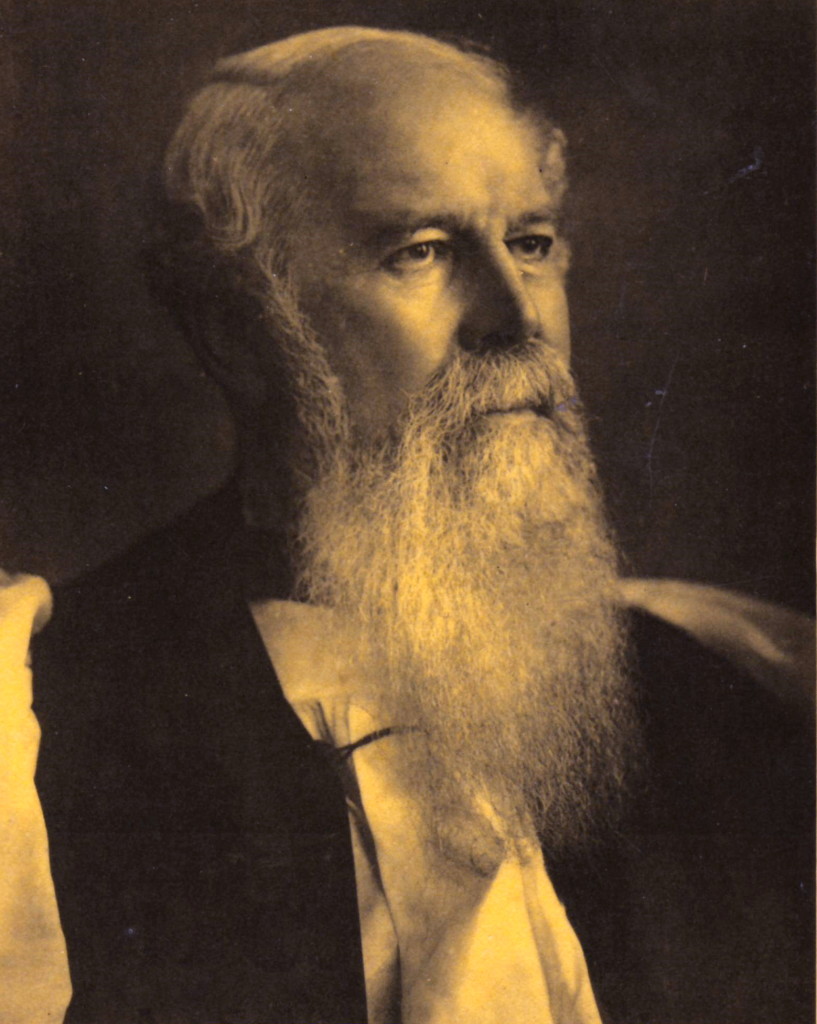
J.C. Ryle

Apostolic Fears

2 Corinthians 11:3
J.C. Ryle October, 20 2019 Audio
0 Comments
Another great chapter from Ryle's book, "Knots Untied".

You will find it helpful to READ the text--as you LISTEN to the audios!
Here is the text for this audio:
https://www.gracegems.org/23/Ryle_apostolic_fea...

Sermon Transcript

Auto-generated transcript • May contain errors

100%
CHAPTER XVIII. APOSTOLIC FEARS

I fear, lest by any means, as the serpent beguiled Eve by his subtlety, so your minds should be corrupted from the simplicity that is in Christ. II Corinthians, Chapter XI, verse 3.

The text which heads this page contains one part of the experience of a very famous Christian. No servant of Christ, perhaps, has left such a mark for good on the world as the Apostle St. Paul. When he was born, the whole Roman Empire, excepting one little corner, was sunk in the darkest heathenism. When he died, the mighty fabric of heathenism was shaken to its very center and ready to fall. And none of the agents whom God used to produce this marvelous change did more than Saul of Tarsus, after his conversion.

Yet even in the midst of his successes and usefulness we find him crying out, I fear. There is a melancholy ring about these words which demands our attention. They show a man of many cares and anxieties. He who supposes that St. Paul lived a life of ease because he was a chosen apostle, wrought miracles, founded churches, and wrote inspired epistles, has yet much to learn. Nothing can be more unlike the truth.

The eleventh chapter of the Second Epistle to the Corinthians tells a very different tale. It is a chapter which deserves attentive study. Partly from the opposition of the heathen philosophers and priests, whose craft was in danger, partly from the bitter enmity of his own unbelieving countrymen, partly from false or weak brethren, partly from his own thorn in the flesh, the great apostle of the Gentiles was like his master, a man of sorrows and acquainted with grief.

But of all the burdens which St. Paul had to carry, none seems to have weighed him down so much as that to which he refers when he writes to the Corinthians, the care of all the churches. 2 Corinthians chapter 11 verse 28. Like little children hardly able to walk, they required to be treated with immense patience. Like exotics in a hothouse, they had to be watched with incessant care. Can we doubt that they kept their apostolic founder in a state of constant, tender anxiety? Can we wonder that he said to the Colossians, What great conflict I have for you! And to the Galatians, I marvel that ye are so soon removed from him who called you into the grace of Christ unto another gospel. O foolish Galatians, who hath bewitched you? Colossians 2.1, Galatians 1.6, 3.1

No attentive reader can study the epistles without seeing this subject repeatedly cropping up, and the text I have placed at the head of this paper is a sample of what I mean. I fear lest by any means, as the serpent beguiled Eve by his subtlety, so your mind should be corrupted from the simplicity that is in Christ.

This text contains three important lessons, which I wish to press on the attention of all my readers. I believe in my conscience they are lessons for the times.

1. First, the text shows us a spiritual disease to which we are all liable, and which we ought to fear. That disease is corruption of our minds. I fear lest your minds be corrupted.

2. Secondly, the text shows us an example which we ought to remember as a beacon. serpent beguiled Eve by his subtlety.

3. The text shows us a point about which we ought specially to be on our guard. That point is corruption from the simplicity that is in Christ.

The text is a deep mine, and is not without difficulty. But let us go down into it boldly. We shall find it contains much precious metal. First, then, there is a spiritual disease which we ought to fear—corruption of the mind. I take corruption of the mind to mean injury of our minds by the reception of false and unscriptural doctrines in religion, and I believe the sense of the apostle to be, I fear lest your mind should imbibe erroneous and unsound views of Christianity. I fear lest you should take up, as truths, principles which are not the truth. I fear lest you should depart from the faith once delivered to the saints, and embrace views which are practically destructive to the gospel of Christ."

The fear expressed by the Apostle is painfully instructive, and at first sight may create surprise. Who would have thought that under the very eyes of Christ's own chosen disciples, while the blood of Calvary was hardly yet dry? while the Age of Miracles had not yet passed away, who would have thought that in a day like this there was any danger of Christians departing from the faith? Yet nothing is more certain than that the mystery of iniquity began already to work before the Apostles were dead. 2 Thessalonians 2.7. Even now, says St. John, there are many Antichrists. 1 John 2.18. And no fact in Church history is more clearly proved than this, that false doctrine has never ceased to be the plague of Christendom for the last eighteen centuries.

Looking forward, with the eye of a prophet, St. Paul might well say, I fear. I fear not merely the corruption of your morals, but of your minds. The plain truth is that false doctrine has been the chosen engine which Satan has employed in every age, to stop the progress of the gospel of Christ. Finding himself unable to prevent the fountain of life being opened, he has labored incessantly to poison the streams which flow from it. If he could not destroy it, he has too often neutralized its usefulness by addition, subtraction, or substitution. In a word, he has corrupted men's minds.

A. False doctrine soon overspread the primitive church after the death of the apostles, whatever some may please to say of primitive purity. Partly by strange teaching about the Trinity and the person of Christ, partly by an absurd multiplication of new-fangled ceremonies, partly by the introduction of monasticism and man-made asceticism, the light of the church was soon dimmed and its usefulness destroyed. Even in Augustine's time As the preface to the English prayer-book tells us, ceremonies were grown to such a number that the estate of Christian people was in worse case concerning this matter than were the Jews. Here was the corruption of men's minds.

b. False doctrine in the Middle Ages so completely overspread the Church that the truth as it is in Jesus was well nigh buried or drowned. During the last three centuries before the Reformation it is probable that very few Christians in Europe could have answered the question, What must I do to be saved? popes and cardinals, abbots and priors, archbishops and bishops, priests and deacons, monks and nuns, were, with a few rare exceptions, steeped in ignorance and superstition. They were sunk into a deep sleep, from which they were only partially roused by the earthquake of the Reformation. Here again was the corruption of men's minds.

False doctrine, since the days of the Reformation, has continually been rising up again, and marring the work which the Reformers began. Neologianism, in some districts of Europe, Socinianism in others, Formalism and Indifferentism in others, have withered blossoms which once promised to bear good fruit, and made Protestantism a mere barren form. Here again has been the corruption of the mind.

False doctrine, even in our own day and under our own eyes, is eating out the heart of the Church of England and periling her existence. One school of churchmen does not hesitate to avow its dislike to the principle of the Reformation, and compasses sea and land to romanize the establishment. Another school, with equal boldness, speaks lightly of inspiration, sneers at the very idea of a supernatural religion, and tries hard to cast overboard miracles, as so much lumber. Another school proclaims liberty to every shade and form of religious opinion, and tells us that all teachers are equally deserving our confidence, however heterogeneous and contradictory their opinions, if they are only clever, earnest, and sincere.

To each and all the same remark applies. They illustrate the corruption of men's minds. In the face of such facts as these, we may well lay to heart the words of the Apostle in the text which heads the paper. Like him we have abundant cause to feel afraid. Never, I think, was there such need for English Christians to stand on their guard. Never was there such need for faithful ministers to cry aloud and spare not. If the trumpet give an uncertain sound, who shall prepare himself for the battle?

1 Corinthians 14.8

I charge every loyal member of the Church of England to open his eyes to the peril in which his own church stands, and to beware lest it takes damage through apathy and a morbid love of peace. Controversy is an odious thing, but there are days when it is a positive duty. Peace is an excellent thing, but, like gold, it may be bought too dear. Unity is a mighty blessing, but it is worthless if it is purchased at the cost of truth. Once more I say, open your eyes and be on your guard.

The nation that rests satisfied with its commercial prosperity, and neglects its national defenses, because they are troublesome or expensive, is likely to become a prey to the first Alaric, or Attila, or Tamerlane, or Napoleon, who chooses to attack it. church which is rich and increased with goods, may think it has need of nothing, because of its antiquity, orders and endowments. It may cry, Peace, peace, and flatter itself, it shall see no evil. But if it is not careful about the maintenance of sound doctrine among its ministers and members, it must never be surprised if its candlestick is taken away.

I deprecate, from the bottom of my heart, despondency or cowardice at this crisis. All I say is, let us exercise a godly fear. I do not see the slightest necessity for forsaking the old ship and giving it up for lost. Bad as things look inside our ark, they are not a whit better outside. But I do protest against that careless spirit of slumber which seems to seal the eyes of many churchmen, and to blind them to the enormous peril in which they are placed by the rise and progress of false doctrine in these days.

I protest against the common notion so often proclaimed by men in high places that unity is of more importance than sound doctrine, and peace more valuable than truth. And I call on every reader who really loves the Church of England to recognize the dangers of the times, and to do his duty, manfully and energetically, in resisting them by united action and by prayer. It was not for nothing that our Lord said, Let us not forget St. Paul's words, watch ye, stand fast in the faith, quit you like men, be strong." 1 Corinthians 16.13. Our noble Reformers bought the truth at the price of their own blood, and handed it down to us. Let us take heed that we do not basely sell it for a mess of pottage under the specious name of unity and peace.

2. Secondly, the text shows us an example we shall do well to remember as a beacon, The serpent beguiled Eve by his subtlety. I need hardly remind my readers that St. Paul in this place refers to the story of the Fall in the third chapter of Genesis as a simple historical fact. He does not afford the least countenance to the modern notion that the book of Genesis is nothing more than a pleasing collection of myths and fables. He does not hint that there is no such being as the devil, and that there was not any literal eating of the forbidden fruit, and that it was not really in this way that sin entered into the world. On the contrary, he narrates the story of the third of Genesis as a voracious history of a thing that really took place.

You should remember, moreover, that this reference does not stand alone. It is a noteworthy fact that several of the most remarkable histories and miracles of the Pentateuch are expressly mentioned in the New Testament, and always as historical facts. Cain and Abel, Noah's Ark, the destruction of Sodom, Esau's selling his birthright, the destruction of the firstborn in Egypt, the passage of the Red Sea, the brazen serpent, the manna, the water flowing from the rock, Balaam's ass speaking—all these things are named by the writers of the New Testament and named as matters of fact and not as fables. Let that never be forgotten. Those who are fond of pouring contempt on Old Testament miracles, and making light of the authority of the Pentateuch, would do well to consider whether they know better than our Lord Jesus Christ and the Apostles. To my mind, to talk of Genesis as a collection of myths and fables, in the face of such a text of Scripture as we have before us in this paper, sounds alike unreasonable and profane.

St. Paul mistaken or not when he narrated the story of the temptation and the fall? If he was, he was a weak-minded, credulous person, and may have been mistaken on fifty other subjects. At this rate there is an end of all his authority as a writer. From such a monstrous conclusion we may well turn away with scorn, but it is well to remember that much infidelity begins with irreverent contempt of the Old Testament.

The point, after all, which the Apostle would have us mark in the history of Eve's fall is the subtlety with which the devil led her into sin. He did not tell her flatly that he wished to deceive her and do her harm. On the contrary, he told her that the thing forbidden was a thing that was good for food and pleasant to the eyes, and to be desired to make one wise. He did not scruple to assert that she might eat the forbidden fruit and yet not die. He blinded her eyes to the sinfulness and danger of transgression. He persuaded her to believe that to depart from God's plain command was for her benefit and not for her ruin. In short, he beguiled her by his subtlety. Now this subtlety, St. Paul tells us, is precisely what we have to fear in false doctrine. We are not to expect it to approach our minds in the garment of error, but in the form of truth. Bad coin would never obtain currency if it had not some likeness to good. The wolf would seldom get into the fold if he did not enter it in sheep's clothing. Potpourri and infidelity would do little harm if they went about the world under their true names. Satan is far too wise a general to manage a campaign in such a fashion as this. He employs fine words and high-sounding phrases, such as catholicity, apostolacy, unity, church order, sound church views, free thought, broad sense, kindly judgment, liberal interpretation of scripture, and the like, and thus affects allogement in unwary minds.

And this is precisely the subtlety which St. Paul refers to in the text. We need not doubt that he has read his master's solemn words in the Sermon on the Mount. Beware of false prophets, which come to you in sheep's clothing, but inwardly they are ravening wolves. Matthew 7, verse 15. I ask you special attention to this point.

Such is the simplicity and innocence of many churchmen in this day that they actually expect false doctrine to look false, and will not understand that the very essence of its mischievousness, as a rule, is its resemblance to God's truth. A young churchman, for instance, brought up from his cradle to hear nothing but evangelical teachings, is suddenly invited some day to hear a sermon preached by some eminent leader of semi-Romish or semi-skeptical opinions. He goes into the church expecting, in his simplicity, to hear nothing but heresy from the beginning to the end. To his amazement he hears a clever, eloquent sermon, containing a vast amount of truth and only a few homeopathic drops of air. Too often a violent reaction takes place in his simple, innocent, unsuspicious mind. He begins to think his former teachers were illiberal, narrow and uncharitable, and his confidence in them is shaken, perhaps forever. Too often, alas! It ends with his entire perversion, and at last he is enrolled in the ranks of the ritualists or the broad churchmen.

And what is the history of the whole case? Why, a foolish forgetfulness of the lesson of St. Paul put forward in this text. As the serpent beguiled Eve by his subtlety, so Satan beguiles unwary souls in the nineteenth century by approaching them under the garb of truth. I beseech every reader of this paper to remember this part of my subject and to stand upon his guard.

What more common than to hear it said of some false teacher in this day, he is so good, so devoted, so kind, so zealous, so laborious, so humble, so self-denying, so charitable, so earnest, so fervent, so clever, so evidently sincere, there can be no danger and no harm in hearing him. Besides, he preaches so much real gospel. No one can preach a better sermon than he does sometimes. I never can and never will believe he is unsound. Who does not hear continually such talk as this? What discerning eye can fail to see that many churchmen expect unsound teachers to be open vendors of poison, and cannot realize that they often appear as angels of light, and are far too wise to be always saying all they think, and showing their whole hand and mind? but it is so. Never was it so needful to remember the words the serpent beguiled Eve by his subtlety.

I leave this part of my subject with the sorrowful remark that we have fallen upon times when suspicion, on the subject of sound doctrine, is not only a duty but a virtue. It is not the avowed Pharisee and Sadducee that we have to fear, but the leaven of the Pharisees and Sadducees. It is the show of wisdom, with which ritualism is invested, that makes it so dangerous to many minds. Colossians 2.23. It seems so good, and fair, and zealous, and holy, and reverential, and devout, and kind, that it carries away many well-meaning people like a flood. He that would be safe must cultivate the spirit of a sentinel at a critical post. He must not mind being laughed at and ridiculed, as one who has a keen nose for heresy. In days like these he must not be ashamed to suspect danger. And if anyone scoffs at him for doing so, he may well be content to reply, the serpent beguiled Eve by his subtlety.

3. The third and last lesson of this text remains yet to be considered. It shows us a point about which we ought to be especially on our guard. That point is called the simplicity that is in Christ. Now the expression before us is somewhat remarkable, and stands alone in the New Testament. One thing, at any rate, is abundantly clear. The word simplicity means that which is single and unmixed, in contradistinction to that which is mixed and double. Following out that idea, some have held that the expression means singleness of affection towards Christ. We are to fear lest we should divide our affections between Christ and any other. This is no doubt very good theology, but I question whether it is the true sense of the text. I prefer the opinion that the expression means the simple, unmixed, unadulterated, unaltered doctrine of Christ, the simple truth as it is in Jesus, on all points, without addition, subtraction, or substitution. Departure from the simple, genuine prescription of the gospel, either by leaving out any part, or adding any part, was the thing St. Paul would have the Corinthians especially dread.

expression is full of meaning, and seems especially written for our learning in these last days. We are to be ever jealously on our guard, lest we depart from and corrupt the simple gospel which Christ once delivered to the saints. The expression before us is exceedingly instructive. The principle it contains is of unspeakable importance. If we love our souls and would keep them in a healthy state, we must endeavor to adhere closely to the simple doctrine of Christ in every jot, tittle, and particular. Once add to it or take away anything from it, and you risk spoiling the divine medicine, and may even turn it into poison. your ruling principle be, no other doctrine but that of Christ, nothing less and nothing more. Lay firm hold on that principle and never let it go. Write it on the table of your heart and never forget it.

1. Let us settle it, for example, firmly in our minds, that there is no way of peace but the simple way marked out by Christ, True rest of conscience and inward peace of soul will never come from anything but direct faith in Christ Himself and His finished work. Peace by auricular confession, or bodily asceticism, or incessant attendance at church services, or frequent reception of the Lord's Supper, is a delusion and a snare. It is only by coming straight to Jesus Himself, laboring and heavy laden, and by believing, trusting communion with Him, that souls find rest. In this matter let us stand fast in the simplicity that is in Christ.

2. Let us settle it next in our minds that there is no other priest who can be in any way a mediator between yourself and God but Jesus Christ. He himself has said, and his word shall not pass away, No man cometh unto the Father but by me. No sinful child of Adam, whatever be his orders, and however high his ecclesiastical title, can ever occupy Christ's place, or do what Christ alone is appointed to do. The priesthood is Christ's peculiar office, and it is one which he has never deputed to another. In this matter also let us stand fast in the simplicity that is in Christ.

3. Let us settle it next in our minds that there is no sacrifice for sin except the one sacrifice of Christ upon the cross. Listen not for a moment to those who tell you that there is any sacrifice in the Lord's Supper, any repetition of Christ's offering on the cross, or any oblation of His body and blood, under the form of consecrated bread and wine. The one sacrifice for sins which Christ offered was a perfect and complete sacrifice, and it is nothing short of blasphemy to attempt to repeat it.

by one offering he has perfected forever them that are sanctified." Hebrews 10.14.

In this matter also let us stand fast in the simplicity that is in Christ.

I

V. Let us settle it, next, in our minds, that there is no other rule of faith, and judge of controversies, but that simple one to which Christ always referred, the written word of God. Let no man disturb our souls by such vague expressions as, the voice of the church, primitive antiquity, the judgment of the early fathers, and all the like tall talk. Let our only standard of truth be the Bible, God's written word. What saith the scripture? What is written? How readest thou? To the law and the testimony, search the scriptures. Romans chapter 4 verse 3, Luke chapter 10 verse 26, Isaiah chapter 8 verse 20, John chapter 5 verse 39.

In this matter also let us stand fast in the simplicity that is in Christ. V. Let us settle it next in our minds that there is no other means of grace in the Church which have any binding authority excepting those well-known and simple ones which Christ and the Apostles have sanctioned. Let us regard with a jealous suspicious all ceremonies and forms of man's invention when they are invested with such exaggerated importance as to thrust into the background God's own appointments. It is the invariable tendency of man's inventions to supersede God's ordinances. Let us beware of making the word of God of none effect by human devices.

In this matter also let us stand fast in the simplicity that is in Christ.

6. Let us settle it next in our minds that no teaching about the sacraments is sound which gives them a power of which Christ says nothing. Let us beware of admitting that either baptism or the Lord's Supper can confer grace ex opere operato, that is, by their mere outward administration, independently of the state of heart of those who receive them. Let us remember that the only proof that baptized people and communicants have grace is the exhibition of grace in their lives. The fruits of the Spirit are the only evidences that we are born of the Spirit and one with Christ, and not the mere reception of the sacraments.

In this matter also let us stand fast in the simplicity that is in Christ.

7. Let us settle it next in our minds that no teaching about the Holy Ghost is safe which cannot be reconciled with the simple teaching of Christ. are not to be heard who assert that the Holy Ghost actually indwells in all baptized people without exception by virtue of their baptism, and that this grace within such people only needs to be stirred up. The simple teaching of our Lord is, that He dwells only in those who are His believing disciples, and that the world neither knows nor sees nor can receive the Holy Spirit. John 14.17 His indwelling is the special privilege of Christ's people, and where He is, He will be seen. On this point also let us stand fast in the simplicity that is in Christ.

8. Finally, let us settle it in our minds that no teaching can be thoroughly sound in which truth is not set forth in the proportion of Christ and the Apostles. Let us beware of any teaching in which the main thing is an incessant exaltation of the Church, the ministry, or the sacraments, while such grand verities as repentance, faith, conversion, holiness, are comparatively left in a subordinate and inferior place. Place such teaching side by side with the teaching of the Gospels, Acts, and Epistles. Count up texts. Make a calculation. Mark how little, comparatively, is said in the New Testament about baptism, the Lord's Supper, the church, and the ministry, and then judge for yourself what is the proportion of truth. In this matter also, I say once more, let us stand fast in the simplicity that is in Christ.

The simple doctrine and rule of Christ, then—nothing added, nothing taken away, nothing substituted—this is the mark at which we ought to aim. This is the point from which departure ought to be dreaded. Can we improve on his teaching? Are we wiser than he? Can we suppose that he left anything of real vital importance unwritten, or liable to the vague reports of human traditions? Shall we take on ourselves to say that we can mend or change for the better any ordinance of his appointment? Can we doubt that in matters about which He is silent we have need to act very cautiously, very gently, very moderately, and must beware of pressing them on those who do not see with our eyes? Above all, must we not beware of asserting anything to be needful to salvation, of which Christ has said nothing at all? I only see one answer to such questions as these. We must beware of anything which has even the appearance of departure from the simplicity that is in Christ.

The plain truth is that we cannot sufficiently exalt the Lord Jesus Christ as the great Head of the Church and Lord of all ordinances, no less than as Savior of sinners. I take it we all fail here. We do not realize how high and great and glorious a king the Son of God is, and what undivided loyalty we owe to one who has not deputed any of his offices or given his glory to another.

The solemn words which John Owen addressed to the House of Commons, in a sermon on the greatness of Christ, deserve to be remembered. I fear the House of Commons hears few such sermons in the present day.

Christ is the Way. Men without Him are canes, wanderers, vagabonds. He is the Truth. Men without Him are liars, like the devil of old. He is the Life. Men without Him are dead in trespasses and sins. He is the Light. Men without Him are in darkness, and go they know not whither. He is the Vine. Men that are not in him are withered branches prepared for the fire. He is the rock. Men not built upon him are carried away with a flood. He is the Alpha and the Omega, the First and the Last, the Author and Ender, the Founder and Finisher of our salvation. He that hath not him hath neither beginning of good nor shall have end of misery.

O blessed Jesus, how much better were it not to be than to be without Thee, never to be born than not to die in Thee. A thousand hells come short of this, eternally to want Jesus Christ. This witness is true. If we can say amen to the spirit of this passage, it will be well with our souls.

And now let me conclude this paper by offering a few parting words of counsel to any one into whose hands it may fall. I offer them not as one who has any authority, but one who is affectionately desirous to do good to his brethren. I offer them especially to all who are members of the Church of England, though I believe they will be found useful by all English Christians. And I offer them as counsels which I find helpful to my own soul, and as such I venture to think they will be helpful to others.

1. In the first place, if we would be kept from falling away into false doctrine, let us arm our minds with the thorough knowledge of God's Word. Let us read our Bibles from beginning to end with daily diligence and constant prayer for the teaching of the Holy Spirit, and so strive to become thoroughly familiar with their contents. Ignorance of the Bible is the root of all error, and a superficial acquaintance with it accounts for many of the sad perversions and defections of the present day.

In a hurrying age of railways and telegraphs, I am firmly persuaded that many Christians do not give time enough to private readings of the Scripture. I doubt seriously whether English people did not know their Bibles better two hundred years ago than they do now. The consequence is that they are tossed to and fro by, and carried about with, every wind of doctrine, and fall as easy prey to the first clever teacher of error who tries to influence their minds. I entreat my readers to remember this counsel and take heed to their ways. It is as true now as ever that the good textuary is the only good theologian, and that a familiarity with great leading texts is, as our Lord proved in the Temptation, one of the best safeguards against error.

Arm yourself, then, with the sword of the Spirit, and let your hand become used to it. I am well aware that there is no royal road to Bible knowledge. Without diligence and pains no one ever becomes mighty in the Scriptures. Justification, said Charles Simeon, with his characteristic quaintness, is by faith, but knowledge of the Bible comes by works. But of one thing I am certain. There is no labor which will be so richly repaid as laborious regular daily study of God's Word.

II. In the second place, if we would keep a straight path as churchmen in this evil day, let us be thoroughly acquainted with thirty-nine articles of the Church of England. Those articles, I am bold to say, are the authorized confession of the Church of England, and the true test by which the teaching of every clergyman ought to be tried. The teaching of the prayer book is a common phrase in many mouths, and the prayer book is often held up as a better standard of churchmanship than the articles. But I venture to assert that the articles and not the prayer book are the Church's standard of Church doctrine.

Let no one suppose that I think lightly of the prayer book, because I say this. In loyal love to the liturgy and deep admiration of its contents I give place to no man. Taken all in all it is an incomparable book of devotion for the use of a Christian congregation. But the Church's prayer book was never meant to be the Church's fixed standard of Bible doctrine in the same way that the Articles are. This was not meant to be its office. This was not the purpose for which it was compiled. It is a manual of devotion. It is not a confession of faith. Let us value it highly, but let us not exalt it to the place which the articles alone can fill, and which common sense, statute law, and the express opinion of eminent divines agree in assigning to them.

I entreat every reader of this paper to search the articles, and to keep up familiar acquaintance with them by reading them carefully at least once a year. Settle it in your minds that no man has a right to call himself a sound churchman who preaches, teaches, or maintains anything contrary to the Church's confession of faith. I believe the articles in this day are unduly neglected. I think it would be well if, in all middle-class schools connected with the Church of England, they formed a part of the regular system of religious instruction. Like the famous Westminster Confession in Scotland, they would be found a mighty barrier against the tendency to return to Rome.

3. The third and last counsel which I venture to offer is this. Let us make ourselves thoroughly acquainted with the history of the English Reformation. My reason for offering this counsel is my firm conviction that this highly important part of English history has of late years been undeservedly neglected. Thousands of churchmen nowadays have a most inadequate notion of the amount of our debt to our martyred Reformers. They have no distinct conception of the state of darkness and superstition in which our fathers lived, and of the light and liberty which the Reformation brought in.

the consequence is that they see no great harm in the Romanizing movement of the present day, and have very indistinct ideas of the real nature and work of Popery. It is high time that a better state of things should begin. Of one thing I am thoroughly convinced. A vast amount of the prevailing apathy about the Romanizing movement of the day may be traced up to gross ignorance, both of the true nature of Popery and the Protestant Reformation. Ignorance, after all, is one of the best friends of false doctrine. More light is one of the great wants of the day, even in the nineteenth century. Thousands are led astray by potpourri or infidelity from sheer want of reading and information.

Once more I repeat, if men would only study with attention the Bible, the Articles, and the history of the Reformation, I should have little fear of their minds being corrupted from the simplicity that is in Christ. They might not, perhaps, be converted to God, but at any rate they would not be perverted from the Church of England.
J.C. Ryle
About J.C. Ryle
John Charles Ryle (10 May 1816 — 10 June 1900) was an English evangelical Anglican bishop. He was the first Anglican bishop of Liverpool.
Broadcaster:

Comments

0 / 2000 characters
Comments are moderated before appearing.

Be the first to comment!

Joshua

Joshua

Shall we play a game? Ask me about articles, sermons, or theology from our library. I can also help you navigate the site.