You will find it helpful to READ the texts--as you LISTEN to the audios!
The TEXTS for the entire commentary can be bound here: https://www.gracegems.org/Ryle/John.htm
Sermon Transcript
Auto-generated transcript • May contain errors
100%
Section 25 of Expository Thoughts on the Gospel of St. John, Volume 1, by J. C. Ryle. Chapter 6, Verses 1 to 14. CHRIST'S ALMIGHTY POWER, THE OFFICE OF MINISTERS, THE SUFFICIENCY OF THE GOSPEL FOR ALL MANKIND. John, Chapter 6, Verses 1 to 14. After these things Jesus went over the Sea of Galilee, which is the Sea of Tiberias. And a great multitude followed him, because they saw his miracles which he did on them that were diseased. And Jesus went up into a mountain, and there he sat with his disciples. And the Passover, a feast of the Jews, was nigh. When Jesus then lifted up his eyes and saw a great company come unto him, he saith unto Whence shall we buy bread, that these may eat?" And this he said to prove him, for he himself knew what he would do. Philip answered him, 200 penny worth of bread is not sufficient for them, that every one of them may take a little. One of his disciples, Andrew, Simon Peter's brother, saith unto him, There is a lad here, which hath five barley loaves, and two small fishes, but what are they among so many? And Jesus said, Make the men sit down. Now there was much grass in the place, so the men sat down, in number about five thousand. And Jesus took the loaves, and when he had given thanks, he distributed to the disciples, and the disciples to them that were set down, and likewise of the fishes as much as they would. When they were filled, he said unto his disciples, Gather up the fragments that remain, that nothing be lost. Therefore they gathered them together, and filled twelve baskets with the fragments of the five barley loaves which remained over and above unto them that had eaten. Then those men, when they had seen the miracle that Jesus did, said, This is of a truth, that prophet that should come into the world. These verses describe one of our Lord's most remarkable miracles. Of all the great works that He did, none was done so publicly as this, and before so many witnesses. Of all the miracles related in the Gospels, this is the only one which all the four Gospel writers alike record. This fact alone, like the four times repeated account of the crucifixion and resurrection, is enough to show that it is a miracle demanding special attention. We have, for one thing, in this miracle, a lesson about Christ's almighty power. We see our Lord feeding five thousand men with five barley loaves and two small fishes. We see clear proof that a miraculous event took place in the twelve baskets of fragments that remained after all had eaten. Creative power was manifestly exercised. Food was called into existence that did not exist before. In healing the sick and raising the dead, something was amended or restored that had already existed. In feeding five thousand men with five loaves, something must have been created which before had no existence. Such a history as this ought to be specially instructive and encouraging to all who endeavor to do good to souls. It shows us that the Lord Jesus was able to save to the uttermost. He is One who has all power over dead hearts. Not only can He mend that which is broken, build up that which is ruined, heal that which is sick, strengthen that which is weak, He can do even greater things than these. He can call into being that which was not before, and call it out of nothing. We must never despair of anyone being saved. So long as there is life, there is hope. Reason and sense may say that some poor sinner is too hardened or too old to be converted. Faith will reply, Our Master can create as well as renew. With a Savior who, by His Spirit, can create a new heart, nothing is impossible. We have, for another thing, in this miracle, a lesson about the office of ministers. We see the Apostles receiving the bread from our Lord's hands, after He had blessed it, and distributing it to the multitude. It was not their hands that made it increase and multiply, but their Master's. It was His Almighty Power that provided an unfailing supply. It was their work to receive humbly and distribute faithfully. Now here is a lively emblem of the work which a true minister of the New Testament is meant to do. He is not a mediator between God and man. He has no power to put away sin, or impart grace. His whole business is to receive the bread of life which his Master provides, and to distribute it among the souls among whom he labors. He cannot make men value the bread, or receive it. He cannot make it soul-saving, or life-giving to anyone.
This is not his work. For this he is not responsible. His whole business is to be a faithful distributor of the food which his Divine Master has provided, and that done, his office is discharged. We have, lastly, in this miracle, a lesson about the sufficiency of the gospel for the wants of all mankind. We see the Lord Jesus supplying the hunger of a huge multitude of five thousand men. The provision seemed, at first sight, utterly inadequate for the occasion. To satisfy so many craving mouths with such a scanty fare, in such a wilderness, seemed impossible. But the event showed that there was enough and to spare. There was not one who could complain that he was not filled. There can be no doubt that this was meant to teach the adequacy of Christ's gospel to supply the necessities of the whole world. Weak, and feeble, and foolish as it may seem to man, the simple story of the cross is enough for all the children of Adam in every part of the globe. The tidings of Christ's death for sinners, and the atonement made by that death, is able to meet the hearts and satisfy the consciences of all nations, and peoples, and kindreds, and tongues. Carried by faithful messengers, it feeds and supplies all ranks and classes. The preaching of the cross is to them that perish foolishness, but to us who are saved it is the power of God. 1 Corinthians 1.18. Five barley loaves and two small fishes seemed scanty provision for a hungry crowd. But blessed by Christ, and distributed by His disciples, they were more than sufficient. Let us never doubt for a moment that the preaching of Christ crucified, the old story of His blood and righteousness and substitution, is enough for all the spiritual necessities of all mankind. It is not worn out. It is not obsolete. It has not lost its power. We want nothing new, nothing more broad and kind. nothing more intellectual, nothing more efficacious. We want nothing but the true bread of life which Christ bestows, distributed faithfully among starving souls. Let men sneer or ridicule as they will. Nothing else can do good in this sinful world. No other teaching can fill hungry consciences and give them peace. We are all in a wilderness. We must feed on Christ crucified, and the atonement made by His death, or we shall die in our sins. The remark made in chapter 5, first verse, applies here. The expression denotes an interval of time having elapsed between the end of the fifth chapter and the beginning of the sixth. John passes over all events which happened at the conclusion of our Lord's defense of himself at Jerusalem. In fact, if the feast spoken of at the beginning of the fifth chapter was really the Passover, almost an entire year of our Lord's ministry is unnoticed by John. The events in this chapter, we should remark, are the only events in our Lord's ministry in Galilee described by St. John, excepting the miracle of turning the water into wine at Cana, and the healing of the ruler's son. Chapter 2 and 4. Went over the Sea of Galilee, Tiberias. This sea, so called, was a fresh-water lake in Galilee, through which the Jordan runs. According to Thompson, one of the most recent and accurate travellers in the Holy Land, it is about fourteen miles long and nine wide at the widest part. It lies no less than six hundred feet below the level of the sea, and is often agitated by sudden and violent storms. Tiberias was a town on the west side of the lake, built by Herod about the time of our Lord's birth, and comparatively a modern place in our Lord's time. In the days of Josephus, forty years after our Lord's crucifixion, Tiberias had become an important city. It was spared by the Romans, when Vespasian's army destroyed almost every other city in Galilee, for its adherence to the Roman cause, and was made capital of the province. John is the only gospel writer who calls the lake the Sea of Tiberias. His doing so is an incidental confirmation of the opinion that he wrote much later than Matthew, Mark, and Luke, and after the taking of Jerusalem. He naturally used the name by which the lake was best known when he wrote, and most familiar to the Gentile readers, whom he had especially in view. The reason of our Lord going over the sea would appear to be His desire to withdraw Himself from public notice, and perhaps from the persecution of Herod's party after the death of John the Baptist. Comparing John's account with that of Matthew, Mark, and Luke, it seems most likely that he went over the sea from the west coast and landed on the northeast side of the lake, not far from Bethsaida. Luke tells us distinctly that the miracle which John here records was wrought in a desert place belonging to the city called Bethsaida. Luke chapter 9 verse 10. Add to this the fact that no less than three of our Lord's disciples were inhabitants of Bethsaida, viz., Philip, Andrew, and Peter, and our Lord's retirement to this neighborhood seems natural and reasonable. The notion held by many that there were two Bethsaidas, one in Galilee, where Andrew, Peter, and Philip lived, and one in Golonitis, where this miracle of feeding the multitude was wrought, seems both groundless and needless. Besida was at the head of the lake, in Galilee, near the point where the river Dorden entered the lake, and the district belonging to it extended most probably beyond the river, into Golanitis. Thornson shows this satisfactorily. Verse 2. A great multitude followed, diseased, There seems no reason to suppose that this multitude followed our Lord for any but low motives. They saw his miracles, that was all. Some few, perhaps, were in doubt and suspense, wondering whether he who wrought such miracles could possibly be the Messiah. The great majority probably followed from that vague, idle curiosity and love of excitement, which are the principles that gather nearly every crowd in the world. St. Mark says, that the people saw them departing, and many knew him, and ran afoot thither out of all cities, and outwent them, and came together unto him. Mark chapter 6 verse 33. This they might easily do by going round the head of the lake, to the point where Bethsaida was. Verse 3. Jesus went up into a mountain. The Greek here would be more correctly rendered, into THE mountain. Whether there is any special reason for this we cannot tell. It may be the one mountain which stood there, in contradistinction to the more level ground composing the district. Thompson, the American traveler, expressly says that there is a beautiful headland here, with a smooth grassy spot at the base, capable of seating many thousand people. It may possibly be that particular hill to which our Lord was in the habit of going when He visited the district near Bethsaida. It may be the hill country, generally, or mountainous district near Bethsaida. His Disciples This expression includes not only the twelve who had been chosen and set apart by our Lord by this time, but many others who professed themselves His disciples. Many of them, it would appear, from this very chapter, verse 66, were not really believers, and in course of time fell away. If Christ Himself had many such disciples and followers, ministers nowadays, even the very best, must not be surprised to find the same state of things among their people. IV. THE PASSOVER, A FEAST OF THE JEWS, WAS NIGH. John's habit of explaining Jewish customs for the benefit of Gentile readers should here be noticed. The approach of the Passover feast is no doubt specially mentioned in order to show the suitableness of our Lord's discourse in this chapter to the season of the year. The minds of his hearers would doubtless be thinking of the Passover lamb and its flesh about to be eaten and blood about to be sprinkled. Our Lord takes occasion to speak of that flesh and blood which must be eaten and drunk by all who would not perish in sin. It is an instance of that divine wisdom with which our Master spoke words in season and turned everything to account. Let it be noted that our Lord did not keep this Passover in Jerusalem to all appearance, but remained in Galilee. Yet he generally observed all the ordinances of the Law of Moses most strictly, and fulfilled all righteousness. The reason evidently is, as Rollock remarks, that the enmity and persecution of the leading Jews at Jerusalem made it impossible for him to go there. It would have cut short his ministry, and brought on his death before the time. May we not also learn here that the use of outward ordinances and ceremonies is not so absolutely necessary that they can never be dispensed with. Grace, and repentance, and faith are absolutely needful to salvation. Sacraments and ordinances are not. The near approach of the Passover may possibly account, in part, for the crowds who were assembled on this occasion. Not a few of the people, perhaps, were on their way to Jerusalem, to keep the Passover feast, and were drawn out of their road by hearing of our Lord's miracles. Verse 5. When Jesus then lifted up his eyes and saw a great company, We must not conclude from these expressions that our Lord was suddenly surprised by the appearance of a great crowd. On the contrary, Matthew and Mark both tell us that before He wrought the miracle which we are about to read of, He had felt compassion for the multitude because they were as sheep not having a shepherd, and had taught them many things. Mark 6.34. When this teaching was over, he seems to have taken a survey of the crowd before him, and seeing how large it was, proceeded to show his tender concern for the wants of men's bodies as well as of their souls. A great crowd is always an impressive and solemn sight. It is an interesting thought, that the same eyes which look compassionately on the crowd here, are still looking at every crowd, and especially at every crowd of persons assembled in God's name. He saith unto Philip, Whence, by, eat. Our Lord's reason for asking this question is given in the next verse. But it is worth notice that there is a certain propriety in asking Philip this question, because Philip was of Bethsaida, the very town near which they were all assembled. Our Lord therefore might reasonably appeal to Philip, as one most likely and able to answer his question, whether it were possible to buy bread for such a multitude. He would, of course, know the capabilities of the neighborhood. The idea, maintained by Chrysostom, Burgon, and others, that Philip was a disciple peculiarly slow to recognize Christ's Godhead, and therefore requiring special appeals, seems to me a far less satisfactory solution. This he said to prove him. We find the same kind of procedure on other occasions. When our Lord appeared to the two disciples at Emmaus, we read that after His discourse with them, He made as though He would have gone further. Luke 21.28. This was to prove whether they really wished for more of His company. When on another occasion He came to the disciples walking on the sea, St. Mark says, He would have passed them. Mark 6.48. When, in this very chapter, he would draw forth an expression of faith from his disciples, he says, Will ye also go away? John 6.67. Our Lord knows the sluggishness and coldness of our hearts, and He sees it good to stir our spiritual senses and draw forth our spiritual desires by such a mode of dealing with us. Explanatory observations like this, made by the Gospel writer himself, are more frequent in St. John's Gospel than in any of the other three. he himself knew would do. This would be rendered more literally, what he was about to do. Our Lord's foreknowledge of the miracle he was about to do should be noted. The words he used in the last chapter should be remembered. They were not works which were done by chance and accidentally, in consequence of unforeseen circumstances, but foreseen and predetermined. They were the works which the Father had given him to finish. V. 7. Philip answered him, 200 pennyworth, etc. What quantity of bread this sum would have procured we have no accurate means of knowing. But we may remember that the Roman denarius, or penny, represented a very much larger sum than a penny does among ourselves. We must remember also that bread was much cheaper then than it is now. The quantity Philip named was probably much larger than we suppose. Bergone thinks that the sum named by Philip was the whole store of money contained in their common purse, viz., about six or seven pounds, but this cannot be proved. Verse 8. One of his disciples, Andrew, etc. Let it be noted here that Andrew, as well as Philip, was a native of the district of Bethsaida, where all these things happened. There is a propriety, therefore, in his speaking and giving information on the present occasion. V. 9. THERE IS A LAD, FIVE BARLEY LOAVES AND TWO SMALL FISHES. We should note in this verse how small were the provisions which our Lord miraculously multiplied. The fact that one little boy—for this is the meaning of the word we render lad—could carry all the supply that Andrew mentions is a plain proof that the loaves could not have been large nor the fish of great size. The fishes were probably small dried fish, such as are not uncommonly used as food now in hot countries, and near the Sea of Galilee would of course be common. Barley was regarded, according to the Talmud, as a coarse food, only fit for horses and asses. What are they among so many? This expression of Andrew's is purposefully reported, no doubt, in order to show how strong was the conviction of our Lord's disciples that they had not sufficient provision to feed the multitude, and then to bring out into clear light the greatness of the miracle which our Lord wrought. It also helps to prove that the wonderful feeling of the multitude was not a preconcerted and prepared thing arranged by our Lord and His disciples. Even His own immediate followers were taken by surprise. Verse 10. Jesus said, Make the men sit down. This arrangement prevented confusion and preserved order, points of vast importance when any large assembly of people are gathered together. Moreover, it made it less easy to practice any imposition or deceit in the feeding of the multitude. When every man was sitting steadily in his appointed place, no one could be passed over in the distribution of food without it being observed. St. Mark tells us that they sat down by ranks, by hundreds and by fifties. There was much grass in the place. The time of year when these things happened would be the very time when there was most grass. It was in the springtime, just before the Passover, when the winter was gone and the parching heat of summer had not begun. Thompson, the American traveler, reports that at this very day there is an open space of green grass at the foot of a hill, at the very place where in all probability this miracle took place. Let us note our Lord's consideration for the bodily comfort of His followers. He chooses a place where there was much grass to sit down on. So the men sat down, five thousand. The word men here is probably emphatic in contradistinction to the women and children whom Matthew expressly mentions as having been present beside the five thousand men. In the Greek the word is not the same as that rendered men in the first clause of this verse. Jesus took the loaves, gave thanks. The expression here seems rather to imply a solemn action of prayer and blessing as well as of giving thanks, as the first preliminary to the mighty miracle about to follow. In fact, St. Luke says, he took the five loaves and the two fishes, and looking up to heaven he blessed them and braked them and gave, etc. This also seems implied in St. John's subsequent reference to this miracle, where he speaks of, The Greek word here used is precisely the same that is used in the account of the institution of the Lord's Supper given by St. Matthew, St. Mark, St. Luke, and St. Paul. St. Matthew and St. Mark say that Our Lord gave thanks when He took the cup. St. Luke and St. Paul say that He also did it when He took the bread. So here we can hardly doubt that blessing and giving thanks went together. The Greek word is the one which we have borrowed and transferred to our own language in the expression, Eucharist. He distributed to the disciples, etc. I think there can be no doubt that this was the point at which the mighty miracle here wrought by our Lord came in. As fast as He broke the loaves and the disciples carried them away to distribute them, so fast did the loaves multiply under His hands. It was in the act of breaking and distributing to the disciples that the miraculous multiplication took place. In fact, there was a continual act of creation going on. Bread was continually called into existence which did not exist before. The greatness of this miracle is perhaps not sufficiently realized. One loaf and less than a half a fish to every thousand men. It is evident there could not have been more than a small morsel for each one without a miraculous increase of the food. Bishop Hall remarks, he could as well have multiplied the loaves wholly. Why would he rather do it in the breaking? Was it not to teach us that in the distribution of our goods we should expect his blessing, not in their entireness and reservation? There is that scattereth, and yet increaseth. XII. WHEN THEY WERE FILLED. That expression deserves notice. It is one of the strongest proofs of the reality of the miracles we are reading. it would be impossible to convince five thousand hungry men in a wilderness that they were really filled if they were not. A few enthusiasts and fanatics might possibly have been found who might have fancied they had eaten when they had not, but it is absurd to suppose that so strong a bodily sensation as hunger could possibly be relieved in five thousand men if there had not been a real supply of food, and real eating of it. He said unto his disciples, Gather up the fragments, etc. In this little circumstance again we have proof that real food was supplied, and in sufficient quantity for all. There was not merely a morsel for each man, but an abundant supply, enough and to spare. Our Lord's care for little things, and dislike of waste and extravagance, appear strongly in this sentence. It would be well if the principle contained in the words was more remembered by Christians, let nothing be lost. It is a deep principle of very wide application. Time, money, and opportunities of showing kindness and doing good are specially to be remembered in applying the principle. It admits of question whether the disciples who distributed the bread on this occasion, and afterwards gathered the fragments, did not include other helpers besides the twelve apostles. The time necessary for the distribution of bread among five thousand people, if only twelve pairs of hands were employed, would prove on calculation to be very great. Verse 13. Therefore they gathered, filled twelve baskets, etc. This simple fact is enough to prove that a mighty miracle had been wrought. Our common sense tells us that five loaves and two fishes alone could not have filled a single basket. Now, if the fragments left after the meal were enough to fill twelve baskets, there must evidently have been a miraculous multiplication of the food at some stage of the proceedings. The fragments alone were probably fifty times more bulky than the original supply of food with which the meal began. The identity between the number of the baskets filled and the number of the apostles will, of course, strike any reader. One might think that each apostle had a basket. St. Mark mentions that there were fragments of fishes put into the baskets as well as loaves, so that the fishes were also miraculously multiplied as well as the bread. Some early writers, not without justice, call this the greatest miracle that our Lord ever wrought. Perhaps we are poor judges of such points, and little able to make comparisons. But it is certain that on no other occasion did our Lord manifest so clearly His creative power. No doubt it was as easy to Him to cause bread to be, as to say, let there be light, or to make the earth bring forth herbs and corn at the creation of the world. but the miracle was clearly intended to be one which Christians should hold in special remembrance. It is at any rate noteworthy that this is the only passage in Christ's life which all the four gospel writers alike record. In this respect the miracle stands alone. The attempts of neologians to explain away this miracle are simply contemptible and ridiculous. It requires more faith to believe their explanations than to believe the miracle and take it as we find it. None but a person determined to disbelieve all miracles, and cast them out of the sacred narrative, would ever try to make out, as some actually have tried, that the four times repeated story of the miraculous feeding which we have considered, only meant the multitude brought out the hidden stores of provisions which they had carried with them, and shared them with one another. Then those men—this probably means the whole crowd and multitude which had been fed on this occasion—when they had seen the miracle. Signs and wonders were expected to accompany the appearance of any prophet or messenger from God. Here was a mighty miracle, and at once the minds of all who saw it were excited. This is of a truth, that prophet, etc. This meant that prophet likened to Moses, whom all well-instructed Jews expected to appear, and for whose speedy appearing the ministry of John the Baptist had prepared the minds of all the dwellers in Palestine. Of a truth, would be more literally rendered, truly, i.e., really and indeed. That prophet, would be more literally, the prophet. CHAPTER VI. VERSES FIFTEEN TO TWENTY-ONE. CHRIST'S HUMILITY. THE TRIALS OF CHRIST'S DISCIPLES. CHRIST'S POWER OVER THE WATERS. John, chapter 6, verses 15 to 21. When Jesus therefore perceived that they would come and take him by force to make him a king, he departed again into the mountain himself alone. And when even was now come, his disciples went down unto the sea, and entered into a ship, and went over the sea toward Capernaum. And it was now dark, and Jesus was not come to them. and the sea arose by reason of a great wind that blew. So when they had rowed about five and twenty or thirty furlongs, they see Jesus walking on the sea, and drawing nigh unto the ship, and they were afraid. But he saith unto them, It is I, be not afraid. Then they willingly received him into the ship, and immediately the ship was at the land whither they went. We should notice, in these verses, our Lord Jesus Christ's humility. We are told that, after feeding the multitude, He perceived that they would come and take Him by force to make Him a king. At once He departed and left them. He wanted no such honors as these. He had come, not to be ministered unto, but to minister and to give His life a ransom for many. We see the same spirit and frame of mind all through our Lord's earthly ministry. From His cradle to His grave He was clothed with humility. He was born of a poor woman, and spent the first thirty years of His life in a carpenter's house at Nazareth. He was followed by poor companions, many of them no better than fishermen. He was poor in his manner of living. The foxes had holes, and the birds of the air their nests, but the Son of Man had not where to lay his head. Matthew 8.20. When he went on the Sea of Galilee, it was in a borrowed boat. When he rowed into Jerusalem, it was on a borrowed ass. When he was buried, it was in a borrowed tomb. Though he was rich, yet for our sakes he became poor. II Corinthians 8.9. The example is one which ought to be far more remembered than it is. How common are pride and ambition and high-mindedness! How rare are humility and lowly-mindedness! How few ever refuse greatness when offered to them! How many are continually seeking great things for themselves, and, forgetting the injunction, seek them not! Jeremiah 45 Surely it was not for nothing that our Lord, after washing the disciples' feet, said, I have given you an example that ye should do as I have done. John Chapter 13 verse 15 There is little, it may be feared, of that feet-washing spirit among Christians. But whether men will hear or forbear, humility is the queen of all graces. Tell me, it has been said, how much humility a man has, and I will tell you how much religion he has. Humility is the first step towards heaven, and the true way to honor. He that humbleth himself shall be exalted. We should notice, secondly, in this verse, the trials through which Christ's disciples had to pass. We are told that they were sent over the lake by themselves, while their Master tarried behind. And then we see them alone, in a dark night, tossed about by a great wind on a stormy waters, and, worst of all, Christ not with them. It was a strange transition. From witnessing a mighty miracle, and helping it instrumentally, amidst an amarring crowd, to solitude, darkness, wind, waves, storm, anxiety, and danger, the change was very great. But Christ knew it, and Christ appointed it, and it was working for their good. Trial, we must distinctly understand, is part of the diet which all true Christians must expect. It is one of the means by which their grace is proved, and by which they find out what there is in themselves. Winter as well as summer, cold as well as heat, clouds as well as sunshine, are all necessary to bring the fruit of the spirit to ripeness and maturity. We do not naturally like this. We would rather cross the lake with calm weather and favorable winds, with Christ always by our side, and the sun shining down on our faces. But it may not be. It is not in this way that God's children are made partakers of His holiness. Hebrews 12.10. Abraham and Jacob and Moses and David and Job were all men of many trials. Let us be content to walk in their footsteps and to drink of their cup. In our darkest hours we may seem to be left, but we are never really alone. Let us notice, in the last place, our Lord Jesus Christ's power over the waves of the sea. He came to His disciples as they were rowing on the stormy lake, walking on the waters. He walked on them as easily as we walk on dry land. They bore Him as firmly as the pavement of the temple or the hills around Nazareth. That which is contrary to all natural reason was perfectly possible to Christ. The Lord Jesus, we must remember, is not only the Lord, but the Maker of all creation. All things were made by Him, and without Him was not anything made that was made. John 1.3. It was just as easy for Him to walk on the sea as to form the sea in the beginning, just as easy to suspend the common laws of nature, as they are called, as to impose those laws at the first. Learned men talk solemn nonsense sometimes about the eternal fixity of the laws of nature, as if they were above God Himself and could never be suspended. It is well to be reminded sometimes by such miracles as that before us, that these so-called laws of nature are neither immutable nor eternal. They had a beginning, and will one day have an end. Let all true Christians take comfort in the thought that their Saviour is Lord of waves and winds, of storms and tempests, and can come to them in the darkest hour, walking upon the sea. There are waves of trouble far heavier than any on the Lake of Galilee. There are days of darkness which try the faith of the holiest Christian. But let us never despair if Christ is our friend. He can come to our aid in an hour when we think not, and in ways that we did not expect. And when He comes, all will be calm. Notes, John chapter 6, verses 15 to 21. Verse 15. When Jesus therefore perceived. This would be more literally rendered, Jesus knowing, or having known, it seems to imply divine knowledge of the multitude's secret intentions, Jesus knew men's hearts and thoughts. That they would come. This would be more literally, that they are about to come. take him by force to make him a king. The intention or wish was probably to place him at their head and proclaim him their king, with or without his consent, and then to hurry him away to Jerusalem, so as to arrive there at the Passover feast, and announce him as a deliverer to the crowd assembled at that time. The idea evidently in their mind was, that one who could work such a mighty miracle must be a mighty temporal redeemer, raised up, like the judges of old, to break the bonds of the Romish government, and restore the old independence and kingdom to Israel. There is no reason to suppose that there was any more spiritual feeling in the minds of the multitude. Of sense of spiritual need, and of faith in our Lord as Saviour from sin, there is no trace. Popularity and the good opinion of excited crowds are both worthless and temporary things. Rollock remarks that the Jews were very sensitive about the tyranny and dominion of the Romans, while they did not feel the far greater tyranny and dominion of sin. He points out that we who are expecting the second advent of Christ in the present day should take care that we increasingly feel the burden and yoke of sin from which Christ's second advent will deliver the creation. Otherwise Christ's second advent will do us no more good than his first advent did to the Jews. departed again into a mountain alone. This would be more literally rendered, the mountain, as at verse 3. St. Matthew and St. Mark both mention another reason why our Lord withdrew to the mountain beside His desire to avoid the intention of the multitude. They tell us that He sent the multitude away and departed to pray. Matthew chapter 14 verse 23, Mark chapter 9 verse 46. Some think that a miracle must have been wrought when our Lord withdrew Himself from the multitude, and that He must have passed through them invisibly, as after the miracle at Bethesda and at Nazareth. Yet it seems hardly necessary to suppose this. It is worth noticing that after St. Luke's account of this miracle, he immediately relates that our Lord asked the disciples, Whom say the people that I am? It does not, however, follow that he asked immediately, but after an interval of some days. But the wish of the multitude here related may have occasioned the question. XVI. WHEN EVEN, DISCIPLES, WENT DOWN UNTO THE SEA. St. Matthew and St. Mark both say that our Lord constrained them to embark in the ship and depart. He obliged or compelled them. He probably saw that in their ignorance of the spiritual nature of His kingdom they were ready to fall in with the wishes of the multitude, and to proclaim Him a King. V. XVII. ENTERED INTO A SHIP. This would be more literally, THE SHIP. It seems to mean that particular vessel or fishing-boat which our Lord and His disciples always used on the Lake of Galilee, and which probably was lent for His use by the relatives of those of His disciples who were fishermen, if not by the four themselves—Viz., James, John, Andrew, and Peter. There is no necessity for supposing that when they left their calling to become disciples they gave up their boats so entirely as to have no more use of them when they wished. The last chapter of this gospel seems to prove the contrary. When Peter said, I go a-fishing, there was the boat ready for them at once. John 21, verse 3. went over the sea, Capernaum. St. Luke especially mentions this. And unless we keep it in mind, we shall not understand St. Mark's words, that our Lord made his disciples, Go to the other side before unto Bethsaida. To go to Capernaum they must needs go in the direction of Bethsaida, though they would leave it on the right as they passed. Thompson, in The Land of the Book, maintains this view, and Rollock, two hundred fifty years ago, held the same opinion. I repeat the opinion that I see no necessity for the theory of Alfred and other commentators that there were two beside us. Capernaum was the city where our Lord passed more time and probably worked more miracles than He did in any other place during His ministry. This is probably the reason why our Lord speaks of it as exalted unto heaven. No city had such privileges and saw so much of the Son of God while He was manifest in the flesh. It was now dark, and Jesus was not come. The Greek word for dark is always rendered darkness in other places, except John 20.1. The simple circumstance of the disciples being alone, in the boat, on the sea, and in darkness, has been felt in every age to be an instructive emblem of the position of the Church of Christ between the first and second Advents. Like them, the church is on a sea of trouble, and separate from its head. In estimating, however, the position and feelings of the disciples, we must not forget that four of them at least were fishermen, and familiar from their youth with the management of boats, and all the dangers of the lake. We must not, therefore, think of them as inexperienced landsmen, or as little children unable to take care of themselves. We learn to know the value of Christ's company when we have it, by the discomfort we experience when we have it not. Verse 18 and the sea arose, great wind that blew. The Greek word rendered arose would be more literally rendered was being raised or stirred. At first sight it may seem surprising that the waters of an inland lake, like the Sea of Galilee, could be so much agitated, but it is remarkable that the testimony of travelers in modern times is distinct, that this lake is peculiarly liable to be visited by violent squalls of wind, and to become very rough while they last. Thompson, the American traveler, says, My experience in this region enabled me to sympathize with the disciples in their long nights' contest with the wind. I have seen the face of the lake like a huge boiling cauldron. The wind howled down the valleys from the north east and east with such fury that no efforts of rowers could have brought a boat to shore at any point along that coast. To understand the causes of these sudden and violent tempests we must remember that the lake lies low, six hundred feet lower than the ocean, that water-courses have cut out profound ravines and wild gorges, converging to the head of the lake, and that these act like gigantic funnels to draw down the cold winds from the mountains. On the occasion referred to we pitched our tents on the shore, and remained for three days and nights exposed to this tremendous wind. We had to double-pin all the tent-ropes, and frequently were obliged to hang with our whole weight upon them, to keep the quivering tabernacle from being carried up bodily into the air. No wonder the disciples toiled and rode hard all that night. In another place, he says, small as the lake is, and placid in general as molten mirror, I have repeatedly seen it quiver and leap and boil like a cauldron when driven by fierce winds. Thompson's Land and the Book Burkitt remarks that the position of the disciples, immediately tempest-tossed after witnessing and partaking in a mighty miracle, is an instructive type of the common experience of believers. After seasons of peculiar privileges, there often come sharp trials of faith and patience. The sudden trial of faith by a danger was no doubt intended to be a lesson to the disciples as to what they must expect in the exercise of their ministry. Affliction and crosses are the grindstones on which God is constantly sharpening those instruments which He uses most. Verse 19. So when, wrote about five and twenty or thirty furlongs, We might gather from the disciples rowing and not sailing that the wind was against them, and we are expressly told, both by St. Matthew and St. Mark, that the wind was contrary. From the distance they had rowed, and the known width of the lake at that particular part of it, they were probably now about the middle of their passage. St. Matthew says, they were in the midst of the sea. Matthew chapter 14 verse 24. This would make them at least two or three miles from shore, a fact which should be carefully noted with reference to what follows. Let the expression, twenty-five or thirty, be noted. It is not necessary to define, to a hair's breadth, distances and quantities in narrating an event. Even an inspired writer does not. He uses the common language of men, and such language as those present on the occasion would have used. In a dark night they could not possibly have spoken with precise accuracy. John was there himself, and knew that excessive accuracy is sometimes suspicious, and looks like a made-up story. John, chapter 2, verse 6, is a similar expression. Vengel says, the Holy Spirit knew and could have told John precisely how many furlongs there were, but in Scripture he imitates popular modes of expression. They see Jesus walking on the sea, etc., etc. This was undoubtedly as great a miracle as any that our Lord wrought. Moses, says Theophilect, as a servant by the power of God divided the sea, but Christ, the Lord of all, by His own power walked on the sea. For solid body to walk on the face of the water as on dry land is an entire suspension of what are called the laws of nature. It was, of course, as easy for him by whom the waters were first created to walk upon them as to create them, but the whole proceeding was so entirely supernatural that we can thoroughly understand the disciples being afraid. Nothing is found to alarm human nature so much as being suddenly brought into contact with anything apparently supernatural and belonging to another world, and especially in the night. The feelings called forth on such occasions, even in ungodly and irreligious men, are one of the strongest indirect proofs that all men's consciences recognize an unseen world. that a mighty miracle really was wrought upon this occasion is the only reasonable account that can be given of the fact we are told. St. Mark adds, to St. John's account, that when Jesus came near the ship, he would have passed by them. St. Matthew adds another fact of even greater importance. He tells us that Peter said, Lord, if it be thou, bid me come unto thee on the water. And he said, Come. And when Peter was come down out of the ship, he walked on the water to go to Jesus. Such a fact as this cannot possibly be explained away. Not only did our Lord walk on the water Himself, but He also gave one of His twelve apostles power to do the same. To say, in the face of such facts as these, that there was in reality no miracle, that the disciples were mistaken, that our Lord was only walking on the shore near the vessel, that the superstitious fear of the disciples made them fancy that He was walking on the sea, that they finally put to shore and took Him aboard—to say such things as these pleases some persons who profess not to believe in miracles at all. But such views cannot possibly be reconciled with the account of what really happened given by two witnesses, Matthew and John, who were actually present on the occasion, and by another writer, Viz. Mark, who was the intimate with that very Peter who walked on the water himself. If the disciples were in the midst of the sea, and two or three miles from shore, how could they possibly have seen our Lord walking on the shore? If it was dark when these things happened, it stands to reason that they could not distinguish any one on shore, even supposing that they were not two miles off. If there was a heavy gale blowing, and the waves were rough, it is absurd to suppose that they could hold conversation with any one walking on shore. The plain truth is that it requires far more faith to accept such improbable and preposterous explanations as these than to take the whole account simply as we find it, and to believe that a real mighty miracle was wrought. Unless men are prepared to say that Matthew, Mark, and John wrote accounts of the events of this night which are incorrect and not trustworthy, it is impossible for any honest and unprejudiced person to avoid the conclusion that a miracle took place. Of course, if Matthew, Mark, and John give incorrect accounts, and are not to be trusted here, they are not to be trusted anywhere, and all their records of our Lord's doing and sayings become utterly worthless. This, unhappily, is the very result to which many would be glad to lead us. From denying all miracles, to downright infidelity, is nothing but a regular succession of steps. If a man begins with throwing overboard the miracles, he cannot stop logically till he has given up the Bible and Christianity. Verse 20. But he saith, It is I, be not afraid. Our Lord's tenderness for His disciples' feelings appears beautifully here. No sooner does He see fear than He proceeds to calm it. He assures them that the figure they see walking on the deep is no spirit or ghost, no enemy or object of dread. It is their own beloved Master. His voice, well known as it must have been, would, of course, help to calm their fears. Yet even that was not enough till Peter had said, If it be thou, bid me come to thee, The practical remark has often been made, that many of the things which now frighten Christians and fill them with anxiety, would cease to frighten them if they would endeavor to see the Lord Jesus in all, ordering every providence and overruling everything, so that not a hair falls to the ground without Him. They are happy who can hear His voice through the thickest clouds and darkness and above the loudest winds and storms, saying, It is I, be not afraid. It has been thought by some that the words, It is I, might be more literally rendered, I am, and that they are intended to refer to the name of God, so familiar to Jews, I am. But I doubt the correctness of the idea. It is a pious thought, but hardly in keeping with the context and circumstances of the occurrence. Our Lord desired first to relieve the fears of His disciples by showing them who it was that they feared, and the Greek words for, It is I, are the only words that He could well have used. It may be noted here, that there seems to be no feeling or passion to which Christians are so liable as fear. There is none, certainly, against which our Lord so often exhorts His disciples. Fear not, be not afraid, let not your hearts be troubled, are very common sayings of His. Verse 21. Then they willingly received, ship. This would be rendered more literally, than they were willing, they were glad and wished. It evidently implies that at first the disciples were afraid of our Lord. But as soon as they recognized Him, their fears departed, and so far from wishing to be rid of the figure they had seen walking on the sea, their greatest desire, now, was to receive Him on board. Immediately the ship was at the land whither they went. This sentence either means that shortly after our Lord joined the disciples in the boat they reached their destination, or that immediately, by miraculous agency, they arrived at the shore. There is, perhaps, no occasion to suppose another miracle. Both Matthew and Mark distinctly say that the wind ceased as soon as our Lord entered the boat. The storm, according to the custom of storms on the lake, suddenly ceased, and the disciples consequently had no trouble in rowing to the shore. The wind was no longer against them, and the sea, in so small a compass as the lake of Galilee, would naturally soon go down. The old practical lesson still remains to be remembered. Christ's church is now a tossed ship in the midst of a stormy sea. The great Master has gone up into heaven to intercede for His people, left alone for a while, and to return. When Jesus returns again to His tossed and afflicted church at the second advent, their troubles will soon be over. They will soon be in harbor. His voice, which will fill the wicked with terror, will fill His people with joy. The place where they landed was evidently Capernaum, or close to it. The discourse which follows was, at any rate, finished, wherever it may have begun, in the synagogue at Capernaum, and follows in unbroken succession after the events we have now been considering. The statement of St. Matthew and St. Mark, that our Lord and His disciples reached the shore in the land of Gennesaret, is quite reconcilable with St. John's account. The land of Gennesaret was a plain on the northwest coast of the Lake of Galilee, extending from Magdala at the south to Capernaum at the north. In leaving this passage, I call the reader's attention to the very marked and peculiar position which the two miracles recorded by St. John in this chapter occupy. They immediately precede the wonderful discourse in the synagogue of Capernaum, in which our Lord proclaims Himself to be the living bread which came down from heaven and giveth light to the world, and declares that, except we eat His flesh and drink His blood, we have no life in us. I believe that the two miracles were intended to prepare the minds of the disciples to receive the mighty truths which the discourse contained. Did they stumble at the announcement that He was the Bread of God, and gave life to the world? It would surely help their weak faith to remember that the very day before they had seen Him suddenly supply the wants of a mighty multitude with five loaves and two fishes. Did they stumble at the doctrine that his flesh was meat indeed, and his blood drink indeed? It would surely assist their feeble spiritual apprehension to remember that the very night before they had seen that body walking on the face of the sea. They had had ocular proof that there was a deep mystery about our Lord's human nature, and that although He was real and true man, there was at the same time something about Him far above man. These things, I believe, are worth noticing. The connection between our Lord's miracles and His teachings is often far closer than at first sight appears. Section 27 of Expository Thoughts on the Gospel of St. John, Volume 1, by J. C. Ryle. Chapter 6, Verses 22 to 27 CHRIST'S KNOWLEDGE OF MAN'S HEART WHAT CHRIST FORBIDS WHAT CHRIST ADVISES WHAT CHRIST PROMISES John, Chapter 6, Verses 22 to 27 The day following, when the people which stood on the other side of the sea saw that there was none other boat there, save that one wherein two, the disciples, were entered, and that Jesus went not with his disciples into the boat, but that his disciples were gone away alone, howbeit there came other boats from Tiberias nigh unto the place where they did eat bread, after that the Lord had given thanks. When the people therefore saw that Jesus was not there, neither his disciples, they also took shipping, and came to Capernaum, seeking for Jesus. And when they had found him on the other side of the sea, they said unto him, Rabbi, when camest thou hither? Jesus answered them, and said, Verily, verily, I say unto you, Ye seek me, not because ye saw the miracles, but because ye did eat of the loaves, and were filled. Labor not for the meat which perisheth, but for the meat which endureth unto everlasting life, which the Son of Man shall give unto you. For him hath God the Father sealed. We should mark first, in this passage, what knowledge of man's heart our Lord Jesus Christ possesses. We see him exposing the false motives of those who followed him for the sake of the loaves and fishes. They had followed him across the Lake of Galilee. They seemed at first sight ready to believe in him, and to do him honor. But he knew the inward springs of their conduct, and was not deceived. Ye seek me, he said, not because ye saw the miracles, but because ye did eat of the loaves and were filled. The Lord Jesus, we should never forget, is still the same. He never changes. He reads the secret motives of all who profess and call themselves Christians. He knows exactly why they do all they do in their religion. The reasons why they go to church, and why they receive the sacrament, why they attend family prayers, and why they keep Sunday holy, all are naked and opened to the eyes of the great Head of the Church. By Him actions are weighed as well as seen. Man looketh on the outward appearance, but the Lord looketh at the heart. 1 Samuel chapter 16 verse 7 Let us be real, true, and sincere in our religion, whatever else we are. The sinfulness of hypocrisy is very great, but its folly is greater still. It is not hard to deceive ministers, relatives, and friends. A little decent outward profession will often go a long way. But it is impossible to deceive Christ. His eyes are a flame of fire. He sees us through and through. Happy are those who can say, Thou, Lord, who knowest all things, knowest that we love Thee. John 21.17 We should mark, secondly in this passage, what Christ forbids. He told the crowds who followed Him so diligently for the loaves and fishes, not to labor for the meat that perisheth. It was a remarkable saying, and demands explanation. Our Lord, we may be sure, did not mean to encourage idleness. It would be a great mistake to suppose this. Labor was the appointed lot of Adam in Paradise. Labor was ordained to be man's occupation after the fall. Labor is honorable in all men. No one need be ashamed of belonging to the working classes. Our Lord himself worked in the carpenter's shop at Nazareth. St. Paul wrought as a tent-maker with his own hands. What our Lord did mean to rebuke was that excessive attention to labor for the body while the soul is neglected, which prevails everywhere in the world. What he reproved was, the common habit of laboring only for the things of time, and letting alone the things of eternity. Of minding only the life that now is, and disregarding the life to come. Against this habit he delivers a solemn warning. Surely, we must all feel our Lord did not say the words before us without good cause. They are a startling caution which should ring in the ears of many in these latter days. How many in every rank of life are doing the very thing against which Jesus warns us? They are laboring night and day for the meat that perisheth, and doing nothing for their immortal souls. happy are those who learn batines, the respective value of souls and body, and give the first and best place in their thoughts to salvation. One thing is needful. He that seeks first the kingdom of God will never fail to find all other things added to him. Matthew chapter 6 verse 33 We should mark, thirdly in this passage, what Christ advises. He tells us to labor for the meat that endureth to everlasting life. He would have us take pains to find food and satisfaction for our souls. That food is provided in rich abundance in Him, but he that would have it must diligently seek it. How are we to labor? There is but one answer. We must labor in the use of all appointed means. We must read our Bibles like men digging for hidden treasure. We must wrestle earnestly in prayer like men contending with a deadly enemy for life. We must take our whole heart to the house of God and worship and hear like those who listen to the reading of a will. We must fight daily against sin, the world, and the devil, like those who fight for liberty, and must conquer or be slaves. These are the ways we must walk in if we would find Christ and be found of Him. This is laboring. This is the secret of getting on about our souls. Labor like this, no doubt, is very uncommon. In carrying it on we shall have little encouragement from man, and shall often be told that we are extreme, and go too far. Strange and absurd as it is, the natural man is always fancying that we may take too much thought about religion, and refusing to see that we are far more likely to take too much thought about the world. But whatever man may say, the soul will never get spiritual food without labor. We must strive. We must run. We must fight. We must throw our whole heart into our soul's affairs. It is the violent who take the kingdom. Matthew chapter 11 verse 12. We should mark, lastly in this passage, what a promise Christ holds out. He tells us that He Himself will give eternal food to all who seek it. The Son of Man shall give you the meat that endureth unto everlasting life. How gracious and encouraging these words are! Whatever we need for the relief of our hungering souls, Christ is ready and willing to bestow. Whatever mercy, grace, peace, strength we require, the Son of Man will give freely, immediately, abundantly, and eternally. He is sealed, and appointed, and commissioned by God the Father for this very purpose. Like Joseph in the Egyptian famine, it is his office to be the friend, the almoner, the reliever of a sinful world. He is far more willing to give than man is to receive. The more sinners apply to him, the better he is pleased. And now, as we leave this rich passage, let us ask ourselves what use we make of it. For what are we laboring ourselves? What do we know of lasting food and satisfaction for our inward man? Let us never rest till we have eaten of the meat which Christ alone can give. They that are content with any other spiritual food will sooner or later lie down in sorrow. Isaiah chapter 50 verse 11 Notes. John chapter 6, verses 22 to 27. Verse 22. The day following, etc. In this, and the three following verses, we have an instance of the extreme minuteness with which St. John describes all the particulars connected with any of the miracles of our Lord which he records. Here, for example, he tells us that our Lord's remaining behind, and not accompanying His disciples when they went into the boat, was observed by the multitude, and that nevertheless they could not find our Lord the next morning, and were puzzled to account for His being found at Capernaum when they got there. All these little things help to prove that the circumstances of our Lord's joining the disciples was something miraculous, and cannot be explained away, as some rationalists pretend to say. In particular, the question, When camest thou hither? v. 25, is plain evidence that the multitude did not think it possible for our Lord to have walked along the shore, as some modern writers suggest, and did not understand how he got to Capernaum except in a boat. In each of the seven great miracles recorded by St. John, this fullness and minuteness is very noticeable. Had he been inspired to relate as many miracles as we find in Matthew and Mark, his gospel would have been fifty chapters instead of twenty-one. Writing long after the other gospel writers, and at a time when many who witnessed our Lord's miracles were dead, there was a fitness and wisdom in his supplying the abundant particulars which characterize his descriptions. the people which stood on the other side of the sea. This means the multitude, or some of them, whom Jesus had fed on the northeast shore of the lake, and whom the disciples had left standing near the banks when they embarked, before our Lord sent them away. Matthew and Mark both mention that our Lord first made the disciples embark, and then sent the multitude away, and retired to the mountain to pray. V. 23. HOW BE IT THERE CAME OTHER BOATS, etc. This verse either means that other boats came from Tiberias the morning after the miracle of feeding the multitude which were not there the evening that the disciples embarked, or else it means that there were other boats from Tiberias not far from the place where the miracle was worked, though there were none actually at the spot where the disciples embarked, except their one boat. The verse is carefully inserted, parenthetically, in order to account for the multitude following our Lord to Capernaum. Had it not been inserted, the infidel would have asked us triumphantly to explain how the people could have followed our Lord when they had no boats. We need not doubt that every apparent discrepancy and difficulty in the gospel narrative would equally admit of explanation, if we only knew how to fill up the gaps. After that the Lord had given thanks. This is purposefully inserted to remind us that it was no common eating of bread that had taken place, but an eating of food miraculously multiplied after our Lord had blessed it. V. 24. WHEN THE PEOPLE. There is no occasion to suppose that this expression means the whole five thousand whom our Lord had fed. For one thing, we are distinctly told that our Lord sent them away, and the greater part probably dispersed and went their way to their homes or to Jerusalem to the Passover. For another thing, it is absurd to suppose that so large a multitude could find boats enough to convey them across the lake. It evidently means the remaining portion of the multitude, and probably included many who followed our Lord, about, from place to place, wherever he went in Galilee, without any spiritual feeling, from a vague love of excitement and in the hope of ultimately getting something by it. they also took shipping. This means that they embarked in the boats which came from Tiberias, and crossed over the lake. V. 25. And when they found him on the other side of the sea.... The place where they found our Lord was on the northwest side of the lake of Galilee, on the opposite side from that where the miracle of feeding the multitude was wrought. The precise spot, however, where they found him, is a point which is not very easy to decide. Of course, if we read the discourse, which follows as one unbroken discourse, all spoken at one time, without breaks or pauses, except such as arise from the remarks of the people who heard our Lord, there can be no doubt where our Lord was. The fifty-ninth verse settles the question, These things said he in the synagogue as he taught in Capernaum. But if we suppose a break at the fortieth verse, where the Jews begin to murmur, and a short interval before the discourse was resumed, it seems highly probable that the crowd found our Lord at the landing-place at Capernaum, or just outside the city, that the discourse began there, and continued up to the fortieth verse, and then after a short pause it was resumed in the synagogue of Capernaum. It certainly does seem rather abrupt and unnatural to suppose the crowd landing at Capernaum, going up to the synagogue, and there beginning the conversation with the question, When camest thou hither? The question evidently implies surprise at finding our lord, and inability to understand how he could possibly have got to Capernaum if he did not go in the boat with his disciples. It is a question, be it remarked, to which our lord returned no answer. He knew the state of mind of those who asked it, and knew that it would be of no use to tell them when he had come, or how. Wordsworth's idea that there is a mystical reference in this question to the manner and time of Christ's presence in the sacrament of the Lord's Supper appears to me very fanciful and far-fetched. Jesus answered, Verily, verily, I say. The solemn expression, as usual in St. John's Gospel, introduces a series of sayings of the deepest importance. The very first was a sharp and cutting rebuke of the carnal-mindedness of those whom our Lord addressed. Ye seek me, not miracles, eat, filled. This was a severe saying, and one which he, who knew all hearts and read all secret motives, could say with peculiar power. It is a sad exposure of the true reason why many followed our Lord, both on this occasion and on others. It was not now even desire to see miracles performed as it had been the day before. These, after a time, when the novelty was past, would cease to astonish and attract. It was a lower and more carnal motive still. It was the mere wish to be fed again with loaves and fishes. They wanted to get something more out of our Lord. They had been fed once, and they would like to be fed again. The poor and mean and carnal motives which induce men to make some religious profession are painfully exhibited here. Perhaps we have but a faint notion how little the reasons of many for coming to public worship or communion would bear sifting and examination. We may be sure that all is not gold that glitters, and that many a professor is rotten at heart. It was so even under our Lord's ministry, and much more now. Augustine remarks how seldom Jesus is sought for the sake of Jesus. Our Lord's perfect knowledge of the secret springs of men's actions is strikingly exhibited here. We cannot deceive Him even if we deceive man, and our true characters will be exposed in the day of judgment if they are not found out before we die. Whatever we are in religion, let us be honest and true. To follow Christ for the sake of a few loaves and fishes seems miserable work. To some who know nothing of poverty it may appear almost incredible that a crowd of people should have done it—perhaps those only can thoroughly understand it—who have seen much of the poor in pauperized rural parishes. They can understand the immense importance which a poor man attaches to having his belly filled, and getting a dinner or supper. Most of our Lord's followers in Galilee were probably very poor. To deal plainly with people about their spiritual condition and faithfully expose their false motives, if we know them, is the positive duty of ministers and teachers. It is no kindness or charity to flatter professing Christians, and tell them they are children of God and going to heaven, if we know that they only make a religious profession for the sake of what they can get. Wisdom and discrimination in giving temporal relief to the poor are very necessary things in ministers, and indeed in all Christians. Unless we take heed what we do in such matters, we do more harm than good. To be always feeding the poor and giving money to those who make some profession of religion is the surest way to train up a generation of hypocrites and to inflict lasting injury on souls. V. 27. LABOR NOT, etc. SEALED. This verse is particularly full of instructive lessons. 1. There is something forbidden. We are not to labor exclusively or excessively for the satisfaction of our bodily wants, for that food which only perishes in the using, and only does us a little temporary good. 2. There is something commanded. We ought to work hard and strive for that spiritual food, that supply for the wants of our souls, which once obtained is an everlasting possession. 3. There is something promised. The Son of Man, even Jesus Christ, is ready to give to every one who desires to have it that spiritual food which endures for ever. For, there is something declared. The Son of Man, Jesus Christ, has been designated and appointed by God the Father for this very purpose, to be the dispenser of this spiritual food to all who desire it. The whole verse is a strong proof that however carnal and wicked men may be, we should never hesitate to offer to them, freely and fully, the salvation of the gospel. Bad as the motives of these Jews were, we see our Lord, in the same breath, first exposing their sin and then showing them their remedy. The figure of speech used by our Lord, which supplies the keynote to the whole subsequent discourse, is a beautiful instance of that divine wisdom with which he suited his language to the mental condition of those he spoke to. He saw the crowd coming to him for food. He seizes the idea, and bids them labor not for bodily but spiritual food. Just so, when he saw the rich young man come to him, he bade him sell all and give to the poor. Just so when the Samaritan woman met him at the well, as she came to draw water, he told her of living water. Just so when Nicodemus came to him, proud of his Jewish birth, he tells him of a new birth which is needed. When our Lord said, Labor not for the meat that perisheth, we must not for a moment suppose that He meant to encourage idleness and the neglect of all lawful means in order to get our living. It is a kind of expression which is not uncommon in the Bible, when two things are put in comparison. Thus, when our Lord says, If any man come after me, and hate not his father and mother and wife and children, etc., he cannot be my disciple, we see at a glance that these words cannot be taken literally. They only mean, If any man does not love me more than father, etc. Luke 14.26. So here the simple meaning is, that we ought to take far more pains about the supply of the wants of our souls than of our bodies. See also 1 Corinthians 7.29, 2 Corinthians 4.18, 1 Samuel 8.7, John 12.44. When our Lord says, labor for the meat that endureth, etc., I think He teaches very plainly that it is the duty of everyone to use every means, and endeavor in every way to promote the welfare of his soul. In the use of prayer, the Bible, and the public preaching of God's Word we are especially to labor. Our responsibility and accountableness, the duty of effort and exertion, appear to me to stand out unmistakably in the expression. It is like the commands, Strive, repent, believe, be converted, save yourselves from this untoward generation, awake, arise, come, pray, It is nothing less wicked to stand still, splitting hairs, raising difficulties and preaching inability in the face of such expressions as these. What God commands men must always try to obey. Whatever language Christ uses, ministers and teachers must never shrink from using likewise. The meat that endureth to everlasting life must doubtless mean that satisfaction of the craving of the soul and conscience, which is the grand want of human nature. Mercy and grace, pardon of sin and a new heart, are the two great gifts which alone can fill the soul, and once given are never taken away, but endure for ever. Both here and in many other places, we must always remember that meat did not mean exclusively flesh, in the days when the Bible was translated, as it does now. The Greek word rendered meat here means simply food, of any kind. When our Lord says, The Son of Man shall give you the meat that endureth to everlasting life, He appears to me to make one of the widest and most general offers to unconverted sinners that we have anywhere in the Bible. The men to whom he was speaking were, beyond question, carnal-minded and unconverted men. Yet even to them Jesus says, The Son of Man shall give unto you. To me it seems an unmistakable statement of Christ's willingness and readiness to give pardon and grace to any sinner. It seems to me to warrant ministers in proclaiming Christ's readiness to save anyone, and in offering salvation to anyone, if only he will repent and believe the gospel. The favorite notion of some, that Christ is to be offered only to the elect, that grace and pardon are to be exhibited but not offered to the congregation, that we ought not to say broadly and fully, to all whom we preach to, Christ is ready and willing to save you. Such notions, I say, appear to me entirely irreconcilable with the language of our Lord. Election, no doubt, is a mighty truth, and a precious privilege. Complete and full redemption, no doubt, is the possession of none but the elect. But how easy it is, in holding these glorious truths, to become more systematic than the Bible, and to spoil the gospel by cramping and limiting it! When our Lord says, Him hath God the Father sealed, he probably refers to the custom of setting apart, for any specific purpose, and making for any peculiar use, by a seal. So also deeds and public documents were sealed to testify their execution and validity, and give them authority. So it is said in Esther, The writing that is written in the king's name, and sealed with the king's ring, may no man reverse. The expression applied to our Lord in this place certainly stands alone, but I think there can be little doubt as to its meaning. It signifies that in the eternal counsels of God the Father, He has sealed, commissioned, designated, and appointed the Son of Man, the incarnate Word, to be the giver of everlasting life to man. It is an office for which He has been solemnly set apart by the Father. Parkhurst thinks that the word means, Him hath God the Father authorized with sufficient evidence, particularly by the voice from heaven, and he refers the sealing entirely to the testimony which the Father had borne to the Son's Messiahship. This is also Susser's view, and Alford's. Steer remarks, The ceiling is not to be understood merely of miracles, but of the stamp of divinity which was impressed upon his whole life in teaching. This is Poole's view, and Hutcheson's. It has been thought by some that there is a tacit reference here to the history of Joseph, and that our Lord meant that as Joseph was appointed to be the great almoner and reliever of the Egyptians by the king of Egypt, so he is appointed by the king of kings to relieve the spiritual famine of mankind. At any rate, it is an apt and suitable illustration. The idea of Hillary, and some others, that the expression, Sealed, refers to our Lord being the express image of the Father's presence, appears to me far-fetched and without foundation. The last words of the verse should be rendered more literally, Him hath the Father sealed, even God. It almost suggests the idea that our Lord desired to prevent His hearers, supposing that He referred to Joseph as His Father. It is as if he said, The father I mean, remember, is not an earthly father, but God. Rollock remarks on this verse, that our Lord does not confine himself to showing the folly of only seeking the meat that perisheth, but is careful to show the true food of the soul, and to point out who alone can give it. He observes that this is an example to us in teaching men the gospel. The remedy must be as plainly taught and lifted up as the disease. He observes truly that none can speak better of the vanity of earthly things and the glory of heaven than many pepists do. But it is when they come to the feeding of a man's soul that they fail. They try to feed him with man's merits, the intercession of saints, purgatory, and the like, and do not show him Christ. It is noteworthy that it was the remembrance of this verse which made Henry Martin persevere in preaching to poor Hindus at Dinapur in India. He had found that they only came for temporal relief and cared nothing for his preaching, and he was on the point of giving up in despair. But this verse came across to his mind. If the Lord Jesus was not ashamed to preach to mere bread-seekers, thought he, who am I that I should give over in disgust? VI. VERSES XXVIII TO XXXIV. THE IGNORANCE OF NATURAL MAN, THE HONOR CHRIST PUTS ON FAITH, THE HIGH PRIVILEGES OF CHRIST HEARERS OVER THOSE OF THE JEWS IN THE WILDERNESS. John, Chapter VI, Verses XXVIII to XXXIV. Then said they unto him, What shall we do that we might work the works of God? Jesus answered and said unto them, This is the work of God, that ye believe on him whom he hath sent. They said therefore unto him, What sign showest thou then, that we may see and believe thee? what dost thou work? Our fathers did eat manna in the desert, as it is written, He gave them bread from heaven to eat. Then Jesus said unto them, Verily, verily, I say unto you, Moses gave you not that bread from heaven, but my Father giveth you the true bread from heaven. For the bread of God is he which cometh down from heaven, and giveth life unto the world. Then said they unto him, Lord, evermore give us this bread. These verses form the beginning of one of the most remarkable passages in the Gospels. None, perhaps, of our Lord's discourses has occasioned more controversy, and has been more misunderstood, than that which we find in the sixth chapter of John. We should observe, for one thing, in these verses, the spiritual ignorance and unbelief of the natural man. Twice over we see this brought out and exemplified. When our Lord bade His hearers, labor for the meat which endureth to eternal life, they immediately began to think of works to be done and a goodness of their own to be established. What shall we do that we might work the works of God? Doing, doing, doing, was their only idea of the way to heaven. Again, when our Lord spoke of Himself as one sent from God, and the need of believing on Him at once, they turned round with the question, What sign showest thou? What dost thou work? fresh from the mighty miracle of the loaves and fishes, one might have thought that they had a sign sufficient to convince them. Taught by our Lord Jesus Christ Himself, one might have expected a greater readiness to believe. But, alas! there are no limits to man's dullness, prejudice, and unbelief in spiritual matters. It is a striking fact that the only thing our Lord is said to have marveled at during His earthly ministry was man's unbelief. We shall do well to remember this if we ever try to do good to others in the matter of religion. We must not be cast down because our words are not believed, and our efforts seem thrown away. We must not complain of it as a strange thing, and suppose that the people we have to deal with are peculiarly stubborn and hard. We must recollect that this is the very cup which our Lord had to drink, and like Him we must patiently work on. If even He, so perfect and so plain a Teacher, was not believed, what right have we to wonder if men do not believe us? Happy are the ministers, and missionaries, and teachers who keep these things in mind. It will save them much bitter disappointment. In working for God it is of first importance to understand what we must expect in man. Few things are so little realized as the extent of human unbelief. We should observe, for another thing, in these verses, the high honor Christ puts on faith in Himself. The Jews had asked him, What shall we do that we might work the works of God? In reply he says, This is the work of God, that ye believe on him whom he hath sent. A truly striking and remarkable expression. If any two things are put in strong contrast, in the New Testament, they are faith and works. Not working, but believing, not of works, but through faith, are words familiar to all careful Bible readers. Yet here the great Head of the Church declares that believing on Him is the highest and greatest of all works. It is the work of God. Doubtless our Lord did not mean that there is anything meritorious in believing. Men's faith, at the very best, is feeble and defective. Regarded as a work, it cannot stand the severity of God's judgment, deserve pardon, or purchase heaven. But our Lord did mean that faith in Himself as the only Savior is the first act of the soul which God requires at a sinner's hands. Till a man believes on Jesus, and rests on Jesus as a lost sinner, he is nothing. Our Lord did mean that faith in Himself is that act of the soul which specially pleases God. When the father sees a sinner casting aside his own righteousness and simply trusting in his dear son, he is well pleased. Without such faith it is impossible to please God. Our Lord did mean that faith in Himself is the root of all saving religion. There is no life in a man till he believes. Above all, our Lord did mean that faith in Himself is the hardest of all spiritual acts in the natural man. Did the Jews want something to do in religion? Let them know that the greatest thing that they had to do was to cast aside their pride, confess their guilt and need, and humbly believe. Let all who know anything of true faith thank God and rejoice. Blessed are they that believe. It is an attainment which many of the wise of this world have never yet reached. We may feel ourselves poor, weak sinners, but do we believe? We may fail and come short in many things, but do we believe? He that has learned to feel his sins and to trust Christ as a Savior has learned the two hardest and greatest lessons in Christianity. He has been in the best of schools. He has been taught by the Holy Ghost. We shall observe, lastly in these verses, the far greater privileges of Christ's hearers than of those who lived in the times of Moses. Wonderful and miraculous as the manna was which fell from heaven, it was nothing in comparison to the true bread which Christ had to bestow on His disciples. He himself was the bread of God, who had come down from heaven to give life to the world. The bread which fell in the days of Moses could only feed and satisfy the body. The Son of Man had come to feed the soul. The bread which fell in the days of Moses was only for the benefit of Israel. The Son of Man had come to offer eternal life to the world. Those who ate the manna died and were buried, and many of them were lost forever, but those who ate the bread which the Son of Man provided would be eternally saved. And now let us take heed to ourselves, and make sure that we are among those who eat the bread of God and live. Let us not be content with lazy waiting, but let us actually come to Christ, and eat the bread of life, and believe in the saving of our souls. The Jews could say, Evermore give us this bread. But it may be feared they went no further. Let us never rest till, by faith, we have eaten this bread, and can say, Christ is mine. I have tasted that the Lord is gracious. I know and feel that I am his. Notes. John chapter 6, verses 28 to 34. Verse 28. Then said they unto him, These words begin one of the most important of our Lord's discourses, and one about which the wildest differences of opinion prevail. These differences it will be time enough to consider when we come to the passage out of which they arise. In the meantime let us remember that the speakers before us were men whom our Lord had miraculously fed the day before, and on whom He had just urged the paramount importance of seeking food and satisfaction for their souls. For anything we can see they were Jews in a state of great spiritual ignorance and darkness. Yet even with them our Lord patiently condescends to hold a long conversation. Teachers who desire to walk in Christ's steps must aim at this kind of patience and be willing to talk with and teach the darkest and most ignorant of men. It needs wisdom, faith, and patience. What Shall We Do? Works of God This question is the language of men who were somewhat aroused and impressed, but still totally in the dark about the way to Heaven. They feel that they are in the wrong road, and that they ought to do something, but they are utterly ignorant of what to do, and their only notion is the old self-righteous one of the natural man. I must do something, I must perform some works to please God and buy admission to Heaven. This seems to me the leading idea of the question before us. Your command to labor or work for the meat that endureth pricks our conscience. We admit that we ought to do something. Tell us what we must do and we will try to do it. It is a case of a conscience partially aroused and put on its defense, groping after light. It is like the rich young man who came running to our Lord, and saying, What good thing shall I do? Matthew chapter 19 verse 16. The expression, what shall we do, would be more literally rendered, what do we, or, what must we do, or, what are we to do. The expression, that we might work, might have been rendered, that we might labor. It is the same Greek word that is translated in the previous verse, labor. The expression, the works of God, cannot, of course, mean the same works that God works. It means, the works that please God, that are agreeable to God's mind and in accordance with God's will. Thus, 1 Corinthians, chapter 15, verse 58, and chapter 16, verse 10. This is the view of Glasius. This question, what shall we do, we must remember ought never to be despised. Though it may often be the lazy expression of languid religious feeling, just half awakened, it is at any rate much better than having no feeling at all. The worst part of many persons' spiritual condition lies here, that they are quite indifferent about their salvation, they never ask, What shall we do? Many, no doubt, content themselves with saying, What shall we do? and like those of whom we are reading, never get any further. But, on the other hand, in many cases, What shall I do? is the beginning of eternal life, the first step toward heaven, the first breath of grace, the first spiritual pulsation. The Jews on the day of Pentecost said, What must we do? Saul, when the Lord met him near Damascus, said, Lord, what wilt thou have me to do? The Philippian jailer said, What must I do to be saved? Whenever, therefore, we hear a person ask the question about his soul, What shall I do? we must try to help him and put him in the right way. We never know what it may lead to. It may perhaps end in nothing, and prove a mere temporary feeling, but it may also come to something and end in the conversion of a soul. Verse 29. Jesus answered, This work believe sent. In this verse, Our Lord takes hold of the expression used by the Jews about work, and answers them according to their state of mind. Did they ask what work they should do? Let them know that the first thing God called them to do was to believe on His Son, the Messiah, whom He had sent, and whom they saw before them. When our Lord calls faith the work of God, we must not suppose that He means here that it is the work of His Spirit and His gift. This is undoubtedly true, but not the truth of the text. He only means that believing is the work that pleases God, and most agreeable to God's will and mind. Of course, every well-instructed Bible reader will remember that, strictly speaking, believing is so far from being a work that it is the very opposite of working. To him that worketh not, but believeth on him that justifieth the ungodly, his faith is counted to him for righteousness. Romans chapter 4 verse 5. But it is evident that our Lord accommodates His manner of speaking to the ignorant minds with which He had to deal. Thus St. Paul calls the doctrine of faith the law of faith. Romans 3.27. It is much the same as if we said to an ignorant but awakened inquirer after salvation, who fancies he can do great things for his soul. You talk of doing, but know that the first thing to be done is to believe on Christ. This is the first step towards heaven. You have done nothing until you believe. This is the thing that pleases God most. Without faith it is impossible to please Him. This is the hardest thing, after all. Nothing will test the reality of your feelings so much as a willingness to believe on Christ, and cease from your own works. Begin, therefore, by believing. the very attempt to believe, in such a case, might prove useful. Let us note, in this verse, the marvelous wisdom with which our Lord suited His language to the minds of those He spoke to. It should be the constant aim of a religious teacher, not merely to teach truth, but to teach truth wisely and with tact, so as to arrest the attention of those He teaches. Half the religious teaching in the churches and schools of our day is entirely thrown away for want of tact and power of adaptation in imparting it. To profess truth is one thing, to be able to impart it wisely quite another. Let us note in this verse the high honor our Lord puts upon faith in Himself. He makes it the root of all religion, the foundation stone of His kingdom, the very first step toward heaven. Christians sometimes talk ignorantly about faith and works as if they were things that could be compared with one another as equals or opposed to one another as enemies. But let them observe here that faith in Christ is so immeasurably the first thing in Christianity, that in a certain sense it is the great work of works. In a certain sense it is the seed and root of all religion, and we can do nothing until we believe. In short, the right answer to, What must I do? is, Believe. V. 30. THEY SAID THEREFORE UNDER HIM. The secret unbelief of the Jews begins to come out in this verse. Nothing so thoroughly reveals the hearts of men as a summons to believe on Christ. Exhortations to work excite no prejudice and enmity. It is the exhortation to believe that offends. What signs showest thou then? The word thou in this sentence is emphatic in the Greek. It is as though the Jew said, Who art thou, indeed, to talk in this way? What miraculous evidence of thy Messiahship hast thou got to show? There is an evident sneer or sarcasm in the question. That we may see and believe thee. This seems to mean that we may see in the miracle wrought unanswerable proof that thou art the Messiah, and seeing the miracle may thus be able to believe thee. This is the common language of many unconverted hearts. They want to see first, and then to believe. But this is inverting God's order. Faith comes first, and sight will follow. There is a difference that ought to be marked between the believing thee of this verse and the believing on him whom he hath sent of the preceding verse. Believing on is saving faith. Believing alone is merely believing a person to speak the truth. The devils believe Christ, but do not believe on Christ. We believe John, but do not believe on him. What dost thou work? It seems at first most extraordinary that men who had seen such a miracle as that of feeding the five thousand with five loaves, and had been themselves of the number fed, and this only twenty-four hours before, could ask such a question as this, Our first thought is, that no greater sign or miracle could have been shown, but they speak as if it was forgotten. Surely when we see such proofs of the extreme dullness and deadness of man's heart, we have no reason to be surprised at what we see among professing Christians. Bucer and Grotius suggest, that the speakers here can hardly be those who were witnesses of the miracle of feeding the five thousand. But I see no need for the suggestion, when we look round us and observe what human nature is capable of, or even look at the book of Exodus, and see how soon Israel in the wilderness forgot the miracles they had seen. Let us remember that this demand for a sign or great miracle was common during our Lord's ministry. It seems to have been a habit of mind among the Jews. St. Paul says, the Jews require a sign. 1 Corinthians chapter 1 verse 22. They were always deceiving themselves with the idea that they wanted more evidence, and pretending that if they had this evidence they would believe. Thousands in every age do just the same. They live on waiting for something to convince them, and fancying that if they were convinced they would be different men in religion. The plain truth is, that it is want of heart, not want of evidence, that keeps people back from Christ. The Jews had signs, and evidences and proofs of Christ's Messiahship in abundance, but they would not see them. Just so, many a professed unbeliever of our day has plenty of evidence around him, but he will neither look at it nor examine it. So true it is, that none are so blind as those that will not see. Quisnel remarks, the atheist is still seeking after proofs of a deity, though he walks every day amidst apparent miracles. We should observe that the Jews were willing enough to honor Christ as a prophet. It was the doctrine of faith in Him that they could not receive. Christ the Teacher is always more popular than Christ the Sacrifice and Substitute. Verse 31. Our Fathers, Manna, Written to Eat. The sign that thou hast given is not so great a sign as that which Moses gave our fathers when he gave them bread from heaven to eat. Why, then, should we be called on to believe thee? What proof have we that thou art a prophet greater than Moses?" The word manna would have been more correctly rendered the manna, i.e., the well-known and famous manna. Let us note in this verse how prone men are to refer back at once to things done in the days of their fathers, when saving religion is pressed home on their consciences. The woman of Samaria began to talk about our father Jacob. Art thou greater than our father Jacob? John chapter 4 verse 12. The Pharisees built the sepulchres of the prophets. Luke chapter 11 verse 47. Dead teachers have always more authority than living ones. Let us mark that the miraculous feeding of Israel in the wilderness with manna is spoken of by the Jews as a notorious historical fact. Our Lord, moreover, in the following verse entirely assumes the truth of the miracle. The modern attempts to deny or explain away the miraculous facts recorded in the Old Testament are here, as well as elsewhere, entirely irreconcilable with the manner in which they are always spoken of in the New Testament. He that denies the Old Testament miracles is assaulting the knowledge and veracity of Christ and the Apostles. They believed them and spoke of them as historical facts. We never need be ashamed of being on their side. Let us observe the acquaintance with Scripture which the Jews exhibit. They quote the 78th Psalm, verses 24 and 25, as a sufficient proof of the fact that they had just mentioned. A certain knowledge of Scripture, unhappily, may often be found in a very unbelieving heart. Knowledge of the letter of Scripture, at any rate, seems to have been very common among the Jews. See Deuteronomy chapter 6, verses 6 and 7. Whether or not they applied the sentence they quoted to Moses rather than God, I think admits of a question. Our Lord's words, in the following verse, would rather lead one to think that they meant that Moses gave them bread from heaven. Verse 32 Then Jesus, verily, Moses gave you not that bread. The object of our Lord in this verse is very plain. He replied to the argument of the Jews that the miracle of the manna was a greater miracle than any he had come into the world to work, and that Moses was consequently a greater prophet than he was. Yet in the words he uses it is not very easy to settle where the stress should be laid and what is the precise word on which the point of the answer rests. A. Some think that it means, It was not Moses who gave you the bread from heaven, but God, they lay this dress on Moses. b. Some think that it means, Moses did not give you bread from the real heaven of heavens, where God the Father dwells, but only a material food from the upper part of that atmosphere which surrounds this earth. They lay this dress on heaven. c. Some think that it means, Moses did not give the true spiritual bread from heaven, though he gave you bread. they lay the stress on that bread. The second of these opinions seems to me quite inadmissible. The distinction between the heaven where God dwells and the upper region of our atmosphere was not, I believe, in our Lord's mind, when He used the language He uses here. Moreover, it cannot be denied that the manna, the only material food, was heavenly food, i.e., food supplied by God's miraculous interposition. The true view seems to me to be contained in the first and third opinions taken together. The Greek bears it out by putting the word not in the very forefront of the sentence. It was not Moses who gave you that bread from heaven, and even the bread that was given you was not that true bread which endures to everlasting life. But my Father giveth you the true bread from heaven. The use of the present tense should be noticed in this sentence. The idea seems to be, what Moses could not give you, even the true bread which feeds the soul, my father does give you, and is actually giving you at this moment, in that he gives you myself. The expression, giveth you, must not be supposed to imply actual reception on the part of the Jews. It rather means, giving, in the sense of offering for acceptance, a thing which those to whom it is offered may not receive. It is a very remarkable saying, and one of those which seems to me to prove unanswerably that Christ is God's gift to the whole world, that His redemption was made for all mankind, that He died for all and is offered to all. It is like the famous text, God so loved the world that He gave His only begotten Son, John 3, verse 16, and God hath given to us eternal life, and this life is in His Son, 1 John 5, verse 11. It is a gift, no doubt, which is utterly thrown away, like many other gifts of God, to man, and is profitable to none but those that believe. But that God nevertheless does in a certain sense actually give His Son, as the true bread from heaven, even to the wicked and unbelieving, appears to me incontrovertibly proved by the words before us. It is a remarkable fact that Erskine, the famous Scotch seceder, based his right to offer Christ to all on these very words, and defended himself before the General Assembly of the Kirk of Scotland on this strength of them. He asked the moderator to tell him what Christ meant when he said, My Father giveth you the true bread from heaven, and got no answer. The truth is, I venture to think, that the text cannot be answered by the advocates of an extreme view of a particular redemption. Fairly interpreted, the words mean that in some sense or another, the Father does actually give the Son to those who are not believers. They warrant preachers and teachers in making a wide, broad, full, free, unlimited offer of Christ to all mankind without exception. Even Hutcheson, the Scotch divine, though a strong advocate of particular redemption, remarks, Even such as are, at present, but carnal and unsound, are not secluded from the offer of Christ, but upon right terms may expect that he will be gifted to them. The expression true in this place when applied to bread means true as opposed to that which is only typical, emblematical, and temporal. The manna was undoubtedly real true food for the body, but it was a type of a far better food and was itself a thing which could not benefit the soul. Christ was the true spiritual food of which the manna was the type. Examples of true in the sense may be seen in john chapter 1 verse 9 chapter 15 verse 1 hebrews chapter 8 verse 2 chapter 9 verse 24 verse 33 the bread of god is that etc At first sight this verse seems to mean that Christ coming down from heaven and giving life unto the world is the true bread of God, the divine food of man's soul. But it may well be doubted whether this is the precise meaning of the Greek words. I think with Rollock, Bengal, Scholefield, Alfred, and others, that they would be more correctly rendered, the bread of God is that bread which cometh down from heaven. A. For one thing, the Jews do not appear to have understood our Lord as yet to speak directly of Himself, or of any person. Else why should they have said, Lord, give us this bread? Moreover, they did not murmur when they heard these words. B. For another thing, our Lord does not appear as yet to reveal fully that He was the bread of God. He reserves this till the thirty-fifth verse, and then declares it. At present he only gives a general intimation of a certain divine, life-giving bread. C. For another thing, it is more in keeping with the gradual unfolding of truth, which appears so strikingly in this chapter, to suppose that our Lord begins with a general statement, than to suppose that He speaks at once of Himself personally. First, 1. the bread generally, then, 2. I am the bread. then, three, the bread is my flesh, then, four, except ye eat the flesh and drink the blood, no life, etc. Such seem the gradual steps by which our Lord leads on his hearers in this wonderful chapter. I freely admit that the point is doubtful. Happily, whether we read, The bread of God is he, or, The bread of God is that bread, the doctrine is sound, and scriptural, and edifying. The expression, the bread of God, seems equivalent to the expression of the preceding verse, the true bread. It is that real satisfying food for the soul which God has provided. The expression, which cometh down from heaven, is an assertion of the divine origin of that spiritual food which God had provided. Like the manna, it came down from heaven, but in a far higher, fuller, and deeper sense than the manna did. It was that personal bread, of which they would soon hear more distinctly. The expression, Giveth life to the world, implies a contrast between the bread of God and the manna. The manna only supplied the hunger of the twelve tribes of Israel, viz., six hundred thousand men and their families. The Bread of God was for the whole world, and provided eternal life for every member of Adam's family who would eat of it, whether Jew or Gentile. We should mark again what a strong argument these words supply in favor of the doctrine of Christ being God's gift to all. That all the world has not life from Christ, and does not believe in Him, is undoubtedly true. But that life is provided in Christ, and salvation sufficient for the world, appears to be the natural interpretation of the text. Verse 34 Then said they, Lord, give us this bread. There is a striking resemblance between the thought expressed in this verse and the thought of the Samaritan woman when she heard of the living water that Christ could give. Sir, give me this water, that I thirst not, neither come hither to draw. In both cases we see desire called forth and excited by our Lord's words. There is a vague sense of something great and good being close at hand, and a vague wish expressed to have it. In the case of the Samaritan woman, the wish proved the first spark in a thorough conversion to God. In the case of the Jews before us, the wish seems to have been nothing more than the desire of the slothful, and to have gone no further. Wishing and admiring are not conversion. Let us note, carefully, that there is nothing hitherto to show that the Jews understood our Lord to call Himself the bread of God, or the true bread. That there was such a thing as the true and satisfying bread, that it must be the same as that meat which endureth to everlasting life, they seem to have concluded, and that it was something which our Lord could give, they inferred. But there is not a word to make us think they saw it at present, to mean Christ Himself. This is a weighty argument in favor of that view of the preceding verse which I have tried to support, viz., that it ought to be translated, The bread of God is that bread, not he. There is some probability in Lightfoot's remark, that our Lord's hearers, like most Jews, had their minds stuffed with foolish and superstitious notions about great banquets and feasts, which they expected Messiah to give them, whenever He appeared. They had a tradition that Leviathan and Behemoth were to be slain, and their flesh made into a great feast for Israel when Messiah came. Our Lord, possibly, had this tradition in His mind, and desired to turn the minds of the Jews to the true food which Messiah had come to give. Section 29 of Expository Thoughts on the Gospel of St. John, Volume 1 by J. C. Ryle. Chapter 6, Verses 35 to 40. Christ the Bread of Life. None cast out. The Father's will about all who come to Christ. John, Chapter 6, Verses 35 to 40. And Jesus said unto them, I am the bread of life. He that cometh to me shall never hunger, and he that believeth on me shall never thirst. But I say unto you, that ye also have seen me, and believe not. All that the Father giveth me shall come to me, and him that cometh to me I will in no wise cast out. For I came down from heaven, not to do mine own will, but the will of him that sent me. And this is the Father's will which hath sent me, that of all which he hath given me I should lose nothing, but should raise it up again at the last day. And this is the will of him that sent me, that every one who seeth the Son, and believeth on him, may have everlasting life, and I will raise him up at the last day. Three of our Lord Jesus Christ's great sayings are strung together like pearls in this passage. Each of them ought to be precious to every true Christian. All taken together, they form a mine of truth into which he that searches need never search in vain. We have, first, in these verses, a saying of Christ about Himself. We read that Jesus said, I am the bread of life. He that cometh to me shall never hunger, and he that believeth on me shall never thirst. Our Lord would have us know that He Himself is the appointed food of man's soul. The soul of every man is naturally starving and famished through sin. Christ is given by God the Father to be the satisfier, the reliever, and the physician of man's spiritual need. In Him and His mediatorial office, in Him and His atoning death, in Him and His priesthood, In Him and His grace, love, and power. In Him alone will empty souls find their wants supplied. In Him there is life. He is the Bread of Life. With what divine and perfect wisdom this name is chosen? Bread is necessary food. We can manage tolerably well without many things on our table, but not without bread. So it is with Christ. We must have Christ, or die in our own sins. Bread is food that suits all. Some cannot eat meat, some cannot eat vegetables. But all like bread. It is food both for the queen and the pauper, so it is with Christ. He is just the Savior that meets the wants of every class. Bread is food that we need daily. Other kinds of food we take, perhaps only occasionally. But we want bread every morning and evening in our lives. So it is with Christ. There is no day in our lives, but we need His blood, His righteousness, His intercession, and His grace. Well may He be called the Bread of Life. Do we know anything of spiritual hunger? Do we feel anything of craving and emptiness in conscience, heart, and affections? Let us distinctly understand that Christ alone can relieve and supply us, and that it is His office to relieve. We must come to Him by faith. We must believe on Him and commit our souls into His hands. So coming, He pledges His royal word, we shall find lasting satisfaction both for time and eternity. It is written, He that cometh unto me shall never hunger, and he that believeth on me shall never thirst. We have, secondly in these verses, a saying of Christ about those who come to Him. We read that Jesus said, Him that cometh to me I will in no wise cast out. What does coming mean? It means that movement of the soul which takes place when a man, feeling his sins and finding out that he cannot save himself, hears of Christ, applies to Christ, trusts in Christ, lays hold on Christ, and leans all his weight on Christ for salvation. When this happens, a man is said, in Scripture language, to come to Christ. What did our Lord mean by saying, I will in no wise cast him out? He meant that he will not refuse to save any one who comes to him, no matter what he may have been. His past sins may have been very great, his present weakness and infirmity may be very great, but does he not come to Christ by faith? Then Christ will receive him graciously, pardon him freely, place him in the number of his dear children, and give him everlasting life. These are golden words, indeed. They have smoothed down many a dying pillow, and calmed many a troubled conscience. Let them sink down deeply into our memories, and abide there continually. A day will come when flesh and heart shall fail, and the world can help us no more. Happy shall we be in that day, if the Spirit witnesses with our spirit that we have really come to Christ. We have, lastly in these verses, a saying of Christ about the will of His Father. Twice over come the solemn words, This is the will of Him that sent me. Once we are told that it is His will that every one that seeth the Son may have everlasting life. Once we are told it is His will that, of all which He hath given to Christ, He shall lose nothing. We are taught by these words that Christ has brought into the world a salvation open and free to everyone. Our Lord draws a picture of it from the story of the brazen serpent, by which bitten Israelites in the wilderness were healed. Everyone that chose to look at the brazen serpent might live. Just in the same way, everyone who desires eternal life may look at Christ by faith and have it freely. There's no barrier, no limit, no restriction. The terms of the gospel are wide and simple. Everyone may look and live. We are taught, furthermore, that Christ will never allow any soul that is committed to Him to be lost and cast away. He will keep it safe, from grace to glory, in spite of the world, the flesh, and the devil. Not one bone of His mystical body shall ever be broken. Not one lamb of His flock shall ever be left behind in the wilderness. He will raise to glory in the last day the whole flock entrusted to His charge, and not one shall be found missing. Let the true Christian feed on the truths contained in this passage, and thank God for them. Christ the Bread of Life, Christ the Receiver of all who come to Him, Christ the Preserver of all Believers. Christ is for every man who is willing to believe on Him, and Christ is the eternal Possession of all who so believe. Surely this is glad tidings and good news. Notes John chapter 6 verses 35 to 40. Verse 35. Jesus said, I am the bread of life. In this verse our Lord begins to speak in the first person. Henceforth in this discourse we hear directly of I and Me no less than thirty-five times. He drops all further reserve as to His meaning, and tells the Jews plainly, I am the bread of life, the true bread from heaven, the bread of God which, coming down from heaven, giveth life to the world. The bread of life means the spiritual bread which conveys life to the soul, that living bread which does not merely feed the body, like common bread, but supplies eternal sustenance and nourishment to the eternal soul. It is like the water of life, Revelation 22, 17, and living water, John 4, 10. The reasons why Christ calls Himself bread appear to be such as these. He is intended to be to the soul what bread is to the body. It's food. Bread is necessary food. When men can afford to eat nothing else, they eat bread. It is food that all need. The king and the pauper both eat bread. It is food that suits all. Old and young, weak and strong, all like bread. It is the most nourishing kind of food. Nothing does so much good and is so indispensable to bodily health as bread. It is food that we need daily, and are never tired of. Morning and night we go on all our lives eating bread. The application of these various points to Christ is too plain to need any explanation. One great general lesson is doubtless intended to be drawn from Christ's selection of bread as an emblem of Himself. He is given to be the great supply of all the wants of men's souls. Whatever our spiritual necessity may be, however starving, famished, weak, and desperate our condition, there is enough in Christ and to spare. He is bread. Rollock remarks that as soon as the slightest spiritual desire is manifested by anyone, however ignorant and weak, he should be at once directed to Christ. It is what our Lord Himself did, as soon as the Jews said, Lord, evermore give us this bread, He cried, I am the bread of life. He never quenched the smoking flax. He that cometh, hunger, believeth, thirst. The words coming and believing in this sentence appear to mean very nearly one and the same thing. To come to Christ is to believe on Him and to believe on Him is to come to Him. Both expressions mean that act of the soul whereby, under a sense of its sins and necessity, it applies to Christ, lays hold on Christ, trusts itself to Christ, casts itself on Christ. Coming is the soul's movement towards Christ. Believing is the soul's venture on Christ. If there is any difference, it is that coming is the first act of the soul when it is taught by the Holy Ghost, and that believing is a continued act or habit which never ends. No man comes who does not believe, and all who come go on believing. When our Lord says, Shall never hunger, and, Shall never thirst, he does not mean that a believer on Christ shall no longer feel any want or emptiness or deficiency within him. This would not be correct. The best of believers will often cry, like St. Paul, O, wretched man that I am! The man who hungers and thirsts after righteousness is blessed. What our Lord does mean is, that faith in Christ shall supply a man's soul with a peace and satisfaction that shall never be entirely taken from him, that shall endure for ever. The man who eats and drinks material food shall soon be hungry and thirsty as ever, but the man who comes to Christ by faith gets hold of something that is an everlasting possession. He shall never die of spiritual famine, and perish for want of soul nourishment. He may have his low feelings at seasons. He may even lose his sense of pardon and his enjoyment of religion, but once in Christ by faith he shall never be cast away and starved in hell. He shall never die in his sins. A. Let us note in this verse how simple are the figures by which our Lord brings his own sufficiency within the reach of man's understanding. He calls himself bread. It was an idea that even the poorest here could understand. He that would do good to the poor need never be ashamed of using the simplest and most familiar illustrations. b. Let us note that faith is a movement of the soul. Its first action is coming to Christ. Its subsequent life is a constant daily repetition of its first action. To tell people to sit still and wait is poor theology. We should bid them arise and come. C. Let us note that coming to Christ is the true secret of obtaining soul satisfaction and inward peace. Until we take that step our consciences are never easy. We hunger and thirst, and find no relief. D. Let us note that true believers shall never be altogether cast off and forsaken of God. The man that comes to Christ shall never hunger nor thirst. The text is one among many proofs of the perseverance of the saints. Let us note, finally, how simple are the terms of the Gospel. It is but coming and believing that Christ asks at our hands. The most ignorant, the most sinful, the most hardened, need not despair. They have but to come and believe. Luther, quoted by Besser, remarks on this verse, These are indeed clear and precious words, which it is not enough for us merely to know. We must turn them to account, and say, Upon these words I will go to sleep at night and get up in the morning. leaning on them I will sleep and wake, and work and travel. For though everything were to go to ruin, and though father and mother, emperor and pope, princes and lords, all forsook me, even though Moses could not help me, and I had only Christ to look to, yet He will help me. For His words are sure, and He says, Hold fast by Me, come thou to Me, and thou shalt live. The meaning of these words is, that whoever can believe on that one man who is called Jesus Christ, shall be satisfied, and cannot suffer either hunger or thirst. Verse 36 But I said, Ye also have seen me, and believed not. It is not quite clear what our Lord refers to in this verse when He says, I said. Some think that He is referring specially to His own words in the 26th verse, you seek me, not because you saw the miracles, etc. Others think that He refers generally to the testimony He had frequently borne against the unbelief of the Jewish people in almost every place where He preached. It seems to me most natural to connect the verse with the saying of the Jews in the thirtieth verse. They had there said, What sign showest thou then, that we may see and believe thee? Why should we not suppose our Lord in this verse to take up that saying, and reply, You talk of seeing and believing. I tell you again, and have long told you, that ye have seen me, and yet ye do not believe. The connecting link with the preceding verse appears to be something of this kind. I am quite aware that I speak in vain to many of you of the bread of life and of believing, for I have said often, and now say it again, that many of you have both seen me and my miracles and yet do not believe. Nevertheless I am not discouraged. I know, in spite of your unbelief, that some will be saved. The unbelief of human nature is painfully exhibited in this verse. Some could even see and hear Christ Himself while He was on earth, and yet remain unbelieving. Surely we have no right to be surprised if we find, like, unbelief now. Men may actually see Christ with their bodily eyes and have no faith. Verse 37. All that the Father giveth me shall come to me, The connection of this verse with the preceding one seems to be this. I see your unbelief with sorrow, but not with anxiety and surprise. I am prepared for it. I know that you cannot alter God's purposes, and in accordance with those purposes a people will come to me, though you do not. Luther, quoted by Besser, supposes our Lord to say, This sermon shall not on your account be of none effect, and remain without fruit. If you will not, another will, and if you do not believe, yet another does. The English language fails to give the full sense of the Greek in this sentence. The literal meaning of the Greek is, not, all persons whom the Father giveth shall come, but, everything, the whole thing. It is not a masculine plural, but a neuter singular. The idea is either, that the whole mystical body, the company of my believing people, shall come to me, or else, every single part, or jot, or member of my mystical body shall come to me, and not one be found missing at last. We learn from these words the great and deep truth of God's election and appointment to eternal life of a people out of this world. The Father from all eternity has given to the Son a people to be His own peculiar people. The saints are given to Christ by the Father as a flock, which Christ undertakes to save completely and to present completely at the last day. See John, chapter 17, verses 2, 6, 9, 11, 12, and chapter 18, verse 9. However wicked men may abuse this doctrine, it is full of comfort to a humble believer. He did not begin the work of his salvation. He was given to Christ by the Father, by an everlasting covenant. We learn from these words the great mark of God's elect, whom He has given to Christ. They all come to Christ by faith. It is useless for any one to boast of his election, unless he comes to Christ by faith. Until a man comes humbly to Jesus, and commits his soul to Him as a believer, we have no dependable evidence of the man's election. Biza remarks, Faith in Christ is a certain testimony of our election, and consequently of our future glorification. Ferris says, Cleaving to Christ by faith, thou art sure of thy predestination. We learn from these words the irresistible power of God's electing grace. All who are given to Christ shall come to Him. No obstacle, no difficulty, no power of the world, the flesh and the devil can prevent them. Sooner or later they will break through all and surmount all. If given, they will come. To ministers the words are full of comfort. Him that cometh unto me I will in no wise cast out. These words declare Christ's willingness to save everyone that comes to Him. There is an infinite readiness in Christ to receive, pardon, justify, and glorify sinners. The expression, I will in no wise cast out, implies this. It is a very powerful form of negation. So far from casting out the man that comes to me, I will receive him with joy when he comes. I will not refuse him on account of past sins. I will not cast him off again because of present weakness and infirmities. I will keep him to the end by my grace. I will confess him before my father in the judgment day, and glorify him for ever. In short, I will do the very opposite of casting him out. The distinction between the language of this clause of the text and that of the former clause should be carefully noticed. They who shall come to Christ are that whole thing which the Father gives. But it is each individual man that comes of whom Jesus says, I will in no wise cast him out. To cast out of the synagogue, to cut off from the congregation of Israel, to shut out of the camp as the leper was shut out, Leviticus chapter 13 verse 46, were ideas with which all Jews were familiar. Our Lord seems to say, I will do the very opposite of all this. A. Clarke thinks that the idea is that of a poor person coming to a rich man's house for shelter and relief, who is kindly treated and not cast out. But may we not suppose, after all, that the latent thought is that of the man fleeing to the city of refuge, according to the law of Moses, who, once admitted, is safe and not cast out. We learn from these words that one point we should look to is, whether we do really come to Christ. Our past lives may have been very bad, our present faith may be very weak, our repentance and prayers may be very imperfect and poor, our knowledge of religion may be very scanty, but do we come to Christ? That is the question. If so, the promise belongs to us. Christ will not cast us out. We may remind Him, boldly, of His own word. We learn from these words that Christ's offers to sinners are wide, broad, free, unlimited, and unconditional. We must take care that we do not spoil and hamper them by narrow statements. God's election must never be thrust nakedly at unconverted sinners in preaching the Gospel. It is a point with which at present they have nothing to do. No doubt it is true that none will come to Christ but those who are given to Him by the Father, but who are those that are so given we cannot tell, and must not attempt to define. All we have to do is to invite every one, without exception, to come to Christ, and to tell men that every one who does come to Christ shall be received and saved. To this point we must carefully stick. Rollock observes how close this glorious promise stands to our Lord's words about God's election and predestination. Election should never be stated nakedly and baldly without reminding those who hear it of Christ's infinite willingness to receive and save all. Hutcheson remarks, Saints do indeed oft-times complain of casting off, but they are the words of sense and not of faith. They may seem to be cast off, when really it is not so. Verse 38. For I came down, not mine own will, etc. The meaning of this verse appears to be as follows. I did not become man and entered this world to do anything of my own independent will and volition, and without reference to the will of my father. On the contrary, I have come to carry out his will. As God, my will is in entire harmony and unity with my father's will, because I and my father are one. As man, I have no other will and desire than to do that which is in entire accordance with the will of Him who has sent me to be the mediator and friend of sinners. What the Father's will about man is, our Lord goes on immediately to state in the two following verses. One part of the Father's will is that nothing should be lost that He has given to the Son. That will Christ came to carry out and accomplish. Another part of the Father's will is that every one who trusts in Christ may be saved. That will, again, Christ came to carry out and accomplish. The verse before us and the two following are closely connected and should be looked at as one great thought. It was the Father's will that free salvation by Christ should be brought near and within the reach of everyone, and it was also His will that every believer in Christ should be completely and finally saved. To work out and accomplish this will of His Father was Christ's object in coming into the world. The expression, I came down from heaven, is a strong proof of the preexistence of Christ. It could not possibly be said of any prophet or apostle that he came down from heaven. It is a heavy blow at the Socinian theory that Christ was nothing more than a man. Verse 39. This is the Father's will which hath sent me. In this verse, and the following, Christ explains fully what was the Father's will concerning the Son's mission into the world. It was that He should receive all and lose none, that anyone might come to Him, and that no comer should be lost. It is a cheering and pleasant thought, that free and full salvation, and the final perseverance of believers, should be so expressly declared to be the will of the Father. Of all, given, lose nothing. Here again there is the same form of speech, as in the thirty-seventh verse. Literally rendered, the sentence would be, That of the whole thing which he has given me, I should not lose anything out of it. The losing must necessarily mean, that I should let nothing be taken away by the power of Satan, and allow nothing to come to ruin by its own inherent weakness. The general sense of the sentence must be, that I should allow no member of my mystical body to be lost. We have in these words the doctrine of the final perseverance of true believers. It seems hard to imagine stronger words than these to express the doctrine. It is the Father's will that no one whom He has given to Christ should be lost. His will must surely take effect. True believers may err and fail in many things, but they shall never finally be cast away. The will of God the Father and the power of Christ the Son are both engaged on their side. We have in these words abundant comfort for all fearful and faint-hearted believers. Let such remember that if they come to Christ by faith, they have been given to Christ by the Father, and if given by the Father to Christ, it is the Father's will that they should never be cast away. Let them lean back on this thought, when cast down and disquieted. It is the Father's will that I should not be lost. Should raise it up again at the last day. We have in these words the Father's will that all Christ's members shall have a glorious resurrection. They shall not only not be lost and cast away while they live, they shall be raised again to glory after they die. Christ will not only justify and pardon, keep and sanctify, He will do even more. He will raise them up at the last day to a life of glory. It is the Father's will that He should do so. The bodies of the saints are provided for no less than their souls. The idea of some writers, which Bullinger mentions with some favor, that the last day means the day of each believer's death, and the raising, his translation in the hour of death to Paradise, seems to me utterly destitute of foundation. The words before us are a strong encouragement for the first resurrection, as a peculiar privilege of believers, It is said here that believers shall be raised again, as a special honor and mercy conferred upon them. Yet it is no less clearly stated, in the fifth chapter, verse 29, that, All that are in the graves shall come forth, both good and bad. It follows, therefore, that there is a resurrection of which saints alone are to be the partakers, distinct from the resurrection of the wicked. What can this be but the first resurrection? Romans chapter 20 verse 5. It must, however, in fairness be remembered that resurrection is sometimes spoken of in Scripture as if it were the peculiar privilege of believers and a thing in which the wicked have no part. In the famous chapter in Corinthians, it is clear that the resurrection of the saints is the only thing in St. Paul's mind. 1 Corinthians chapter 15. That the wicked will be raised again, as well as the righteous, is clearly asserted in several places, but it is sometimes a thing kept in the background. Verse 40. THIS IS THE WILL OF HIM THAT SENT ME. These words are repeated in this verse to show that it is no less the Father's will that Christ should receive sinners than that Christ should preserve saints. Both things are alike the purpose and intention of God. Everyone which seeth the Son, and believeth, life." These words mean that everyone, without exception, who by faith looks to Christ and trusts in Him for salvation, is allowed by God the Father's appointment to have part in the salvation Christ has provided. There is no barrier, difficulty, or objection. Everyone is the expression. No one can say he is excluded. Seeing and believing are the only things required. No one can say that the terms are too hard. Does he see and believe? Then he may have everlasting life. The expression, seeth the sun, in this sentence, must evidently mean more than mere seeing with bodily eyes. It is the looking with faith at Christ. See John, chapter 12, verse 45, where the same Greek word is used. It is such a look, as that of the Israelites, who looked at the brazen serpent, and, looking, were healed. See John chapter 3 verses 14 and 15, and Numbers chapter 21 verse 9. I believe that this was in our Lord's mind when He spake the words of this verse. just as every serpent-bitten Israelite might look at the brazen serpent, and, as soon as he looked, was cured, so every sin-stricken man may look to Christ and be saved. I will raise him up at the last day. These words are repeated, I believe, in order to make it sure that a glorious resurrection shall be the portion of every one that only looks at Christ and believes, as well as of those who enjoy the assurance that they are given to Christ, and shall never be cast away. The humblest believer shall be raised again by Christ at the first resurrection, and eternally glorified, just as certainly as the oldest saint in the family of God. Stier remarks, This raising up at the last day, twice emphatically affirmed, points out to us the final goal of salvation and preserving power, after the attainment of which there is no more danger of perishing or losing again that eternal life which is now, the body being raised, consummate. Let us mark what abundant comfort there is in this verse for all doubting, trembling sinners, who feel their sins and yet fancy there is no hope for them. Let such observe that it is the will of God the Father that every one who looks at Christ by faith may have everlasting life. It would be impossible to open a wider door. Men look and live. The will of God is on their side. Calvin remarks on this verse, the way to obtain salvation is to obey the gospel of Christ. If it is the will of God that those whom he has elected shall be saved, and if in this manner he ratifies and executes his eternal decrees, whoever he be that is not satisfied with Christ, but indulges in curious inquiries about eternal predestination, such a person desires to be saved contrary to the purposes of God. They are madmen who seek their own salvation, or that of others, in the whirlpool of predestination, not keeping the way of salvation which is exhibited to them. To every man, therefore, his faith is a sufficient attestation of the eternal predestination of God. Section 30 of Expository Thoughts on the Gospel of St. John Volume 1 by J. C. Ryle CHAPTER VI VERSES 41 TO 51 CHRIST'S LOWLY CONDITION AND OFFENSE TO SOME MAN'S NATURAL IMPOTENCE SALVATION A PRESENT THING John, Chapter 6, Verses 41 to 51 The Jews then murmured at him, because he said, I am the bread which came down from heaven. And they said, Is this not Jesus, the son of Joseph, whose father and mother we know? How is it, then, that he saith, I come down from heaven? Jesus therefore answered and said unto them, murmur not among yourselves. No man can come to me except the Father which hath sent me draw him, and I will raise him up on the last day. It is written in the Prophets, And they shall all be taught of God. Every man, therefore, that hath heard and hath learned of the Father, cometh unto me. Not that any man hath seen the Father, save he which is of God, he hath seen the Father. Verily, verily, I say unto you, He that believeth on me hath everlasting life. I am that bread of life. Your fathers did eat manna in the wilderness, and are dead. This is the bread which cometh down from heaven, that a man may eat thereof and not die. I am the living bread which came down from heaven, If any man eat of this bread, he shall live for ever, and the bread that I will give is my flesh, which I will give for the life of the world." Truths of the weightiest importance follow each other in rapid succession in the chapter we are now reading. There are probably very few parts of the Bible which contain so many deep things as the sixth chapter of St. John. Of this, the passage before us is a signal example. We learn, for one thing, from this passage, that Christ's lowly condition, when he was upon earth, is a stumbling block to the natural man. We read that the Jews murmur because Jesus said, I am the bread that came down from heaven, and they said, Is not this Jesus, the son of Joseph, whose father and mother we know? How is it, then, that he saith, I came down from heaven? Had our Lord come as a conquering king, with wealth and honors to bestow on His followers, and mighty armies in His train, they would have been willing enough to receive Him. But a poor, and lowly, and suffering Messiah was an offense to them. Their pride refused to believe that such a one was sent from God. There's nothing that need surprise us in this. It is human nature showing itself in its true colors. We see the same thing in the days of the Apostles. Christ crucified was, to the Jews, a stumbling-block, and to the Greeks, foolishness. 1 Corinthians 1. 23. The cross was an offense to many wherever the gospel was preached. We may see the same thing in our own times. There are thousands around us who loathe the distinctive doctrines of the Gospels on account of their humbling character. They cannot away with the atonement and the sacrifice and the substitution of Christ, His moral teaching they approve, His example and self-denial they admire, but speak to them of Christ's blood, of Christ being made sin for us, of Christ's death being the cornerstone of our hope, of Christ's poverty being our riches, and you will find they hate these things with deadly hatred. Truly the offense of the cross is not yet ceased. We learn, for another thing, from this passage, man's natural helplessness and inability to repent or believe. We find our Lord saying, No man can come unto me except the Father who hath sent me draw him. Until the Father draws the heart of man by His grace, man will not believe. The solemn truth contained in these words is one that needs careful weighing. It is vain to deny that without the grace of God no one ever can become a true Christian. We are spiritually dead and have no power to give ourselves life. We need a new principle put in us from above. Facts prove it. Preachers see it. The tenth article of our own Church expressly declares it. The condition of man after the fall of Adam is such that he cannot turn and prepare himself, by his own natural strength and good works, to faith and calling upon God. This witness is true. But, after all, of what does this inability of man consist? In what part of our inward nature does this impotence reside? Here is a point on which many mistakes arise. For ever let us remember that the will of man is the part of him which is in fault. His inability is not physical, but moral. It would not be true to say that a man has a real wish and desire to come to Christ, but no power to come. It would be far more true to say that a man has no power to come because he has no desire or wish. It is not true that he would come if he could. It is true that he could come if he would. The corrupt will, the secret disinclination, the want of heart, are the real causes of unbelief. It is here the mischief lies. The power that we want is a new will. It is precisely at this point that we need the drawing of the Father. These things, no doubt, are deep and mysterious. By truths like these God proves the faith and patience of His people. Can they believe Him? Can they wait for a fuller explanation at the last day? What they see, not now, they shall see hereafter. One thing, at any rate, is abundantly clear, and that is man's responsibility for his own soul. His inability to come to Christ does not make an end of his accountableness. Both things are equally true. If lost at last, it will prove to have been his own fault. His blood will be on his own head. Christ would have saved him, but he would not be saved. He would not come to Christ, that he might have life. We learn, lastly in this passage, that the salvation of a believer is a present thing. Our Lord Jesus Christ says, Verily, verily, I say unto you, He that believeth on me hath everlasting life. Life, we should observe, is a present possession. It is not said that he shall have it at last, in the judgment day. It is now, even now, in this world, his property. he hath it the very day that he believes. The subject is one which it must concerns our peace to understand, and one about which errors abound. How many seem to think that forgiveness and acceptance with God are things which we cannot attain in this life, that they are things which are to be earned by a long course of repentance and faith and holiness, things which we may receive at the bar of God at last, but must never pretend to touch while we are in this world. It is a complete mistake to think so. The very moment a sinner believes on Christ he is justified and accepted. There is no condemnation for him. He has peace with God, and that immediately and without delay. His name is in the Book of Life, however little he may be aware of it. He has a title to heaven, which death and hell and Satan cannot overthrow. Happy are they that know this truth. It is an essential part of the good news of the gospel. After all, the great point we have to consider is whether we believe. What shall it profit us that Christ has died for sinners, if we do not believe on Him? He that believeth on the Son hath everlasting life, and he that believeth not the Son shall not see life, but the wrath of God abideth on him. John chapter 3 verse 36 Notes John chapter 6 verses 41 to 51. Verse 41. The Jews then murmured at him. The verb is here in the imperfect tense. It seems to mean the Jews were then murmuring or beginning to murmur about him. It was a murmuring that went on among themselves concerning our Lord and was not openly expressed. At him would be more literally rendered about him. I venture to think there is a break, pause, or slight interval, implied at this point of the conversation. The speakers called here, the Jews, do not appear to be the same who followed our Lord over the lake after being fed with the loaves and fishes, and began the conversation by saying, When camest thou hither? They would rather appear to be the principal people or leaders in the synagogue at Capernaum. They had probably heard our Lord's words to the people who had followed him over the lake, and were murmuring at them. To my own mind it is by no means clear that there was not at this point a change in the place where the conversation was carried on. Up to this point it looks as if the conversation was carried on in the open air. At this point our Lord may have gone into the synagogue, and the rulers of it may have taken up the subject and been murmuring about it when he went in. I throw out this theory with diffidence. It must at least be conceded that the expressions at verse 25, when they had found him at the other side of the sea, when camest thou hither, can hardly be supposed to mean that our Lord was then in the synagogue. On the other hand, it is perfectly clear from verse 59 that the latter part of his discourse, at any rate, was spoken in the synagogic pernium. Where, then, I ask, does the slight break come in, which is necessary to reconcile these beginning and ending statements? I reply that it seems to me to come in here, at this very forty-first verse. The language, I think, implies a slight pause in time, and a change in the speaker, Steer, I am aware, calls the idea highly artificial, but I cannot see any force in the objection, and I see much difficulty in any other view." Cyril remarks that a readiness to murmur seemed to be hereditary with the Jews. From the days when they murmured in the wilderness, it was always the same. Because he said, I am the bread, heaven. It does not appear that our Lord had actually used these words. We must therefore suppose that the Jews constructed the saying out of three things that our Lord had said. One was, I am the bread of life. Another, I came down from heaven. And another, the bread of God is he, or it, which cometh down from heaven. Verse 42. Is not this Jesus, the son of Joseph? The word this, in the Greek, has a latent sneer of contempt about it, which our English version cannot fully convey. It is as if they said, Is not this fellow? etc. The expression, the son of Joseph, shows what was the impression that the Jews commonly had about our Lord's birth. They believed him to be the naturally begotten son of Joseph, the husband of Mary. The Annunciation by the angel Gabriel, the miraculous conception, the miraculous birth of our Lord, are matters of which the Jews apparently had not any knowledge. Throughout the whole of our Lord's ministry we never find them mentioned. For some wise reason a total silence was observed about them until after our Lord's death, resurrection, and ascension. It was not probably till after the death of the Virgin Mary and all her family that this great and deep subject was allowed to be much brought forward in the Church. We can easily see that an unhallowed curiosity might have arisen on questions connected with the Incarnation, which would only have done harm. WHOSE FATHER AND MOTHER WE KNOW These words seem to show that Joseph was still living at this time. They could hardly have been used if Joseph was dead. They also show that Joseph and Mary were known at Capernaum, where this conversation was held. They had either removed there from Nazareth, or else were so connected with Capernaum and such frequent visitors there that the inhabitants knew them. How is it, then, that he saith, These words have been more literally rendered. How, then, does this fellow say? Again, like the beginning of this verse, there is something scornful in the phrase. I came down from heaven. The thing that seems to have vexed and angered the Jews, was that our Lord should so openly declare His divine origin, by talking of coming down from heaven, they were offended at the idea of one so lowly in dress and circumstances and position, taking on himself to say, that he was one who had come down from heaven. Here as elsewhere, Christ's humiliation was the great stumbling-block. Human nature would not so much object to a conquering Christ, a Christ with a crown and an army, a Christ with wealth to shower on all his followers, but a Christ in poverty, a Christ preaching nothing but heart-religion, a Christ followed by none but poor fishermen and publicans, a Christ coming to suffer and die and not to reign. Such a Christ was always an offence to many in this world, and always will be. Rollock remarks with great truth, that with many persons, reasoning, so called, is the grand obstacle to conversion. Jesus answered and said, This phrase is almost the same as that used in Chapter 5, verse 19, when our Lord began what many think was His formal defense of Himself before the Sanhedrin. It leads me to think, as I have already said, that there is a slight break at this point of the chapter, and a slight pause, if only of a few hours' time. Our Lord knew by His divine knowledge that the Jews were murmuring and saying contemptuous things about Him, and He therefore took up their thoughts and made a reply to them. Murmur not among yourselves, This seems a mild hint that they need not waste their time in murmuring. It neither surprised our lord nor discouraged him. It is as though he said, "'Your murmuring is only what I am prepared to expect. I know what human nature is. I am not moved by it. Think not that your unbelief will shake my confidence in my divine mission or prevent my saying what I do. I know that you cannot naturally understand such things as I am speaking of, and I will proceed to tell you why. But cease from these useless murmurings, which neither surprise nor stop me. Webster thinks that the idea is the same as that in John 3, 7-12, I have harder things to say. See verse 28. Verse 44. No man can come except the Father draw him. The connection between this verse and the preceding one is not clear. Like many passages in St. John's writings, the language is elliptical, and the link must be supplied. But the precise link in the present case is not very evident. I believe it is something of this sort. You are murmuring among yourselves because I speak of coming down from heaven, and you are making my apparently low origin an excuse for not believing on me. But all the time the fault is not in my sayings, but in your want of grace and your unbelief. There is a deeper and more solemn truth, to which you seem totally blind, and that is, man's need of God's grace in order to believe on me. You are never likely to believe until you acknowledge your own corruption and ask for grace to draw your souls to me. I am aware that it needs something more than argument and reasoning to make any one believe in me. Your unbelief and murmuring do not surprise me or discourage me. I neither expect to see you or any one else believe until you are drawn by my father. This, or something like it, seems to me the connecting link. One thing at any rate is certain. Our Lord did not mean to excuse the unbelief of His hearers. He rather desired to magnify their danger and guilt, and to make them see that faith in Him was not so easy an affair as they supposed. It was not knowledge of His origin alone, but the drawing grace of God the Father which they needed. Let them awake to see that, and cry for grace before it was too late. The general lesson of the sentence, apart from the connection, is one of vast importance. Our Lord lays down the great principle, that no man whatsoever can come to Christ by faith and really believe in Him, unless God the Father draws him so to come, and inclines his will to believe. The nature of man since the fall is so corrupt and depraved, that even when Christ is made known and preached to him, he will not come to him and believe in him without the special grace of God inclining his will and giving him a disposition to come. Moral suasion and advice alone will not bring him. He must be drawn This is no doubt a very humbling truth, and one which in every age has called forth the hatred and opposition of man. The favorite notion of man is that he can do what he likes, repent or not repent, believe or not believe, come to Christ or not come, entirely at his own discretion. In fact, man likes to think that his salvation is in his own power. Such notions are flatly contradictory to the text before us. The words of our Lord here are clear and unmistakable, and cannot be explained away. a. This doctrine of human impotence, whether man likes it or not, is the uniform teaching of the Bible. The natural man is dead, and must be born again and brought to life. Ephesians 2. 1. He has neither knowledge, nor faith, nor inclination toward Christ, until grace comes into his heart. Man never of himself begins with God. God must first begin with man. And this beginning is just the drawing of the text. b. It is the doctrine of the Church of England, as shown in the tenth article, and of every Protestant confession of faith which dates from the sixteenth and seventeenth centuries. C. Last but not least, it is the doctrine of experience. The longer ministers of the gospel live, the more do they find that there is something to be done in every heart which neither preaching, teaching, arguing, exhorting, or means of grace can do. When all has been done, God must draw, or there is no fruit. The more the holiest Christians are examined, the more general is their testimony found, that without grace they never would have been converted, and that God drew them, or else they never would have come to Christ. And it is a curious fact, moreover, that many who profess to deny man's impotence and theory often confess it in their prayers and praises, almost in spite of themselves. Many people are very low Armenians in print or in the pulpit, but excellent Calvinists on their knees. When our Lord says, No man can come unto me, we must carefully remember that it is moral inability and not physical inability that He speaks of. We are not to suppose that any man can have a sincere and hearty wish to come to Christ, and yet be prevented by some mysterious impotence. The impotence lies in man's will. He cannot come because he will not come. There is an Old Testament sentence which throws much light on the expression before us. It is said of Joseph's brethren that they hated him and could not speak peaceably unto him. Genesis chapter 27 verse 4. Anyone must see at a glance what this could not means. They could not because they would not. When our Lord says, Except the Father draw him, we must not suppose that the drawing means such a violent drawing as the drawing of a prisoner to a jail, or of an ox to the slaughter-house—a drawing, in short, against a man's will. It is a drawing which a father effects through the man's own will, by creating a new principle within him, By the unseen agency of the Holy Ghost, he works on the man's heart, without the man himself knowing it at the time, inclines him to think, induces him to feel, shows him his sinfulness, and so leads him at length to Christ. Everyone that comes to Christ is so drawn. Scott remarks, The Father, as it were, cures the fever of the soul. He creates the appetite. He sets the provisions before the sinner. He convinces him that they are wholesome and pleasant, and that he is welcome, and thus the man is drawn to come and eat and live forever. The well-known quotation from Augustine, which seems so great a favorite with many commentators on this text, appears to me defective. He argues that God's drawing of men to Christ is entirely a drawing through man's will, that it is like drawing the sheep by offering to it food, like drawing and alluring a child by offering him nuts, but there is a wide difference, that both the sheep and the child have a natural taste and inclination for the thing offered. Man, on the contrary, has none at all. God's first act is to give man a will to come to Christ. As the tenth article of the Church of England says, we need the grace of Christ preventing us that we may have a good will, and working with us when we have that good will. The theory that all members of the Church and all baptized people are drawn by God appears to me a most baseless theory, and practically a most mischievous one. It would reduce the drawing to nothing, and make it a thing which the majority of Christians resist. I believe the drawing is a thing that belongs to none but God's elect, and is a part of the procedure by which their salvation is effected. They are chosen in Christ from all eternity, and then drawn to Christ in time. There are several very important principles of theology connected with this remarkable sentence, which it may be useful to put down together before we leave the passage. A. We must never suppose that the doctrine of this verse takes away man's responsibility and accountableness to God for his soul. On the contrary, the Bible always distinctly declares that if any man is lost, it is his own fault. He loses his own soul. Mark 8.36. If we cannot reconcile God's sovereignty and man's responsibility now, we need not doubt that it will be all plain at the last day. B. We must not allow the doctrine of this verse to make us limit or narrow the offer of salvation to sinners. On the contrary, we must hold firmly that pardon and peace are to be offered freely through Christ to every man and woman without exception. We never know who they are that God will draw, and have nothing to do with it. Our duty is to invite all, and leave it to God to choose the vessels of mercy. See, we must not suppose that we, or anybody else, are drawn unless we come to Christ by faith. This is the grand mark and evidence of anyone being the subject of the Father's drawing work. If drawn, he comes to Christ, believes and loves. Where there is no faith and love, there may be talk, self-conceit, and high profession, but there is no drawing of the Father. D. We must always remember that God ordinarily works by means, and specially by such means as He Himself has pointed. No doubt He acts as a sovereign in drawing souls to Christ. We cannot pretend to explain why some are drawn and others are not. Nevertheless, we must carefully maintain the great principle that God ordinarily draws through the instrumentality of His Word. The man that neglects the public preaching and private reading of God's Word has no right to expect that God will draw him. The thing is possible, but highly improbable. e. We must never allow ourselves or others to waste time in trying to find out, as a first question in religion, whether we are drawn of God the Father, elect, chosen, and the like. The first and indeed the main question we have to do with is, whether we have come to Christ by faith. If we have, let us take comfort and be thankful. None come to Him unless they are drawn. Augustine remarks, If thou dost not desire to err, do not seek to determine whom God draws, and whom he does not draw, nor why he draws one man and not another. But if thou thyself art not drawn by God, pray to him that thou mayest be drawn. The words of the seventeenth article of the Church of England are weighty and wise. We must receive God's promises in such wise as they are generally set forth to us in Holy Scripture, and in our doings, that will of God is to be followed which we have expressly declared unto us in the Word of God. Whether the drawing of God the Father is irresistible or not is a point on which good men differ greatly. My own opinion is decidedly that it is irresistible. Those whom the Father draws and calls, always obey the calling. As Rollock truly remarks, there is often a great fight and struggle when the drawing grace of God first begins to work on the soul, and the consequence is great distress and depression, but when grace once begins it always wins the victory at last. I will raise him up at the last day." This is the same sentence that we have had twice already, and shall have once again. Whosoever does come to Christ, and has the great mark of faith, shall be raised by Christ to a life of eternal glory at the last day. None come but those who are drawn, but all who do come shall be raised. 45. IT IS WRITTEN, PROPHETS, TAUGHT OF GOD. Our Lord here confirms the doctrine of the necessity of divine teaching by reference to the Scriptures. He had told the Jews nothing but what their own Scriptures taught, and what they ought to have known themselves. It is not quite clear whether our Lord referred to one particular quotation or to the general testimony of the prophetical Scriptures. The words of Isaiah, chapter 54, verse 13, are most like the sentence before us, All thy children shall be taught of God. The Greek and the Septuagint version of this text rather favor the idea that our Lord referred to it. On the whole, however, I incline to the opinion that no one particular text is referred to. It was the general doctrine of the prophets that in the days of the gospel men should have the direct teaching of God. The words do not mean that under the gospel all mankind, or all members of the professing Christian Church, shall be taught of God. It rather means that all who are God's children, and come to Christ under the gospel, shall be taught of God. It is like, This is the true light that lighteth every man. John 1.9. Where it does not mean that all are lighted, but that such as are lighted are lighted by Christ. Every man, heard, learned of the Father, cometh unto me." The meaning of this sentence seems to be, every man that comes to me has first heard and learned of the Father. It is useless to talk of being taught by God, and of God being our Father, if we do not come to Christ for salvation. Bishop Hooper remarks, Many men understand the words, except the Father draws him, in a wrong sense, as though God did not require in a reasonable man no more than in a dead post, and do not mark the words that follow, Every man that hath heard Christ, God draweth with his word and the Holy Ghost. Man's duty is to hear and learn, that is to say, receive the grace offered, consent unto the promises, and not refuse the God that calleth. Hooper on the Ten Commandments. Verse 46. Not that any man hath seen the Father, This sentence seems put in, by way of a parenthesis, to prevent mistakes in the minds of our Lord's hearers, both as to the kind of teaching He meant, and the person He intended when He spoke of the Father. The Father was the Eternal God whom no man had seen, nor could see. The teaching was that inward teaching of the heart, which the Father gave by His Spirit. He which is of God, he hath seen the Father. Our Lord plainly means Himself in this verse. It is like John 1.18. No man hath seen God at any time. The only begotten Son, which is in the bosom of the Father, he hath declared Him. I cannot but think that one object our Lord had in mind, both here and in 5.37, is to impress on the Jews' minds that all the appearances of God which are recorded in the Old Testament were appearances not of the first person of the Trinity, but of the second. His object in both places, I suspect, was to prepare their minds for the great truth which as yet they were unable to receive, that, however unbelieving they were now, Christ who was with them, was that very person who had appeared to Abraham, and Isaac, and Jacob, and Moses. Verse 47 Verily, verily, he that believeth on me, In this verse our Lord returns to the main thread of His discourse, which had been interrupted at the fortieth verse. He now speaks out much more clearly and plainly about Himself, dropping all reserve, and revealing Himself as the object of faith, openly and without figure. It is one of those great, broad, simple declarations of the gospel way of salvation which we can never know too well. He that would have his sins pardoned and his soul saved must go to Christ for it. It is to me, says Christ, that he must apply. What are the terms held out? He must simply trust, lean back, rest on Christ, and commit his soul to his hand. In a word, he must believe. What shall such a man get by believing? He hath everlasting life. The very moment he believes, life and peace with God are his own. a. Faith. b. The great object of Faith. c. The present privileges, to which Faith admits a man, are three subjects which, however often repeated in the Gospel, ought never to weary the Christian's ear. The frequent repetition of this doctrine of believing is a strong proof of its great necessity and importance, and of man's infinite backwardness to see, understand, and receive it. We must believe, we must believe, says Rollock, is a truth that needs constant repetition. 48. I am the Bread of Life. Here our Lord distinctly proclaims to the Jews that He Himself is that bread of life, that soul-satisfying food, the true bread, the bread of God, of which He had spoken generally in the earlier part of His discourse. He had awakened their curiosity by speaking of that bread as a real thing and a thing worth their attention. He now unveils the whole truth to them, and tells them plainly, I am that bread. If you ask what it is, and where it is, you have only to look at Me. Your fathers did eat manna, dead. In this verse our Lord points out the inferiority of the manna which the Jews ate in the wilderness to the bread which He Himself offered. The manna not only could do nothing for the soul, but was unable to preserve from death those who ate it. Here, as before, we should observe how our Lord speaks of the miraculous feeding of Israel in the wilderness as an undoubted historical fact. Piscator remarks that our Lord here says emphatically, your fathers and not our fathers. He thinks it was intentionally done to remind the Jews how little lasting good their fathers got from the manna, and how unbelieving they were even while they ate of it. For they all died in the wilderness. It was a tacit caution to beware of doing like them. Verse 50. This is the bread, heaven, eat and not die. The object of this verse is to show the superiority of the true bread from heaven to the manna. It is as though our Lord said, This bread that cometh down from heaven is bread of such a nature that he that eateth it shall never die. His soul shall not be hurt by the second death, and his body shall have a glorious resurrection. I am not without doubt whether our Lord did not point to himself in speaking the words of this verse. This person who now stands before you is that bread which came down from heaven, that any one eating of it should not die. But I throw out the conjecture with much diffidence. Lamp seems to favor the idea, saying, the pronoun this is here demonstrative, and pointed to himself. Trep and Beza also take this view. I AM THE LIVING BREAD, HEAVEN. This sentence is a repetition of the idea that has already been given out in the 50th and 49th verses. The thought is repeated in order to impress it on the minds of the Jews and make it impossible for them to misunderstand our Lord's meaning. We must never be ashamed of repetition in religious teaching. If any man eat of this bread, he shall live for ever." The thought here is only an expression of the one contained in the thirty-fifth verse. There it is said, He that comes to Christ shall never hunger. Here it is, The eater of the bread of life shall live for ever. The meaning is that the soul of the man who feeds on Christ by faith shall never die and be cast away in hell. There is no condemnation for him. His sins are put away. He shall not be hurt by the second death. The Bread. Give is my flesh. In these words our Lord goes even further than He has gone yet, in explaining the great theme of His discourse. When He speaks of, My flesh, I believe He means, My body offered up in sacrifice on the cross as an atonement for man's sins. It is our Lord's death that is specially meant. It is not merely His human nature, His incarnation, that feeds souls. It is His death as our substitute, bearing our sins and carrying our transgressions. which I will give for the life of the world." These words appear to me to make it certain that our Lord meant, His body offered in sacrifice as an atonement for sin, when He said, My flesh is the bread. For He does not say, I have given, or I do give, but I will give. That use of the future tense seems to me a conclusive proof that, My flesh, cannot mean only, My incarnation. The giving was about to take place, but had not taken place yet. It could only be His death. When our Lord says, I will give my flesh, it appears to me that He can only mean, I will give it to die, to suffer, to be offered upon the cross as a sacrifice for sin. When our Lord says, I will give my flesh for the life of the world, I believe He means, I will give my body to death on account of, for the sake of, to procure, purchase, and obtain the life of the world. I will give my death to procure the world's life. My death shall be the ransom, the payment, and the redemption money by which eternal life shall be purchased for a world of sinners. I hold strongly that the idea of substitution is contained in these words of our Lord, and that the great doctrine of His vicarious death, which is so directly stated elsewhere, Romans chapter 5 verses 6 to 8, is indirectly implied in this sentence. When our Lord says, I will give my flesh for the life of the world, I can only see one meaning in the word world. It means all mankind. And the idea contained, I believe, is the same as we have elsewhere, viz., that Christ died for all mankind, not for the elect only, but for all mankind. See John 1. 29 and 3.16 and my notes on each text. that all the world is not saved is perfectly certain, that many die in unbelief and get no benefit from Christ's death is certain, but that Christ's death was enough for all mankind, and that when He died, He made sufficient atonement for all the world, are truths which, both in this text and others like it, appear to my mind incontrovertible. Let us note in this verse what a full and broad offer Christ holds out to sinners. He says, If any man, no matter who or what he may have been, if any man eat of this bread, he shall live for ever. Happy would it be for many, whose whole hearts are set on eating and drinking and feasting their poor perishable bodies, if they would only look at these words, It is only those who eat this bread who shall live for ever. Let us remember how impossible it is for anyone to explain the end of this verse who denies the sacrificial character of Christ's death. One's grant that Christ is only a great teacher and example, and that His death is only a great pattern of self-denial, and what sense or meaning can be got out of the end of this verse? I will give my flesh for the life of the world. I unhesitatingly say that the words are unintelligible nonsense if we receive the teaching of many modern divines about Christ's death, and that nothing can make them intelligible and instructive but the doctrine of Christ's vicarious death and satisfaction on the cross as our substitute. Section 31 of Expository Thoughts on the Gospel of St. John, Volume 1, by J. C. Ryle. CHAPTER VI. VERSES FIFTY-TWO TO FIFTY-NINE. THE TRUE MEANING OF EATING CHRIST'S BODY AND DRINKING CHRIST'S BLOOD. John, Chapter 6, Verses 52 to 59. The Jews therefore strove among themselves, saying, How can this man give us his flesh to eat? Then Jesus said unto them, Verily, verily, I say unto you, Except ye eat the flesh of the Son of Man, and drink his blood, ye have no life in you. Whoso eateth my flesh, and drinketh my blood, hath eternal life, and I will raise him up at the last day. For my flesh is meat indeed, and my blood is drink indeed. He that eateth my flesh, and drinketh my blood, dwelleth in me, and I in him. as the Living Father hath sent me, and I live by the Father, so he that eateth me, even he shall live by me. This is that bread which came down from heaven, not as your fathers did eat manna, and are dead. He that eateth of this bread shall live for ever." These things said he in the synagogue, as he taught in Capernaum. Few passages of Scripture have been so painfully wrested and perverted as that which we have now read. The Jews are not the only people who have striven about its meaning. A sense has been put upon it which it was never intended to bear. Fallen man, in interpreting the Bible, has an unhappy aptitude for turning meat into poison. The things that were written for his benefit he often makes an occasion for falling. Let us first consider carefully what these verses do not mean. The eating and drinking of which Christ speaks do not mean any literal eating and drinking. Above all, the words were not spoken with any reference to the sacrament of the Lord's Supper. We may eat the Lord's Supper and yet not eat and drink Christ's body and blood. We may eat and drink Christ's body and blood and yet not eat the Lord's Supper. Let this never be forgotten. The opinion here expressed may startle some, who have not looked closely into the subject, but it is an opinion which is supported by three weighty reasons. For one thing, a literal eating and drinking of Christ's body and blood would have been an idea utterly revolting to all Jews, and flatly contradictory to an oft-repeated precept of their law. For another thing, to take a literal view of eating and drinking is to interpose a bodily act between the soul of man and salvation. This is a thing for which there is no precedent in Scripture. The only things without which we cannot be saved are repentance and faith. Last, but not least, to take a literal view of eating and drinking would involve most blasphemous and profane consequences. It would shut out of heaven the penitent thief. He died long after these words were spoken, without any literal eating and drinking. Will any dare to say he had no life in him? It would admit to heaven thousands of ignorant, godless communicants in the present day. They literally eat and drink, no doubt. But they have no eternal life, and will not be raised to glory at the last day. Let these reasons be carefully pondered. The plain truth is, there is a morbid anxiety in fallen man to put a carnal sense on scriptural expressions, wherever he possibly can. He struggles hard to make religion a matter of forms and ceremonies, of doing and performing, of sacraments and ordinances, of sense and of sight. He secretly dislikes that system of Christianity which makes the state of the heart the principal thing, and labors to keep sacraments and ordinances in the second place. Happy is that Christian who remembers these things, and stands on his guard. Baptism and the Lord's Supper, no doubt, are holy sacraments, and mighty blessings, when rightly used. But it is worse than useless to drag them in everywhere, and to see them everywhere in God's Word. Let us next consider carefully what these verses do mean. The expressions they contain are, no doubt, very remarkable. Let us try to get some clear notion of their meaning. The flesh and blood of the Son of Man mean that sacrifice of His own body which Christ offered up on the cross when He died for sinners. The atonement made by His death, the satisfaction made by His sufferings, as our substitute, the redemption effected by His enduring the penalty of our sins in His own body on the tree, this seems to be the true idea that we should set before our minds. The eating and drinking, without which there is no life in us, means that reception of Christ's sacrifice which takes place when a man believes on Christ crucified for salvation. It is an inward and spiritual act of the heart, and has nothing to do with the body. Whenever a man, feeling his own guilt and sinfulness, lays hold on Christ, and trusts in the atonement made for him by Christ's death, at once he eats the flesh of the Son of Man and drinks his blood. His soul feeds on Christ's sacrifice, by faith, just as his body would feed on bread. Believing, he is said to eat. Believing, he is said to drink. And the special thing that he eats and drinks, and gets benefit from, is the atonement made for his sins by Christ's death for him on Calvary. The practical lessons which may be gathered from the whole passage are weighty and important, The point being once settled, that the flesh and blood in these verses mean Christ's atonement, and the eating and drinking mean faith, we may find in these verses great principles of truth which lie at the very root of Christianity. We may learn that faith in Christ's atonement is a thing of absolute necessity to salvation. just as there was no safety for the Israelite in Egypt, who did not eat the Passover lamb, in the night when the firstborn were slain, so there is no life for the sinner who does not eat the flesh of Christ and drink His blood. We may learn that faith in Christ's atonement unites us by the closest possible bonds to our Savior and entitles us to the highest privileges. Our souls shall find full satisfaction for all their wants. His flesh is meat indeed, and his blood is drink indeed. All things are secured to us that we can need for time and eternity. Whoso eateth my flesh and drinketh my blood hath eternal life, and I will raise him up at the last day. Last but not least, we may learn that faith in Christ's atonement is a personal act, a daily act, and an act that can be felt. No one can eat and drink for us, and no one in like manner can believe for us. We need food every day, and not once a week or once a month, and, in like manner, we need to employ faith every day. We feel benefit when we have eaten and drunk, we feel strengthened, nourished, and refreshed, and, in like manner, if we believe truly, we shall feel the better for it, by sensible hope and peace in our inward man. Let us take heed that we use these truths, as well as know them. The food of this world, for which so many take thought, will perish in the using, and not feed our souls. He only that eats of the bread that came down from heaven shall live for ever." Notes, John, Chapter 6, verses 52 to 59. Verse 52. The Jews therefore strove among themselves, This expression shows an increasingly strong feeling among the Jews. When our Lord talked of coming down from heaven, they murmured. When He speaks of giving His flesh to eat, they strove. It is the word rendered, ye fight, in James chapter 4 verse 2. In what way the Jews strove, it is not very clear to see. We cannot suppose that there were two contending parties, one favorable to our Lord and one opposed to Him, It probably means that they began to reason and argue among themselves in an angry, violent, and excited manner, such as St. Paul forbids when he says, The servant of the Lord must not strive. 2Timothy 2.24. The same word is used there as here. How can this man give flesh to eat? The likeness should be observed between this question and that of Nicodemus, John 3, verse 4, and that of the Samaritan woman, John 4, verse 11. There is an implied scornful sense about the expression, this man. Cyril, in commenting on this verse, points out the unreasonableness and inconsistency of the Jews, above all men, in raising difficulties and denying the possibility of things, because they are hard to explain and preternatural. He summons the Jews to explain the miracles in Egypt and those in the wilderness, and he concludes, There are innumerable things, in which, if thou inquirest how they can be, thou must overthrow the whole Scripture, and despise Moses and the prophets. Jesus said, Verily, verily, I say. We come now to one of the most solemn and important sayings that ever fell from our Lord's lips. Having brought the Jews step by step up to this point, He now declares to them the highest and most startling doctrine of the gospel. Except ye eat the flesh, drink his blood, no life in you. When our Lord uses this phrase, except, at the beginning of a sentence, we generally find something of more than ordinary importance in it. Thus, except a man be born again, except ye be converted and become as little children, except ye repent. John 3, Matthew 18, Luke 13. Here he tells the Jews that they have no life, no spiritual life, no title to eternal life, that they are in fact dead, legally dead, spiritually dead, and on the way to the second death, if they do not eat the flesh and drink the blood of the Son of Man, that is, of himself. In a word, he lays down the principle that eating his flesh and drinking his blood is a thing not only possible, but absolutely necessary to salvation. a thing without which no man can go to heaven. Considering that the Jewish Passover was nigh at hand, and that many of our Lord's hearers were probably on their way to Jerusalem to attend it, it seems highly probable that our Lord desired to direct the minds of those He addressed to Himself as the true Passover and sacrifice for sin. The latent idea of this sentence, I firmly believe, is the first Passover in the land of Egypt, which was kept on the night when the firstborn was slain. The flesh and blood of the Lamb slain that night were the means of life, safety, and deliverance to the Israelites. In like manner, I believe, our Lord means the Jews to understand that His flesh and blood were to be the means of life and deliverance from the wrath to come to sinners. To a Jewish ear, therefore, there would be nothing entirely new and strange in the sentence, as at first sight may appear to us. The thing that would startle them, no doubt, would be our Lord's assertion that eating His flesh and drinking His blood could be the means of life to their souls, as the flesh and blood of the Passover lamb had been to their fathers the salvation of their bodies. But what did our Lord mean when He spoke of eating His flesh and drinking His blood as things indispensably necessary to life? This is a point on which wide differences of opinion prevail, have prevailed in every age of the Church, and probably will prevail as long as the world stands. a. Some think that our Lord meant a literal eating and drinking with the mouth of our bodies, and that the flesh and blood mean the bread and wine in the sacrament of the Lord's Supper. This is the opinion of almost all the fathers, though occasional passages may be pointed out in the writings of some which seem irreconcilable with it. It is the opinion of most Roman Catholic writers, but certainly not of all. It is the opinion of some modern English divines, such as Wordsworth and Burgon. be. Some think that the eating and drinking here mean the eating and drinking of heart and soul by faith, not of the body, and that the flesh and blood mean Christ's vicarious sacrifice of His body on the cross. They deny entirely that there is any reference whatever to the Lord's Supper in the words. They consider that our Lord meant to teach the absolute necessity of feeding by faith on His atonement for sin on the cross. Except a man's soul lays hold by faith on Christ's sacrifice of his body and blood as the only hope of his salvation, he has no title to or part in eternal life. This is the opinion of Luther, Melanchthon, Zwingle, Calvin, Echolampadius, Brentius, Gauter, Bullinger, Pelican, Biza, Muscollus, Flacius, Colovius, Cossicius, Gomarus, Nephanius, Poole, Cartwright, Hammond, Rollock, Hutcheson, Lightfoot, Henry, Burkitt, Whitby, Lee, Pierce, Lamp, Gill, Tittman, A. Clark, Barnes, and most modern divines. Among Romanist writers, this opinion is held by Cardinal Cajetan, Ferris, and Jensenius of Ghent. Even Tolitus, one of the ablest Roman commentators on John, admits that the opinions of writers are not unanimous. See, some think that our Lord did not mean any literal eating and drinking, and that He did not refer directly to the Lord's supper when He spoke of His flesh and blood. But they do think that our Lord had the sacrament in view and prospect when He spoke these words, and that He did tacitly refer to that particular communion with His flesh and blood when He afterwards appointed the Lord's supper to be the means of imparting to believing communicants. This is the opinion, apparently, of Trapp, Doddridge, Olshausen, Tholek, Stier, Bengal, Beezer, Scott, Alford, and some others. I decidedly agree with those who hold the second of these opinions. I believe that our Lord, both in this text and all through this chapter, did not, either directly or indirectly, refer to the Lord's Supper, that by His flesh and blood He did not mean the bread and wine, that by eating and drinking he did not mean any bodily act. I believe that by flesh and blood he meant the sacrifice of his own body for us, when he offered it up as our substitute on Calvary. I believe that by eating and drinking he meant that communion and participation of the benefits of his sacrifice which faith, and faith only, conveys to the soul. I believe his meaning to be, Except ye believe on me as the one sacrifice for sin, and by faith receive into your hearts the redemption purchased by my blood, ye have no spiritual life, and will not be saved. The Atonement of Christ, His vicarious death and sacrifice, and faith in it—these things are the key to the whole passage. I believe this must be kept steadily in view. It is easy to call the opinion to which I adhere Zwinglian, and low, and irreverent. Hard words are not arguments. It is easier to make such assertions than to prove them. I have already shown that many writers, wholly unconnected with Zwingle or Zwinglianism, maintain the opinion, but I submit that the following reasons are weighty and unanswerable. 1. To say that our Lord meant the Lord's Supper in this text is a most cruel and uncharitable opinion. It cuts off from eternal life all who do not receive the communion. At this rate, all who die in infancy and childhood, all who die of full age without coming to the communion, the whole body of the Quakers in modern times, the penitent thief on the cross, all—all are lost for ever in hell. Our Lord's words are stringent and exclusive. Such an opinion is too monstrous to be true. In fact, it was to avoid this painful conclusion that many early Christians, in Cyprian's time, held the doctrine of infant communion. Ferris, the Roman Catholic commentator, who considers the eating and drinking here to be only spiritual and not to refer to the sacrament, sees this objection clearly and puts it strongly. II. To say that our Lord meant the Lord's Supper in this text opens a wide door to formalism and superstition. Thousands, who wish nothing better than to hear, He that eateth my flesh and drinketh my blood, that is, eats the sacramental bread and drinks the sacramental wine, has eternal life. Here is precisely what the natural heart of man likes. He likes to go to heaven by formally using ordinances, This is the very way in which millions in the Romish Church have made and are making shipwreck of their souls. 3. To say that the Lord meant the Lord's Supper in the text, is to make a thing absolutely necessary to salvation which Christ never intended to be so. Our Lord commanded us to use the Lord's Supper, but He never said that all who did use it would be saved, and that all who did not use it would be lost. How many hundreds repent and are converted on their deathbeds, far away from ministers and sacraments, and never receive the Lord's Supper? And will any one dare to say they are all lost? A new heart and an interest in Christ's cleansing blood are the two things needful to salvation. We must have the blood and the Spirit or we have no life in us. Without them we have no heaven. But the Scripture never puts between the sinner and salvation an outward ordinance, over which the poor sinner may have no control, and may be unable to receive it, without any fault of his own. Archbishop Cramner remarks, in his Defense of the True Doctrine of the Sacrament, The Romanists say that good men eat the body of Christ and drink His blood only at that time when they receive the sacrament. We say that they eat, drink, and feed on Christ continually so long as they are members of His body. They say that the body of Christ, which is in the sacrament, hath its own proper form and quantity. We say that Christ is there sacramentally and spiritually without form or quantity. They say that the fathers and prophets of the Old Testament did not eat the body nor drink the blood of Christ. We say that they did eat his body and drink his blood, although he was not yet born or incarnate. Ferris says, We must take hold of Christ's flesh and blood, not with our hands, but with our faith. He, therefore, that believes that Christ has given up his body for us, and has shed his blood for the remission of our sins, and through this places all his hope and confidence in Christ crucified, that man really eats the body and blood of Christ. Cardinal Cajetan, quoted by Ford, says, To eat the flesh of Christ and to drink his blood is faith in the death of Jesus Christ. so that the sense is this, if ye use not the death of the Son of God as meat and drink, ye have not the life of the Spirit in you. The opinion which many hold, that although our Lord did not directly mean the Lord's Supper in this text, He did refer to it indirectly, and had it in view, seems to me very vague and unsatisfactory, and only calculated to confuse our minds. Our Lord is speaking of something which He says is absolutely and indispensably necessary to eternal life. Where is the use of dragging in an ordinance which is not absolutely necessary, and insisting that He had it in view? The truth of the matter, I believe, lies precisely in the opposite direction. I believe that afterwards, when our Lord appointed the Lord's Supper, He had in view the doctrine of this text, and used words intended to remind the disciples of the doctrine. But here, I believe, he was speaking of something far higher and greater than the Lord's Supper. When he spoke of the lesser things, I have no doubt that he intended to refer to the greater, and to turn the disciple's mind back to it. But when he spoke, as he did, here, of the greater thing, I am quite unable to believe that he intended to refer to the lesser. If our Lord did not really refer to the Lord's Supper when He spake of eating His flesh and drinking His blood, it seems impossible to understand how Roman Catholics can deny the cup to the laity. Drinking Christ's blood is distinctly said to be as necessary to eternal life as eating Christ's body, yet the Roman Church will not allow the laity to drink Christ's blood. It is evidently the pressure of this argument which makes some Roman Catholic writers deny that this passage refers to the sacrament. It is a mistake to suppose that they are unanimous on the point. Rollock starts the question, why our Lord did not plainly tell his hearers that by eating and drinking he meant not a bodily but a spiritually act, viz., believing. He replies, that in this as in every case our Lord did not strive so much to make men understand words as to beget feeling and experimental acquaintance with things. When the heart really begins to feel, words are soon understood. The distinction that Alford and some others draw between the flesh and blood in this text appears to me very doubtful. They think that eating the flesh refers generally to participation in the benefits of Christ's incarnation and ascension with a human body into heaven, and that drinking the blood refers specially to an interest in the benefits purchased by His death. I am not satisfied that this is correct. At the 57th verse, our Lord, speaking briefly of the truth just before enunciated, only says, He that eateth me, even he shall live by me. Surely eating there stands for participation in the benefits of Christ's death as well as life. My own impression is that both flesh and blood are mentioned here by our Lord to make it certain to the Jews that He spoke of His death and the offering of His whole body in sacrifice on the cross. The body of the sin-offering was just as essential a part of the sacrifice as the blood. So also the body of the Passover lamb had to be eaten as well as the blood sprinkled. The flesh and blood are both mentioned here because our Lord had in view the offering of Himself as a sin-offering and because He would make it sure that He meant the death of His body to be the life of man's soul. It is not Christ incarnate merely, but Christ crucified as our atonement and sin offering that man must feed upon if he would have life. Verse 54. Whoso eateth, drinketh eternal life. This verse is just the converse of the preceding one. As it had been said that without eating and drinking there was no life, so it is now said that he who eats and drinks has life. These words, as I have already remarked, appear to me to make it impossible to interpret the passage of the Lord's Supper. Myriads are communicants who have no spiritual life whatever. Everyone, on the other hand, who by faith feeds his soul on Christ's sacrifice for sin, has even now everlasting life. that believeth on him is not condemned. He that believeth on me hath everlasting life." John 3.18.6.47. The word whoso would have been more simply and literally rendered, he that. The presentness of a true Christian's privileges should be remarked here again. He hath eternal life. The Greek word for eateth in this verse, and the fifty-sixth, is quite a different word from that used in the fifty-third verse. The reason of the difference is not very clear, and no commentator has hitherto explained it. Lee, Parkhurst, and Schlusner, all agree that the Greek word used in this verse ordinarily denotes the eating of an animal, in contradistinction to that of a man. Lee observes that the word noteth a continuance of eating, as brute beasts will eat all day, and some part of the night. I venture to suggest that the word is purposefully used in order to show that our Lord meant the habit of continually feeding on Him all day long by faith. He did not mean the occasional eating of material food in an ordinance. The word is only used in this and in the 56th, 57th, and 58th verses, and in Matthew 24.38 and John 13.18. I will raise Him up at the last day. These words are a fourth time repeated, and purposefully, in my judgment, to show who they are of whom Christ is speaking. He is not speaking of all who receive the Lord's Supper, but of those who are given to Him by the Father, who see the Son and believe on Him, who are drawn to the Father and come to Christ. These are the same persons who eat his flesh and drink his blood by faith. To them belongs the privilege of a part in that first and glorious resurrection when Christ shall call all his people from the grave at his second coming. V. 55. For my flesh is meat indeed, and my blood is drink indeed. The word indeed here would be more literally rendered truly, and the word meat answers to our word food. The meaning is, my flesh is more truly food, and my blood is more truly drink, than any other food and drink can be. It is food and drink in the highest, fullest, noblest sense, food and drink for the soul, food and drink that satisfies, food and drink that endures to everlasting life. Ferris suggests that there may be a latent reference here to the forbidden fruit which Satan promised should be meat and drink indeed to Adam and Eve. This stands out in contrast to that food. By eating the food Satan held out came sin and death. By eating the food Christ holds out comes life and heaven. V. 56. He that eateth my flesh, and drinketh my blood. These words are precisely the same as those at the beginning of the fifty-fourth verse, and there's no reason why, whoso, there, should not have been, he that, as here. In the one case, the man who eats and drinks Christ's flesh and blood is said to possess eternal life, and in the other, to be intimately joined to Christ, but it is the same person. Dwelleth in me, and I in him. This expression is meant to convey to our minds the close and intimate union that there is between Christ and a true Christian. Such a man is said to dwell, or abide in Christ, and Christ to dwell, or abide in him. Christ is the house, or home, or hiding-place within which the believer's soul, as it were, resides. And Christ dwells in the believer's heart by His Spirit, comforting, nourishing, and strengthening him. See 1 John 3.24 and 4.15-16. See also John 15.4 where, Abide in me and I in you, might have been equally rendered, dwell in me and I in you. Just as food and drink, received into a man's body, become part of the man's self, and are incorporated into his system, and add to his health, comfort, and strength, so when a man, by faith, feeds his soul on Christ's sacrifice for his sins, Christ becomes, as it were, part of himself, and he becomes part of Christ. In a word, there is as intimate a union between Christ and a believer's soul, as there is between man's food and a man's body. verse 57, as the Living Father, etc. This verse explains the intimate union between Christ and the true believer by a far higher and more mysterious figure than that of the union of our food and our body. The illustration used is drawn from that unspeakable and inexplicable union which exists between the two First Persons of the Trinity, God the Father and God the Son. It is as though our Lord said, Just as the Father sent me into the world to be born of a woman and take the manhood into God, And yet, though I am among you as man, I live in the closest union and communion with God. Even so, the man that by faith feeds his soul on my sacrifice for sin shall live in the closest union and communion with me. In a word, the union between Christ and the true Christian is as real and true and close and inseparable as the union between God the Father and God the Son. While the Son was in the world, the carnal eye discerned little or nothing of His union with the Father. Yet it was a true thing and existed. Just so the carnal eye may see little or nothing of the union between Christ and the man who feeds by faith on Christ. yet it is a real true union. Just as the Son, though equal to the Father as touching His Godhead, does live, in an ineffable and inscrutable way, through and by the Father, the Son never being without the Father, nor the Father without the Son, so in like manner, the man that feeds on Christ enjoys spiritual life only through and by Christ. Is not this St. Paul's thought, I live, yet not I, but Christ liveth in me? To me to live is Christ. Galatians 2.20, Philippians 1.21. Whether our Lord is here speaking of His human nature or of His divine nature is not quite clear. I incline to think, with Cyril and Chrysostom, that it is the divine nature. Rollock remarks that we have three living ones spoken of here. 1. The Living Father, 2. The Living Son, 3. The Living Believer. As we are sure of the life of the Father, so we may be sure of the life of the Believer. The three lives are linked together. Hodgson remarks, Christ's living by the Father is not only a pledge of our life, but our life holds, also, some proportion or similitude of His. For as he hath life communicated by eternal generation, so by regeneration we are made partakers of the divine nature." Weiner remarks that the Greek preposition rendered by in this verse means literally, on account of, and that the sentence means, strictly and properly, I live owing to the Father, that is, I live because the Father lives. Schluessner and Parkhurst say much the same. The living Father is a remarkable phrase. It is like the living God of John 6.69, Acts 14.15, Romans 9.26, 2 Corinthians 13.6-9, 1 Thessalonians 1.9, 1 Timothy 6.17. It must mean the Father who is the source of life, who hath life in Himself. John 5.26. V. 58. THIS IS THAT BREAD, etc. Here our Lord sums up the whole discourse. He reverts to the saying, with which the Jews had begun, about the fathers eating manna in the wilderness, and repeats the main points he would have his hearers carry away. These points are as follows. 1. That he himself was the true bread which had come down from heaven to feed the world by the sacrifice of himself. 2. that they must not cling to the idea that their fathers had ever eaten this true bread, for they all died in the wilderness, and their souls received no benefit from the manna. 3. and that those, on the contrary, who would eat the bread he had come down to give, should live for ever, have everlasting life, and their souls never die. It is as though he said, This sacrifice of myself is the true bread from heaven, of which I spoke at the beginning. The eaters of this bread are in far better circumstances than your fathers when they ate manna in the wilderness. Your fathers died in spite of the manna, and beside that recovered from it no spiritual benefit whatever. He, on the contrary, who by faith eats the bread of my sacrifice for sin, shall have everlasting life, and his soul shall never die. All the expressions in this verse, we should remark, have been used frequently in the discourse, and now all are grouped together and presented in one view. V. 59. THESE THINGS SAID. Synagogue. Capernaum. This verse is not sufficiently noticed, I venture to think. I ask any one to compare it with the beginning of the discourse in this chapter at the twenty-fifth verse. When they had found him on the other side of the sea, they said, etc. Are we to suppose that they found him in the synagogue? I cannot think it. To me it seems that there must have been a slight break or pause in the discourse. It began at the landing-place or outside the city, it was resumed after a short interval of a few hours, perhaps, in the synagogue, and, as I have said before, the break appears to me to be at verse 41. Both the discourse of this chapter and that of the preceding one have this point in common, that they seem to have been delivered before formal assemblies of Jews. In concluding the notes on this very important passage, I take occasion to express my entire dissent from the common opinion held by many that the sixth chapter of John was intended to teach the true doctrine of the Lord's Supper as the third was intended to teach the truth about baptism. My own opinion is flatly contrary. I hold that in neither chapter are the sacraments referred to at all. I believe that the third chapter was intended to counteract erroneous views about baptism by teaching a far higher truth of spiritual regeneration, and I believe that the sixth chapter was intended to counteract erroneous views about the Lord's Supper by teaching the far higher truth of the necessity of feeding on Christ's sacrifice by faith. In fact, the true antidote to wrong views of baptism and the Lord's Supper is a right understanding of the third and sixth chapters of St. John's Gospel, and the whole of St. John's First Epistle. Writing, as St. John did, the last of all the inspired writers, I believe he was divinely inspired to record things which the Church of Christ needed most to know. And I regard it as a most striking fact, that while he altogether omits to describe the institution of the Lord's Supper, and says little or nothing about baptism in the Gospel, he dwells at the same time most strongly on these two mighty truths, which he foresaw were in danger of being forgotten—viz., the new birth, and faith in the Atonement. Surely it is possible to honor baptism and the Lord's Supper without thrusting them in everywhere in our interpretation of Scripture. End of section 31 Section 32 of Expository Thoughts on the Gospel of St. John Volume 1 by J. C. Ryle Chapter 6 Verses 60 to 65 Some of Christ's Sayings Hard. Danger of Putting Carnal Meanings on Spiritual Words. Christ's Perfect Knowledge of Hearts. John, Chapter 6, Verses 60 to 65. Many, therefore, of his disciples, when they had heard this, said, This is a hard saying. Who can hear it? When Jesus knew in Himself that His disciples murmured at it, He said unto them, Doth this offend you? What and if ye shall see the Son of Man ascend up where He was before? It is the Spirit that quickeneth, the flesh profiteth nothing. The words that I speak unto you, they are Spirit and they are life. But there are some of you that believe not. For
Jesus knew from the beginning who they were that believed not, and who should betray him. And he said, Therefore said I unto you, that no man can come unto me except it were given unto him of the Father. We learn from these verses that some of Christ's sayings seem hard to flesh and blood. We are told that many who had followed our Lord for a season were offended when He spoke of eating His flesh and drinking His blood. They murmured and said, This is a hard saying. Who can hear it? Murmurs and complaints of this kind are very common. It must never surprise us to hear them. They have been, they are, they will be as long as the world stands. To some Christ's sayings appear hard to understand, to others, as in the present case, they appear hard to believe and harder still to obey. It is just one of the many ways in which the natural corruption of man shows itself. So long as the heart is naturally proud, worldly, unbelieving, and fond of self-indulgence, if not of sin, so long there will never be wanting people who will say of Christian doctrines and precepts, these are hard sayings, who can hear them? Humility is the frame of mind which we should labor and pray for, if we would not be offended. If we find any of Christ's sayings hard to understand, we should humbly remember our present ignorance, and believe that we shall know more by and by. If we find any of His sayings difficult to obey, we should humbly recollect that He will never require of us impossibilities, and that what He bids us do, He will give us grace to perform. We learn, secondly, from these verses, that we must beware of putting a carnal meaning on spiritual words. We read that our Lord said to the murmuring Jews who stumbled at the idea of eating his flesh and drinking his blood, It is the spirit that quickeneth, the flesh profiteth nothing. The words that I speak unto you, they are spirit, and they are life. It is useless to deny that this verse is full of difficulties. It contains expressions hard to be understood. It is far more easy to have a general impression of the meaning of the whole sentence than to explain it word by word. Some things nevertheless we can see clearly and grasp firmly. Let us consider what they are. Our Lord says, It is the Spirit that quickeneth. By this He means that it is the Holy Ghost, who is the special author of spiritual life in man's soul. By His agency it is first imparted, and afterwards sustained and kept up. If the Jews thought he meant that man could have spiritual life by bodily eating or drinking, they were greatly mistaken. Our Lord says, the flesh profiteth nothing. By this he means that neither his flesh nor any other flesh, literally eaten, can do good to the soul. The spiritual benefit is not to be had through the mouth, but through the heart. The soul is not a material thing and cannot therefore be nourished by material food. Our Lord says, The words that I speak unto you, they are spirit and they are life. By this He signifies that His words and teachings, applied to the heart by the Holy Ghost, are the true means of producing spiritual influence and conveying spiritual life. By words, thoughts are begotten and aroused. By words, mind and conscience are stirred. And Christ's words especially are spirit-stirring and life-giving. The principle contained in this verse, however faintly we may grasp its full meaning, deserves peculiar attention in these times. There is a tendency in many minds to attach an excessive importance to the outward and visible, or doing part of religion. They seem to think that the sum and substance of Christianity consists in baptism and the supper of the Lord, in public ceremonies and forms, in appeals to the eye and ear and bodily excitement. Surely they forget that it is the spirit that quickeneth, and that the flesh profiteth nothing. It is not so much by noisy public demonstrations as by the still quiet work of the Holy Ghost on hearts that God's cause prospers. It is Christ's words entering into consciences which are spirit and life. We learn, lastly from these verses, that Christ has a perfect knowledge of the hearts of men. We read that He knew from the beginning who they were that believed not and who should betray Him. Sentences like this are found so frequently in the Gospels that we are apt to underrate their importance. Yet there are few truths which we shall find so good for our souls to remember as that which is contained in the sentence before us. The Saviour with whom we have to do is One who knows all things. What light this throws on the marvelous patience of the Lord Jesus in the days of His earthly ministry! He knew the sorrow and humiliation before Him, and the manner of His death. He knew the unbelief and treachery of some who professed to be His familiar friends, but, for the joy that was set before Him, He endured it all. What light this throws on the folly of hypocrisy and false profession in religion! Let those who are guilty of it recollect that they cannot deceive Christ. He sees them, knows them, and will expose them at the last day, except they repent. Whatever we are as Christians, and however weak, let us be real, true, and sincere. Finally, what light this throws on the daily pilgrimage of all true Christians! let them take comfort in the thought that their Master knows them. However much unknown and misunderstood by the world, their Master knows their hearts, and will comfort them at the last day. Happy is he who, in spite of many infirmities, can say with Peter, Lord, thou knowest all things, thou knowest that I love thee. NOTES. JOHN CHAPTER VI VERSES 60-65. VERSE 60. MANY, THEREFORE, OF HIS DISCIPLES. It is plain that these were not true believers. Many who followed our Lord about, and recalled His disciples, had no real grace in their hearts, and followed Him from carnal motives. We must expect to see the same thing in every age. Not all who come to church, nor all who profess to admire and follow popular preachers, are real Christians. This is far too much forgotten. This is a hard saying.
This does not mean hard in the sense of being difficult to understand. It is not so much hard to the comprehension as hard to the feelings. Parkhurst defines it as shocking to the mind. It is the same word that is used in the parable of the talents, Thou art a hard man, Matthew 25.24, and in the epistle of Jude, the hard speeches which ungodly sinners have spoken against him, Jude 15. Some think that the hard sayings means the whole discourse. My own opinion is, that it refers specially to our Lord's concluding words about eating His flesh and drinking His blood. Who can hear it? The hearing here is evidently the hearing so as to believe, receive, and obey. Who can believe, receive, and obey such a saying as this? See John 5.24, 8.43, 10.3, 16, 17, 18.37, 1 John 4.6. Verse 61. Jesus knew in Himself. This means that He knew by that divine knowledge through which He always knew what was in man. John Chapter 2, Verse 25. His disciples murmured at it. This would be more literally rendered, His disciples are murmuring about this. He spoke at the very moment of their murmuring. Doth this offend you? This means, is this saying of mine a stumbling-block to you? Is the doctrine of eating my flesh and drinking my blood too humbling a doctrine for your hearts to receive? Verse 62. What and if ye shall see the Son of Man ascend? This means, what will ye think and say of my ascension into heaven? What will your feelings be, if ye behold this body of mine going up to that heaven from whence I came down? Will ye not be much more offended? See John chapter 3 verse 12. The first thing we must remember that the Jews murmured about was our Lord's saying that He came down from heaven. The second thing was His saying that He would give them His flesh to eat. Both times our Lord's human body was the subject. Here our Lord asks them what they would think if they saw that same body ascending up into heaven. Even then, after his ascension, they would have to eat his flesh and drink his blood, if they desired eternal life. What would they think of that? Would they not find it even more difficult to receive and believe? where he was before. This is an expression which no Socinian can explain. It is a clear assertion of the pre-existence of Christ. Some think, as Olfhausen and Tholak, that our Lord only means generally, If you are offended and unbelieving, even now, while I am here with you, how much more will ye be, when I go away? But this is a frigid and unsatisfactory interpretation. It is fair to say that Stier thinks, with Chrysostom, Cyril, Theophylact, and others, that our Lord did not mean that His ascension would be a greater difficulty to His disciples, but that, on the contrary, it would remove their doubts and weaken the offense which they now felt. Hutchison and Alford seemed to agree with this. But I cannot see it. "'Steer things,' our Lord implied, "'then, after my ascension, it will be disclosed to you how and in what way my human corporeality, become heavenly and glorified, may be given to be eaten and to be drunk.' Compare John 8.28. 63. IT IS THE SPIRIT, etc. This text is, perhaps, one of the most difficult in the Gospel of St. John. It is easy to slur it over, and be satisfied with the vague impression that it means, we are to put a spiritual sense on our Lord's words. That, no doubt, is a true idea. But when we come to a close examination of the words which compose this verse, I think no one can be satisfied with such a loose interpretation of Scripture. That our Lord's words are to be taken spiritually may be very true, but to say so is not to explain the verse. What is meant by the expression, It is the Spirit that quickeneth? a. Some think that the Spirit here means the divine nature of Christ, as Romans 1.4, 1 Peter 3.18, in contradistinction to His human nature, here called His flesh. See 1 Corinthians 15. 45. They consider our Lord to mean. It is my divine nature as God which is the means of communicating spiritual benefit to men. My human nature as flesh could of itself do no good to souls. It is not, therefore, any carnal eating of my flesh that could be of use to you, and I did not mean any such eating. This is the opinion of Cyril, Cartwright, Poole, Bishop Hall, Trapp, Toletus, Rollock, Hutcheson, Ley, Burkett, Quisnell, Burgon, and Wordsworth. be. Some think that the spirit here means the Holy Spirit, the third person of the Trinity. They consider our Lord to mean, it is the Holy Spirit who alone can convey spiritual life to the soul of man. The mere eating of flesh, whether my flesh or any other flesh, cannot do good to the inner man. When, therefore, I spoke of eating my flesh, I did not mean the bodily act of eating any literal flesh, but a very different kind of eating, and a very different sort of flesh. This is the opinion of Zwingle, Melanchthon, Calvin, Booser, Echolampadius, Pelican, Flacius, Bollinger, Koscius, Daudati, Piskor, Moschullus, Baxter, Lamp, Henry, Scott, Stier, Besser, Alfred. See, some think that the spirit here means the spiritual doctrine or sense, as opposed to the letter or literal sense of scriptural language. They consider the sentence to mean, It is the spiritual sense of my words, and not the literal, which is quickening or life-giving to the soul. When I spoke of my flesh, I did not mean my flesh literally, but my flesh in a spiritual sense. My flesh literally could be of no use to any one. This seems to be the opinion of Chrysostom, Theophylact, Euthymius, Brentius, Beza, Ferus, Cornelius Allopotti, Schlotgen, Pearse, Parkhurst, A. Clarke, Faber, Barnes, Webster. But it is not easy to make out clearly, in every instance, what is the precise meaning put on the words, the spirit, by the interpreters who take this third view. There are not a few shades of variety in their opinions. I must acknowledge that I find it difficult to give a decided opinion on the comparative merits of these three views of the expression before us. There is something to be said for each one of the three. On the whole, I think the second and third are more satisfactory than the first, and I incline to prefer the second to the third, but I say this with much hesitation. Rollick, who holds strongly that the spirit means Christ's divine nature, maintains that the flesh means the whole human nature of Christ. He thinks that the meaning of the flesh profiteth nothing is, that all the works of our Lord's body, whether in life or death, His fulfilling the law, His sufferings on the cross, derive their whole efficacy from the union of the two natures. It is the divine nature that is life-giving. The human nature, alone and separate from the divine, is useless and unprofitable. He holds, therefore, that to eat the human nature of Christ alone, i.e., His flesh, could do us no good, as, unless we could eat His divine nature also it would be unprofitable. He concludes, therefore, that the only eating of Christ that can be useful to the soul must, of necessity, be the spiritual eating of faith, and not any carnal eating of the Lord's Supper. Hutcheson agrees with this view. The expression, The words that I speak unto you, they are spirit and they are life, is just as difficult as the former part of the text. The word spirit here, at any rate, cannot mean the divine nature of Christ. If it were so taken, the sentence would be unmeaning. The word spirit must either mean the Holy Spirit or the spiritual sense, as opposed to the letter. The sentence then might be paraphrased in either of the following ways. 1. The words that I speak to you, received into your hearts and believed, are the spirit's influence, the ministration of the spirit, and the spirit's means of giving life. This is Rawlik's view. Or else, too, the words that I speak unto you are to be taken in a spiritual sense, or are spiritual words, and taken in that sense are life-giving to the soul. This is Augustine's view. I must honestly confess that neither of these explanations is quite satisfactory, but they are the nearest approach I can see to a satisfactory interpretation. The sentence is evidently a concise elliptical one, and it seems impossible to convey it in English without a paraphrase. Alford paraphrases the sentence thus, the words that I have spoken, viz., the words my flesh and blood, are spirit and life, spirit, not flesh only, living food, not carnal and perishable. I venture to think that this explanation is not more precise or satisfactory than either of those I have suggested. The expression, the words that I speak unto you, must probably be confined to the words our Lord had spoken about eating his flesh and drinking his blood, and not referred to the whole discourse. After all, however difficult and elliptical the sentence before us may be, there is a truth which throws light on it, with which every true Christian must be familiar. It is the words of Christ brought home to the hearts of men by the Spirit which are the great agents employed in quickening and giving spiritual life to men. The Spirit impresses Christ's words on a man's conscience. These words become the parent of thoughts and convictions in the man's mind. From these thoughts springs all the man's spiritual life. The soul is not benefited by bodily actions, such as eating or drinking, but by spiritual impressions, which the Holy Spirit alone can produce. In producing these spiritual impressions, the Spirit especially employs the agency of Christ's words, and hence comes the great principle that His words are Spirit and Life. V. 64. THERE ARE SOME OF YOU THAT BELIEVE NOT. The connection of this sentence with the preceding verses seems to be this. The true account of your murmuring and thinking my sayings hard is your want of faith. You do not really believe me to be the Messiah, though you have followed me and professed yourselves my disciples. And, not really believing in me, you are offended at the idea of eating my flesh and drinking my blood. Jesus knew from the beginning who believed not. This is one of the many places which declare our Lord's divine knowledge of all hearts and characters. He was never deceived by crowds and apparent popularity, as His ministers often are. When it says, from the beginning, it probably means from the beginning of His ministry, and from the time when the unbelieving many before Him first professed to be His disciples. Of course our Lord, as God, knew all things from the beginning of the world, but it does not seem necessary to suppose that this is meant here. Rollick remarks our Lord's example of patient teaching and preaching to all without exception, though he knew that many did not and would not believe. He points out what a pattern it is to ministers. Christ knew exactly who would believe. Ministers do not know. Who should betray Him? We should not fail to notice in this expression our Lord's marvelous patience in allowing one whom He knew to be about to betray Him to be one of His Apostles. It was doubtless meant to teach us that false profession must be expected everywhere and must not surprise us. How much we ought to tolerate and put up with if our Lord tolerated Judas near Him! The pain and sorrow which the foreknowledge of the conduct of Judas must have caused to our Lord's heart is a circumstance in our Lord's sufferings which ought not to be forgotten. and he said, therefore I said, etc., etc. The connection of this verse seems to be as follows. There are some of you that believe not, and that is the reason why I said to you that no man can come to me unless the Father gives him grace to come and draws his heart to me. The Father has not given you grace and drawn you to me, and therefore you do not believe. Section 33 of Expository Thoughts on the Gospel of St. John, Volume 1 by J. C. Ryle. CHAPTER VI. VERSES SIXTY-SIX TO SEVENTY-ONE. BACKSLIDING AN OLD SIN. PETER'S NOBLE DECLARATION. THE LITTLE BENEFIT SOME GET FROM RELIGIOUS PRIVILEGES. John, Chapter 6, Verses Sixty-six to Seventy-one. From that time many of his disciples went back and walked no more with him. Then Jesus said unto the twelve, Will ye also go away? Then Simon Peter answered him, Lord, to whom should we go? thou hast the words of eternal life. And we believe and are sure that thou art the Christ, the Son of the living God. Jesus answered them, Have not I chosen you twelve, and one of you is a devil? He spoke of Judas Iscariot, the son of Simon, for he it was that should betray him, being one of the twelve. These verses form a sorrowful conclusion to the famous discourse of Christ which occupies the greater part of the sixth chapter. They supply a melancholy proof of the hardness and corruption of man's heart. Even when the Son of God was the preacher, many seem to have heard in vain. Let us mark in this passage what an old sin backsliding is. We read that when our Lord had explained what He meant by eating and drinking His flesh and blood, from that time many went back and walked no more with Him. The true grace of God, no doubt, is an everlasting possession. From this men never fall away entirely, when they have once received it. The foundation of God standeth ashore. My sheep shall never perish. But there is counterfeit grace and unreal religion in the church, wherever there is true. And from counterfeit grace thousands may and do fall away. Like the stony ground hearers in the parable of the sower, many have no root in themselves, and so in time of temptation fall away. All is not gold that glitters. All blossoms do not come to fruit. All are not Israel which are called Israel. Men may have feelings, desires, convictions, resolutions, hopes, joys, sorrows in religion, and yet never have the grace of God. They may run well for a season, and bid fair to reach heaven, and yet break down entirely after a time, go back to the world, and end like Demas, Judas Iscariot, and Lot's wife. It must never surprise us to see and hear of such cases in our own days. If it happened in our Lord's time and under our Lord's teaching, much more may we expect it to happen now. above all, it must never shake our faith and discourage us in our course. On the contrary, we must make up our minds that there will be backsliders in the Church as long as the world stands. The sneering infidel, who defends his unbelief by pointing at them, must find some better argument than their example. He forgets that there will always be counterfeit coin where there is true money. Let us mark, secondly, in this passage, the noble declaration of faith which the Apostle Peter made. Our Lord had said to the Twelve, when many went back, Will ye also go away? At once Peter replied, with characteristic zeal and fervor, Lord, to whom shall we go? Thou hast the words of eternal life, and we believe and are sure that Thou art that Christ, the Son of the living God. The confession contained in these words is a very remarkable one. Living in a professedly Christian land, and surrounded by Christian privileges, we can hardly form an adequate idea of its real value. For a humble Jew to say of one whom scribes, Pharisees, and Sadducees agreed in rejecting, Thou hast the words of eternal life, Thou art the Christ, was an act of mighty faith. No wonder that our Lord said, in another place, Blessed art thou, Simon Barjona, for flesh and blood hath not revealed it unto thee, but my Father which is in heaven. Matthew 16.18 But the question with which Peter begins is just as remarkable as his confession. "'To whom shall we go?' said the noble-hearted apostle. "'Whom shall we follow? To what teacher shall we betake ourselves? Where shall we find any guide to heaven to compare with thee? What shall we gain by forsaking thee? What scribe, what Pharisee, what Sadducee, what priest, what rabbi can show us such words of eternal life as thou showest?' The question is one which every true Christian may boldly ask, when urged and tempted to give up his religion and go back to the world. It is easy for those who hate religion to pick holes in our conduct, to make objections to our doctrines, to find fault with our practices. It may be hard sometimes to give them any answer, but after all, to whom shall we go, if we give up our religion? Where shall we find such peace and hope and solid comfort as in serving Christ, however poorly we serve Him. Can we better ourselves by turning our back on Christ and going back to our old ways? We cannot. Then let us hold on to our way and persevere. Let us mark, lastly, in this passage, what little benefit some men get from religious privileges. We read that our Lord said, Have I not chosen you twelve, and one of you is a devil? and it goes on. He spake of Judas Iscariot, the son of Simon. If ever there was a man who had great privileges and opportunities, that man was Judas Iscariot. A chosen disciple, a constant companion of Christ, a witness of his miracles, a hearer of his sermons, a commissioned preacher of his kingdom, a fellow and friend of Peter, James, and John, it would be impossible to imagine a more favorable position for a man's soul. Yet if any one ever fell hopelessly into hell, and made shipwreck at last for eternity, that man was Judas Iscariot. The character of that man must have been black indeed, of whom our Lord could say he is a devil. let us settle it firmly in our minds that the possession of religious privileges alone is not enough to save our souls. It is neither place, nor light, nor company, nor opportunities, but grace that man needs to make himself a Christian. With grace we may serve God in the most difficult position, like Daniel in Babylon, Obadiah in Ahab's court, and the saints in Nero's household. Without grace we may live in the full sunshine of Christ's countenance and yet, like Judas, be miserably cast away. Then let us never rest till we have grace reigning in our souls. Grace is to be had for the asking. There is one sitting at the right hand of God who has said, Ask, and it will be given you. Matthew 7.7. The Lord Jesus is more willing to give grace than man is to seek it. If men have it not, it is because they do not ask it. Notes. John 6.66-71. 66. From that time It is doubtful whether the Greek words here might not have been better translated, upon this, after this conversation. Many of his disciples. This expression shows that the number of persons who followed our Lord about and professed themselves his disciples must have been large. Went backward. This is a metaphorical expression signifying retreat, desertion, forsaking a position once occupied. It is the same that is rendered in the account of the Jews coming to take our Lord in the garden, they went backward and fell to the ground. John, chapter 18, verse 6. Walked no more with him. The simplest view of this expression is, that these deserters from our Lord walked no longer in his company as he went about teaching as they had done, but returned to their own homes. No minister of the gospel should feel surprised if the same thing happens to him. Not a few of these very disciples probably had been forward in wishing to make our Lord a king the day before. Such is popularity, here today and gone tomorrow. Verse 67. Then said Jesus unto the Twelve, Will ye also go away? We cannot suppose that our Lord asked this as if He did not know what the Apostles were going to do. We may be sure that He who knew from the beginning who they were that believed not, verse 64, knew the hearts of His Apostles. The question was evidently asked to prove His chosen followers and to draw forth from them an expression of feeling. See John, chapter 6, verse 6. The word will, here, would be more accurately rendered, do you wish, have you a will. We should note that this is the first time St. John speaks of the Twelve. We know from the other Gospels that the Twelve were employed in distributing the loaves and fishes to the five thousand. Luke chapter 9 verses 12 and 17. Verse 68. Then Simon Peter answered him, The fervor and impetuosity of Peter's character come out here as in other places in the Gospels. He is the first to speak, and to speak for his brethren as well as himself. Only the night before this very scene he had been the first, in the storm on the lake, to say, Lord, if it be thou, bid me to come unto thee on the water. and here, in like manner, he is the first to profess loudly his determination not to go away, and his faith in Christ. To whom shall we go? This question is a strong burst of feeling. To what teacher, to what master, to what leader shall we go if we leave thee? Where are we to find anyone like thee? What could we gain by leaving thee? The question was one which might well be asked, when we remember the state of the Jewish nation, and the universal prevalence of Phariseeism and Sadduceeism. But this is not all. It may always be asked by true Christian men, when tempted to give up Christ's service, True Christianity undoubtedly has its cross. It entails trial and persecution. But to whom shall we go if we give up Christ? Will infidelity, deism, Socinianism, Romanism, formalism, rationalism, or worldliness give us anything better? There is but one answer. They cannot. Thou hast the words of eternal life. This would be more literally rendered, Thou hast words of eternal life. Thou possessest instruction about everlasting life, such as we can hear nowhere else, and such as we find soul-comforting and edifying. The sayings that fall continually from Thy lips about eternal life are such as we cannot leave. Our Lord's expression should be remembered, I have given unto them the words which Thou gavest me. V. 69. AND WE BELIEVE AND ARE SURE. This would be more literally rendered, WE HAVE BELIEVED AND HAVE KNOWN. Moreover, the WE is emphatic. Whatever others may please to think, however many may go away and forsake thee, after following thee for a little, it is not so with us. WE HAVE BELIEVED AND KNOWN, AND DO BELIEVE AND KNOW. Thou art that Christ, the Son of the living God. This might equally well have been rendered, Thou art the Christ. The sentence is a noble confession, when we remember the time in which it was made, and the universal unbelief of the leaders of the Jewish nation. We may remember, that it is precisely the same confession that is recorded to have been made by Peter, after our Lord said to him, Blessed art thou, Simon bar Jonah, for flesh and blood hath not revealed it unto thee, but my Father which is in heaven. We must not, however, misunderstand the extent of Peter's confession. He declared his faith that our Lord was the anointed Messiah, the Son of the living God. The Messiahship and divinity of Christ were the points on which he and the other apostles laid firm hold. But the sacrifice and death of Christ, and His substitution for us on the cross, were not things which he either saw or understood at present. See Matthew, Chapter XVI, verses 22 and 23. a. We should notice that a man's heart may be right towards God, while he remains very ignorant of some great doctrines of the Christian faith. It certainly was so with Peter and the apostles at this time. b. We should also notice that there is nothing man is so backward to see as the sacrifice of the death of Christ, the substitution, and the atonement. It is possible to be right about Christ's divinity and Messiahship, and yet be in the dark about His death. See, we should notice how ignorant Christians often are of the state of others' souls. Peter never suspected any one of the twelve to be a false apostle. It is a fearful proof that Judas must have been, in all outward demeanor and profession, just like the rest of the apostles. Verse 70. HAVE I NOT CHOSEN YOU TWELVE? I do not think that the choosing here spoken of means anything more than selection for office. The word is evidently used in the simple sense. In Luke, chapter 6, verse 13, of them he chose twelve whom he called apostles. Acts, chapter 6, verse 5. They chose Stephen, a man full of faith. Acts, chapter 15, verse 22. It pleased the apostles to send chosen men of their own company to Antioch. I say confidently that in each one of these cases the Greek word rendered chosen, the very same word that is used here, can mean nothing more than chosen or selected for an office. This, I believe, with Poole, Henry, and Hutcheson is the meaning here. I disagree with Alfred's remark that the selection of the twelve was the consequence of the giving of them to him by the Father, and that Christ's selecting and the Father's giving and the Father's giving and drawing do not exclude final falling away. This remark is built on the gratuitous assumption that Christ's choosing, here spoken of, is the same as that choosing unto salvation, which is the special privilege of believers. Of that choosing unto salvation, our Lord speaks, in another place, where He carefully draws the distinction between the true disciples and the false. I speak not of you all, I know whom I have chosen. John 13, 18. Of that choosing unto salvation, Judas was not a partaker. Of the other choosing unto office, as in the verses before us, undoubtedly he was a partaker. Bergone and many others agree with Alford and dwell on the expression before us as an apparent proof that men chosen to salvation may fall away, but their reasoning appears to me inconclusive. Even Quisnel, the Romanist commentator, remarks, the being duly called to the ecclesiastical office is not sufficient if a man live not suitably to that holy vocation. Tolitas, the Spanish Jesuit, says much the same. One of you is a devil. This is a singularly strong expression, and gives an awfully vivid impression of the wickedness of Judas. Of course, he was not literally and really a devil, but a man. The meaning is, one out of your number is so completely under the influence of the devil, such a servant of the devil, that he desires to be called nothing less than a devil. Our Lord, in another place, says of the wicked Jews, Ye are of your father, the devil. So St. Paul says to Elymas, Thou child of the devil, Acts chapter 13 verse 10. When we read at a later period, the devil having now put into the heart of Judas Iscariot to betray him, John chapter 13 verse 2, it must mean the final working out of a wicked purpose which, under the influence of the devil, Judas had long had in his heart. Let us note that even now, Judas is called a devil long before our Lord's betrayal and crucifixion. This helps to show that he never was a faithful disciple, even from the first. Let us note, that the only other expression of our Lord's, which at all approaches the one before us in strength, is the one which, on another occasion, our Lord applies to His zealous apostle, Peter,—'Get thou behind me, Satan'—Matthew 16.23. While we condemn the wickedness of Judah, let us not forget that even a true-hearted apostle may so far err and be mistaken that he needs to be sharply rebuked and called Satan. A thoroughly bad man is a devil, but even a good man may need to be called Satan. Rollock observes that Jesus never used so strong an expression about his open enemies who went about to slay him. It was a hypocrite and a false apostle whom he called a devil. Nothing is so wicked as a false profession. He spake of Judas Iscariot, the son of Simon. The word Iscariot, according to some, means, man of Cariath. Cariath was a town of Judah, Joshua chapter 15 verse 25. According to others, it means, a man of Issachar. According to Lamp and others, it is a Syriac word, meaning, the bearer of the purse. We are told that, he had the bag, John chapter 13 verse 29. It is remarkable that St. John, four times in his Gospel, calls Judas the son of Simon. We do not exactly know why, unless it is that Simon was a person well known by name, or that St. John wished to make it quite clear that Judas Iscariot was not St. Jude, the faithful apostle and cousin of Christ, by naming his father. There is no proof, whatever, that Judas was the son of Simon the Canaanite, the apostle, though it is somewhat curious that in the list of apostles given by Matthew and Mark, Simon and Judas Iscariot are named in close juxtaposition. he it was that should betray him. This would be more literally rendered, he was about to betray him. The expression seems to imply that to betray such a master as Christ was so eminently a work of the devil that the betrayer ought to be spoken of as a devil. The frequency of our Lord's warnings and hints, addressed to Judas Iscariot, is very remarkable. Rollick observes, what an awful proof it is of the hardness of the heart, that a man so warned should not be conscience-stricken and repent.
About J.C. Ryle
John Charles Ryle (10 May 1816 — 10 June 1900) was an English evangelical Anglican bishop. He was the first Anglican bishop of Liverpool.
Pristine Grace functions as a digital library of preaching and teaching from many different men and ministries. I maintain a broad collection for research, study, and listening, and the presence of any preacher or message here should not be taken as a blanket endorsement of every doctrinal position expressed.
I publish my own convictions openly and without hesitation throughout this site and in my own preaching and writing. This archive is not a denominational clearinghouse. My aim in maintaining it is to preserve historic and contemporary preaching, encourage careful study, and above all direct readers and listeners to the person and work of Christ.
Brandan Kraft
Bible Verse Lookup
Loading today's devotional...
Unable to load devotional.
Select a devotional to begin reading.
Examples: Isaiah 53:10, Rom 8:28-30, Psalm 23, grace, love one another
0 results
Click a result to view with context
to
This chapter has verses 1---
Sign in to save your Bible lookup and search history.
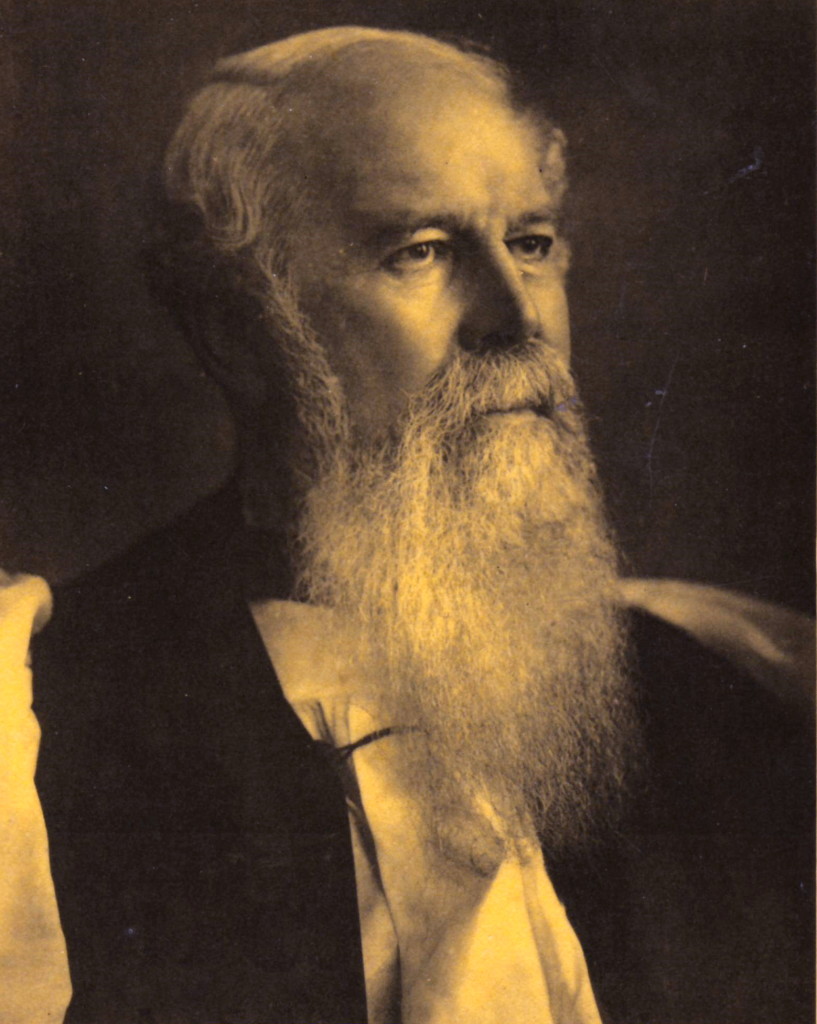
Comments
Your comment has been submitted and is awaiting moderation. Once approved, it will appear on this page.
Be the first to comment!