Bootstrap
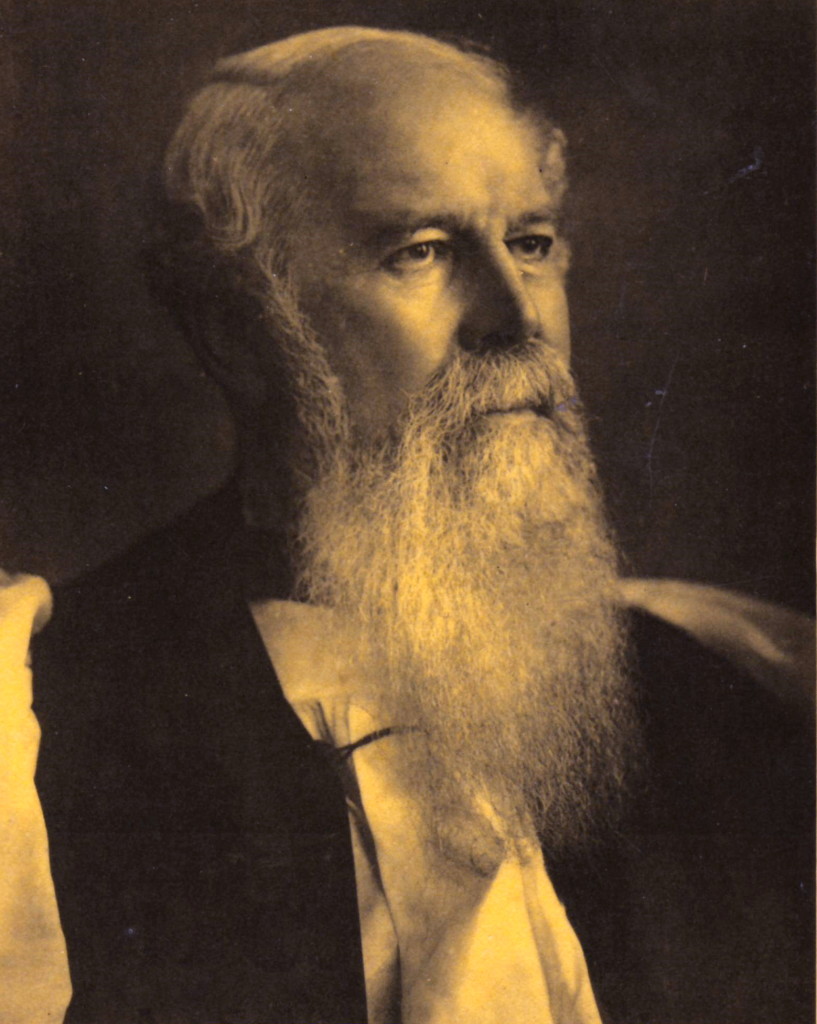
J.C. Ryle

Matthew 8

Matthew 8
J.C. Ryle October, 10 2019 Audio
0 Comments
You will find it helpful to READ the texts--as you LISTEN to the audios!
The TEXTS for the entire commentary can be bound here:
https://gracegems.org/Ryle/Matthew.htm

Sermon Transcript

Auto-generated transcript • May contain errors

100%
CHAPTER VIII. VERSES ONE TO FIFTEEN MIRACULOUS HEALING OF A LEPROSY, A PALSY, AND A FEVER. MATTHEW CHAPTER VIII. VERSES ONE TO FIFTEEN WHEN he was come down from the mountain, great multitudes followed him. And behold, there came a leper, and worshipped him, saying, Lord, if thou wilt, thou canst make me clean. And Jesus put forth his hand, and touched him, saying, I will, be thou clean. And immediately his leprosy was cleansed.

And Jesus saith unto him, See thou tell no man, but go thy way, shew thyself to the priest, and offer the gift that Moses commanded, for testimony unto them.

And when Jesus was entered into Capernaum, there came unto him a centurion, beseeching him, and saying, Lord, my servant lieth at home sick of the palsy, grievously tormented. And Jesus saith unto him, I will come and heal him.

The centurion answered and said, Lord, I am not worthy that thou shouldst come under my roof, but speak the word only, and my servant shall be healed. For I am a man under authority, having soldiers under me, and I say to this man, Go, and he goeth, and to another, Come, and he cometh, and to my servant, Do this, and he doeth it.

When Jesus heard it, he marveled, and said to them that followed, Verily I say unto you, I have not found so great a faith, no, not in Israel. And I say unto you, that many shall come from the east and west, and shall sit down with Abraham, and Isaac, and Jacob, in the kingdom of heaven.

But the children of the kingdom shall be cast out into the outer darkness. There shall be weeping and gnashing of teeth.

And Jesus saith unto the centurion, Go thy way, and as thou hast believed, so be it done unto thee. And his servant was healed in the selfsame hour.

And when Jesus was come into Peter's house, he saw his wife's mother laid, and sick with a fever. And he touched her hand, and the fever left her, and she arose, and ministered unto them.

The eighth chapter of St. Matthew's Gospel is full of our Lord's miracles. No less than five are specially recorded. There is a beautiful fitness in this. It was fitting that the greatest sermon ever preached should be immediately followed by mighty proof that the preacher was the Son of God.

Those who heard the Sermon on the Mount would be obliged to confess that, as none spake such words as this man, so also none did such works. The verses we have now read contain three great miracles. A leper is healed with a touch. A palsied person is made well by a word. A woman sick with a fever is restored in a moment to health and strength.

On the face of these three miracles, we may read three striking lessons. Let us examine them and lay them to heart. Let us learn, for one thing, how great is the power of our Lord Jesus Christ.

Leprosy is the most fearful disease by which a man's body can be afflicted. He that has it is like one dead while he lives. It is a complaint regarded by physicians as incurable. Yet Jesus says, Be thou clean, and immediately the leprosy was cleansed.

To heal a person of the palsy without even seeing him, by only speaking a word, is to do that which our minds cannot even conceive. Yet Jesus commands, and at once it is done.

To give a woman prostrate with a fever, not merely relief, but strength to do work in an instant, would baffle the skill of all the physicians on earth. Yet Jesus touched Peter's wife's mother, and she arose and ministered unto them.

These are the doings of One that is Almighty. There is no escape from the conclusion. This was the finger of God.

Exodus chapter 8 verse 19 Behold here a broad foundation for the faith of a Christian. We are told in the gospel to come to Jesus, to believe on Jesus, to live the life of faith in Jesus. We are encouraged to lean on Him, to cast all our care on Him, to repose all the weight of our souls on Him. We may do so without fear. He can bear all. He is a strong rock. He is almighty. It was a fine saying of an old saint, My faith can sleep sound on no other pillow than Christ's omnipotence. He can give life to the dead. He can give power to the weak. He can increase the strength to them that have no might. Let us trust Him and not be afraid. The world is full of snares. Our hearts are weak. But with Jesus, nothing is impossible.

Let us learn, for another thing, the mercifulness and compassion of our Lord Jesus Christ. The circumstances of the three cases we are now considering were all different. He heard the leper's pitiful cry, Lord, if thou wilt, thou canst make me clean. He was told of the centurion's servant, but he never saw him. He saw Peter's wife's mother, laid and sick of a fever. And we are not told that she spoke a word. Yet in each case the heart of the Lord Jesus was one and the same. In each case he was quick to show mercy, and ready to heal. Each poor sufferer was tenderly pitied, and each effectually relieved. Behold here another strong foundation for our faith. Our great High Priest is very gracious. He can be touched with the feelings of our infirmities. He is never tired of doing us good. He knows that we are a weak and feeble people in the midst of a weary and troublous world. He is as ready to bear with us and help us as he was eighteen hundred years ago. It is as true of him now as it was then. He despiseth not any. Job 36.5. No heart can feel for us so much as the heart of Christ.

Let us learn, in the last place, what a precious thing is the grace of faith. We know little about the centurion described in these verses. His name, his nation, his past history, are all hidden from us. But one thing we know, and that is, that he believed. Lord, he says, I am not worthy that thou shouldest come under my roof. Speak the word only, and my servant shall be healed. He believed, let us remember, when scribes and Pharisees were unbelievers. He believed, though a Gentile born, when Israel was blinded. And our Lord pronounced upon him the commendation which has been read all over the world from that time to this, I have not found so great faith, no, not in Israel. Let us lay firm hold on this lesson. It deserves to be remembered. To believe Christ's power and willingness to help, and to make a practical use of our belief, is a rare and precious gift. Let us be ever thankful if we have it. To be willing to come to Jesus as helpless, lost sinners, and commit our souls into His hands is a mighty privilege. Let us ever bless God if this willingness is ours, for it is His gift. Such faith is better than all other gifts and knowledge in the world. Many a poor converted heathen, who knows nothing but that he is sick of sin and trusts in Jesus, shall sit down in heaven, while many learned English scholars are rejected for evermore. Blessed indeed are they that believe!

What do we each know of this faith? This is the great question. Our learning may be small, but do we believe? Our opportunities of giving and working for Christ's cause may be few, But do we believe? We may neither be able to preach, nor write, nor argue for the gospel. But do we believe? May we never rest till we can answer this inquiry. Faith in Christ appears a small and simple thing to the children of this world. They see in it nothing great or grand. But faith in Christ is most precious in God's sight, and, like most precious things, is rare. By it true Christians live. By it they stand. By it they overcome the world. Without this faith, no one can be saved.

Section 21 of Expository Thoughts on the Gospel of St. Matthew by J. C. Ryle. Chapter 8, verses 16 to 27. Christ's Wisdom in Dealing with Professors. The Storm on the Lake Calmed.

Matthew Chapter 8, verses 16 to 26. When the evening was come, they brought unto him many that were possessed with devils, and he cast out the spirits with his word, and healed all that were sick, that it might be fulfilled which was spoken by Esaias the prophet, saying, Himself took our infirmities, and bare our sicknesses. Now when Jesus saw great magnitudes about him, he gave commandment to depart unto the other side. And a certain scribe came, and said unto him, Master, I will follow thee whithersoever thou goest. And Jesus saith unto him, The foxes have holes, and the birds of the air have nests, but the Son of Man hath not where to lay his head. And another of his disciples said unto him, Lord, suffer me first to go and bury my father. But Jesus said unto him, Follow me, and let the dead bury their dead. And when he was entered into a ship, his disciples followed him. And, behold, there arose a great tempest in the sea, insomuch that the ship was covered with the waves, but he was asleep. And his disciples came to him and awoke him, saying, Lord, save us, we perish. And he saith unto them, Why are ye fearful, O ye of little faith? Then he rose, and rebuked the winds and the sea, and there was a great calm. But the men marveled, saying, What manner of man is this, that even the winds and the sea obey him?

In the first part of these verses we see a striking example of our Lord's wisdom in dealing with those who professed a willingness to be His disciples. The passage throws so much light on a subject frequently misunderstood in these days, that it deserves more than ordinary attention. A certain scribe offers to follow our Lord whithersoever he goes. It was a remarkable offer, when we consider the class to which the man belonged. and the time at which it was made. But the offer receives a remarkable answer. It is not directly accepted, nor yet flatly rejected. The Lord only makes the solemn reply. The foxes have holes, and the birds of the air have nests. But the Son of Man hath not where to lay his head.

Another follower of our Lord next comes forward and asks to be allowed to bury his father, before going any further in the path of a disciple. The request seems, at first sight, a natural and lawful one. But it draws from our Lord's lips a reply no less solemn than that already referred to,â€"Follow me, and let the dead bury their dead. There is something deeply impressive in both these sayings. They ought to be well weighed by all professing Christians. They teach us plainly that people who show a desire to come forward and profess themselves true disciples of Christ should be warned plainly to count the cost before they begin. Are they prepared to endure hardship? Are they ready to carry the cross?

If not, they are not yet fit to begin. They teach us plainly that there are times when a Christian must literally give up all for Christ's sake, and when even such duties as attending to a parent's funeral must be left to be performed by others. Such duties some will always be ready to attend to, and at no time can they be put in comparison with the greater duty of preaching the gospel and doing Christ's work in the world.

It would be well for the churches of Christ if these sayings of our Lord were more remembered than they are. It may be well feared that the lesson they contain is too often overlooked by the ministers of the gospel, and that thousands are admitted to full communion who are never warned to count the cost. Nothing, in fact, has done more harm to Christianity than the practice of filling the ranks of Christ's army with every volunteer who is willing to make a little profession, and talk fluently of his experience.

It has been painfully forgotten that numbers alone do not make strength, and that there may be a great quantity of mere outward religion, while there is very little real grace. Let us all remember this. Let us keep back nothing from young professors and inquirers after Christ. Let us not enlist them on false pretenses. Let us tell them plainly that there is a crown of glory at the end, but let us tell them no less plainly that there is a daily cross in the way.

In the latter part of these verses we learn that true saving faith is often mingled with much weakness and infirmity. It is a humbling lesson, but a very wholesome one. We are told of our Lord and His disciples crossing the Sea of Galilee in a boat. A storm arises, and the boat is in danger of being filled with water by the waves that beat over it. Meanwhile, our Lord is asleep. The frightened disciples awake Him and cry to Him for help. He hears their cry and stills the waters with a word, so that there is a great calm. At the same time, He gently reproves the anxieties of His disciples.

Why are ye fearful, O ye of little faith? What a vivid picture we have here of the hearts of thousands of believers! How many have faith and love enough to forsake all for Christ's sake and follow Him whithersoever He goes, and yet are full of fears in the hour of trial! How many have grace enough to turn to Jesus in every trouble, crying, Lord, save us, and yet not grace enough to lie still, and believe in the darkest hour that all is well! Truly believers have reason indeed to be clothed with humility. Let the prayer, Lord, increase our faith, always form part of our daily petitions.

We never, perhaps, know the weakness of our faith, until we are placed in the furnace of trial and anxiety. Blessed and happy is that person who finds by experience that his faith can stand the fire, and that he can say with Job, Though he slay me, yet will I trust him.

Job 13. We have great reason to thank God that Jesus, our great High Priest, is very compassionate and tender-hearted. He knows our frame. He considers our infirmities. He does not cast off His people because of defects. He pities even those whom He reproves. The prayer even of little faith is heard and gets an answer.

Section 22 of Expository Thoughts on the Gospel of St. Matthew by J. C. Ryle

Chapter 8, verses 28 to 34

THE DEVIL CAST OUT OF A MAN IN THE COUNTRY OF THE GERGESENES

Matthew Chapter 8, verses 28 to 34

And when he was come to the other side of the country of the Gergesenes, there met him two possessed with devils, coming out of the tombs, exceeding fears, so that no man might pass by that way. And, behold, they cried out, saying, What have we to do with thee, Jesus, thou son of God? Art thou come hither to torment us before the time? And there was a good way off from them a herd of many swine feeding. So the devils besought him, saying, If thou cast us out, suffer us to go away into the herd of swine. And he said unto them, Go. And when they were come out, they went into the herd of swine. And, behold, the whole herd of swine ran violently down a steep place into the sea, and perished in the waters. And they that kept them fled, and went their ways into the city, and told everything, and what was befallen to the possessed of the devils. And, behold, the whole city came out to meet Jesus, and when they saw him, they besought him that he would depart out of their coasts.

The subject of these seven verses is deep and mysterious. The casting out of a devil is here described with special fullness. It is one of those passages which throws strong light on a dark and difficult point.

Let us settle it firmly in our minds that there is such a being as the devil. It is an awful truth, and one too much overlooked. There is an unseen spirit ever near us, of mighty power and full of endless malice against our souls. From the beginning of creation he has labored to injure man. Until the Lord comes the second time and binds him, he will never cease to tempt and practice mischief.

In the days when our Lord was upon earth, it is clear that He had a peculiar power over the bodies of certain men and women as well as over their souls. Even in our own times there may be more of this bodily possession than some suppose, though confessedly in far less degree than when Christ came in the flesh. But that the devil is ever near us in spirit, and ever ready to ply our hearts with temptations, ought never be forgotten.

Let us, in the next place, settle it firmly in our minds, that the power of the devil is limited. Mighty as he is, there is one mightier still. Keenly set as his will is on doing harm in the world, he can only work by permission. These very verses show us that the evil spirits know they can only go to and fro and ravage the earth until the time allowed them by the Lord of Lords. Art thou come to torment us, they say, before the time? Their very petition shows us that they could not even hurt one of the Gergesene swine unless Jesus, the Son of God, suffered them. Suffer us, they say, to go into the herd of swine.

Let us, in the next place, settle it in our minds that our Lord Jesus Christ is man's great deliverer from the power of the devil. He can redeem us not only from all iniquity and this present evil world, but from the devil. It was prophesied of old that he should bruise the serpent's head. He began to bruise that head when he was born of the Virgin Mary. He triumphed over that head when he died upon the cross. He showed his complete dominion over Satan by healing all that were oppressed of the devil when he was upon earth.

Our great remedy in all the assaults of the devil is to cry to the Lord Jesus and seek his help. He can break the chains that Satan casts around us and set us free. He can cast out every devil that plagues our hearts as surely as in the days of old. It would be miserable, indeed, to know that there is a devil ever near us, if we did not also know that Christ was able to save to the uttermost, because he ever liveth to make intercession for us.

Let us not leave this passage without observing the painful worldliness of the Gergesenes, among whom this miracle of casting out a devil was wrought. They besought the Lord Jesus to depart out of their coasts. They had no heart to feel for anything but the loss of their swine. They cared not that two fellow-creatures with immortal souls were freed from Satan's bondage. They cared not that there stood among them a greater than the devil, Jesus, the Son of God. They cared for nothing but that their swine were drowned and the hope of their gains gone. They ignorantly regarded Jesus as one who stood between them and their prophets, and they only wished to be rid of him.

There are only too many like the Gergesenes. There are thousands who'd care not one jot for Christ or Satan, so long as they can make a little more money and have a little more of the good things of this world. From this spirit may we be delivered. Against this spirit may we ever watch and pray. It is very common. It is awfully infectious.

Let us recollect every morning that we have souls to be saved, and that we shall one day die, and after that be judged. Let us beware of loving the world more than Christ. Let us beware of hindering the salvation of others, because we fear the increase of true religion may diminish our gains, or give us trouble. End of section 22
J.C. Ryle
About J.C. Ryle
John Charles Ryle (10 May 1816 — 10 June 1900) was an English evangelical Anglican bishop. He was the first Anglican bishop of Liverpool.
Broadcaster:

Comments

0 / 2000 characters
Comments are moderated before appearing.

Be the first to comment!

Pristine Grace Research Assistant

Pristine Grace Research Assistant

Ask me about articles, sermons, or theology from our library. I can also help you navigate the site.