Bootstrap
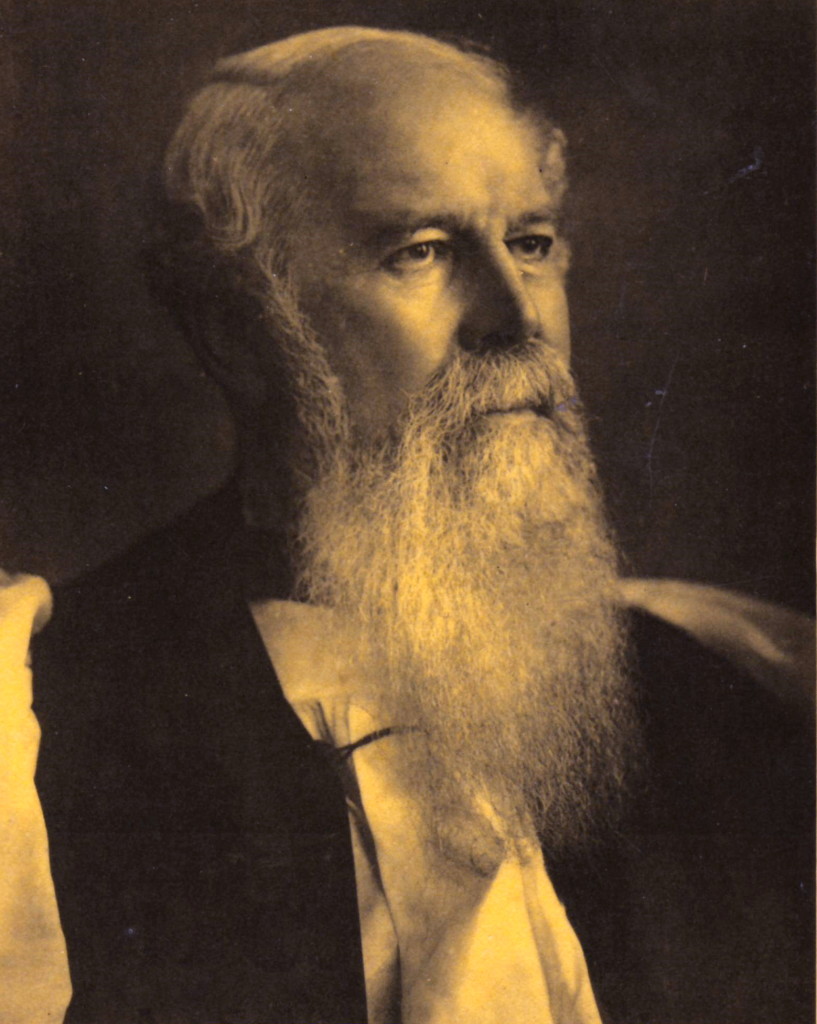
J.C. Ryle

Matthew 18

Matthew 18
J.C. Ryle October, 10 2019 Audio
0 Comments
You will find it helpful to READ the texts--as you LISTEN to the audios!
The TEXTS for the entire commentary can be bound here:
https://gracegems.org/Ryle/Matthew.htm

Sermon Transcript

Auto-generated transcript • May contain errors

100%
Section 55 of Expository Thoughts on the Gospel of St. Matthew by J. C. Ryle. Chapter 18, Verses 1 to 14. Necessity of Conversion and Humility. Reality of Hell. Matthew, Chapter 18, Verses 1 to 14.

At the same time came the disciples unto Jesus, saying, Who is the greatest in the kingdom of heaven? And Jesus called a little child unto him, and set him in the midst of them, and said, Verily I say unto you, Except ye be converted, and become as little children, ye shall not enter into the kingdom of heaven.

Whosoever therefore shall humble himself as this little child, the same is the greatest in the kingdom of heaven. And whoso shall receive one such little child in my name, receiveth me

But whoso shall offend one of these little ones, which believe in me, it were better for him that a millstone were hanged about his neck, and that he were drowned in the depth of the sea.

Woe unto the world because of offences! For it must needs be that offences come, but woe to that man by whom the offence cometh.

Wherefore, if thy hand or thy foot offend thee, cut them off, and cast them from thee, It is better for thee to enter into life halt, or maimed, rather than having two hands or two feet, to be cast into everlasting fire.

And if thine eye offend thee, pluck it out, and cast it from thee. It is better for thee to enter into life with one eye, rather than having two eyes, to be cast into hell-fire.

Take heed that ye despise not one of these little ones. For I say unto you, that in heaven their angels do always behold the face of my Father which is in heaven.

For the Son of Man is come to save that which was lost. How think ye, if a man have a hundred sheep, and one of them be gone astray, doth he not leave the ninety and nine, and goeth into the mountains, and seeketh that which is gone astray?

And if it so be that he find it, verily I say unto you, he rejoiceth more of that sheep than of the ninety and nine which went not astray.

Even so, it is not the will of your Father which is in heaven, that one of these little ones should perish.

The first thing that we are taught in these verses is the necessity of conversion, and of conversion manifested by childlike humility. The disciples came to our Lord with the question, Who is the greatest in the kingdom of heaven? They spoke as men half enlightened, and full of carnal expectations. They received an answer, well calculated to awaken them from their daydream, an answer containing a truth which lies at the very foundation of Christianity.

except ye be converted, and become as little children, ye shall not enter into the kingdom of heaven." Let these words sink down deeply into our hearts. Without conversion, there is no salvation. We all need an entire change of nature. Of ourselves we have neither faith, nor fear, nor love towards God. We must be born again. Of ourselves we are utterly unfit for dwelling in God's presence. Heaven would be no heaven to us if we were not converted. It is true of all ranks, classes, and orders of mankind. All are born in sin and children of wrath, and all, without exception, need to be born again and made new creatures. A new heart must be given to us, and a new spirit put within us. Old things must pass away, and all things must become new. It is a good thing to be baptized into the Christian church, and use Christian means of grace, but after all, are we converted? Would we know whether we are really converted? Would we know the test by which we must try ourselves? The surest mark of true conversion is humility. If we have really received the Holy Ghost, we shall show it by a meek and childlike spirit. Like children, we shall think humbly of our own strength and wisdom, and be very dependent on our Father in Heaven. Like children, we shall not seek great things in this world, and having food and raiment and a Father's love, we shall be content.

Truly, this is a heart-searching test. It exposes the unsoundness of many a so-called conversion. It is easy to be a convert from one party to another party, from one sect to another sect, from one set of opinions to another set of opinions. Such conversions save no one's soul. What we all want is a conversion from pride to humility, from high thoughts of ourselves to lowly thoughts of ourselves, from self-conceit to self-abasement, from the mind of the Pharisee to the mind of the publican. A conversion of this kind we must experience if we hope to be saved.

These are the conversions that are wrought by the Holy Ghost.

The next thing that we are taught in these verses is the great sin of putting stumbling blocks in the way of believers. The words of the Lord Jesus on this subject are peculiarly solemn. Woe unto the world because of offenses. Woe to that man by whom the offense cometh. We put offenses or stumbling blocks in the way of men's souls whenever we do anything to keep them back from Christ or to turn them out of the way of salvation. or to disgust them with true religion.

We may do it directly, by persecuting, ridiculing, opposing, or dissuading them from decided service of Christ. We may do it indirectly, by living a life inconsistent with our religious profession, and by making Christianity loathsome and distasteful by our own conduct. Whenever we do anything of the kind, it is clear, from our Lord's words, that we commit a great sin.

There is something very fearful in the doctrine here laid down. It ought to stir up within us great searchings of heart. It is not enough that we wish to do good in this world. Are we quite sure that we are not doing harm? We may not openly persecute Christ's servants, but are there none that we are injuring by our ways and our example? It is awful to think of the amount of harm that can be done by one inconsistent professor of religion. He gives a handle to the infidel. He supplies the worldly man with an excuse for remaining undecided. He checks the inquirer after salvation. He discourages the saints. He is, in short, a living sermon on behalf of the devil.

The last day alone will reveal the wholesale ruin of souls that offenses have occasioned in the Church of Christ. One of Nathan's charges against David was, Thou hast given great occasion to the enemies of the Lord to blaspheme. 2 Samuel chapter 12 verse 14.

The next thing that we are taught in these verses is the reality of future punishment after death. Two strong expressions are used by our Lord on this point. He speaks of being cast into everlasting fire. he speaks of being, cast into hell-fire. The meaning of these words is clear and unmistakable. There is a place of unspeakable misery in the world to come, to which all who die impenitent and unbelieving must ultimately be consigned. There is revealed in Scripture a fiery indignation which, sooner or later, will devour all God's adversaries. Hebrews chapter 10 verse 27 The same sure word which holds out a heaven to all who repent and are converted, declares plainly that there will be a hell for all the ungodly. Let no man deceive us with vain words upon this awful subject. Men have arisen in these latter days who profess to deny the eternity of future punishment, and repeat the devil's old argument that we shall not surely die. Genesis chapter 3 verse 4. Let none of their reasonings move us, however plausible they may sound. Let us stand fast in the old paths. The God of love and mercy is also a God of justice. he will surely requite. The flood in Noah's day, and the burning of Sodom, were meant to show us what he will one day do. No lips have ever spoken so clearly about hell as those of Christ himself. Hardened sinners will find out, to their cost, that there is such a thing as the wrath of the Lamb. The last thing we are taught in these verses is the value that God sets on the least and lowest of believers. It is not the will of your Father in Heaven that one of these little ones should perish. These words are meant for the encouragement of all true Christians, and not for little children only. The connection in which they are found with the parable of the hundred sheep and the one that went astray seems to place this beyond doubt. They are meant to show us that our Lord Jesus is a shepherd who cares tenderly for every soul committed to His charge. The youngest, the weakest, the sickliest of His flock is as dear to Him as the strongest. They shall never perish. None shall ever pluck them out of his hand. He will lead them gently through the wilderness of this world. He will not overdrive them a single day, lest any die. Genesis chapter 33, verse 13. He will carry them through every difficulty. He will defend them against every enemy. The saying which he spoke shall be literally fulfilled. Of them which thou gavest me, I have lost none." John, chapter 18, verse 9. With such a Saviour, who need fear beginning to be a thorough Christian? With such a Shepherd, who, having once begun, need fear being cast away? Section Fifty-Six of Expository Thoughts on the Gospel of St. Matthew by J. C. Ryle. Chapter Eighteen, Verses Fifteen to Twenty RULE FOR SETTLING DIFFERENCES AMONG CHRISTIANS NATURE OF CHURCH DISCIPLINE Matthew, Chapter Eighteen, Verses Fifteen to Twenty Moreover, if thy brother shall trespass against thee, go and tell him his fault between thee and him alone. If he shall hear thee, thou hast gained thy brother. But if he will not hear thee, then take with thee one or two more, that in the mouth of two or three witnesses every word may be established. And if he neglect to hear them, tell it unto the church. But if he neglect to hear the Church, let him be unto thee as a heathen man and a publican. Verily I say unto you, Whatsoever ye shall bind on earth shall be bound in heaven, and whatsoever ye shall loose on earth shall be loosed in heaven. Again I say unto you, That if two of you shall agree on earth as touching anything that they shall ask, it shall be done for them of my Father which is in heaven. for where two or three are gathered together in my name, there am I in the midst of them. These words of the Lord Jesus contain an expression which has been often misapplied. The command to hear the Church has been so interpreted as to contradict other passages of God's Word. It has been falsely applied to the authority of the whole visible Church in matters of doctrine, and so been made an excuse for the exercise of much ecclesiastical tyranny. But the abuse of Scripture truths must not tempt us to neglect the use of them. We must not turn away altogether from any text, because some have perverted it and made it poison.

Let us notice, in the first place, how admirable are the rules laid down by our Lord for the healing of differences among brethren. If we have unhappily received any injury from a fellow member of Christ's Church, the first step to be taken is to visit him alone and tell him his fault. He may have injured us unintentionally, as Abimelech did Abraham. Genesis, chapter 21, verse 26. His conduct may admit of explanation, like that of the tribes of Reuben, Gad, and Manasseh, when they built an altar as they returned to their own land. Joshua, chapter 22, verse 24. At any rate, this friendly, faithful, straightforward way of dealing is the most likely course to win a brother, if he is to be won. A soft tongue breaketh the bone. who can tell, but he may say at once, I was wrong, and make ample reparation.

If, however, this course of proceeding fails to produce any good effect, a second step is to be taken. We are to take with us one or two companions, and tell our brother of his fault in their presence and hearing. Who can tell but his conscience may be stricken, when he finds his misconduct made known, and he may be ashamed and repent? If not, we shall, at all events, have the testimony of witnesses, that we did all we could to bring our brother to a right mind, and that he deliberately refused, when appealed to, to make amends.

Finally, if this second course of proceeding prove useless, we are to refer the whole matter to the Christian congregation, of which we are members. We are to tell it to the Church. Who can tell but the heart which has been unmoved by private remonstrances, may be moved by the fear of public exposure? If not, there remains but one view to take of our brother's case. We must sorrowfully regard him as one who has shaken off all Christian principles, and will be guided by no higher motives than a heathen man and a publican.

The passage is a beautiful instance of the mingled wisdom and tender consideration of our Lord's teaching. What a knowledge it shows of human nature! Nothing does so much harm to the cause of religion as the quarrels of Christians. No stone should be left unturned, no trouble spared, in order to prevent their being dragged before the public. What a delicate thoughtfulness it shows for the sensitivity of poor human nature! Many a scandalous breach would be prevented if we were more ready to practice the rule of between thee and him alone. Happy would it be for the Church and the world if this portion of our Lord's teaching was more carefully studied and obeyed. Differences and divisions there will be, so long as the world stands. But how many of them would be extinguished at once if the course recommended in these verses was tried?

In the second place, let us observe what a clear argument we have in these verses for the exercise of discipline in a Christian congregation. Our Lord commands disagreements between Christians, which cannot be otherwise settled, to be referred to the decision of the Church, or Christian assembly to which they belong. Tell it, He says, to the Church. It is evident from this, that He intends every congregation of professing Christians, to take cognizance of the moral conduct of its members, either by the actions of the whole body collectively, or of heads and elders to whom its authority may be delegated. It is evident, also, that he intends every congregation to have the power of excluding disobedient and refractory members from participation in its ordinances.

If he refuse, he says, to hear the Church, let him be to thee as an heathen man and a He says not a word about temporal punishment and civil disabilities. Spiritual penalties are the only penalty he permits the Church to inflict, and when rightly inflicted, they are not to be lightly regarded. Whatsoever ye shall bind on earth shall be bound in heaven.

Such appears to be the substance of our Lord's teaching about ecclesiastical discipline. It is vain to deny that the whole subject is surrounded with difficulties. On no point has the influence of the world weighed so heavily on the action of churches. On no point have churches made so many mistakes. Sometimes on the side of sleepy remissness sometimes on the side of blind severity.

No doubt the power of excommunication has been fearfully abused and perverted, and, as Quisnel says, we ought to be more afraid of our sins than of all the excommunications in the world. Still, it is impossible to deny, with such a passage as this before us, that Church discipline is according to the mind of Christ, and, when wisely exercised, is calculated to promote a Church's health and well-being.

It can never be right that all sorts of people, however wicked and ungodly, should be allowed to come to the table of the Lord, no man letting or forbidding It is the bounded duty of every Christian to use his influence to prevent such a state of things. A perfect communion can never be attained in this world, but purity should be the mark at which we aim. An increasingly high standard of qualification for full church membership will always be found one of the best evidences of a prosperous church.

Let us observe, in the last place, what gracious encouragement Christ holds out to those who meet together in His name. He says, Where two or three are gathered together in my name, there am I in the midst of them. That saying is a striking proof of our Lord's divinity. God alone can be in more places than one at the same time.

There is comfort in these words for all who love to meet together for religious purposes, At every assembly for public worship, at every gathering for prayer and praise, at every missionary meeting, at every Bible reading, the King of Kings is present. Christ Himself attends. We may be often disheartened by the small number who are present on such occasions, compared to those who meet for worldly ends. We may sometimes find it hard to bear the taunts and ridicule of an ill-natured world, which cries like the enemy of old,â€"'What do these feeble people do?' But we have no reason for despondency, and we may boldly fall back on these words of Jesus.

At all such meetings we have the company of Christ Himself. There is a solemn rebuke in these words for all who neglect the public worship of God, and never attend meetings for any religious purpose. They turn their backs on the society of the Lord of Lords. They miss the opportunity of meeting Christ Himself. It avails nothing to say that the proceedings of religious meetings are marked by weakness and infirmity, or that as much good is got by staying at home as going to church. The words of our Lord should silence such arguments at once. Surely men are not wise when they speak contemptuously of any gathering where Christ is present.

May we all ponder these things. If we have met together with God's people for spiritual purposes in times past, let us persevere, and not be ashamed. If we have hitherto despised such meetings, let us consider our ways, and learn wisdom.

PARABLE OF THE UNFORGIVING SERVANT. MATTHEW CHAPTER XVIII VERSES 21-35.

Then came Peter to him, and said, Lord, how often shall my brother sin against me, and I forgive him? Till seven times, Jesus saith unto him, I say not unto thee, until seven times, but until seventy times seven. Therefore is the kingdom of heaven likened unto a certain king, which would take account of his servants. And when he had begun to reckon, one was brought unto him which owed him ten thousand talents. But forasmuch he had not to pay, his lord commanded him to be sold, and his wife, and children, and all that he had, and payment to be made.

The servant therefore fell down and worshipped him, saying, Lord, have patience with me, and I will pay thee all. Then the lord of that servant was moved with compassion, and loosed him, and forgave him the debt. But the same servant went out, and found one of his fellow-servants, which owed him a hundred pence, and laid hands on him, and took him by the throat, saying, Pay me that thou owest. and his fellow-servant fell down at his feet, and besought him, saying, Have patience with me, and I will pay thee all. And he would not, but went and cast him into prison till he should pay the debt.

So when his fellow-servants saw what was done, they were very sorry, and came and told unto their lord all that was done. Then his lord, after that he had called him, said unto him, O thou wicked servant! I forgave thee all that debt, because thou desirest me. Shouldest not thou also have had compassion on thy fellow-servant, even as I had pity on thee? And his lord was wroth, and delivered him to the tormentors, till he should pay all that was due unto him. So likewise shall my Heavenly Father do also unto you, if ye from your hearts forgive not every one his brother their trespasses.

In these verses, the Lord Jesus deals with a deeply important subject, the forgiveness of injuries. We live in a wicked world, and it is vain to expect that we can escape ill-treatment, however carefully we may behave. To know how to conduct ourselves when we are ill-treated is of great moment to our souls.

In the first place, the Lord Jesus lays it down as a general rule that we ought to forgive others to the uttermost. Peter puts the question, How often shall my brother sin against me, and I forgive him? Till seven times. He received for answer, I say not unto thee till seven times, but until seventy times seven. The rule here laid down must, of course, be interpreted with sober-minded qualification. Our Lord does not mean that offenses against the law of the land and the good order of society are to be passed over in silence. He does not mean that we are to allow people to commit thefts and assaults with impunity. All that He means is, that we are to study a general spirit of mercy and forgiveness towards our brethren. We are to bear much, and to put up with much, rather than quarrel. We are to look over much, and submit to much, rather than have any strife. We are to lay aside everything like malice, strife, revenge, and retaliation. Such feelings are only fit for heathens. They are utterly unworthy of a disciple of Christ.

What a happy world it would be if this rule of our Lord's was more known and better obeyed! How many of the miseries of mankind are occasioned by disputes, quarrels, lawsuits, and an obstinate tenacity about what men call their rights! many of them might be altogether avoided if men were more willing to forgive, and more desirous for peace. Let us never forget that a fire cannot go on burning without fuel. Just in the same way it takes two to make a quarrel. Let us each resolve by God's grace, that of these two we will never be one. Let us resolve to return good for evil, and blessing for cursing, and so melt down enmity, and change our foes into friends.

Romans chapter 12 and verse 20. It was a fine feature in Archbishop Cramner's character, that if you did him an injury, he was sure to be your friend.

In the second place, our Lord supplies us with two powerful motives for exercising a forgiving spirit. He tells us a story of a man who owed an enormous sum to his master and had nothing to pay. Nevertheless, at the time of reckoning his master had compassion on him and forgave him all. He tells us that this very man, after being forgiven himself, refused to forgive a fellow-servant a trifling debt of a few pence. He actually cast him into prison, and would not abate a jot of his demand. He tells us how punishment overtook this wicked and cruel man, who, after receiving mercy, ought surely to have shown mercy to others, And finally, he concludes the parable with the impressive words, So likewise shall my Heavenly Father do unto you, if ye from your hearts forgive not every one his brother their trespasses.

It is clear from this parable that one motive for forgiving others ought to be the recollection that we all need forgiveness at God's hands ourselves. Day after day we are coming short in many ways, leaving undone what we ought to do, and doing what we ought not to do. Day after day we require mercy and pardon. Our neighbors' offenses against us are mere trifles compared with our offenses against God. Surely it ill becomes poor erring creatures like us to be extreme in marking what is done amiss by our brethren, or slow to forgive it.

Another motive for forgiving others ought to be the recollection of the day of judgment, and the standard by which we shall all be tried in that day. There will be no forgiveness in that day for unforgiving people. Such people would be unfit for heaven. They would not be able to value a dwelling-place to which mercy is the only title, and in which mercy is the eternal subject of song. Surely if we mean to stand at the right hand when Jesus sits on the throne of His glory, we must learn, while we are on earth, to forgive.

Let these truths sink down deeply into our hearts. It is a melancholy fact that there are few Christian duties so little practiced as that of forgiveness. It is sad to see how much bitterness, unmercifulness, spite, hardness, and unkindness there is among men. Yet there are few duties so strongly enforced in the New Testament scriptures as this duty is, and few the neglect of which so clearly shuts a man out of the kingdom of God.

Would we give proof that we are at peace with God, washed in Christ's blood, born of the Spirit, and made God's children by adoption and grace? Let us remember this passage. Like our Father in heaven, let us be forgiving. Has any man injured us? Let us this day forgive him. As Leighton says, we ought to forgive ourselves little and others much.

Would we do good in the world? Would we have any influence on others and make them see the beauty of true religion? Let us remember this passage. Men who care not for doctrines can understand a forgiving temper.

Would we grow in grace ourselves, and become more holy in all our ways, words, and works? Let us remember this passage. Nothing so grieves the Holy Spirit, and brings spiritual darkness over the soul, as giving way to a quarrelsome and unforgiving temper.
J.C. Ryle
About J.C. Ryle
John Charles Ryle (10 May 1816 — 10 June 1900) was an English evangelical Anglican bishop. He was the first Anglican bishop of Liverpool.
Broadcaster:

Comments

0 / 2000 characters
Comments are moderated before appearing.

Be the first to comment!

Pristine Grace Research Assistant

Pristine Grace Research Assistant

Ask me about articles, sermons, or theology from our library. I can also help you navigate the site.