Bootstrap
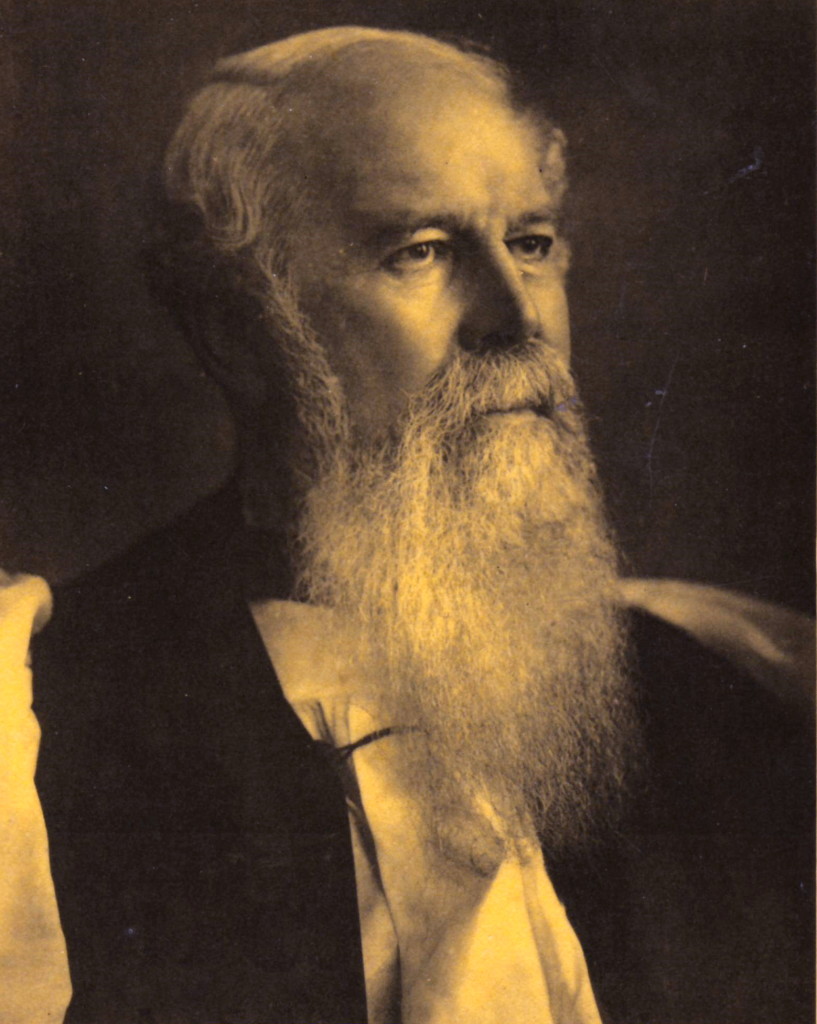
J.C. Ryle

Matthew 20

Matthew 20
J.C. Ryle October, 10 2019 Audio
0 Comments
You will find it helpful to READ the texts--as you LISTEN to the audios!
The TEXTS for the entire commentary can be bound here:
https://gracegems.org/Ryle/Matthew.htm

Sermon Transcript

Auto-generated transcript • May contain errors

100%
Section 61 of Expository Thoughts on the Gospel of St. Matthew by J. C. Ryle. Chapter 20, Verses 1 to 16

PARABLE OF THE LABORERS IN THE VINEYARD.

Matthew, Chapter 20, Verses 1 to 16.

For the kingdom of heaven is like unto a man that is a householder, which went out early in the morning to hire laborers into his vineyard. And when he had agreed with the labourers for a penny a day, he sent them into his vineyard.

And he went out about the third hour, and saw others standing idle in the market-place, and said unto them, Go ye also into the vineyard, and whatsoever is right I will give you. And they went their way.

Again he went out about the sixth and ninth hour, and did likewise.

About the eleventh hour he went out, and found others standing idle, and saith unto them, Why stand ye here all the day idle? They say unto him, Because no man hath hired us. He saith unto them, Go ye also into the vineyard, and whatever is right, that shall ye receive.

So when even was come, the lord of the vineyard saith unto his steward, Call the labourers, and give them their hire, beginning from the last unto the first.

And when they came that were hired about the eleventh hour, they received every man a penny. But when the first came, they supposed that they should have received more, and they likewise received every man a penny.

And when they had received it, they murmured against the good man of the house, saying, These last have wrought but one hour, and thou hast made them equal unto us, which have borne the burden and heat of the day.

But he answered one of them, and said, Friend, I do thee no wrong. Didst thou not agree with me for a penny? Take that thine is, and go thy way. I will give unto the last, even as unto thee. Is it not lawful for me to do what I will with mine own? Is thine eye evil, because I am good?

So that the last shall be first, and the first last. For many be called, but few chosen.

There are undeniable difficulties in the parable contained in these verses.

The key to the right explanation of them must be sought in the passage which concludes the last chapter.

There we find the Apostle Peter asking our Lord a remarkable question.

We have forsaken all and followed Thee. What shall we have, therefore?

There we find Jesus giving a remarkable answer.

He makes a special promise to Peter and his fellow disciples. they should one day sit on twelve thrones, judging the twelve tribes of Israel.

He makes a general promise to all who suffer loss for his sake, they shall receive a hundredfold and inherit everlasting life.

Now we must bear in mind that Peter was a Jew.

Like most Jews he had probably been brought up in much ignorance as to God's purposes respecting the salvation of the Gentiles,

In fact, we know from the Acts that it required a vision from heaven to take that ignorance away.

Furthermore, we must bear in mind that Peter and his fellow disciples were weak in faith and knowledge.

They were probably apt to attach a great importance to their own sacrifices for Christ's sake, and inclined to self-righteousness and self-conceit.

Both these points our Lord knew well.

He therefore speaks this parable for the special benefit of Peter and his companions.

He read their hearts.

He saw what spiritual medicine those hearts required, and supplied it without delay.

In a word, He checked their rising pride, and taught them humility. In expounding this parable, we need not inquire closely into the meaning of the penny, the marketplace, the steward, or the hours. Such inquiries often darken counsel by words without knowledge. Well, says Colovius, the theology of parables is not argumentative. The hint of Chrysostom deserves notice. He says, it is not right to search curiously, and word by word, into all things in a parable, but when we have learned the object for which it was composed, to reap this, and not to busy ourselves about anything further.

Two main lessons appear to stand out on the face of the parable, and to embrace the general scope of its meaning. let us content ourselves with these, too.

We learn in the first place that in the calling of nations to the professed knowledge of Himself, God exercises free, sovereign, and unconditional grace. He calls the families of the earth into the visible church at His own time, and in His own way. We see this truth wonderfully brought out in the history of God's dealings with the world, We see the children of Israel called and chosen to be God's people in the very beginning of the day. We see some of the Gentiles called at a later period by the preaching of the apostles. We see others being called in the present age by the labors of missionaries. We see others, like the millions of Chinese and Hindus, still standing idle because no man hath hired them.

And why is all this? we cannot tell. We only know that God loves to hide pride from churches, and to take away all occasion of boasting. He will never allow the older branches of His church to look contemptuously on the younger. His gospel holds out pardon and peace with God through Christ to the heathen of our own times, as fully as it did to St. Paul. The converted inhabitants of Tinevelli and New Zealand should be as fully admitted to heaven as the holiest patriarch who died 3500 years ago. The old wall between Jews and Gentiles is removed. There is nothing to prevent the believing heathen being a fellow heir and partaker of the same hope with the believing Israelites. The Gentiles converted at the eleventh hour of the world, shall be as really and truly heirs of glory as the Jews. They shall sit down with Abraham, and Isaac, and Jacob, in the kingdom of heaven, while many of the children of the kingdom are for ever cast out. The last shall indeed be first.

We learn, in the second place, that in the saving of individuals as well as in the calling of nations, God acts as a sovereign and gives no account of His matters. He has mercy on whom He will have mercy, and that too at His own time. Romans chapter 9 verse 15. This is a truth which we see illustrated on every side in the Church of Christ as a matter of experience, We see one man called to repentance and faith in the beginning of his days, like Timothy, and laboring in the Lord's vineyard for forty or fifty years. We see another man called at the eleventh hour, like the thief on the cross, and plucked like a brand out of the fire. One day a hard, impenitent sinner, and the next day in Paradise. And yet the whole tenor of the Gospel leads us to believe that both these men are equally forgiven before God. Both are equally washed in Christ's blood, and clothed in Christ's righteousness. Both are equally justified, both accepted, and both will be found at Christ's right hand in the last day. There can be no doubt that this doctrine sounds strange to the ignorant and inexperienced Christian. It confounds the pride of human nature. It leaves the self-righteous no room to boast. It is a leveling, humbling doctrine, and gives occasion to many a murmur. But it is impossible to reject it, unless we reject the whole Bible.

True faith in Christ, though it be but a day old, justifies a man before God as completely as the faith of him who has followed Christ for fifty years. The righteousness in which Timothy will stand at the Day of Judgment is the same as that of the penitent thief. Both will be saved by grace alone. Both will owe all to Christ.

We may not like this, but it is the doctrine of this parable, and not of this parable only, but of the whole New Testament. Happy is he who can receive the doctrine with humility. well says Bishop Hall, if some have cause to magnify God's bounty, none have cause to complain.

Before we leave this parable, let us arm our minds with some necessary cautions. It is a portion of Scripture that is frequently perverted and misapplied. Men have often drawn from it not milk, but poison.

Let us beware of supposing, from anything in this parable, that salvation is in the slightest degree to be obtained by works. To suppose this is to overthrow the whole teaching of the Bible. Whatever a believer receives in the next world is a matter of grace, and not of debt. God is never a debtor to us, in any sense whatsoever. when we have done all, we are unprofitable servants." Luke chapter 17, verse 10.

Let us beware of supposing, from this parable, that the distinction between Jews and Gentiles is entirely done away by the gospel. To suppose this is to contradict many plain prophecies, both of the Old Testament and new. In the matter of justification, there is no distinction between the believing Jew and the Greek, Yet Israel is still a special people and not numbered among the nations. God has many purposes concerning the Jews which are yet to be fulfilled.

Let us beware of supposing, from this parable, that all saved souls will have the same degree of glory. To suppose this is to contradict many plain texts of Scripture. The title of all believers, no doubt, is the same, the righteousness of Christ. But all will not have the same place in heaven. Every man shall receive his own reward, according to his own labor. 1 Corinthians chapter 3 verse 8

Finally, let us beware of supposing from this parable that it is safe for any one to put off repentance till the end of his days. To suppose this is a most dangerous delusion. The longer men refuse to obey Christ's voice, the less likely they are to be saved. Now is the accepted time. Now is the day of salvation. 2 Corinthians, chapter 6, verse 2.

Few are ever saved on their death-beds. One thief on the cross was saved that none should despair, but only one that none should presume. A false confidence in these words, the eleventh hour, has ruined thousands of souls.

Section 62 of Expository Thoughts on the Gospel of St. Matthew by J. C. Ryle.

Chapter 20, Verses 17 to 23. Christ's Announcement of His Coming Death. Mixture of Ignorance and Faith in True Disciples.

Matthew Chapter 20, Verses 17 to 23.

And Jesus, going up to Jerusalem, took the twelve disciples apart in the way, and said unto them, Behold, we go up to Jerusalem, and the Son of Man shall be betrayed unto the chief priests, and unto the scribes, and they shall condemn him to death, and shall deliver him to the Gentiles to mock, and to scourge, and to crucify him, and the third day he shall rise again, Then came to him the mother of Zebedee's children with her sons, worshipping him, and desiring a certain thing of him. And he said unto her, What wilt thou? she saith unto him, Grant that these my two sons may sit, the one on thy right hand, and the other on thy left, in thy kingdom.

Jesus answered and said, Ye know not what ye ask. Are ye able to drink of the cup that I shall drink of, and to be baptized with the baptism that I am baptized with?" They say unto him, We are able. And he saith unto them, Ye shall drink indeed of my cup, and be baptized with the baptism that I am baptized with. But to sit on my right hand, and on my left, is not mine to give, but it shall be given to them for whom it is prepared of my Father.

The first thing we should notice in these verses is the clear announcement which the Lord Jesus Christ makes of His own approaching death. For the third time we find Him telling His disciples the astounding truth that He, their wonder-working Master, must soon suffer and die. The Lord Jesus knew from the beginning all that was before him—the treachery of Judas Iscariot, the fierce persecution of the chief priests and scribes, the unjust judgment, the delivery of Pontius Pilate, the mocking, the scourging, the crown of thorns, the cross, The hanging between two malefactors, the nails, the spear—all, all were spread before his mind like a picture. How great an aggravation of suffering foreknowledge is, those know well who have lived in the prospect of some fearful surgical operation. Yet none of these things moved our Lord. He says, I was not rebellious, neither turned away back. I gave my back to the smiters, and my cheeks to them that plucked off the hair. I hid not my face from shame and spitting. He saw Calvary in the distance all his life through, and yet walked calmly up to it, without turning to the right hand or to the left. Surely there never was sorrow like unto his sorrow, or love like his love.

The Lord Jesus was a voluntary sufferer. When He died on the cross, it was not because He had not power to prevent it. He suffered intentionally, deliberately, and of His own free will. John chapter 10, verse 18. He knew that without shedding of His blood, there could be no remission of man's sin. He knew that He was the Lamb of God, who must die to take away the sin of the world. He knew that his death was the appointed sacrifice, which must be offered up to make reconciliation for iniquity. Knowing all this, he went willingly to the cross. His heart was set on finishing the mighty work he came into the world to do. He was well aware that all hinged on his own death, and that, without that death, his miracles and preaching would have done comparatively nothing for the world. No wonder that he thrice pressed on the attention of his disciples that he must needs Ty. Blessed and happy are they who know the real meaning and importance of the sufferings of Christ.

The next thing that we should notice in these verses is the mixture of ignorance and faith that may be found even in true-hearted Christians. We see the mother of James and John coming to our Lord with her two sons, and preferring on their behalf a strange petition. She asks that they may sit one on his right hand and the other on his left in his kingdom. She seems to have forgotten all he had just been saying about his suffering. Her eager mind can think of nothing but his glory. His plain warnings about the crucifixion appear to have been thrown away on her sons. Their thoughts were full of nothing but his throne and the day of his power.

There was much of faith in their request, but there was much more of infirmity. There was something to be commended, in that they could see in Jesus of Nazareth a coming king, but there was also much to blame, in that they could not remember that he was to be crucified before he could reign. Truly the flesh lusteth against the Spirit in all God's children, and Luther well remarks, the flesh ever seeks to be glorified before it is crucified.

There are many Christians, who are very like this woman and her sons. They see in part, and know in part, the things of God. They have faith enough to follow Christ, they have knowledge enough to hate sin and come out from the world, and yet there are many truths of Christianity, of which they are deplorably ignorant. They talk ignorantly, they act ignorantly, and commit many sad mistakes. Their acquaintance with the Bible is very scanty. Their insight into their own hearts is very small.

But we must learn from these verses to deal gently with such people, because the Lord has received them. We must not set them down as graceless and godless because of their ignorance. We must remember that true faith may lie at the bottom of their hearts, though there is much rubbish at the top. We must reflect that the sons of Zebedee, whose knowledge was at one time so imperfect, became at a later period pillars of the Church of Christ. Just so a believer may begin his course in much darkness, and yet prove finally a man mighty in the Scriptures, and a worthy follower of James and John.

The last thing we should notice in these verses is the solemn reproof which our Lord gives to the ignorant request of the mother of Zebedee's children and her two sons. He says to them, You know not what you ask. They had asked to share in their master's reward, but they had not considered that they must first be partakers in their master's sufferings.

1 Peter 4.13 They had forgotten that those who would stand with Christ in glory must drink of His cup and be baptized with His baptism. They did not see that those who carry the cross and those alone shall receive the crown. Well might our Lord say, He know not what ye ask.

But do we never commit the same mistake that the sons of Zebedee committed? Do we never fall into their error and make thoughtless, inconsiderate requests? Do we not often say things in prayer without counting the cost, and ask for things to be granted to us without reflecting on how much our supplications involve? These are heart-searching questions. It may well be feared that many of us cannot give them a satisfactory answer.

We ask that our souls may be saved and go to heaven when we die. It is a good request, indeed. But are we prepared to take up the cross and follow Christ? Are we willing to give up the world for his sake? Are we ready to put off the old man and put on the new, to fight, to labor, and to run so as to obtain? Are we ready to withstand a taunting world and endure hardships for Christ's sake? What shall we say? If we are not so ready, our Lord might say to us also, Ye know not what ye ask.

We ask that God would make us holy and good. It is a good request indeed. But are we prepared to be sanctified by any process that God in His wisdom may call on us to pass through? Are we ready to be purified by affliction, weaned from the world by bereavements, drawn nearer to God by losses, sicknesses, and sorrow? Alas, these are hard questions. But if we are not, our Lord might well say to us, Ye know not what ye ask.

Let us leave these verses with a solemn resolution to consider well what we are about, when we draw nigh to God in prayer. Let us beware of thoughtless, inconsiderate, and rash petitions. Well, might Solomon say, be not rash with thy mouth, and let not thine heart be hasty to utter anything before God.

Chapter 20, Verses 24 to 28

TRUE STANDARD OF GREATNESS AMONG CHRISTIANS

Matthew Chapter 20, Verses 24 to 28

And when the ten heard it, they were moved with indignation against the two brethren But Jesus called them unto him, and said, Ye know that the princes of the Gentiles exercise dominion over them, and they that are great exercise authority upon them. But it shall not be so among you. But whosoever will be great among you, let him be your minister, and whosoever will be chief among you, let him be your servant. Even as the Son of Man came not to be ministered unto, but to minister, and to give his life a ransom for many.

These verses are few in number, but they contain lessons of great importance to all professing Christians. Let us see what they are.

In the first place, we learn that there may be pride, jealousy, and love of preeminence even among true disciples of Christ. What saith the Scripture? When the ten heard what James and John had asked, they were moved with indignation against the two brethren. Pride is one of the oldest, and most mischievous, of sins. By it the angels fell, for they kept not their first estate. Jude, verse 6. Through pride Adam and Eve were seduced into eating the forbidden fruit. They were not content with their lot, and thought they would be as gods. From pride the saints of God received their greatest injuries after their conversion. Well says Hooker, Pride is a vice, which cleaveth so fast unto the hearts of men, that if we were to strip ourselves of all faults, one by one, we should undoubtedly find it the very last, and hardest to put off. It is a quaint but true saying of Bishop Hall, that Pride is the inmost coat which we put off last, and which we put on first.

In the second place, we learn that a life of self-denying kindness to others is the true secret of greatness in the Kingdom of Christ. What saith the Scripture? Whosoever will be great among you, let him be your minister. Whosoever will be chief among you, let him be your servant. The standard of the world, and the standard of the Lord Jesus, are indeed widely different. They are more than different, they are flatly contradictory one to the other. Among the children of this world, he is thought the greatest man who has the most land, most money, most servants, most rank, and most earthly power. Among the children of God, he is reckoned the greatest who does most to promote the spiritual and temporal happiness of his fellow creatures.

True greatness consists not in receiving, but in giving. Not in selfish absorption of good things, but in imparting good to others. Not in being served, but in serving. Not in sitting still and being ministered to, but in going about and ministering to others. The angels of God see far more beauty in the work of the missionary than in the work of the Australian digger for gold. They take far more interest in the labors of men like Howard and Judson than in the victories of generals, the political speeches of statesmen, or the council chambers of kings. Let us remember these things. Let us beware of seeking false greatness. Let us aim at that which alone is true. We may be sure that there is profound wisdom in that saying of our Lord's, It is more blessed to give than to receive. Acts 20, verse 35.

In the third place, we learn that the Lord Jesus Christ is intended to be the example of all true Christians. What saith the Scripture? We ought to serve one another, even as the Son of Man came, not to be ministered unto, but to minister.

The Lord God has mercifully provided His people with everything necessary to their sanctification. He has given those that follow after holiness the clearest of precepts, the best of motives, and the most encouraging of promises. But this is not all. He has furthermore supplied them with the most perfect pattern and example even the life of his own son. By that life he bids us frame our own. In the steps of that life he bids us walk. 1 Peter chapter 2 verse 21.

It is the model after which we must strive to mold our tempers, our words, and our works in this evil world. Would my master have spoken in this manner? Would my master have behaved in this way? These are the questions by which we ought daily to try ourselves.

How humbling this truth is! What searchings of heart it ought to raise within us! What a loud call it is to lay aside every weight, and the sin which most easily besets us! What manner of persons ought they to be who profess to copy Christ! What poor, unprofitable religion is that which makes a man content with talking an empty profession, while his life is unholy and unclean.

Alas, those who know nothing of Christ as an example will find at last that he knows nothing of them as his saved people. He that saith he abideth in him ought himself also to walk even as he walked. 1 John 2.6

Finally, let us learn from these verses that Christ's death was an atonement for sin. What sayeth the scripture? The Son of Man came to give His life a ransom for many. This is the mightiest truth in the Bible. Let us take care that we grasp it firmly and never let it go.

Our Lord Jesus Christ did not die merely as a martyr or as a splendid example of self-sacrifice and self-denial. Those who can see no more than that in his death fall infinitely short of the truth. They lose sight of the very foundation stone of Christianity, and miss the whole comfort of the Gospel.

Christ died as a sacrifice for man's sin. He died to make reconciliation for man's iniquity. He died to purge our sins by the offering of Himself. He died to redeem us from the curse which we all deserved, and to make sanctification to the justice of God which must otherwise have condemned us. Never let us forget this.

We are all by nature debtors. We owe to our Holy Maker ten thousand talents, and are not able to pay. We cannot atone for our own transgressions, for we are weak and frail, and only adding to our debts every day. But, blessed be God, what we could not do, Christ came into the world to do for us. What we could not pay, He undertook to pay for us. To pay it He died for us upon the cross. He offered Himself to God. Hebrews 9.14. He suffered for sin, the just for the unjust, that He might bring us to God. 1 Peter 3.18.

Once more, never let us forget this. Let us not leave these verses without asking ourselves, where is our humility? What is our idea of true greatness? What is our example? What is our hope? Life, eternal life, depends on the answer we give to these questions. Happy is that man who is truly humble, strives to do good in his day, walks in the steps of Jesus, and rests all his hopes on the ransom paid for him by Christ's blood. Such man is a true Christian.

CHAPTER XX. VERSES TWENTY-NINE TO THIRTY-FOUR. HEALING OF TWO BLIND MEN. MATTHEW CHAPTER XX. VERSES TWENTY-NINE TO THIRTY-FOUR.

And as they departed from Jericho, a great multitude followed him. And, behold, two blind men, sitting by the wayside, when they heard that Jesus passed, cried out, saying, Have mercy on us, O Lord, thou Son of David! and the multitude rebuked them, because they should hold their peace. But they cried the more, saying, Have mercy on us, O Lord, thou Son of David!

And Jesus stood still, and called them, and said, What will ye that I shall do unto you? They say unto him, Lord, that our eyes may be opened, so Jesus had compassion on them and touched their eyes, and immediately their eyes received sight, and they followed him.

In these verses we have a touching picture of an event in our Lord's history. He heals two blind men sitting by the wayside near Jericho. The circumstances of the event contain several deeply interesting lessons, which all professing Christians would do well to remember.

For one thing, let us mark what strong faith may sometimes be found where it might least have been expected. Blind as these two men were, they believed that Jesus was able to help them. They never saw any of our Lord's miracles. They knew Him only by hearsay, and not face to face. And yet, as soon as they heard that He was passing by, they cried out, saying, Have mercy on us, O Lord, thou Son of David!

Such faith may well put us to shame. With all our books of evidence, and lives of saints, and libraries of divinity, how few know anything of simple, childlike confidence in Christ's mercy and Christ's power. and even among those who are believers, the degree of faith is often strangely disproportionate to the privileges enjoyed. Many an unlearned man, who can only read his New Testament with difficulty, possesses the spirit of unhesitating trust in Christ's advocacy, while deeply read divines are harassed by questionings and doubts, They who, humanly speaking, ought to be first are often last, and the last first.

For another thing, let us mark what wisdom there is in using every opportunity for getting good for our souls. These blind men sat by the wayside. Had they not done so, they might never have been healed. Jesus never returned to Jericho, and they might never have met with him again.

Let us see, in this simple fact, the importance of diligence in the use of means of grace. Let us never neglect the house of God, never forsake the assembling of ourselves with God's people, never omit the reading of our Bibles, never let drop the practice of private prayer. These things, no doubt, will not save us without the grace of the Holy Ghost. Thousands make use of them and remain dead in trespass and sin. But it is just in the use of these things that souls are converted and saved. They are the ways in which Jesus walks. It is they who sit by the wayside who are likely to be healed.

Do we know the diseases of our souls? Do we feel any desire to see the Great Physician? If we do, we must not wait in idleness, saying, If I am to be saved, I shall be saved. We must arise and go to the road where Jesus walks. Who can tell? But He will soon pass by for the last time. Let us sit daily by the wayside. For another thing, let us mark the value of pains and perseverance in seeking Christ. These blind men were rebuked by the multitude that accompanied our Lord. Men told them to hold their peace. But they were not to be silenced in this way. They felt their need of help. They cared nothing for the check which they received. They cried the more, saying, Have mercy on us, O Lord, thou Son of David!

We have in this part of their conduct a most important example. We are not to be deterred by opposition or discouraged by difficulties when we begin to seek the salvation of our souls. We must pray always and not faint. Luke 18, verse 1. We must remember the parable of the importunate widow and the friend who came to borrow bread at midnight. Like them, we must press our petitions at the throne of grace and say, I will not let thee go, except thou bless me. Genesis chapter 32 verse 26

Friends, relatives, and neighbors may say unkind things and reprove our earnestness. We may meet with coldness and want of sympathy, where we might have looked for help. But let none of these things move us. If we feel our diseases and want to find Jesus, the Great Physician, if we know our sins and desire to have them pardoned, let us press on. The violent take the kingdom by force.

Finally, let us mark how gracious the Lord Jesus is to those who seek Him. He stood still and called the blind men. He kindly asked them what it was that they desired. He heard their petition and did what they requested. He had compassion on them and touched their eyes and immediately their eyes received sight. We see here an illustration of that old truth which we can never know too well, the mercifulness of Christ's heart toward the sons of men.

The Lord Jesus is not only a mighty Savior, but merciful, kind, and gracious to a degree that our minds cannot conceive. Well might the Apostle Paul say, that the love of Christ passeth knowledge. Ephesians chapter 3 verse 19. Like him, let us pray that we may know more of that love. We need it when we first begin our Christian course, poor, trembling penitents and babes in grace. We need it afterwards as we travel along the narrow way, often erring, often stumbling, and often cast down. We shall need it in the evening of our days, when we go down the valley of the shadow of death.

Let us then grasp the love of Christ firmly, and keep it daily before our minds. We shall never know, till we wake up in the next world, how much we are indebted to it.
J.C. Ryle
About J.C. Ryle
John Charles Ryle (10 May 1816 — 10 June 1900) was an English evangelical Anglican bishop. He was the first Anglican bishop of Liverpool.
Broadcaster:

Comments

0 / 2000 characters
Comments are moderated before appearing.

Be the first to comment!

Pristine Grace Research Assistant

Pristine Grace Research Assistant

Ask me about articles, sermons, or theology from our library. I can also help you navigate the site.