Bootstrap
J.C. Ryle

Matthew 23

Matthew 23
J.C. Ryle October, 10 2019 Audio
0 Comments
You will find it helpful to READ the texts--as you LISTEN to the audios!
The TEXTS for the entire commentary can be bound here:
https://gracegems.org/Ryle/Matthew.htm

Sermon Transcript

Auto-generated transcript • May contain errors

100%
Section 73 of Expository Thoughts on the Gospel of St. Matthew, by J. C. Ryle. Chapter 23, Verses 1 to 12. Christ's Warning Against the Teaching of the Scribes and Pharisees. Matthew, Chapter 23, Verses 1 to 12. Then spake Jesus to the multitude, and to his disciples, saying, The scribes and the Pharisees sit on Moses's seat. All therefore whatsoever they bid you observe, that observe and do. But do not ye after their works, for they say and do not. For they bind heavy burdens and grievous to be born, and lay them on men's shoulders, but they themselves will not move them with one of their fingers. But all their works they do for to be seen of men. They make broad their phylacteries, and enlarge the borders of their garments. and love the uppermost rooms at feasts, and the chief seats in the synagogues, and greetings in the markets, and to be called of men, Rabbi, Rabbi. But be ye not called Rabbi, for one is your Master, even Christ, and all ye are brethren. And call no man your Father upon the earth, for one is your Father which is in heaven, neither be ye called masters, for one is your master, even Christ. But he that is greatest among you shall be your servant, and whosoever shall exalt himself shall be abased, and he that shall humble himself shall be exalted."

We are now beginning a chapter which in one respect is the most remarkable in the four Gospels. It contains the last words which the Lord Jesus ever spoke within the walls of the temple. These last words consist of a withering exposure of the scribes and Pharisees, and a sharp rebuke of their doctrines and practices. Knowing full well that his time on earth was drawing to a close, our Lord no longer keeps back his opinion of the leading teachers of the Jews. Knowing that he would soon leave his followers alone, like sheep among wolves, he warns them plainly against the false shepherds, by whom they were surrounded. The whole chapter is a signal example of boldness and faithfulness in denouncing error. It is a striking proof that it is possible for the most loving heart to use the language of stern reproof. Above all, it is an awful evidence of the guilt of unfaithful teachers. So long as the world stands, this chapter ought to be a warning and a beacon to all ministers of religion. No sins are so sinful as theirs in the sight of Christ.

In the twelve verses which begin the chapter we see firstly the duty of distinguishing between the office of a false teacher and his example. The scribes and Pharisees sat in Moses' seat. Rightly or wrongly, they occupied the position of the chief public teachers of religion among the Jews. However unworthily they filled the place of authority, their office entitled them to respect. But while their office was respected, their bad lives were not to be copied. And although their teaching was to be adhered to, so long as it was scriptural, it was not to be observed when it contradicted the word of God. to use the words of Brentius. They were to be heard when they taught what Moses taught, but no longer. That such was our Lord's meaning is evident from the whole tenor of the chapter we are reading. False doctrine is there denounced, as well as false practice. The duty here placed before us is one of great importance. There is a constant tendency in the human mind to run into extremes. If we do not regard the office of the minister with idolatrous veneration, we are apt to treat it with indecent contempt. Against both these extremes we have need to be on our guard. However much we may disapprove of a minister's practice, or dissent from his teaching, we must never forget to respect his office. We must show that we can honor the commission, whatever we may think of the officer that holds it.

The example of St. Paul, on a certain occasion, is worthy of notice. I wist not, brethren, that he was the high priest, for it is written, Thou shalt not speak evil of the ruler of thy people. Acts, chapter 23, verse 5.

We see, secondly, in these verses, that inconsistency, ostentation, and love of preeminence, among professors of religion, are specially displeasing to Christ. As to inconsistency, it is remarkable that the very first thing our Lord says of the Pharisees is, that they say and do not. They required from others what they did not practice themselves.

As to ostentation, our Lord declares that they did all their works to be seen of men. They had their phylacteries, or strips of parchment, with texts written on them, which many Jews wore on their clothes, made of an excessive size. They had the borders, or fringes of their garments, which Moses bade the Israelites to wear as a remembrance of God, made of an extravagant width. Numbers, chapter 15, verse 38. All this was done to attract notice, and to make people think how holy they were.

As to love of preeminence, our Lord tells us that the Pharisees loved to have the chief seats given to them in public places, and to have flattering titles addressed to them. All these things our Lord holds up to reprobation. Against all, He would have us watch and pray. They are soul-ruining sins. How can ye believe which receive honour one of another? John chapter 5 verse 44.

Happy would it have been for the Church of Christ if this passage had been more deeply pondered and the spirit of it more implicitly obeyed. The Pharisees are not the only people who have imposed austerities on others, and effected a sanctity of apparel, and loved the praise of man. The annals of Church history show that only too many Christians have walked closely in their steps. May we remember this and be wise. It is perfectly possible for a baptized Englishman to be in spirit a thorough Pharisee.

We see, in the third place, from these verses, that Christians must never give to any man the titles and honors which are due to God alone and to His Christ. We are to call no man father on earth. The rule here laid down must be interpreted with proper scriptural qualification. We are not forbidden to esteem ministers very highly in love for their work's sake. Even St. Paul, one of the humblest saints, called Titus his own son in the faith, and says to the Corinthians, I have begotten you through the gospel.

But still we must be very careful that we do not insensibly give to ministers a place and an honor which do not belong to them. We must never allow them to come between ourselves and Christ. The very best are not infallible. They are not priests who can atone for us. They are not mediators who can undertake to manage our soul's affairs with God. They are men of like passions with ourselves, needing the same cleansing blood and the same renewing spirit, set apart to a high and holy calling, but still, after all, only men.

Let us never forget these things. Such cautions are always useful. Human nature would always rather lean on a visible minister than an invisible Christ. We see, in the last place, that there is no grace which should distinguish the Christian so much as humility. He that would be great in the eyes of Christ must aim at a totally different mark from that of the Pharisees. His aim must be, not so much to rule as to serve the Church. Well, says Baxter, Church greatness consisteth in being greatly serviceable. The desire of the Pharisee was to receive honor and to be called master. The desire of the Christian must be to do good, and to give himself and all that he has to the service of others. Truly this is a high standard, but a lower one must never content us.

The example of our blessed Lord, the direct command of the apostolic epistles, both alike require us to be clothed with humility. Let us seek that blessed grace day by day. None is so beautiful, however much despised by the world. None is such an evidence of saving faith, and true conversion to God. None is so often commended by our Lord. Of all His sayings, hardly any is so often repeated as that which concludes the passage we have now read. He that shall humble himself shall be exalted.

CHAPTER XXIII. VERSES THIRTEEN TO THIRTY-THREE.

But woe unto you, scribes and Pharisees, hypocrites! For ye shut up the kingdom of heaven against men. For ye neither go in yourselves, neither suffer ye them that are entering to go in.

Woe unto you, scribes and Pharisees! Hypocrites, for ye devour widows' houses, and for a pretense make long prayer, therefore ye shall receive the great damnation.

Woe unto you, scribes and Pharisees! Hypocrites, for ye compass sea and land to make one prostylite, and when he is made, ye make him twofold more the child of hell than yourselves.

Woe unto you, ye blind guides, which say, Whosoever shall swear by the temple, it is nothing, but whosoever shall swear by the gold of the temple, he is a debtor. Ye fools and blind! For weather is greater, the gold, or the temple that sanctifyeth the gold. And whosoever shall swear by the altar, it is nothing. But whosoever sweareth by the gift that is upon it, he is guilty. He fools and blind. For whether is greater, the gift, or the altar that sanctifieth the gift? Whoso therefore shall swear by the altar, sweareth by it, and by all things thereon. And whoso shall swear by the temple, sweareth by it, and by him that dwelleth therein. And he that shall swear by heaven, sweareth by the throne of God, and by him that sitteth thereon.

Woe unto you, scribes and Pharisees, hypocrites! For ye pay tithe of mint and anise and cumin, And have omitted the weightier matters of the law, Judgment, mercy, and faith. These ought ye to have done, And not to leave the other undone. He blind guides which strain at a gnat, And swallow a camel.

Woe unto you, scribes and Pharisees, hypocrites! For ye make clean the outside of the cup and of the platter, but within they are full of extortion and excess. Thou blind Pharisee, cleanse first that which is within the cup and platter, that the outside of them may be clean also.

Woe unto you, scribes and Pharisees, hypocrites! For ye are like unto white and sepulchres, which indeed appear beautiful outward, but are full of dead men's bones, and of all uncleanness. Even so ye also outwardly appear righteous unto men, but within ye are full of hypocrisy and iniquity,

Woe unto you, scribes and Pharisees, hypocrites, because ye build the tombs of the prophets, and garnish the sepulchres of the righteous. And say, if we had been in the days of our fathers, we would not have been partakers with them in the blood of the prophets. Wherefore ye be witnesses unto yourselves, that ye are the children of them which killed the prophets. Fill ye up, then, the measure of your fathers. ye serpents, ye generation of vipers! How can ye escape the damnation of hell?"

We have in these verses the charges of our Lord against the Jewish teachers ranged under eight heads. Standing in the midst of the temple, with a listening crowd around him, he publicly denounces the main errors of the scribes and Pharisees in unsparing terms. Eight times he uses the solemn expression, woe unto you. Seven times he calls them hypocrites, twice he speaks of them as blind guides, twice as fools and blind, once as serpents and a generation of vipers. Let us mark that language well. It teaches a solemn lesson. It shows how utterly abominable the spirit of the scribes and Pharisees is in God's sight, in whatever form it may be found.

Let us glance shortly at the eight charges which our Lord brings forward, and then seek to draw from the whole passage some general instruction.

The first woe in the list is directed against the systematic opposition of the scribes and Pharisees to the progress of the gospel. They shut up the kingdom of heaven. They would neither go in themselves, nor suffer others to go in. They rejected the warning voice of John the Baptist. They refused to acknowledge Jesus, when he appeared among them, as the Messiah. They tried to keep back Jewish inquirers. They would not believe the gospel themselves, and they did all in their power to prevent others believing it. This was a great sin.

The second woe in the list is directed against the covetousness and self-aggrandizing spirit of the scribes and Pharisees. They devoured widows' houses, and for a pretense made long prayer. They imposed on the credulity of weak and unprotected women, by an affectation of great devoutness, until they were regarded as their spiritual directors. They scrupled not to abuse the influence thus unrighteously obtained, to their own temporal advantage, and in a word to make money by their religion. This again was a great sin.

The third woe in the list is directed against the zeal of the scribes and Pharisees for making partisans. They compassed sea and land to make one proselyte. They labored incessantly to make men join their party and adopt their opinions. They did this from no desire to benefit men's souls in the least, or to bring them to God. They only did it to swell the ranks of their sect, and to increase the number of their adherents, and their own importance. Their religious zeal arose from sectarianism, and not from the love of God. This was also a great sin.

The fourth woe in the list is directed against the doctrines of the scribes and Pharisees about oaths. They drew subtle distinctions between one kind of oath and another. They taught the Jesuitical tenant that some oaths were binding on men, while others were not. They attached greater importance to oaths sworn by the gold offered to the temple than to oaths sworn by the temple itself. By so doing they brought the Third Commandment into contempt, and by making men overrate the value of alms and oblations, advanced their own interests. This practice of tampering with oaths was well known among the heathen as a feature in the Jewish character. It is a striking fact that Martial, the Roman poet, specially refers to it. The fifth woe in the list is directed against the practice of the scribes and Pharisees to exalt trifles in religion above serious things, to put the last things first and the first last. They made great ado about tithing mint and other garden herbs, as if they could not be too strict in their obedience to God's law. And yet at the same time they neglected great plain duties such as justice, charity, and honesty. This again was a great sin.

The sixth and seventh woes in the list possess too much in common to be divided. They are directed against a general characteristic of the religion of the scribes. They set outward purity and decency above inward sanctification and purity of heart. They made it a religious duty to cleanse the outside of their cups and platters, but neglected their own inward man. They were like white and sepulchers, clean and beautiful externally, but within full of all corruption. Even so, they outwardly appeared righteous, but within were full of hypocrisy and iniquity. This also was a great sin.

The last woe in the list is directed against the affected veneration of the scribes and Pharisees for the memory of the dead saints. They built the tombs of the prophets and garnished the sepulchres of the righteous. And yet their own lives proved that they were of one mind with those who killed the prophets. Their own conduct was a daily evidence that they liked dead saints better than living ones. The very men that pretended to do honor to dead prophets could see no beauty in a living Christ. This also was a great sin.

A passage from the Berlenberger Bible on this subject is sufficiently striking to deserve an insertion. Ask in Moses' times, who were the good people? They will be Abraham, Isaac, and Jacob, but not Moses. He should be stoned. Ask in Samuel's times, who were the good people, and they would be Moses and Joshua, but not Samuel. Ask in the time of Christ, who were such. They would be all the former prophets with Samuel, but not Christ and his apostles. The Latin proverbs, mortui na mordent and siddhivas dumodo non vivas, are both illustrative of the same truth.

Such is the melancholy picture which our Lord gives of Jewish teachers. Let us turn from the contemplation of it with sorrow and humiliation. It is a fearful exhibition of the morbid anatomy of human nature. It is a picture which unhappily has been reproduced over and over again in the history of the Church of Christ. There is not a point in the character of the scribes and Pharisees in which it might not be easily shown that persons calling themselves Christians have often walked in their steps.

NOTE. I cannot avoid the opportunity of here expressing my firm conviction that our Lord's sayings in this chapter are meant to bear a prophetical signification, and to apply to corruptions which he foresaw would spring up in his professing Church. Beyond doubt there is a most unhappy similarity between the doctrines and practices of the scribes and Pharisees, and many of the leading corruptions of the Church of Rome.

Let us learn from the whole passage how deplorable was the condition of the Jewish nation when our Lord was upon the earth. When such were the teachers, what must have been the miserable darkness of the taught! Truly the iniquity of Israel had come to the full. It was high time indeed for the Son of Righteousness to arise and the gospel to be preached.

Let us learn from the whole passage how abominable is hypocrisy in the sight of God. These scribes and Pharisees are not charged with being thieves or murderers, but with being hypocrites to the very core. Whatever we are in our religion, let us resolve never to wear a cloak. Let us by all means be honest and real. Let us learn from the whole passage how awfully dangerous is the position of an unfaithful minister. It is bad enough to be blind ourselves. It is a thousand times worse to be a blind guide. Of all men none is so culpably wicked as an unconverted minister, and none will be judged so severely.

It is a solemn saying about such as one, he resembles an unskillful pilot, he does not perish alone. Finally, let us beware of supposing from this passage that the safest course in religion is to make no profession at all. This is to run into a dangerous extreme. It does not follow that there is no such thing as true profession, because some men are hypocrites. It does not follow that all money is bad, because there is much counterfeit coin. Let not hypocrisy prevent our confessing Christ, or move us from our steadfastness, if we have confessed Him. Let us press on, looking unto Jesus, and resting on Him, praying daily to be kept from error, and saying with David, Let my heart be sound in thy statutes.

Section 75 of Expository Thoughts on the Gospel of St. Matthew by J. C. Ryle. Chapter 23, verses 34 to 39. Christ's Last Public Words to the Jews.

Matthew chapter 23, verses 34 to 39.

Wherefore, behold, I send unto you prophets, and wise men, and scribes, and some of them ye shall kill and crucify, and some of them ye shall scourge in your synagogues, and persecute them from city to city, that upon you may come all the righteous blood shed upon the earth, from the blood of righteous Abel, unto the blood of Zacharias, son of Barachias, whom ye slew between the temple and the altar,

Verily I say unto you, all these things shall come upon this generation.

O Jerusalem, Jerusalem, thou that killest the prophets, and stonest them which are sent unto thee, how often would I have gathered thy children together, even as a hen gathereth her chickens under her wings, and ye would not.

Behold, your house is left unto you desolate. For I say unto you, ye shall not see me henceforth till ye shall say, Blessed is he that cometh in the name of the Lord."

These verses form the conclusion of our Lord Jesus Christ's address on the subject of the scribes and Pharisees. They are the last words which he ever spoke as a public teacher in the hearing of the people. The characteristic tenderness and compassion of our Lord shine forth in a striking manner at the close of His ministry. Though He left His enemies in unbelief, He shows that He loved and pitied them to the last.

We learn in the first place, from these verses, that God often takes great pains with ungodly men. He sent the Jews prophets and wise men and scribes. He gave them repeated warnings. He sent them message after message. He did not allow them to go on sinning without rebuke. They could never say that they were not told when they did wrong. This is the way in which God generally deals with unconverted Christians. He does not cut them off in their sins without a call to repentance. He knocks at the door of their hearts by sickness and afflictions. He assails their consciences by sermons or by the advice of friends. He summons them to consider their ways by opening the grave under their eyes and taking away from them their idols. They often know not what it all means. They are often blind and deaf to all his gracious messages. But they will see his hand at last, though perhaps too late. They will find that God spake once, yea, twice, but they perceived it not.

Job chapter 33, verse 14. They will discover that they too, like the Jews, had prophets, and wise men, and scribes sent to them. There was a voice in every providence, turn ye, turn ye, why will ye die?

Ezekiel chapter 33 verse 11. We learn in the second place from these verses that God takes notice of the treatment which his messengers and ministers receive and will one day reckon for it.

The Jews, as a nation, had often given the servants of God most shameful usage. They had often dealt with them as enemies, because they told them the truth. Some they had persecuted, and some they had scourged, and some they had even killed. They thought, perhaps, that no account would be required of their conduct, but our Lord tells them they were mistaken. There was an eye that saw all their doings. there was a hand that registered all innocent blood they shed, in books of everlasting remembrance.

The dying words of Zacharias, who was slain between the temple and the altar, would be found after eight hundred and fifty years not to have fallen to the ground. He said as he died,

It is remarkable that the Zacharias here spoken of is described in Chronicles as the son of Jehoiada. Our Lord speaks of him as the son of Barakias. This discrepancy has led some to suppose that the Zacharias here spoken of could not be the one who was murdered in the days of Joash, but an entirely different person. but there seems no sufficient reason for this supposition. By far the most satisfactory explanation appears to be that the father of Zacharias had two names, Jehoiada and Barachias. It was not at all uncommon among the Jews to have two names. Matthew was also called Levi, and Jude Thaddeus.

Yet a few years, and there would be such an inquisition for blood at Jerusalem as the world had never seen, the holy city would be destroyed. The nation which had murdered so many prophets would itself be wasted by famine, pestilence, and the sword, and even those that escaped would be scattered to the four winds and become, like Cain the murderer, fugitives and vagabonds upon the earth.

We all know how literally these sayings were fulfilled. Well might our Lord say, Verily all these things shall come upon this generation. It is good for us all to mark this lesson well. We are too apt to think bygones are bygones, and that things which to us are past and done and old will never be raked up again. But we forget that with God one day is as a thousand years, and that the events of a thousand years ago are as fresh in His sight as the events of this very hour.

God requireth that which is past, and above all God will require an account of the treatment of His saints. The blood of the primitive Christians shed by the Roman emperors, the blood of the Valenzes and Albigenses, and the sufferers at the massacre of St. Bartholomew, the blood of the martyrs who were burned at the time of the Reformation, and of those who have been put to death by the Inquisition. All! All will yet be accounted for.

It is an old saying that the millstones of God's justice grind slowly, but they grind very fine, The world will yet see that there is a God that judgeth in the earth. Psalm 58 verse 11. Let those who persecute God's people in the present day take heed what they are doing. Let them know that all who injure or ridicule or mock or slander others on account of their religion, commit a great sin. Let them know that Christ takes notice of everyone who persecutes his neighbor because he is better than himself, or because he prays, reads his Bible, and thinks about his soul.

He lives who said, He that toucheth you toucheth the apple of my eye. Zechariah chapter 2 verse 8. The judgment day will prove that the king of kings will reckon with all who insult his servants.

We learn, in the last place, from these verses, that those who are lost forever are lost through their own fault. The words of our Lord Jesus Christ are very remarkable. He says, I would have gathered thy children together, and ye would not. There is something peculiarly deserving of notice in this expression. It throws light on a mysterious subject, and one which is often darkened by human explanations. It shows that Christ has feelings of pity and mercy for many who are not saved, and that the grand secret of man's ruin is his want of will.

Impotent as man is by nature, unable to think a good thought of himself, without power to turn himself to faith and calling upon God, he still appears to have a mighty ability to ruin his own soul. Powerless as he is to good, he is still powerful to evil. We say rightly that a man can do nothing of himself, but we must always remember that the seed of impotence is his will. A will to repent and believe no man can give himself, but a will to reject Christ and have his own way, every man possesses by nature. And if not saved at last, that will shall prove to have been his destruction.

Ye will not come to me, says Christ, that ye might have life. Let us leave this subject with the comfortable reflection that with Christ nothing is impossible. The hardest heart can be made willing in the day of His power. Grace beyond doubt is irresistible. But never let us forget that the Bible speaks of man as a responsible being, and that it says of some, Ye do always resist the Holy Ghost. Acts chapter 7 verse 51

Let us understand that the ruin of those who are lost is not because Christ is not willing to save them, nor yet because they wanted to be saved but could not, but because they would not come to Christ. Let the ground we take up be always that of the passage we are now considering. Christ would gather men, but they will not to be gathered. Christ would save men, but they will not to be saved. Let it be a subtle principle in our religion that man's salvation, if saved, is holy of God, and that man's ruin, if lost, is holy of himself. The evil that is in us is all our own. The good, if we have any, is all of God. The saved in the next world will give God all the glory. The lost in the next world will find that they have destroyed themselves. Hosea chapter 13 verse 9.

End of section 75.
J.C. Ryle
About J.C. Ryle
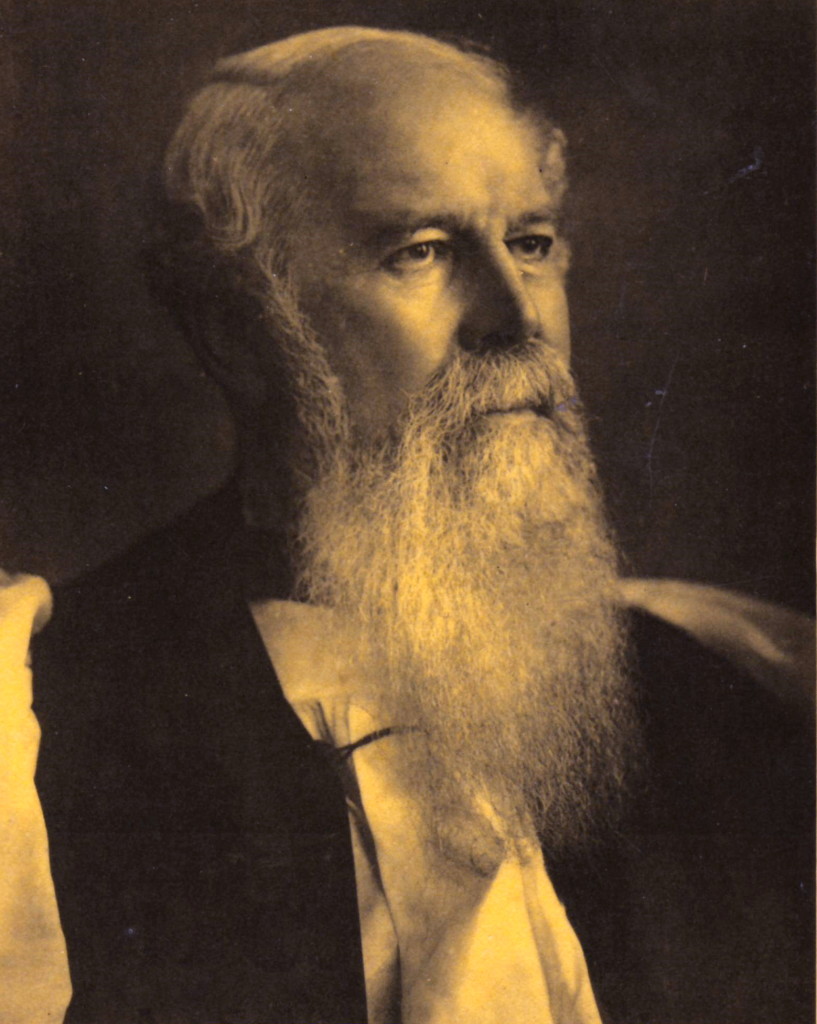
John Charles Ryle (10 May 1816 — 10 June 1900) was an English evangelical Anglican bishop. He was the first Anglican bishop of Liverpool.
Broadcaster:

Comments

0 / 2000 characters
Comments are moderated before appearing.

Be the first to comment!