You will find it helpful to READ the texts--as you LISTEN to the audios!
The TEXTS for the entire commentary can be bound here: https://gracegems.org/Ryle/Mark.htm
Sermon Transcript
Auto-generated transcript • May contain errors
100%
Section 9 of Expository Thoughts on the Gospel of St. Mark by J. C. Ryle. Chapter 3, Verses 1 to 12.
THE MAN WITH THE WITHERED HAND HEALED ON THE SABBATH DAY. CHRIST WATCHED BY HIS ENEMIES AND GRIEVED.
Mark, Chapter 3, Verses 1 to 12.
And he entered again into the synagogue, and there was a man there which had a withered hand. And they watched him, whether he would heal him on the Sabbath day, that they might accuse him. And he saith unto the man which had the withered hand, Stand forth. And he said unto them, Is it lawful to do good on the Sabbath days, or to do evil, to save life, or to kill? But they held their peace. And when he had looked round about on them with anger, being grieved for the hardness of their hearts, he saith unto the man, Stretch forth thine hand. And he stretched it out, and his hand was restored, whole as the other.
And the Pharisees went forth, and straightway took counsel with the Herodians against him, how they might destroy him. But Jesus withdrew himself with his disciples to the sea, and a great multitude from Galilee followed him, and from Judea, and from Jerusalem, and from Edmura, and from beyond Jordan. And they about Tyre and Sidon, a great multitude, when they had heard what great things he did, came unto him. And he spake to his disciples, that a small ship should wait on him because of the multitude, lest they should throng him. for he had healed many, insomuch that they pressed upon him for to touch him as many as had plagues. And unclean spirits, when they saw him, fell down before him, and cried, saying, Thou art the Son of God. And he straightly charged them that they should not make him known.
These verses show us our Lord again working a miracle. He heals a man in the synagogue which had a withered hand, always about his father's business, always doing good, doing it in the sight of enemies as well as of friends. Such was the daily tenor of our Lord's earthly ministry. And He left us an example that we should follow His steps.
1 Peter chapter 2 verse 21.
Blessed indeed are those Christians who strive, however feebly, to imitate their Master.
Let us observe in these verses how our Lord Jesus Christ was watched by His enemies. We read that they watched Him, whether He would heal Him on the Sabbath day, that they might accuse Him. What a melancholy proof we have here of the wickedness of human nature. It was the Sabbath day when these things happened. It was in the synagogue where men were assembled to hear the word and worship God. Yet even on the day of God, and at the time of worshipping God, these wretched formalists were plotting mischief against our Lord.
The very men who pretended to such strictness and sanctity in little things were full of malicious and angry thoughts in the midst of the congregation. Proverbs chapter 5 verse 14. Christ's people must not expect to fare better than their Master. They are always watched by an ill-natured and spiteful world. Their conduct is scanned with a keen and jealous eye. Their ways are noted and diligently observed. They are marked men. They can do nothing without the world's noticing it. Their dress, their expenditure, their employment of time, their conduct in all the relations of life, are all rigidly and closely remarked. Their adversaries wait for their halting, and if at any time they fall into an error, the ungodly rejoice. It is good for all Christians to keep this before their minds. Wherever we go, and whatever we do, let us remember that, like our Master, we are watched. The thought should make us exercise a holy jealousy over all our conduct, that we may do nothing to cause the enemy to blaspheme. It should make us diligent to avoid even the appearance of evil. Above all, it should make us pray much to be kept in our tempers, tongues, and daily public demeanor.
That Savior who was watched Himself knows how to sympathize with His people, and to supply grace to help in time of need.
Let us observe, in the second place, the great principle that our Lord lays down about Sabbath observance. He teaches that it is lawful to do good on the Sabbath. This principle is taught by a remarkable question. He asks those around him whether it was lawful to do good or evil on the Sabbath days, to save life or to kill. Was it better to heal this poor sufferer before him with the withered hand or to leave him alone? Was it more sinful to restore a person to health on the Sabbath than to plot murder and nourish hatred against an innocent person, as they were doing at that moment against himself? Was he to be blamed for saving a life on the Sabbath? Were they blameless who were desirous to kill?
No wonder that before such a question as this, our Lord's enemies held their peace. It is plain from these words of our Lord that no Christian need ever hesitate to do a really good work on the Sunday. A real work of mercy, such as ministering to the sick or relieving pain, may always be done without scruple. The holiness with which the fourth commandment invests the Sabbath day is not in the least degree invaded by anything of this kind.
But we must take care that the principle here laid down by our Lord is not abused and turned to bad account. We must not allow ourselves to suppose that the permission to do good implied that every one might find his own pleasure on the Sabbath. The permission to do good was never meant to open the door to amusements, worldly festivities, travelling, journeying, and sensual gratification. It was never intended to license the Sunday railway train, or the Sunday steamboat, or the Sunday exhibition. These things do good to no one, and do certain harm to many. They rob many a servant of his seventh day's rest. They turn the Sunday of thousands into a day of hard toil.
Let us beware of perverting our Lord's words from their proper meaning. Let us remember what kind of doing good, on the Sabbath, His blessed example sanctioned. Let us ask ourselves whether there is the slightest likeness between our Lord's works on the Sabbath and those ways of spending the Sabbath for which many contend, who yet dare to appeal to our Lord's example. Let us fall back on the plain meaning of our Lord's words, and take our stand on them. He gives us a liberty to do good on Sunday, but for feasting, sightseeing, party-giving, and excursions, He gives no liberty at all.
Let us observe, in the last place, the feelings which the conduct of our Lord's enemies called forth in His heart. We are told that He looked round about on them with anger, being grieved for the hardness of their hearts. This expression is very remarkable and demands special attention. It is meant to remind us that our Lord Jesus Christ was a man like ourselves in all things, sin only accepted. Whatever sinless feelings belong to the constitution of man, our Lord partook of, and knew by experience. We read that he marveled, that he rejoiced, that he wept, that he loved, and here we read that he felt anger. It is plain from these words that there is an anger which is lawful, right, and not sinful. There is an indignation which is justifiable, and on some occasions may be properly manifested,
The words of Solomon and St. Paul both seem to teach the same lesson. The north wind driveth away rain, so doth an angry countenance a backbiting tongue. Be ye angry, and sin not. Proverbs 25.23, Ephesians 4.26
Yet it must be confessed that the subject is full of difficulty. Of all the feelings that a man's heart experiences, there is none, perhaps, which so soon runs into sin as the feeling of anger. There is none which once excited seems less under control. There is none which leads on to so much evil. The length to which ill-temper, irritability, and passion will carry even godly men, all must know. The history of the contention of Paul and Barnabas at Antioch, and the story of Moses being provoked till he spake unadvisedly with his lips, are familiar to every Bible reader. The awful fact that passionate words are a breach of the sixth commandment is plainly taught in the Sermon on the Mount.
And yet here we see that there is anger which is lawful. Let us leave this subject with an earnest prayer, that we may all be enabled to take heed to our spirit in the matter of anger. We may rest assured that there is no human feeling which needs so much cautious guarding as this. A sinless wrath is a rare thing. The wrath of man is seldom for the glory of God. In every case a righteous indignation should be mingled with grief and sorrow for those who cause it, even as it was in the case of our Lord. And this, at all events, we may be sure of. It is better never to be angry than to be angry in sin.
Footnote. In connection with this subject, Bishop Butler's Sermon on Resentment deserves perusal. He says, at the conclusion of it, That passion, from whence men take occasion to run into the dreadful sins of malice and revengeâ€"even that passion, as implanted in our nature by God, is not only innocent, but a generous movement of mind. It is, in itself, and in its original, no more than indignation against injury and wickedness, that which is the only deformity in the creation, and the only reasonable object of abhorrence and dislike.
Section 10 of EXPOSITORY THOUGHTS ON THE GOSPEL OF SAINT MARK by J. C. Ryle CHAPTER III. VERSES THIRTEEN TO TWENTY-ONE ORDINATION OF THE TWELVE APOSTLES CHRIST'S ZEAL MISUNDERSTOOD BY HIS FRIENDS MARK CHAPTER III. VERSES THIRTEEN TO TWENTY-ONE
And he goeth up into a mountain, and calleth unto him whom he would, and they came unto him. And he ordained twelve, that they should be with him, and that he might send them forth to preach, and to have power to heal sicknesses, and to cast out devils. And Simon he surnamed Peter, and James the son of Zebedee, and John the brother of James, and he surnamed them Boanerges, which is the sons of thunder. and Andrew, and Philip, and Bartholomew, and Matthew, and Thomas, and James the son of Alphaeus, and Thaddeus, and Simon the Canaanite, and Judas Iscariot, which also betrayed him.
And they went into a house. And the multitude cometh together again, so that they could not so much as eat bread. And when his friends heard of it they went out to lay hold on him, for they said, He is beside himself.
The beginning of this passage describes the appointment of the Twelve Apostles. It is an event in our Lord's earthly ministry, which should always be read with deep interest. What a vast amount of benefit these few men have conferred on the world! The names of a few Jewish fishermen are known and loved by millions all over the globe, while the names of many kings and rich men are lost and forgotten. It is they who do good to souls who are had in everlasting remembrance.
Psalm 112, verse 6. Let us notice in these verses how many of the twelve who are here named have been called to be disciples before they were ordained apostles. There are six, at least, out of the number, whose first call to follow Christ is specially recorded. These six are Peter and Andrew, James and John, Philip and Matthew. In short, there can be little doubt that eleven of our Lord's apostles were converted before they were ordained.
It ought to be the same with all ministers of the gospel. They ought to be men who have been first called by the Spirit before they are set apart for the great work of teaching others. The rule should be the same with them as it was with the Apostles, first converted, then ordained. It is impossible to overrate the importance of this to the interests of true religion. Bishops and presbyteries can never be too strict and particular in the inquiries they make about the spiritual character of candidates for orders. An unconverted minister is utterly unfit for his office. How can he speak experimentally of that grace which he has never tasted himself? How can he commend that Savior to his people, whom he himself only knows by name? How can he urge on souls the need of that conversion and new birth, which he himself has not experienced?
Miserably mistaken are those parents who persuade their sons to become clergymen, in order to obtain a good living, or follow a respectable profession. What is it but persuading them to say what is not true, and to take the Lord's name in vain? None do such injury to the cause of Christianity as unconverted, worldly ministers. They are a support to the infidel, a joy to the devil, and an offense to God.
Let us notice, in the second place, the nature of the office to which the apostles were ordained. They were to be with Christ. They were to be sent forth to preach. They were to have power to heal sicknesses. They were to cast out devils. These four points deserve attention. They contain much instruction. Our Lord's twelve apostles, beyond doubt, were a distinct order of men. They had no successors when they died. Strictly and literally speaking, there is no such thing as apostolical succession. No man can really be called a successor of the apostles, unless he can work miracles, and teach infallibly, as they did.
But still, in saying this, we must not forget that in many things the apostles were intended to be patterns and models for all ministers of the gospel. Bearing this in mind, we must draw most useful lessons from this passage as to the duties of a faithful minister. Like the apostles, the faithful minister ought to keep up-close communion with Christ. He should be much with Him. His fellowship should be with the Son. 1 John 1.3. He should abide in Him. He should be separate from the world, and daily sit, like Mary, at Jesus' feet, and hear His word. He should study Him, copy Him, drink into His Spirit, and walk in His steps, should strive to be able to say, when he enters the pulpit, That which we have seen and heard declare we unto you."
1 John 1 verse 3 Like the apostles, the faithful minister ought to be a preacher. This must ever be his principal work, and receive the greatest part of his thoughts. He must place it above the administration of the sacraments. He must exalt it above the reading of forms. An unpreaching minister is of little use to the Church of Christ. He is a lampless lighthouse, a silent trumpeter, a sleeping watchman, a painted fire.
Like the Apostles, the faithful minister must labor to do good in every way. Though he cannot heal the sick, he must seek to alleviate sorrow, and to increase happiness among all with whom he has to do. He must strive to be known as the Comforter, the Counselor, the Peacemaker, the Helper, and the Friend of all. Men should know Him, not as one who rules and domineers, but as one who is their servant for Jesus' sake.
Like the apostles, the faithful minister must oppose every work of the devil. Though not called now to cast out evil spirits from the body, he must be ever ready to resist the devil's devices, and to denounce his snares for the soul. He must expose the tendency of races, theatres, balls, gambling, drunkenness, sabbath, profanation, and sensual gratifications. Every age has its own peculiar temptations. Many are the devices of Satan. But whatever be the direction in which the devil is most busy, there ought the minister to be, ready to confront and withstand him.
How great is the responsibility of ministers! How heavy their work, if they do their duty! How much they need the prayers of all praying people, in order to support and strengthen their hands! No wonder that St. Paul so often says to the churches, Pray for us!
Let us notice, in the last place, how our Lord Jesus Christ's zeal was misunderstood by His enemies. We are told that they went out to lay hold of Him, for they said, He is beside Himself. There is nothing in this fact that needs surprise us. The prophet who came to anoint Jehu was called a mad fellow. 2Kings 9.11 Festus told Paul that he was mad. Few things show the corruption of human nature more clearly than man's inability to understand zeal in religion. Zeal about money, or science, or war, or commerce, or business, is intelligible to the world, But zeal about religion is too often reckoned foolishness, fanaticism, and the sign of a weak mind. If a man injures his health by study, or excessive attention to business, no fault is found. He is a diligent man. But if he wears himself out with preaching, or spends his whole time in doing good to souls, the cry is raised, he is an enthusiast, and righteous over much.
The world is not altered. The things of the spirit are always foolishness to the natural man. 1 Corinthians 2.14. Let it not shake our faith, if we have to drink of the same cup as our blessed Lord. Hard as it may be to flesh and blood to be misunderstood by our relations, we must recollect it is no new thing. Let us call to mind our Lord's words. He that loveth father and mother more than me is not worthy of me. Jesus knows the bitterness of our trials. Jesus feels for us. Jesus will give us help. Let us bear patiently the unreasonableness of unconverted men, even as our Lord did. Let us pity their blindness and want of knowledge, and not love them one whit the less. Above all, let us pray that God would change their hearts. Who can tell, but the very persons who now try to turn us away from Christ may one day become new creatures, see all things differently, and follow Christ themselves.
Section 11 of Expository Thoughts on the Gospel of St. Mark by J. C. Ryle.
CHAPTER III. VERSES TWENTY-TWO TO THIRTY.
WARNING AGAINST DIVISIONS.
A FULLNESS OF GOSPEL FORGIVENESS.
ETERNAL DAMNATION.
Mark chapter 3, verses 22 to 30.
And the scribes which came down from Jerusalem said, He hath Baal-zebub, and by the prince of the devils casteth he out devils.
And he called them unto him, and said unto them in parables, How can Satan cast out Satan?
And if a kingdom be divided against itself, that kingdom cannot stand.
And if a house be divided against itself, that house cannot stand.
and if Satan rise up against himself and be divided, he cannot stand, but hath an end.
No man can enter into a strong man's house and spoil his goods, except he will first bind the strong man, and then he will spoil his house.
Verily I say unto you, All sin shall be forgiven unto the sons of men, and blasphemies, wherewithsoever they shall blaspheme, but he that shall blaspheme against the Holy Ghost hath never forgiveness, but is in danger of eternal damnation, because they said he hath an unclean spirit.
" We all know how painful it is to have our conduct misunderstood and misrepresented when we are doing right. It is a trial which our Lord Jesus Christ had to endure continually, all through His earthly ministry. We have an instance in the passage before us. The scribes which came down from Jerusalem saw the miracles which He worked. They could not deny their reality. What then did they do? They accused our blessed Savior of being in league and union with the devil. They said, He hath Baalzebub, and by the prince of devils casteth he out devils.
In our Lord's answer to this wicked accusation, there are expressions which deserve special attention. Let us see what lessons they contain for our use.
We ought to notice, in the first place, how great is the evil of dissensions and divisions. This is a lesson which is strongly brought out in the beginning of our Lord's reply to the scribes. He shows the absurdity of supposing that Satan would cast out Satan, and so help to destroy his own power. He appeals to the notorious fact, which even his enemies must allow, that there can be no strength where there is division. If a kingdom be divided against itself, that kingdom cannot stand.
This truth is one which does not receive sufficient consideration. On no point has the abuse of the right of private judgment produced so much evil. The divisions of Christians are one great cause of the weakness of the visible Church. They often absorb energy, time, and power, which might have been well bestowed on better things. They furnish the infidel with a prime argument against the truth of Christianity. They help the devil. Satan indeed is the chief promoter of religious divisions. If he cannot extinguish Christianity, he labors to make Christians quarrel with one another, and to set every man's hand against his neighbor. None knows better than the devil that to divide is to conquer.
Let us resolve, so far as in us lies, to avoid all differences, dissensions, and disputes in religion. Let us loathe and abhor them as the plague of the churches. We cannot be too jealous about all saving truths, but it is easy to mistake morbid scrupulosity for conscientiousness, and zeal about mere trifles for zeal about the truth. Nothing justifies separation from a church but the separation of that church from the gospel. Let us be ready to concede much and make many sacrifices for the sake of unity and peace.
We ought to notice, in the second place, what a glorious declaration our Lord makes in these verses about the forgiveness of sins. He says, All sins shall be forgiven to the sons of men, and blasphemies wherewithsoever they shall blaspheme, These words fall lightly on the ears of many persons. They see no particular beauty in them. But to the man who is alive to his own sinfulness, and deeply sensible of his need of mercy, these words are sweet and precious.
The sins of backsliders from Christ, like Peter, all, all may be forgiven. The blood of Christ can cleanse all the way. The righteousness of Christ can cover all and hide all from God's eyes. The doctrine here laid down is the crown and glory of the gospel. The very first thing it proposes to man is free pardon, full forgiveness, complete remission, without money and without price. Through this man is preached unto you the forgiveness of sins, and by him all that believe are justified from all things.
Let us lay hold on this doctrine without delay, if we never received it before. It is for us, as well as for others. We, too, this very day, if we come to Christ, may be completely forgiven. Though our sins have been as scarlet, they shall be white as snow. Isaiah chapter 1 verse 18
Let us cleave firmly to this doctrine, if we have received it already. We may sometimes feel faint and unworthy and cast down, but if we have really come to Jesus by faith, our sins are clean forgiven. They are cast behind God's back, blotted out of the book of His remembrance, sunk into the depths of the sea. Let us believe and not be afraid.
We ought to notice, in the last place, that it is possible for a man's soul to be lost forever in hell. The words of our Lord are distinct and express. He speaks of one who hath never forgiveness, but is in danger of eternal damnation. This is an awful truth, beyond doubt. But it is a truth, and we must not shut our eyes against it. We find it asserted over and over again in Scripture. Figures of all kinds are multiplied, and language of every sort is employed, in order to make it plain and unmistakable.
In short, if there is no such thing as eternal damnation, we may throw the Bible aside, and say that words have no meaning at all. We have great need to keep this awful truth steadily in view in these latter days. Teachers have risen up, who are openly attacking the doctrine of the eternity of punishment, and laboring hard to explain it away. Men's ears are being tickled with plausible sayings about the love of God, and the impossibility of a loving God permitting an everlasting hell. The eternity of punishment is spoken of as a mere speculative question, about which men may believe anything they please.
In the midst of all this flood of false doctrine, let us hold firmly to the old truth. Let us not be ashamed to believe that there is an eternal God, an eternal heaven, and an eternal hell. Let us recollect that sin is an infinite evil. It needed an atonement of infinite value to deliver the believer from its consequences and it entails an infinite loss on the unbeliever who rejects the remedy provided for it. Above all, let us fall back on plain scriptural statements like that before us this day. One plain text is worth a thousand abstruse arguments. Finally, if it be true that there is an eternal damnation, let us give diligence that we ourselves do not fall into it. Let us escape for our lives and not linger. Genesis chapter 19 verses 16 and 17. Let us flee for refuge to the hope set before us in the gospel and never rest till we know and feel that we are safe. And never, never let us be ashamed of seeking safety. Of sin, worldliness, and the love of pleasure, we may well be ashamed. But we never need be ashamed of seeking to be delivered from an eternal hell.
There is an expression, in the passage now expounded, which appears to demand special notice. It is, confessedly, one of the hard things of Scripture, and has often troubled the hearts of Bible readers. I refer to the saying of our Lord, He that blasphemeth against the Holy Ghost hath never forgiveness. It seems that there is such a thing as an unpardonable sin. Some interpreters have endeavored to cut the knot of the difficulty, by maintaining that the sin here referred to was entirely confined to the time when our Lord was on earth. They say that when the scribes and Pharisees saw the evidence of our Lord's miracles, and yet refused to believe in Him as the Messiah, they committed the unpardonable sin. Their assertion that our Lord worked miracles through Beelzebub was blasphemy against the Holy Ghost. There might be something in this view, if the passage under consideration stood entirely alone, though even then he would be a bold man who would assert that there were no hardened scribes and Pharisees among the three thousand converted and forgiven on the day of Pentecost. But, unfortunately for this theory, the doctrine here laid down is to be found in other places of Scripture besides this, I allude, of course, to the well-known passages Hebrews 6, 4-6, 10, 26, and 1 John 5, 17. In all these places, there seems a reference to a sin which is not forgiven.
What then is the unpardonable sin? It must be frankly confessed that its precise nature is nowhere defined in Holy Scripture. The most probable view is, that it is a combination of clear intellectual knowledge of the gospel with a deliberate rejection of it and willful choice of sin. It is a union of light in the head and hatred in the heart. Such was the case of Judas Iscariot. We must not flatter ourselves that none have walked in his steps. In the absence of any definition in Scripture, we shall probably not get much nearer to the mark than this. Yet even this view must be carefully handled. The limits which knowledge combined with unbelief must pass, in order to become the unpardonable sin, are graciously withheld from us. It is mercifully ordered of God that man can never decide positively of any brother that he has committed a sin which cannot be forgiven. But although it is difficult to define what the unpardonable sin is, it is far less difficult to point out what it is not. A few words on this point may possibly help to relieve tender consciences. We may lay it down as nearly certain that those who are troubled with fears that they have sinned the unpardonable sin are the very people who have not sinned it. The very fact that they are afraid and anxious about it is the strongest possible evidence in their favor. A troubled conscience, an anxiety about salvation and a dread of being cast away, A concern about the next world, and a desire to escape from the wrath of God, will probably never be found in the heart of that person who has sinned the sin for which there is no forgiveness. It is far more probable that the general marks of such a person will be utter hardness of conscience, a seared heart, an absence of any feeling, a thorough insensibility to spiritual concern. The subject may safely be left here, There is such a thing as a sin which is never forgiven, but those who are troubled about it are most unlikely to have committed it.
The following quotation from Thomas Fuller deserves attention, quote, The sin against the Holy Ghost is ever attended with these two symptoms, absence of all contrition and of all desire of forgiveness. Now, if thou canst truly say that thy sins are a burden to thee, that thou dost desire forgiveness, and wouldst give anything to attain it, be of good comfort. Thou hast not yet, and, by God's grace, never shall, commit that unpardonable offence. I will not define how near thou hast been unto it, as David said to Jonathan, there is but a step between me and death. So, may be, thou hast missed it very narrowly, but assure thyself that thou art not as yet guilty thereof." Section 12 of Expository Thoughts on the Gospel of St. Mark by J. C. Ryle.
CHAPTER III. VERSES THIRTY-ONE TO THIRTY-FIVE. CHRIST'S BROTHER AND SISTER AND MOTHER. MARK CHAPTER III. VERSES THIRTY-ONE TO THIRTY-FIVE. There came then his brethren and his mother, and, standing without, sent unto him calling him. And the multitude said about him, and they said unto him, Behold, thy mother and thy brethren without seek for thee. And he answered them, saying, who is my mother, or my brethren?" And he looked round about on them which sat about him, and said, Behold, my mother and my brethren. For whosoever shall do the will of God, the same is my brother, and my sister, and mother.
In the verses which immediately precede this passage, we see our blessed Lord accused by the scribes of being in league with the devil. They said, He hath Baalzebub, and by the prince of the devils casteth he out devils. In the verses we have now read, we find that this absurd charge of the scribes was not all that Jesus had to endure at this time. We are told that his brethren and his mother came, and, standing without, sent unto him, calling him. They could not yet understand the beauty and usefulness of the life that our Lord was living. Though they doubtless loved Him well, they would fain have persuaded Him to cease from His work and spare Himself. Little did they know what they were doing. Little had they observed or understood our Lord's words when He was only twelve years old. Whist ye not that I must be about my Father's business?
The remarks of Scott on the conduct of our Lord's mother on this occasion are worth quoting. It is plain that many of these intimations were suited, and doubtless prophetically intended, to be a scriptural protest against the idolatrous honor, to this day, by vast multitudes rendered to Mary the mother of Jesus. She was, no doubt, an excellent and honorable character, but evidently not perfect. She is entitled to great estimation and high veneration, but surely not to religious confidence and worship." It is difficult to mention any doctrine more completely destitute of scriptural foundation than the Romish doctrine of the efficacy of the Virgin Mary's intercession, or the utility of addressing our prayers to her. As to the doctrine of the Immaculate Conception of the Virgin Mary, which has been lately accredited by the Romish Church, it is a mere man-made figment, without a single word of scripture to support it. holy and full of grace as the Virgin Mary was, it is plain that she regarded herself as one born in sin and needing a Saviour. We have her own remarkable words in evidence of this last point. My spirit hath rejoiced in God my Saviour.
As to the opinion of the fathers on the conduct of the mother of our Lord in this place, Whitby has collected some curious expressions. Quote, Theophylact taxes her with vain glory and guilt in endeavouring to draw Jesus from teaching the word. Tertullian pronounces her guilty of incredulity. Chrysostom of vain glory, infirmity, and madness for this very thing. End quote.
It is interesting to remark the quiet, firm perseverance of our Lord in the face of all discouragements. None of these things moved him. The slanderous suggestions of enemies, and the well-meant remonstrances of ignorant friends were alike powerless to turn him from his course. He had set his face as a flint towards the cross and the crown. He knew the work he had come into the world to do. He had a baptism to be baptized, and was straightened till it was accomplished. Luke chapter 12 verse 50.
So let it be with all true servants of Christ. Let nothing turn them for a moment out of the narrow way, or make them stop and look back. Let them not heed the ill-natured remarks of enemies. Let them not give way to the well-intentioned but mistaken entreaties of unconverted relations and friends. Let them reply in the words of Nehemiah, I am doing a great work, and I cannot come down. Nehemiah chapter 6 verse 3. Let them say, I have taken up the cross, and I will not cast it away.
We learn from these verses one mighty lesson. We learn who they are that are reckoned the relations of Jesus Christ. They are they who are His disciples, and do the will of God. Of such the great Head of the Church says, The same is my brother, and sister, and mother. How much there is in this single expression! What a rich mind of consolation it opens to all true believers! Who can conceive the depth of our Lord's love towards Mary, the mother that bare Him, and on whose bosom He had been nursed? Who can imagine the breadth of His love towards His brethren according to the flesh, with whom the tender years of His childhood had been spent? Doubtless no heart ever had within it such deep wellsprings of affection as the heart of Christ. Yet even He says, of all who do the will of God, that each is His brother and sister and
Let all true Christians drink comfort out of these words. Let them know that there is one, at least, who knows them, loves them, cares for them, and reckons them as his own family. What though they be poor in this world? They have no cause to be ashamed, when they remember that they are the brethren and sisters of the Son of God. What though they be persecuted and ill-treated in their own homes because of their religion? They may remember the words of David and apply them to their own case. When my father and mother forsake me, then the Lord will take me up. Psalm 27 verse 10.
Finally, let all who persecute and ridicule others because of their religion take warning by these words, and repent. Whom are they persecuting and ridiculing? The relations of Jesus, the Son of God, the family of the King of kings and Lord of lords. Surely they would do wisely to hold their peace, and consider well what they are doing. Those whom they persecute have a mighty friend. Their Redeemer is mighty. He shall plead their cause.
About J.C. Ryle
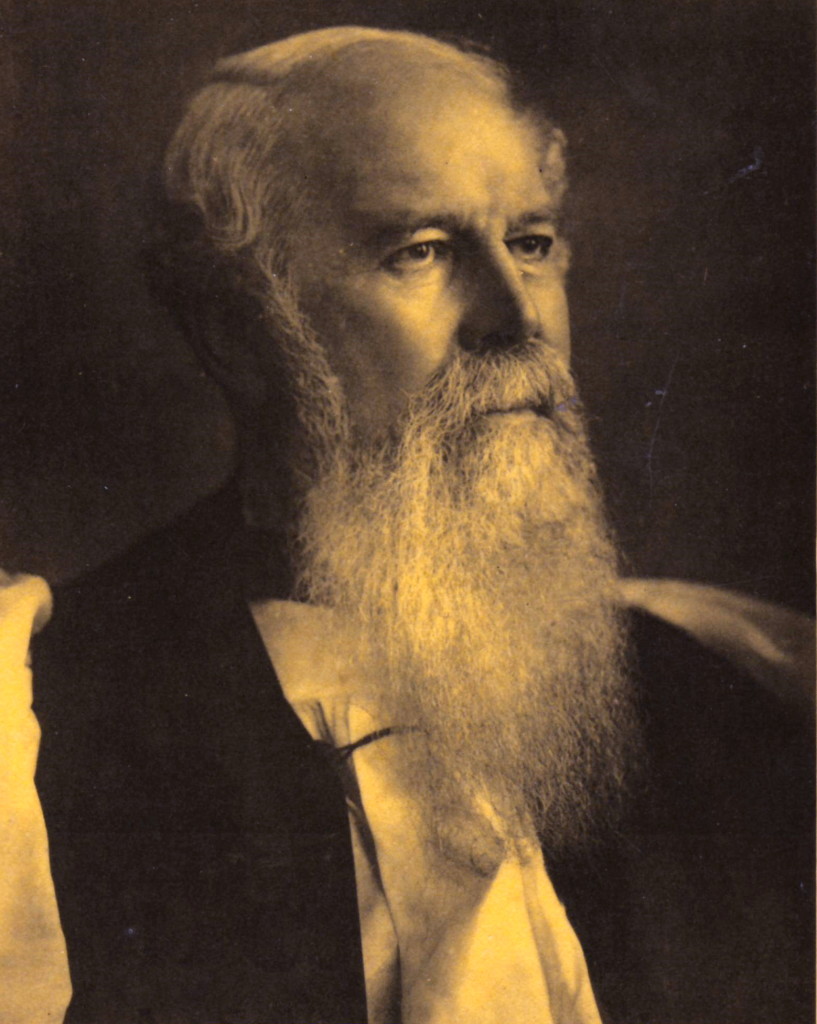
John Charles Ryle (10 May 1816 — 10 June 1900) was an English evangelical Anglican bishop. He was the first Anglican bishop of Liverpool.
Pristine Grace functions as a digital library of preaching and teaching from many different men and ministries. I maintain a broad collection for research, study, and listening, and the presence of any preacher or message here should not be taken as a blanket endorsement of every doctrinal position expressed.
I publish my own convictions openly and without hesitation throughout this site and in my own preaching and writing. This archive is not a denominational clearinghouse. My aim in maintaining it is to preserve historic and contemporary preaching, encourage careful study, and above all direct readers and listeners to the person and work of Christ.
Brandan Kraft
Bible Verse Lookup
Loading today's devotional...
Unable to load devotional.
Select a devotional to begin reading.
Bible Reading Plans
Track your daily Bible reading with a structured plan. Choose from several options and let us keep track of your progress.
Comments
Your comment has been submitted and is awaiting moderation. Once approved, it will appear on this page.
Be the first to comment!