You will find it helpful to READ the texts--as you LISTEN to the audios!
The TEXTS for the entire commentary can be bound here: https://gracegems.org/Ryle/Mark.htm
Sermon Transcript
Auto-generated transcript • May contain errors
100%
Section 47 of Expository Thoughts on the Gospel of St. Mark by J. C. Ryle. CHAPTER XI. VERSES 1-11. CHRIST'S PUBLIC ENTRY INTO JERUSALEM, AND VOLUNTARY POVERTY.
Mark chapter 11, verses 1 to 11. And when they came nigh to Jerusalem, unto Bethpage, and Bethany, at the Mount of Olives, he sendeth forth two of his disciples, and saith unto them, Go you away into the village over against you, and as soon as ye be entered into it, ye shall find a colt tied, whereon never man sat. Loose him, and bring him. And if any man say unto you, Why do ye this? say ye that the Lord hath need of him, and straightway he will send him hither. And they went their way, and found the colt tied by the door without in a place where two ways met, and they loose him. And certain of them that stood there said unto them, What do ye, loosing the colt? And they said unto them, even as Jesus had commanded. And they let them go. and they brought the colt to Jesus, and cast their garments on him, and he sat upon them. And many spread their garments in the way, and others cut down branches off the trees, and strawed them in the way. And they that went before, and they that followed, cried, saying, Hosanna! Blessed is he that cometh in the name of the Lord! Blessed be the kingdom of our father David, that cometh in the name of the Lord! Hosanna in the highest. And Jesus entered into Jerusalem, and into the temple. And when he had looked round about upon all things, and now the eventide was come, he went out to Bethany with the twelve.
The event described in these verses is a singular exception in the history of Our Lord's earthly ministry. Generally speaking, we see Jesus withdrawing himself from public notice, often passing his time in the remote parts of Galilee, not unfrequently abiding in the wilderness, and so fulfilling the prophecy that he should not cry, nor strive, nor let his voice be heard in the streets. Here, and here only, our Lord appears to drop his private character, and of his own choice to call public attention to himself, He deliberately makes a public entry into Jerusalem at the head of his disciples. He voluntarily rides into the holy city, surrounded by a vast multitude, crying, Hosanna, like King David returning to his palace in triumph. 2 Samuel, Chapter 19, verse 40.
All this, too, was done at a time when myriads of Jews were gathered out of every land to Jerusalem to keep the Passover. We may well believe that the holy city rang with the tidings of our Lord's arrival. It is probable there was not a house in Jerusalem in which the entry of the prophet of Nazareth was not known and talked of that night. These things should always be remembered in reading this portion of our Lord's history. It is not for nothing that this entry into Jerusalem is four times related in the New Testament. It is evident that it is a scene in the earthly life of Jesus, which Christians are intended to study with special attention. Let us study it in that spirit, and see what practical lessons we may learn from the passage for our own souls.
Let us observe, in the first place, how public our Lord purposely made the last act of His life. He came to Jerusalem to die, and He desired that all Jerusalem should know it. When he taught the deep things of the Spirit, he often spoke to none but his apostles. When he delivered his parables, he often addressed none but a multitude of poor and ignorant Galileans. When he worked his miracles, he was generally at Capernaum, or in the land of Zebulun and Naphtali. But when the time came that he should die, he made a public entry into Jerusalem. He drew the attention of rulers, and priests, and elders, and scribes, and Greeks, and Romans to himself. He knew that the most wonderful event that ever happened in this world was about to take The Eternal Son of God was about to suffer in the stead of sinful men. The great sacrifice for sin about to be offered up. The great Passover lamb about to be slain. The great atonement for a world's sin about to be made. He therefore ordered it so that his death was eminently a public death. He overruled things in such a way that the eyes of all Jerusalem were fixed upon him, and when he died, he died before many witnesses.
Let us see here one more proof of the unspeakable importance of the death of Christ. Let us treasure up His gracious sayings. Let us strive to walk in the steps of His holy life. Let us prize His intercession. Let us long for His second coming. But never let us forget that the crowning fact in all we know of Jesus Christ is His death upon the cross. From that death flow all our hopes. Without that death we should have nothing solid beneath our feet. May we prize that death more and more every year we live, and in all our thoughts about Christ rejoice in nothing so much as the great fact that He died for us.
Let us observe, in the second place in this passage, the voluntary poverty which our Lord underwent when He was upon earth. How did he enter Jerusalem when he came to it on this remarkable occasion? Did he come in a royal chariot, with horses, soldiers, and a retinue around him, like the kings of this world? We are told nothing of the kind. We read that he borrowed the colt of an ass for the occasion, and sat upon the garments of his disciples for lack of a saddle. This was in perfect keeping with all the tenor of his ministry. He never had any of the riches of this world. When he crossed the Sea of Galilee, it was in a borrowed boat. When he rode into the Holy City, it was on a borrowed beast. When he was buried, it was in a borrowed tomb. We have, in this simple fact, an instance of that marvellous union of weakness and power, riches and poverty, the Godhead and manhood which may be so often traced in the history of our blessed Lord.
Nevertheless, I wish it to be distinctly understood that I utterly disclaim the idea of there being any moral weakness in the human nature of Christ. The only weakness I mean is that sinless infirmity which is inseparably connected with flesh and blood, and from which Adam, before the Fall, was not exempt. Of all such weakness, I believe, our Lord was partaker to the fullest extent. Whether or not our Lord's riding upon an ass instead of a horse was a mark of humiliation is a point on which opinions differ widely. Some dwell on the fact that the ass in Oriental cultures was an animal that even kings rode, and refer to Judges chapter 5 verse 10, Speak, ye that ride on white asses, etc. Others think that the choice of an ass was purposefully made as emblematic of our Lord's lowly nature. Gerhard, in his commentary, refers to a saying of Tertullian, that the Gentiles called Christians assnarii, in ridicule, because they believed in Christ who rode on an ass, and even columniously charged them with worshipping an ass's head.
Who that reads the Gospels carefully can fail to observe that he who could feed thousands with a few loaves was himself sometimes hungry, and he who could heal the sick and infirm was himself sometimes weary, that he who could cast out devils with a word was himself tempted, and he who could raise the dead could himself submit to die. We see the very same thing in the passage before us. We see the power of our Lord in His bending the wills of a vast multitude to conduct Him into Jerusalem in triumph. We see the poverty of our Lord in His borrowing an ass to carry Him when He made His triumphal entry. It is all wonderful, but there is a fitness in it all. It is meet and right that we should never forget the union of the divine and human natures in our Lord's person. If we saw his divine acts only, we might forget that he was a man. If we saw his seasons of poverty and weakness only, we might forget that he was God. But we are intended to see in Jesus divine strength and human weakness, united in one person. We cannot explain the mystery, but we may take comfort in the thought, this is our Savior, this is our Christ, one who is able to sympathize, because He is man, but one Almighty to save, because He is God.
Finally, let us see in the simple fact that our Lord rode on a borrowed ass, one more proof that poverty is in itself no sin. The causes which occasion much of the poverty there is around us are undoubtedly very sinful. Drunkenness, extravagance, profligacy, dishonesty, idleness, which produce so much of the destitution in the world, are unquestionably wrong in the sight of God. But to be born a poor man, and to inherit nothing from our parents, to work with our own hands for our bread, and to have no land of our own, all this is not sinful at all. The honest poor man is as honorable in the sight of God as the richest king. The Lord Jesus Christ himself was poor. Silver and gold he had none. He had often nowhere to lay his head. Though he was rich, yet for our sakes he became poor. To be like him in circumstances cannot be in itself wrong. Let us do our duty in that state of life to which God has called us, and if he thinks fit to keep us poor, let us not be ashamed. The Saviour of sinners cares for us as well as for others. The Saviour of sinners knows what it is to be poor. CHAPTER XI. CHRIST'S MANHOOD. THE FIG-TREE CURSED. THE TEMPLE CLEANSED. MARK CHAPTER XI. And on the morrow, when they were come from Bethany, he was hungry, and seeing a fig tree afar off having leaves, he came, if happily he might find anything thereon. And when he came to it, he found nothing but leaves, for the time of figs was not yet. And Jesus answered, and said unto it, No man eat fruit of thee hereafter for ever. And his disciples heard it. And they came to Jerusalem. And Jesus went into the temple, and began to cast out them that sold and bought in the temple, and overthrew the tables of the moneychangers, and the seats of them that sold doves. And he would not suffer that any man should carry any vessel through the temple. And he taught, saying unto them, Is it not written, My house shall be called of all nations the house of prayer? But ye have made it a den of thieves. And the scribes and chief priests heard it, and sought how they might destroy him. For they feared him, because all the people were astonished at his doctrine. And when even was come, he went out of the city. and in the morning, as they passed by, they saw the fig-tree dried up from the roots. And Peter, calling to remembrance, saith unto him, Master, behold, the fig-tree which thou cursest is withered away.
We see in the beginning of this passage one of the many proofs that our Lord Jesus Christ was really man. We read that He was hungry. He had a nature and bodily constitution, like our own in all things, sin only accepted. He could weep and rejoice and suffer pain. He could be weary and need rest. He could be thirsty and need drink. He could be hungry and need food.
Expressions like this should teach us the condescension of Christ, how wonderful they are when we reflect upon them. He who is the Eternal God, who made the world and all that it contains, He from whose hand the fruits of the earth, the fish of the sea, the fowls of the air, the beasts of the field, all had their beginning—He, Even he was pleased to suffer hunger when he came into the world to save sinners. This is a great mystery. Kindness and love like this pass man's understanding. No wonder that St. Paul speaks of the unsearchable riches of Christ. Ephesians chapter 3 verse 8.
Expressions like this should teach us Christ's power to sympathize with his believing people on earth. He knows their sorrows by experience. He can be touched with the feeling of their infirmities. He has had experience of a body and its daily wants. He has suffered, himself, the severe sufferings that the body of man is liable to. He has tasted pain, and weakness, and weariness, and hunger, and thirst. When we tell him of these things in our prayers, he knows what we mean, and is no stranger to our troubles. Surely this is just the Savior and Friend that poor, aching, groaning human nature requires.
We learn, in the second place from these verses, the great danger of unfruitfulness and formality in religion. This is a lesson which our Lord teaches in a remarkable, typical action. We are told that coming to a fig tree in search of fruit, and finding on it nothing but leaves, He pronounced on it the solemn sentence, No man eat fruit of thee, hereafter, for ever." And we are told that the next day the fig tree was found, dried up from the roots.
We cannot doubt for a moment that this whole transaction was an emblem of spiritual things. It was a parable in deeds, as full of meaning as any of our Lord's parables in words.
There are two difficulties connected with the story of the withered fig tree, which weigh considerably on some minds, and therefore deserve notice.
1. It is a difficulty with some persons that our Lord should have pronounced any curse at all on the fig tree. They say that it looks like needless destruction of an innocent and unoffending creature, and out of keeping with the spirit of Deuteronomy 20.19. Such objections appear to forget that the withering of the fig tree was not a mere empty exhibition of power, like the pretended miracles of Muhammad and other false prophets. It was a mighty typical act, teaching deep spiritual lessons—lessons of such importance as might well justify the destruction of one of God's unintelligent creatures in order to convey them. Remembering this, we have no more right to object to it than to object to the daily offering of a lamb under the Mosaic law. In that offering the life of an innocent and unoffending creature was daily taken away. But the great end of daily setting before the eyes of men, the one sacrifice for sin, justified the taking away of the life of the lamb. Just in the same way we may justify our Lord's taking away the life of the tree.
II. It is a difficulty with some persons that the account of St. Mark contains the words, The time of figs was not yet. They asked to be told why our Lord should have gone to the tree seeking fruit, when the season for figs had not yet arrived. The answers to this difficulty are various. The simplest of them appears to be as follows. The time of figs, as a general rule, had not yet come. But our Lord, seeing a tree covered with leaves, unlike the other fig trees, had a right to suppose that figs were to be found on it, and therefore came to it.
It is no small recommendation of this view that it supplies an exact illustration of the state of the Jewish Church when our Lord was upon earth. The time of figs was not yet, that is, the nations of the earth were all in darkness and bore no fruit to the glory of God. But among the nations there was one covered with leaves, that is, the Jewish Church, full of light, knowledge, privileges, and high profession. Seeing this fig-tree full of leaves, our Lord came to it seeking fruit. That is, He came to the Jews justly expecting them to have fruit according to their outward profession.
But when our Lord came to this leafy Jewish fig-tree, He found it utterly destitute of fruit, faithless and unbelieving. And the end was that He pronounced sentence on it, gave it over to be destroyed by the Romans, and scattered the Jews over the earth.
But who were they to whom this withered fig tree was intended to speak? It was a sermon of threefold application, a sermon that ought to speak loudly to the consciences of all professing Christians. Though withered and dried up, that fig tree yet speaks.
There was a voice in it for the Jewish Church. Rich in the leaves of a formal religion, but barren of all the fruits of the Spirit, that Church was in fearful danger, at the very time when this withering took place. Well would it have been for the Jewish Church if it had had eyes to see its peril.
There was a voice in the fig tree for all the branches of Christ's visible Church in every age and every part of the world. There was a warning against an empty profession of Christianity, unaccompanied by sound doctrine and holy living, which some of those branches would have done well to lay to heart.
But above all, there was a voice in that withered fig tree for all carnal, hypocritical, and false-hearted Christians. Well would it be for all who are content with a name to live while in reality they are dead, if they would only see their own faces in the glass of this passage.
Let us take care that we each individually learn the lesson that this fig tree conveys, Let us always remember that baptism, and Church membership, and reception of the Lord's Supper, and a diligent use of the outward forms of Christianity, are not sufficient to save our souls. They are leaves, nothing but leaves, and without fruit will add to our condemnation. Like the fig leaves, of which Adam and Eve made themselves garments, They will not hide the nakedness of our souls from the eye of an all-seeing God, or give us boldness when we stand before Him at the last day. No, we must bear fruit or be lost for ever. There must be fruit in our hearts and fruit in our lives, the fruit of repentance toward God and faith toward our Lord Jesus Christ, and true holiness in our conversation. Without such fruits as these a profession of Christianity will only sink us lower into
We learn in the last place, from this passage, how reverently we ought to use places which are set apart for public worship. This is a truth which is taught us in a striking manner by our Lord Jesus Christ's conduct when He went into the temple. We are told that He cast out them that sold and bought in the temple, and overthrew the tables of the money-changers, and the seats of them that sold doves. we are told that he enforced this action by warrant of Scripture, saying, Is it not written, My house shall be called of all nations the house of prayer? But ye have made it a den of thieves. We need not doubt that there was a deep meaning in this action of our Lord on this occasion, Like the cursing of the fig tree, the whole transaction was eminently typical. But in saying this, we must not allow ourselves to lose sight of one simple and obvious lesson which lies on the surface of the passage. That lesson is the sinfulness of careless and irreverent behavior in the use of buildings set apart for the public service of God.
It was not so much as the house of sacrifice, but as the house of prayer, that our Lord purified the temple. His action clearly indicates the feeling with which every house of prayer should be regarded. A Christian place of worship, no doubt, is in no sense so sacred as the Jewish tabernacle or temple. Its arrangements have no typical meaning. It is not built after a divine model, and intended to serve as an example of heavenly things. But it does not follow because these things are so, that a Christian place of worship is to be used with no more reverence than a private dwelling, or a shop, or an inn. There is surely a decent reverence which is due to a place where Christ and his people regularly meet together, and public prayer is offered up, a reverence which it is foolish and unwise to brand as superstitious, and confound with potpourri. There is a certain feeling of sanctity and solemnity which ought to belong to all places where Christ is preached. And souls are born again. A feeling which does not depend on any consecration of man, and ought to be encouraged rather than checked. At all events, the mind of the Lord Jesus in this passage seems very plain. He takes notice of men's behavior in places of worship. And all irreverence or profanity is an offense in his sight.
Let us remember these verses whenever we go to the house of God, and take heed that we go in a serious frame and do not offer the sacrifice of fools. Let us call to mind where we are, what we are doing, what business we are about, and in whose presence we are engaged. Let us beware of giving God a mere formal service while our hearts are full of the world. Let us leave our business and money at home, and not carry them with us to church. Let us beware of allowing any buying and selling in our hearts, in the midst of our religious assemblies. The Lord still lives, who cast out buyers and sellers from the temple, and when he sees such conduct he is much displeased.
Importance of Faith
Necessity of a Forgiving Spirit
Mark Chapter 11 verses 22 to 26
And Jesus answering, saith unto them, Have faith in God. For verily I say unto you, That whosoever shall say unto this mountain, Be thou removed, and be thou cast into the sea, and shall not doubt in his heart, but shall believe that these things which he saith shall come to pass, he shall have whatsoever he saith.
Therefore I say unto you, What things soever ye desire, when ye pray, believe that ye receive them, and ye shall have them. And when ye stand praying, forgive, if ye have ought against any, that your Father also, which is in heaven, may forgive you your trespasses. But if ye do not forgive, neither will your Father, which is in heaven, forgive your trespasses. Let us learn from these words of our Lord Jesus Christ the immense importance of faith. This is a lesson which our Lord teaches first by proverbial saying. Faith shall enable a man to accomplish works and overcome difficulties as great and formidable as the removing of a mountain and casting it into the sea. Footnote. It is clear that a promise like this of removing mountains must be taken in a figurative sense. It appears to be a proverbial expression, and to be used as such by St. Paul. Moreover, it is a promise that must be interpreted with sober and reasonable limitations. We have no right to expect that whatever we take into our heads to ask of God shall at once be done for us, whether it be for His glory and our sanctification or not. We have no warrant for presuming that in every difficulty and trouble God will at once work a miracle and deliver us from our anxiety as soon as we make it a subject of prayer. Things about which we pray must be things having special reference to our own vocation and providential position. Moses at the head of the twelve tribes of Israel, Elijah on Mount Carmel, Paul in the Philippian prison, might confidently expect miraculous interpositions in answer to prayer, in a way that private individuals may not expect in our days. Above all, we must not think to prescribe to God the time and way in which he shall remove mountains for us.
Afterwards, the lesson is impressed upon us still further by general exhortation to exercise faith when we pray. What things soever ye desire, when ye pray, believe that ye receive them, and ye shall have them. This promise must, of course, be taken with a reasonable qualification. It assumes that a believer will ask things which are not sinful, and which are in accordance with the will of God. When he asks such things, he may confidently believe that his prayer will be answered. To use the words of St. James, let him ask in faith, nothing wavering. James 1.6. The faith here commended must be distinguished from that faith which is essential to justification. In principle, undoubtedly, all true faith is one and the same. It is always trust, or belief, But in the object and operations of faith there are diversities which it is useful to understand. Justifying faith is that act of the soul by which a man lays hold on Christ and has peace with God. Its special object is the atonement for sin which Jesus made on the cross. The faith spoken of in the passage now before us is a grace of more general signification, the fruit and companion of justifying faith, but still not to be confounded with it. It is, rather, a general confidence in God's power, wisdom, and goodwill toward believers. And its special objects are the promises, the word, and the character of God in Christ. Confidence in God's power and will to help every believer in Christ, and in the truth of every word that God has spoken, is the great secret of success and prosperity in our religion. In fact, it is the very root of saving Christianity. By it the elders obtained a good report. He that cometh unto God must believe that He is, and that He is a rewarder of them that diligently seek Him. To know the full worth of it in the sight of God, we should often study the eleventh chapter of the Epistle to the Hebrews.
Do we desire to grow in grace, and in the knowledge of our Lord Jesus Christ? Do we wish to make progress in our religion, and become strong Christians, and not mere babes in spiritual things? Then let us pray daily for more faith, and watch our faith with most jealous watchfulness. Here is the cornerstone of our religion. A flaw or weakness here will affect the whole condition of our inner man. According to our faith will be the degree of our peace, our hope, our joy, our decision in Christ's service, our boldness in confession, our strength in work, our patience in trial, our resignation in trouble, our sensible comfort in prayer. All, all will hinge on the proportion of our faith. happy are they who know how to rest their whole weight continually on a covenant God, and to walk by faith, not by sight. He that believeth shall not make haste. Isaiah 28.16.
Let us learn, for another thing, from these verses, the absolute necessity of a forgiving spirit towards others. This lesson is here taught us in a striking way. There is no immediate connection between the importance of faith, of which our Lord has just been speaking, and the subject of forgiving injuries. But the connecting link is prayer. First we are told that faith is essential to the success of our prayers. But then it is added, no prayers can be heard which do not come from a forgiving heart. When ye stand praying, forgive, if ye have ought against any, that your Father also who is in heaven may forgive you your trespasses. The value of our prayers, we can all understand, depends exceedingly on the state of mind in which we offer them. But the point before us is one which receives far less attention than it deserves. Our prayers must not only be earnest, fervent and sincere, and in the name of Christ, they must contain one more ingredient besides. They must come from a forgiving heart. We have no right to look for mercy if we are not ready to extend mercy to our brethren. We cannot really feel the sinfulness of the sins we ask to have pardoned if we cherish malice towards our fellow men. We must have the heart of a brother toward our neighbor on earth if we wish God to be our Father in heaven. We must not flatter ourselves that we have the spirit of adoption if we cannot bear and forbear. This is a heart-searching subject. The quantity of malice, bitterness, and party spirit among Christians is fearfully great. No wonder that so many prayers seem to be thrown away and unheard. It is a subject which ought to come home to all classes of Christians. All have not equal gifts of knowledge and utterance in their approaches to God, but all can forgive their fellow man. It is a subject which our Lord Jesus Christ has taken special pains to impress on our minds. He has given it a prominent place in that pattern of prayers, the Lord's Prayer. We are all familiar from our infancy with the words, Forgive us our trespasses, as we forgive them that trespass against us. Well would it be for many if they would consider what these words mean. Let us leave the passage with serious self-inquiry. Do we know what it is to be of a forgiving spirit? Can we look over the injuries that we receive from time to time in this evil world? Can we pass over transgression and pardon and offense? If not, where is our Christianity? If not, why should we wonder that our souls do not prosper? Let us resolve to amend our ways in this matter. Let us determine by God's grace to forgive, even as we hope to be forgiven. This is the nearest approach we can make to the mind of Christ Jesus. This is the character which is most suitable to a poor, sinful child of Adam. God's free forgiveness of sins is our highest privilege in this world. God's free forgiveness will be our only title to eternal life in the world to come. Then let us be forgiving during the few years that we are here upon earth.
Footnote. The expression, when ye stand praying, in this passage, ought not to be overlooked. It is one of those forms of speech in the Bible which ought to teach all Christians not to be dogmatical in laying down minute rules about the externals of religion, and especially about the precise manner, gesture, or posture in which a believer ought to pray. If a man is fully persuaded that he can hold closer communion with God, and pour out his heart more freely, and without distraction, in the attitude of standing than that of kneeling, I dare not tell him that he is wrong. The great point to insist on us is the absolute necessity of praying with the heart. The last words of Sir Walter Raleigh to his executioner on the scaffold are a beautiful illustration of the right view of this question. Friend, it matters little how a man's head lies, if his heart be right in the sight of God.
And they came again to Jerusalem. And as he was walking in the temple, there came to him the chief priests, and the scribes, and the elders, and say unto him, By what authority dost thou these things? and who gave thee this authority to do these things? And Jesus answered and said unto them, I will also ask of you one question, and answer me and I will tell you by what authority I do these things." The Baptism of John. Was it from heaven, or of men? Answer me. And they reasoned with themselves, saying, If we say from heaven, he will say, Why then did you not believe him? But if we shall say of men, they feared the people. For all men counted John, that he was a prophet indeed. And they answered and said unto Jesus, We cannot tell. And Jesus answering, saith unto them, Neither do I tell you by what authority I do these things.
Let us observe in these verses how much spiritual blindness may be in the hearts of those who hold high ecclesiastical office. We see the chief priests and scribes and elders coming to our Lord Jesus and raising difficulties and objections in the way of His work. These men, we know, were the accredited teachers and rulers of the Jewish Church, They were regarded by the Jews as the fountain and spring-head of religious knowledge. They were, most of them, regularly ordained to the position they held, and could trace their orders by regular descent from Aaron, and yet we find these very men, at the time when they ought to have been instructors of others, full of prejudice against the truth, and bitter enemies of the Messiah.
The following remarks from Gerhard's commentary are worth reading. The Church is not tied to those teachers who are in the regular succession, for they frequently err from the path of truth. In such cases the Church ought not to follow their errors, but to embrace the truth as set forth in the Word. Thus, Aaron, setting up the golden calf, Uriah, the high priest, in the time of Ahaz, building a new altar, Peshur, and the other priests, in Jeremiah's time, all erred most grievously. And in this very passage, the priest sitting in Moses's seat rejected the Messiah himself, and impugned his authority.
But if those who succeeded Aaron, in the divinely appointed priesthood of the Old Testament, could err, and, in fact, did occasionally err, How much more likely to err are the popes of Rome, who cannot prove from God's word that the pope's office has been instituted by Christ in the New Testament? These things are written to show Christians that they must beware of depending too much on ordained men. They must not look up to ministers as popes, or regard them as infallible. the orders of no church confer infallibility, whether they be episcopal, Presbyterian, or independent. Bishops, priests, and deacons, at their best, are only flesh and blood, and may err, both in doctrine and practice, as well as the chief priests and elders of the Jews. Their acts and teaching must always be tested by the Word of God. They must be followed so far as they follow Scripture, and no further.
There is only one priest and bishop of souls who makes no mistakes. That one is the Lord Jesus Christ. In Him alone is no weakness, no failure, no shadow of infirmity. Let us learn to lean more entirely on Him. Let us call no man father on earth. Matthew chapter 23 verse 9. So doing we shall never be disappointed.
Let us observe, in the second place, how envy and unbelief make men throw discredit on the commission of those who work for God. These chief priests and elders could not deny the reality of our Lord's miracles of mercy. They could not say that His teaching was contrary to Holy Scripture, or that His life was sinful. What, then, did they do? They attacked His claim to attention, and demanded His authority. By what authority doest thou these things, and who gave thee this authority?" He shows the similarity of their conduct to that of the Greek and Roman churches, and to that of a foolish head of a family, who neither corrects his children himself, nor likes any one else to correct them for him. And he concludes by saying, quote, Let us learn that every one should do his own duty, or else yield up his place to another. Let us not be like the dog in the manger, who would neither eat the hay himself, nor yet allow the ox to eat it.
The history of the Church of Christ contains only too much of the dog in the manger. Ministers and teachers have often neglected the souls of their people shamefully, and yet found fault with anyone who has tried to do good, and haughtily demanded his authority. The reflections of the Roman Catholic writer, Quisnau, on this subject are remarkable. Those who find themselves vanquished by truth generally endeavor to reject authority. there are no persons more forward to demand of others a reason for their actions than those who think they may do everything themselves without control."
There can be no doubt whatever that, as a general principle, all who undertake to teach others should be regularly appointed to the work. St. Paul himself declares that this was the case with our Lord in the matter of the priestly office. no man taketh this honour unto himself, but he that is called of God, as was Aaron." Hebrews chapter 5 verse 4. And even now, when the office of the sacrificing priest no longer exists, the words of the twenty-third article of the Church of England are wise and scriptural. It is not lawful for any man to take upon him the office of public preaching, or ministering the sacraments in the congregation, before he be lawfully called, and sent to execute the same.
But it is one thing to maintain the lawfulness of an outward call to minister in sacred things, and quite another to assert that it is the one thing needful without which no work for God can be done. This is the point on which the Jews evidently erred in the time of our Lord's earthly ministry, and on which we may have unhappily followed them down to the present day. Let us beware of this narrow spirit, and specially in these last ages of the world. Unquestionably, we must not undervalue order and discipline in the Church. It is just as valuable there as it is in an army, But we must not suppose that God is absolutely tied to the use of ordained men. We must not forget that there may be an inward call of the Holy Ghost without any outward call of the man, no less than an outward call of the man without any inward call of the Holy Ghost.
The first question, after all, is this. Is a man for Christ or against Him? What does he teach? How does he live? Is he doing good? If questions like these can be answered satisfactorily, let us thank God and be content. We must remember that a physician is useless, however high his degree and diploma, if he cannot cure diseases, and a soldier is useless, however well dressed and drilled, if he will not face the enemy in the day of battle. the best doctor is the man who can cure, and the best soldier the man who can fight.
Let us observe, in the last place, what dishonesty and equivocation unbelievers may be led into by prejudice against the truth. The chief priests and elders dared not answer our Lord's question about John's baptism. They dared not say, it was of men, because they fear the people. They dared not confess that it was of heaven, because they saw our Lord would say, Why did ye not believe him? He testified plainly of me. What then did they do? They told a direct lie. They said, We cannot tell. It is a melancholy fact that dishonesty like this is far from being uncommon among unconverted people. There are thousands who evade appeals to their conscience by answers which are not true. When pressed to attend to their souls, they say things which they know are not correct. They love the world and their own way, and like our Lord's enemies, are determined not to give them up, but like them also are ashamed to say the truth. And so they answer exhortations to repentance and decision by false excuses.
One man pretends that he cannot understand the doctrines of the gospel. Another assures us that he really tries to serve God, but makes no progress. A third declares that he has every wish to serve Christ, but has no time. all these are often nothing better than miserable equivocations. As a general rule, they are as worthless as the chief priest's answer, We cannot tell. The plain truth is that we ought to be very slow to give credit to the unconverted man's professed reasons for not serving Christ. We may be tolerably sure that when he says, I cannot, the real meaning of his heart is, I will not. A really honest spirit in religious matters is a mighty blessing. Once let a man be willing to live up to his light, and act up to his knowledge, and he will soon know of the doctrine of Christ, and come out from the world. John chapter 7 verse 17 The ruin of thousands is simply this, that they deal dishonestly with their own souls. They allege pretended difficulties as the cause of their not serving Christ, while in reality they love darkness rather than light, and have no honest desire to change.
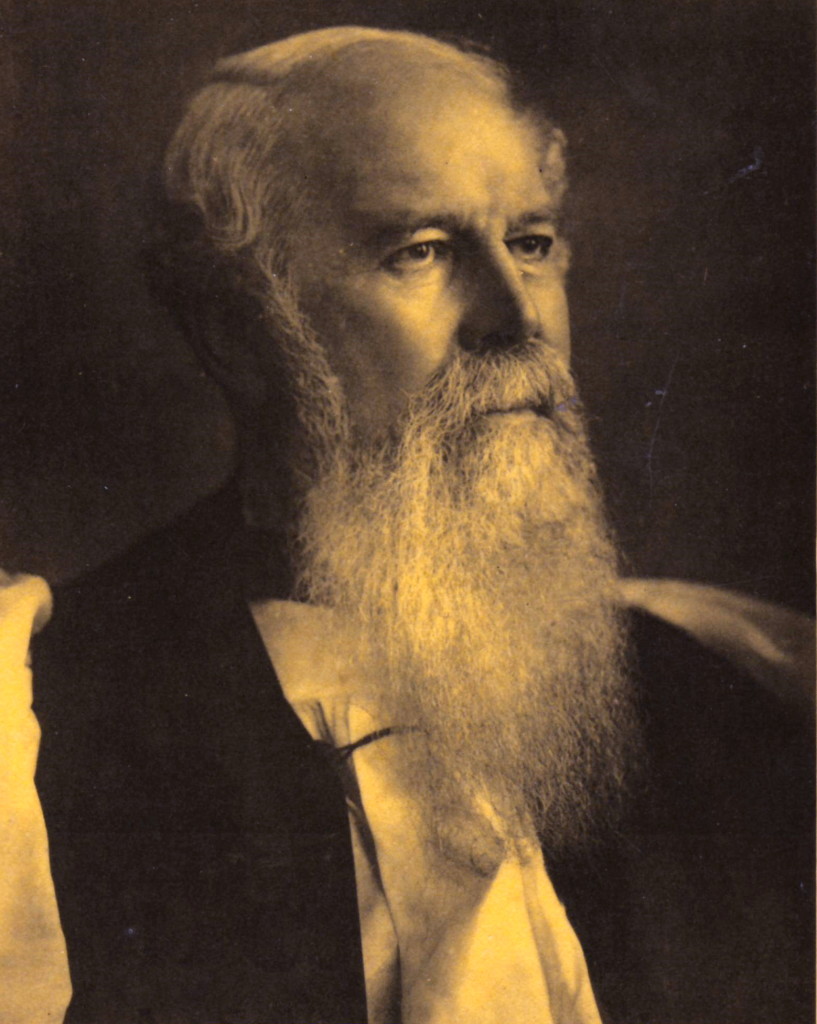
About J.C. Ryle
John Charles Ryle (10 May 1816 — 10 June 1900) was an English evangelical Anglican bishop. He was the first Anglican bishop of Liverpool.
Pristine Grace functions as a digital library of preaching and teaching from many different men and ministries. I maintain a broad collection for research, study, and listening, and the presence of any preacher or message here should not be taken as a blanket endorsement of every doctrinal position expressed.
I publish my own convictions openly and without hesitation throughout this site and in my own preaching and writing. This archive is not a denominational clearinghouse. My aim in maintaining it is to preserve historic and contemporary preaching, encourage careful study, and above all direct readers and listeners to the person and work of Christ.
Brandan Kraft
Bible Verse Lookup
Loading today's devotional...
Unable to load devotional.
Select a devotional to begin reading.
Examples: Isaiah 53:10, Rom 8:28-30, Psalm 23, grace, love one another
to
This chapter has verses 1---
Sign in to save your Bible lookup and search history.
Comments
Your comment has been submitted and is awaiting moderation. Once approved, it will appear on this page.
Be the first to comment!