You will find it helpful to READ the texts--as you LISTEN to the audios!
The TEXTS for the entire commentary can be bound here: https://gracegems.org/Ryle/Mark.htm
Sermon Transcript
Auto-generated transcript • May contain errors
100%
Section 69 of Expository Thoughts on the Gospel of St. Mark by J. C. Ryle. Chapter 15, Verses 1 to 15. Christ Condemned Before Pilate. Mark, Chapter 15, Verses 1 to 15. And straightway in the morning the chief priest held a consultation with the elders and scribes and the whole council, and bound Jesus, and carried him away, and delivered him to Pilate. And Pilate asked him, Art thou the king of the Jews? And he answering said unto him, Thou sayest it. And the chief priest accused him of many things, but he answered nothing. And Pilate asked him again, saying, Answers thou nothing? behold, how many things they witness against thee! But Jesus yet answered nothing, so that Pilate marveled. Now at that feast he released unto them one prisoner, whomsoever they desired. And there was one named Barabbas, which lay bound with them, that had made insurrection with him, who had committed murder in the insurrection. And the multitude, crying aloud, began to desire him to do as he had ever done unto them. But Pilate answered them, saying, Will ye that I release unto you the king of the Jews? For he knew that the chief priest had delivered him for envy. But the chief priest moved the people, that he should rather release Barabbas unto them. And Pilate answered, and said again unto them, What will ye then that I shall do unto him who ye call the king of the Jews? And they cried out again, Crucify him! Then Pilate said unto them, Why, what evil hath he done? And they cried out the more exceedingly, Crucify him! And so Pilate, willing to content the people, released Barabbas unto them, and delivered Jesus, when he had scourged him, to be crucified.
These verses begin the chapter in which St. Mark describes the slaying of the Lamb of God, which takes away the sin of the world. It is a part of the Gospel history which should always be read with peculiar reverence. We should call to mind that Christ was cut off, not for Himself, but for us. we should remember that his death is the life of our souls, and that unless his blood had been shed, we must have perished miserably in our sins.
Let us mark in these verses what a striking proof the Jewish rulers gave to their own nation that the times of Messiah had come. The chapter opens with the fact that the chief priest bound Jesus and delivered him to Pilate, the Roman governor. Why did they do so? Because they had no longer the power of putting any one to death, and were under the dominion of the Romans. By this one act and deed they declared that the prophecy of Jacob was fulfilled. The scepter had departed from Judah, and the lawgiver from between his feet. And Shiloh, the Messiah, whom God had promised to send, must have come.
Yet there's nothing whatever to show that they remembered this prophecy. Their eyes were blinded. They either could not or would not see what they were doing. Let us never forget that wicked men are often fulfilling God's predictions to their own ruin, and yet know it not. In the very height of their madness, folly, and unbelief, they are often unconsciously supplying fresh evidence that the Bible is true. The unhappy scoffers who make a jest of all serious religion, and can scarcely talk of Christianity without ridicule and scorn, would do well to remember that their conduct was long ago foreseen and foretold. There shall come in the last days scoffers, walking after their own lusts." 2 Peter, verse 3.
Let us remark, secondly, in these verses, the meekness and lowliness of our Lord Jesus Christ. When He stood before Pilate's bar, and was accused of many things, He answered nothing. Though the charges against him were false, and he knew no sin, he was content to endure the contradiction of sinners against himself, not answering again.
HEBREWS CHAPTER XII VERSE 3 Though he was innocent of any transgression, he submitted to bear groundless accusations made against him without a murmur. Great is the contrast between the second Adam and the first. Our first father Adam was guilty and yet tried to excuse himself. The second Adam was guiltless and yet made no defense at all. As a sheep before her shears is dumb, so openeth he not his mouth. Isaiah chapter 53 verse 7.
Let us learn a practical lesson from our Savior's example. Let us learn to suffer patiently and not to complain whatever God may think fit to lay upon us. Let us take heed to our ways, that we offend not in our tongues in the hour of temptation. Psalm 39, verse 1. Let us beware of giving way to irritation and ill-temper, however provoking and undeserved our trials may seem to be. Nothing in the Christian character glorifies God so much as patient suffering. If, when ye do well and suffer for it, ye take it patiently, this is acceptable with God. For even hereunto were ye called, because Christ also suffered for us, leaving us an example that ye should follow in his steps." 1 Peter chapter 2 verses 20 and 21.
Let us mark thirdly in these verses the wavering and undecided conduct of Pilate, It is clear from the passage before us that Pilate was convinced of our Lord's innocence. He knew that the chief priest had delivered him for envy. We see him feebly struggling for a time to obtain our Lord's acquittal and to satisfy his own conscience. At last he yields to the importunity of the Jews, and willing to content the people, delivers Jesus to be crucified, to the eternal disgrace and ruin of his own soul.
A man in high place without religious principles is one of the most pitiable sights in the world. He is like a large ship tossed to and fro on the sea without compass or rudder. His very greatness surrounds him with temptations and snares. It gives him power for good or evil, which, if he knows not how to use it aright, is sure to bring him into difficulties and to make him unhappy. Let us pray much for great men. They need great grace to keep them from the devil. High places are slippery places. No wonder that St. Paul recommends intercession for kings and for all that are in authority. 1Timothy 2.1 Let us not envy great men. They have many and peculiar temptations. How hardly shall a rich man enter the kingdom of God Seekest thou great things for thyself? Seek them not. Jeremiah chapter 40 verse 5.
Let us mark, fourthly in these verses, the exceeding guilt of the Jews in the matter of the death of Christ. At the eleventh hour the chief priests had an opportunity of repenting if they would have taken it. They had the choice given to them whether Jesus or Barabbas should be let go, free. coolly and deliberately, they persevered in their bloody work. They chose to have a murderer let go free. They chose to have the Prince of Life put to death. The power of putting our lord to death was no longer theirs. The responsibility of his death they publicly took upon themselves. What will ye that I shall do unto him? was Pilate's question. Crucify him! Crucify him! was the awful answer.
The agents in our Lord's death were undoubtedly Gentiles, but the guilt of our Lord's death must always rest chiefly upon the Jews. We marvel at the wickedness of the Jews at this part of our Lord's history, and no wonder. To reject Christ and choose Barabbas was indeed an astounding act. It seems as if blindness, madness, and folly could go no further. But let us take heed that we do not unwittingly follow their example. Let us beware that we are not found, at last, to have chosen Barabbas and rejected Christ. The service of sin and the service of God are continually before us. The friendship of the world and the friendship of Christ are continually pressed upon our notice. Are we making the right choice? Are we cleaving to the right friend? These are solemn questions. Happy is he who can give them a satisfactory answer.
Let us mark, finally, in these verses, what a striking type the release of Barabbas affords of the gospel plan of salvation. The guilty is set free and the innocent is put to death. The great sinner is delivered and the sinless one remains bound. Barabbas is spared and Christ is crucified. We have in this striking fact a vivid emblem of the manner in which God pardons and justifies the ungodly. He does it because Christ hath suffered in their stead, the just for the unjust. They deserve punishment, but a mighty substitute has suffered for them. They deserve eternal death, but a glorious surety has died for them. We are all by nature in the position of Barabbas. We are guilty, wicked, and worthy of condemnation. But when we were without hope, Christ the innocent died for the ungodly. and now God for Christ's sake can be just, and yet the justifier of him who believeth in Jesus. Let us bless God that we have such a glorious salvation set before us. Our plea must ever be, not that we are deserving of acquittal, but that Christ has died for us. Let us take heed that having so great a salvation we really make use of it for our own souls May we never rest till we can say by faith, Christ is mine, I deserve hell, but Christ has died for me, and believing in Him, I have a hope of heaven.
CHAPTER XV. VERSES SIXTEEN TO THIRTY-TWO. CHRIST IS MOCKED AND CRUCIFIED. MARK CHAPTER XV. VERSES SIXTEEN TO THIRTY-TWO.
And the soldiers led him away into the hall, called Praetorium, and they called together the whole band, and they clothed him with purple, and plaited a crown of thorns and put it about his head, and began to salute him, Hail, King of the Jews! And they smote him on the head with a reed, and did spit upon him, and bowing their knees worshipped him. And when they had mocked him, they took off the purple from him, and put his own clothes on him, and led him out to crucify him. And they compelled one Simon, a Cyrenian, who passed by, coming out of the country, the father of Alexander and Rufus, to bear his cross. And they bring him unto the place Golgotha, which is, being interpreted, the place of a skull. And they gave him to drink wine mingled with myrrh, but he received it not. And when they had crucified him, they parted his garments, casting lots upon them, what every man should take. And it was the third hour, when they crucified him. And the superscription of his accusation was written over, The King of the Jews. and with him they crucified two thieves, the one on his right hand and the other on his left. And the Scripture was fulfilled, which saith, And he was numbered with the transgressors. And they that passed by railed on him, wagging their heads, and saying, Ah, thou that destroyest the temple, and buildest it in three days, save thyself, and come down from the Likewise also the chief priests, mocking, said among themselves with the scribes, He saved others, himself he cannot save. Let Christ the King of Israel descend now from the cross, that we may see and believe. And that they were crucified with him, reviled him.
The passage we have now read is one of those which show us the infinite love of Christ toward sinners. The sufferings described in it would fill our minds with mingled horror and compassion if they had been inflicted on one who was only a man like ourselves. But when we reflect that the sufferer was the eternal Son of God, we are lost in wonder and amazement, and when we reflect further that these sufferings were voluntarily endured to deliver sinful men and women like ourselves from hell, We may see something of St. Paul's meaning when he says, The love of Christ passeth knowledge. God commendeth his love toward us in that while we were yet sinners, Christ died for us. Ephesians chapter 3 verse 19 Romans chapter 5 verse 8
We shall find it useful to examine separately the several parts of our Lord's Passion. Let us follow Him step by step from the moment of His condemnation by Pilate to His last hour upon the cross. There is a deep meaning in every jot and tittle of His sorrows. All were striking emblems of spiritual truths. And let us not forget, as we dwell on the wondrous story, that we and our sins were the cause of all these sufferings. Christ suffered four sins, the just for the unjust, that he might bring us to God. 1 Peter 3, verse 18. It is the death of our own surety and substitute that we are reading.
First of all, we see Jesus delivered into the hands of the Roman soldiers as a criminal condemned to death. he before whom the whole world will one day stand and be judged, allowed himself to be sentenced unjustly, and given over into the hands of wicked men. And why was this? It was that we, the poor sinful children of men, believing on him, might be delivered from the pit of destruction, and the torment of the prison of hell. It was that we might be set free from every charge in the day of judgment and be presented faultless before God the Father with exceeding joy.
Secondly, we see Jesus insulted and made a laughing stock by the Roman soldiers. They clothed him with purple in derision. and put a crown of thorns on his head, in mockery of his kingdom. They smote him on the head with a reed and did spit upon him, as one utterly contemptible and no better than the filth of the world. And why was this? It was that we, vile as we are, might have glory, honor, and eternal life through faith in Christ's atonement. It was done that we might be received into God's kingdom with triumph at the last day, and receive the crown of glory that fadeth not away.
Thirdly, we see Jesus stripped of his garments and crucified naked before his enemies. The soldiers who led him away parted his garments, casting lots upon them. And why was this? It was that we, who have no righteousness of our own, might be clothed in the perfect righteousness that Christ has wrought out for us, and not stand naked before God at the last day. It was done, that we, who are all defiled with sin, might have a wedding garment, wherein we may sit down by the side of angels, and not be ashamed.
Fourthly, we see Jesus suffering the most ignominious and humiliating of all deaths, even the death of the cross. It was the punishment reserved for the worst of malefactors. The man on whom it was afflicted was counted accursed. It is written, Cursed is everyone that hangeth on a tree. Galatians chapter 3 verse 13. And why was this? It was that we, who are born in sin and children of wrath, might be counted blessed for Christ's sake. It was done to remove the curse which we all deserve because of sin by laying it on Christ. Christ hath redeemed us from the curse of the law, be made a curse for us. Galatians chapter 3 verse 13.
Fifthly, we see Jesus reckoned a transgressor and a sinner. With him they crucify two thieves. He who had done no sin, and in whom there was no guile, was numbered with the transgressors. And why was this? It was that we, who are miserable transgressors, both by nature and practice, may be reckoned innocent for Christ's It was done that we, who are worthy of nothing but condemnation, may be counted worthy to escape God's judgment and be pronounced not guilty before the assembled world. Lastly, we see Jesus mocked when dying as one who was an imposter and unable to save himself. And why was this? It was that we, in our last hours, through faith in Christ, may have strong consolation. It all came to pass that we may enjoy a strong assurance, may know whom we have believed, and may go down the valley of the shadow of death, fearing no evil. Let us leave the passage with a deep sense of the enormous debt which all believers owe to Christ. all that they have, and are, and hope for, may be traced up to the doing and dying of the Son of God. Through His condemnation, they have acquittal. Through His sufferings, peace. Through His shame, glory. Through His death, life. Their sins were imputed to Him. His righteousness is imputed to them. No wonder that St. Paul says, Finally, let us leave the passage with the deepest sense of Christ's unutterable love to our souls. Let us remember that we are corrupt, evil, and miserable sinners. Let us remember who the Lord Jesus is, the eternal Son of God, the Maker of all things. And then let us remember that for our sakes, Jesus voluntarily endured the most painful, horrible, and disgraceful death. Surely the thought of this love should constrain us daily to live not unto ourselves, but unto Christ. It should make us ready and willing to present our bodies a living sacrifice to Him who lived and died for us. 2 Corinthians 5.4 Romans 12.1 Let the cross of Christ be often before our minds. Rightly understood, no object in all Christianity is so likely to have a sanctifying as well as a comforting effect on our souls. And when the sixth hour was come, there was darkness over the whole land until the ninth hour, And at the ninth hour Jesus cried with a loud voice, saying, Eloi, Eloi, lama sabachthani, which is, being interpreted, My God, my God, why hast thou forsaken me? And some of them that stood by when they heard it said, Behold, he calleth Elias. And one ran and filled a sponge full of vinegar and put it on a reed and gave him to drink, saying, Let alone, let us see whether Elias will come to take him down. And Jesus cried with a loud voice and gave up the ghost. And the veil of the temple was rent in twain from the top to the bottom. We have in these verses the death of our Lord Jesus Christ. All deaths are solemn events. Nothing in the whole history of a man is so important as his end. But never was there a death of such solemn moment as that which is now before us. In the instant that our Lord drew his last breath, the work of atonement for a world's sin was accomplished. The ransom for sinners was at length paid. The kingdom of heaven was fully thrown open to all believers. All the solid hope that mortal men enjoy about their souls may be traced to the giving up the ghost on the cross.
Let us observe, in these verses, the visible signs and wonders which accompanied our Lord's death. St. Mark mentions two in particular, which demand our attention. One is the darkening of the sun for the space of three hours. The other is the rending of the veil which divided the holy of holies from the holy place in the temple. Both were miraculous events. Both had, no doubt, a deep meaning about them. Both were calculated to arrest the attention of the whole multitude assembled at Jerusalem. The darkness would strike even thoughtless Gentiles, like Pilate and the Roman soldiers. The rent veil would strike even Annas and Caiaphas and their unbelieving companions. There were probably few houses in Jerusalem that evening in which men would not say, We have heard and seen strange things to-day.
What did the miraculous darkness teach? It taught the exceeding wickedness of the Jewish nation. They were actually crucifying their own Messiah and slaying their own king. The Son himself hid his face at the site. It taught the exceeding sinfulness of sin in the eyes of God. The Son of God Himself must needs be left without the cheering light of day, when He became sin for us and carried our transgressions. It is almost unnecessary to remark that the darkness which covered the heavens on the day of the crucifixion could not possibly have been occasioned by an eclipse of the sun, because the Passover was always held at full moon. It is evident that the darkness was miraculous and caused by some special interference with the course of nature.
What did the miraculous rending of the veil mean? It taught the abolition and termination of the whole Jewish law of ceremonies. It taught that the way into the holiest of all was now thrown open to all mankind by Christ's death. It taught that Gentiles as well as Jews might now draw nigh to God with boldness through Jesus, the One High Priest, and that all barriers between man and God were forever cast down. May we never forget the practical lesson of the rent veil. To attempt to revive the Jewish ceremonial in the Church of Christ, by returning to altars, sacrifices, and a priesthood, is nothing better than closing up again the rent veil, and lighting a candle at noonday.
May we never forget the practical lesson of the miraculous darkness, It should lead our minds on to that blackness of darkness which is reserved for all obstinate unbelievers. Jude, verse 13. The darkness endured by our blessed surety on the cross was only for three hours. The chains of darkness which shall bind all who reject his atonement and die in sin shall be for evermore.
Let us observe, secondly, in these verses, how truly and really our Lord Jesus Christ was made a curse for us and bore our sins. We see it strikingly brought out in those marvelous words which he used at the ninth hour, My God, my God, why hast thou forsaken me? It would be useless to pretend to fathom all the depth of meaning which those words contain. They imply an amount of mental suffering such as we are unable to conceive. The agony of some of God's holiest servants has been occasionally very great, under an impression of God's favor being withdrawn from them. What then may we suppose was the agony of the Holy Son of God, when all the sin of all the world was laid upon His head, when He felt Himself reckoned guilty, though without sin, when He felt His Father's countenance turned away from Him? The agony of that season must have been something past understanding. It is a high thing. We cannot attain to a comprehension of it. We may believe it, but we cannot explain and find it out to perfection.
One thing, however, is very plain, and that is the impossibility of explaining these words at all, except we receive the doctrine of Christ's atonement and substitution for sinners. To suppose, as some dare to do, that Jesus was nothing more than a man, or that his death was only a great example of self-sacrifice, makes this dying cry of his utterly unintelligible. It makes him appear less patient and calm in a dying hour than many a martyr, or even than some heathen philosophers. one explanation alone is satisfactory. That explanation is the mighty scriptural doctrine of Christ's vicarious sacrifice and substitution for us on the cross. He uttered His dying cry, under the heavy pressure of a world's sin laid upon Him and imputed to Him.
Let us observe, lastly, in these verses, that it is possible to be forsaken of God for a time, and yet to be loved by Him. We need not doubt this when we read our Lord's dying words on the cross. We hear Him saying to His Father, Why hast thou forsaken me? and yet addressing Him as, My God, We know, too, that our Lord was only forsaken for a season, and that even when forsaken He was the Beloved Son in whom, both in His suffering and doing, the Father was well pleased. There is deep experimental instruction in this, which deserves the notice of all true Christians. No doubt there is a sense in which our Lord's feeling of being forsaken was peculiar to Himself since he was suffering for our sins and not for his own. But still, after making this allowance, there remains the great fact that Jesus was for a time forsaken of the Father, and yet for all that was the Father's beloved Son. as it was with the great head of the Church, so it may be in a modified sense with his members. They, too, though chosen and believed of the Father, may sometimes feel God's face turned away from them. They, too, sometimes from illness of body, sometimes from peculiar affliction, sometimes from carelessness of walk, sometimes from God's sovereign will to draw them near to himself, may be constrained to cry, My God, my God, why hast thou forsaken me? It becomes believers who feel forsaken to learn from our Lord's experience not to give way to despair. No doubt they ought not to be content with their position. They ought to search their own hearts, and see whether there is not some secret thing there which causes their consolations to be small. Job 15.11. But let them not write bitter things against themselves, and hastily conclude that they are cast off for ever, or are self-deceivers, and have no grace at all. Let them still wait on the Lord, and say with Job, Though he slay me, yet will I trust in him. Job chapter 13, verse 15. Let us remember the words of Isaiah and David. Who is among you that feareth the Lord, that walketh in darkness, and hath no light? Let him trust in the name of the Lord, and stay upon his God. Why art thou cast down, O my soul, and why art thou disquieted within me? Hope thou in God, for I shall yet praise him." Isaiah 50 Section 72 of Expository Thoughts on the Gospel of St. Mark by J. C. Ryle. Chapter 15, verses 39 to 47. Christ's Burial. Mark, Chapter 15, verses 39 to 47. And when the centurion, which stood over against him, saw that he so cried out and gave up the ghost, he said, Truly this man was the Son of God. There were also women looking on afar off, among whom was Mary Magdalene, and Mary the mother of James the less and of Joseph, and Salome, who also, when he was in Galilee, followed him and ministered unto him, and many other women which came up with him into Jerusalem. And now, when the even was come, because it was the preparation, that is, the day before the Sabbath, Joseph of Arimathea, an honorable counselor, who also waited for the kingdom of God, came, and went in boldly unto Pilate, and craved the body of Jesus. And Pilate marveled if he were already dead, and calling unto him the centurion, asked him whether he had been any while dead. and when he knew it of the centurion, he gave the body to Joseph. And he bought fine linen, and took him down, and wrapped him in the linen, and laid him in a sepulchre which was hewn out of a rock, and rolled a stone unto the door of the sepulchre. And Mary Magdalene, and Mary the mother of Joseph, beheld where he was laid.
The death of our Lord Jesus Christ is the most important fact in Christianity. On it depends the hopes of all saved sinners, both for time and eternity. We need not, therefore, to be surprised to find the reality of his death carefully placed beyond dispute. Three kinds of witnesses to the fact are brought before us in the verses we have now read. The Roman centurion, who stood near the cross. The women who followed our Lord from Galilee to Jerusalem. The disciples, who buried Him, were all witnesses that Jesus really died. Their united evidence is above suspicion. They could not be deceived. What they saw was no swoon, or trance, or temporary insensibility. They saw that same Jesus, who was crucified, lay down his life and become obedient even unto death. Let this be established in our minds. Our Savior really and truly died.
Let us notice, for one thing in this passage, what honorable mention is here made of women. We are specially told that, when our Lord gave up the ghost, there were women looking on far off. The names of some of them are recorded. We are also told that they were the same who had followed our Lord in Galilee and ministered unto Him, and that there were many other women which came up with Him to Jerusalem. We should hardly have expected to read such things. We might well have supposed that, when all the disciples but one had forsaken our Lord and fled, the weaker and more timid sects would not have dared to show themselves his friends. It only shows us what grace can do. God sometimes chooses the weak things of the world to confound the things that are mighty. The last are sometimes first, and the first last. The faith of women sometimes stands upright when the faith of men fails and gives way. But it is interesting to remark throughout the New Testament how often we find the grace of God glorified in women and how much benefit God has been pleased to confer through them on the church and on the world. In the Old Testament, we see sin and death brought in by the woman's transgression. In the New, we see Jesus born of a woman and life and immortality brought to light by that miraculous birth. In the Old Testament we see women proving a hindrance and a snare to man. The women before the flood—the histories of Sarah, Rebecca, Rachel, Delilah, Bathsheba, Jezebel—are all painful examples. In the New Testament, we generally see women mentioned as a help and assistance to the cause of true religion. Elizabeth, Mary, Martha, Dorcas, Lydia, and the women named by St. Paul to the Romans are all cases in point. The contrast is striking, and we need not doubt intentional. It is one of the many proofs that grace is more abundant under the gospel than under the law. It seems meant to teach us that women have an important place in the church of Christ, one that ought to be assigned to them and one that they ought to fill. There's a great work that women can do for God's glory without being public teachers. Happy is that congregation in which women know this and act upon it.
Let us notice, for another thing, in this passage, that Jesus has friends of whom little is known. We cannot conceive a more remarkable proof of this than the person who is here mentioned for the first time, Joseph of Arimathea. We know nothing of this man's former history. We know not how he had learned to love Christ and to desire to do Him honor. We know nothing of his subsequent history after our Lord left the world. All we know is the touching collection of facts before us. We are told that He waited for the kingdom of God, and that at a time when our Lord's disciples had forsaken Him, He went boldly unto Pilate and craved the body of Jesus, and buried it honorably in His own tomb. Others had honored and confessed our Lord when they saw Him working miracles, But Joseph honored him and confessed himself a disciple when he saw him a cold, blood-sprinkled corpse. Others had shown love to Jesus while he was speaking and living, but Joseph showed love when he was silent and dead. Let us take comfort in the thought that there are true Christians on earth, of whom we know nothing, and in places where we should not expect to find them. No doubt the faithful are always few, but we must not hastily conclude that there is no grace in a family or in a parish because our eyes may not see it. We know in part, and see only in part, outside the circle in which our own lot is cast. The Lord has many hidden ones in the church who, unless brought forward by special circumstances, will never be known till the last day. The words of God to Elijah should not be forgotten. Yet I have left me seven thousand in Israel. First Kings, chapter 19, verse 18.
Let us notice, lastly in this passage, what honor our Lord Jesus Christ has placed on the grave by allowing Himself to be laid in it. We read that He was laid in a sepulcher, hewn out of a rock, and a stone rolled unto the door. This is a fact that in a dying world we should always remember. It is appointed unto men once to die. We are all going to one place, and we naturally shrink from it. The coffin and the funeral, the worm and corruption, are all painful subjects. They chill us, sadden us, and fill our minds with heaviness. It is not in flesh and blood to regard them without solemn feelings. One thing, however, ought to comfort believers, and that is the thought that the grave is the place where the Lord once lay. As surely as he rose again victorious from the tomb, so surely shall all who believe in him rise gloriously in the day of his appearing. Remembering this, they may look down with calmness into the house appointed for all living. They may recollect that Jesus himself was once there on their behalf, and has robbed death of his sting. They may say to themselves, the sting of death is sin, and the strength of sin is the law, but thanks be to God who giveth us the victory through our Lord Jesus Christ. First Corinthians chapter 15, verses 56 and 57. The great matter that concerns us all is to make sure that we are spiritually buried with Christ while we are yet alive. We must be joined to Him by faith and conformed to His image. With Him we must die to sin and be buried by baptism into His death. With Him we must rise again and be quickened by His Spirit. Except we know these things, Christ's death and burial will profit us nothing at all.
About J.C. Ryle
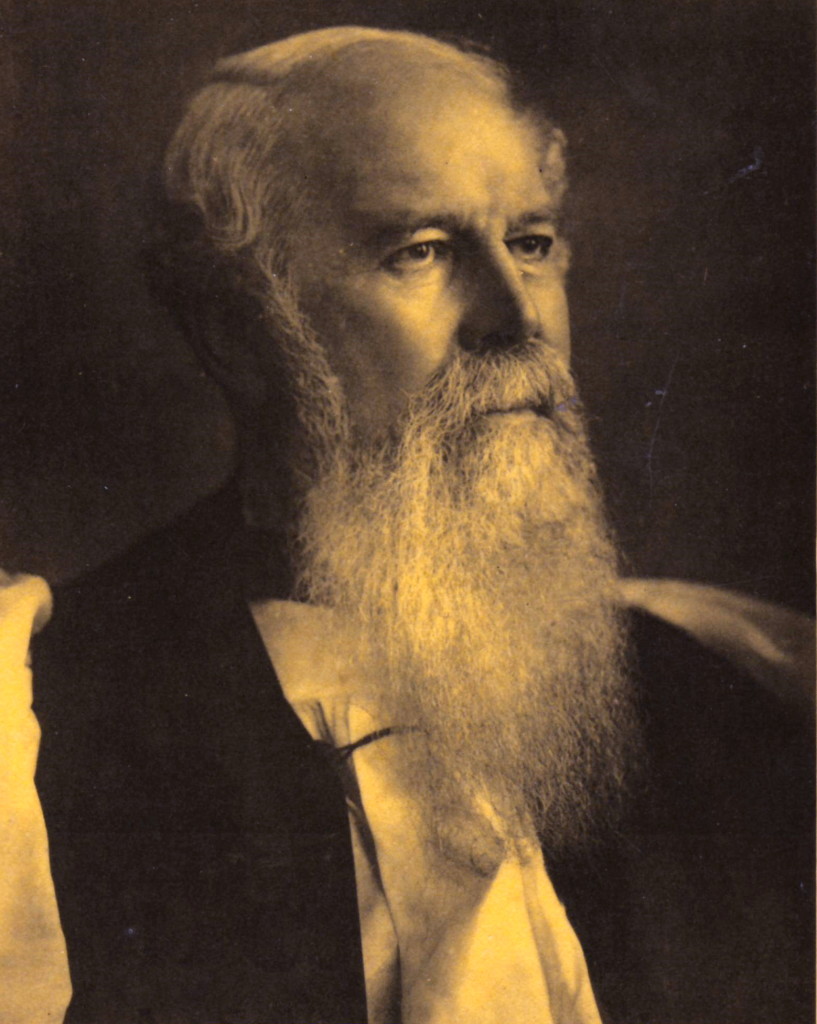
John Charles Ryle (10 May 1816 — 10 June 1900) was an English evangelical Anglican bishop. He was the first Anglican bishop of Liverpool.
Pristine Grace functions as a digital library of preaching and teaching from many different men and ministries. I maintain a broad collection for research, study, and listening, and the presence of any preacher or message here should not be taken as a blanket endorsement of every doctrinal position expressed.
I publish my own convictions openly and without hesitation throughout this site and in my own preaching and writing. This archive is not a denominational clearinghouse. My aim in maintaining it is to preserve historic and contemporary preaching, encourage careful study, and above all direct readers and listeners to the person and work of Christ.
Brandan Kraft
Bible Verse Lookup
Loading today's devotional...
Unable to load devotional.
Select a devotional to begin reading.
Examples: Isaiah 53:10, Rom 8:28-30, Psalm 23, grace, love one another
to
This chapter has verses 1---
Sign in to save your Bible lookup and search history.
Comments
Your comment has been submitted and is awaiting moderation. Once approved, it will appear on this page.
Be the first to comment!