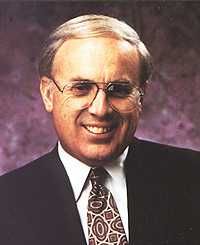
Superb message by John MacArthur given at the "Standing Firm: 2012 West Coast Conference".
Sermon Transcript
Auto-generated transcript • May contain errors
100%
Well, first of all, thank you,
Steve, for that vitally, vitally important subject. Thank you,
Chris, for such a kind introduction. I did not know the firestorm
that the gospel according to Jesus would cause when I wrote
that book. I was profoundly exercised when
I wrote it. I will admit that. because I
felt that the gospel was being misrepresented, and that it was
being misrepresented at the heart of the tradition that I came
from. I was shocked at the misrepresentation
of the gospel that I felt was coming out of the seminary that
was the bastion of my own heritage. And I will admit that I wrote
that with a fire in my heart, that book. And I remember Zondervan
that published the book and brought it out said that they thought
it would sell about 25,000 copies. but they didn't understand what would
happen if someone stepped on the oxygen at Dallas Seminary
and cut off their air. So, it went way, way beyond that
initially and did cause a firestorm. And you know, it became a defining
moment in my own life. When I came out of seminary,
I had been prepared in seminary to fight battles over inerrancy.
biblical inspiration, to fight battles over what Steve was talking
about, paradigms of sanctification, true and false, and to understand
what true sanctification was. Never did I believe that I would
spend my life trying to defend the gospel from evangelical attacks. That was a total shock. And when I wrote that, I essentially
distanced myself from my own tradition. And I wound up for
a little bit in the process of that, a lost soul, until in studying
for that very book, I can say that I fully and with all the
passion of my heart embraced Reformed theology. And it started with its soteriology
at its basic subjective level. What does it mean to put your
faith in Jesus Christ? And it hasn't stopped. It was
the gospel according to Jesus, and then I wrote an answer to
all the reaction called The Gospel According to the Apostles, and
then came Ashamed of the Gospel, and the same effort to clarify
the gospel, then came Hard to Believe, and now comes Slave.
And I just keep trying to address the fact that evangelicals are
not rightly representing the gospel. How can, after all these
years, we not get that? That seems to be the reality
of it. I'm very thankful that the Lord
in His wonderful providence and grace just kind of blended me
in to this movement. At the same time, you were coming
along, and a few others were coming along, and Jim Boyce was
raising the profile of all of these things. And, you know,
this was brand new from the category that I came from. to take on
a subject like that at that level and take that approach. And I
needed some new companions, and so I'm grateful. One of the most prominent preachers
in America that all of you would know, when that book came out,
called me up and said, I have to meet with you right now. And
I said, sure, I'd be glad to. We went to lunch, and he said,
you have divided the body of Christ in a massive way by the
writing of that book. And I just asked him, is it true? If it's not true, then write
an answer. Tell me where it's not true." But the point that
he was making was the point that I felt, that there was an immediate
alienation. But that's okay. This is something
we have to get right. This is something we have to
get right. Some of us can be wrong about baptism. This we have to get right. Now you would think that with the massive
onslaught of this great work that is pouring out of the Reformed
minds, that the questions would be resolved, that everybody would
get on board And as Steve said, that you'd
finally see it and then see it everywhere, the sovereignty of
God in the gracious work of salvation. But we still have battles to
fight, and battles to fight at this very basic foundational
level around the gospel. And one of the battles is, believe
it or not, the necessity of believing the gospel of Jesus Christ to
be saved. There is much movement in evangelicalism
to espouse the idea that you don't need to believe the gospel
to be saved. The message of Christianity has
always been the message of faith in Christ. The content of that
objectively is found in the gospel facts of history recorded in
Scripture. We have always affirmed that.
That has been the core of true biblical understanding since
the New Testament. True Christians have always believed
that the only way sinners can be rescued from eternal hell
is to believe the gospel, to acknowledge Christ. For centuries,
Christians have given their lives and shed their blood to make
that message known. For centuries, they have spent
their fortunes to send missionaries to the farthest corners of the
world who, in many cases, have given their lives there, either
in life or in death, to get the one message that saves, apart
from which no one can be saved. This is what we have believed. Salvation comes only to those
who believe the truth concerning Jesus Christ, His person and
His work. And here it is, this really pathetic
irony that in our time, with greater means than ever to proclaim
the gospel to the ends of the earth, the church has become
confused as to whether that is even necessary. embarrassed by the realities
of sin and hell, fearful of offending the perishing by calling them
to repent and confess Jesus as Lord, and trying desperately
to save God from being responsible for anyone's condemnation. We have raised questions about
whether People even need to hear the gospel. After all, God loves you just
the way you are, as we heard earlier. We have questions about
the lordship of Christ. We have lots of questions about
the doctrine of justification. We have confusion about the doctrine
of imputation. We have a whole lot of confusion
as well about faith. Is it even necessary to believe
in Jesus Christ? So the question that I've been
given in this session is, do people have to hear the gospel
and believe it to be saved? The biblical answer is yes, and
that's what we've always believed, and that's what we've always
preached and given our lives generation after generation to
proclaim. But we have some new ideas. I'll
just give you some, maybe some categories and then some people
to sort of set the scene a little bit. There is a movement that
falls under the title natural theology. You may have been reading
a little bit about that. Natural theology suggests that
a man has natural reasoning powers to bring himself to God without
the Bible and without the gospel. He is able to know enough about
God to satisfy a sort of divine minimum requirement without Scripture. One source of that we might understand,
this I drew out of the LA Times. The Pope, interpreting the Second
Vatican Council, says, and I quote, the gospel teaches us that those
who live in accordance with the Beatitudes and who bear lovingly
the sufferings of life will enter God's kingdom, close quote. We might concede that the Catholics
would believe that. The biblical teaching that salvation
only comes in response to faith in Jesus Christ is rejected. It is rejected as unreasonably
cruel. And the heathen are saved if
they just live good lives and are sincere, and as Peter Kreeft
tried to say in Ecumenical Jihad, they are essentially monotheistic. In fact, Peter Kreeft says in
that book, endorsed by Chuck Colson and Jim Packer, that even
atheists will be in heaven if they sought to find out if, in
fact, there was a God. So don't be surprised, says Peter
Kreeft, Roman Catholic, if you enter heaven and see Hindus and
Muslims. In fact, Muslims, for the most
part, are better Christians than Christians. The book is Ecumenical
Jihad, endorsed by J.I. Packer and Charles Colson on
the back cover. There was an interesting interview,
very interesting interview on the Hour of Power, one of my
favorite television programs. I switch from R.C. Sproul to
Robert Shuler often. One broadcast of the Hour of
Power, this is 1997, and I ordered the transcript of it because
I was so amazed at it. The guest was Billy Graham, Billy
Graham, the leading evangelist of the world. Billy Graham is
having a conversation with Robert Shuler, and here is the conversation.
Mr. Graham said, I think everybody
that loves Christ or knows Christ, whether they are conscious of
it or not, they're members of the body of Christ, whether they
come from the Muslim world, the Buddhist world, or the Christian
world. or the non-believing world. They're
members of the body of Christ because they've been called by
God. They may not even know the name
of Jesus, but they know they need something, and I think they're
saved, and they're going to be with us in heaven." That was Billy Graham, not Robert
Shuler. To which Billy Graham responds again, I've met people
in tribal situations, they've never seen a Bible, heard about
a Bible, never heard of Jesus, but they've believed in their
hearts that there is a God, and they've tried to live a life
that's apart from the community in which they lived. To which
Robert Shuler said, there's a wideness in God's mercy. To which Mr. Graham said, there is, there
definitely is. We're not talking about something
that's on the fringes, folks. Is any of that conversation a
reflection of the truth that we believe about the necessity
of the gospel? It doesn't matter whether they
know the name of Jesus or have ever heard the gospel. Perhaps
on a more academic front, if I had the choice, I'd choose
to keep this there, so let me fix it. If we get on a more academic
front, we run into a man who, through the years, metamorphosed
continually by the name of Clark Pinnock, and I'm quoting from
him, when we approach the man of faith, he started out as an
evangelical, when we approach the man of faith other than our
own faith, It will be with a spirit of expectancy to find out how
God has been speaking to him and what new understanding of
the grace and love of God we may discover in this encounter. Pinnock goes on to say, our task
in approaching another people, another culture, another religion
is to take off our shoes because the place we are approaching
is holy ground. we may forget that God was there
before our arrival," end quote. And then Pinnock said this, God
has more going on by way of redemption than what happened in first century
Palestine. Raymond Pinnickian wrote a book
called The Unknown Christ of Hinduism. There's a bizarre title,
The Unknown Christ of Hinduism. And in it, he says this, and
I quote, page 54, the good and bona fide Hindu is saved by Christ,
and not by Hinduism. But it is through the sacraments
of Hinduism, through the message of morality and the good life,
that the mysticism that comes down to him through Hinduism
is a mysticism by which Christ saves that Hindu. A popular television charismatic
pastor down in Texas, John Hagee, says the Jews don't have to believe
in Christ. They don't have to believe the gospel. They can
be saved by another means. And he advocates this all the
time. A book written a few years ago
and published by Moody Press called Totally Saved, written
by Dr. Tony Evans, says that people
who've never heard the gospel will be saved by being transdispensationalized. Coins that word. That is, they
will be treated as if they lived prior to Christ's arrival. Have you had enough? You want
more, that's enough for me. Are we wasting our time sending
out missionaries? Are we wasting our time preaching
the gospel? Are we just making things worse? Because if they're
saved without the message, the message can only then potentiate
their damnation. Now I know that you know that
Jesus said, I am the way, the truth, and the life. No man comes
to the Father but by Me. I know that you know that, John
14, 6, Acts 4, 12. There's not salvation available
in any other name under heaven given among men, only the name
of Christ by which we are to be saved. You know those positive
things, but let's take a different approach. than just to recite
those verses, or I would be done now, and I have a few more minutes
to fill. So let's… let's come at this
a little bit differently, and let's ask the question, does
the unaided pagan have in himself the ability to come to any saving
knowledge of God, left to himself? Well, if you have any sensible
biblical doctrine of depravity, you know the answer. Of course,
but let's expand that a little bit and look at some Scripture
passages that I think might enrich us. You know, we could actually
start in Genesis 3, and you can always start there, but we can
start there by saying, if man by his own reason could know
God savingly, then we would assume that there would have been a
really big advantage to Adam and Eve before they fell. Did
Adam and Eve have the natural powers in their sinless condition?
Did they have with perfect minds and perfect reason the capability
naturally to understand why they were created and exactly what
God required of them? Would they have known intuitively
what to do, what not to do, what to eat, what not to eat? Does
natural theology put you in line with the purposes and the will
and the plans and the requirements and the mandates of God? Many of these natural theologians,
I suppose, would be shocked to have to face the reality that
even Adam and Eve couldn't know what God required and what God
denied them by any means of their perfect reason unless God had
revealed it to them. God had to tell them, don't eat
this, eat this. Marry this woman that showed
up this morning. Name the animals. Take care of
the garden. Adam is not the origin of truth.
Adam is not the origin of justice, duty, morality, meaning, beauty.
The Creator God is the origin of all of that, and it was all
given to Him in times of special revelation day by day when God
walked and talked with Adam. God had to come down and find
Adam every day and give Adam His requirements. No one can
understand God unaided by special revelation, and even in His unfallen
condition, He would not intuitively have been able to do the will
of God and to please God if He had not heard from God what God
required. And since the Fall, whatever
hope there would be for a perfect human being to know and obey
the will of God is so far corrupted that we would agree that no fallen,
corrupted individual could ever intuitively please God by his
own human reasonings. Man cannot please God apart from
obedience to His revelation. And according to the seventeenth
chapter of Acts, now God requires all men to repent and believe
in the one He raised from the dead. Where does man left to himself
get? Does he get to God? Does he get
to God savingly? Is God impressed with His intuition,
with His mystical meanderings through His own human reason
and the collective reason of whatever pagan community He's
submitted Himself to or subjected to? Is God pleased? Is that a
path to God? Let me show you a few passages.
Let's start in Romans 1. And there's a lot that can be
said about this. from a lot of portions of Scripture,
but what time does this session end, Chris? 3.30? Oh. Okay. Well, I'll tell you a few
things. I just, I want you to get the picture of Romans 1,
verse 14. I'm under obligation to both
Greeks and barbarians, wise and foolish. What is that obligation? For my part, I'm eager to do
what? Preach the gospel. I'm not ashamed
of the gospel. It is the power of God for salvation
to everyone who believes, to the Jew first and also to the
non-Jew. Everyone in the world is is targeted here by the Apostle
Paul in this discharge of his debt to proclaim the only message
that saves, which is the gospel. He is a debtor. He is obligated
to those who are Jews, to those who are Greeks, to those who
are educated, to those who are uneducated, because there is
no other way to be saved. Verse 18 then is that very compelling
statement, the wrath of God is revealed from heaven against
all ungodliness and unrighteousness of men who suppress the truth
in unrighteousness. This is the problem with the
human race, with the natural man. He suppresses the truth
that He has. He doesn't go from the truth
that He has to greater light on His own. He goes the other
way. That which is known about God
is evident within them, for God made it evident to them. He has
reasoning power. He has deductive powers which
would lead Him back to an original source, a first cause. He has
enough reasoning power to go back through the steps of logic
to using cause and effect reasoning, which is how we reason about
everything, to go back to the first cause and understand that
the one who caused this is a glorious, creative power, verse 20, with
invisible attributes, eternal power, a divine nature, and that
is so evident and so obvious that man is without excuse. Now
here's the key point. This isn't enough to save him.
This is just enough to damn him without excuse. And he doesn't go from there
to the truth. He goes from there to error. He starts down. They know God. They don't honor Him as God.
They don't give Him thanks. They become futile in their speculation. Their foolish heart is darkened.
Professing to be wise, they become morons. That's the Greek word,
moron. It is. It's a Greek word. and they exchange the glory of
the incorruptible God for an image of the form of corruptible
man, birds four-footed." You know the passage. So what happens
is man is given reasoning power to take him back to God, and
he can know a lot about the attributes of God by looking at the world
around him, power and beauty and order and structure and design
and personality, all of those things. And his reason takes him back
to that cause. And when he gets there, he starts
down, and his heart's darkened, and he corrupts what he knows
because that's all he can do. Left to himself, man is an inexcusable
religious moron. That's where he's going to end
up. and God is going to bring His judgment and His wrath on
him. Man's nature with natural revelation,
if you want to call it that, will only make him a proud, foolish,
empty, evil, corrupt sinner who will have no excuse when he stands
before God. Romans 2 even says he has a moral
set. in his mind. He has a structure
of morality, the law of God written in his heart. But even the Jews,
with the law of God written in their heart and the law of God
written in Scripture, were judged and condemned. So
man left to himself, with only his aided powers, aided by the
corporate influence of the community of the pagans around him is going
to end up as an inexcusable moron who develops a false religion. Now to further understand this,
and we're moving pretty fast because I want to cover a few
of these, 1 Corinthians chapter 1, and this is going to be another
few, so keep your Bible handy. 1 Corinthians chapter Here we have another very important
insight into a category of people. In verse 18, there are two categories
of people here. There are those who are perishing,
those who are present-tense perishing. That's a category of people.
That's all the unregenerate people. They're the perishing people,
okay? Those who are perishing. And then there There's another
group mentioned in verse 18, those who are being saved, those
who are in the process of salvation. And while salvation is, of course,
at its initiation not a process but a divine miracle, there is
following the first phase of salvation, which is justification,
regeneration, conversion, all of that, sanctification, and
then glorification. So those who belong to the being
saved, going from justification through sanctification to glorification,
that's one category. The other category is the perishing.
So let's look at the perishing and ask the question, what characterizes
the perishing? Well, the first thing we find
in verse 18 is that the word of the cross is to them foolishness. And here we have the same word
again, moron. It's morons for whom the truth
is moronic. They reject the gospel. They
reject the Word of the Cross as the gospel. They reject the
gospel. This is categorically true. Perishing
people reject the gospel. So, they are inexcusably incapable
of coming to God without the gospel, and to make it even worse,
if you give them the gospel, they will reject the gospel.
Why would they do that? Because the message is unacceptable. It is foolishness to them. It
is beneath them. They laughed at the Apostle Paul.
They mocked him. He preached Christ all the time,
and they were unimpressed by him. His presence is unimpressive,
and his speech is despicable. And all he did was preach the
gospel. So the category of perishing
people are spiritual religious morons without excuse, who even
when they hear the gospel, reject the gospel because The message
is unacceptable, unreasonable. It's not a rational message,
this substitutionary atonement, this salvation by a crucified
Jew. Look, Paul had a horrendous time
trying to communicate that message with all the rest of the early
church in the Gentile world, didn't he? You can go to the
Circus Maximus in Rome, and you will find the fading remnants
of an amazing carving around Circus Maximus. It's a carving
of a crucified figure with the body of a man and the head of
a jackass. And underneath, the words, Alexa Menos, a man bowing
down, and the words, Alexa Menos worships his God. Who would worship
a crucified jackass? That was the world's view. That was a tough sell to tell
the Roman world, a world where everybody wanted freedom in a
world of slavery, that they needed to become slaves to a crucified
Jew. That's a tough sell. The whole
message was idiocy. But not only is it unreasonable,
it's unattainable. Verse 19. And here he borrows
from Isaiah 29, it is written, I will destroy the wisdom of
the wise, the cleverness of the clever I will set aside. Where
is the wise? Where is the scribe? Where is
the debater of this age? Has not God made foolish the
wisdom of this world? Then this statement in 21, since
in the wisdom of God the world through its wisdom did not come
to know God. You can't get to God from that
path. It can't be done. On the other
hand, God was well-pleased through the foolishness of the message
preached to save those who believe. Friends, that's the Great Commission
in different words. The only hope of salvation is
through the preaching of the message of the Word of the cross
and the hearing and believing. That's the only hope. So they had an unreasonable message. They had a message that was unattainable
from the human perspective. The message is unreasonable.
The message is unattainable. And to make things more difficult,
in verses 26 to 28, it says the people preaching it are unremarkable. Not many wise, not many mighty,
not many noble, foolish, weak. base, despised, things that are
not, things meaning people who are absolutely nobody's. You have an unreasonable message
about salvation in someone who claimed to be God and was crucified
by the Romans, rejected by the people He came to save the Jews. And that's supposed to be the
God of the universe and the only Savior? That is unreasonable. Even worse, it's unattainable.
Even worse, its preachers are unremarkable and unimpressive
and unfashionable. It comes down into chapter 2. That's where He says, I was with
you in weakness, fear, trembling. my message, my preaching were
not in persuasive words of wisdom, but in the demonstration of the
Spirit and of power." So how is anybody going to believe?
I mean, this is impossible. Not only it is impossible for
the unregenerate to be saved apart from the gospel, it's impossible
for the unregenerate to be saved with the gospel. They can't get there without
it, and on their own, are you ready for this? They can't get
there with it. But Paul says, I keep preaching
it. Why do you keep preaching it, Paul? Why do you keep preaching
it? His answer comes in verse 30
and 31 of chapter 1 by – I love this – if you haven't seen the
sovereignty of God clearly before, see it now. By His doing, you're
in Christ Jesus. The only way anybody will ever
be saved is by His doing. who became to us wisdom from
God and righteousness and sanctification and redemption, so that just
as it is written, let him who boasts," what? Boasts in the
Lord. Why did the Lord design it this
way? So that he gets what? All the glory. All the glory. Paul says in chapter 2, look,
I preach the way I preach so that your faith doesn't rest
on the wisdom of men, but on the what? Power of God. So the people in the category
of the perishing, the world of unbelievers, aren't going to
be saved on their own without the gospel. They aren't even
going to be saved on their own with the gospel, but they're
not going to be saved without the gospel. But when they are
saved with the gospel, they're going to be saved by the power
of God who saves them. To add to the same kind of thoughts,
drop down in chapter 2 of 1 Corinthians to verse Who among men knows the thoughts
of a man except the spirit of a man which is in him? Even so,
the thoughts of God, no one knows except the Spirit of God." I've
got news for you. You have no idea on your own
what God thinks. This is ludicrous. Some guy somewhere
in the world by his own mystical intuition is going to discern
the mind of God? Not a chance. His mind is so
corrupt that he thinks like a fallen, corrupt, godless human being,
and God doesn't think that way. So, the apostle says, the only
one who knows the thoughts of God is the Spirit of God. So, the only way we're ever going
to know What God thinks and what God desires and what God demands
is if they're revealed to us, so we have received, not the
Spirit of the world, but the Spirit who is from God, so that
we may know the things freely given to us by God, which things
we also speak, not in words taught by human wisdom, but in those
taught by the Spirit, combining spiritual thoughts listened with
spiritual words. Let me tell you something, any
spiritual thought that isn't connected to a spiritual word
in the Scripture is wrong. Spiritual thoughts come from
spiritual words. This is talking about the revelation
of Holy Scripture. Verse 16 says, we have the mind
of Christ. That's not a mystical experience.
That's not intuitive. That's the Scripture. We have
the mind of Christ, the mind of God revealed by the Holy Spirit. And only by that can we know
what God desires, what God requires, what God demands. A natural man,
let's go back to natural theology, verse 14, doesn't accept the
things of the Spirit of God, and we're back to the same word,
their foolishness. He can't understand them. They're
spiritually appraised. He's spiritually dead and blind. Apart from the revelation of
Scripture encompassing the gospel of Jesus Christ, no one in the
natural can find his way to God. All the best of human wisdom
leads to false religion and ignorance, for which, as we saw in Romans
1, they profess to be wise and give themselves PhDs. Turn to 2 Corinthians chapter
10. A couple more minutes here. 2 Corinthians chapter 10. Talk about spiritual warfare
today. There are a lot of people who talk about that and they
think it means chasing demons around and telling them what
to do. You really don't want to do that.
You look silly, first of all, telling demons what to do. I
remember being at a big pastor's conference. I don't know if you
were there that time, and the moderator, I think you might
have been there, stood up to start this great big pastor's
conference, and he said, let's pray. And he said, Satan, I thought,
whoa, were you there? What? I almost… I was the speaker. I almost fell out of my… Who
is he think he is? Satan? Then he started telling
Satan what to do. You know, wow. That's not spiritual
warfare. Chasing demons. Here's spiritual
warfare. Verse 3, 2 Corinthians 10. We
walk in the flesh, and we're not talking there about sin,
but rather we're human. We're human. This is talking about
ministry, how Paul did ministry. You know, we're human, but we
don't war according to the flesh. We don't use human weapons, okay?
There are no human weapons that are going to work. So the weapons
of our warfare are not human, but divinely powerful for the
destruction of fortresses. Vivid language. We've got to
have, I think the King James says, mighty unto God, but divinely
powerful is good. Our weapons have to be superhuman,
supernatural, transcendent. We can't use human ingenuity,
human planning, human technique, human wisdom. It's got to be
divine. Why do we have to go to battle
on the divine level with divine weapons? Because we're going
into a very, very formidable operation for the destruction
of fortresses. The Greek word fortress means
fort, prison, tomb. Same word. massive granite stone
edifices. We're trying to destroy massive
fortifications in spiritual warfare. What are they? They're described
in verse 5. End of verse 4 talks about, as we said, the destruction
of fortresses. The beginning of verse 5, the
destruction of logismos, speculations. That means the fortresses are
speculations. What is the logismos that NAS
calls speculations? It's ideas, ideologies, theories,
viewpoints, philosophies, psychologies, religions, any kind of idea. Further follow it. even every
lofty thing raised up against the knowledge of God." Spiritual
war is a battle against anti-God ideas. It's a battle for the
mind. It's not chasing demons. It's
battling for the minds of people whose minds are captive to deadly
anti-God ideologies and ideas and theories and viewpoints and
religions. We need weapons that smash error. You tell me, what is the only
thing that can destroy error? Truth. So He doesn't even have
to tell us. We get it. We have to go with
divine truth, supernatural, divine truth. And what is our goal? If we're going to do evangelism,
this is another great commission passage. We have to smash all
wrong thinking about God and take every thought captive to
the obedience of whom? Christ. There is no other way
for people to be delivered. People are… they have fortified
themselves in their damning ideologies. Those fortifications become their
prisons and then become their tombs. If we want to rescue people,
we have to smash those ideologies and replace them with the truth
about Christ and call them to obedience to Him, bringing every
thought captive to Christ. No matter how you come at this
in the Bible, you always end up with the necessity to proclaim
the truth concerning Christ. That is the only thing that frees
people from the imprisonment that their damning ideologies
hold them in. Go back to 1 Corinthians for
a moment. We may not get past Paul's letters to the Corinthians,
but there's one other very formidable passage to mark here, and it
draws on Deuteronomy 22, and it draws on Psalm 106. But it's
1 Corinthians 10, 19. Paul is talking about this whole
problem of food offered to idols. But down in verse 19, he says,
an idol isn't anything. No, an idol isn't anything. We
agree with that. It is a fabrication. But an important thing to understand
is, when people sacrifice to idols, when they worship their
idols, their false gods, could we say that that's the best they
can do, and that's the most revelation they have, and they're trying
their best, and God will accept that? He will accept that as worship
of Him? because they don't know any better? Will He say, that's
okay, you were trying to worship, and I'll let that be a substitute
for Me? I don't think so. Verse 20, the things which the
nations sacrifice, they sacrifice to what? Yeah, demons. That's demon worship. That's
what Hindus do. That's what Jehovah's Witnesses
do. That's what Mormons do. They worship demons, not God. That's where you go with natural
theology. That's where you go with that
kind of thinking. You end up worshiping demons every single
time. Demons. Demon worship. When I was in Russia, I was meeting
a group of pastors in closed session, all the leading pastors
of the evangelical church in Russia, and they said, because
they hadn't really had a lot of training, they said, isn't
Allah the same as Jehovah God? And I didn't know the question
would come up. I said, no, no, He is not. Those who worship Allah worship
demons. There is no Allah, al-ilah, the
God. There is no Allah. There is only
the demons that impersonate Him. Natural theology will get you
to worshiping demons and before God without an excuse. The only
way to be saved is through the gospel of Jesus Christ. Why do
you think Jesus said, go into all the world and preach the
gospel to every creature? That's the only way. I wish I had time to talk about
Romans 10. That was the best part of this
message. Wow. You took all my time, Steve. Faith, no, no, I can't do that.
I've got to catch an airplane, I've got to preach in church
tomorrow. Look, Romans 10, let's sum it up. Whoever calls
upon the Lord shall be saved. How will they call on Him? They
haven't heard. You need more? How can they hear
if they don't have a preacher? How are they going to have a
preacher unless they're sent? This isn't brain surgery. That's
why we've been doing this for 2,000 years, sending preachers
to the ends of the earth, right? Because faith, saving faith,
comes by hearing the message concerning Christ. We better pray. Let's pray. If I get my second wind, we're
all in trouble. Father, we thank You from the
depths of our hearts that Your Word is so clear. We love it. We love it so deeply. And what
we love about it is its life-giving power. And that comes because
it's clear to us. not because we're noble and mighty
and brilliant, not because we're the elite minds, but in its majestic
simplicity, its message is unmistakable so that a wayfaring stranger,
though he be a fool, need not err, so that even a child could
understand. The world must hear the message
of Jesus Christ. May we never be so content with
our theology never so content with our privilege of being saved
by sovereign grace that we forget that our great God has not only
saved us, chosen us, but He's chosen us to be the means by
which He will save others, make us faithful in the relentless
proclamation of the glorious gospel of Christ. for His honor
and glory forever and ever. And everyone said, Amen.
Pristine Grace functions as a digital library of preaching and teaching from many different men and ministries. I maintain a broad collection for research, study, and listening, and the presence of any preacher or message here should not be taken as a blanket endorsement of every doctrinal position expressed.
I publish my own convictions openly and without hesitation throughout this site and in my own preaching and writing. This archive is not a denominational clearinghouse. My aim in maintaining it is to preserve historic and contemporary preaching, encourage careful study, and above all direct readers and listeners to the person and work of Christ.
Brandan Kraft
Bible Verse Lookup
Examples: Isaiah 53:10, Rom 8:28-30, Psalm 23, grace, love one another
0 results
Click a result to view with context
to
This chapter has verses 1---
Sign in to save your Bible lookup and search history.
Comments
Your comment has been submitted and is awaiting moderation. Once approved, it will appear on this page.
Be the first to comment!