Bootstrap
J.C. Ryle

085. The Barren Fig Tree, Luke 13:6-9

Luke 13:6-9
J.C. Ryle October, 19 2018 Audio
0 Comments
This superb narration of Ryle's devotional commentary on the Gospel of Luke has been professionally read, and graciously supplied by Christopher Glyn. Please visit his website, treasures365.com/shop.php, where you can purchase additional superb audios at very reasonable prices.

You will find it helpful to READ the texts--as you LISTEN to the audios!

The TEXTS for the entire commentary can be bound here:
http://gracegems.org/Ryle/Luke.htm

The AUDIOS for the entire commentary can be bound here:
https://www.sermonaudio.com/search.asp?subsetit...

Sermon Transcript

Auto-generated transcript • May contain errors

100%
J. C. Ryle's devotional thoughts on the Gospel of Luke. Section 85. The barren fig tree. Luke 13, verses 6-9.

He spake also this parable. A certain man had a fig tree planted in his vineyard, and he came and sought fruit thereon, and found none. Then said he to the dresser of his vineyard, Behold, these three years I come seeking fruit On this fig-tree and find none. Cut it down, why cumbreth it the ground? And he answering, said unto him, Lord, let it alone this year also, Till I shall dig about it and dung it, And if it bear fruit, well, and if not, Then after that thou shalt cut it down.

The parable we have now read is particularly humbling and heart-searching. The Christian who can hear it and not feel sorrow and shame as he looks at the state of Christendom must be in a very unhealthy state of soul.

We learn first from this passage that where God gives spiritual privileges, he expects proportionate returns. Our Lord teaches this lesson by comparing the Jewish church of his day to a fig tree planted in a vineyard. That was exactly the position of Israel in the world. They were separated from other nations by the Mosaic law and ordinances, no less than by the situation of their land. They were favored with revelations of God which were granted to no other people. Things were done for them which were never done for Egypt, or Nineveh, or Babylon, or Greece, or Rome. It was only just and right that they should bear fruit to God's praise. It might reasonably be expected that there would be more faith, and penitence, and holiness, and godliness in Israel than among the heathen. This is what God looked for. The owner of the fig tree came seeking fruit.

But if we mean to get the full benefit of the parable before us, then we must look beyond the Jewish church. We must look to the Christian churches. They have light and truth and doctrines and precepts of which the heathen never hear. How great is their responsibility! Is it not just and right that God should expect fruit from them? We must look to our own hearts. We live in a land of Bibles and liberty and gospel preaching. How vast are the advantages we enjoy compared to the Chinese and Hindu. Let us never forget that God expects fruit from us.

These are solemn truths. Few things are so much forgotten by men as the close connection between privilege and responsibility. We are all ready enough to eat the fat and drink the sweet and bask in the sunshine of our position both as Christians and Englishmen. and even to spare a few pitying thoughts for the half-naked savage who bows down to sticks and stones. But we are very slow to remember that we are accountable to God for all we enjoy, and that to whomever much is given, of them much shall be required. Let us awake to a sense of these things. Let us not forget that the great Master looks for fruit,

We learn, secondly from this passage, that it is a most dangerous thing to be unfruitful under great religious privileges. The manner in which our Lord conveys this lesson to us is deeply impressive. He shows us the owner of the barren fig tree complaining that it bore no fruit. These three years I have come seeking fruit, and find none. He describes him as even ordering the destruction of the tree as a useless cumberer of the ground. Cut it down! Why does it cumber the ground? He brings in the dresser of the vineyard, pleading for the fig-tree, that it may be spared a little longer. Lord, let it alone this year also. And he concludes the parable by putting these solemn words into the vinedresser's mouth. If it bears fruit next year, fine. If not, then cut it down.

There is a plain warning here to all professing churches of Christ. If their ministers do not teach sound doctrine, and their members do not live holy lives, then they are in imminent peril of destruction. God is every year observing them and taking account of all their ways. They may abound in ceremonial religion, They may be covered with the leaves of forms and services and ordinances, but if they are destitute of the fruits of the Spirit, then they are reckoned to be useless cumberers of the ground. Unless they repent, they will be cut down.

It was so with the Jewish church forty years after our Lord's ascension. It will be so yet with many others, it may be feared, before the end comes. The axe is lying near the root of many an unfruitful church. The sentence will yet go forth. Cut it down.

There is a plainer warning still in the passage for all unconverted professing Christians. There are many in every congregation who hear the gospel who are literally hanging over the brink of the bottomless pit They've lived for years in the best part of God's vineyard and yet borne no fruit. They've heard the gospel preached faithfully for hundreds of Sundays, yet have never embraced it and taken up the cross and followed Christ. They do not perhaps run into open sin, but they do nothing for God's glory. There's nothing positive about their religion.

Of each of these the lord of the vineyard might say with truth, I come for these many years seeking fruit on this tree, and have found none. It only cumbers the ground. Cut it down. There are myriads of respectable, professing Christians in this plight. They have not the least idea how near they are to destruction. Never let us forget that to be content with sitting in the congregation and hearing sermons while we bear no fruit in our lives is conduct which is most offensive to God. It provokes Him to cut us off suddenly, and that without remedy.

We learn, lastly, from this parable, what an infinite debt we all owe to God's mercy and Christ's intercession. It seems impossible to draw any other lesson from the earnest pleading of the vinedresser, Lord, let it alone this year also. Surely we see here, as in a looking-glass, the loving kindness of God and the mediation of Christ.

Mercy has been truly called the darling attribute of God. Power, justice, purity, holiness, wisdom, unchangeableness are all part of God's character, and have all been manifested to the world in a thousand ways, both in His works and in His Word. But if there is one of his attributes which he is pleased to exhibit to man more clearly than others, beyond doubt, that attribute is his mercy. He is a God who delights in mercy.

Micah chapter 7 verse 18 Divine mercy founded on the mediation of a coming Savior. Divine mercy was the cause why Adam and Eve were not cast down to hell in the day that they fell. Divine mercy has been the cause why God has borne so long with this sin-laden world and not come down to judgment. Divine mercy is even now the cause why unconverted sinners are so long spared, and not cut off in their sins.

We have probably not the least conception how much we all owe to God's mercy. The last day will prove that all mankind were debtors to God's mercy and Christ's mediation. Even those who are finally lost will discover to their shame that it was of the Lord's mercies they were not consumed long before they died. As for those who are saved, Covenant mercy will be all their plea.

Are we fruitful or unfruitful? This after all is the question which concerns us most. What does God see in us year after year? Let us take heed so to live that he may see fruit in us. So,
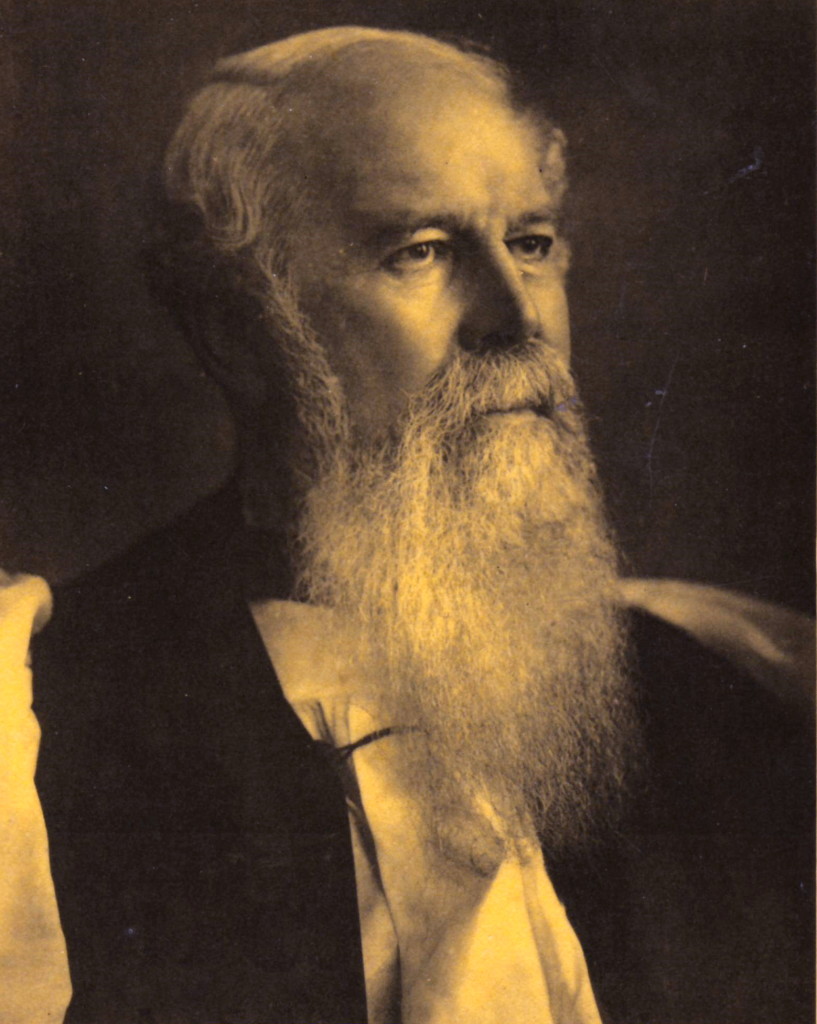
J.C. Ryle
About J.C. Ryle
John Charles Ryle (10 May 1816 — 10 June 1900) was an English evangelical Anglican bishop. He was the first Anglican bishop of Liverpool.
Broadcaster:

Comments

0 / 2000 characters
Comments are moderated before appearing.

Be the first to comment!

Joshua

Joshua

Shall we play a game? Ask me about articles, sermons, or theology from our library. I can also help you navigate the site.