Bootstrap
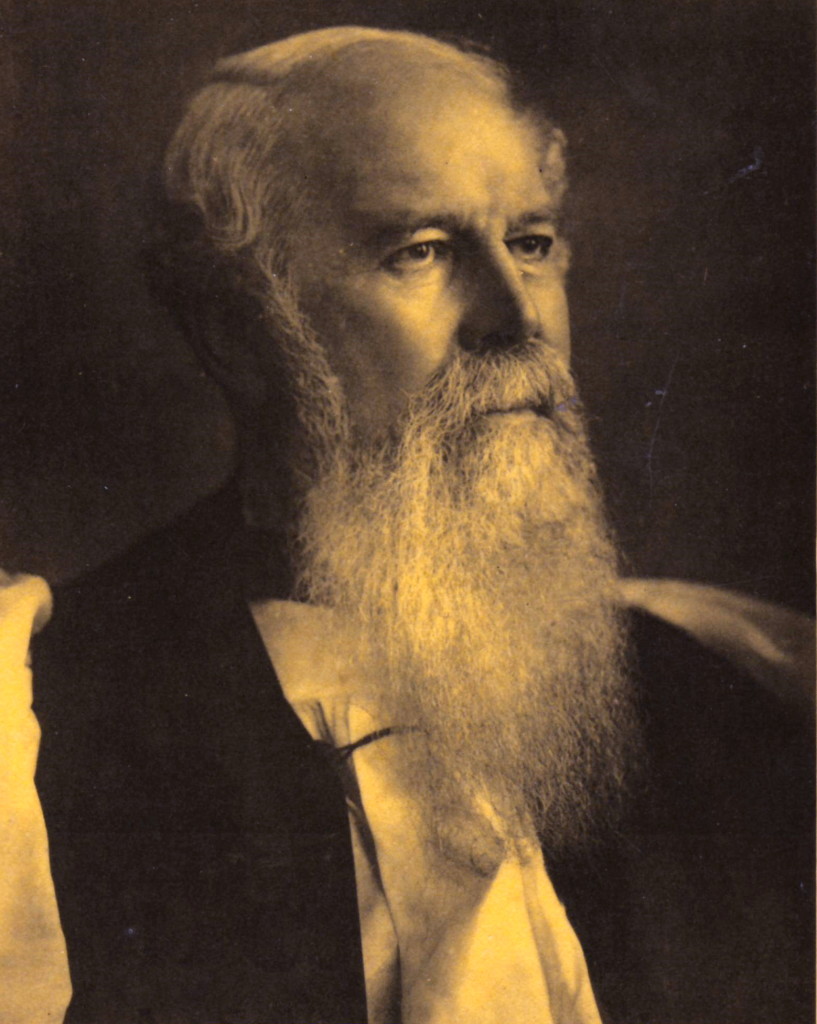
J.C. Ryle

087. Parables of the Mustard Seed, and the Yeast, Luke 13:18-21

Luke 13:18-21
J.C. Ryle October, 19 2018 Audio
0 Comments
This superb narration of Ryle's devotional commentary on the Gospel of Luke has been professionally read, and graciously supplied by Christopher Glyn. Please visit his website, treasures365.com/shop.php, where you can purchase additional superb audios at very reasonable prices.

You will find it helpful to READ the texts--as you LISTEN to the audios!

The TEXTS for the entire commentary can be bound here:
http://gracegems.org/Ryle/Luke.htm

The AUDIOS for the entire commentary can be bound here:
https://www.sermonaudio.com/search.asp?subsetit...

Sermon Transcript

Auto-generated transcript • May contain errors

100%
J.C. Ryle's Devotional Thoughts on the Gospel of Luke, section 87, Parables of the Mustard Seed and the Yeast, Luke chapter 13, verses 18 through 21. Then said he, Unto what is the kingdom of God like, and whereunto shall I resemble it? It is like a grain of mustard seed which a man took and cast into his garden, and it grew and waxed a great tree, and the fowls of the air lodged in the branches of it. And again he said, Whereunto shall I liken the kingdom of God? It is like leaven which a woman took and hid in three measures of meal, till the hole was leavened.

There is a peculiar interest belonging to the two parables contained in these verses. We find them twice delivered by our Lord and at two distinct periods in his ministry. This fact alone should make us give the more earnest attention to the lessons which the parables convey. They will be found rich both in prophetic and experimental truths.

The parable of the mustard seed is intended to show the progress of the gospel in the world. The beginnings of the gospel were exceedingly small. It's like a mustard seed which a man took and planted in his garden. It grew and became a great tree, and the birds of the air perched in its branches.

It was a religion which seemed at first so feeble and helpless and powerless that it could not live. Its first founder was the one who was poor in this world and ended his life by dying the death of a criminal on the cross. Its first adherents were a little company whose number probably did not exceed a thousand when the Lord Jesus left the world. Its first preachers were a few fishermen and publicans who were, most of them, unlearned and ignorant men. Its first starting point was a despised corner of the earth called Judea, a petty tributary province of the vast empire of Rome. Its first doctrine was eminently calculated to call forth the enmity of the natural heart. Christ crucified was to the Jews a stumbling block, and to the Greeks foolishness.

Its first movements brought down persecution from all quarters on its adherents. Pharisees and Sadducees, Jews and Gentiles, ignorant idolaters, and self-conceited philosophers all agreed in hating and opposing Christianity. It was a sect everywhere spoken against. These are no empty assertions. They are simple historic facts which no one can deny. If ever there was a religion which was a little grain of seed at its beginning, that religion was the Christian gospel.

But the progress of the gospel, after the seed was once cast into the earth, was great, steady, and continuous. The grain of mustard seed grew and became a great tree. In spite of persecution, opposition, and violence, Christianity gradually spread and increased. Year after year, its adherents became more numerous. Year after year, idolatry withered away before it. City after city and country after country received the new faith. Church after church was formed in almost every quarter of the earth then known. Preacher after preacher rose up and missionary after missionary came forward to fill the place of those who died. Roman emperors and heathen philosophers, sometimes by force and sometimes by argument, tried in vain to check the progress of Christianity. They might as well have tried to stop the tide from flowing or the sun from rising. In a few hundred years the religion of the despised Nazarene, the religion which began in the upper chamber at Jerusalem, had overrun the civilized world. It was professed in nearly all Europe, in a great part of Asia, and the whole northern part of Africa. The prophetic words of the parable before us were literally fulfilled. The grain of mustard seed became a great tree, and the birds of the air perched in its branches. The Lord Jesus said it would be so, and so it came to pass.

Let us learn from this parable never to despair of any work for Christ because its first beginnings are feeble and small. A single minister in some large neglected town district, a single missionary amid myriads of savage heathen, a single reformer in the midst of a fallen and corrupt church, each and all of these may seem at first sight utterly unlikely to do any good. To the eye of man, the work may appear too great, and the instrument employed quite unequal to it. Let us never give way to such thoughts. Let us remember the parable before us and take courage. When the line of duty is plain, then we should not begin to count numbers and confer with flesh and blood. We should believe that one man with the living seed of God's truth on his side, like Luther or Knox, may turn a nation upside down. If God is with him, then none shall be able to stand against him. In spite of men and devils, the seed that he sows shall become a great tree.

The parable of the leaven is intended to show the progress of the gospel in the heart of a believer. The first beginnings of the work of grace in a sinner are generally exceedingly small. It is like the mixture of leaven with a lump of dough. a single sentence of a sermon, or a single verse of holy scripture, a word of rebuke from a friend, or a casual religious remark overheard, a tract given by a stranger, or a trifling act of kindness received from a Christian. Some one of these things is often the starting point in the life of a saint. The first actings of the spiritual life are often small in the extreme, so small that for a long time they are not known except by him who is the subject of them, and even by him they are not fully understood. A few serious thoughts and prickings of conscience, a desire to pray sincerely and not formally, a determination to begin reading the Bible in private, a gradual drawing towards means of grace, an increasing interest in the subject of religion, a growing distaste for evil habits and bad companions. These, or some of them, are often the first symptoms of grace beginning to move the heart of man. They are symptoms which worldly men may not perceive, and ignorant believers may despise, and even old Christians may mistake. Yet they're often the first steps in the mighty business of conversion. They're often the leaven of grace working in a heart.

The work of grace, once begun in the soul, will never stand still. It will gradually leaven the whole lump. Like leaven once introduced, it can never be separated from that with which it is mingled. Little by little it will influence the conscience, the affections, the mind, and the will, until the whole man is affected by its power, and a thorough conversion to God takes place. In some cases, no doubt, the progress is far quicker than in others. In some cases, the result is far more clearly marked and decided than in others. But wherever a real work of the Holy Spirit begins in the heart, the whole character is sooner or later leavened and changed the tastes of the man are altered the whole bent of his mind becomes different all things pass away and all things become new

2nd Corinthians chapter 5 verse 17 the Lord Jesus said that it would be so and all experience shows that so it is

Let us learn from this parable never to despise the day of small things in religion. Zechariah 4, verse 10. The soul must creep before it can walk, and walk before it can run. If we see any sign of grace beginning in a brother, however feeble, then let us thank God and be hopeful. The leaven of grace once planted in his heart shall yet leaven the whole lump. Being confident of this, that he who hath begun a good work in you will carry it on to completion until the day of Christ Jesus. Philippians chapter 1 verse 6

Let us ask ourselves whether there be any work of grace in our own hearts? Are we resting satisfied with a few vague wishes and convictions? Or do we know anything of a gradual, growing, spreading, increasing, leavening process going on in our inward man? Let nothing short of this content us. The true work of the Holy Spirit will never stand still. It will leaven the whole lump. so
J.C. Ryle
About J.C. Ryle
John Charles Ryle (10 May 1816 — 10 June 1900) was an English evangelical Anglican bishop. He was the first Anglican bishop of Liverpool.
Broadcaster:

Comments

0 / 2000 characters
Comments are moderated before appearing.

Be the first to comment!

Joshua

Joshua

Shall we play a game? Ask me about articles, sermons, or theology from our library. I can also help you navigate the site.