Bootstrap
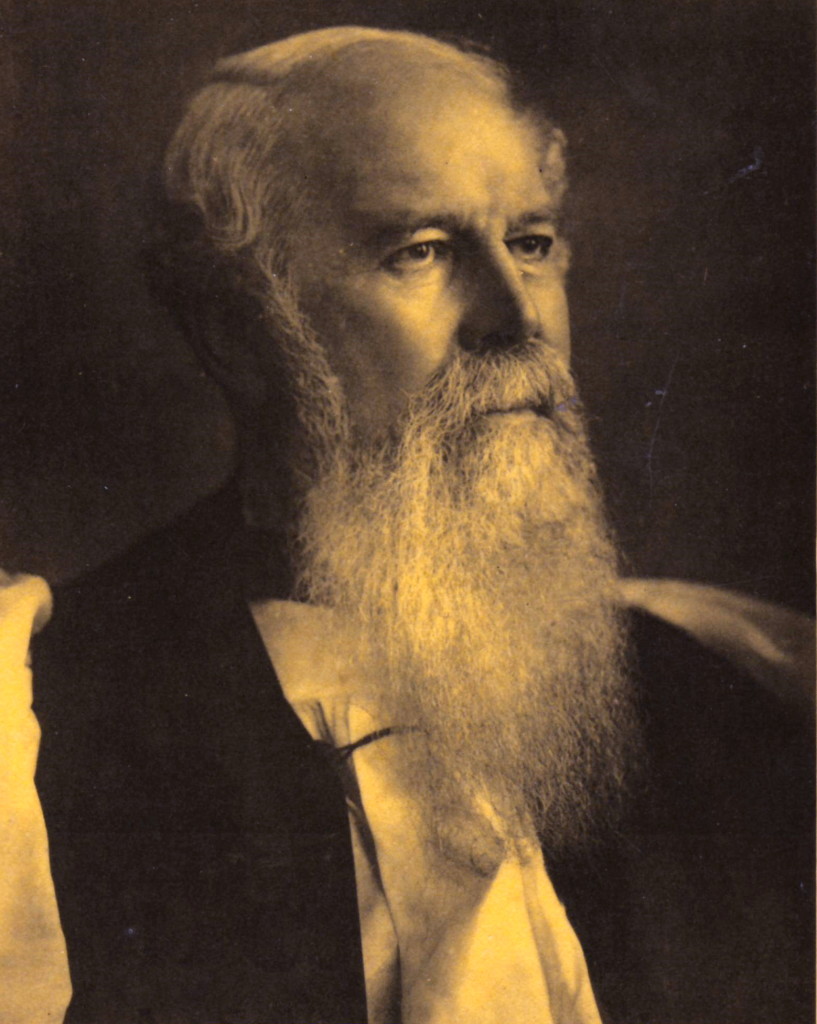
J.C. Ryle

093. The Cost of Being a Disciple, Luke 14:25-35

Luke 14:25-35
J.C. Ryle October, 19 2018 Audio
0 Comments
This superb narration of Ryle's devotional commentary on the Gospel of Luke has been professionally read, and graciously supplied by Christopher Glyn. Please visit his website, treasures365.com/shop.php, where you can purchase additional superb audios at very reasonable prices.

You will find it helpful to READ the texts--as you LISTEN to the audios!

The TEXTS for the entire commentary can be bound here:
http://gracegems.org/Ryle/Luke.htm

The AUDIOS for the entire commentary can be bound here:
https://www.sermonaudio.com/search.asp?subsetit...

Sermon Transcript

Auto-generated transcript • May contain errors

100%
J.C. Ryle's Devotional Thoughts on the Gospel of Luke
Section 93
The Cost of Being a Disciple
Luke Chapter 14, Verses 25-35

And there went great multitudes with him. And he turned and said unto them, If any man come to me, and hate not his father, and mother, and wife, and children, and brethren, and sisters, yes, and his own life also, he cannot be my disciple. And whoever does not bear his cross, and come after me, cannot be my disciple.

For which of you, intending to build a tower, sits not down first, and counts the cost, whether he have sufficient to finish it? Less happily, after he has laid the foundation, and is not able to finish it, all that behold it begin to mock him, saying, This man began to build, and was not able to finish.

Or what king, going to make war against another king, sits not down first and consults whether he be able with ten thousand to meet him that comes against him with twenty thousand? Or else, while the other is yet a great way off, he sends an embassage and desires conditions of peace.

So likewise, whoever he be of you that forsakes not all that he has, he cannot be my disciple.

Salt is good, but if the salt have lost his savour, with which shall it be seasoned? It is neither fit for the land, nor yet for the dunghill, but men, cast it out. He who has ears to hear, let him hear.

We learn firstly from this passage that true Christians must be ready, if need be, to give up everything for Christ's sake. This is a lesson which is taught in very remarkable language. Our Lord says, if anyone comes to me and does not hate his father and mother, his wife and children, his brothers and sisters, yes, even his own life, he cannot be my disciple.

This expression must doubtless be interpreted with some qualification. We must never explain any text of Scripture in such a manner as to make it contradict another. Our Lord did not mean us to understand that it is the duty of Christians to hate their relatives. This would have been to contradict the fifth commandment. He only meant that those who follow him must love him with a deeper love, even than their nearest and dearest relatives or their own lives.

He did not mean that it is an essential part of Christianity to quarrel with our relatives and friends. But he did mean that if the claims of our relatives and the claims of Christ come into collision, then the claims of relatives must give way. We must choose rather to displease those we love most upon earth than to displease Him who died for us on the cross.

The demand which our Lord makes upon us here is particularly stringent and heart-searching. Yet it is a wise and a necessary one. Experience shows, both in the church at home and in the mission field abroad, that the greatest foes to a man's soul are sometimes those of his own house. It sometimes happens that the greatest hindrance in the way of an awakened conscience is the opposition of relatives and friends.

Ungodly fathers cannot bear to see their sons taking up new views of religion. Worldly mothers are vexed to see their daughters unwilling to enter into the gaieties of the world. A collision of opinion takes place frequently as soon as saving grace enters into a family. And then comes the time when the true Christian must remember the spirit of our Lord's words in this passage. He must be willing to offend his family rather than offend Christ. The line of duty in such cases is doubtless very painful. It is a heavy cross to disagree with those we love, and especially about spiritual things. But if this cross is laid upon us, then we must remember that firmness and decision are true kindness. It can never be true love to relatives to do wrong in order to please them. And best of all, firmness accompanied by gentleness and consistency in the long run of life often brings its own reward.

Thousands of Christians will bless God at the last day that they had relatives and friends who chose to displease them rather than Christ. That very firmness was the first thing that made them think seriously and led finally to the conversion of their souls.

We learn secondly from this passage that those who are thinking of following Christ should be warned to count the cost. This is a lesson which was intended for the multitudes who followed our Lord without thought and consideration and was enforced by examples drawn from building and from war. It is a lesson which will be found useful in every age of the church.

It costs something to be a true Christian. Let that never be forgotten. To be a mere nominal Christian and go to church is cheap and easy work. But to hear Christ's voice, and follow Christ, and believe in Christ, and confess Christ, requires much self-denial. It will cost us our sins, and our self-righteousness, and our ease, and our worldliness. All, all must be given up. We must fight an enemy who comes against us with 20,000 followers. We must build a tower in troublous times.

Our Lord Jesus Christ would have us thoroughly understand this. He bids us to count the cost. Now why did our Lord use this language? Did he wish to discourage men from becoming his disciples? Did he mean to make the gate of life appear more narrow than it is? It's not difficult to find an answer to these questions.

Our Lord spoke, as he did, to prevent men following him superficially and inconsiderately from mere fleshly feeling or temporary excitement, who, in time of temptation, would fall away. He knew that nothing does so much harm to the cause of true religion as backsliding, and that nothing causes so much backsliding as enlisting disciples without letting them know the cost of what they take in hand. Jesus had no desire to swell the number of his followers by admitting soldiers who would fail in the hour of need. For this reason he raises a warning voice. He bids all who think of taking up service with him to count the cost before they begin.

Well would it be for the church and the world if the ministers of Christ would always remember their master's conduct in this passage. Often, far too often, people are built up in self-deception and encouraged to think they are converted, when in reality they are not converted at all. Feelings are supposed to be faith. Mere convictions are supposed to be grace. These things ought not so to be.

By all means let us encourage the first beginnings of religion in a soul. But never let us urge people forward without telling them what true Christianity entails. Never let us hide from them the battle and the toil. Let us say to them, come with us. But let us also say, count the cost.

We learn, lastly from this passage, how miserable is the condition of backsliders and apostates. This is a lesson which is intimately connected with the preceding one. The necessity of counting the cost is enforced by a picture of the consequences of neglecting to do so. The man who has once made a profession of religion, but has afterwards gone back from it, is like salt which has lost its savor. Such salt is comparatively useless. It is neither fit for the land nor fit for the ash heap, but men cast it out. Yet the state of that salt is a lively emblem of the state of a backslider.

No wonder that our Lord said, He who has ears to hear, let him hear. The truth which our Lord brings out in this place is very painful, but very useful and needful to be known.

No man, be it remembered, is in so dangerous a state as he who has once known the truth and professed to love it, and has afterwards fallen away from his profession and gone back to the world. You can tell such a man nothing that he does not know. You can show him no doctrine that he has not heard. He has not sinned in ignorance like many. He has deserted Christ with his eyes opened. He has sinned against a known God and not an unknown God. His case is well near desperate.

all things are possible with God yet it is written it is impossible for those who were once enlightened if they shall fall away to renew them again unto repentance Hebrews chapter 6 verses 4 through 6

Let us ponder these things well. The subject is one which is not sufficiently considered. Let us never be afraid of beginning to serve Christ. But let us begin seriously, thoughtfully, and with a due consideration of the step we take. And, having once begun, let us pray for grace that we may persevere and never fall away.
J.C. Ryle
About J.C. Ryle
John Charles Ryle (10 May 1816 — 10 June 1900) was an English evangelical Anglican bishop. He was the first Anglican bishop of Liverpool.
Broadcaster:

Comments

0 / 2000 characters
Comments are moderated before appearing.

Be the first to comment!

Joshua

Joshua

Shall we play a game? Ask me about articles, sermons, or theology from our library. I can also help you navigate the site.