Bootstrap
J.C. Ryle

096. The Elder Son, Luke 15:25-32

Luke 15:25-32
J.C. Ryle October, 19 2018 Audio
0 Comments
This superb narration of Ryle's devotional commentary on the Gospel of Luke has been professionally read, and graciously supplied by Christopher Glyn. Please visit his website, treasures365.com/shop.php, where you can purchase additional superb audios at very reasonable prices.

You will find it helpful to READ the texts--as you LISTEN to the audios!

The TEXTS for the entire commentary can be bound here:
http://gracegems.org/Ryle/Luke.htm

The AUDIOS for the entire commentary can be bound here:
https://www.sermonaudio.com/search.asp?subsetit...

Sermon Transcript

Auto-generated transcript • May contain errors

100%
J.C. Ryle's Devotional Thoughts on the Gospel of Luke. Section 96. The Elder Son. Luke Chapter 15, verses 25 through 32.

Now his eldest son was in the field, and as he came and drew near to the house, he heard music and dancing, and he called one of the servants and asked what these things meant, and he said unto him, Your brother is come, and your father has killed the fatted calf, because he has received him safe and sound. And he was angry, and would not go in. Therefore his father came out and entreated him, and he answering said to his father, Lo, these many years do I serve you, neither transgressed I at any time your commandment, and yet you never gave me a kid that I might make merry with my friends. But as soon as this your son was come, which has devoured your living with harlots, you have killed for him the fatted calf. And he said unto him, Son, you are ever with me, and all that I have is yours. It was meat that we should make merry and be glad, for this your brother was dead and is alive again, was lost and is found.

These verses form the conclusion of the parable of the prodigal son. They're far less well-known than the verses which go before them, but they were spoken by the same lips which described the younger son's return to his father's house. Like everything which those lips spoke, they'll be found deeply profitable.

We're taught firstly in this passage how unkind and mean-spirited are the feelings of self-righteous men towards sinners. This is a lesson which our Lord conveys to us by describing the conduct of the elder brother of the prodigal son. He shows him to us as angry and finding fault because of the rejoicings over his brother's return. He shows him complaining that his father treated the returning prodigal too well and that he himself has not been treated as well as his merits deserved. He shows him utterly unable to share in the joy which prevailed when his younger brother came home, and giving away to mean-spirited and envious thoughts. It is a painful picture, but a very instructive one.

For one thing, this elder brother is an exact picture of the Jews of our Lord's times. They could not bear the idea of their Gentile younger brother being made partaker of their privileges. They would have gladly have excluded him from God's favor. They steadily refused to see that the Gentiles were to be fellow heirs and partakers of Christ with themselves. In all this, they were precisely acting the part of the elder brother.

For another thing, the elder brother is an exact type of the scribes and Pharisees of our Lord's times. They objected that our Lord received sinners and ate with them. They murmured because he opened the door of salvation to publicans and harlots. They would have been better pleased if our Lord had confined his ministry to them and their party, and had left the ignorant and wicked entirely alone. Our Lord saw this state of things clearly, and never did he paint it with such graphic power as in the picture of the Elder Brother.

Last but not least, the Elder Brother is an exact type of a large class in the Church of Christ in the present day. There are thousands on every side who dislike a free, full, unfettered gospel to be preached. They're always complaining that ministers throw the door too wide open and that the doctrine of grace tends to promote profligacy. Whenever we come across such people, let us remember the passage we're now considering. Their voice is the voice of the elder brother. Let us beware of this spirit infecting our own heart.

It arises partly from ignorance. Men begin by not seeing their own sinfulness and unworthiness, and then they imagine that they are much better than others, and that nobody is as deserving as themselves. It arises partly from lack of love. Men are lacking in kind feeling towards others, and then they are unable to take pleasure when others are saved. Above all, it arises from a thorough misunderstanding of the true nature of gospel forgiveness. The man who really feels that we all stand by grace, and are all debtors, and that the best of us has nothing to boast of, and has nothing which he has not received, such a man will not be found talking like the elder brother.

We are taught secondly in this passage that the conversion of any soul ought to be an occasion of joy to all who see it. The Lord shows us this by putting the following words into the mouth of the prodigal's father. We had to celebrate this happy day for your brother was dead and has come back to life. He was lost but now he is found.

The lesson of these words was primarily meant for the Scribes and Pharisees. If their hearts had been in a right state, then they would never have murmured at our Lord for receiving sinners. They would have remembered that the worst of publicans and sinners were their own brethren, and that if they themselves were different, then it was grace alone which had made the difference. They would have been glad to see such helpless wanderers returning to the fold. They would have been thankful to see them plucked as brands from the burning, and not cast away for ever. Of all these glad feelings, unhappily, they knew nothing. Wrapped in their own self-righteousness, they murmured and found fault, when in reality they ought to have thanked God and rejoiced.

The lesson is one which we shall all do well to lay to heart. Nothing ought to give us such true pleasure as the conversion of souls. It makes angels rejoice in heaven. It ought to make Christians rejoice on earth. What if those who are converted were the vilest of the vile? What if they have served sin and Satan for many long years and wasted their substance in riotous living? It matters nothing at all. Has grace come into their hearts? Are they truly penitent? Have they come back to their Father's house? Are they new creatures in Christ Jesus? Are the dead made alive and the lost found? These are the only questions we have any right to ask. If they can be answered satisfactorily, then we ought to rejoice and be glad. Let the worldly, if they please, mock and sneer at such conversions. Let the self-righteous, if they will, murmur and find fault and deny the reality of all great and sudden conversions. But let the Christian who reads the words of Christ in this chapter remember them and act upon them. Let him thank God and be merry. Let him praise God that one more soul is saved. Let him say, this my brother was dead and is now alive. He was lost and now is found.

What are our own feelings on this subject? This, after all, is the question which concerns us most. The man who can take deep interest in politics, or sports, or money-making, or farming, but none in the conversion of souls, is no true Christian. He is himself dead, and must be made alive again. He is himself lost, and must be found. you
J.C. Ryle
About J.C. Ryle
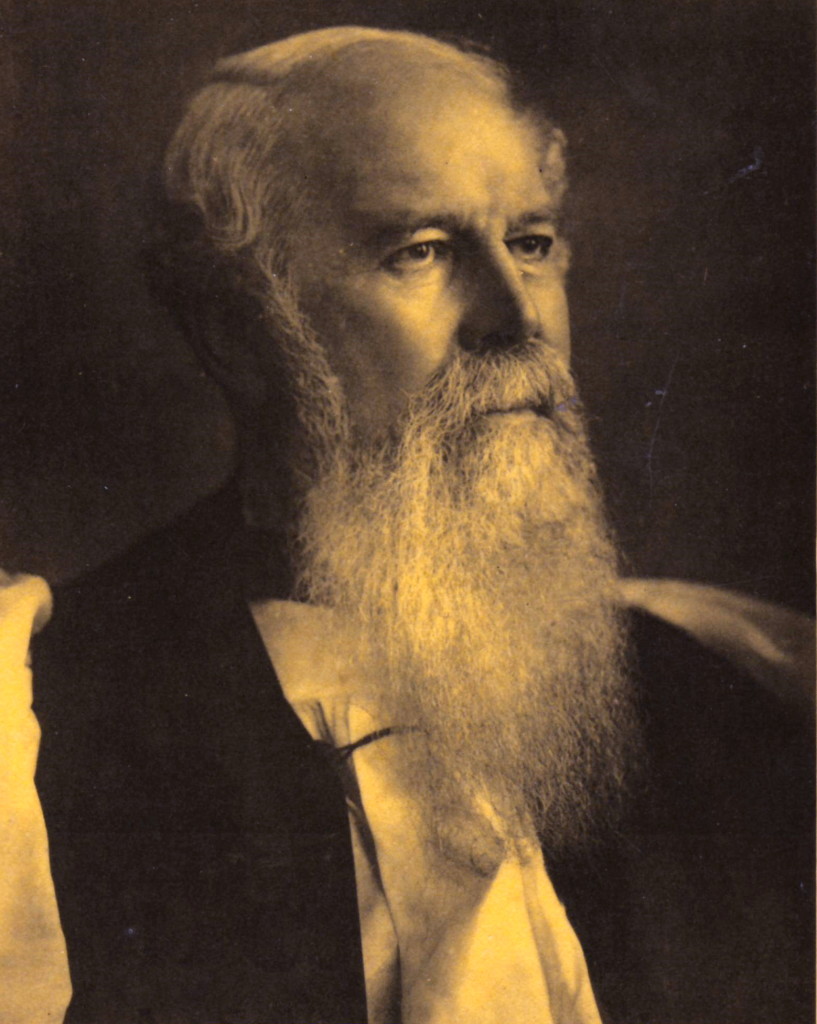
John Charles Ryle (10 May 1816 — 10 June 1900) was an English evangelical Anglican bishop. He was the first Anglican bishop of Liverpool.
Broadcaster:

Comments

0 / 2000 characters
Comments are moderated before appearing.

Be the first to comment!

Joshua

Joshua

Shall we play a game? Ask me about articles, sermons, or theology from our library. I can also help you navigate the site.