Bootstrap
J.C. Ryle

099. The Rich Man and Lazarus, Luke 16:19-31

Luke 16:19-31
J.C. Ryle October, 19 2018 Audio
0 Comments
This superb narration of Ryle's devotional commentary on the Gospel of Luke has been professionally read, and graciously supplied by Christopher Glyn. Please visit his website, treasures365.com/shop.php, where you can purchase additional superb audios at very reasonable prices.

You will find it helpful to READ the texts--as you LISTEN to the audios!

The TEXTS for the entire commentary can be bound here:
http://gracegems.org/Ryle/Luke.htm

The AUDIOS for the entire commentary can be bound here:
https://www.sermonaudio.com/search.asp?subsetit...

Sermon Transcript

Auto-generated transcript • May contain errors

100%
J.C. Ryle's Devotional Thoughts on the Gospel of Luke Chapter 16, verses 19-31

There was a certain rich man, which was clothed in purple and fine linen, and fared sumptuously every day. And there was a certain beggar, named Lazarus, which was laid at his gate full of sores, and desiring to be fed with the crumbs which fell from the rich man's table. Moreover, the dogs came and licked his sores.

And it came to pass that the beggar died and was carried by the angels into Abraham's bosom. The rich man also died and was buried. And in hell he lifted up his eyes, being in torment, and sees Abraham afar off and Lazarus in his bosom. And he cried and said, Father Abraham, have mercy on me and send Lazarus that he may dip the tip of his finger in water and cool my tongue for I am tormented in this flame.

But Abraham said, Son, remember that you in your lifetime received your good things and likewise Lazarus evil things. But now he is comforted and you are tormented. And besides all this, between us and you, there's a great gulf fixed so that they which would pass from hence to you cannot. Neither can they pass to us that would come from thence.

Then he said, I pray you therefore, father, that you would send him to my father's house for I have five brethren that he may testify unto them lest they also come into this place of torment. Abraham said unto him They have Moses and the prophets, let them hear them.

And he said, Nay, father Abraham, but if one went unto them from the dead, they will repent. And he said unto him, If they hear not Moses and the prophets, neither will they be persuaded, though one rose from the dead.

The parable we have now read, in one respect, stands alone in the Bible. It is the only passage of scripture which describes the feelings of the unconverted after death. For this reason, as well as for many others, the parable deserves special attention.

We learn, firstly from this parable, that a man's worldly condition is no test of his state in the sight of God. The Lord Jesus describes to us two men, of whom one was very rich and the other very poor. The one fared sumptuously every day. The other was a mere beggar who had nothing that he could call his own. And yet of these two, the poor man had grace, and the rich man had none. The poor man lived by faith and walked in the steps of Abraham. The rich man was a thoughtless, selfish worldling, dead in trespasses and sins. Let us never give way to the common idea that men are to be valued according to their income, and that the man who has the most money is the one who ought to be the most highly esteemed. There is no authority for this notion in the Bible. The general teaching of Scripture is flatly opposed to it. Not many wise, not many mighty, not many noble are called. 1 Corinthians chapter 1 verse 26. Let not the rich man glory in his riches, but let him who glories glory in this, that he who knows and understands me. Jeremiah chapter 9 verse 24 Wealth is no mark of God's favor. Poverty is no mark of God's displeasure. Those whom God justifies and glorifies are seldom the rich of this world. If we would measure men as God measures them, then we must value them according to their grace.

We learn, secondly from this parable, that death is the common end to which all classes of mankind must come. The trials of the beggar and the sumptuous faring of the rich man alike cease at last. There came a time when both of them died. All go to one place. Ecclesiastes chapter 3 verse 20. Death is a great fact that all acknowledge, but very few seem to ponder. Most men eat and drink and talk and plan as if they were going to live upon earth forever. The true Christian must be on his guard against this spirit. He who would live well, said a great divine, should often think of his last day, and make it his company-keeper. against murmuring and discontent and envy in the state of poverty, and against pride and self-sufficiency and arrogance in the possession of wealth, there are few better antidotes than the remembrance of death. The beggar died, and his bodily needs were at an end. The rich man died, and his feasting was stopped forevermore. We learn thirdly from this parable that the souls of believers are especially cared for by God in the hour of death. The Lord Jesus tells us that when the beggar died he was carried by angels to Abraham's bosom. There's something very comforting in this expression. We know little or nothing of the state and feelings of the dead. When our own last hour comes and we lie down to die, we should be like those who journey into an unknown country. But it may satisfy us to know that all who fall asleep in Jesus are in good keeping. They're not houseless, homeless wanderers between the hour of death and the day of resurrection. They are at rest in the midst of France with all who have had like faith with Abraham. They have no lack of anything. And best of all, Paul tells us that they are with Christ. We learn fourthly from this parable, the reality and eternity of hell. The Lord Jesus tells us plainly that after death the rich man was in hell, tormented with fire. He gives us a fearful picture of his longing for a drop of water to cool his tongue and of the gulf between him and Abraham which could not be passed. There are few more dreadful passages, perhaps, in the whole Bible than this one. And let it be remembered that he from whose lips it came was one who delighted in mercy. The certainty and endlessness of the future punishment of the wicked are truths which we must hold fast and never let go. From the day when Satan said to Eve, You shall not surely die, there never have been lacking men who have denied them. Let us not be deceived. There is a hell for the impenitent, as well as a heaven for believers. There is a wrath to come for all who do not obey the gospel of Christ. 2 Thessalonians 1, verse 8. From that wrath let us flee to the great hiding place, Jesus Christ the Lord. If men find themselves in torment at last, it will not be because there was no way to escape. We learn fifthly from this parable that unconverted men find out the value of a soul after death, when it is too late. We read that the rich man wanted Lazarus to be sent to his five brethren who were yet alive, lest they also should come to the place of torment. While he lived, he'd never done anything for their spiritual good. They had probably been his companions in worldliness, and like him had neglected their souls entirely. When he is dead, he finds out too late the folly of which they'd all been guilty, and desires that, if possible, they might be called to repentance. The change that will come over the minds of unconverted men after death is one of the most fearful points in their future condition. They will see and know and understand a hundred things to which they were obstinately blind while they were alive. They will discover that, like Esau, they have bartered away eternal happiness for a mere bowl of stew. There is no infidelity or skepticism or unbelief after death. It is a wise saying of an old divine that Hell is nothing more than truth known too late. We learn lastly from this parable that the greatest miracles would have no effect on men's hearts if they will not believe God's word. The rich man thought that if one went to his brethren from the dead, they would repent. He argued that the sight of one who came from another world must surely make them feel their need of forgiveness, though the old familiar words of Moses and the prophets had been heard in vain. The reply of Abraham is solemn and instructive. If they do not hear Moses and the prophets, then neither will they be persuaded, though one rose from the dead. The principle laid down in these words is of deep importance. The scriptures contain all that we need to know in order to be saved, and a messenger from the world beyond the grave could add nothing to them. It is not more evidence which is needed in order to make men repent, but more heart and will to make use of what they already know. If the dead rose from their graves to instruct us they could tell us nothing more than the Bible already contains. After the first novelty of their testimony was worn away we would care no more for their words than the words of any other. This wretched waiting for something which we have not, a neglect of what we already have, is the ruin of thousands of souls. Faith, simple faith in the scriptures which we already possess, is the first thing needful to salvation. The man who has the Bible and can read it, and yet waits for more evidence before he becomes a decided Christian, is only deceiving himself. Unless he awakens from his delusion, he will die in his sins, and be forever in the torments of hell. you
J.C. Ryle
About J.C. Ryle
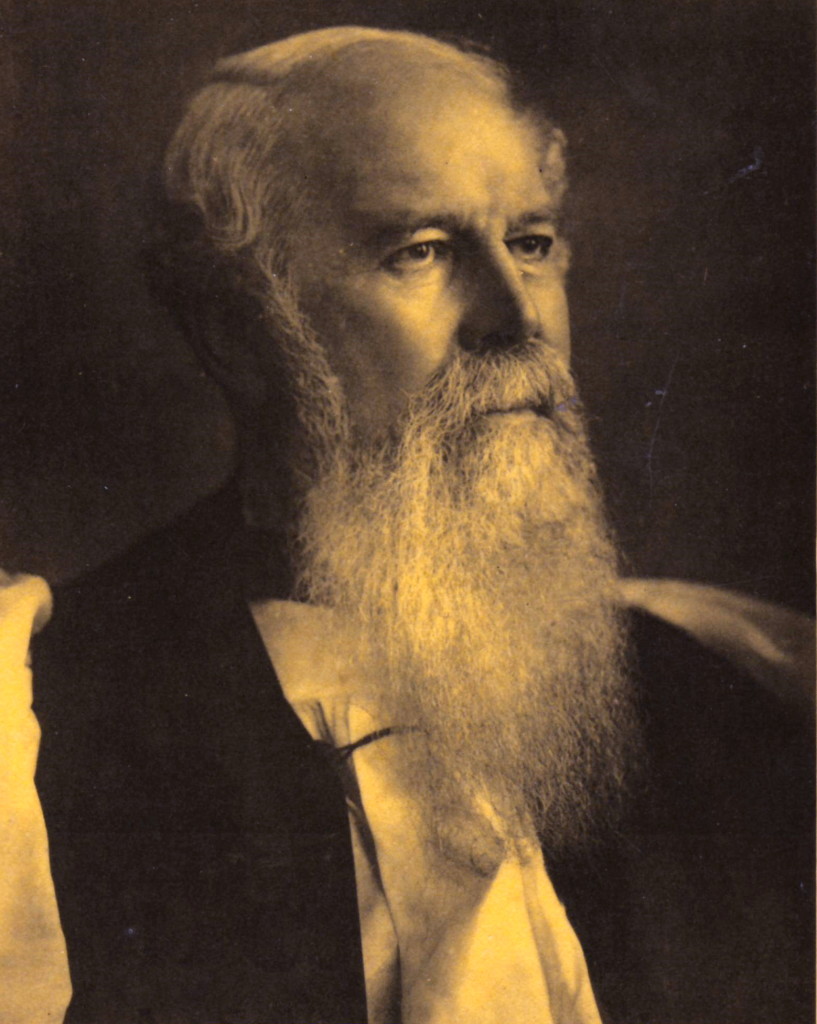
John Charles Ryle (10 May 1816 — 10 June 1900) was an English evangelical Anglican bishop. He was the first Anglican bishop of Liverpool.
Broadcaster:

Comments

0 / 2000 characters
Comments are moderated before appearing.

Be the first to comment!

Joshua

Joshua

Shall we play a game? Ask me about articles, sermons, or theology from our library. I can also help you navigate the site.