Bootstrap
J.C. Ryle

102. Ten Healed of Leprosy, Luke 17:11-19

Luke 17:11-19
J.C. Ryle October, 19 2018 Audio
0 Comments
This superb narration of Ryle's devotional commentary on the Gospel of Luke has been professionally read, and graciously supplied by Christopher Glyn. Please visit his website, treasures365.com/shop.php, where you can purchase additional superb audios at very reasonable prices.

You will find it helpful to READ the texts--as you LISTEN to the audios!

The TEXTS for the entire commentary can be bound here:
http://gracegems.org/Ryle/Luke.htm

The AUDIOS for the entire commentary can be bound here:
https://www.sermonaudio.com/search.asp?subsetit...

Sermon Transcript

Auto-generated transcript • May contain errors

100%
J.C. Ryle's devotional thoughts on the Gospel of Luke, section 102, 10 healed of leprosy, Luke chapter 17, verses 11 through 19. And it came to pass, as he went to Jerusalem, that he passed through the midst of Samaria and Galilee. And as he entered into a certain village, there met him ten men that were lepers, which stood afar off. And they lifted up their voices and said, Jesus, Master, have mercy on us. And when he saw them, he said unto them, Go, show yourselves unto the priests. And it came to pass that as they went, they were cleansed. And one of them, when he saw that he was healed, turned back, and with a loud voice glorified God, and fell down on his face at his feet, giving him thanks. And he was a Samaritan. And Jesus answering said, Were there not ten cleansed? But where are the nine? There are not found that return to give glory to God save this stranger. And he said unto him, Arise, go your way, your faith has made you whole.

Let us mark, firstly in this passage, how earnestly men can cry for help when they feel their need of it. We read that as our Lord entered into a certain village, ten men who were lepers met him. It is difficult to conceive any condition more thoroughly miserable than that of men afflicted with leprosy. They were cast out from society. They were cut off from all society with their fellows. The men described in this passage before us appear to have been truly sensible of their wretchedness. They stood afar off. But they did not stand idly doing nothing. They called out in a loud voice, Jesus, Master, have mercy on us. They acutely felt the deplorable state of their bodies. They found words to express their feelings. They cried earnestly for relief, when a chance for relief appeared in sight.

The conduct of the Ten Lepers is very instructive. It throws a light on a most important subject in practical Christianity, which we can never understand too well. That subject is prayer. How is it that many never pray at all? How is it that many others are content to repeat a form of words, but never pray with their hearts? How is it that dying men and women with souls to be lost or saved can know so little of real, hearty, sincere prayer? The answer to these questions is short and simple. The bulk of mankind have no sense of sin. They do not feel their spiritual disease. They're not conscious that they are lost and guilty and hanging over the brink of hell. When a man finds out his soul's ailment, then he soon learns to pray. Like the leper, he finds words to express his need. He cries for help.

How is it again that many true believers often pray so coldly? What is the reason that their prayers are so feeble and wandering and lukewarm as they frequently are? The answer once more is very plain. Their sense of need is not as deep as it ought to be. They're not truly alive to their own weakness and helplessness, and so they do not cry fervently for mercy and grace. Let us remember these things. Let us seek to have a constant and abiding sense of our real necessities. If saints could only see their souls as the ten afflicted lepers saw their bodies, then they would pray far better than they do.

Let us mark, secondly in these verses, how help meets men in the path of obedience. We're told that when the lepers cried to our Lord, he only replied, go show yourselves to the priests. He did not touch them and command their disease to depart. He prescribed no medicine, no washing, no use of outward material means. Yet healing power accompanied the words which he spoke. Relief met the afflicted company as soon as they obeyed his command. As they went, they were cleansed of their leprosy.

A fact like this is doubtlessly intended to teach us knowledge. It shows us the wisdom of simple, childlike obedience to every word that comes from the mouth of Christ. It does not befit us to stand still and reason and doubt when our Master's commands are plain and unmistakable. If the lepers had acted in this way, then they would never have been healed.

We must read the Scriptures diligently. We must try to pray. We must attend on the public means of grace. All these are duties which Christ requires at our hands and to which, if we love life, we must attend without asking vain and critical questions. It is just in the path of unhesitating obedience that Christ will meet and bless us.

Whoever has my commands and obeys them. He is the one who loves me He who loves me will be loved by my father and I too will love him and Show myself to him John chapter 14 verse 21

Let us mark, lastly in these verses, what a rare thing is thankfulness. We're told that of all the ten lepers whom Christ healed, there was only one who turned back and gave him thanks. The words that fell from our Lord's lips upon this occasion are very solemn. Were there not ten cleansed? Where are the other nine?

The lesson before us is humbling, heart-searching, and deeply instructive. The best of us are far too like the nine lepers. We're more ready to pray than to praise, and more disposed to ask God for what we have not than to thank him for what we have. Murmurings and complainings and discontent abound on every side of us. Few indeed are to be found who are not continually hiding their mercies under a bushel, and setting their needs and trials on a hill. These things ought not so to be.

But all who know the ways of mankind must confess that they are true. The widespread thanklessness of Christians is the disgrace of our day. It is a plain proof of our little humility. Let us pray for a daily thankful spirit. It is the spirit which God loves and delights to honor. David and Paul were eminently thankful men. It is the spirit which has marked all the brightest saints in every age of the church. It is the spirit which is the very atmosphere of heaven. Angels and just men made perfect are always praising God. It is the spirit which is the source of happiness on earth.

If we would not be anxious then we must make our requests known to God not only with prayer and supplication but with thanksgiving. Philippians chapter 4 verse 6

Above all, let us pray for a deeper sense of our own sinfulness. guilt and undeserving. This, after all, is the true secret of a thankful spirit. It is the man who daily feels his debt to grace and daily remembers that in reality he deserves nothing but hell. This is the man who will be daily thanking and praising God. Thankfulness is a flower which will never bloom well except upon a root of deep humility.
J.C. Ryle
About J.C. Ryle
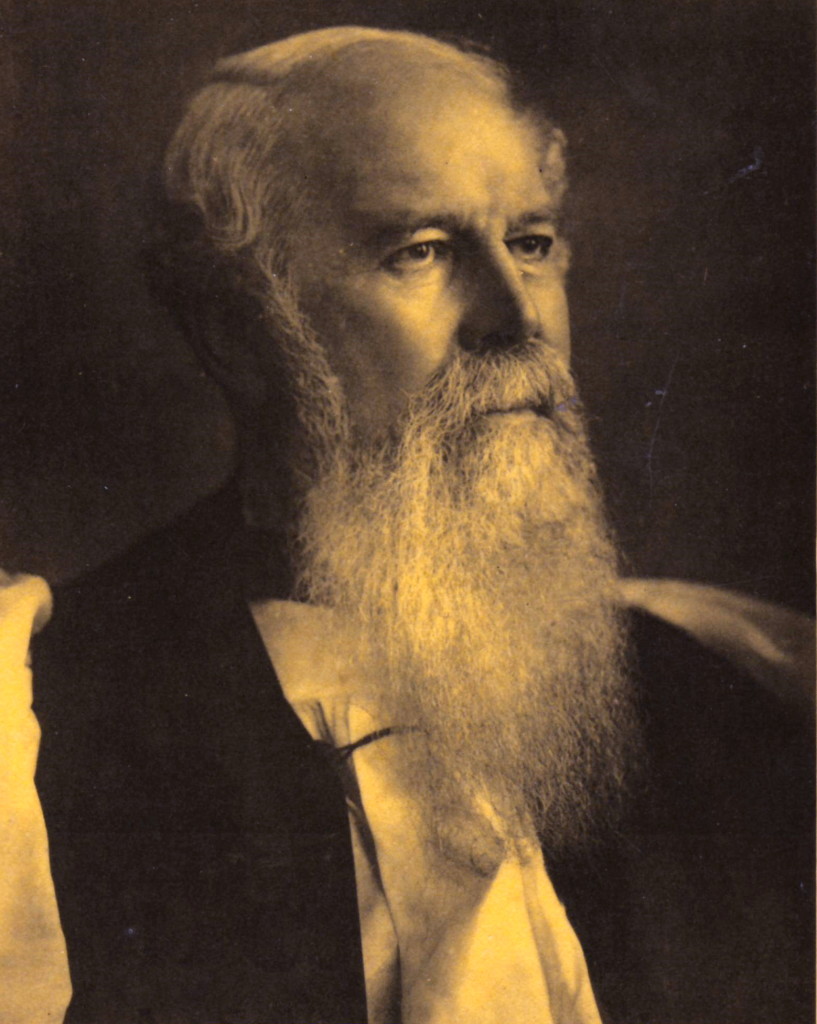
John Charles Ryle (10 May 1816 — 10 June 1900) was an English evangelical Anglican bishop. He was the first Anglican bishop of Liverpool.
Broadcaster:

Comments

0 / 2000 characters
Comments are moderated before appearing.

Be the first to comment!

Joshua

Joshua

Shall we play a game? Ask me about articles, sermons, or theology from our library. I can also help you navigate the site.