Bootstrap
J.C. Ryle

105. The Parable of the Persistent Widow, Luke 18:1-8

Luke 18:1-8
J.C. Ryle October, 19 2018 Audio
0 Comments
This superb narration of Ryle's devotional commentary on the Gospel of Luke has been professionally read, and graciously supplied by Christopher Glyn. Please visit his website, treasures365.com/shop.php, where you can purchase additional superb audios at very reasonable prices.

You will find it helpful to READ the texts--as you LISTEN to the audios!

The TEXTS for the entire commentary can be bound here:
http://gracegems.org/Ryle/Luke.htm

The AUDIOS for the entire commentary can be bound here:
https://www.sermonaudio.com/search.asp?subsetit...

Sermon Transcript

Auto-generated transcript • May contain errors

100%
J.C. Ryle's Devotional Thoughts on the Gospel of Luke, section 105, The Parable of the Persistent Widow, Luke chapter 18, verses 1 through 8. And he spoke a parable unto them to this end, that men ought always to pray, and not to faint, saying, There was in a city a judge, which feared not God, neither regarded man. And there was a widow in that city, and she came unto him, saying, Avenge me of mine adversary. And he would not for a while. But afterward he said within himself, Though I fear not God, nor a God-man, yet because this widow troubles me, I will avenge her, lest by her continual coming she weary me. And the Lord said, Hear what the unjust judge says. And shall not God avenge his own elect, which cry day and night unto him, though he bear long with them? I tell you that he will avenge them speedily. Nevertheless, when the Son of Man comes, shall he find faith on the earth?

The object of the parable before us is explained by Christ himself. To use the words of an old divine, the key hangs at the door. Jesus told his disciples a parable to show them that they should always pray and not give up. These words, be it remembered, are closely connected with the solemn doctrine of the second coming with which the preceding chapter concludes. It is perseverance in prayer during the long, weary intervals between the first and second comings which Jesus is urging his disciples to keep up. In that interval, we ourselves are standing. The subject, therefore, is one that ought to possess a special interest in our eyes.

These verses teach us firstly the great importance of perseverance in prayer. Our Lord conveys this lesson by telling the story of a friendless widow who obtained justice from a wicked magistrate by force of sheer importunity. Though I do not fear God nor regard man, said the unjust judge, yet because this widow troubles me I will see that she gets justice lest by her continual coming she weary me. Our Lord Himself supplies the application of the parable. And will not God bring about justice for His chosen ones who cry out to Him day and night? Will He delay in helping them? If importunity obtains so much from a wicked man, then how much more will it obtain for the children of God from the righteous Judge, their Father in heaven?

The subject of prayer ought always to be interesting to Christians. Prayer is the very life breath of true Christianity. It is in prayer that true religion begins. It is in prayer that true religion flourishes. It is in prayer that it decays. Prayer is one of the first evidences of conversion. Acts 9.11. Neglect of prayer is the sure road to a fall. Matthew 26.40-41. Whatever throws light on the subject of prayer is for our soul's health. Let it then be engraved deeply in our minds that it is far more easy to begin a habit of prayer than it is to keep it up. The fear of death or some temporary piercings of conscience or some excited feelings may make a man begin praying after a fashion, but to go on praying requires saving faith. We're apt to become weary and to give way to the suggestion of Satan that it is of no use.

And then comes the time when the parable before us ought to be carefully remembered. We must recollect that our Lord expressly told us always to pray and never give up. Do we ever feel a secret inclination to hurry our prayers or shorten our prayers or become careless about our prayers or omit our prayers altogether? Let us be sure, when we do, that it is a direct temptation from the devil. He is trying to sap and undermine the very citadel of our souls, and to cast us down to hell. Let us resist the temptation, and cast it behind our backs. Let us resolve to pray on steadily, patiently, perseveringly, and let us never doubt that it does us good.

However long the answer may be incoming, still let us pray on. Whatever sacrifice and self-denial it may cost us, still let us pray on. Pray always. Pray without ceasing. continue in prayer 1 Thessalonians chapter 5 verse 17 Colossians chapter 4 verse 2 let us arm our minds with this parable and while we live whatever else we make time for let us make time for prayer

These verses teach us, secondly, that God has an elect people upon earth who are under his special care. The Lord Jesus declares that God will avenge his own elect who cry day and night unto him. I tell you, he says, that he will avenge them speedily.

Election is one of the deepest truths of Scripture. It is clearly and beautifully stated in the 17th article of the Church of England. Election is the everlasting purpose of God, whereby before the foundations of the world were laid, He has decreed by His counsel, secret to us, to deliver from curse and damnation those whom he has chosen in Christ out of mankind, and to bring them by Christ to everlasting salvation. This testimony is true. This is sound speech which cannot be condemned. Titus 2

Election is a truth which should call forth praise and thanksgiving from all true Christians. Unless God had chosen and called them, they would never have been chosen and called on Him. Except He had chosen them of His own good pleasure, without respect to any goodness of theirs, there would never have been anything in them to make them worthy of His choice. The worldly and the carnal-minded may rail at the doctrine of election. The false professor may abuse it and turn the grace of God into a license for sin, Jude verse 4. But the believer who knows his own heart will ever bless God for election. He will confess that without election there would be no salvation.

But what are the marks of election? By what tokens shall a man know whether he is one of God's elect? These marks are clearly laid down in scripture. Election is inseparately connected with faith in Christ and conformity to his image. Romans chapter 8 verse 29 and 30 It was when Paul saw the working faith and patient hope and laboring love of the Thessalonians that he knew their election of God. 1 Thessalonians 1, verses 3 and 4. Above all, we have a plain mark described by our Lord in the passage before us. God's elect are a people who cry unto him night and day. They are essentially a praying people. No doubt there are many people whose prayers are formal and hypocritical. But one thing is very clear. A prayerless man must never be called one of God's elect. Let that never be forgotten.

These verses teach us, lastly, that true faith will be found very scarce at the end of the world. The Lord Jesus shows this by asking a very solemn question. When the Son of Man comes, shall he find faith on the earth? The question before us is a very humbling one. It shows the uselessness of expecting that all the world will be converted before Christ comes again. It shows the foolishness of supposing that all people are good, and that though differing in outward matters, they are all right at heart and all going to heaven. Such notions find no approval in the texts before us.

What is the use, after all, of ignoring facts under our own eyes? Facts in the world, facts in the churches, facts in the congregations we belong to, facts by our own doors and firesides. Where is faith to be seen? How many around us really believe what the Bible contains? How many live as if they believed that Christ died for them and that there is a coming judgment, a heaven and a hell? These are most painful and serious inquiries, but they demand and deserve an answer. Have we faith ourselves? If we have, then let us bless God for it. It is a great thing to believe all the Bible. It is a matter for daily thankfulness if we feel our sins and really trust in Jesus. We may be weak, frail, erring, shortcoming sinners. But do we believe? That is the grand question. If we believe, then we shall be saved. But he who does not believe shall not see life, and shall die in his sins under God's wrath. John 3.36, 8.24
J.C. Ryle
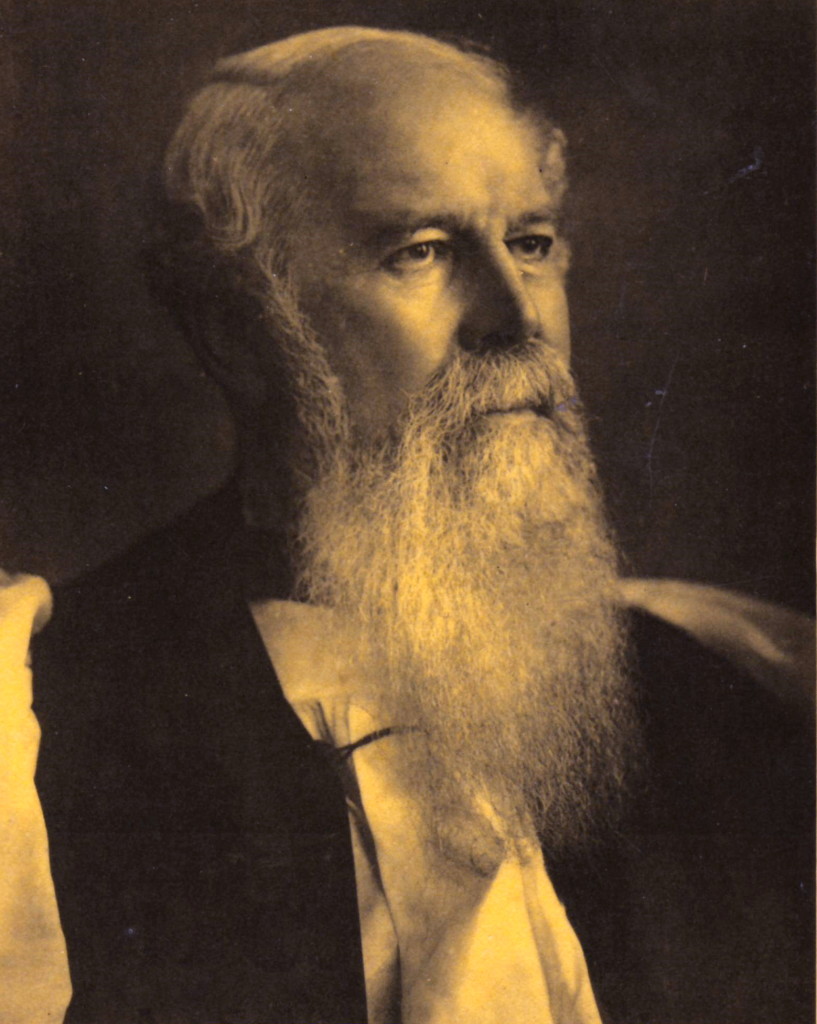
About J.C. Ryle
John Charles Ryle (10 May 1816 — 10 June 1900) was an English evangelical Anglican bishop. He was the first Anglican bishop of Liverpool.
Broadcaster:

Comments

0 / 2000 characters
Comments are moderated before appearing.

Be the first to comment!

Joshua

Joshua

Shall we play a game? Ask me about articles, sermons, or theology from our library. I can also help you navigate the site.