Bootstrap
J.C. Ryle

116. The Parable of the Tenants, Luke 20:9-19

Luke 20:9-19
J.C. Ryle October, 19 2018 Audio
0 Comments
This superb narration of Ryle's devotional commentary on the Gospel of Luke has been professionally read, and graciously supplied by Christopher Glyn. Please visit his website, treasures365.com/shop.php, where you can purchase additional superb audios at very reasonable prices.

You will find it helpful to READ the texts--as you LISTEN to the audios!

The TEXTS for the entire commentary can be bound here:
http://gracegems.org/Ryle/Luke.htm

The AUDIOS for the entire commentary can be bound here:
https://www.sermonaudio.com/search.asp?subsetit...

Sermon Transcript

Auto-generated transcript • May contain errors

100%
J.C. Ryle's devotional thoughts on the gospel of Luke section 116 the parable of the tenants Luke chapter 20 verses 9 through 19 then began he to speak to the people this parable a certain man planted a vineyard and let it forth to gardeners and went into a far country for a long time

And at the season he sent a servant to the gardeners that they should give him of the fruit of the vineyard. But the gardeners beat him and sent him away empty. And again he sent another servant, and they beat him also, and entreated him shamefully, and sent him away empty. And again he sent a third, and they wounded him also, and cast him out.

Then said the lord of the vineyard, What shall I do? I will send my beloved son. It may be they will reverence him when they see him. But when the gardeners saw him, they reasoned among themselves, saying, This is the heir. Come, let us kill him, that the inheritance may be ours. So they cast him out of the vineyard and killed him.

What therefore shall the lord of the vineyard do unto them? He shall come and destroy these gardeners, and shall give the vineyard to others. And when they heard it, they said, God forbid! And he beheld them, and said, What is this, then, that is written? The stone, which the builders rejected, the same is become the head of the corner. Whoever shall fall upon that stone shall be broken, but on whoever it shall fall, it will grind him to powder.

And the chief priest and the scribes the same hour sought to lay hands on him, and they feared the people, for they perceived that he had spoken this parable against them.

The parable we have now read is one of the very few which are recorded more than once by the Gospel writers. Matthew, Mark and Luke all give it at full length. This threefold repetition alone is sufficient to point out the importance of its contents.

The parable, no doubt, was specially intended for the Jews to whom it was addressed. that we must not confine its application to them. It contains lessons which should be remembered in all churches of Christ, as long as the world stands.

In the first place, the parable shows us the deep corruption of human nature. The conduct of the wicked farmers is a vivid representation of man's dealings with God. It is a faithful picture of the history of the Jewish Church. In spite of privileges such as no nation ever had, in the face of warnings such as no people ever received, the Jews rebelled against God's lawful authority, refused to give him his rightful due, rejected the counsel of his prophets, and at length crucified his only begotten son.

It is a no less faithful picture of the history of all the Gentile churches. Called as they were out of heathen darkness by infinite mercy, they have done nothing worthy of the vocation in which they were called. On the contrary, they have allowed false doctrines and wicked practices to spring up rankly among them, and have crucified Christ afresh.

It is a mournful fact that in hardness, unbelief, superstition, and self-righteousness, the Christian churches as a whole are little better than the Jewish church of our Lord's time. Both are described with painful correctness in the story of the Wicked Farmers. In both, we may point to countless privileges misused and countless warnings despised.

Let us often pray that we may thoroughly understand the sinfulness of man's heart. Few of us, it may be feared, have the least conception of the strength and virulence of the spiritual disease with which we are born. Few entirely realize that the carnal mind is enmity against God, and that unconverted human nature, if it had the power, would cast its maker down from his throne. The behavior of the farmers before us is only a picture of what every natural man would do to God if he only could.

To see these things is of great importance. Christ is never fully valued until sin is clearly seen. We must know the depth and malignity of our disease in order to appreciate the great physician.

In second place, this parable shows us the amazing patience and long-suffering of God. The conduct of the owner of the vineyard is a vivid representation of God's dealings with man. It is a faithful picture of his merciful dealings with the Jewish church. Prophet after prophet was sent to warn Israel of his danger. Message after message was repeatedly sent, notwithstanding insults and injuries heaped on the messengers.

It is a no less faithful picture of his gracious treatment of the Gentile churches. For 1,800 years he has borne with their sinful behaviors. They have repeatedly tried him by false doctrines, superstitions, and contempt of his word. Yet he has repeatedly granted them seasons of refreshing, raised up holy ministers and mighty reformers for them, and not cut them off, notwithstanding all their persecutions.

The churches of Christ have no right to boast. They are debtors to God for innumerable mercies, no less than the Jews were in our Lord's time. They have not been dealt with according to their sins, nor rewarded according to their iniquities. We should learn to be more thankful for God's mercy. We have probably little idea of the extent of our obligations to it and of the number of gracious messages which the Lord of the vineyard is constantly sending to our souls.

The last day will unfold to our wandering eyes a long list of unacknowledged kindnesses, of which, while we lived, we took no notice. Mercy, we shall find, was indeed God's darling attribute. He delights in mercy. Micah chapter 7, verse 18. Mercies before conversion, mercies after conversion, mercies at every step of their journey on earth will be revealed to the minds of saved saints and make them ashamed of their own thanklessness. Sparing mercies, providential mercies, mercies in the way of warnings, mercy in the way of sudden visitations, will all be set forth in order before the minds of lost sinners, and confound them by the exhibition of their own hardness and unbelief.

We shall all find that God was often speaking to us when we did not hear, and sending us messages which we did not regard. Few texts will be brought out so prominently at the last day as that of Peter. The Lord is patient toward us, not willing that any should perish. Second Peter chapter three, verse nine.

In the last place, this parable shows us the severity of God's judgments when they fall on obstinate sinners. The punishment of the wicked farmers is a vivid representation of God's final dealings with those who continue living in wickedness. At the time when our Lord spoke this parable, it was a prophetic picture of the approaching ruin of the Jewish church and nation. The vineyard of the Lord in the land of Israel was about to be taken from its unfaithful tenants. Jerusalem was to be destroyed. The temple was to be burned. The Jews were to be scattered over the earth. At the present time, it may be feared, it is a mournful picture of things yet to come on the Gentile churches in the latter days. The judgments of God will yet fall on unbelieving professors as they fell on unbelieving Jews. The solemn warning of Paul to the Romans will yet receive an accomplishment.

Consider, therefore, the kindness and sternness of God, sternness to those who fell, but kindness to you, provided that you continue in His kindness, otherwise you also will be cut off. Romans 11, verse 22.

We must never flatter ourselves that God cannot be angry. He is indeed a God of infinite grace and compassion. But it is also written that he is a consuming fire. Hebrews chapter 12 verse 29. His spirit will not always strive with men. Genesis chapter 6 verse 3. There will be a day when his patience will come to an end and when he will arise to dreadfully judge the earth.

Happy will they be who are found hidden in the ark in the day of the Lord's anger. Of all wrath, none can be conceived so dreadful as the wrath of the Lamb. The man on whom the stone cut without hands falls at his second coming will indeed be crushed to powder. Daniel chapter 2 verse 34 and 35

Do we know these things? And do we live up to our knowledge? The chief priests and elders, we are told, perceived that this parable was spoken against them. But they were too proud to repent, and too hardened to turn from their sins. Let us beware of doing likewise. you
J.C. Ryle
About J.C. Ryle
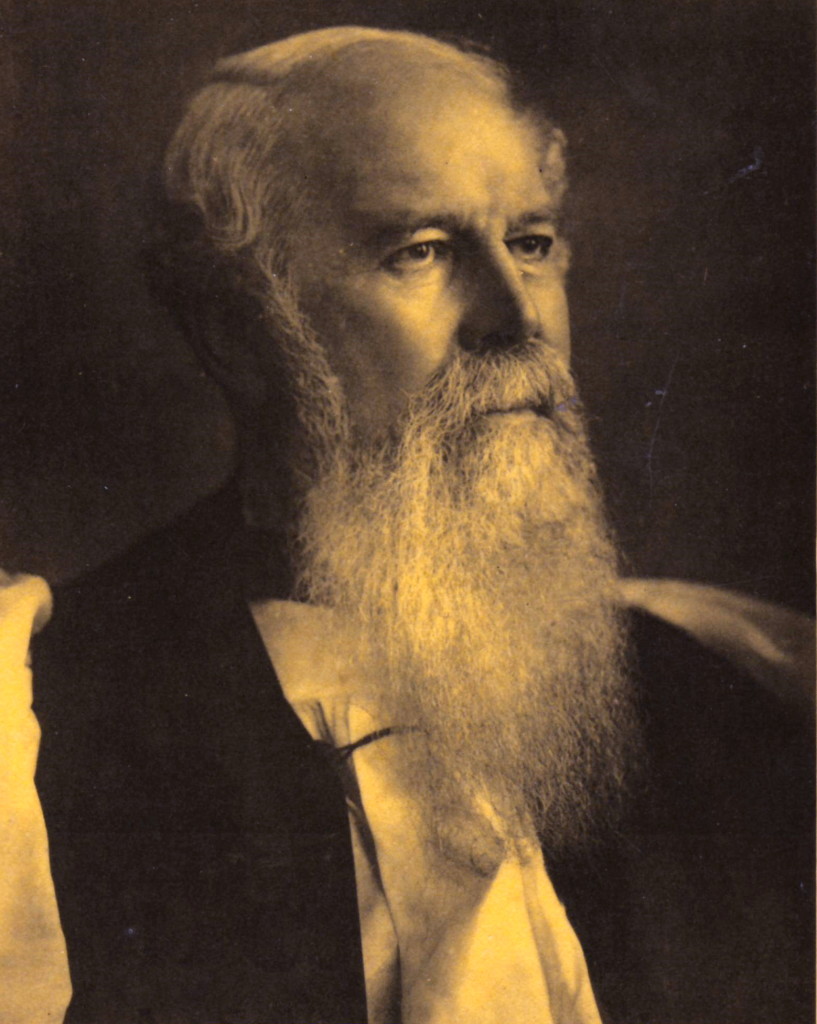
John Charles Ryle (10 May 1816 — 10 June 1900) was an English evangelical Anglican bishop. He was the first Anglican bishop of Liverpool.
Broadcaster:

Comments

0 / 2000 characters
Comments are moderated before appearing.

Be the first to comment!

Joshua

Joshua

Shall we play a game? Ask me about articles, sermons, or theology from our library. I can also help you navigate the site.