Bootstrap
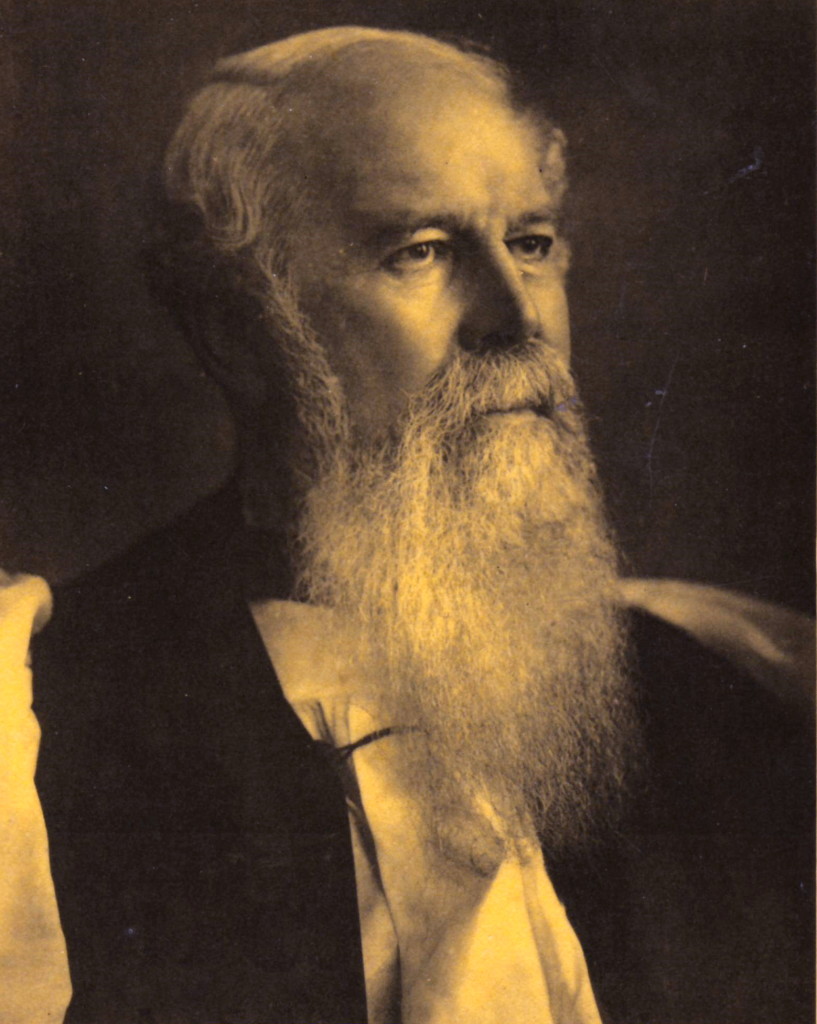
J.C. Ryle

119. Whose Son Is Christ, Luke 20:41-47

Luke 20:41-47
J.C. Ryle October, 19 2018 Audio
0 Comments
This superb narration of Ryle's devotional commentary on the Gospel of Luke has been professionally read, and graciously supplied by Christopher Glyn. Please visit his website, treasures365.com/shop.php, where you can purchase additional superb audios at very reasonable prices.

You will find it helpful to READ the texts--as you LISTEN to the audios!

The TEXTS for the entire commentary can be bound here:
http://gracegems.org/Ryle/Luke.htm

The AUDIOS for the entire commentary can be bound here:
https://www.sermonaudio.com/search.asp?subsetit...

Sermon Transcript

Auto-generated transcript • May contain errors

100%
J.C. Ryle's Devotional Thoughts on the Gospel of Luke, section 119. Whose Son is Christ? Luke chapter 20, verses 41 through 47.

And he said unto them, how say they that Christ is David's son? And David himself says in the book of Psalms, the Lord said unto my Lord, sit you on my right hand until I make your enemies your footstool. David therefore calls him Lord. How is he then his son?

Then, in the audience of all the people, he said unto his disciples, Beware of the scribes, which desire to walk in long robes, and love greetings in the markets, and the highest seats in the synagogues, and the chief rooms at feasts, which devour widows' houses, and for a show make long prayers. The same shall receive greater damnation.

Let us observe in this passage what striking testimony to Christ's divinity the Book of Psalms contains. We read that after patiently replying to the attacks of his enemies, our Lord in turn propounds a question to them. He asked them to explain an expression in the 110th Psalm where David speaks of the Messiah as his Lord. To this question the scribes could find no answer. They did not see the mighty truth that Messiah was to be God as well as man, and that while as man he was to be David's son, as God he was to be David's Lord. Their ignorance of Scripture was thus exposed before all the people. Professing themselves to be instructors of others, and possessors of the key of knowledge, they were proved unable to explain what their own Scriptures contained.

We may well believe that of all the defeats which our Lord's malicious enemies met with, none galled them more than this. Nothing so abashes the pride of man as to be publicly proved ignorant of that which he imagines is his own particular department of knowledge.

We have probably little idea how much deep truth is contained in the Book of Psalms. No part of the Bible perhaps is better known in the letter, and none so little understood in the spirit. We err greatly if we suppose that it is nothing but a record of David's feelings, of David's experience, David's praises, and David's prayers. The hand that held the pen was generally David's, but the subject matter was often something far deeper and higher than the history of the son of Jesse.

The book of Psalms, in a word, is a book full of Christ. Christ suffering, Christ in humiliation, Christ dying, Christ rising again, Christ coming the second time, Christ reigning over all. Both of Christ's advents are here, the advent in suffering to bear the cross, and the advent in power to wear the crown. Both of Christ's kingdoms are here, the kingdom of grace, during which the elect are gathered, and the kingdom of glory, when every tongue shall confess that Jesus is Lord.

Let us always read the Psalms with a particular reverence. Let us say to ourselves as we read, for greater than David is here.

The remark now made applies more or less to all the Bible. There is a fullness about the whole book which is a strong proof of its inspiration. The more we read it, the more it will seem to contain. All other books become threadbare if they're constantly read. Their weak points and their shallowness becomes more apparent every year. The Bible alone seems broader and deeper and fuller the oftener it is studied. We have no need to look for allegorical and mystical meanings. The fresh truths that will constantly spring up before our eyes are simple, plain and clear. Of such truths, the Bible is an inexhaustible mine. Nothing can account for this but the great fact that the Bible is the Word, not of man, but of God.

Let us observe secondly in this passage how abominable is hypocrisy in the eyes of Christ. We're told that in the presence of all the people Jesus said unto his disciples, beware of the teachers of the law. They like to walk around in flowing robes and love to be greeted in the marketplaces and have the most important seats in the synagogues and the places of honor at banquets. They devour widow's houses and for a show make lengthy prayers.

you This was a bold and remarkable warning. It was a public denunciation, we must remember, of men who sat in Moses's seat and were the recognized teachers of the Jewish people. It teaches us clearly that there may be times when the sins of people in high religious places make it a positive duty to protest publicly against them. It shows us that it is possible to speak out and yet not to despise authority.

No sin seems to be regarded by Christ as more sinful than hypocrisy. None certainly drew forth from his lips such frequent, strong, and withering condemnation during the whole course of his ministry. He was ever full of mercy and compassion for the chief of sinners. Fury was not in him when he saw Zacchaeus, the penitent thief, Matthew, the tax collector, Saul, the persecutor, the sinful woman in Simon's house. But when he saw scribes and Pharisees wearing a mere cloak of religion and pretending to grate out with sanctity while their hearts were full of wickedness, his righteous soul seems to have been full of indignation.

Eight times in one chapter, Matthew chapter 23, we find him saying, Woe unto you, scribes and Pharisees, you hypocrites! Let us not forget that the Lord Jesus never changes. He is the same yesterday and today and forever. Whatever else we are in religion, let us be true. However feeble our faith and hope and love and obedience may be, let us see to it that they are real, genuine and sincere. Let us abhor the very idea of play-acting and mask-wearing in our Christianity. At any rate, let us be genuine.

Let us observe lastly in this passage that there will be degrees of condemnation and misery in hell. The words of our Lord are distinct and express. He says of those who live and die hypocrites, such men shall receive greater damnation.

The subject opened up in these words is a deeply painful one. The reality and eternity of future punishment are among the great foundation truths of scriptural religion, which it is hard to think upon without a shudder. But it is well to have all that the Bible teaches about heaven and hell firmly fixed on our minds. The Bible teaches distinctly that there will be degrees of glory in heaven. It teaches with no less distinctness, both here and elsewhere, that there will be degrees of misery in hell.

Who, after all, are those who will finally receive condemnation? This is the practical point which most concerns us. All who will not come to Christ, all who do not know God, all who do not obey the gospel, all who refuse to repent, all who continue in wickedness, all such will be finally condemned. They will reap according as they have sown. God does not will their eternal ruin, but if they will not listen to His voice, They must die in their sins.

But among those who are condemned, who will receive the heaviest condemnation? It will not fall on heathen who never heard the truth. It will not fall on ignorant and neglected Englishmen, for whose souls, however sunk in profligacy, no man cared. It will fall on those who had great light and knowledge, but made no proper use of it. It will fall on those who professed great sanctity and religiousness, but in reality clung to their sins. In one word, the hypocrite will have the lowest place in hell.

These are dreadful things, but they are true. The End
J.C. Ryle
About J.C. Ryle
John Charles Ryle (10 May 1816 — 10 June 1900) was an English evangelical Anglican bishop. He was the first Anglican bishop of Liverpool.
Broadcaster:

Comments

0 / 2000 characters
Comments are moderated before appearing.

Be the first to comment!

Joshua

Joshua

Shall we play a game? Ask me about articles, sermons, or theology from our library. I can also help you navigate the site.