Bootstrap
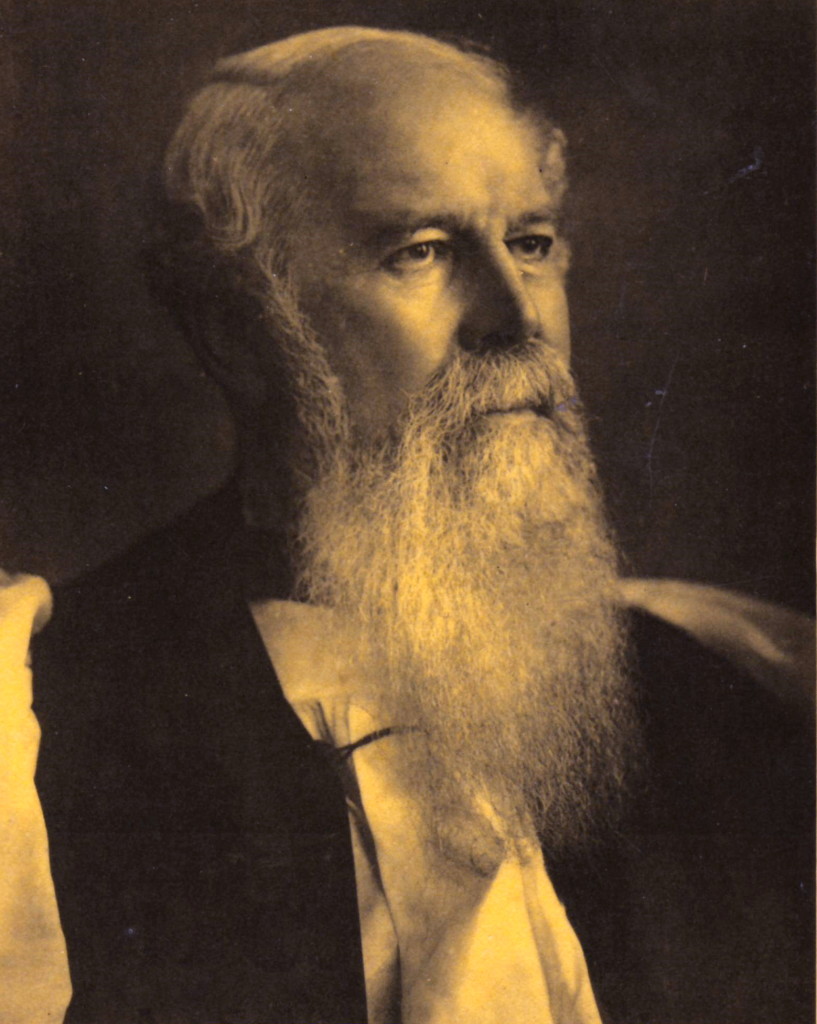
J.C. Ryle

123. The Destruction of Jerusalem, Luke 21:20-24

Luke 21:20-24
J.C. Ryle October, 19 2018 Audio
0 Comments
This superb narration of Ryle's devotional commentary on the Gospel of Luke has been professionally read, and graciously supplied by Christopher Glyn. Please visit his website, treasures365.com/shop.php, where you can purchase additional superb audios at very reasonable prices.

You will find it helpful to READ the texts--as you LISTEN to the audios!

The TEXTS for the entire commentary can be bound here:
http://gracegems.org/Ryle/Luke.htm

The AUDIOS for the entire commentary can be bound here:
https://www.sermonaudio.com/search.asp?subsetit...

Sermon Transcript

Auto-generated transcript • May contain errors

100%
J.C. Ryle's devotional thoughts on the Gospel of Luke. Section 123. The Destruction of Jerusalem. Luke chapter 21, verses 20 through 24.

And when ye shall see Jerusalem compassed with armies, then know that the desolation thereof is near. Then let them which are in Judea flee to the mountains, and let them which are in the midst of it depart out, and let not them that are in the countries enter thereunto. For these be the days of vengeance, that all things which are written may be fulfilled. But woe unto them that are with child, and to them that give suck. in those days, for there shall be great distress in the land, and wrath upon this people. They shall fall by the edge of the sword, and shall be led away captive into all nations, and Jerusalem shall be trodden down of the Gentiles, until the times of the Gentiles be fulfilled.

The subject of the verses before us is the capturing of the city of Jerusalem by the Romans. It was fit and right that this great event which wound up the Old Testament dispensation should be especially described by our Lord's mouth. It was fitting that the last days of that holy city, which had been the seat of God's presence for so many centuries, should receive a special notice in the greatest prophecy which was ever delivered to the church.

We should mark in this passage our Lord Jesus Christ's perfect knowledge. He gives us a fearful picture of the miseries which were coming on Jerusalem. Forty years before the armies of Titus encompassed the city, the dreadful circumstances which would attend the siege are minutely described. The distress of weak and helpless women, the slaughter of myriads of Jews, the final scattering of Israel in captivity among all nations, the treading down of the holy city by the Gentiles, are things which our Lord narrates with as much particularity as if he saw them with his own eyes.

Foreknowledge like this is a special attribute of God. Of ourselves we know not what a day may bring forth. Proverbs 27 verse 1. To say what will happen to any city or kingdom in forty years from the present time is far beyond the power of man. The words in Isaiah are very solemn. I am God and there is no other. I am God and there is none like me. I make known the end from the beginning, from ancient times what is still to come. My purpose will stand and I will do all that I please. Isaiah chapter 46 verses 9 and 10.

He who could speak with authority of things to come, as our Lord did in this place, must have been true God as well as true man. The Christian should continually keep this perfect knowledge of Christ in mind. Past things, present things, and things to come are all naked and open to the eyes of Him with whom we have to do. The recollection of the sins of youth may well make us humble. The sense of present weakness may make us anxious. The fear of trials yet to come may make our hearts faint. But it is a strong consolation to think that Christ knows all. For past, present, and future things, we may safely trust Him. Nothing can ever happen to us that Christ has not known long ago.

We should mark, secondly, in this passage, our Lord's words about flight in time of danger. He says, respecting the days preceding the siege of Jerusalem, then let those who are in Judea flee to the mountains, let those in the city get out, and let those in the country not enter the city. The lesson of these words is very instructive. They teach us plainly that there is nothing cowardly or unworthy of a Christian in endeavouring to escape from danger. There is nothing unfitting our Christian profession in a diligent use of means in order to secure our safety.

To meet death patiently and courageously, if it comes on us in the path of God's providence, is a duty incumbent on every believer. But to court death and suffering, and rush needlessly into danger, is the part of a fanatic and enthusiast, not of the wise disciple of Christ. It is those who use all means which God has placed within their reach who may confidently expect God's protection. There is a wide difference between presumption and genuine faith.

We should mark thirdly in this passage, our Lord's words about vengeance. He says with reference to the siege of Jerusalem, these are the days of vengeance, punishment, that all things which are written may be fulfilled. There's something particularly solemn in this expression. It shows us that the sins of the Jewish nation had long been noted down in the book of God's remembrance. The Jews, by their unbelief and impenitence, had been treasuring up wrath against themselves for many hundred years. The anger of God, like a pent-up river, had been silently accumulating for ages. The fearful tribulation which attended the siege of Jerusalem would only be the outburst of a thunderstorm which had been gradually gathering since the days of the kings. It would only be the fall of a sword which had long been hanging over Israel's head.

The lesson of the expression is one which we shall do well to lay to heart. We must never allow ourselves to suppose that the conduct of wicked men or nations is not observed by God. All is seen and all is known. A reckoning day will certainly arrive at last. It is a mighty truth of Scripture that God requires that which is passed. Ecclesiastes chapter 3 verse 15. In the days of Abraham, the iniquity of the Amorites was not yet full, and 400 years passed away before they were punished, yet punishment came. at last, when Joshua and the twelve tribes of Israel took possession of Canaan. God's sentence against an evil work is not always executed speedily, but it does not follow that it will not be executed at all. The wicked may flourish for many years like a green bay tree, but his latter end will be that his sin will surely find him out.

We should mark, lastly in this passage, our Lord's words about the times of the Gentiles. We read that he said, Jerusalem shall be trodden down by the Gentiles until the times of the Gentiles is fulfilled. A fixed period is here foretold during which Jerusalem was to be given over to the hands of the Gentile rulers and the Jews were to have no dominion over their ancient city. A fixed period likewise foretold which was to be the time of the Gentiles' visitation, the time during which they were to enjoy privileges and occupy a position, something like that of Israel in ancient days. Both periods are one day to end. Jerusalem is to be once more restored to its ancient inhabitants. The Gentiles, because of their hardness and unbelief, are to be stripped of their privileges and endure the just judgments of God. But the times of the Gentiles are not yet run out. We ourselves are living within them at the present day.

The subject before us is a very affecting one, and ought to raise within us great searchings of heart. While the nations of Europe are absorbed in political conflicts and worldly business, the sands in their hour-glass are ebbing away. While governments are disputing about secular things, their days are numbered in the sight of God. Yet, in a few years, and the times of the Gentiles will be fulfilled, their day of visitation will be past and gone, their misused privileges will be taken away, the judgments of God shall fall on them. They shall be cast aside as vessels in which God has no pleasure. Their dominion shall crumble away, and their vaunted institutions shall fall to pieces. The Jews shall be restored. The Lord Jesus shall come again in power and great glory. The kingdoms of this world shall become the kingdoms of our God and of his Christ. And the times of the Gentiles shall come to an end. Happy is he who knows these things and lives a life of faith in the Son of God. He is the man and he alone who is ready for the great things coming on the earth and the appearing of the Lord Jesus Christ. The kingdom to which he belongs is the only kingdom which shall never be destroyed. The king whom he serves is the only king whose dominion shall never be taken away. Daniel chapter 2 verse 44 chapter 7 verse 14
J.C. Ryle
About J.C. Ryle
John Charles Ryle (10 May 1816 — 10 June 1900) was an English evangelical Anglican bishop. He was the first Anglican bishop of Liverpool.
Broadcaster:

Comments

0 / 2000 characters
Comments are moderated before appearing.

Be the first to comment!

Joshua

Joshua

Shall we play a game? Ask me about articles, sermons, or theology from our library. I can also help you navigate the site.