Bootstrap
J.C. Ryle

132. Peter Denies Jesus, Luke 22:54-62

Luke 22:54-62
J.C. Ryle October, 19 2018 Audio
0 Comments
This superb narration of Ryle's devotional commentary on the Gospel of Luke has been professionally read, and graciously supplied by Christopher Glyn. Please visit his website, treasures365.com/shop.php, where you can purchase additional superb audios at very reasonable prices.

You will find it helpful to READ the texts--as you LISTEN to the audios!

The TEXTS for the entire commentary can be bound here:
http://gracegems.org/Ryle/Luke.htm

The AUDIOS for the entire commentary can be bound here:
https://www.sermonaudio.com/search.asp?subsetit...

Sermon Transcript

Auto-generated transcript • May contain errors

100%
J.C. Ryle's devotional thoughts on the Gospel of Luke Chapter 22, verses 54-62 And they took him, and led him, and brought him into the high priest's house. And Peter followed afar off. And when they had kindled a fire in the midst of the hall, and were set down together, Peter sat down among them. But a certain maid beheld him as he sat by the fire, and earnestly looked upon him, and said, This man was also with him. And he denied him, saying, Woman, I know him not. And after a little while another saw him, and said, You are also of them. And Peter said, Man, I am not. And about the space of one hour after another confidently affirmed, saying, Of a truth, this fellow also was with him, for he is a Galilean. And Peter said, Man, I know not what you say. And immediately, while he yet spoke, the rooster crew. And the Lord turned and looked upon Peter. And Peter remembered the word of the Lord, how he had said unto him, Before the rooster crow, you shall deny me thrice. And Peter went out and wept bitterly.

The verses we have now read describe the fall of the Apostle Peter. It is a passage which is deeply humbling to the pride of man but singularly instructive to true Christians. The fall of Peter has been a beacon to the church and has probably preserved myriads of souls from destruction. It is a passage which supplies strong proof that the Bible is inspired and Christianity is from God. If the Christian religion had been the invention of uninspired men, its first historians would never have told us that one of the chief apostles denied his master three times.

The story of Peter's fall teaches us, firstly, how small and gradual are the steps by which men may go down into great sins. The various steps in Peter's fall are clearly marked out by the Gospel writers. They ought always to be observed in reading this part of the Apostles' history. The first step was proud self-confidence. Though all men denied Christ, yet he never would. He was ready to go with him both to prison and to death. The second step was indolent neglect of prayer. When his master told him to pray, lest he should enter into temptation, he gave way to drowsiness and was found asleep. The third step was facilitating indecision. When the enemies of Christ came upon him, Peter first fought, then ran away, then turned again, and finally followed afar off. The fourth step was mingling with bad company. He went into the high priest's house and sat among the servants by the fire, trying to conceal his religion, and hearing and seeing all manner of evil. The fifth and last step was the natural consequence of the preceding four. He was overwhelmed with fear when suddenly charged with being a disciple. The snare was round his neck. He could not escape. He plunged deeper into error than ever. He denied his blessed master three times. The mischief, be it remembered, had been done before. The denial was only the disease coming to a head. Let us beware of the beginnings of backsliding, however small. We never know what we may come to if we once leave the king's highway. The professing Christian who begins to say of any sin or evil habit, it is but a little one, is in imminent danger. He is sowing seeds in his heart, which will one day spring up and bear bitter fruit. It is a homely saying that, if men take care of the pence, the pounds will take care of themselves. We may borrow a good spiritual lesson from the saying. The Christian who keeps his heart diligently in little things shall be kept from great falls.

The story of Peter's fall teaches us, secondly, how very far a believer may backslide. In order to see this lesson clearly, the whole circumstances of Peter's case ought to be fully weighed.

He was a chosen apostle of Christ. He had enjoyed greater spiritual privileges than most men in the world. He had just received the Lord's Supper. He had just heard that wonderful discourse recorded in the 14th, 15th, and 16th chapters of John. He had been most plainly warned of his own danger. He had boasted most loudly that he was ready for anything that might come upon him, and yet this very man denies his gracious master, and that repeatedly, and after intervals giving him space for reflection, he denies him once, twice, and three times.

The best and highest believer is a poor, weak creature, even at his best times. Whether he knows it or not, he carries within him an almost boundless capacity of wickedness, however fair and decent his outward conduct may seem. There is no enormity of sin into which he may not run if he does not watch and pray, and if the grace of God does not hold him up. When we read the falls of Noah, Lot, and Peter, we only read what might possibly befall any of ourselves. Let us never presume, let us never indulge in high thoughts about our own strength, or look down upon others. Whatever else we pray for, let us daily pray that we may walk humbly with God.

Micah 6, 8

The story of Peter's fall teaches us thirdly the infinite mercy of our Lord Jesus Christ. This is a lesson which is brought out most forcibly by a fact which is only recorded in Luke's gospel. We are told that when Peter denied Christ the third time and the rooster crowed, the Lord turned and looked straight at Peter. These words are deeply touching. Surrounded by bloodthirsty and insulting enemies, in the full anticipation of horrible outrages, an unjust trial, and a painful death, the Lord Jesus yet found time to think kindly of his poor erring disciple. Even then he would have Peter know that he did not forget him. Sorrowfully, no doubt, but not angrily, he turned and looked straight at Peter.

There was deep meaning in that look. It was a sermon which Peter never forgot. The love of Christ toward his people is a deep well which has no bottom. Let us never measure it by comparison with any kind of love of man or woman. It exceeds all other love, as far as the sun exceeds the rush-light. There is about it a mine of compassion and patience and readiness to forgive sin, of whose riches we have but a faint conception. Let us not be afraid to trust that love when we first feel our sins. Let us never be afraid to go on trusting it after we have once believed. No man need despair, however far he may have fallen, if he will only repent and turn to Christ. If the heart of Jesus was so gracious when he was a prisoner in the judgment hall we surely need not think it less gracious when he sits in glory at the right hand of God.

The story of Peter's fall teaches us lastly how bitter sin is to believers when they've fallen into it and discovered their fall. This is a lesson which stands out plainly on the face of the verses before us. We are told that when Peter remembered the warning he had received and saw how far he had fallen, he went out and wept bitterly.

He found out by experience the truth of Jeremiah's words. It is an evil and a bitter thing that you have forsaken the Lord. Jeremiah 2.19 He felt keenly the truth of Solomon saying, The backslider in heart shall be filled with his own ways. Proverbs 14.14 No doubt he could have said with Job, I abhor myself and repent in dust and ashes. Job 42 6

Sorrow like this, let us always remember, is an inseparable companion of true repentance. Here lies the grand distinction between repentance unto salvation and unavailing remorse. Remorse can make a man miserable like Judas Iscariot, but it can do no more. It does not lead him to God. Repentance makes a man's heart soft. and his conscience tender, and shows itself in real turning to a Father in Heaven.

The falls of a graceless professor are falls from which there is no rising again. But the fall of a true saint always ends in deep contrition, self-abasement, and amendment of life.

Let us take heed before we leave this passage that we always make a right use of Peter's fall. Let us never make it an excuse for sin. Let us learn from his sad experience to watch and pray lest we fall into temptation. If we do fall let us believe that there is hope for us as there was for him but above all let us remember that if we fall as Peter fell we must repent as Peter repented you
J.C. Ryle
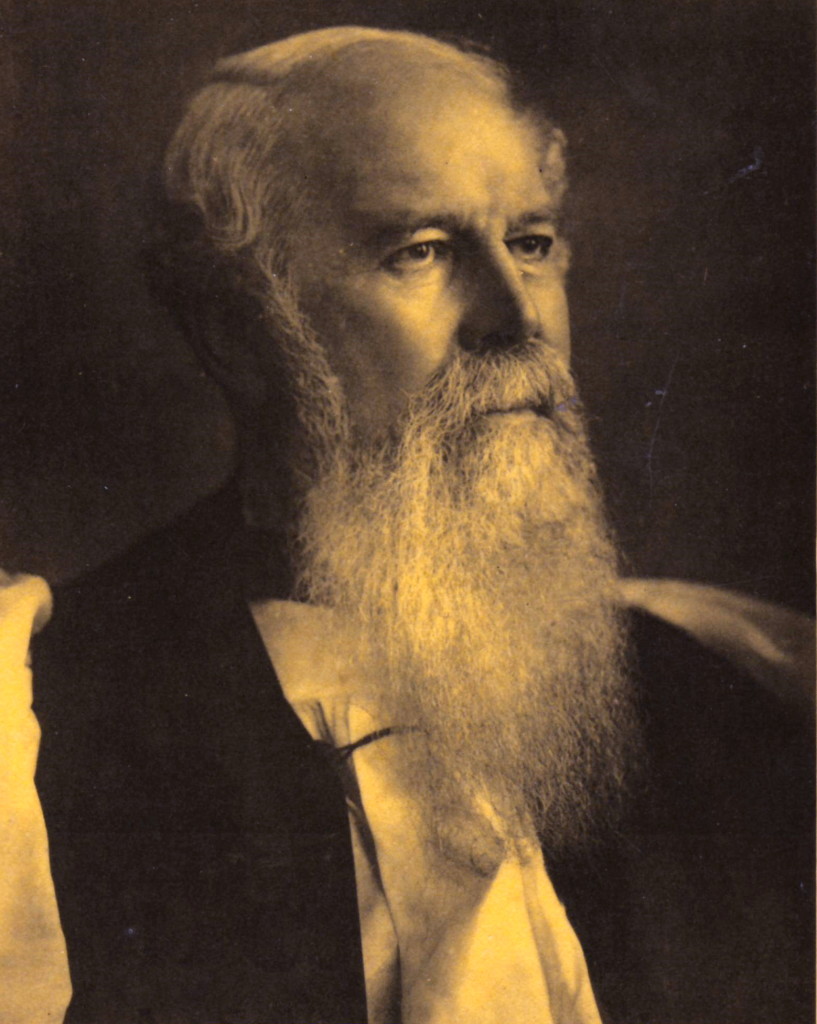
About J.C. Ryle
John Charles Ryle (10 May 1816 — 10 June 1900) was an English evangelical Anglican bishop. He was the first Anglican bishop of Liverpool.
Broadcaster:

Comments

0 / 2000 characters
Comments are moderated before appearing.

Be the first to comment!

Joshua

Joshua

Shall we play a game? Ask me about articles, sermons, or theology from our library. I can also help you navigate the site.