Bootstrap
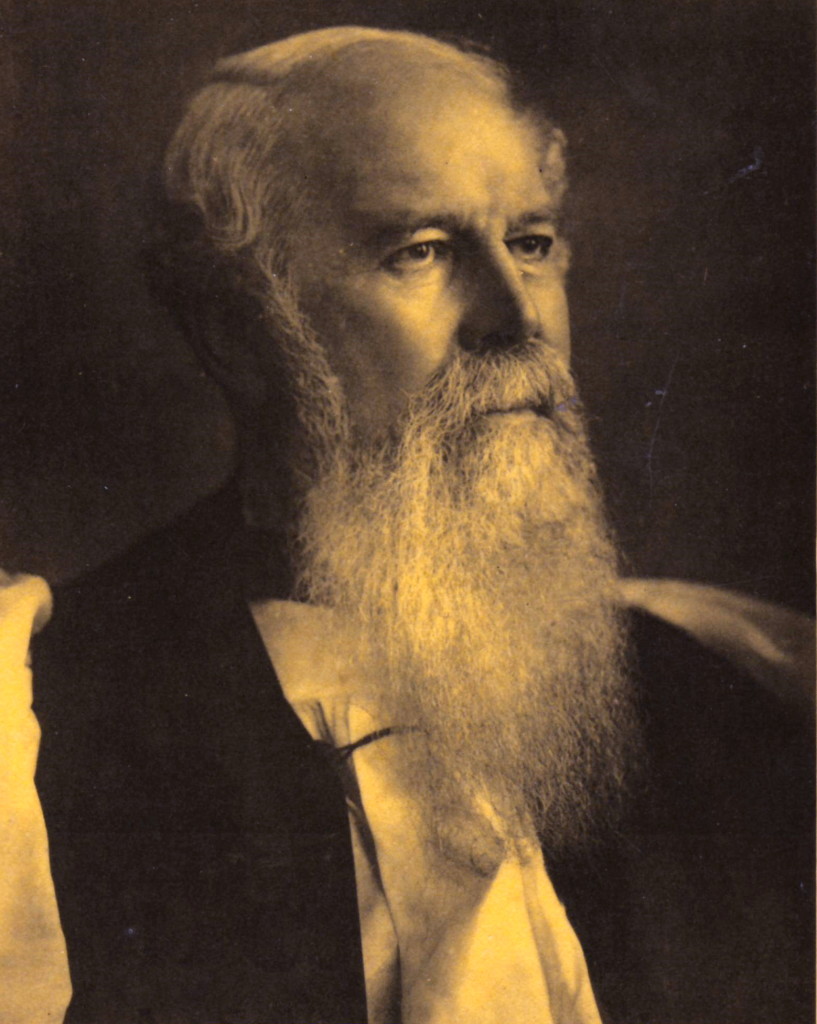
J.C. Ryle

136. The Crucifixion, Luke 23:26-38

Luke 23:26-38
J.C. Ryle October, 19 2018 Audio
0 Comments
This superb narration of Ryle's devotional commentary on the Gospel of Luke has been professionally read, and graciously supplied by Christopher Glyn. Please visit his website, treasures365.com/shop.php, where you can purchase additional superb audios at very reasonable prices.

You will find it helpful to READ the texts--as you LISTEN to the audios!

The TEXTS for the entire commentary can be bound here:
http://gracegems.org/Ryle/Luke.htm

The AUDIOS for the entire commentary can be bound here:
https://www.sermonaudio.com/search.asp?subsetit...

Sermon Transcript

Auto-generated transcript • May contain errors

100%
J.C. Ryle's Devotional Thoughts on the Gospel of Luke
Section 136
The Crucifixion
Luke 23, verses 26-38

And as they led him away, they laid hold upon one Simon, a Cyrenian, coming out of the country. And on him they laid the cross, that he might bear it after Jesus. And there followed him a great company of people and of women, which also bewailed and lamented him. But Jesus, turning unto them, said, Daughters of Jerusalem, weep not for me, but weep for yourselves and for your children. For behold, the days are coming, in the which they shall say, Blessed are the barren, and the wombs that never bear, and the breasts which never gave suck. Then shall they begin to say to the mountains, Fall on us, and to the hills, cover us. For if they do these things in a green tree, what shall be done in the dry?

And there were also two other criminals, led with him to be put to death. And when they were come to the place which is called Calvary, there they crucified him and the criminals, one on the right hand and the other on the left. Then said Jesus, Father, forgive them, for they know not what they do. And they parted his clothing and cast lots. And the people stood beholding. And the rulers also with them derided him, saying, He saved others. Let him save himself, if he be Christ, the chosen of God. And the soldiers also mocked him, coming to him and offering him vinegar, and saying, If you be the king of the Jews, save yourself. and a superscription also was written over him in letters of Greek and Latin and Hebrew. This is the King of the Jews.

We ought to notice in this passage our Lord's words of prophetical warning. We read that he said to the women who followed him as he was being led away to Calvary daughters of Jerusalem don't weep for me but weep for yourselves and for your children for the days are coming when they will say fortunate indeed are the women who are childless the wombs that have not born a child and the breasts that have never nursed

These words must have sounded peculiarly terrible to the ears of a Jewish woman. To her it was always a disgrace to be childless. The idea of a time coming when it would be a blessing to have no children must have been a new and fearsome thought to her mind. and yet within 50 years this prediction of Christ was literally fulfilled. The siege of Jerusalem by the Roman army under Titus brought down on all the inhabitants of the city the most horrible sufferings from famine and pestilence that can be conceived. Women are reported to have actually eaten their own children during the siege for lack of food. Upon none did the last of judgments sent upon the Jewish nation fall so heavily as upon the wives, the mothers, and the little children.

Let us beware of supposing that the Lord Jesus holds out to man nothing but mercy, pardon, love, and forgiveness. Beyond all doubt, He is plenteous in mercy. There is mercy with Him like a mighty stream. He delights in mercy. But we must never forget that there is justice with him as well as mercy. There are judgments preparing for the impenitent and the unbelieving. There is wrath revealed in the gospel for those who harden themselves in wickedness. The same cloud, which was bright to Israel, was dark to the Egyptians. The same Lord Jesus, who invites the laboring and heavy laden to come to Him and rest, declares most plainly that unless a man repents, he will perish, and that he who believes not shall be damned. Luke 13.3 Mark 16.16 The same Saviour, who now holds out His hands to the disobedient and gainsaying, will come one day in flaming fire, taking vengeance on those that know not God and obey not the gospel. 2 Thessalonians 1.8.

Let these things sink down into our hearts. Christ is indeed most gracious, but the day of grace must come to an end at last. An unbelieving world will find at length, as Jerusalem did, that there is judgment with God, as well as mercy. No wrath will fall so heavily as that which has been long accumulating and heaping up.

We ought to notice, for another thing, in this passage, our Lord's words of gracious intercession. We read that when he was crucified, his first words were, Father, forgive them, for they know not what they do. His own racking agony of body did not make him forget others. The first of his seven sayings on the cross was a prayer for the souls of his murderers.

His prophetical office he had just exhibited by remarkable prediction. His kingly office he was about to exhibit soon by opening the door of paradise to the penitent thief. His priestly office he now exhibited by interceding for those who crucified him. Father, he said, forgive them.

The fruits of this wonderful prayer will never be fully seen until the day when the books are opened and the secrets of all hearts are revealed. We have probably not the least idea how many of the conversions to God at Jerusalem, which took place during the first six months after the crucifixion, were the direct reply to this marvellous prayer. Perhaps this prayer was the first step towards the penitent thief's repentance. Perhaps it was one means of affecting the centurion who declared our Lord a righteous man, and the people who smote their breasts and returned. Perhaps the three thousand converted on the day of Pentecost, foremost it may be at one time among our Lord's murderers, owed their conversion to this very prayer. The day will declare it. There is nothing secret that shall not be revealed.

This only we know, that the Father hears the Son always. John 11, 42. We may be sure that this wondrous prayer was heard.

Let us see, in our Lord's intercession for those who crucified Him, one more proof of Christ's infinite love to sinners. The Lord Jesus is indeed most pitiful, most compassionate, most gracious. None are too wicked for Him to care for. None are too far gone in sin for His almighty heart to take interest about their souls. He wept over unbelieving Jerusalem. He heard the prayer of the dying thief. He stopped under the tree to call the tax collector Zacchaeus. He came down from heaven to turn the heart of the persecutor Saul. He found time to pray for his murderers, even on the cross.

Love like this is a love that passes knowledge. The vilest of sinners have no cause to be afraid of applying to a Savior like this. If we want warrant and encouragement to repent and believe, the passage before us surely supplies enough.

Finally, let us see in our Lord's intercession a striking example of the Spirit which should reign in the hearts of all His people. Like Him, let us return good for evil and blessing for cursing. Like Him, let us pray for those who evil entreat us and persecute us. The pride of our hearts may often rebel against the idea. The fashion of this world may call it foolish to behave in such a way. But let us never be ashamed to imitate our divine master. The man who prays for his enemies shows the mind that was in Christ and will have his reward.

Yeah.
J.C. Ryle
About J.C. Ryle
John Charles Ryle (10 May 1816 — 10 June 1900) was an English evangelical Anglican bishop. He was the first Anglican bishop of Liverpool.
Broadcaster:

Comments

0 / 2000 characters
Comments are moderated before appearing.

Be the first to comment!

Joshua

Joshua

Shall we play a game? Ask me about articles, sermons, or theology from our library. I can also help you navigate the site.