Bootstrap
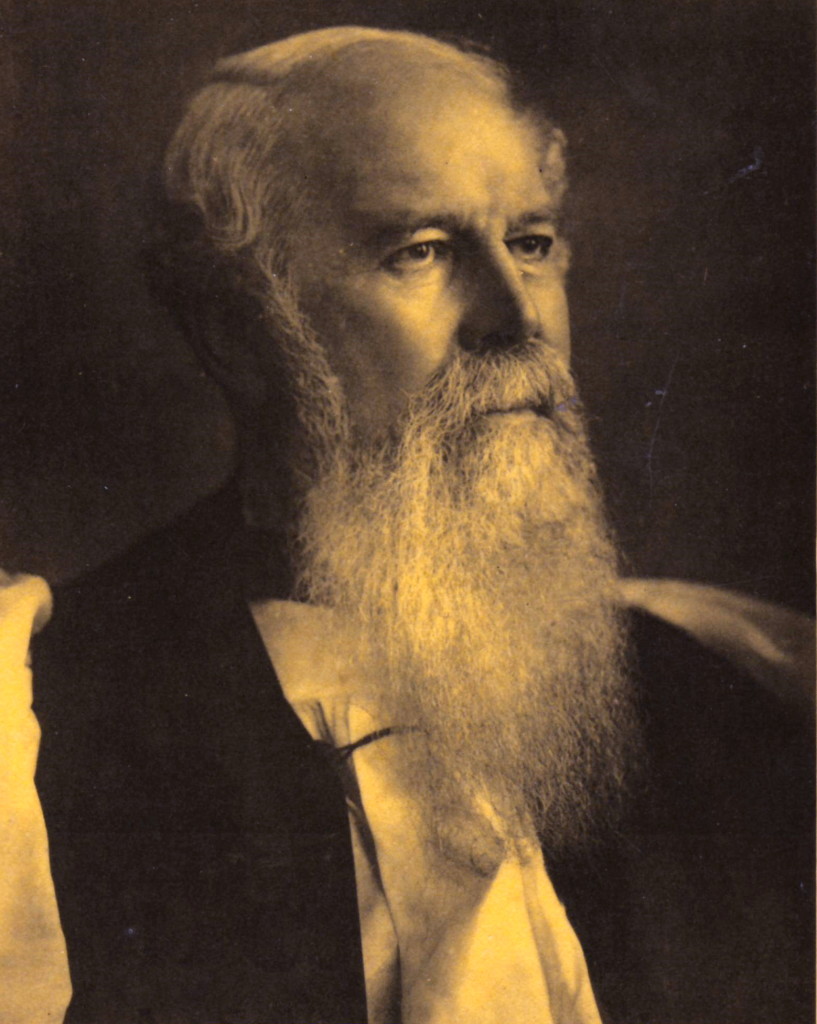
J.C. Ryle

056. The Transfiguration, Luke 9:28-36

Luke 9:28-36
J.C. Ryle July, 16 2018 Audio
0 Comments
This superb narration of Ryle's devotional commentary on the Gospel of Luke has been professionally read, and graciously supplied by Christopher Glyn. Please visit his website, treasures365.com/shop.php, where you can purchase additional superb audios at very reasonable prices.

You will find it helpful to READ the texts--as you LISTEN to the audios!

The TEXTS for the entire commentary can be bound here:
http://gracegems.org/Ryle/Luke.htm

The AUDIOS for the entire commentary can be bound here:
https://www.sermonaudio.com/search.asp?subsetit...

Sermon Transcript

Auto-generated transcript • May contain errors

100%
J.C. Ryle's Devotional Thoughts on the Gospel of Luke, section 56, The Transfiguration, Luke 9, verses 28-36. And it came to pass, about an eight days after these sayings, he took Peter and John and James and went up into a mountain to pray. And as he prayed, the fashion of his countenance was altered, and his raiment was white and blistering. And behold, there talked with him two men, which were Moses and Elias, who appeared in glory and spake of his decease, which he should accomplish at Jerusalem. But Peter and they that were with him were heavy with sleep. And when they were awake, they saw his glory, and the two men that stood with him. And it came to pass, as they departed from him, Peter said unto Jesus, Master, it is good for us to be here, and let us make three tabernacles, one for thee, and one for Moses, and one for Elias, not knowing what he said. While he thus spake, there came a cloud, and overshadowed them. And they feared as they entered into the cloud. And there came a voice out of the cloud, saying, This is my beloved son. Hear him. And when the voice was passed, Jesus was found alone. And they kept it close and told no man in those days any of those things which they had seen. The event described in these verses, commonly called the Transfiguration, is one of the most remarkable events in the history of our Lord's earthly ministry. It is one of those passages which we should always read with particular thankfulness. It lifts a corner of the veil which hangs over the world to come and throws light on some of the deepest truths of our religion. In the first place, this passage shows us something of the glory which Christ will have at his second coming. We read that, as he was praying, the appearance of his face was altered, and his clothing became dazzling white, and that the disciples who were with him saw his glory. We need not doubt that this marvellous vision was meant to encourage and strengthen our Lord's disciples. They'd just been hearing of his cross and death and the self-denial and sufferings to which they must submit themselves if they would be saved. They were now cheered by a glimpse of the glory that would follow, and the reward which all faithful servants of their master would one day receive. They had seen their master's day of weakness. They now saw for a few minutes a pattern and specimen of his future power and glory. Let us take comfort in the thought that there are good things laid up in store for all true Christians, which shall make ample amends for the afflictions of this present time. Now is the season for carrying the cross and sharing in our Saviour's humiliation. The crown, the kingdom, the glory are all yet to come. Christ and his people are now like David in the cave of Adullam, despised and lightly esteemed by the world. There seems no form or loveliness in him or in his service. But the hour is coming and will soon be here when Christ shall take to himself his great power and reign and put down every enemy under his feet. And then the glory which was first seen for a few minutes by three witnesses on the Mount of Transfiguration shall be seen by all the world and never be hidden to all eternity. In the second place, this passage shows us the safety of all true believers who've been removed from this world. We're told that when our Lord appeared in glory, Moses and Elijah were seen with him, standing and speaking with him. Moses had been dead nearly 1,500 years. Elijah had been taken up by a whirlwind from the earth more than nine hundred years before this time. Yet here these holy men were seen once more alive, and not only alive, but in glory. Let us take comfort in the blessed thought that there is a resurrection and a life to come. All is not over when the last breath is drawn. There is another world beyond the grave. But above all, let us take comfort in the thought that until the day dawns and the resurrection begins, the people of God are safe with Christ. There is much about their present condition, no doubt, which is deeply mysterious. Where is their local habitation? What knowledge have they of things on earth? These are questions we cannot answer, but let it suffice us to know that Jesus is taking care of them, and will bring them with him at the last day. He showed Moses and Elijah to his disciples on the Mount of Transfiguration, and he will show us all who have fallen asleep in him at his second coming. Our brethren and sisters in Christ are in good keeping. They are not lost, but only gone before us. In the third place, This passage shows us that the Old Testament saints in glory take a deep interest in Christ's atoning death. We're told that when Moses and Elijah appeared in glory with our Lord on the Mount of Transfiguration, they talked with him. And what was the subject of their conversation? We do not have to make conjectures and guesses about this. Luke tells us they spoke of his departure, which he would accomplish at Jerusalem. They knew the meaning of that death. They knew how much depended on it. Therefore they talked about it. It is a grave mistake to suppose that holy men and women under the Old Testament knew nothing about the sacrifice which Christ was to offer up for the sin of the world. Their light, no doubt, was far less clear than ours. They saw things afar off and indistinctly, which we see, as it were, close at hand. But there's not the slightest proof that any Old Testament saint ever looked to any other atonement for sin but that which God promised to make by sending the Messiah. From Abel downwards, the whole company of old believers appear to have been ever resting on a promised sacrifice and a blood of almighty efficacy yet to be revealed. From the beginning of the world, there's never been but one foundation of hope and peace for sinners. The death of an almighty mediator between God and man. That foundation is the center truth of all revealed religion. It was the subject of which Moses and Elijah were seen speaking when they appeared in glory. They spoke of the atoning death of Christ. Let us take heed that this death of Christ is the ground of all our confidence. Nothing else will give us comfort in the hour of death and the day of judgment. Our own works are all defective and imperfect. Our sins are more in number than the hairs of our head. Psalm 40 verse 12. Christ dying for our sins and rising again for our justification must be our only plea if we wish to be saved. Happy is that man who has learned to cease from his own works and to trust in nothing but the cross of Christ. If saints in glory see in Christ's death so much beauty that they must need talk of it, then how much more ought sinners on earth? In the last place, the passage shows us the immense distance between Christ and all other teachers whom God has given to man. We're told that when Peter, not knowing what he said, proposed to make three tabernacles on the mount, one for Jesus, one for Moses, and one for Elijah, as if all three deserved equal honor, this proposal was at once rebuked in a remarkable way. A voice came out of the cloud saying, this is my beloved son, hear him. The voice was the voice of God the Father, conveying both reproof and instruction. That voice proclaimed to Peter's ear that however great Moses and Elijah might be, one stood before him far greater than they. They were but servants. He was the king's son. They were but stars. He was the sun. They were but witnesses. He was the truth. Forever let that solemn word of the Father ring in our ears and give the keynote to our religion. Let us honor ministers for their master's sake. Let us follow them only as long as they follow Christ. But let it be our principal aim to hear Christ's voice and follow Him wherever He goes. Let some talk, if they will, of the voice of the church. Let others be content to say, I hear this preacher or that clergyman. Let us never be satisfied unless the Spirit witnesses within us that we hear Christ himself and are his disciples. you
J.C. Ryle
About J.C. Ryle
John Charles Ryle (10 May 1816 — 10 June 1900) was an English evangelical Anglican bishop. He was the first Anglican bishop of Liverpool.
Broadcaster:

Comments

0 / 2000 characters
Comments are moderated before appearing.

Be the first to comment!

Joshua

Joshua

Shall we play a game? Ask me about articles, sermons, or theology from our library. I can also help you navigate the site.