Bootstrap
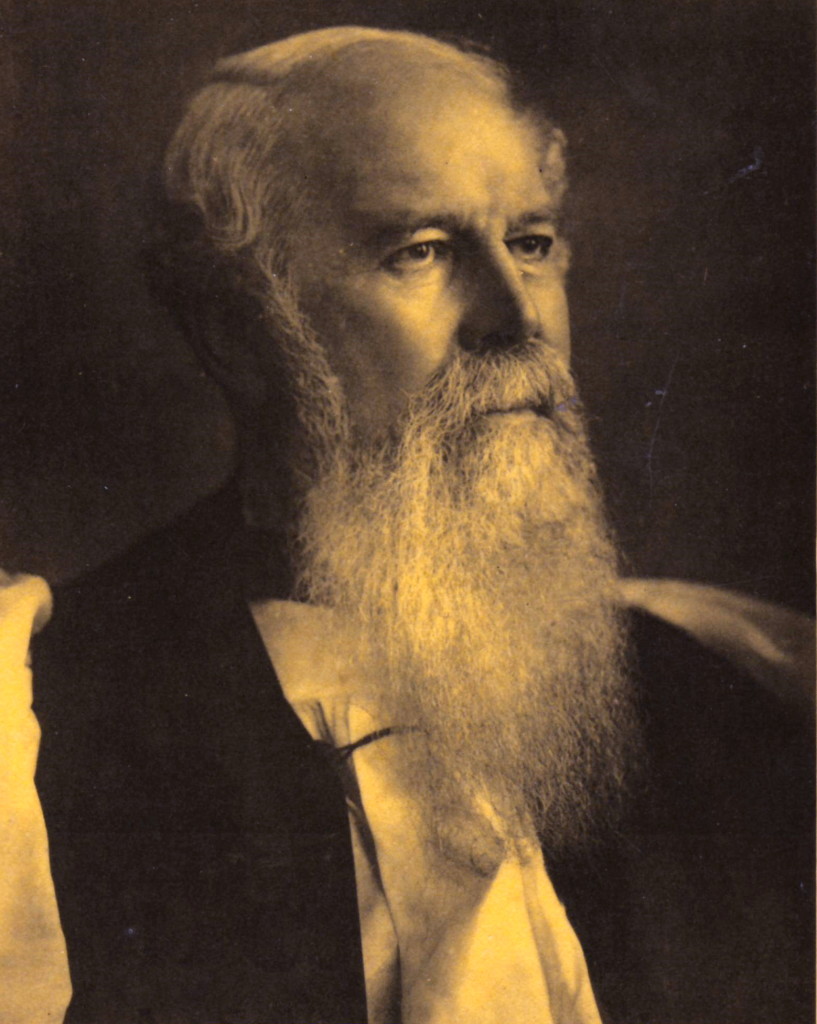
J.C. Ryle

058. Who Will Be the Greatest, Luke 9:46-50

Luke 9:46-50
J.C. Ryle July, 16 2018 Audio
0 Comments
This superb narration of Ryle's devotional commentary on the Gospel of Luke has been professionally read, and graciously supplied by Christopher Glyn. Please visit his website, treasures365.com/shop.php, where you can purchase additional superb audios at very reasonable prices.

You will find it helpful to READ the texts--as you LISTEN to the audios!

The TEXTS for the entire commentary can be bound here:
http://gracegems.org/Ryle/Luke.htm

The AUDIOS for the entire commentary can be bound here:
https://www.sermonaudio.com/search.asp?subsetit...

Sermon Transcript

Auto-generated transcript • May contain errors

100%
J.C. Ryle's Devotional Thoughts on the Gospel of Luke, section 58. Who will be the greatest? Luke chapter 9, verses 46 through 50. And there arose a reasoning among them, which of them should be greatest. And Jesus, perceiving the thought of their heart, took a child, and set him by him, and said unto them, Whosoever shall receive this child in my name receiveth me, and whosoever shall receive me receiveth him that sent me. For he that is least among you, the same shall be great. And John answered and said, Master, we saw one casting out devils in thy name, and we forbade him, because he followed not with us. And Jesus said unto him, Forbid him not, for he that is not against us is for us. The verses we have now read contain two most important warnings. They are directed against two of the commonest evils which are to be found in the Church of Christ. He who gave them well knew what was in the heart of man. Well would it have been for the Church of Christ if his words in this passage had received more attention. In the first place, the Lord Jesus gives us a warning against pride and self-conceit. We're told that a dispute arose among the disciples as to which of them would be the greatest. Astonishing as it may seem, this little company of fishermen and publicans was not beyond the plague of a self-seeking and ambitious spirit. Filled with the vain notion that our Lord's kingdom was to appear immediately, they were ready to wrangle about their place and priority in it. Each thought that his own claim was the strongest. Each thought that his own deserts and right to honour was the most unquestionable. Each thought that whatever place was assigned to his brethren, a principal place ought to be assigned to himself. And all this happened in the company of Christ himself and under the noontide blaze of his teachings. Such is the prideful heart of man. There is something very instructive in this fact. It ought to sink down deeply into the heart of every Christian reader. Of all sins, there is none against which we have such need to watch and pray as pride. It is a pestilence which walks in darkness, and a sickness which destroys at noonday. No sin is so deeply rooted in our nature as pride. It cleaves to us like our skin. Its roots never entirely die. They are ready at any moment to spring up and exhibit a most pernicious vitality. At the same time, no sin is so senseless and deceitful. It can wear the garb of humility itself. It can lurk in the hearts of the ignorant, the ungifted, and the poor, as well as in the minds of the great, the learned, and the rich. It is a quaint and homely saying, but only too true, that no pope has ever received such honor as pope self. Let a prayer for humility and the spirit of a little child form part of our daily supplications. Of all creatures, none has so little right to be proud as man. And of all men, none ought to be so humble as the Christian. Is it really true that we confess ourselves to be miserable sinners and daily debtors to mercy and grace? Are we followers of Jesus who was meek and lowly of heart and made himself nothing for our sakes? Then let that same mind be in us which was in Christ Jesus. Let us lay aside all proud thoughts and self-conceit. In lowliness of mind, let us esteem others better than ourselves. Let us be ready on all occasions to take the lowest place, and let the words of our Savior ring in our ears continually. He who is least among you all is the greatest. In the second place, our Lord Jesus Christ gives us a warning against a bigoted and illiberal spirit. As in the preceding verses, so here the occasion of the warning is supplied by the conduct of his own disciples. We read that John said to him, Master, we saw one casting out devils in your name and we forbade him because he does not follow with us. Who this man was, and why he did not associate with the disciples, we do not know. But we do know that he was doing a good work in casting out devils, and that he was doing what he did in the name of Christ. And yet John says, we forbade him. Very striking is the reply which the Lord at once gave him. Do not forbid him, for he who is not against us is for us. The conduct of John and the disciples on this occasion is an illustration of the sameness of human nature in every age. Thousands in every period of church history have spent their lives in copying John's mistake. They have labored to stop every man who will not work for Christ in their way from working for Christ at all. They have imagined in their petty self-conceit that no man can be a soldier of Christ unless he wears their uniform and fights in their regiment. They have been ready to save every Christian who does not see everything with their eyes. Forbid him, forbid him, for he does not follow with us. The solemn remark of our Lord Jesus Christ on this occasion demands our special notice. He pronounces no opinion upon the conduct of the man of whom John speaks. He neither praises nor blames him for following an independent course and not working with his disciples. He simply declares that he must not be forbidden and that those who work the same kind of work that we do should be regarded not as enemies but allies. He who is not against us is for us. The principle laid down in this passage is of great importance. A right understanding of it will prove most useful to us in these latter days. The divisions and varieties of opinion which exist among Christians are undeniably very great. The schisms and separations which are continually arising about church government and modes of worship are very perplexing to tender consciences. Shall we approve those divisions? We cannot do so. Union is strength. The divisions of Christians is one cause of the slow progress of vital Christianity. Shall we denounce and hold up to public reprobation all who will not agree to work with us, and to oppose Satan in our way? It is useless to do so. Harsh words have never yet made men of one mind. Unity was never yet brought about by force. What then ought we to do? We must leave alone those who do not agree with us, and wait quietly until God shall think fit to bring us together. Whatever we may think of our divisions, the words of our Lord must never be forgotten. Do not forbid them. The plain truth is that we're all too ready to say, we are the men, and wisdom shall die with us, Job chapter 12, verse 2. We forget that no individual church on earth has an absolute monopoly of all wisdom, and that people may be right in the main without agreeing with us. We must learn to be thankful if sin is opposed, and the gospel preached, and the devil's kingdom pulled down. Though the work may not be done exactly in the way we like, we must try to believe that men may be true-hearted followers of Christ, and yet, for some wise reason, may be kept back from seeing all things in religion, just as we do. Above all, we must praise God if souls are converted and Christ is magnified, no matter who the preacher may be and to what church he may belong. Happy are those who can say with Paul, if Christ be preached, I rejoice. Yes, and I will rejoice. Philippians 1, verse 18. And with Moses, are you jealous for my sake? I wish that all the Lord's people were prophets, and that the Lord would put his spirit upon them all. Numbers chapter 11, verse 29. you
J.C. Ryle
About J.C. Ryle
John Charles Ryle (10 May 1816 — 10 June 1900) was an English evangelical Anglican bishop. He was the first Anglican bishop of Liverpool.
Broadcaster:

Comments

0 / 2000 characters
Comments are moderated before appearing.

Be the first to comment!

Joshua

Joshua

Shall we play a game? Ask me about articles, sermons, or theology from our library. I can also help you navigate the site.