Bootstrap
J.C. Ryle

074. Jesus Pronounces Three Woes on the Pharisees, Luke 11:37-44

Luke 11:37-44
J.C. Ryle July, 16 2018 Audio
0 Comments
This superb narration of Ryle's devotional commentary on the Gospel of Luke has been professionally read, and graciously supplied by Christopher Glyn. Please visit his website, treasures365.com/shop.php, where you can purchase additional superb audios at very reasonable prices.

You will find it helpful to READ the texts--as you LISTEN to the audios!

The TEXTS for the entire commentary can be bound here:
http://gracegems.org/Ryle/Luke.htm

The AUDIOS for the entire commentary can be bound here:
https://www.sermonaudio.com/search.asp?subsetit...

Sermon Transcript

Auto-generated transcript • May contain errors

100%
J.C. Ryle's devotional thoughts on the Gospel of Luke, section 74. Jesus pronounces three woes on the Pharisees. Luke chapter 11, verses 37 through 44.

And as he spake, a certain Pharisee besought him to dine with him, and he went in and sat down to meet. And when the Pharisee saw it, he marveled that he had not first washed before dinner. And the Lord said unto him, Now do ye Pharisees make clean the outside of the cup and the platter, but your inward part is full of ravening and wickedness. Ye fools, did not he that made that which is without make that which is within also? But rather give alms of such things as ye have, and behold, all things are clean unto you.

But woe unto you, Pharisees, for ye tithe mint and rue, and all manner of herbs, and pass over judgment and the love of God. These ought ye to have done, and not to leave the other undone. Woe unto you Pharisees, for ye love the uppermost seats in the synagogues and greetings in the markets. Woe unto you scribes and Pharisees, hypocrites, for ye are as graves which appear not, and the men that walk over them are not aware of them.

Let us notice in this passage our Lord Jesus Christ's readiness when needful to go into the company of the unconverted. We learn that a certain Pharisee invited Jesus to eat with him. The man was evidently not one of our Lord's disciples, yet we're told that Jesus went in and reclined at the table.

The conduct of our Lord on this occasion, as on others, is meant to be an example to all Christians. Christ is our pattern as well as our propitiation. There are evidently times and occasions when the servant of Christ must mix with the ungodly and the people of this world. There may be seasons when it may be a duty to hold social dealings with them to accept their invitations and sit down at their tables.

Nothing, of course, must induce the Christian to be our partaker in the sins or frivolous amusements of the world. But he must not be uncourteous. He must not entirely withdraw himself from the society of the unconverted and become a hermit or an ascetic. He must remember that good may be done in the private room as well as in the pulpit.

One qualification, however, should never be forgotten when we act upon our Lord's example in this matter. Let us take heed that we go down into the company of the unconverted in the same spirit in which Christ went. Let us remember His boldness in speaking of the things of God. He was always about His Father's business. Let us remember his faithfulness in rebuking sin. He did not even spare the sins of those who entertained him when his attention was publicly called to them.

Let us go into company in the same frame of mind, and our souls will take no harm. If we feel that we dare not imitate Christ in the company which we are invited to join, then we may be sure that we better stay at home.

Let us notice secondly in this passage the foolishness which accompanies hypocrisy in religion. We're told that the Pharisee with whom our Lord dined marveled that our Lord had not first washed before dinner. He thought, like most of his order, that there was something unholy in not doing it and that the neglect of it was a sign of moral impurity.

Our Lord points out the absurdity of attaching such importance to the mere cleansing of the body, while the cleansing of the heart is overlooked. He reminds his host that God looks at the inward part of us, the hidden man of the heart, far more than our skins. And he asks the searching question, did not he who made the outside make also that which is inside? The same God who formed our poor dying bodies is the God who gave us a heart and soul. Forever let us bear in mind that if we would know what we are in religion, the state of our hearts is the principal thing that demands our attention.

Bodily washings and fastings and gestures and postures and self-imposed mortifications of the flesh are all utterly useless if the heart is wrong. External devoutness of conduct, a grave face, and a bowed head, and a solemn countenance, and a loud Amen, are all abominable in God's sight, as long as our hearts are not washed from their wickedness and renewed by the Holy Spirit. Let this caution never be forgotten.

The idea that men can be devout before they are converted is a grand delusion of the devil. and one against which we all need to be on our guard. There are two scriptures which are very weighty on this subject. In one it is written, out of the heart are the issues of life, Proverbs 4.23. In the other it is written, man looks on the outward appearance, but the Lord looks at the heart, 1 Samuel 16.7.

There is a question which we should always ask ourselves in drawing near to God whether in public or private. We should say to ourselves, where is my heart?

Let us notice thirdly in this passage the gross inconsistency which is often exhibited by hypocrites in religion. We read that our Lord says to the Pharisees, Woe to you Pharisees, because you give God a tenth of your mint, rue, and other kinds of garden herbs, but you neglect justice and the love of God. They carry to an extreme their zeal to pay tithes for the service of the temple. and yet they neglected the plainest duties towards God and their neighbors.

They were scrupulous to an extreme about small matters in the ceremonial law, and yet they were utterly regardless of the simplest, first principles of justice to man and love toward God. In the one direction, they were rigidly careful to do even more than was needful. In the other direction, they would do nothing at all. In the secondary things of their religion they were downright zealots and enthusiasts, but in the great primary things they were no better than the heathen.

The conduct of the Pharisees in this matter unhappily does not stand alone. There have never been lacking religious professors who have exalted the secondary things of Christianity far above the primary things. And in their zeal for the secondary things, they have finally neglected the essential things entirely.

There are thousands at the present day who make a great ado about daily services and keeping Lent and a gorgeous ceremonial and other religious rituals, but never get any further. They know little or nothing of the great practical duties of humility, charity, meekness, spiritual mindedness, Bible reading, private devotion and separation from the world. They plunge into every gaiety with greediness. They are to be seen at every worldly assembly and amusement, at the race, the opera, the theatre and the ball. They exhibit nothing of the mind of Christ in their daily life.

What is all this but walking in the steps of the Pharisees? Well, says the wise man, there is nothing new under the sun, Ecclesiastes chapter 1 verse 9. The generation which tithe mint, rue, and all other kinds of garden herbs, but neglect justice and the love of God, is not yet extinct. Let us watch and pray that we may observe a scriptural proportion in our religion. Let us beware of putting the secondary things out of their place, and so by degrees lose sight of the essential things entirely. Whatever importance we attach to the ceremonial part of Christianity, let us never forget its great practical duties. The religious teaching which inclines us to pass over the great practical duties of the gospel has something about it which is radically defective.

Let us notice, lastly, the falseness and hollowness which characterize the religious hypocrite. We read that our Lord compared the Pharisees to unmarked graves which men walk over without knowing it. Even so, these boasting Jewish leaders were inwardly full of corruption and impurity to such an extent of which their deluded hearers had no conception. The picture here drawn is both painful and disgusting. Yet the accuracy and truthfulness of it have often been proved by the conduct of hypocrites in every age of the church.

What should we say of the lives of monks and nuns which were exposed at the time of the Reformation? Thousands of so-called holy men and women were found to be sunk in every kind of wickedness. What should we say of the lives of some of the leaders of sects and heresies? Frequently the very men who promised liberty to others have turned out to be themselves servants of corruption. The morbid anatomy of human nature is a loathsome study. Hypocrisy and impure living have often been found side by side.

Let us leave the whole passage with a settled determination to watch and pray against hypocrisy in religion. Whatever we are as Christians, let us be real, thorough, genuine and sincere. Let us abhor all disguise, and pretense, and masquerading in the things of God as that which is utterly loathsome in Christ's eyes. We may be weak, and erring, and frail, and come far short of our aims and desires. But at any rate, if we profess to believe in Christ, then let us be true.
J.C. Ryle
About J.C. Ryle
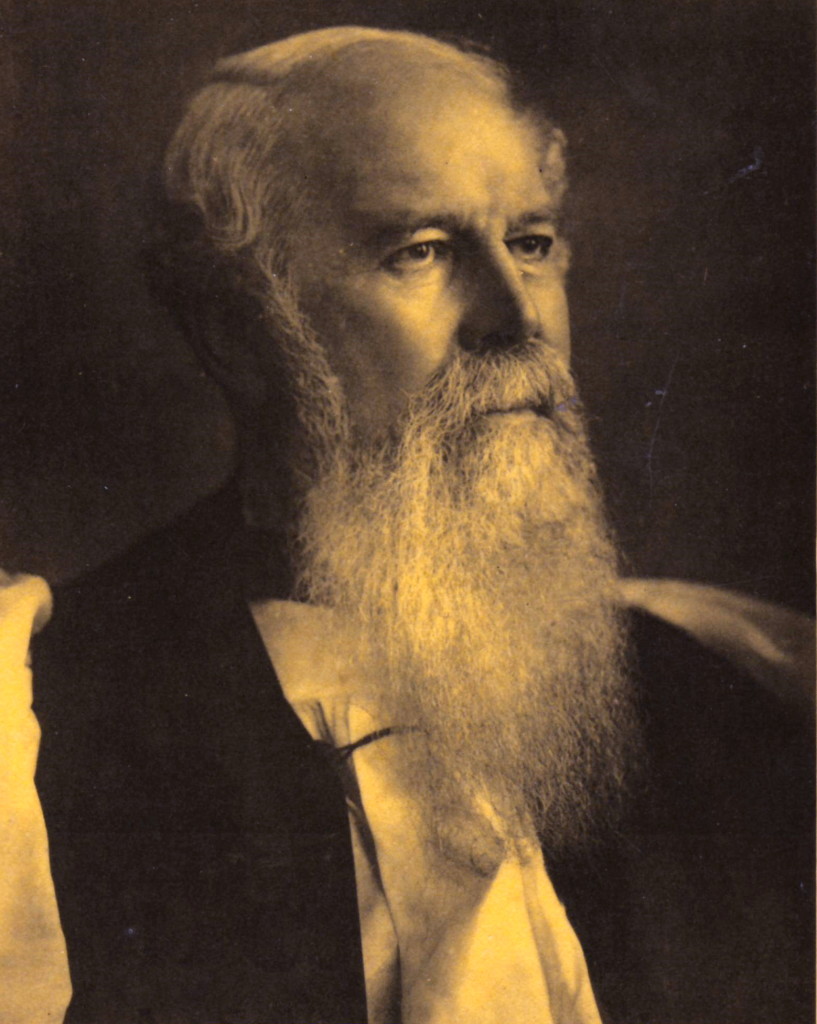
John Charles Ryle (10 May 1816 — 10 June 1900) was an English evangelical Anglican bishop. He was the first Anglican bishop of Liverpool.
Broadcaster:

Comments

0 / 2000 characters
Comments are moderated before appearing.

Be the first to comment!

Joshua

Joshua

Shall we play a game? Ask me about articles, sermons, or theology from our library. I can also help you navigate the site.