Bootstrap
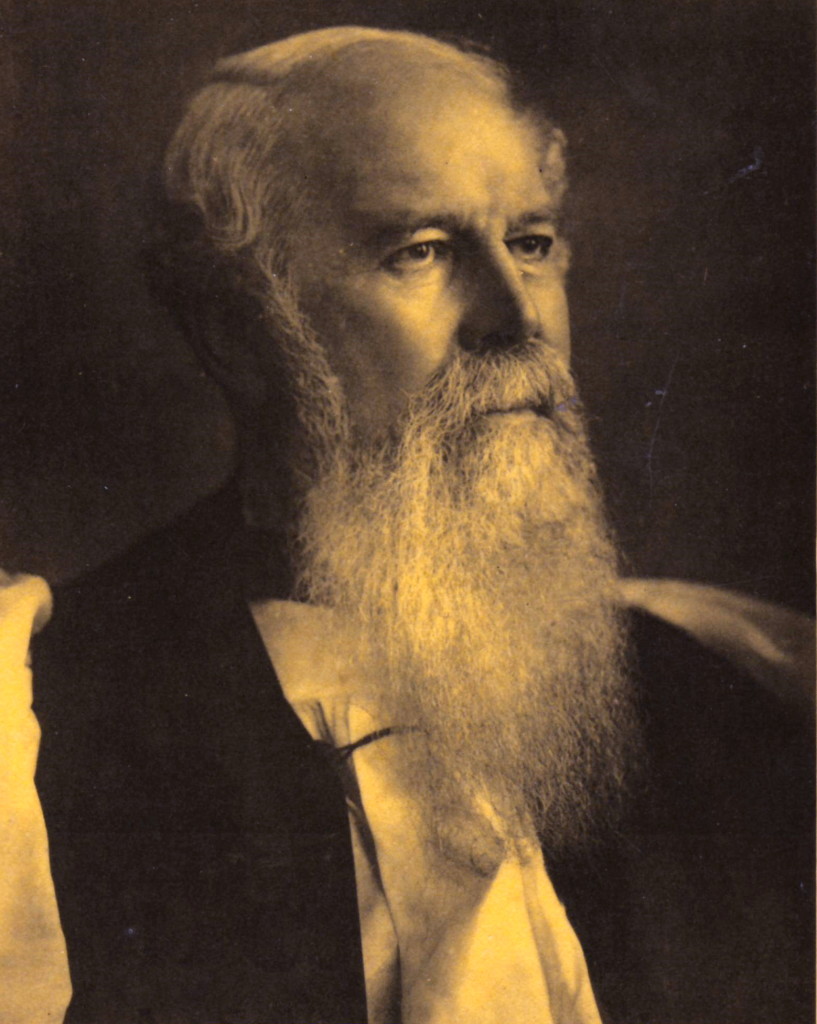
J.C. Ryle

048. Christ rejected by the Gadarenes, Luke 8:37-40

Luke 8:37-40
J.C. Ryle May, 21 2018 Audio
0 Comments
This superb narration of Ryle's devotional commentary on the Gospel of Luke has been professionally read, and graciously supplied by Christopher Glyn. Please visit his website, treasures365.com/shop.php, where you can purchase additional superb audios at very reasonable prices.

You will find it helpful to READ the texts--as you LISTEN to the audios!

The TEXTS for the entire commentary can be bound here:
http://gracegems.org/Ryle/Luke.htm

The AUDIOS for the entire commentary can be bound here:
https://www.sermonaudio.com/search.asp?subsetit...

Sermon Transcript

Auto-generated transcript • May contain errors

100%
J.C. Ryle's devotional thoughts on the Gospel of Luke, section 48, Christ Rejected by the Gadarenes, Luke chapter 8, verses 37 through 40.

Then the whole multitude of the country of the Gadarenes round about besought him to depart from them, for they were taken with great fear. And he went up into the ship and returned back again. Now the man, of whom the devils were departed, besought him that he might be with him. But Jesus sent him away, saying, Return to thine own house, and show how great things God hath done unto thee. And he went his way and published throughout the whole city how great things Jesus had done unto him. And it came to pass that when Jesus was returned, the people gladly received him, for they were all waiting for him.

We see in this passage two requests made to our Lord Jesus Christ. They were widely different, one from the other, and were offered by people of widely different character. We see, moreover, how these requests were received by our Lord Jesus Christ. In either case, the requests received a most remarkable answer. The whole passage is singularly instructive.

Let us observe in the first place that the Gadarenes besought our Lord to depart from them, and their request was granted. We read these painfully solemn words, Then all the people of the region of the Gadarenes begged Jesus to leave them, because they were overcome with fear. So he got into the boat and left.

Why did these unhappy men want the Son of God to leave them? Why, after the amazing miracle of mercy which had just been wrought among them, did they feel no wish to know more of Him who wrought it? Why, in a word, did they become their own enemies, forsake their own mercies, and shut the door against the gospel?

There is but one answer to these questions. The Gadarenes loved the world and the things of the world, and were determined not to give them up. They felt convinced in their own consciences that they could not receive Christ among them and keep their sins, and they were resolved to keep their sins. They saw at a glance that there was something about Jesus with which their habits of life would never agree. And having to choose between the new ways and their old ones, they refused the new and chose the old.

And why did our Lord Jesus Christ grant the request of the Gadarenes and leave them? He did it in judgment, to testify His sense of the greatness of their sin. He did it to show how great is the wickedness of those who willfully reject the truth. It seems to be an eternal law of His government that those who obstinately refuse to walk in the light shall have the light taken from them.

Great is Christ's patience and long-suffering. His mercy endures for ever. His offers and invitations are wide and broad and sweeping and universal. He gives every church its day of grace and time of visitation. But if men persist in refusing His counsel, He has nowhere promised to persist in forcing it upon them. People who have the gospel and yet refuse to obey it must not be surprised if the gospel is removed from them.

Hundreds of churches and parishes and families are at this moment in the same state of the Gadarenes. They said to Christ, depart from us. and he has taken them at their word they were joined to idols and are now let alone Job chapter 21 verse 14 and Hosea chapter 4 verse 17 let us take heed that we do not sin the sin of the Gadarenes Let us beware lest by coldness and inattention and worldliness we drive Jesus from our doors and compel him to forsake us entirely.

Of all sins which we can sin, this is the most sinful. Of all states of soul into which we can fall, none is so fearful as to be let alone. Let it rather be our daily prayer that Christ may never leave us to ourselves. The old wreck, high and dry on the sand bank, is not a more wretched sight than the man whose heart Christ has visited with mercies and judgments, but has at last ceased to visit because he was not received. The barred door is a door at which Jesus will not always knock. The Gadarene mind must not be surprised to see Christ leaving it and going away.

Let us observe, in the second place, that the man out of whom the devils were departed besought our Lord that he might be with him, but his request was not granted. We read that Jesus sent him away, saying, Return to your own home, and tell them the great things which God has done unto you. We can easily understand the request which this man made. He felt deeply grateful for the amazing mercy which he had just received in being cured. He felt full of love and warm affection toward him who had so wonderfully and graciously cured him. He felt that he could not see too much of him, be too much in his company, or cleave too closely to him. He forgot everything else under the influence of these feelings. Family, relations, friends, home, house, country, all seemed as nothing in his eyes. He felt that he cared for nothing but to be with Christ.

We cannot blame him for his feelings. They may have been tinged with something of enthusiasm and inconsideration. There may have been a zeal not according to knowledge about them. In the first excitement of a newly felt cure he may not have been fit to judge what his future line of life should be. But excited feelings in religion are far better than no feelings at all. In the petition he made, there was far more to praise than to blame.

But why did our Lord Jesus Christ refuse to grant this man's request? Why, at a time when he had few disciples, did he send this man away? Why, instead of allowing him to join with himself and his disciples, did he bid him to return to his own house? Our Lord did what he did in infinite wisdom. He did it for the benefit of the man's own soul. He saw that it was far more for his good to be a witness for the gospel at home than to be a disciple abroad. He did it in mercy for the Gadarenes. He left among them one standing testimony of the truth of his own divine mission. He did it above all for the perpetual instruction of his whole church. He would have us know that there are various ways of glorifying him, that he may be honored in private life as well as in the apostolic office, and that the first place in which we should witness for Christ is our own home.

There is a lesson of deep experimental wisdom in this little incident, which all true Christians would do well to lay to heart. That lesson is our own utter ignorance of what position is good for us in this world, and the necessity of submitting our own wills to the will of Christ. The place that we wish to fill is not always the place that is best for us. The line of life that we want to take up is not always that which Christ sees to be the most for the benefit of our souls. The place that we are obliged to fill is sometimes very distasteful, and yet it may be needful to our sanctification. The position we are compelled to occupy may be very disagreeable to flesh and blood and yet it may be the very one that is necessary to keep us in our right mind.

It is better to be sent away from Christ's bodily presence by Christ himself than to remain in Christ's bodily presence without his consent. Let us pray for the spirit of contentment with such things as we have Let us be fearful of choosing for ourselves in this life without Christ's consent or moving in this world when the pillar of cloud and fire is not moving before us. Let us ask the Lord to choose everything for us. Let our daily prayer be, give me what you will, place me where you will, only let me be your disciple and abide in you. you
J.C. Ryle
About J.C. Ryle
John Charles Ryle (10 May 1816 — 10 June 1900) was an English evangelical Anglican bishop. He was the first Anglican bishop of Liverpool.
Broadcaster:

Comments

0 / 2000 characters
Comments are moderated before appearing.

Be the first to comment!

Joshua

Joshua

Shall we play a game? Ask me about articles, sermons, or theology from our library. I can also help you navigate the site.