Bootstrap
Charles Spurgeon

Meditations on the Easter Story

Mark 16:1-15; Matthew 28:1-8
Charles Spurgeon March, 30 2018 Audio
0 Comments
Choice Puritan Devotional!

Sermon Transcript

Auto-generated transcript • May contain errors

100%
Charles Spurgeon's Meditations on the Easter Story.

And he went a little farther and fell on his face and prayed. Matthew chapter 26 verse 39. There are several instructive features in our Savior's prayer in his hour of trial. It was lonely prayer. He withdrew even from his three favored disciples. Believer, be much in solitary prayer, especially in times of trial. Family prayer, social prayer, prayer in the church will not suffice. These are very precious. But the best beaten spice will smoke in your censer, in your private devotions, where no ear hears but God's.

It was humble prayer. Luke says he knelt, but another evangelist says he fell on his face. Where then must be thy place, thou humble servant of the great Master? What dust and ashes should cover thy head? Humility gives us good foothold in prayer. There is no hope of prevalence with God unless we obese ourselves that he may exalt us in due time.

It was filial prayer. Abba, father, you will find it a stronghold in the day of trial to plead your adoption. You have no rights as a subject. You have forfeited them by your treason, but nothing can forfeit a child's right to a father's protection. Be not afraid to say, my father, hear my cry.

Observe that it was persevering prayer. He prayed three times. Cease not until you prevail. Be as the importunate widow whose continual coming earned what her first supplication could not win. Continue in prayer, and watch in the same with thanksgiving.

Lastly, it was the prayer of resignation. Nevertheless, not as I will, but as thou wilt. Yield, and God yields. Let it be as God wills, and God will determine for the best. Be thou content to leave thy prayer in His hands, who knows when to give, and how to give, and what to give, and what to withhold. So, pleading earnestly, importunately, yet with humility and resignation, thou shalt surely prevail.

so so His sweat was, as it were, great drops of blood falling down to the ground. Luke chapter 22 verse 44 The mental pressure arising from our Lord's struggle with temptation so forced his frame to an unnatural excitement that his paws sent forth great drops of blood which fell down to the ground. This proves how tremendous must have been the weight of sin when it was able to crush the Savior so that he distilled great drops of blood. This demonstrates the mighty power of his love.

It is a very pretty observation of old Isaac Ambrose that the gum which exudes from the tree without cutting is always the best. This precious campfire tree yielded most sweet spices when it was wounded under the knotty whips and when it was pierced by the nails on the cross. But see, it giveth forth its best spice when there is no whip, no nail, no wound. This sets forth the voluntariness of Christ's sufferings, since without a lance the blood flowed freely. No need to put on the leech or apply the knife, it flows spontaneously. No need for the rulers to cry, Spring up, O well! of itself it flows In crimson torrents.

If men suffer great pain of mind, Apparently the blood rushes to the heart, The cheeks are pale, a fainting fit comes on, The blood is gone inward, as if to nourish The inner man while passing through its trial. But see our Saviour in His agony. He is so utterly oblivious of self, that instead of His agony driving His blood to the heart to nourish Himself, it drives it outward to bedew the earth. The agony of Christ, inasmuch as it pours Him out upon the ground, pictures the fullness of the offering which He made for men.

Do we not perceive how intense must have been the wrestling through which he passed? And will we not hear its voice to us? Ye have not yet resisted unto blood, striving against sin. Behold the great apostle and high priest of our profession, and sweat even to blood, rather than yield to the great tempter of your souls. you you He was heard in that he feared. Hebrews chapter 5 verse 7.

Did this fear arise from the infernal suggestion that he was utterly forsaken? There may be sterner trials than this, but surely it is one of the worst to be utterly forsaken. See, said Satan, thou hast a friend nowhere. Thy father hath shut up the bowels of his compassion against thee. Not an angel in his courts will stretch out his hand to help thee. All heaven is alienated from thee. Thou art left alone. See the companions with whom thou hast taken sweet counsel, what are they worth? Son of Mary, see there thy brother James, see there thy loved disciple John, and thy bold apostle Peter, how the cowards sleep when thou art in thy sufferings. Lo, thou hast no friend left in heaven or in earth. All hell is against thee. I have stirred up mine infernal den. I have sent my missives throughout all regions, summoning every prince of darkness to set upon thee this night. And we will spare no arrows. We will use all our infernal might to overwhelm thee. And what wilt thou do, thou solitary one?

It may be this was the temptation. We think it was. Because the appearance of an angel unto him, strengthening him, removed that fear. He was heard in that he feared. He was no more alone, but heaven was with him. It may be that this is the reason of his coming three times to his disciples. As Hart puts it, backwards and forwards thrice he ran, as if he sought some help from man. He would see for himself whether it were really true that all men had forsaken him. He found them all asleep. But perhaps he gained some faint comfort from the thought that they were sleeping not from treachery, but from sorrow. The spirit indeed was willing, but the flesh was weak. At any rate, he was heard in that he feared.

Jesus was heard in his deepest woe. My soul, thou shalt be heard also.

so so so Jesus said unto them, If ye seek me, let these go their way. John chapter 18 verse 8 Mark, my soul, the care which Jesus manifested even in his hour of trial towards the sheep of his hand. The ruling passion is strong in death. He resigns himself to the enemy, but he interposes a word of power to set his disciples free. As to himself, like a sheep, before her shearers he is dumb and opened not his mouth, but for his disciples' sake he speaks with almighty energy. Herein is love, constant, self-forgetting, faithful love.

But is there not far more here than is to be found upon the surface? Have we not the very soul and spirit of the atonement in these words? The good shepherd lays down his life for the sheep, and pleads that they must therefore go free. The surety is bound, and justice demands that those for whom he stands a substitute should go their way. In the midst of Egypt's bondage That voice rings as a word of power, Let these go their way. Out of the slavery of sin and Satan The redeemed must come. In every cell of the dungeons of despair The sound is echoed, Let these go their way. And forth come despondency and much afraid.

Satan hears the well-known voice and lifts his foot from the neck of the fallen, and death hears it, and the grave opens her gates to let the dead arise. Their way is one of progress, holiness, triumph, glory, and none shall dare to stay them in it. No lion shall be on their way, neither shall any ravenous beast go up thereon. The hind of the morning has drawn the cruel hunters upon himself, and now the most timid rose and hinds of the field may graze at perfect peace among the lilies of his loves. The thundercloud has burst over the cross of Calvary, and the pilgrims of Zion shall never be smitten by the bolts of vengeance. Come, my heart, rejoice in the immunity which thy Redeemer has secured thee, and bless His name all the day and every day.

so Then all the disciples forsook him and fled. Matthew 26, verse 56. He never deserted them. They, in cowardly fear of their lives, fled from him in the very beginning of his sufferings. This is but one instructive instance of the frailty of all believers if left to themselves. They are but sheep at the best, and they flee when the wolf cometh. They had all been warned of the danger and had promised to die rather than leave their master, and yet they were seized with sudden panic and took to their heels. It may be that I, at the opening of this day, have braced up my mind to bear a trial for the Lord's sake, and I imagine myself to be certain to exhibit perfect fidelity. But let me be very jealous of myself, lest, having the same evil heart of unbelief, I should depart from my Lord as the apostles did. It is one thing to promise and quite another to perform. It would have been to their eternal honor to have stood at Jesus' side right manfully. They fled from honor. May I be kept from imitating them. Where else could they have been so safe as near their master, who could presently call for twelve legions of angels? They fled from their true safety. O God, let me not play the fool also. Divine grace can make the coward brave. The smoking flax can flame forth like fire on the altar when the Lord wills it. These very apostles, who were timid as hares, grew to be bold as lions after the Spirit had descended upon them. And even so, the Holy Spirit can make my recreant spirit brave to confess my Lord and witness for his truth. What anguish must have filled the Savior, as he saw his friends so faithless? This was one bitter ingredient in his cup. But that cup is drained dry. Let me not put another drop in it. If I forsake my Lord, I shall crucify him afresh and put him to an open shame. Keep me, O blessed spirit, from an end so shameful.

so so He was numbered with the transgressors. Isaiah chapter 53 verse 12. Why did Jesus suffer himself to be enrolled amongst sinners? This wonderful condescension was justified by many powerful reasons. In such a character, he could the better become their advocate. In some trials, there is an identification of the counselor with the client nor can they be looked upon in the eye of the law as apart from one another. Now, when the sinner is brought to the bar, Jesus appears there himself. He stands to answer the accusation. He points to his side, his hands, his feet, and challenges justice to bring anything against the sinners whom he represents. He pleads his blood, and pleads so triumphantly, being numbered with them and having a part with them, that the judge proclaims Let them go their way. Deliver them from going down into the pit, for he hath found a ransom. Our Lord Jesus was numbered with the transgressors in order that they might feel their hearts drawn towards him. Who can be afraid of one who is written in the same list with us? Surely we may come boldly to him and confess our guilt. He, who is numbered with us, cannot condemn us. Was he not put down in the transgressors' list, that he might be written in the red roll of the saints? He was holy, and written among the holy. We were guilty, and numbered among the guilty. He transfers his name from yonder list to this black indictment. And our names are taken from the indictment and written in the roll of acceptance.

For there is a complete transfer made between Jesus and his people. All our estate of misery and sin, Jesus has taken away. And all that Jesus has comes to us. His righteousness, his blood, and everything that he hath, he gives us as our dowry. Rejoice, believer, in your union to him who was numbered among the transgressors and prove that you are truly saved by being manifestly numbered with those who are new creatures in him.

With his stripes we are healed Isaiah chapter 53 verse 5 Pilate delivered our Lord to the Lictus to be scourged. The Roman scourge was a most dreadful instrument of torture. It was made of the sinews of oxen, and sharp bones were intertwisted every here and there among the sinews, so that every time the lash came down, these pieces of bone inflicted fearful laceration, and tore off the flesh from the bone. The Saviour was no doubt bound to the column, and thus beaten. He had been beaten before, but this of the Roman lictors was probably the most severe of his flagellations.

My soul, stand here and weep over his poor, stricken body. Believer in Jesus, can you gaze upon him without tears, as he stands before you, the mirror of agonizing love? He is at once fair as the lily for innocence, and red as the rose with the crimson of his own blood. As we feel the sure and blessed healing which his stripes have wrought in us, does not our heart melt at once with love and grief? If ever we have loved our Lord Jesus, surely we must feel that affection glowing now within our bosoms.

See how the patient Jesus stands, insulted in his lowest case. Sinners have bound the Almighty's hands and spit in their Creator's face. With thorns his temples, gored and gashed, send streams of blood from every part, his backs with knotted scourges lashed. But sharper scourges tear his heart. We would fain go to our chambers and weep. But since our business calls us away, we will first pray our beloved to print the image of his bleeding self upon the tablets of our hearts all the day. And at nightfall, we will return to commune with him and sorrow that our sin should have cost him so dear.

so Hey there! Hey there! He answered him to never a word. Matthew chapter 27 verse 14. He had never been slow of speech when he could bless the sons of men. But he would not say a single word for himself. Never man spake like this man, and never man was silent like him. Was this singular silence the index of his perfect self-sacrifice? Did it show that he would not utter a word to stay the slaughter of his sacred person, which he had dedicated as an offering for us? Had he so entirely surrendered himself that he would not interfere in his own behalf, even in the minutest degree, but be bound and slain an unstruggling, uncomplaining victim? Was this silence a type of the defenselessness of sin? Nothing can be said in palliation or excuse of human guilt. And therefore he who bore its whole weight stood speechless before his judge. Is not patient silence the best reply to a gainsaying world? Calm endurance answers some questions infinitely more conclusively than the loftiest eloquence. The best apologists for Christianity in the early days were its martyrs. The anvil breaks a host of hammers by quietly bearing their blows.

Did not the silent Lamb of God furnish us with a grand example of wisdom? Where every word was occasion for new blasphemy, It was the line of duty to afford no fuel for the flame of sin. The ambiguous and the false, the unworthy and mean, Will ere long overthrow and confute themselves, and therefore the true can afford to be quiet and finds silence to be its wisdom evidently our Lord by his silence furnished a remarkable fulfillment of prophecy a long defense of himself would have been contrary to Isaiah's prediction he is led as a lamb to the slaughter and as a sheep before her shearers is done so he openeth not his mouth By his quiet, he conclusively proved himself to be the true Lamb of God.

As such, we salute him this morning. Be with us, Jesus. And in the silence of our heart, let us hear the voice of thy love.

you you you They took Jesus and led him away. John chapter 19 verse 16 He had been all night in agony. He had spent the early morning at the Hall of Caiaphas. He had been hurried from Caiaphas to Pilate, from Pilate to Herod, and from Herod back again to Pilate. He had therefore but little strength left, and yet neither refreshment nor rest were permitted him. They were eager for his blood, and therefore led him out to die loaded with the cross. Oh, Dolores' procession! Well may Salem's daughters weep, My soul, do thou weep also.

What learn we here, as we see our blessed Lord led forth? Do we not perceive that truth which was set forth in shadow by the scapegoat? Did not the high priest bring the scapegoat, and put both his hands upon its head, confessing the sins of the people, that thus those sins might be laid upon the goat and cease from the people? Then the goat was led away by a fit man into the wilderness, and it carried away the sins of the people, so that if they were sought for they could not be found.

Now we see Jesus brought before the priests and rulers who pronounce him guilty. God himself imputes our sins to him. The Lord hath laid on him the iniquity of us all. He was made sin for us. And as the substitute for our guilt, bearing our sin upon his shoulders, represented by the cross. We see the great scapegoat, led away by the appointed officers of justice.

Beloved, can you feel assured that he carried your sin? As you look at the cross upon his shoulders, does it represent your sin? There is one way by which you can tell whether he carried your sin or not. Have you laid your hand upon his head, confessed your sin, and trusted in him? Then your sin lies not on you. It has all been transferred by blessed imputation to Christ, and he bears it on his shoulder as a load heavier than the cross. Let not the picture vanish till you have rejoiced in your own deliverance and adored the loving Redeemer upon whom your iniquities were laid.

you you On him they laid the cross, that he might bear it after Jesus. Luke chapter 23 verse 26 We see in Simon's carrying the cross a picture of the work of the church throughout all generations. She is the cross-bearer after Jesus. Mark then, Christian, Jesus does not suffer so as to exclude your suffering. He bears a cross, not that you may escape it, but that you may endure it. Christ exempts you from sin, but not from sorrow. Remember that. and expect to suffer but let us comfort ourselves with this thought that in our case as in Simon's it's not our cross but Christ's cross which we carry when you are molested for your piety when your religion brings the trial of cruel mockings upon you then remember it is not your cross it is Christ's cross

And how delightful it is to carry the cross of our Lord Jesus. You carry the cross after him. You have blessed company. Your path is marked with the footprints of your Lord. The mark of his blood-red shoulder is upon that heavy burden. It is his cross, and he goes before you as a shepherd goes before his sheep. Take up your cross daily and follow him.

Do not forget also that you bear this cross in partnership. It is the opinion of some that Simon only carried one end of the cross, and not the whole of it. That is very possible. Christ may have carried the heavier part against the transverse beam, and Simon may have borne the lighter end. Certainly it is so with you. You do but carry the light end of the cross. Christ bore the heavier end.

And remember, though Simon had to bear the cross for a very little while, it gave him lasting honor. Even so, the cross we carry is only for a little while at most, and then we shall receive the crown, the glory. Surely, we should love the cross. And instead of shrinking from it, count it very dear when it works out for us a far more exceeding and eternal weight of glory.

you so If they do these things in a green tree, what shall be done in the dry? Luke chapter 23 verse 31.

Among other interpretations of this suggestive question, the following is full of teaching. If the innocent substitute for sinners suffer thus, what shall be done when the sinner himself, the dry tree, shall fall into the hands of an angry God? When God saw Jesus in the sinner's place, he did not spare him. And when he finds the unregenerate without Christ, he will not spare them. O sinner, Jesus was led away by his enemies. So shall you be dragged away by fiends to the place appointed for you. Jesus was deserted of God. And if he who was only imputedly a sinner was deserted, how much more shall you be?

Eloi, Eloi, lama sabachthani! What an awful shriek! But what shall be your cry, when you shall say, O God, O God, why hast thou forsaken me? And the answer shall come back, Because ye have set at naught all my counsel, and would none of my reproof. I also will laugh at your calamity, I will mock when your fear cometh. If God spared not His own Son, how much less will He spare you? What whips of burning wire will be yours when conscience shall smite you with all its terrors? Ye richest, ye merriest, ye most self-righteous sinners, who would stand in your place when God shall say, Awake, O sword, against the man that rejected me. Smite him, and let him feel the smart forever.

Jesus was spat upon. Sinner, what shame will be yours? We cannot sum up in one word all the mass of sorrows which met upon the head of Jesus who died for us. Therefore, it is impossible for us to tell you what streams, what oceans of grief must roll over your spirit if you die as you now are. You may die so. You may die now by the agonies of Christ, by his wounds and by his blood. Do not bring upon yourselves the wrath to come. Trust in the Son of God and you shall never die. And there followed him a great company of people and of women which also bewailed and lamented him. Luke chapter 23 verse 27 Amid the rabble rout which hounded the Redeemer to His doom, there were some gracious souls whose bitter anguish sought vent in wailing and lamentations, fit music to accompany that march of woe. When my soul can, in imagination, see the Saviour bearing His cross to Calvary, she joins the godly women and weeps with them. For indeed there is true cause for grief, cause lying deeper than those mourning women thought. They bewailed innocence maltreated, goodness persecuted, love bleeding, meekness about to die. But my heart has a deeper and more bitter cause to mourn. My sins were the scourges which lacerated those blessed shoulders and crowned with thorn those bleeding brows. My sins, cried, crucify him, crucify him, and laid the cross upon his gracious shoulders. His being led forth to die is sorrow enough for one eternity, but my having been his murderer is more, infinitely more grief than one poor fountain of tears can express. Why those women loved and wept, it were not hard to guess. But they could not have had greater reasons for love and grief than my heart has. Nain's widow saw her son restored, but I myself have been raised to newness of life. Peter's wife's mother was cured of the fever, but I of the greater plague of sin. Out of Magdalene seven devils were cast, but a whole legion out of me. Mary and Martha were favored with visits, but he dwells with me. His mother bear his body, but he is formed in me the hope of glory. In nothing behind the holy women in debt, Let me not be behind him in gratitude or sorrow. Love and grief my heart dividing, With my tears his feet I'll lave, Constant still in heart abiding, Weep for him who died to save. O ye sons of men, how long will ye turn my glory into shame? Psalm 4 verse 2. An instructive writer has made a mournful list of the honors which the blinded people of Israel awarded to their long-expected king. 1. They gave him a procession of honor in which Roman legionnaires, Jewish priests, men and women took a part, he himself bearing his cross. This is the triumph which the world awards to him who comes to overthrow man's direst foes. Derisive shouts are his only acclamations, and cruel taunts his only pains of praise. too. They presented him with the wine of honour. Instead of a golden cup of generous wine, they offered him the criminal's stupefying death-draft, which he refused, because he would preserve an uninjured taste, wherewith to the taste of death. And afterwards, when he cried, I thirst, they gave him vinegar mixed with gall thrust to his mouth upon a sponge. Oh, wretched, detestable inhospitality to the King's son! 3. He was provided with a guard of honour, who showed their esteem of him by gambling over his garments, which they had seized as their booty. Such was the bodyguard of the Adored of Heaven, a Quaternion of brutal gamblers. 4. A throne of honour was found for him upon the bloody tree. No easier place of rest would rebel men yield to their liege lord. The cross was in fact the full expression of the world's feeling towards him. There they seemed to say, Thou son of God, this is the manner in which God himself should be treated could we reach him. 5. The title of honor was nominally King of the Jews, but that the blinded nation distinctly repudiated, and really called him King of thieves by preferring Barabbas, and by placing Jesus in the place of the highest shame between two thieves. His glory was thus in all things turned into shame by the sons of men. But it shall yet gladden the eyes of saints and angels, world without end.

so so I am poured out like water and all my bones are out of joint. Psalm 22 verse 14 Did earth or heaven ever behold a sadder spectacle of woe? In soul and body our Lord felt himself to be weak as water poured upon the ground. The placing of the cross in its socket had shaken him with great violence, had strained all the ligaments, pained every nerve, and more or less dislocated all his bones. Burdened with his own weight, the august sufferer felt the strain increasing every moment of those six long hours. His sense of faintness and general weakness were overpowering, while to his own consciousness he became nothing but a mass of misery and swooning sickness.

When Daniel saw the great vision, he thus describes his sensations, there remained no strength in me, for my vigor was turned into corruption, and I retained no strength. How much more faint must have been our greater prophet when he saw the dread vision of the wrath of God, and felt it in his own soul. To us, sensations such as our Lord endured would have been insupportable, and kind unconsciousness would have come to our rescue. But in his case, he was wounded and felt the sword. He drained the cup and tasted every drop.

O King of Grief, a title strange yet true
To thee of all kings only due!
O King of Wounds, how shall I grieve for thee,
Who in all grief preventest me?

As we kneel before our now ascended Saviour's throne, let us remember well the way by which He prepared it as a throne of grace for us. Let us in spirit drink of His cup, that we may be strengthened for our hour of heaviness, whenever it may come. In His natural body every member suffered, and so must it be in the spiritual. But as out of all his griefs and woes his body came forth uninjured to glory and power, even so shall his mystical body come through the furnace with not so much as the smell of fire upon it.

My heart is like wax. It is melted in the midst of my bowels. Psalm 22 verse 14 Our blessed Lord experienced a terrible sinking and melting of soul. The spirit of a man will sustain his infirmity, but a wounded spirit, who can bear? Deep depression of spirit is the most grievous of all trials. All besides is as nothing. well might the suffering Savior cry to his God, be not far from me, for above all other seasons a man needs his God when his heart is melted within him because of heaviness.

Believer, come near the cross this morning and humbly adore the King of Glory as having once been brought far lower in mental distress and inward anguish than anyone among us. and mark his fitness to become a faithful high priest who can be touched with a feeling of our infirmities. Especially let those of us whose sadness springs directly from the withdrawal of a present sense of our Father's love enter into near and intimate communion with Jesus. Let us not give way to despair, since through this dark room the Master has passed before us. Our souls may sometimes long and faint and thirst even to anguish to behold the light of the Lord's countenance. At such times let us stay ourselves with the sweet fact of the sympathy of our great High Priest. Our drops of sorrow may well be forgotten in the ocean of his griefs, but how high Ought our love to rise! Come in, O strong and deep love of Jesus, Like the sea at the flood in springtides. Cover all my powers, drown all my sins, Wash out all my cares, lift up my earth-bound soul, And float it right up. to my Lord's feet. And there let me lie, a poor broken shell, washed up by his love, having no virtue or value, and only venturing to whisper to him that if he will put his ear to me, He will hear within my heart faint echoes of the vast waves of his own love which have brought me where it is my delight to lie even at his feet forever.

I'm All they that see me laugh me to scorn, they shoot out the lip, they shake the head. Psalm 22 verse 7

Mockery was a great ingredient in our Lord's woe. Judas mocked him in the garden. The chief priests and scribes laughed him to scorn. Herod set him at nought. The servants and the soldiers jeered at him and brutality insulted him. Pilate and his guards ridiculed his royalty. And on the tree all sorts of horrid jests and hideous taunts were hurled at him. Ridicule is always hard to bear, but when we are in intense pain, it is so heartless, so cruel, that it cuts us to the quick. Imagine the Saviour crucified, racked with anguish far beyond all mortal guess, and then picture that motley multitude all wagging their heads or thrusting out the lip in bitterest contempt of one poor suffering victim. Surely there must have been something more in the crucified one than they could see, or else such a great and mingled crowd would not unanimously have honoured him with such contempt. Was it not evil, confessing, in the very moment of its greatest apparent triumph, that after all it could do no more than mock at that victorious goodness which was then reigning on the cross?

O Jesus, despised and rejected of men, how couldst thou die for men who treated thee so ill? Herein is love amazing, love divine, yea, love beyond degree. We too have despised thee in the days of our unregeneracy, and even since our new birth we have set the world on high in our hearts, and yet thou bleedest to heal our wounds and diest to give us life. Oh, that we could set thee on a glorious high throne in all men's hearts. We would wring out thy praises over land and sea, Till men should as universally adore, As once they did unanimously reject.

Thy creatures wrong thee, O thou sovereign good, Thou art not loved, because not understood. This grieves me most, that vain pursuits Beguile ungrateful men, regardless of thy smile.

so My God, my God, why hast thou forsaken me? Psalm 22 verse 1.

We here behold the Savior in the depth of his sorrows. No other place so well shows the griefs of Christ as Calvary. And no other moment at Calvary is so full of agony as that in which his cry rends the air. My God, my God, why hast thou forsaken me? At this moment, physical weakness was united with acute mental torture from the shame and ignominy through which he had to pass. And to make his grief culminate with emphasis, he suffered spiritual agony surpassing all expression, resulting from the departure of his father's presence. This was the black midnight of his horror. Then it was that he descended the abyss of suffering. No man can enter into the full meaning of these words. Some of us think at times we could cry, my God, my God, why hast thou forsaken me? There are seasons when the brightness of our father's smile is eclipsed by clouds and darkness. But let us remember that God never does really forsake us. It is only a seeming forsaking with us. But in Christ's case, it was a real forsaking. We grieve at a little withdrawal of our Father's love, but the real turning away of God's face from His Son, who shall calculate how deep the agony which it caused Him?

In our case, our cry is often dictated by unbelief. In his case, it was the utterance of a dreadful fact, for God had really turned away from him for a season. O thou poor distressed soul, who once lived in the sunshine of God's face, but art now in darkness, remember that he has not really forsaken thee. God in the clouds is as much our God as when he shines forth in all the luster of his grace. But since even the thought that he has forsaken us gives us agony, what must the woe of the Savior have been when he exclaimed, My God, my God, why hast thou forsaken me? so so The Precious Blood of Christ


1 Peter 1 verse 19

Standing at the foot of the cross, we see hands and feet and side, all distilling crimson streams of precious blood. It is precious because of its redeeming and atoning efficacy. By it the sins of Christ's people are atoned for. They are redeemed from under the law. They are reconciled to God, made one with Him.

Christ's blood is also precious in its cleansing power. It cleanseth from all sin. Though your sins be as scarlet, they shall be as white as snow. Through Jesus' blood there is not a spot left upon any believer, no wrinkle nor any such thing remains. O precious blood, which makes us clean, removing the stains of abundant iniquity, and permitting us to stand accepted in the Beloved, notwithstanding the many ways in which we have rebelled against our God.

The blood of Christ is likewise precious in its preserving power. We are safe from the destroying angel under the sprinkled blood. Remember, it is God's seeing the blood which is the true reason for our being spared. Here is comfort for us when the eye of faith is dim, for God's eye is still the same.

The blood of Christ is precious also in its sanctifying influence. The same blood which justifies by taking away sin does in its after action quicken the new nature and lead it onward to subdue sin and to follow out the commands of God. There is no motive for holiness so great as that which streams from the veins of Jesus.

And precious, unspeakably precious, is this blood, because it has an overcoming power. It is written, they overcame through the blood of the Lamb. How could they do otherwise? He who fights with the precious blood of Jesus fights with a weapon which cannot know defeat. The blood of Jesus. Sin dies at his presence. Death ceases to be death. Heaven's gates are opened. The blood of Jesus. We shall march on conquering and to conquer so long as we can trust its power.

you you you you Behold, the veil of the temple was rent in twain from the top to the bottom. Matthew chapter 27 verse 51

No mean miracle was wrought in the rending of so strong and thick a veil. But it was not intended merely as a display of power. Many lessons were herein taught us. The old law of ordinances was put away, and like a worn-out vesture, rent and laid aside. When Jesus died, the sacrifices were all finished, because all were fulfilled in him. And therefore, the place of their presentation was marked with an evident token of decay. That rent also revealed all the hidden things of the old dispensation. The mercy seat could now be seen, and the glory of God gleamed forth above it. By the death of our Lord Jesus, we have a clear revelation of God, for he was not as Moses who put a veil over his face. Life and immortality are now brought to light, and things which have been hidden since the foundation of the world are manifest in him.

the annual ceremony of atonement was thus abolished. The atoning blood, which was once every year sprinkled within the veil, was now offered once and for all by the High Priest, and therefore the place of the Symbolical Rite was broken up. No blood or bullocks or of lambs is needed now, for Jesus has entered within the veil with his own blood. Hence, access to God is now permitted and is the privilege of every believer in Christ Jesus. There is no small space laid open through which we may peer at the mercy seat, but the rent reaches from the top to the bottom.

we may come with boldness to the throne of the heavenly grace. Shall we err if we say that the opening of the Holy of Holies in this marvellous manner by our Lord's expiring cry was the type of the opening of the gates of paradise to all the saints by virtue of the Passion? Our bleeding Lord hath the key of heaven. He openeth and no man shutteth. Let us enter in with him into the heavenly places and sit with him there till our common enemies shall be made his footstool.

so so Who is even at the right hand of God? Romans chapter 8 verse 34 He who was once despised and rejected of men now occupies the honorable position of a beloved and honored son. The right hand of God is the place of majesty and favor. Our Lord Jesus is his people's representative. When he died for them, they had rest. He rose again for them, they had liberty. When he sat down at his father's right hand, they had favor and honor and dignity. The raising and elevation of Christ is the elevation, the acceptance and enshrinement, the glorifying of all his people, for he is their head and representative.

This sitting at the right hand of God, then, is to be viewed as the acceptance of the person of the surety. the reception of the representative, and therefore the acceptance of our souls. O saint, see in this thy sure freedom from condemnation. Who is he that condemneth? Who shall condemn the men who are in Jesus at the right hand of God? The right hand is the place of power. Christ, at the right hand of God, hath all power in heaven and in earth. Who shall fight against the people who have such power vested in their captain? O my soul, what can destroy thee if omnipotence be thy helper? If the age-eyes of the Almighty cover thee, what sword can smite thee? Rest thou secure. If Jesus is thine all-prevailing King, and hath trodden thine enemies beneath his feet, if sin, death, and hell are all vanquished by him, and thou art represented in him, by no possibility canst thou be destroyed. Jesus' tremendous name puts all our foes to flight.

Jesus, the meek, the angry lamb, a lion, is in fight. By all hell's host withstood, we all hell's host o'erthrow, and conquering them through Jesus' blood, we still to conquer go.

Him hath God exalted. Acts chapter 5 verse 31 Jesus our Lord, once crucified, dead, and buried, now sits upon the throne of glory. The highest place that heaven affords is his by undisputed right.

It is sweet to remember that the exaltation of Christ in heaven is a representative exaltation. He is exalted at the Father's right hand, and though as Jehovah he has eminent glories, in which finite creatures cannot share, yet as the mediator, the honors which Jesus wears in heaven are the heritage of all the saints.

It is delightful to reflect how close is Christ's union with his people. We are actually one with him. We are members of his body and his exaltation is our exaltation. He will give us to sit upon his throne even as he has overcome and is set down with his father on his throne. He has a crown, and he gives us crowns too. He has a throne, but he's not content with having a throne to himself. On his right hand there must be his queen, arrayed in gold of Ophia. He cannot be glorified without his bride.

Look up, believer, to Jesus now. Let the eye of your faith behold Him with many crowns upon His head. And remember that you will one day be like Him, when you shall see Him as He is. You shall not be so great as He is, you shall not be so divine, But still you shall in a measure share the same honours, and enjoy the same happiness and the same dignity which he possesses.

Be content to live unknown for a little while, and to walk your weary way through the fields of poverty, or up the hills of affliction. For by and by you shall reign with Christ. For he has made us kings and priests unto God, and we shall reign forever and ever.

Oh, wonderful thought for the children of God! We have Christ for our glorious representative in heaven's court now. and soon he will come and receive us to himself to be with him there to behold his glory and to share his joy

But now is Christ risen from the dead. 1 Corinthians chapter 15 verse 20 The whole system of Christianity rests upon the fact that Christ is risen from the dead. For if Christ be not risen, then is our preaching vain, and your faith is also vain, ye are yet in your sins.

The divinity of Christ finds its surest proof in his resurrection, since he was declared to be the Son of God with power according to the spirit of holiness by the resurrection from the dead. It would not be unreasonable to doubt his deity if he had not risen.

Moreover, Christ's sovereignty depends upon his resurrection. For to this end, Christ both died and rose and revived that he might be Lord both of the dead and living. Again, our justification, that choice blessing of the covenant, is linked with Christ's triumphant victory over death and the grave. For he was delivered for our offenses and was raised again for our justification.

Nay, more, our very regeneration is connected with his resurrection. For we are begotten again unto a lively hope by the resurrection of Jesus Christ from the dead. And most certainly our ultimate resurrection rests here. For if the spirit of him that raised up Jesus from the dead dwell in you, he that raised up Christ from the dead shall also quicken your mortal bodies by his spirit that dwelleth in you.

If Christ be not risen, then shall we not rise but if he be risen then they who are asleep in Christ have not perished but in their flesh shall surely behold their God thus the silver thread of resurrection runs through all the believers blessings from his regeneration onwards to his eternal glory and binds them together

How important, then, will this glorious fact be in his estimation? And how will he rejoice that beyond the doubt it is established that now is Christ risen from the dead? The promise is fulfilled. Redemption's work is done. Justice with mercies reconciled. For God has raised his Son.

The readings in Meditations on the Easter Story were selected from Charles Spurgeon's morning and evening daily devotionals. They were read by Christopher Glynn and the music was by Michael Dooley. you
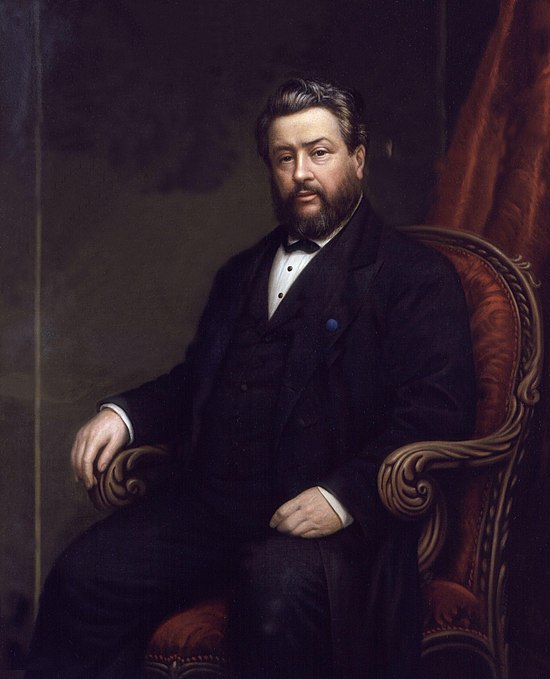
Charles Spurgeon
About Charles Spurgeon
Charles Haddon Spurgeon (19 June 1834 — 31 January 1892) was an English Particular Baptist preacher. His nickname is the "Prince of Preachers."
Broadcaster:

Comments

0 / 2000 characters
Comments are moderated before appearing.

Be the first to comment!

Joshua

Joshua

Shall we play a game? Ask me about articles, sermons, or theology from our library. I can also help you navigate the site.