Bootstrap
John Bunyan

26. The Enchanted Ground

1 Peter 2:11; Matthew 7:13-14
John Bunyan September, 16 2017 Audio
0 Comments
We have published John Bunyan's "Pilgrim's Progress" in modern English. As you listen to this professionally read audio, you can also read along with the text here:
http://www.gracegems.org/pilgrims_progress.htm#..., where you can purchase additional superb audios at very reasonable prices.

Sermon Transcript

Auto-generated transcript • May contain errors

100%
the enchanted ground. Then I saw in my dream that they went on until they came to a certain country whose air naturally tended to make the travelers drowsy.

So Hopeful began to be very dull and sleepy and said to Christian I'm starting to grow so drowsy, I can hardly hold my eyes open. Let's lay down here and take a nap."

Christian. By no means, lest by sleeping we never wake up again.

Hopeful. Why, my brother, sleep is sweet to the laboring man. We may be refreshed if we take a nap.

Christian. Do you not remember that one of the shepherds warned us to beware of the enchanted ground? Therefore let us not sleep as others do, but let us keep awake and watch."

Hopeful, I acknowledged my fault. Had I been here alone, I would have slept, and been in danger of death. I see what the wise man said is true. Two are better than one. Your company has been a mercy to me, and you shall have a good reward for your labour."

"'Now then,' Christian said, to prevent drowsiness in this place, let us have a wholesome discussion.

With all my heart. said Hopeful.

Christian, where shall we begin?

Hopeful, where God began with us.

Please start.

Christian. First I'll sing this song to you.

When saints do sleepy grow,
Let them come hither,
And hear how these two pilgrims
Talk together.
Yes, let them learn of them
In any wise thus to keep open
Their drowsy, slumbering eyes.
Saints' fellowship, if it be managed well,
Keeps them awake, and that, in spite of hell,

Then Christian began. I will ask you a question. How did you come at first to think of going on this pilgrimage?

Hopeful. Do you mean, how did I first come to look after the good of my soul?

Christian. Yes, that's my meaning."

Hopeful. I continued a great while in the delight of those vain things which were seen and sold at our fair. These things I now believe, had I continued in them still, would have ground me in perdition and destruction.

What things were they?

Hopeful. All the treasures and riches of the world. I also delighted much in carousing, drinking, swearing, lying, impurity, Sabbath-breaking, and what not, all of which lead to the destruction of the soul. But I found at last, by hearing and considering divine things, which I heard from you and beloved faithful, who was put to death for his faith and holy living in vanity fair, that the end of these things is death, and that for these things the wrath of God comes upon the children of disobedience.

Christian, did you immediately fall under the power of this conviction?

No, I was not initially willing to know the evil of sin, nor the damnation which follows the commission of sin. Rather, when my mind at first began to be shaken with the word, I endeavoured to shut my eyes against its light.

Christian, but what was the cause of your resistance to the first workings of God's blessed Spirit upon you?"

Hopeful, there were several causes. First, I was ignorant that this was the work of God upon me. I never thought that God begins the conversion of a sinner through convictions of sin. Secondly, sin was yet very sweet to my flesh, and I was reluctant to leave it. Thirdly, I could not tell how to part with my old companions. Their presence and actions were so desirable to me. Finally, my convictions of sin were so troublesome and heart-affrighting that I could not endure the thought of them in my heart.

Christian. Then, as it seems, sometimes you got rid of your convictions of sin.

Hopeful, yes, truly, but they would come into my mind again, and then I would be as bad—nay, worse—than I was before.

Christian. Why, what was it that brought your sins to mind again?

Hopeful. Many things, such as

1. If I did but meet a godly man in the streets, or
2. If I heard anyone read in the Bible, or
3. If my head began to ache, or
4. If I was told that some of my neighbours were sick, or
5. if I heard the death-bell toll for someone who had died, or, six, if I thought of dying myself, or, seven, if I heard another had died by sudden death, eight, but especially when I thought of myself, that I must quickly come to judgment.

Christian. And could you not easily at any time get off the guilt of sin, when by any of these ways conviction came upon you?

Hopeful. No, not I. For then they got a tighter hold on my conscience. And then, if I did but think of going back to sin, though my mind was turned against it, it would be a double torment to me.

Christian. And what did you do then?

Hopeful. I reckoned that I must endeavour to mend my life, for I thought that otherwise I was sure to be damned.

Christian. And did you ever attempt to mend your life?

Hopeful. Yes. And I fled not only from my sins, but from sinful company too. I also began religious duties, such as prayer, reading, weeping for sin, speaking truth to my neighbours, and so forth. These things I did, along with many others, too many to recount.

" Christian. And did you think yourself well, then?

Hopeful. Yes, for a while, but eventually my troubling convictions came tumbling upon me again, in spite of all my reformations.

Christian, how so, since you were now reformed?

Hopeful, there were several things which brought these convictions upon me, especially such sayings as these. All our righteousnesses are as filthy racks. By the works of the law shall no flesh be justified. When we've done everything we should, we're unworthy servants doing but our duty, along with many more similar sayings.

Hence I began to reason thus with myself. If all my righteousnesses are filthy rags, and if by the deeds of the law no man can be justified, and if, when we've done all our duty, we're yet unprofitable servants, that it is but folly to think of gaining heaven by keeping the law.

I further thought thus. If a man runs a hundred dollars into debt to the shopkeeper, and from then on he pays for everything that he purchases, yet if his old debt still remains unpaid in the ledger book, the shopkeeper will sue him for that, and cast him into prison until he shall pay the full debt.

Christian, So how do you apply this to yourself?

Hopeful. Why, I thought thus with myself, I have by my sins accumulated a great debt in God's book, and that my now reforming will not pay off that debt. Therefore, even with all my present amendments, I would not be freed from that damnation which my former transgressions still deserved.

" Christian. A very good application. But please, go on.

Hopeful. Another thing which troubled me. even since my recent amendments, is that I look closely into the best of whatever I do, I still see sin, new sin, mixing itself with my best deeds. So I am forced to conclude that notwithstanding my former good opinion of myself and my duties, I have committed enough sin in one duty to send me to hell, even if my former life had been faultless.

And what did you do then?

Hopeful. Do? I did not know what to do, until I shared my thoughts with Faithful, for we were well acquainted. He told me that unless I could obtain the righteousness of a man who never had sinned, that neither my own nor all the righteousness of the world could save me.

Christian. And did you think he spoke the truth?

Hopeful. Had he told me this while I was yet pleased and satisfied with my own amendments, I would have called him a fool for his counsel. But now, since I see my own error and the sin which cleaves to even my best performances, I was forced to embrace his opinion.

Christian, but did you think when at first he suggested it to you that there was such a man to be found, of whom it might justly be said that he never committed any sin?

Hopeful, I must confess that his words did sound strange at first, but after a little more conversation with him I was fully convinced.

Christian, And did you ask, faithful, who this man was, and how you must be justified by him?

Hopeful. Yes. And he told me it was the Lord Jesus, who dwells on the right hand of the Most High God. And thus he said that I must be justified by Him, even by trusting in what He Himself has done during His earthly life, and what He suffered when He hung on the tree.

I asked him further how that man's righteousness could be effectual to justify another before God. And he told me that he was the mighty God, and that both his life and his death was not for himself, but for me, to whom the worthiness of his doings would be imputed if I believed on him.

Christian, and what did you do then?

Hopeful, I made objections against my believing, for I thought that he was not willing to save me.

Christian, and what did Faithful say to you then?

Hopeful, he bid me to go to him and see, and I told him this would be presumption, but he said not so, for I was invited to come. Then he gave me a book of Jesus, in his own words, to encourage me to come the more freely. He also said, concerning that book, that its every jot and tittle stood firmer than heaven and earth.

Then I asked Faithful what I must do when I go to him. He told me that I must entreat the Father upon my knees and with all my heart and soul to reveal the Lord Jesus to me. Then I asked him further how I must make my petition to him, and he said, Go, and you shall find him upon a mercy seat, where he sits all the year long, to give pardon and forgiveness to those who come.

I told him that I did not know what to say when I go, and he bid me to say something to this effect.

God, be merciful to me a sinner, and make me to know and believe in Jesus Christ. For I see that if he has not provided his perfect righteousness, or if I have not faith in his righteousness, then I am utterly cast away. Lord, I have heard that you are a merciful God, and have ordained that your son Jesus Christ should be the Saviour of the world, and moreover that you are willing to bestow him upon such a poor sinner as I am. And I am a poor sinner indeed. Lord, be pleased to magnify your grace in the salvation of my soul, through your Son, Jesus Christ. Amen.

Christian, and did you do as you were bidden?

Hopeful, yes, over and over and over.

Christian, and did the Father reveal his Son to you?

Not at the first, nor the second, nor the third, nor the fourth, nor the fifth. No, not even at the sixth time.

" Christian. What did you do then?

Hopeful. What? Why, I could not tell what to do.

Christian. Did you ever consider giving up praying?

Hopeful. Yes, a hundred times, twice over.

Christian. And what was the reason why you did not? Hopeful. I believed that what faithful told me was true. Namely, that without the righteousness of Christ, all the world could not save me. Therefore, I thought that if I ceased praying, I would die. And I dare not die. except at the throne of grace.

Then this thought came to my mind. Though it seems slow in coming, wait patiently, for it will surely take place. So I continued praying until the father revealed his son to me.

Christian, and how was he revealed unto you?

Hopeful. I did not see him with my bodily eyes. but with the eyes of my understanding. It happened in this way. One day I was very sad, perhaps sadder than at any other time in my life. This sadness sprang from a fresh sight of the immensity and vileness of my sins. As I was then expecting nothing but hell and the everlasting damnation of my soul, suddenly I thought I saw the Lord Jesus look down from heaven upon me and say, Believe on the Lord Jesus Christ, and you shall be saved.

But I replied, Lord, I am a dreadful sinner, a very dreadful sinner. And he answered, My grace is sufficient for you. Then I said, But Lord, what is believing? And then I saw from that saying, he who comes to me shall never hunger, and he who believes on me shall never thirst, that believing and coming were one and the same. And that he who came, that is, he who ran out in his heart and affections after salvation by Christ, he indeed believed in Christ.

Then the water stood in my eyes. And I asked further, but Lord, may such a vile sinner as I am indeed be accepted by you, and be saved by you? And I heard him say, Whoever comes to me, I will never cast out. Then I said, But how, Lord, in my coming to you must I properly think of you, that my faith may be rightly placed upon you? And he said, Christ Jesus came into the world to save sinners. He is the end of the law for righteousness for everyone who believes. He died for our sins. and rose again for our justification. He loved us and washed us from our sins in his own blood. He is the mediator between God and men. He ever lives to make intercession for us.

From all of this, I gather that I must look for righteousness in his person and for atonement for my sins by his blood. Also, that what he did in obedience to his father's law and in submitting to its penalty was not for himself, but for the one who will accept it for his salvation and be thankful.

And now my heart was full of joy, my eyes were full of tears, and my affections were running over with love to the name, ways, and people of Jesus Christ.

Christian. This was a revelation of Christ to your soul indeed. But tell me particularly, what effect this encounter had upon your spirit?

Hopeful. First, it made me see that all the world, notwithstanding all its boasted righteousness, is in a state of condemnation. Secondly, It made me see that God the Father is both just and the justifier of the one who believes in Jesus. Thirdly, it made me greatly ashamed of the vileness of my former life and confounded me with the sense of my own ignorance for I never had a thought in my heart before now that so showed me the beauty of Jesus Christ. Lastly, it made me love a holy life and long to do something for the honor and glory of the name of the Lord Jesus. Yes, I thought that had I now a thousand gallons of blood in my body I could spill it all for the sake of the Lord Jesus. you
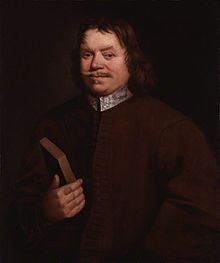
John Bunyan
About John Bunyan
John Bunyan (1628-1688) was a Puritan preacher best remembered as the author of the allegory The Pilgrim's Progress. In addition to The Pilgrim's Progress, Bunyan wrote nearly sixty titles.
Broadcaster:

Comments

0 / 2000 characters
Comments are moderated before appearing.

Be the first to comment!