Bootstrap
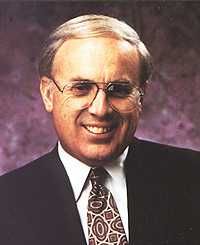
John MacArthur

Questions & Answers #2

Proverbs 1; Romans 12
John MacArthur March, 21 2017 Video & Audio
0 Comments
Questions & Answers with MacArthur, Lawson,Mohler, and Sproul

Sermon Transcript

Auto-generated transcript • May contain errors

100%
Well, the Q&A time is something
particularly for you first-time attendees that we really enjoy
doing with all of our guest speakers, our teachers that have gathered
here, and it's an informal time of discussion and back-and-forth.
These are questions that you've written in, submitted. There
is no way that we can get to all that you've provided to us,
but we try and be as judicious as possible with the time allotted
to us. And would you join me in welcoming
first-time to the platform today, Dr. Sproul? Dr. MacArthur, and
Dr. Mohler, and Dr. Lawson. Well, we're going to jump right
in, but Dr. Sproul, Dr. Mohler, Dr. Lawson, Dr. MacArthur, it's so good for you
all to be here with us. I'm very grateful for you making
this journey. Dr. MacArthur, we know that you
had a wonderful conference last week at the Shepherds Conference.
Can you tell just the folks there, just tell them a little bit about
how many people came and from how many different countries?
Thank you, Chris. We had about 5,000 plus, about
1,100 of our church volunteers, so 6,000 or so people running
around campus from about 70 nations of the world. It was amazing. It was being translated on campus. as well as live stream into multiple
languages because there were different language speakers on
the campus. Just a tremendous opportunity. The theme was We
Preach Christ. There were, by the time we hit
Sunday, seventeen separate preaching services, and every one of them
exalted Christ. It was just a…we all felt like
we had gone to the Mount of Transfiguration and we wanted to build booths
and live there. LARSON See, you've gone from
glory to glory now at Ligonier. SPROUL Glory to glory, yeah.
No, no, this is just, this is a lateral move. LARSON All right, we're going to jump right
in. not directed to any one particular
teacher today, but how do you explain the term Reformed to
a person unfamiliar with Reformed teaching? LAWSON Well, I think
when we say Reformed, we simply mean biblical, that we have come
back to the Bible and allow the Bible to frame our doctrine. And, of course, Dr. Sproul has
an entire book on what is Reformed theology, and he has five hallmarks
of Reformed theology. I would say certainly the foundation
is the authority of Scripture alone, and the highest pinnacle
is the glory of God above all things. and it was a recovery,
or Reformed truth is the purity of the gospel, how sinful man
can be right with holy God, and as well as what we heard today
earlier from Dr. Ferguson, a restoration of the
purity of worship in spirit and in truth. Certainly, the five
solas and the five points of the doctrines of grace are certainly
in that mix as well. So, when I think of Reformed,
in essence, God formed the truth And then the truth became deformed
by false teachers, where tradition and ecclesiastical hierarchy
became the authority, and reformed is to simply bring it back to
where God formed it. So, man, by his failure to properly
teach the Bible, deformed it, and the Reformers simply put
it back to the form as God had originally given it. Is our heart still deceitful
above all things and desperately sick after we are born again?"
Referencing Jeremiah 17, 9. I think the answer has to be
yes and no. I mean, first of all, we understand
immediately why the unregenerate heart is desperately wicked and
beyond our understanding. That's how we can understand
and interpret the headlines around us. Frankly, that's how we can
understand the mirror in front of us. It is the knowledge of
a depravity, the heart as the seat of sin. And so, we can thoroughly
understand that in terms of the undergenerate heart. It has to
be affirmed comprehensively. Desperately wicked, who can understand
it? But even as believers in the
Lord Jesus Christ, and remember a part of the new covenant is
being promised a new heart, so in one sense the answer is no,
it's not the same heart. This is a heart that has been
converted. It's a heart that is regenerated. It's new. It's a new heart. Sanctification
is a process. Justification is punctiliar.
Sanctification is a process, and sanctification is not an
end unto itself. Our sanctification is only completed
in our glorification, and that is yet to come. It's accomplished
in Christ, as Paul makes clear in Romans chapter 8, but applied
to us, it's something for which we are still waiting. And so,
our heart can still deceive us, and we as Christians Perhaps
as a sign of maturity, not of immaturity, understand that at
times we can't explain our own heart. But those who have a new
heart in Christ know that we are to guard against our heart
leading us astray, and instead to lean into Jesus, and to obey
Christ, and to obey His Word. So there's a distinction, but
I think in some sense the answer to that has to be yes and no.
But thanks be to God, the final verdict is no. How should I share the gospel
when it could cost me my job? Well, I can jump in while they're
just kind of giving me a little pause here. I think you want to honor God,
you want to be faithful to the gospel, but you don't want to
be foolish. You want to be responsible. You want to take the long view
and not the short view. You have a responsibility to
provide for your family. If you don't do that, you're
worse than an infidel. You also have a responsibility, and this
is explicit both in Colossians and Ephesians, that you submit
yourself to your master, whoever your boss is, whoever is over
you. You don't overturn that submission. You don't run roughshod
over that submission in some ill-conceived effort to fulfill
the Great Commission. I think you want to be as wise
as you can be. and as submissive as you can
be. And I would just encourage you
to make those kinds of opportunities sort of dependent on the Lord
opening a door for you on a personal level. If you ask the Lord to
give you opportunity, I'm sure that that opportunity may arise.
But I think it's irresponsible for you to overthrow your other
Christian responsibilities and duties as somebody who's employed
by someone, gainfully employed, taking their money and their
resources with the expectation that you're going to perform
according to the, you know, whatever the standard of that organization
is. and reserve the opportunity to
communicate the gospel for those times when it's right and the
door is sensibly opened. And again, you should be helped
along with this by realizing that the Lord again will draw
His own He will draw His own to Him, and He will find someone
to communicate the gospel to them. You just want to be the
one ready and eager when that door is opened in a responsible
and gracious way to exercise that privilege. Often I hear the phrase, God
loves you, proclaimed to a group of people, which may include
both Christians and non-Christians. Is this biblical to say that
phrase to just anyone? When we look at the concept of
the love of God in Scripture, we see distinctions that have
to be made. Historically and theologically,
we distinguish among three types of divine love. There is the
love of benevolence, where God has a a kind spirit to the whole
world, and His benevolent will and His benevolent love falls
on everybody. But there's also the sense in
which the Bible, the love of God is defined in terms of God's
beneficence. That is, that's not just simply
what His attitude is towards the world, but how He displays
that goodness universally. The rain falls upon the just
as well as on the unjust, and so that universal dimension of
the love of God. is manifest. But usually when
we're talking about the love of God in popular language, what
really is what we're talking about is what we call God's love
of complacency. And that term, the love of complacency,
is not used in the way in which we use the term complacency in
our age and our culture and our term of complacency means smugness,
self-satisfaction, that sort of thing. But rather when the
Scriptures indicate the love of complacency, it's that special
love that God has for His Son and all of those who are in His
Son and who are adopted into His family. And if we talk about
the love of God in His terms of the love of complacency and
talk about it. universally, that's blasphemy
because God does not love the whole world in the love of complacency. In fact, the Scriptures tell
us that there are many ways in which God is at enmity with the
world. He hates the world. He hates
those who are swift to shed blood, and we have to take that into
account. When I hear preachers stand up
and say that God loves everybody unconditionally, I want to scream
and say, wait a minute, then why does He call us to repent?
Why does He call us to come to the cross? Why does He call us
to come to Christ? If God loves everybody unconditionally,
then you can do whatever you want. And believe whatever you
think. It's just not true that God loves
His Son. He's placed an absolute condition
by which He requires. He doesn't just invite people
to come to His Son. He commands all men everywhere
to repent of their sins and to come to Christ. And if you want
to enjoy the love of complacency, you have to be in Christ. What does it mean when we confess
that Jesus has a reasonable soul? When we say that Jesus has a
reasonable soul, we simply mean by that that touching His human
nature, He is a duality, His body and soul as all human beings
are, and that that soul is rational. And when we talk about, in that
sense, the term soul is virtually interchangeable with the word
mind. And God has created us in our
image. God Himself is a rational being,
and God has planted within the soul or mind of every creature
that He has made. the capacity for reasonable discourse
and thinking. And I know we live in a time
that is one of the most anti-rational and anti-intellectual periods
of the history of the church. Not that people are opposed to
academics or science. Some people love academic pursuits
and investigation, scientific inquiry, but it's anti-the mind,
anti-being rational. People think that Aristotle,
for example, invented logic. Aristotle didn't invent logic.
God did. And that what Aristotle, I mean
Aristotle no more invented logic than Columbus invented America.
He discovered it. He found it. And you know the
late Christian philosopher, not Van
Til, but the other one. Gordon Clark, when he exegetes
John 1, and the beginning was the Word, and the Word was with
God, and so on, it's in the N.R.K. Ainho Logos, and actually Gordon
Clark interpreted that, or translated it. In the beginning it was logic.
and logic was with God, and logic was God in the sense that rationality
has its foundation in the divine mind itself, and that that rationality
is a communicable attribute of God that in His creatures we
also have the capacity for reasonable thinking. SPROUL JR.: : Don't
you think also it's also trying to say that He was not a human
shell with only a divine mind? SPROUL Jr.: : He had a human
mind. SPROUL JR.: : He had a human
mind. SPROUL Jr.: : Right, with all the limitations of human thinking. Touching His
human nature, He was not omniscient. Touching His divine nature, He
was absolutely omniscient. But we can't separate those,
but we must distinguish them or all kinds of mischief takes
place. SPROUL JR.: : But fully God, fully man with all the reasonableness
of man. Well, I prefer truly God and
truly man because it can be confused, and when you say that Jesus was
fully God and fully man, if you mean by that, that that one person
was absolutely, totally God and that's all, then you'd be denying
His humanity. Or if you say He was fully man,
then there's no room for His deity. That's why we like to
say vera homo, vera Deus, truly God, truly man. You're with me
on that. That's what I meant. That's what
I meant. I knew that's what you meant. Why, Johnny Mac, do you
always make me have to define what you meant? John, he's corrected me in a
Q&A on this very point before, so I… Dr. MacArthur, you spoke in your
2016 Shepherds Conference message about clergy malpractice. Can
you tell us what you meant by that? What year is this? Yeah, any failure on the part
of a pastor, an under-shepherd of Christ, to lead his church
in a way that is not sound in doctrine and practice is in itself
a form of clergy malpractice. Clergy malpractice, I went through
a clergy malpractice lawsuit that lasted ten years, ended
up in the United States Supreme Court, and the Supreme Court
ruled in our favor. That was a legal experience of
what the courts called clergy malpractice, and they exonerated
us from the accusation that we had committed clergy malpractice
by preaching about sin and judgment, which the plaintiff said had
exacerbated someone's precondition to feeling guilty that led to
that person's suicide, so that we were responsible for his suicide. The lawsuit went for ten years.
It went through all kinds of courts. I gave testimony on the
stand in courts. It went to appellate courts.
It went all the way to the U.S. Supreme Court. That is the opposite of clergy
malpractice. that that is doing what you must do, which is to
declare the truth in preaching and in practice, that you have
to be faithful to the Word of God. And, I mean, where would
you even begin to catalog all of the clergy malpractice going
on all over the place today, bad theology and bad practice
combined together. It is pandemic. LARSON This person writes in
and says, I'm an eighth grade teacher in Christian school.
How can I best prepare students as they head to public schools
to defend and live their faith out? 1 Peter 3.15. That is a really sweet question,
and there has to be a special crown for anyone teaching thirteen-year-olds
in the school. That's just magnificent. And
for a teacher to have this godly concern about how to prepare
those students, knowing they're on the threshold of something
really big, Aristotle's been quoted once, I'll go back to
him. Aristotle, I'll paraphrase here, basically said there are
two points. He was speaking of men who were the boys who were his
students. He said there are two times to get a boy's attention,
and that is between the ages of one to five, and then between
the ages of fifteen to twenty. After that, he's a lost cause,
said Aristotle. But you understand that those are two very formative
periods. You know, the period from 1 to 5 is when a child learns
his or her place in the world, identity, and leaves with a world
picture, a world picture. The Germans were good at making
these words very clear. But when a child leaves high
school he or she has a worldview. Those are two different things.
The difference is the complex analytical capacity that comes
in adolescence, the ability to understand one mind among other
minds, to understand that what this child has received from
mom and dad is not exactly what everyone else receives from their
mom and dad. What they receive from the preacher is not what
others are hearing. There are alternative worldviews,
and so I would simply say that there's an offensive and a defensive
play here. Both of them are very important.
Offensively, we need to help students when they're thirteen
to understand how to judge other truth claims and worldviews because
they're going to be inundated with them by the unchanging authority
of God's Word. build in them insofar as there
is your possibility and instinct to turn to the Word of God and
to trust the Word of God. There's no way you can comprehensively
prepare them for all the intellectual challenges they're going to face,
but you can at least model for them what it means to trust in
Scripture and to know that there is a way of understanding all
truth that is accountable to God. And then defensive, it's
very important. their hearts. It's not just their
minds, it's their hearts. And, you know, to talk to a thirteen-year-old
and let them know a battle for their minds is ensuing, but also
a battle for their hearts. And so, the defensive play is
not only as you pray for them and not only as you teach them,
but also just to help them to understand your joy in Christ.
because there are all kinds of competing affections that are
going to be presented to them very, very quickly. Let your
affection for Christ be something that they remember. How would you counsel a wife
of Reformed faith married to a staunch Roman Catholic, particularly
as it relates to teaching their two children the true Word of
God and raising them to know, love, and serve God? Well, I guess I live in that
world a lot because Southern California has so many Hispanic
people there, and it's very common. And even some people from Asia
who have been raised as Catholics, we see a spouse coming to Christ,
and that is a very, very common kind of experience. And it takes
all kinds of forms. Sometimes they shut them out
of the church. They won't allow them to come. They won't allow
them to read the Bible in the house. They won't allow them
to communicate the gospel openly to the kids. In other cases,
they're indifferent, and that takes different form in just
about every single case that you work with. But again, the
balance is, you know, 1 Peter, you win your unbelieving husband
by being a submissive wife, but at the same time you also have
a higher standard than that. As the apostles said when they
told them to stop preaching, who do we obey, you or God? I
have to, I must obey God. But you've got to demonstrate,
I think, as a spouse that your obedience to God makes you a
better wife to Him in every area and every way, and a better mother
in every way. I think that's what has to be
demonstrated, not that you're some kind of an antagonist in
the family, and that's the balance, and that takes some of the gentleness
of the Holy Spirit to do. At the same time that you give
honor to the husband and teach your children to respect the
husband, because that's an ordered home, and that's necessary if
they're going to have any place in life in the future that provides
any kind of success for them. But at the same time, behind
that you've got to communicate the need to pray for this unconverted
husband, because the issue here is, you know, we love daddy,
but he needs Jesus Christ. And while He may resist the wife's
pleas, I think that the pleas of the children and the prayers
of the children are pretty powerful influences. So, that's kind of
the general instruction that we would give to people in that
situation, although they're very different in each case. Acts 17.27 refers to mankind
seeking God and finding Him, but other passages state that
man cannot seek God. With the rise of seeker churches,
how should we understand biblically seeking God? SPROUL JR.: : Well,
when you talk about Acts 17 and Paul at the Areopagus, and he
talks about quoting some of his pagan poets and everything, and
talks about people groping after God, they have the statute to
the unknown God, and in one sense they're seeking Him. And the
other sense when you're talking didactically, when the Apostle
spells it out specifically what the natural human condition is,
quoting the psalm and adding to it with the fullness of it,
the Apostle Paul makes it very clear that no one, that's a universal
negative, no one in their natural state seeks after God. Now, Thomas Aquinas. had to answer this question centuries
ago. Why is it that it seems to us
that people all around us who are not believers in Christ,
are not Christians, seem to be seeking after God, when the Apostle
says so clearly that no man seeks after God? And Aquinas answered
the question this way, which I think was the correct answer.
He said, what we observe is people seeking things that only God
can give them. From our perspective, we know
that the only way they're ever going to feel relief from their
guilt is if they come to Christ. We know that if they're ever
going to find peace, ultimately, it's going to be in Christ. We
know that if they're ever going to find meaning and significance
for their existence, it's only going to be in Christ. Without
Christ, they're without hope. But they are looking all over
the place for the things that only God can give them, that
is the benefits that God gives. while at the very same time are
fleeing with all of their strength and might from Him, from the
being of God. So if you want to have a seeker-sensitive
church, what that means biblically is that you organize and structure
your worship and your church and your program for Christians,
because the reason why churches exist in the first place are
not for evangelism. They're for worship and for the
gathering together of the saints to apply themselves to the study
of the Word of God, to prayer and to fellowship and the Lord's
Supper and that sort of thing. Now, the whole church is responsible
to do evangelism, but the purpose of the church itself in terms
of worship and the gathering together on the Lord's Day is
not to do evangelism. Now, I use evangelism all the
time in the congregation because I'm very much well aware that
there are people who are there that aren't believers, and so
I preach the gospel to them. But if I tailor the program for
the unbeliever, That's totally antithetical to what the New
Testament teaches and what the Word of God teaches. So this
whole movement of seeker sensitivity is a pernicious distortion of
what God commands and expects. And what it is, as Jim Boyce
used to say, when the church is trying to be the church, do
the Lord's work in the world's way. And it works. It works,
I mean as far as people will come in droves if you entertain
them and if you make them feel comfortable and all of that.
So when you talk about seeker sensitivity, and what that means
historically is that you design consciously worship for the unbeliever. That's crazy. Probably the most dramatic illustration
of this is in the book of Acts. The church was born on the day
of Pentecost. Three thousand believers are added to the hundred
and twenty in the upper room, and they gave themselves to the
apostles' doctrine, the breaking of bread, prayers, and fellowship.
That's the church. And the Lord added daily to the
church those that were being saved. they were doing miracles. They were doing miracles, rapid-fire
miracles, the healing of the lame man and other miracles,
and that attracted the people. That was attracting the people
to the church. You might say that's a good thing.
No, the Lord had to put a halt to that. The Lord Himself had
to stop unbelievers from rushing into the miracle-producing church. So, what He did was kill two
people at the offering, He literally killed, publicly, Ananias and
Sapphira. Ananias, that morning, he dropped
dead because he lied to the Holy Spirit about how much money he
actually gave off the sale of a piece of land. Three hours
later when his wife showed up, I have ambivalence about that.
I like a three-hour church service, but I don't know what she was
doing for those three hours. But anyway, when she shows up,
the people come, the boys, the young boys coming in from burying
the husband pick her up and bury her, and it says in Acts 5, none
dared join himself to them. The Lord shut the door in the
book of Acts on unbelievers rushing into the church for the signs
and wonders by frightening them about the holiness of that place.
When the church recovers its transcendent understanding of
worship, and when the church becomes devoted to the glory
and honor of God and pursues holiness, it makes the statement
that our Lord wants it to make to the world, and the Lord then
will add to the church those that His sovereign will calls. I'm going to just say that that's
my theme for my final message, God willing, on Saturday on what
the goal of Reformation is and the purpose of Reformation is.
And so maybe I shouldn't even bother to… You're going to leave
before that, but you could just preach the thing. I'm just glad you agree with
me on that answer. How would you define a false
teacher, and how much error is allowed before they are considered
false? Vesta's going to be really after
me after this Q&A, because every time you ask a question, I have
to ask Al what it is you said. The one thing I have in common
with my mentor is he was deaf as a doornail, and I'm getting
there quickly. But my hearing aids interfere
with my breathing, and I have to choose between hearing and
breathing. When is a false teacher a false
teacher? It's when he teaches falsehood. I would just add to that. Amen. But I think there is in the New
Testament a clear reservation of that, not just to one who
teaches falsely, but who is uncorrectable, who resists correction. I mean,
Apollos was a false teacher, but when he was corrected when
he was taught how to preach a better way, how to be more faithful
to Scripture, he was corrected. So there's a difference between
a false teaching, because just about any preacher starting out,
especially if he's going to teach something that's false, that's
quite different than being, I think, a false teacher, uncorrected
and uncorrectable. SPROUL JR.: : And the chief characteristic
of his teaching is falsehood. Calvin said no theologian is
ever more than 80 percent right, and the problem was we don't
know which that 20 percent is, and in some of us it's 50 percent. I think we need to say that there
are some absolutely non-negotiable truths that you are false if
you deny the Trinity, if you deny the deity of Christ, if
you deny His sinless life, substitutionary death, salvation by grace through
faith, the gospel. I mean, that's the drivetrain
of truth, saving truth. Those are not negotiable. You
can misunderstand baptism or something like that. those we call errors, not heresies. I mean, there's a difference
between error and heresy. Heresy is something that strikes
at the very heart of the gospel and of the truth, yeah. LARSON
Should I just end this before it gets nasty? SPROUL This is
not fair. I'm outnumbered here. It's hard
to be a true teacher. I know what's behind that screen. Trying to bring it back in. LARSON
In what ways is our current cultural climate forcing the mushy middle
out of the church? MOHLER Yeah, that's a great question. And it kind of goes back to the
seeker-sensitive question. We all wanted in on that one
because that's where we live. But one of the interesting things
to note is that there aren't many new seeker-sensitive churches. because that fit a certain cultural
moment when people were saying to unbelievers, you can gain
a bit of social capital by coming to join with us. There's some
value added to your life if you come and join with us. If you
just come and be with us, we'll add meaning and spirituality
to your life in a non-threatening way. But in the hardening secularization
that we're now experiencing, People are going to pay social
capital to hang around with anyone who believes the gospel of Jesus
Christ. They're going to forfeit social capital. They're going
to run a risk for being members of our churches. There once was
a time when especially someone in, say, a southern town, he
wanted to come and he wanted to…he had his family, wanted
to be able to raise his children, wanted to be able to sell life
insurance. He had to have credibility, join credibility by…that is,
add credibility by joining the First Baptist Church, First Presbyterian
Church. That was just what people did. in an age of cultural Christianity. Well, now you may fail to become
a partner in your law firm because you're a member of a Bible-believing,
gospel-teaching church. The mushy middle is disappearing
because in a time of hardening, I'm not going to use the word
persecution, but in a time of hardening, opposition could well
turn into persecution. People are running a risk to
hang around with the likes of us. And the mushy middle is going
to disappear in a hurry, because the pressures on both sides are
coming real hard. LARSON Given the failure of many
ecumenical movements, what can the church do to promote unity
without compromising doctrine? I think it goes back to what
Dr. MacArthur just said on the essentials of the faith. I mean,
there is common ground in believing and affirming the Trinity, the
deity of Christ, His virgin birth, sinless life, substitutionary
death, bodily resurrection, present enthronement, His soon return,
the final judgment, the eternality of heaven and hell. I mean, if
you can't come together and agree on that, then you're really outside
the faith. You're not inside, you're outside the faith. And
we, in a true Catholicity, I mean, we come together in agreement
on these gospel truths, and these are things
that we would be willing to die for. And if you're not willing
to die for these things, then there's some question, do you
really believe these things that are truly essential? And everything
in the Bible is important and everything in the Bible is true,
yet there are some things that rise to a higher level of importance. And every truly, truly I say
unto you introduces some of those, and Paul would say, I delivered
to you of first importance. Those are the things that we
can come together as believers in Christ. But if you can't affirm
these, then what Dr. MacArthur is going to preach
on tonight, Galatians 1, then the curse of God is upon you.
So, to me, that's where we come together is in these fundamental
essentials of Christianity that are non-negotiable. I mean, we
can't give up one inch on this. LAWSON Absolutely, and thus you
follow through the history of the Christian church and those
moments like Nicaea Let's remember, Nicaea didn't say, here's a good
Christology and here's a bad Christology. Nicaea said, here's
Christianity and here is let there be anathema, let them be
anathema. This is to be identified as heresy.
But as you follow that through, I just want to add to what Steve
said very quickly, that by the time you get to the Reformation,
we also learn that we've got to put justification by faith
alone in that top tier. such that without the affirmation,
Luther said, the article by which the church stands or falls, without
justification by faith alone, there is no Christianity, there
is no gospel. SPROUL JR.: : I believe the first
question, if I'm not mistaken, was something about what is Reformed
theology? What does it mean to be Reformed?
And anybody who is Reformed is, first of all, Catholic. namely
that we embrace the classic ecumenical truths of the ecumenical councils,
the Council of Nicaea, the Council of Chalcedon, and so on, so that
we all share that same basic structure of Christianity. And
you move to the sixteenth century, and you have the emergence of
the concept of evangelicalism, which takes its meaning from
the word evangel, or the gospel, And so that was a rallying around
the doctrine of justification by faith alone. So anyone who
is Reformed is also evangelical, and anyone who is evangelical
is also Catholic. But at the time of the Reformation,
there were many kinds and brands and varieties of evangelicals.
Lutherans reformed in Switzerland and so on, Episcopalian in England,
and he had all these different branches of Protestantism. But though they had differences
among themselves, they had certain core beliefs, the Catholic truth
and then also the two primary affirmations of which all historic
evangelists agreed on was one, justification by faith alone,
sola fide, and two, the authority, absolute authority of sacred
Scripture, sola scriptura. And it's only in recent decades
that that consensus among so-called evangelicals has collapsed, where
you can't assume now that somebody that calls themselves an evangelical
believes in justification by faith alone or believes in sola
scriptura. But when you go beyond the broader
term evangelical and even broader term Catholic, then you get to
the narrow distinctives of Reformed theology, which we embrace all
of the Catholic truths, the evangelical truths, but there's more to that.
There are also specific things like you mentioned the doctrines
of grace and so on. Where I think people get confused
on this is John 17, Jesus' prayer that they may be one. They assume
that's a prayer that hasn't been answered. That is not. That prayer
is answered in the forming of the body of Christ. That is a
prayer that all believers would be one, and it's in the same
list of things as praying believers into heaven. So that is a done,
that is a reality. We are one. We are the body of
Christ. That prayer is answered. That's
different than how do Christians get along with one another. Then
you go to Philippians 2 and you talk about, come on, you need
to get along better with each other by not looking on your
own things when things of others don't consider yourself better
than anybody else. That's a whole different issue. There's nothing
in the Bible that assumes that true believers are going to get
along well with fake believers. That's not going to happen. The
true church is one in Christ. We need to do a better job of
loving each other in the process, but we will never be one with
those who hold a false form of Christianity. LARSON Well, that was our last
question for this particular Q&A, and before we adjourn, Dr. MacArthur is going to leave and
go to his book signing in just a minute, but the teaching fellows
and Dr. Sproul have a special announcement.
But would you thank our panelists this afternoon?
Broadcaster:

Comments

0 / 2000 characters
Comments are moderated before appearing.

Be the first to comment!

Joshua

Joshua

Shall we play a game? Ask me about articles, sermons, or theology from our library. I can also help you navigate the site.