Bootstrap
Charles Spurgeon

Justice Satisfied!

1 John 1:9; Romans 3:26
Charles Spurgeon March, 10 2017 Audio
0 Comments
Choice Puritan Devotional

Sermon Transcript

Auto-generated transcript • May contain errors

100%
Justice Satisfied by Charles Haddon Spurgeon.

This sermon was originally preached on May 29, 1859.

Our text today comes from two passages. First, Romans 3.26. He is just and the one who justifies those who have faith in Jesus. First John 1.9. If we confess our sins, He is faithful and just and will forgive us our sins and purify us from all unrighteousness.

When the soul is seriously made aware of the conviction of its guilt, when terror and dread grab hold of it concerning the inevitable consequences of its sin, the soul then becomes afraid of God. It dreads every attribute of divinity. But most of all, the sinner is afraid of God's justice.

Oh, he says to himself, God is a just God. And because he is, how can he forgive my sins? For my wickedness loudly cries out for punishment. And my sins demand that God's right hand of judgment should strike me down. How can I be saved? If God were unjust, he might forgive. But no, he is not that way. He is severely just. He makes justice the measuring line and righteousness the plumb line. He is the judge of all the earth, and he must do what is right. How then can I escape from his righteous wrath, which must be stirred up against me?

Let us be assured that the sinner is quite right in the conviction that there is here a great dilemma. The justice of God is in itself a great barrier to the salvation of sinners. There is no possible way for that barrier to be surmounted, nor even for it to be removed except by one way, which I will today proclaim to you through the gospel of Jesus Christ our Lord.

It is true that God is just. Let the old city of Sodom tell you how God rained down fire and brimstone out of heaven upon man's iniquity. Let a drowning world tell you how God opened up the floodgates of the fountains and caused the bubbling waters to spring up and swallow up man alive in the great flood. Let the earth tell you, for she opened her mouth when Korah, Dathom, and Abiram rebelled against God. Let the buried cities of Nineveh and the tattered relics of Tyre and Sidon tell you that God is just and will by no means spare the guilty.

And most terrible of all, let hell's bottomless lake declare the awful vengeance of God against the sins of man. Let the cries and groans and moans and shrieks of spirits condemned of God scream in your ears and bear witness that he is a God who will not spare the guilty, who will not wink at iniquity, will not wink at transgression and sin, but who will have vengeance upon every rebel and will give justice its full satisfaction for every offense.

The sinner is right in his conviction that God is just, and he is also right in the inference which follows from it, that because God is just, then the sinner's sin must be punished. O sinner, if God did not punish your sin, then he would cease to be what God has always been, the severely just and the inflexibly righteous. Never has there been a sin pardoned absolutely and without atonement since the world began. There has never been an offense forgiven by the great judge of heaven until the law has received the fullest vindication. You are right, O convicted sinner, that such will be the case from now to the end of time. Every sin will have its just reward. For every offense there will be punishment, and for every iniquity there will be judgment.

Oh, says the sinner, if this is true, then I am shut out from heaven. If God is just and he must punish sin, then what can I do? Justice, like some dark angel, stands blocking the road of mercy, and with his sword drawn, thirsty for blood and ready to kill, he steps towards me and threatens to drive me backwards over the precipice of death into the fiery lake of burning sulfur. Sinner, you are right. It is true. Except through the gospel, which I'm about to preach to you, justice is your adversary, your lawful, irresistible, and insatiable enemy. It cannot allow you to enter heaven because you have sinned, and you must be punished for that sin as long as God is God, a holy and just God. Is it possible, then, that the sinner cannot be saved? This is the great riddle of the law and the great truth of the gospel. Stand in wonder, you heavens! Be astonished, O earth! that the very justice which stood in the sinner's way and prevented his being forgiven has been appeased by the gospel of Christ. By the rich atonement offered at Calvary, justice is satisfied. Justice has put away its sword, and now justice has nothing to say against the pardon of the repentant sinner. No, in fact, even beyond that, that justice that was once so angry whose eyes were like lightning and whose voice was like thunder, has now become the sinner's advocate. And justice itself, with its mighty voice, pleads with God that whoever confesses his sin should be forgiven and be cleansed from all unrighteousness. My goal this morning is to show, in the first place, according to our first text, how justice is no longer the sinner's enemy. God is just and the one who justifies those who have faith in Jesus. And then in the second place, that justice has become the sinner's advocate and that God is just and will forgive us our sins and purify us from all unrighteousness. But let me utter a caution. I will speak this morning only to those who feel their guilt and who are ready to confess their sin. For to those who still love sin and will not acknowledge their guilt, there is no promise of mercy or pardon. For them, there remains nothing but the fearful anticipation of judgment. A man who remains stiff-necked after many rebukes will suddenly be destroyed without remedy. The soul that neglects this great salvation cannot escape. There is no door of escape provided for it. Unless the Lord causes us to feel our need of mercy and has compelled us to confess that without his mercy we must rightly perish, and in addition, that unless he has made us willing to be saved on any terms, then this gospel which I am about to preach is not ours. But if we are convicted of sin and are now trembling before the thunders of God's wrath, then every word that I am about to speak will be full of encouragement and consolation to you. First, how has justice been put aside? Or rather, how has it been so satisfied that it no longer stands in the way of God's justifying the sinner? The one answer to that is, justice has been satisfied through the substitution of our blessed Lord and Savior, Jesus Christ. When man sinned, the law demanded that man must be punished. The first offense of man was committed by Adam, who was the representative of the entire human race. When God anticipated that he would punish sin, In his own infinite mind, he thought of the blessed means, not of punishing his people, but of punishing their representative, the covenant head, the second Adam. It was by one man, the first man, that sin entered into the world and death by sin. It was by another man, the second Adam, who is the Lord from heaven, It was by him that this sin was carried. By him its punishment was endured. By him the whole wrath of heaven was suffered. And through that second representative of mankind, Jesus Christ, the second Adam, God is now able and willing to forgive the vilest of the vile and justify even the ungodly. and he is able to do so without the slightest violation of his justice. For I want you to note that when Jesus Christ, the Son of God, suffered on the cross, he did not suffer for himself. He had no sin, either original or actual. He had done nothing whatever that could bring him under the judgment of heaven. or subject his holy soul and his perfect body to grief and pain. When he suffered, it was as a substitute. He died, the righteous for the unrighteous, to bring you to God. Had his sorrows been personally deserved, they would have had no efficacy, no value in them whatsoever. But inasmuch as he died to atone for sins that were not his own, inasmuch as he was punished, not for any guilt for what he had done or could do, but for the guilt incurred by others, therefore there was a merit and an efficacy, a value in all that he suffered by which the law was satisfied, and therefore God is able to forgive. Now let me show very briefly how fully the law is satisfied. Note first the dignity of the victim who offered himself up to divine justice. Man had sinned. The law required the punishment of mankind. But Jesus, the eternal Son of God, God himself, who had been praised in song throughout eternal ages by joyous angels, who had been the favorite of his father's court, exalted high above principalities and powers, and above every name that is named. He himself condescended to become man, was born of the Virgin Mary, was cradled in a manger, lived a life of suffering, and in the end died a death of agony. If you will but think of the wondrous person who Jesus was, as very God of very God, King of the angels, Creator, Preserver, Lord of all, I think then you will see that in his sufferings the law received a greater vindication than it could have done even in the sufferings of all the men and women that have ever lived or ever could live. If God had consumed the whole human race, if all the worlds that are suspended in space had been sacrificed as one mighty holocaust to the vengeance of the law, it would not have been so well vindicated as when Jesus died. For the deaths of all men and all angels would have been nothing but the deaths and sufferings of creatures. But when Jesus died, The Creator himself underwent the pain. It was the divine preserver of the world hanging on the cross. There is such dignity in the Godhead that everything it does is marvelous and infinite in its merit. And when Jesus stooped to suffer, when he bowed his majestic head, cast aside his crown of stars to have his forehead encircled about with thorns, when his hands that once held the scepter of all the worlds were nailed to the cross, when his feet that formerly had walked on the clouds, when these were fastened to the wood, then did the law receive an honor such as it never could have received if the whole universe in one devouring inferno had blazed and burned forever. In the next place, Just pause and think of the relationship which Jesus Christ had towards the great judge of all the earth, and then you will see again that the law must have been fully satisfied. We hear of Brutus, that he was the most inflexible of lawgivers, that when he sat on the bench, he knew no distinction of persons. Imagine, dragged before Brutus, many of the noblest Roman senators, convicted of crimes. He condemns them, and without any mercy, they are roughly taken away to their doom. You would certainly admire all this justice of Brutus, but suppose Brutus' own son was brought before him, as such was the case. Imagine the father sitting on the judgment bench and declaring that he knew no distinction whatever, even of his own children. Conceive that son tried and condemned out of his father's own mouth. See him tied up before the father's own eyes while, as the inflexible judge, that father commands that he be beaten with the rod. And afterward, that father cries out, Take him away and use the axe. Do you see here how much he loves his country even better than his own son? And he loves justice better than either. Now, says the world, Brutus is indeed just. Now, if God had condemned each of us one by one, for the whole race is a mass, there would certainly have been a vindication of his justice. But look, look, his own son takes upon himself the sins of the world and he comes before his father's presence. He is not guilty in himself, but the sins of man are laid upon his shoulders. The father condemns his son. He gives him up to the Roman rod. He gives him up to the Jewish mockery, to military scorn, and to priestly arrogance. He delivers up his son to the executioner and tells him to nail him to the cross. And as if that were not enough, since the creature, man himself, did not have the power to give out all the vengeance of God upon its own substitute, God himself strikes at his own son. Are you staggered at such an expression? It is scriptural. Read in the 53rd chapter of Isaiah, and there you will have the proof. Listen, it was the Lord's will to crush him and to cause him to suffer. When the whip had been passed around to every hand, when the betrayer had hurt him, when Pilate and Herod and Jew and Gentile had each laid on the stroke It was seen that the human arm was not powerful enough to execute God's full vengeance. It was then that the father took his sword and cried out, awake old sword against my shepherd, against the man who is close to me. And he struck him severely as if he had been his enemy, as if he were a common criminal, as if he were the worst of criminals. He struck him again and again, till that awful shriek was forced from the lips of the dying substitute, Eloi, Eloi, lama shibaktenai. My God, my God, why have you forsaken me? Surely, when God strikes his son, and such a son, when God strikes his only begotten and well-beloved son, then justice has more than done its due, more than it could ever ask, for Christ freely gave himself. Furthermore, if you will consider for a moment how terrible were the agonies of Christ, which he endured in the place of all poor, penitent sinners, of all those who confess their sins and believe in him, I say, When you observe these agonies, you will quickly see why justice does not stand in the sinner's way. If justice comes to you this morning and says, sinner, you have sinned and I will punish you. Answer with this, justice, you have punished all my sins. All I ought to have suffered have been suffered by my substitute, Jesus Christ. It is true that in myself I owe you a debt greater than I can pay, but it is also true that in Christ I owe you nothing. For all I did owe is paid, every last penny of it.

Oh, you avenging justice of God. But if justice still accuses and conscious shouts in your ears, then you go and take justice with you to Gethsemane and you stand there with it See that man so oppressed with grief that his head, his hair, his garments are all bloody. Sin was like a vice which forced his blood from every vein and wrapped him in a sheet of his own blood. Do you see that man there? Can you hear his groans, his cries, his earnest intercessions, his intense crying and tears? Can you see that clotted sweat as it drops to the ground and turns the soil red? Do you see him in the desperate agony of his spirit, crushed, broken, bruised beneath the feet of justice in the olive press of God? Justice, is that not enough? Will you not be content?

In all of hell, there is not so much gravity of vengeance as there is in the garden of Gethsemane. Are you not satisfied yet? Come, Justice. Come with me to the Hall of Pilate. Do you see that man, arraigned, accused, charged with treason and with blasphemy? See his accusers spit in his face, beat him with their fist, and slap him. See the soldiers spit on him, hit him with their fist, crown him with thorns, robe him in mockery, and insult him with a reed for a scepter. I say, Justice, you see that man, and do you know that he is God who is blessed forever, and yet he endures all this to satisfy your demands? Are you not content with that?

Justice, do you still frown? Let me show you this man on the pavement. He is stripped. Stand, Justice, and listen to those whips as they strike his back, those bloody scourges as they fall upon his devoted back and plow deep furrows there. Do you see his quivering flesh torn from his poor bare back? Are you not content yet, Justice? Then what will satisfy you? Nothing, says Justice, nothing but his death.

Justice, come with me. Then you can see that weakened man hurried through the streets. See him driven to the top of Calvary, thrown on his back, nailed to the cross. Oh, Justice, can you see his dislocated bones now that his cross is lifted up? Stand with me, O Justice. See him as he weeps and sighs and cries. See the agonies of his soul. Can you read that tale of terror which is veiled in that flesh and blood? Come, listen, Justice, while you hear him cry out, I thirst, and all the while see the burning fever devouring him. till he is dried up like a broken piece of pottery, and his tongue sticks to the roof of his mouth because of thirst. And lastly, O Justice, do you see him bow his head and die?

Yes, says Justice, and I am satisfied. I have nothing more that I can ask. I am fully content. My uttermost demands are more than satisfied. And am I not content too? Guilty though I am in vile, can I not plead that this bloody sacrifice is enough to satisfy God's demands against me? Oh yes, I trust that I can. My faith does lay its hand on that dear head of Him, while like a penitent I stand and here confess my sin. Jesus, I believe that your sufferings were for me, and I believe that they are more than enough to satisfy for all my sins. By faith, I cast myself at the foot of your cross and cling to it. This is my only hope, my shelter and my shield. It cannot be that God can strike me now. Justice itself prevents it. For once justice is satisfied, then it would be an injustice if it should ask for more.

Now, is it not clear enough to the eye of everyone whose soul has been aroused that justice stands no longer in the way of the sinner's pardon? God can be just and yet the justifier. He has punished Christ. Why should he punish twice for one offense? Christ has died for all his people's sins. And if you are in the covenant, you are one of Christ's people. Damned you cannot be. You cannot suffer for your sins. Until God can be unjust and demand two payments for one debt, he cannot destroy the soul for whom Jesus died.

Away with universal redemption, says one. Yes, away it goes indeed. I am sure there is nothing about that in the Word of God. A redemption that does not redeem is not worth my preaching or your hearing. Christ redeemed every soul that is saved, no more and no less. Every spirit that will be seen in heaven, Christ bought. If He had redeemed those in hell, They would have never gone there. He has bought his people with his blood, and they alone will he bring with him.

But who are they, says one. You are one of them if you believe. You are one of them if you repent of your sin. If you will now take Christ to be your all in all, then you are one of his. The covenant must prove a lie, and God be unjust, and justice must become unrighteousness, and love must become cruelty, and the cross must become a fiction before you can be condemned if you trust in Jesus. This is the way in which justice ceases to be the enemy of souls.

Our second text this morning says that not only can God be just, But it says something more. It says, if we confess our sins, he is faithful and just and will forgive us our sins and purify us from all unrighteousness. Now, if I understand this text, it means this, that it is an act of justice on God's part to forgive the sinner who makes confession of his sin to God. Please note, that the sinner does not deserve forgiveness. That can never be. Sin can never merit anything but punishment, and repentance is no atonement for sin. Also note that God is not bound from any necessity of his nature to forgive anyone that repents. because repentance does not have in itself sufficient efficacy, sufficient worth, and power to merit forgiveness at the hand of God.

Yet, nevertheless, it is a truth, because God is just. He must forgive every sinner who confesses his sin. And if he did not, and note this, it is a bold thing to say, but it is warranted by the text. If a sinner should be truly and solemnly led to make confession of his sins and cast himself on Christ, if God did not forgive him, then he would not be the God that he is represented to be in the Word of God. He would be an unjust God, and that, God forbid, must not and cannot be.

But then, how is it How is it that justice itself actually demands that every soul that repents should be forgiven? It is true. The same justice that just now stood with a fiery sword in his hand, like the cherubim of old keeping man away from the tree of life, now goes hand in hand with the sinner. Sinner, he says, I will go with you. When you go to plead for forgiveness, I will go and plead with you. Once I spoke against you, but now I am so satisfied with what Christ has done that I will go with you and plead for you. I will change my language. I will not say a word to oppose your pardon, but I will go with you and demand it. It is but an act of justice that God should now forgive.

And the sinner goes up with justice. And what has justice got to say? Why, it says this, God must forgive the repenting sinner if he is a just God according to his promise. A God who could break his promise would be unjust. We do not believe in men who tell us lies. I have known some men of such a gentle disposition that they would never say no when asked if they would do something. They always said yes, but they never ever gained any respect for it when they have said yes and later did not do what they said they would do. It is not so with God. He is no tenderhearted person who promises more than he can perform. and no forgetful one who promises what afterwards will slip from his memory. Every word which God utters will be fulfilled, whether it be a decree, a warning, or a promise.

Sinner, go to God with a promise in your hand. Lord, you have said, he that confesses his sin and forsakes it will find mercy. I confess my sin and I forsake it. Lord, give me mercy. Do not doubt, my friend, that God will give it to you. You have his own pledge in your hand. You have his own promise in your keeping. Take that pledge and that promise before his throne of mercy, and that promise will never be canceled. It will be honored. You will see that promise fulfilled to the uttermost letter, though your sins are the blackest ever.

Suppose the promise you take to the throne should be this one. Whoever comes to me, I will never drive away. But, says the law, you are one of the greatest sinners that ever lived. Yes, but the promise says whoever comes, and I come, and I claim the fulfillment of it. No, but you have been a blasphemer. I know it. But the promise says, whoever comes, and I come. And blasphemer though I am, I claim the promise. But you have been a thief. You have deceived your neighbor, and you have robbed men. I have, but the promise says, whoever comes to me, I will never drive away. I come, and I claim the promise. It does not say anything at all about the character in the promise. It says, whoever comes, and I come, and if I am as wicked as the devil, nevertheless, God is true, and I claim the promise. I confess to all the charges that can be brought against me. Will God be untrue and send a seeking soul away with a promise unfulfilled? Never.

But, says one, You have lived many years in this way. Your conscience has often convicted you and you have often resisted your conscience. It is too late now. But I have the promise, whoever comes, there is no time stipulated in it, whoever comes, I come and oh God, you cannot break your promise. Challenge God by faith and you will see that he will be as good as his word to you. Though you are worse than words can tell, God, I repeat it, as long as He is just, must honor His own promise. Go and confess your sin, trust in Christ, and you will find forgiveness.

" But again, not only did God make the promise, but according to the text, man has been induced to act upon it. and therefore this becomes a double bond upon the justice of God. Suppose you made a promise to another man that if such a thing was done, you would do something else. And suppose that man were to do something quite contrary to his own nature, quite abhorrent to himself, but he did it nevertheless because he expected to get great blessings from you. Do you mean to say you would ask a man to do that and cause him vast expense and care and trouble and then turn around and say, I will have nothing to do with that promise. I only promised it to make you do so and so. Now I will not fulfill my commitment. Why the man would turn around and call you a dishonest person for you made a promise to lead him to do something. And then you did not fulfill your promise. Now God has said, if we confess our sins and trust in Christ, we will receive mercy. You have done it. You have made the most sincere confession, and you do in fact declare that you have no trust in anything but in the blood and righteousness of Christ. Do you imagine when God has brought you through much pain and agony of mind to repent of sin, to give up self-righteousness and to rely on Christ, that he will afterwards turn around and tell you that he did not mean what he said? It cannot be. It cannot be. Suppose now you were about to hire a man to be your servant, and you say to him, resign from your other position. Give that up. Come and take a house in the neighborhood where I live, and I will take you to be my servant." Suppose he does it, and then you say, I am glad for your own sake that you have left your former master. Still, I will not take you to be my servant. What would he say to you? He would say, I gave up my position on the faith of your promise, and now you break it? Ah, but it can never be said of the Almighty God that if a sinner acted on the faith of his promise, then that promise was not kept. God ceases to be God when he ceases to have mercy on the soul who seeks forgiveness through the blood of Jesus Christ. No, our God is a just God, faithful and just to forgive us our sins and to purify us from all unrighteousness.

One more aspect of this case. God's justice demands that the sinner should be forgiven if he seeks mercy. For this reason, Christ died purposely to secure a pardon for every seeking soul. Now I hold it to be an axiom, a self-evident truth, that whoever Christ died for, he will have I cannot believe that when he paid to his father the price of blood with groans and tears that he bought something which the father will not give him. Now Christ died to purchase the pardon of sin for all those who believe in him. And do you suppose that the father will rob him of that which he has bought at so dear a price? No. God would be untrue to his own son. He would break his oath to his well-beloved and only begotten Son if he would not give forgiveness, peace, and purity to every soul that comes to God through Jesus Christ our Lord. Oh, I wish I could preach it as with a tongue of thunder everywhere. God is just, and yet the justifier of him that believes. God is just to forgive us our sins if we confess them, and just to cleanse us from all unrighteousness.

Now to close, my friends, I must give a little explanation of the two great duties that are taught in the two texts. The first duty is faith, faith in Jesus. And the second duty is confession, if we confess our sins. I will begin with confession first. Do not expect that God will forgive you until you confess. not the general confession of a prayer book, but in the particular confession of your own innermost heart. You are not to confess to a priest or to a man unless you've offended a man. In that respect, if you have been an offender against any man, be at peace with him and ask for his forgiveness for all that you've done against him. It is a proof of a noble mind when you can ask forgiveness of another for having done wrong. Whenever grace comes into the heart, it will lead you to make amends for any injury which you have done either by word or deed to any of your fellow men. And you cannot expect that you will be forgiven of God until you have forgiven men and have been ready to make peace with those who are now your enemies. That is a beautiful trait in the character of a true Christian.

I have heard of Mr. John Wesley, that he was attended in most of his traveling around by one who loved him very much and was willing, I believe, to have even died for him. Still, he was a man of a very stubborn and obstinate disposition, and Mr. Wesley was not perhaps the very kindest man at all times. On one occasion he said to this man, Joseph, take these letters to the post office. I will take them after the preaching service, sir. Take them now, Joseph, said Mr. Wesley. I wish to hear you preach, sir, and there will be sufficient time for the post office after the service. I insist on you going now, Joseph. I will not go at this time. You won't? No, sir. Then you and I must part, said Mr. Wesley. Very good, sir. The good men slept on it. Both were early risers. At four o'clock the next morning, the obstinate helper was confronted with, Joseph, have you considered what I said, that we must part? Yes, sir. And must we part? Please yourself, sir. Will you not ask for my forgiveness, Joseph? No, sir. You won't? No, sir. Then I will ask for yours, Joseph." Poor Joseph was instantly melted, and they were at once reconciled. When once the grace of God has entered the heart, a man ought to be ready to seek forgiveness for an injury done to another. There is nothing wrong in a man confessing an offense against a fellow man and asking for forgiveness for the wrong he has done him. If you have done anything against any man, leave your gift before the altar and go and make peace with him, and then come and make peace with God.

You are to make confession of your sin to God. Let that be humble and sincere. You cannot mention every offense, but do not hide one. If you hide one, it will be a millstone around your neck to sink you into the lowest hell. Confess that you are vile in your nature, evil in your practice, that in you there is no good thing. Lie as low as you possibly can at the footstool of divine grace and confess that you are a wretch unless God has mercy on you. Then, my friends, the next duty is faith. The next duty is faith. While you are lying there in the dust, turn your eye to Christ and say, Wicked as I am, and deserving hell as I confess myself to be, I believe that Jesus Christ died for the repentant, and inasmuch as he died, he died that the repentant person might not die. I believe your merits to be great. I believe your blood to be efficacious, effective, and more than that, I risk my eternal salvation, and yet it is no risk. I venture my eternal salvation upon the merit of your blood. Jesus, I cannot save myself. Throw the clothing of your blood-red atonement over me. Come, take me in your arms. Come, wrap me in your crimson vest and tell me that I am yours. I will trust in nothing else but you. Nothing I can do or ever did will be my dependence. I rely simply and entirely on your mighty cross, upon which you died for sinners. My dear listeners, as to any probability of you being lost after such a confession and such a faith, I assure you there is neither possibility nor probability of such a thing. You are saved. You are saved in time. You are saved in eternity. Your sins are forgiven. Your iniquities are all put away. In this life, you will be fed and blessed and kept. Remaining sin within you will be overcome and conquered, and you will see his face in the end in everlasting glory when he will come in the glory of his father and all his holy angels with him.

Whoever believes in the Son has eternal life and will never be condemned. Whoever believes and is baptized will be saved, but whoever does not believe will be condemned.

And now in conclusion, I have tried to speak out simply and plainly the story of how God's justice is satisfied and has become the sinner's friend, and I look for fruit. For where the gospel is simply preached, it is never preached in vain.

Only let us go home and pray now that we may know the Savior. Let us pray that others may know Him too. If you are convicted of sin, my dear friends, do not waste a moment. Go to your bedroom as soon as you get home, shut the door, get alone with Jesus, and there repeat your confession. And once more affirm your faith in Christ and you will have that peace with God which the world cannot give and which the world cannot take away.

Your troubled conscience will find rest, your feet will be on a rock, and a new song will be in your mouth, even praise forevermore. Amen.
Charles Spurgeon
About Charles Spurgeon
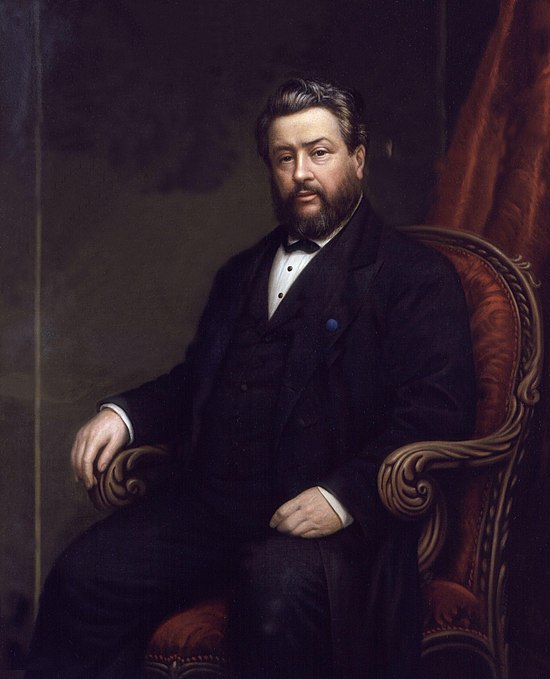
Charles Haddon Spurgeon (19 June 1834 — 31 January 1892) was an English Particular Baptist preacher. His nickname is the "Prince of Preachers."
Broadcaster:

Comments

0 / 2000 characters
Comments are moderated before appearing.

Be the first to comment!

Joshua

Joshua

Shall we play a game? Ask me about articles, sermons, or theology from our library. I can also help you navigate the site.