Bootstrap
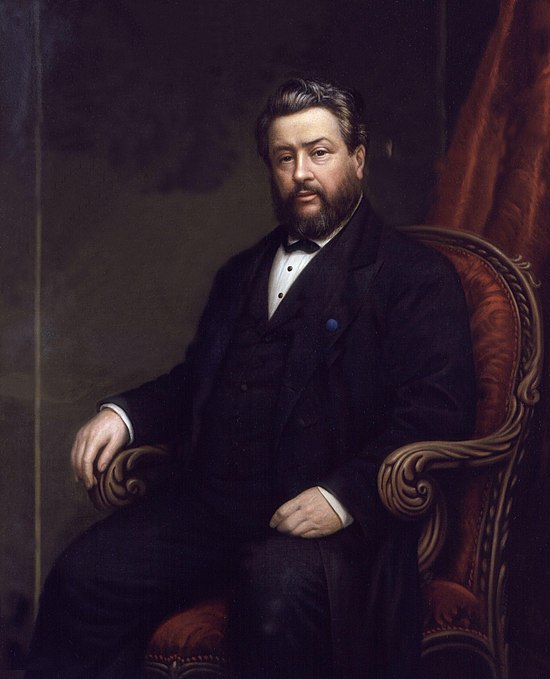
Charles Spurgeon

Election -- No Discouragement to Seeking Souls

Exodus 33:19; Romans 9
Charles Spurgeon March, 10 2017 Audio
0 Comments
Choice Puritan Devotional

Sermon Transcript

Auto-generated transcript • May contain errors

100%
This sermon is entitled, Election is No Discouragement to Seeking Souls. This sermon was originally preached by Charles Haddon Spurgeon on the 7th of February, 1864. The text for the sermon comes from the book of Exodus, chapter 33, verse 19. I will have mercy on whom I will have mercy, and I will have compassion on whom I will have compassion. Because God is the maker and the creator and the sustainer of all things, he has a right to do as he pleases with all of his creation. Shall what is formed say to him who formed it, why did you make me like this? Doesn't the potter have the right to make out of the same lump of clay some pottery for noble purposes and some for common use. God's absolute supremacy and unlimited sovereignty naturally flows from his omnipotence. And if that were not enough, then the superlative excellence of his divine character would entitle him to absolute dominion. Whoever is the best will be the chief. He who cannot err, being perfect in wisdom. He who will not err, being as perfect in holiness. He who can do no wrong, being supremely just. He who must act in accordance with the principles of kindness. Seeing he is essentially love, is the most fitting person to rule. Do not tell me of the creatures ruling themselves, What a chaos that would be! Do not talk of a supposed democracy of all created beings, controlling and guiding themselves, all the creatures put together, with all their combined wisdom and goodness, which in reality would be nothing but combined folly and wickedness. All these, I say, with all the excellencies of knowledge, judgment and love, which the most earnest imagination can suppose them to possess, would never equal that of the great God whose name is holiness, whose essence is love, and to whom all power belongs, and to whom alone wisdom is to be ascribed. Let God reign supreme, for He is infinitely superior to all other beings, Even if God did not already reign, the vote of all wise men would choose the Lord Jehovah to be the absolute monarch of the universe. And if He were not already King of Kings and Lord of Lords, doing as He pleases among the armies of heaven and the inhabitants of this lower world, it would be the path of wisdom to lift Him up to that throne. Since men have sinned, there is yet another reason for the display of God's sovereignty. The creature as a creature may think that he has some claim on the Creator. At least he may assume that God did not create him intentionally to suffer pain, that he did not arbitrarily and without cause or necessity cause mankind's existence to be one of misery. I will not venture to judge the Lord, but I do think it is altogether incompatible with his goodness that he would have made a creature and as a creature have condemned it to misery. Justice seems to demand that there will be no punishment where there is no sin. But man has lost all his rights as a creature. If he ever had any, he has sinned them away. Our first parents have sinned and we, their children, have condemned ourselves by high treason against our faithful Lord and Sovereign. All that a just God owes to any one of us on the basis of our own claim is wrath and displeasure. If He would give to us what we deserve, we would no longer remain on the earth with the ability to pray and breathing the air of mercy. The creature before its creator must now be silent as to any demands on him. It cannot require anything of God as a matter of right. If the Lord desires to show mercy, it will be so. But if he withholds it, who can call him to account? God has said, can I not do as I will with my own creatures? And this is a fit reply to all such arrogant inquiries. For man has sinned himself out of court and there remains no right of appeal from the sentence of the Most High. Man is now in the position of a condemned criminal whose only right is to be taken to the place of execution and to justly suffer the consequences of his sins. Whatever difference of opinion there might have been about the sovereignty of God as exercised upon creatures as a whole, there should be none, and there will be none, except in those rebellious spirits concerning the sovereignty of God over rebels who have sinned themselves into eternal ruin and have lost all claim even to the mercy, much less to the love of their offended creator. However, whether we all agree to the doctrine that God is sovereign or not is a very little matter to Him. For He is sovereign by right. He should be sovereign as a matter of fact. He is sovereign. It is a fact about which you only have to open your eyes and see that God acts as a sovereign in the distribution of His grace. Our Savior, when he wished to give examples of this, told us this. I assure you, Jesus said, that there were many widows in Israel in Elijah's time. Yet Elijah was not sent to any of them, but to a widow in Zarephath, in the region of Sidon. Here was election. Elijah is not sent to nourish and to be nourished by an Israelite widow. but to a poor, idolatrous widow across the border. Again, our Savior says, there were many in Israel with leprosy in the time of Elisha the prophet, yet not one of them was cleansed, only Naaman the Syrian, not an Israelite at all, but one who bowed down in the temple of the false god, Raman. See how distinguishing grace finds strange objects? Although our Savior only gave these two examples and no more, because they were sufficient for His purpose, there are thousands of such cases on record. Look at man and the fallen angels. How is it that fallen angels are condemned to endless fire and kept in darkness, bound with everlasting change for judgment on the great day? There is no Savior for angels. No precious blood was ever shed for Satan. Lucifer falls and falls forever, never to hope again. There is no distribution of mercy to those nobler spirits, but man, who was made lower than the angels, is selected to be the object of divine redemption. What a great truth is here. This is a most illustrious and indisputable instance of the exercise of the prerogatives of divine sovereignty. Look again at the nations of the earth. Why is the gospel preached today to us Englishmen? We have committed as many offenses, I will even venture to say we have perpetrated as many political crimes as any other nation. Our eye is always prejudiced towards everything which is English. But if we honestly read our history, we can discover in the past and detect in the present grave and serious faults which disgrace our nation. Think of the recent atrocities in Japan and our frequent wars of extermination in New Zealand and at the Cape. And in addition, that every inhabitant of the British Isles be embarrassed when we remember our opium traffic in China. Yet to us, the gospel is graciously sent so that few nations enjoy it so fully as we do. It is true that Russia and Holland hear the word and that Sweden and Denmark are comforted by the truth, but their candle burns dimly It is a poor flickering lamp which cheers their darkness. While in our own dear land, partly from the fact of our religious liberty, and yet more graciously through the recent revival, the sun of the gospel shines brightly and men rejoice in the light of day. Why is this so? Why is there no grace for the Japanese? Why is there no gospel preached to the inhabitants of Central Africa? Why wasn't the truth of God displayed in the Cathedral of Santiago instead of the mockeries and follies which disgraced both victims and receivers and were the incidental cause of the horrible burnings of that modern day hell? Why today is Rome the seat of false religion instead of becoming the throne of Jesus Christ? I cannot tell you. But I assure you, divine sovereignty has passed by many races of men and has been pleased to choose the Anglo-Saxon family, that they may be as the Jews were in times past, the custodians of divine truth and the favorites of mighty grace. We need not speak further on the election of nations for the principle is plainly carried out in individuals. Do you see anything, my brethren, in that rich tax collector whose money chest was gorged with the results of his extortion? Do you see anything when he climbs the sycamore tree so that his short stature may not prevent him from seeing the Savior? Do you see anything in him that would cause the Lord of glory to stop beneath that sycamore tree and say, Zacchaeus, Come down immediately. I must stay at your house today. Can you find me a reason why the adulterous woman who had had five husbands and who was living with a man who was not her husband could compel the Savior to journey through Samaria that he might tell her of the water of life? If you can find the reason, I cannot. Look at that bloodthirsty Pharisee. hurrying to Damascus with authority to arrest men and women, to put them in prison and shed their blood. The heat of the midday sun cannot stop him, for his heart is hotter with religious rage than the sun with its noontime rays. But see, he is stopped in his pursuit. A bright light shines all around him. Jesus speaks from heaven the words of tender rebuke, and Saul of Tarsus becomes Paul, the apostle of God. Why? For what reason? What answer can we give but this? Yes, Father, for this was your good pleasure. Read the life of John Newton. Wasn't he the grossest of all scoundrels? Turn to the history of John Bunyan. By his own confession, he was the worst of all wicked foul-mouthed persons. And tell me, can you find in either of these offenders any sort of reason why the Lord should have chosen them to be among the most distinguished heralds of the cross? No man in his right mind will venture to assert that there was anything in Newton or Bunyan why they should capture the attention of the Most High. It was sovereignty. and nothing but sovereignty. Take your own case, dear friends, and that will be the most convincing of all to you. If you know anything of your own heart, if you have formed a right estimate of your own character, if you have seriously considered your own position before the Most High, the realization that God loves you with an everlasting love and that, therefore, with his arms of kindness has drawn you then all of this should cause you to say at once, not to us, O Lord, not to us, but to your name be the glory because of your love and faithfulness. Brethren, the whole world is full of examples of divine sovereignty. For in every conversion, some beam of the absolute dominion of God shines forth upon mankind. When a sinner is anxiously troubled about the condition of his own soul, his chief and main thought should not be on this subject of God's sovereignty. When a man wants to escape from wrath and procure a place in heaven, his first, his last, his middle thought should be that of the cross of Jesus Christ. As an awakened sinner, I have little to do with the secret purposes of God. Rather, I must be concerned with his revealed commands. For a man to say, you command all men to repent, yet I will not repent because I do not know if I am chosen to eternal life. This is not only unreasonable, but extremely wicked. Let me show you why it is unreasonable to think like that. I know that bread does not of itself nourish my body, because man does not live on bread alone, but on every word that comes from the mouth of God. It depends, therefore, on God's decree whether that bread will nourish my body or not, for if He has not purposed that it will, then it could choke me, and so become the cause of my death rather than the sustainer of my life. Do I therefore, when I am hungry, thrust my hands into my pockets and stand still, and refuse to help myself from the spread of the food on the table, because I do not know whether God has decreed that the food will nourish me or not? If I did, I would be an idiot or a madman. And if because of my foolishness I starve myself, then I richly deserve the burial of a suicide. I am not absolutely sure that my field will yield a harvest next year unless God has ordained that the corn will spring up and ripen. All my hard work at tilling the ground will be lost. There are worms in the earth, frost in the air, birds in the sky, mildews in the winds, all of which may destroy my corn. and I may lose every single grain which I throw into the furrows. Shall I therefore leave my farm to be one perpetual, uncultivated piece of land, because I do not know whether God has decreed that there will be a harvest or not next year? If because of this I become bankrupt and I'm unable to pay my rent, and if finally my landlord thrusts me from my house and my farm, all that men will say will be, It serves him right, because I was such a fool as to make the secret purposes of God a matter of paramount consideration, instead of performing my known duty. I am sick. A physician comes to me with medicine. I am not certain that his medicine will heal me. It has healed a great many others. But if God has decreed that I will die, then I will die. My arm has gangrene, but I will not have it cut off, because I do not know whether God has decreed that I will die of gangrene or not. Who but a crazy idiot or a raving maniac would talk like this? When I put the case in that light, you all reply, nobody ever talks like that. It's too absurd. Of course nobody does. And the fact is, Even in the things of God, nobody really argues in that way. A man may say, I will not believe in Christ because I am afraid I am not elect. But that is so stupid, so absurd, that I do not believe that any man can be so foolish as to believe in his own reasoning. I am far more inclined to think that it is simply a wicked and perverse method of endeavoring to suppress conscience. on the theory that a bad excuse is better than no excuse, and that even a foolish argument is better than keeping one's mouth shut in speechless confusion. But since men will always be getting to this point, and there are so many who are always giving this as an excuse why they do not believe in the Lord Jesus Christ, because, quoting God's own words, It does not depend on man's desire or effort, but on God's mercy. Because of this kind of reasoning, I will try this morning to talk with these people on their own ground. And I shall endeavor, by the help of the Holy Spirit, to show that the doctrine of the sovereignty of God, that is, the doctrine of election, far from discouraging anybody, does not have in it, if understood properly, any sort of discouragement, whatever, for any soul that would believe in Jesus Christ. Let me first take a moment while I reply to a very common method of misrepresenting the doctrine of election. It may be good to start with a clear idea of what the doctrine really is. Our opponents state the case in this way. Suppose a father would condemn some of his children to extreme misery. and make others supremely happy, simply because of his own arbitrary will. Would it be just and right? Would it not be brutal and detestable? My answer is, of course it would. It would be deplorable in the highest degree, and far be it from us to attribute such a course of action to the judge of all the earth. But the case stated is not at all the one under consideration, but one as opposite from it as light is from darkness. Sinful man is not now in the position of a well-deserving or innocent child. Neither does God occupy the place of an arbitrary parent. We will look at another example that will be far closer to the reality of election. Indeed, an exact description of the whole matter. A number of criminals, guilty of the most aggravated and detestable crimes, are rightly condemned to die, and they must die, unless the king shall exercise the prerogative vested in him and give them a free pardon. If for good and sufficient reasons, known only to himself, the king chooses to forgive a certain number and to leave the rest for execution, Is there anything cruel or unrighteous here? If by some wise means justice can better be served by the sparing of the pardoned ones than by their condemnation, while at the same time the punishment of the others honors the justice of the lawgiver, who shall dare to find fault? None, I venture to say, but those who are enemies of the state and of the king. And so may we well ask, is there any unrighteousness with God? God forbid. What if God, choosing to show His wrath and make His power known, bore with great patience the objects of His wrath, prepared for destruction? What if He did this to make the riches of His glory known to the objects of His mercy, whom He prepared in advance for glory, even us? whom he also called, not only from the Jews, but also from the Gentiles. Who is he that shall accuse the mixture of mercy and severity of heaven, or make the eternal God an offender, because he has mercy on whom he will have mercy? Let us now proceed to our subject for today and endeavor to clear this truth from the terrors supposedly clustered around it. Let us begin with this assertion, which we are absolutely sure is correct, and that is, this doctrine of election does not oppose any consolation or comfort derived from other scriptural truths. This doctrine, stern as it may seem to be, does not oppose the consolation and comfort which may be rightly derived from any other truth of Revelation. Those who hold to the free will theory say that our doctrine, that salvation is of God alone and that he will have mercy on whom he will have mercy, takes away from man the comfort that he derives from God's goodness.

God is good. infinitely good in his character and his nature. God is love. He does not want anyone to perish, but everyone to come to repentance. As surely as I live, declares the sovereign Lord, I take no pleasure in the death of the wicked, but rather that they turn from their ways and live. Our friends rightly insist that God is good to everyone and his tender mercies are in all of his works. that the Lord is merciful and gracious, slow to anger, and abounding in love.

Let me assure them that we shall never argue over these points, for we also rejoice in the same facts. Some of you have listened to my voice for the past 10 years. I ask you whether you have heard me utter a single sentence which at all contradicts the doctrine of God's great goodness. You may have construed it by mistake, but no such teaching has passed my lips. Do I not again and again assert the universal benevolence of God, the infinite and overflowing goodness of the heart of the Most High?

If any man can preach upon the great text, God is love. Though I may not be able to preach with the same eloquence, I will truly agree with him in the heartiness, delight, earnestness, and plainness with which he may expound his theme, whoever he may be. There is not the slightest shadow of a conflict between God's sovereignty and God's goodness. He may be a sovereign, and yet it is absolutely certain that he will always act in the way of goodness and love. It is true that he will do as he wills, And yet it is absolutely certain that he always wills to do that which, in the widest view of it, is good and gracious.

If sinners gain any comfort from the goodness of God, the doctrine of election will never stand in their way. Only note this, it does with a two-edged sword cut to pieces that false confidence in God's goodness which sends so many souls to hell. We have heard dying men singing themselves into the bottomless pit with this lullaby. Yes, sir, I am a sinner, but God is merciful. God is good.

Oh, dear friends, let these men remember that God is a just God, as well as a good God, and that he will by no means spare the guilty, except through the great atonement of his Son, Jesus Christ. The doctrine of election in a most blessed, honest manner comes in and breaks the neck, once for all, of all this false and groundless confidence in the universal mercy of God. Sinner, you have no right to trust in the goodness of God apart from Christ. There is no word in the whole Bible which gives the smallest hope to a man or a woman who will not believe in Jesus Christ. It says of them, Whoever does not believe will be condemned. It declares about you, you who are resting on such a poor confidence as the universal favor of heaven. It says that no one can lay any foundation other than the one already laid, which is Jesus Christ.

If it is considered an evil thing to rob you of a false confidence, then the doctrine of election certainly does this. But election does not detract a single thing from the comfort rightly derived from the correct view of God's abundant goodness and unlimited love.

Much comfort too flows to a troubled conscience from the promise that God will hear prayer, from the promise that God will hear prayer. The Bible says, Ask and it will be given to you. Seek and you will find. Knock and the door will be opened to you. For everyone who asks, receives. He who seeks, finds. And to him who knocks, the door will be opened. If you ask anything of God in the name of Jesus Christ, you will receive it.

There are some who imagine that they must not pray because they do not know whether they are God's chosen people or not. If you refuse to pray on the ground of such bad reasoning as this, you must do so at your own expense. But do remember our solemn assurance, for which we have God's guarantee, that there is nothing in the sovereignty of God which changes the great truth that every sincere seeking soul Craving divine grace by humble prayer through Jesus Christ shall find mercy.

There may be an Arminian brother here, that is, one who believes salvation is based on man's faith and not on God's sovereign choice. This Arminian brother may like to get into this pulpit and preach the reassuring truth that God has not said to us that we seek his face in vain. We not only accord this man full liberty to preach this doctrine, but we will go as far as he can, and perhaps a little further, in the enunciation of that truth. We cannot perceive any discrepancy between personal election and the prevalence of prayer. Let those who wish rack their brains with the task of reconciling God's sovereign choice and man's personal responsibility to believe To us, the wonder is how a man can believe the one without the other. I must firmly believe that the Lord God will show mercy to whom he will show mercy and have compassion on whom he will have compassion. But I know just as well that whenever there is a genuine prayer, God gave it, that wherever there is a seeker, God made him seek. Consequently, if God has made the man seek, and made the man pray, there is clear evidence of divine election, and the fact stands true that everyone who seeks will find. Great reassurance is derived, and naturally so, from the free invitations of the gospel, from the free invitations of the gospel. Oh, cries one, what a sweet thing it is that the Savior has said, Come to me, all you who are weary and burdened, and I will give you rest. How delightful to read such a word as this. Come, all you who are thirsty, come to the waters. And you who have no mercy, come, buy and eat. Come, buy wine and milk without money and without cost. My friend, my heart is encouraged when I find it written, Whoever wishes, let him take the free gift of the water of life. But, someone says, I dare not come because of the doctrine of election. My dear friend, I would not say anything harshly to you, but I must express my conviction that this is nothing but an idle excuse for not doing what you don't want to do in the first place. because invitations of the most general character, no, invitations which shall be universal in their scope, are perfectly consistent with the doctrine of election. I have preached here, and you know it, invitations as free as those which proceeded from the lips of John Wesley. Van Arman himself, the founder of the Armenian school, could not more honestly have pleaded with the very vilest of the vile to come to Jesus than I have done. Have I therefore felt in my mind that there was a contradiction here? No, nothing of the kind, because I know it to be my duty, like the sower in the parable, to scatter the seed upon the stony ground as well as upon the good land, knowing that election does not narrow the gospel call which is universal. but only affects the effectual call, which is and must be from the Spirit of God. My business is to give the general call. The Holy Spirit will apply it to the chosen ones, the elect." Oh, my dear listeners, God's invitations are honest invitations to every one of you. He invites you in the words of the parable He addresses. My oxen and fattened cattle have been butchered, and everything is ready. Come to the wedding banquet." He said to his servants, go to the street corners and invite to the banquet anyone you find. Though he knows in advance who will come in, and has before the creation of the universe preordained who shall taste of that supper, yet the invitation in its widest possible range is a true and honest one. and if you accept it, you shall find it to be true. Furthermore, if we understand the gospel at all, we will realize that it is a very simple gospel. It is this, believe in the Lord Jesus Christ and you will be saved. Or to use the words of Christ, whoever believes and is baptized will be saved, but whoever does not believe will be condemned. This promise is the gospel. Now the gospel is true, whatever else may be false. Whatever doctrine may or may not be of God, the gospel certainly is. The doctrine of sovereign grace, the doctrine of election, is not contrary to the gospel, but perfectly consistent with it. God has a people that men cannot number, whom he has ordained to have eternal life. This is by no means in conflict with the great declaration, whoever does not believe will be condemned. If any man who ever lived, or ever shall live, believes in Jesus Christ, he has eternal life, election or no election. If you are resting on the rock of ages, you are saved. If you, as a guilty sinner, put on the righteousness of Christ, if you, being completely wicked and filthy, come to wash in the fountain filled with the saving blood of Christ, sovereignty or no sovereignty, be rest assured that you are redeemed from the wrath to come. When you say, I will not believe in Christ because of election, I can only say, as Job said to his wife, you are talking like a foolish person. How dare you? Because God revealed to you two things which you cannot harmonize together, how dare you charge either the one or the other with being false? If I believe God, I am not only to believe what I can understand, but what I cannot understand. And if there were a revelation from God which I could easily comprehend and sum up as easy as counting to five on my fingers, I could be sure that it did not come from God. But if it has some depths vastly too deep for me, some knots which I cannot untie, some mysteries which I cannot solve, then I receive it with a greater confidence because it now gives me some swimming room for my faith. and my soul bathes itself in the great sea of God's wisdom, praying, Lord, I do believe, help me overcome my unbelief. Let it be said over and over again that there shall be no doubt about this matter, that if there is any comfort derived from the gospel, If there is any sweet consolation flowing from the free invitations and the universal commands of divine truth, all those may be received and enjoyed by you while you believe in this doctrine of divine sovereignty as much as if you did not believe it. I think I can hear someone say, Sir, the only comfort I can ever have lies in the infinite value of the precious blood of Christ. It seems to me such a sweet thing that there is no sinner so wicked that Christ cannot wash away his sins, and no sinner so old that the meritorious virtue of that atonement cannot meet his situation. Not one in any rank or in any condition whom that blood cannot cleanse away all sin. Now, sir, if that is true, then tell me, how can the doctrine of election be true? My dear friend, you know in your own heart that the two things are not opposed to each other at all. But what does the doctrine of election say? It says that God has chosen and saved some of the greatest sinners who have ever lived, that he has washed away some of the foulest sins ever committed, and that he is doing and will do the same from now to the end of the world, so that the two things are in exact agreement. And I will venture to say that if in the fullness of a man's heart he shall say, there is no sin except the one unpardonable sin which cannot be forgiven, if he boldly announces that all kinds of sin will be forgiven men, and if he will plead with power and earnestness that souls would now come to Christ and lay hold of eternal life, he may go back to his Bible and he may read every text teaching the sovereignty of God. and every passage upholding divine election. And he may feel that all these texts look him in the face and say, well done. Our spirit and your spirit are precisely the same. We have no conflict together. We are two great truths which came from the same God. We are in harmony with the revelation of the Holy Spirit. But we must leave that point. If there is any comfort center which you can truthfully and rightly get from any passage of scripture, from any promise of God, from any invitation to believe, from any open door of mercy, you may have it. For the doctrine of election does not rob you of one speck of the comfort which the truth of God affords. Our second point today is this. This doctrine of election has a most beneficial effect on sinners. These sinners may be divided into two classes, those who are awakened and those who are hardened and hopeless. To the awakened sinner, next to the doctrine of the cross, the doctrine of election is perhaps the most filled with blessings and comfort. In the first place, the doctrine of election applied by the Holy Spirit strikes dead forever all the efforts of the flesh. It is the purpose of Arminian preaching to make men active, to excite them to do what they can to be saved. But the very end and purpose of gospel preaching is to make men feel that they have no power of their own and to lay them as dead at the foot of God's throne. We seek under God to make them feel that all their strength must lie in the Strong One who is mighty to save. If I can convince a man that, let him do what he may, he cannot save himself, if I can show him that his own prayers and tears can never save him apart from the Spirit of God, if I can convince him that he must be born again from above, if I lead him to see that all which is born of the flesh is flesh, and only that which is born of the Spirit is spirit, then brethren, three parts of the great battle are already won. I put to death and bring to life, says God. When a man is put to death, then the work is half done. I have wounded and I will heal. When a man is wounded, his salvation is initiated. What? Am I to tell a sinner to vigorously strive after eternal life by his own works? Then indeed I would be an ambassador of hell. Am I to teach him that there is goodness in him which he is to develop, to polish, and educate and perfect, and so to save himself? Then I am a teacher of the contemptuous elements of the law and not the gospel of Christ. Are we to say that if a man will, by his own power, pray, repent, and humble himself, that this is the way of salvation? If so, let us renounce the righteousness of Christ at once, for the two will never stand together. I am an evil person if I excite the activities of the flesh instead of pointing to the arms of the Redeemer. But if the powerful hammer of election knocks out the brains of all of a man's works and merits, and pronounces over the dead carcass this sentence, it does not depend on man's desire or effort, but on God's mercy, then the best thing is done for a sinner that can be done, for it becomes a stepping stone to the act of faith. When a man is weaned from self, and totally delivered from looking to the flesh for help, then there is hope for him, and this the doctrine of election gives through the power of the Holy Spirit.

Again, this doctrine of election gives the greatest hope to the truly awakened sinner. It gives the greatest hope to the truly awakened sinner. You know how the case stands. We are all prisoners condemned to die. God, as sovereign, has a right to pardon whom he pleases. Now imagine with me a number of us locked up in a condemned cell, all guilty. One of the murderers says to himself, I know that I have no reason to expect to be delivered. I am not rich. If I had some rich relatives, I might be able to be declared insane and delivered, but I am very poor. I am not educated. If I had the education of some men, I might expect some consideration. I am not a man of rank or position. I am a man without merit or influence. Therefore, I cannot expect that I should be selected as one to be pardoned.

No, my friends, I believe that if the authorities and leaders of our country were the persons to determine who should be saved, than a man who was poor might have a very poor chance of expecting any deliverance. But when God is the great sovereign, the case is very different. For then we can argue, here I am, and my salvation depends entirely upon the will of God. Is there any chance for me? We look at the list of those whom he has already saved, and we find that he saves the poor, the illiterate, the wicked, the godless, and the worst of the worst, the vile ones, and the ones that are despised. Well, what do we say? We say this, then why can't he choose me? Why not save me? If I am to look for some reason in myself why I should be saved, I shall never find any. And consequently, I shall never have any hope. But if I am to be saved for no reason at all, but simply because God wills to save me, then there is hope for me. I will approach the gracious King. I will do as He commands me. I will trust in His dear Son, Jesus Christ, and I will be saved.

So, my friends, we can see that this doctrine of election opens the door of hope to the worst of the worst And the only persons it discourages are the Pharisees, the self-righteous religious persons who say, God, I thank you that I am not like other men. These proud, arrogant spirits who say, no, if I am not to be saved for something good in myself, then I would rather be damned. And damned they will be, and with a vengeance.

Moreover, do you not see, dear friends, how the doctrine of election comforts the sinner in the matter of power? The sinner's complaint is, I find I have no power to believe. I have no spiritual power of any kind. Election stoops down and whispers in his ear, but if God wills to save you, he will give you the power, give you the life, and give you the grace. And therefore, since he has given that power to others as weak as you, why not to you? Have courage, my friends. Look to the cross of Christ and live.

And oh, what emotions of gratitude, what throbbings of love does this doctrine cause in human hearts? Why, says the man, I am saved simply because God wills to save me. not because I deserved it, but because his loving heart determined to save me. Then I will love him, I will live for him, I will spend and be spent for him. Such a man cannot be proud, for that would be inconsistent with the doctrine of election. He lies humbly at God's feet. Other men may boast of what they are and how they have attained their own eternal life by their own goodness, but I cannot. If God had left me alone, I would have been in hell with the others. But since I have been chosen to go to heaven, I must cast my salvation crown at the feet of the grace which brought me there.

Such a man will become kind to others. He will hold his opinions, but he will not hold them savagely, nor teach them bitterly, because he will say, if I have light and others have not, My light was given to me as a gift from God. Therefore, I have no reason to congratulate myself. I will try to spread that light, but not by anger and abuse. For why should I blame those who cannot see? For could I have seen if God had not opened my blind eyes?

When the Holy Spirit applies this doctrine, then it fosters every virtue and kills every vice. It treads pride underfoot and cherishes humble, trustful confidence in the mercy of God through Christ.

Now my time is gone, but I want to say a word as to the effect of this gospel upon hopeless sinners.

The effect of the gospel upon hopeless sinners. I will just say this. I know what the effect of it ought to be. What do I say to those of you who have made up your minds not to repent? You who do not care for God. Why, you believe that any day you like you can turn to God, since God is merciful and he will save you. And therefore, you walk about the world as comfortable as possible, thinking it all depends on you and that you will get to heaven right at the very last moment of your life.

Oh, my friend, If this is your situation, then note very carefully where you are. Do you see that moth fluttering in my hand? Imagine that moth to be there. With this finger of mine, I can crush it in a moment. Whether it shall live or die depends absolutely upon whether I choose to crush it or let it go. That is precisely your position at the present moment. God can damn you to hell at any moment. No, let me say this to you. Your position is even worse than that. There are some seven persons that are presently on death row, doomed for murder and piracy on the high seas. You can clearly say that their lives depend upon Her Majesty's pleasure. If Her Majesty the Queen chooses to pardon them, she can. If not, when the fatal morning comes, they will be executed and will be launched into eternity. That is the same as your situation, sinner. You are already condemned. This world is nothing but one huge condemned cell in which you are kept until the execution morning comes. If you are ever to be pardoned, God must do it. You cannot escape from him by running away. You cannot bribe him by actions of your own. You are absolutely in the hand of God, and if he leaves you where you are and as you are, your eternal ruin is as certain as your existence.

Now doesn't this cause you to tremble? Perhaps not. Rather, it makes you angry. Well, if it does, that will not alarm me. Because there are some of you who will never be good for anything until you become angry. I believe it is a good sign when persons are angry, when they get angry with the truth. It shows that the truth has pierced them. If an arrow penetrates my flesh, I do not like the arrow. And if you kick and struggle against the truth, it will not alarm me. I will have some hope that a wound is made. If this truth should provoke you to think, it will have done for some of you one of the greatest things in all the world. It is not your perverse thinking which frightens me. It is the utterly thoughtless way in which you go on with life. If you had sense enough to consider these things and fight against them, I would have some faint hope for you. But no, many of you do not have any sense at all. You say, yes, yes, it is all true. You accept it, but then it has no effect on you. The gospel rolls over you like oil down a slab of marble and produces no effect. If you carefully examine your heart, you will begin to see what your state really is. And the next thing that will startle your mind will be the reflection. Is it true? Am I absolutely in God's hands? Can he save me or damn me as he will? Then I will cry out to him, O God, save me from the wrath to come, from eternal torment, from banishment from your presence. Save me, O God. What would you have me to do? Oh, what would you have me to do that I might find your favor and live? Then comes the answer to you. Believe in the Lord Jesus Christ and you will be saved. For whoever believes in him shall not perish, but have eternal life. Oh, that God might bless this precious divine doctrine of election to you. I have never preached this doctrine without conversions, and I believe I never shall. At this very moment, God will cause his truth to attract your hearts to Jesus. or to frighten you to him. May you be drawn as the bird is drawn by the bait, or may you be driven as a dove when chased by the hawk into the clefts of the rock. Only may you be sweetly compelled to come. May my Lord fulfill this desire of my heart, O that God may grant me your souls for my efforts, and to him shall be the glory, world without end, Amen.
Charles Spurgeon
About Charles Spurgeon
Charles Haddon Spurgeon (19 June 1834 — 31 January 1892) was an English Particular Baptist preacher. His nickname is the "Prince of Preachers."
Broadcaster:

Comments

0 / 2000 characters
Comments are moderated before appearing.

Be the first to comment!

Joshua

Joshua

Shall we play a game? Ask me about articles, sermons, or theology from our library. I can also help you navigate the site.